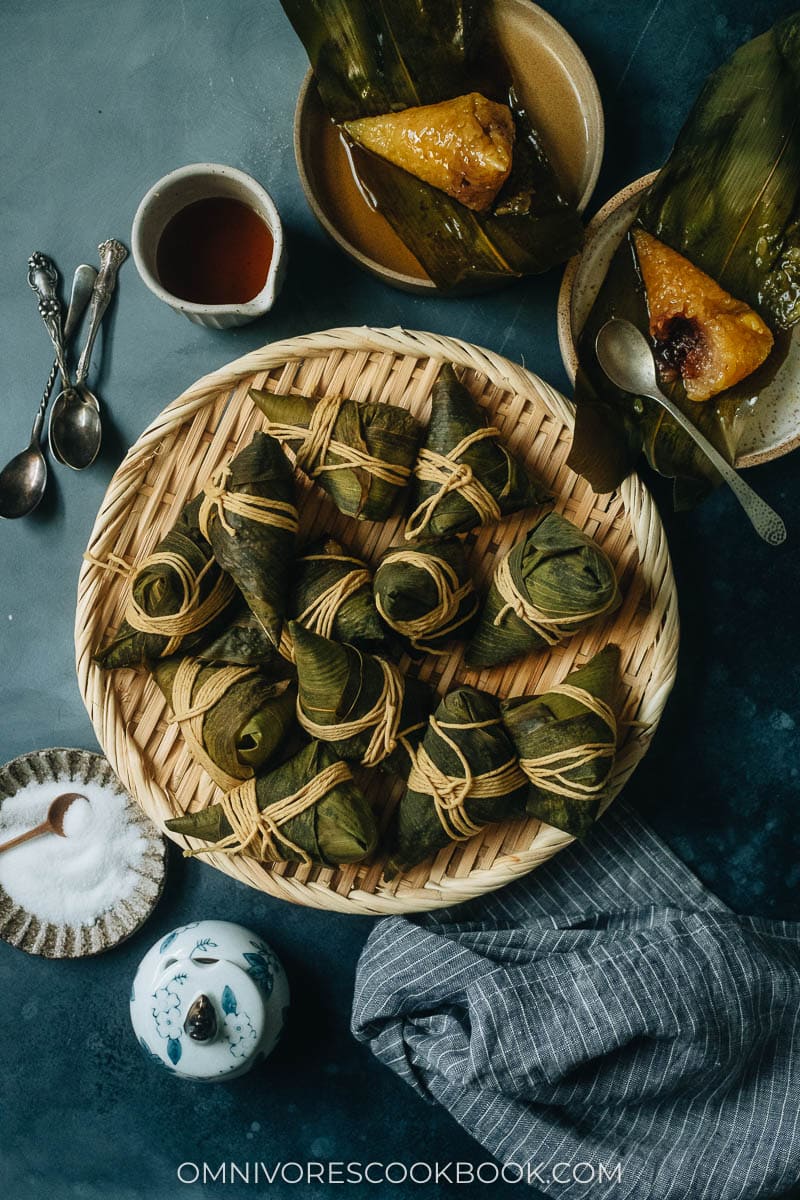
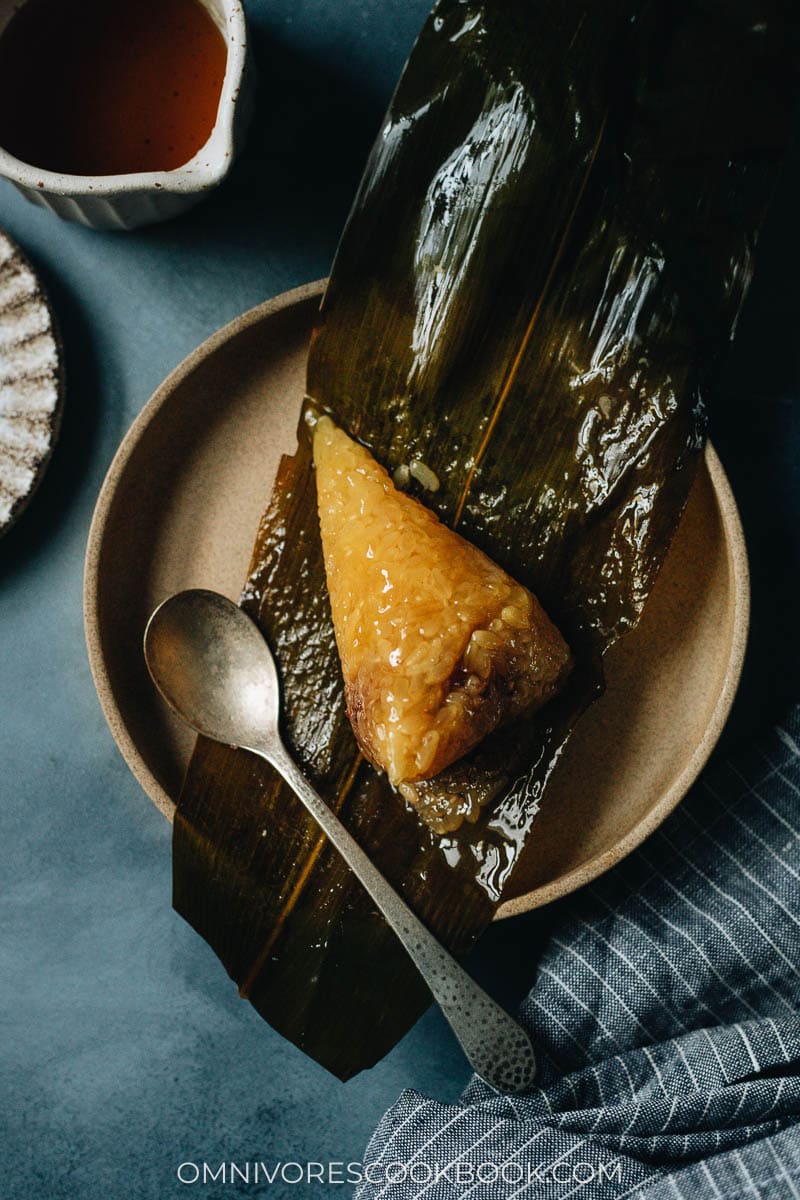
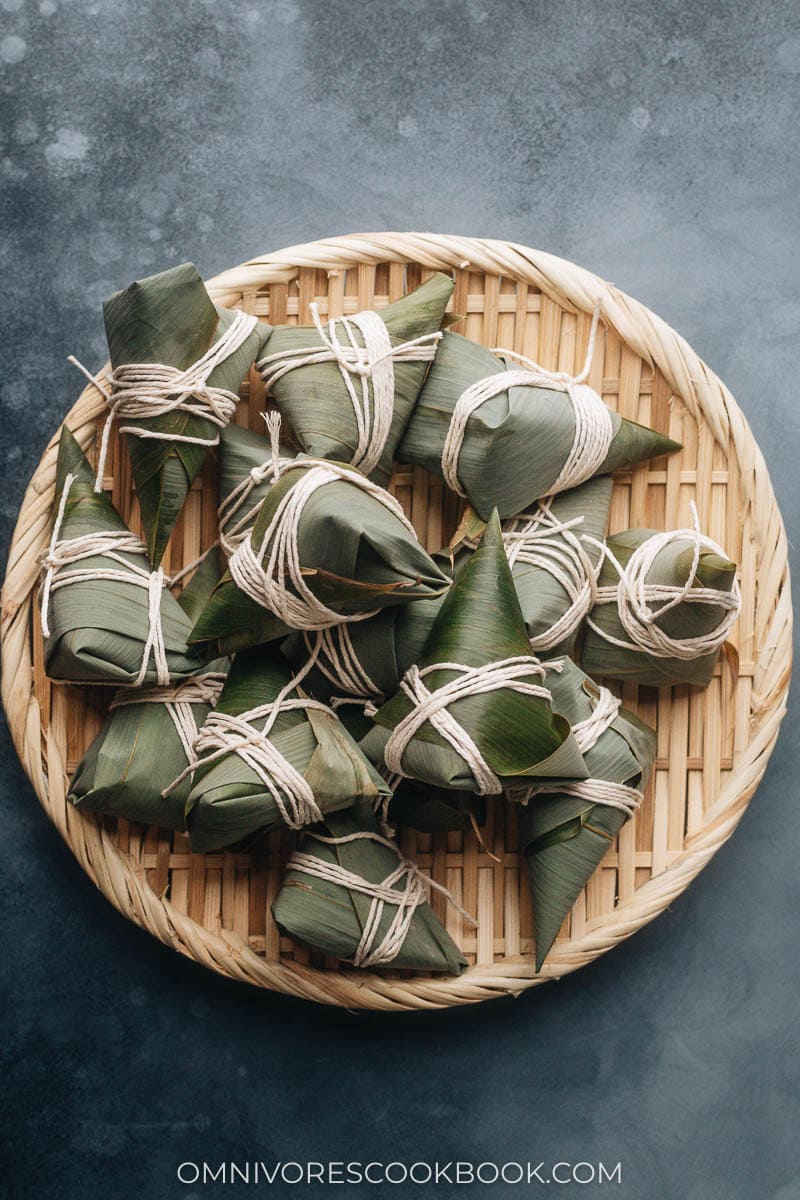
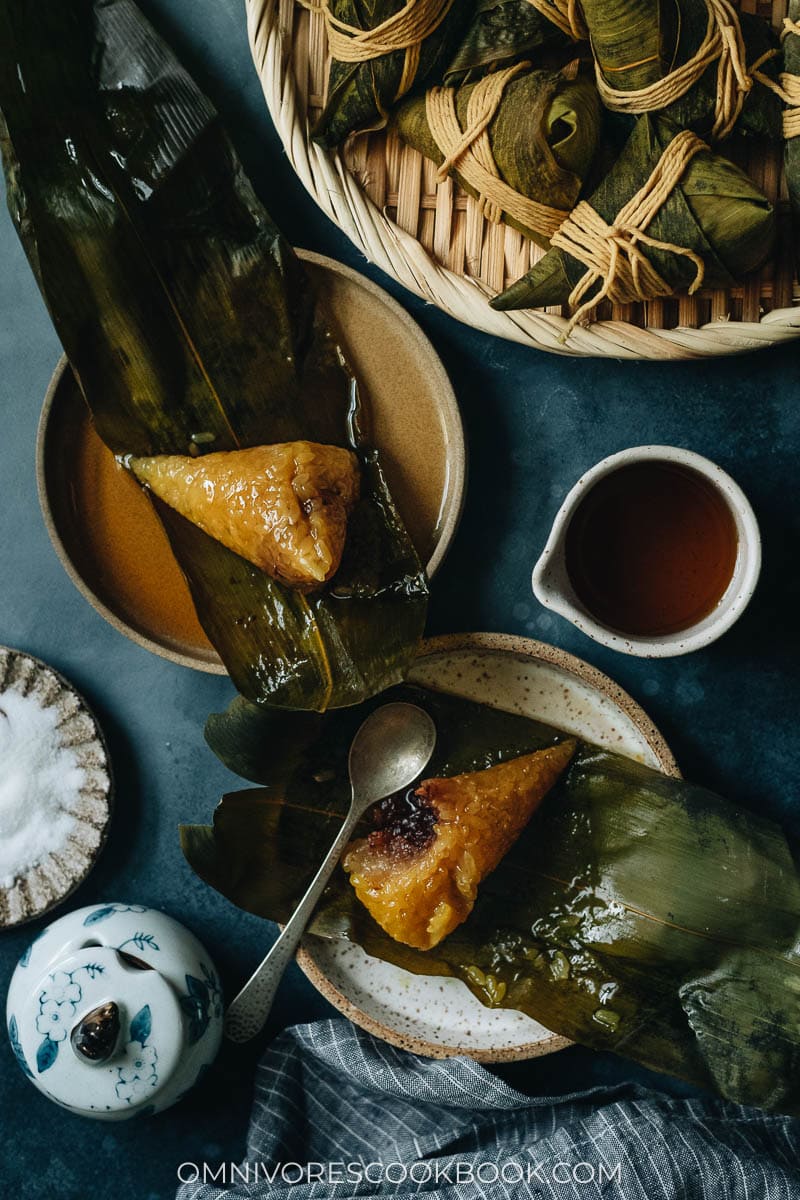
Are you making zongzi for this year’s Dragon Boat Festival? If you’re looking for a new recipe to try out, you might want to make these lovely alkaline dumplings. Compared to your average sweet zongzi, alkaline zongzi have a more tender and gooey texture with a lovely yellow color that is so pretty. I know it’s quite a lot of work to make zongzi, but the freshly made zongzi are so fragrant and nothing beats the smiles on your friends and family members’ faces when you share the fruits of your labor of love.
What is Alkaline dumpling
Alkaline dumplings, or Jian Shui Zong Zi in Mandarin, are also called alkaline zongzi, lye water zongzi, and Gan Sui Jong (Cantonese). It’s a classic dish from the southern part of China, such as the Shanghai and Guangdong regions. It’s a festive dish to serve during Dragon Boat Festival (端午节), but it’s also quite often seen at dim sum restaurants or served as a dessert. Growing up in Beijing, we usually only make the regular sweet zongzi. I wasn’t very familiar with Alkaline dumpling until moving to the US where I got exposed more to Cantonese culture. Not to mention, I was immediately hooked on these delicious dumplings and now I cannot get enough of them.
What’s special about alkaline dumplings
Alkaline dumplings are made with sticky rice that’s pre-soaked in alkaline water. The alkalinity does a few things to the zongzi:
It makes the sticky rice extra tender and gooey, creating a better mouthfeel. The alkaline water will dye the zongzi to a beautiful yellow color, creating a more appealing look.Alkali is a natural preservative so the zongzi can be stored a bit longer.
When using an alkaline solution, you need to be careful about the quantity. If using too much, the zongzi will end up with a sulfuric taste or even taste bitter.
Ingredients for making alkaline dumplings
Alkaline solution (lye water)
Food grade alkaline solution is the key ingredient in alkaline dumplings. It can be acquired in different forms. In China, you can easily find food-grade alkaline powder. Some very traditional recipes call for the natural ingredient Chao Mu Hui (草木灰), which is the ash from burned plant matter. But the most commonly seen ingredient is alkaline solution, which is a solution of potassium carbonate and sodium bicarbonate. If you’re familiar with Cantonese style mooncakes, the kansui used in that recipe is the alkaline solution you’re looking for. I’ve also seen quite a lot of Chinese recipes that use baking soda to make alkaline dumplings. But since I haven’t tested the result, I’m not including it as an alternative in the recipe below.
Sticky rice
You will need short grain sticky rice (糯米), which is also called glutinous rice or sweet rice. Although it has “glutinous” in the name, the rice itself is gluten-free.
Bamboo leaves
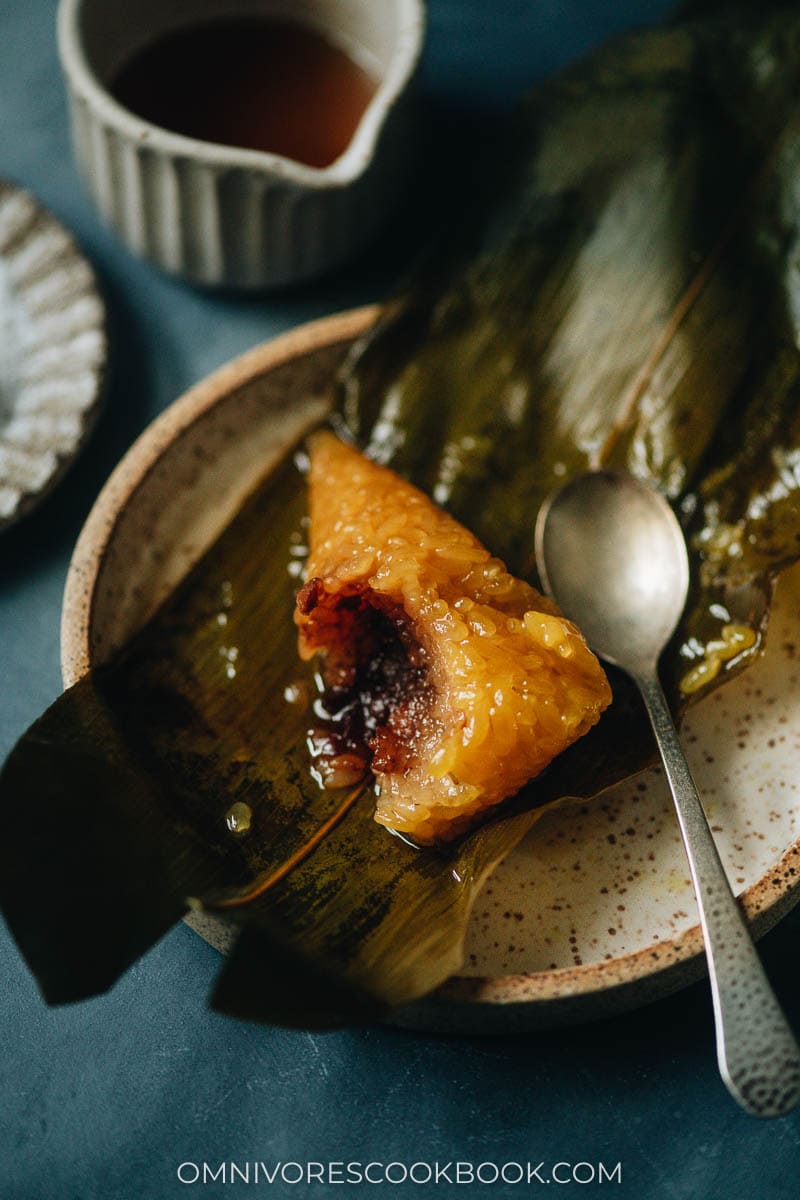
Red bean paste (Optional)
Besides those ingredients, you will also need some kitchen twine to tie the zongzi.
Prepare ahead
Making zongzi requires a bit of time and patience.
The night before
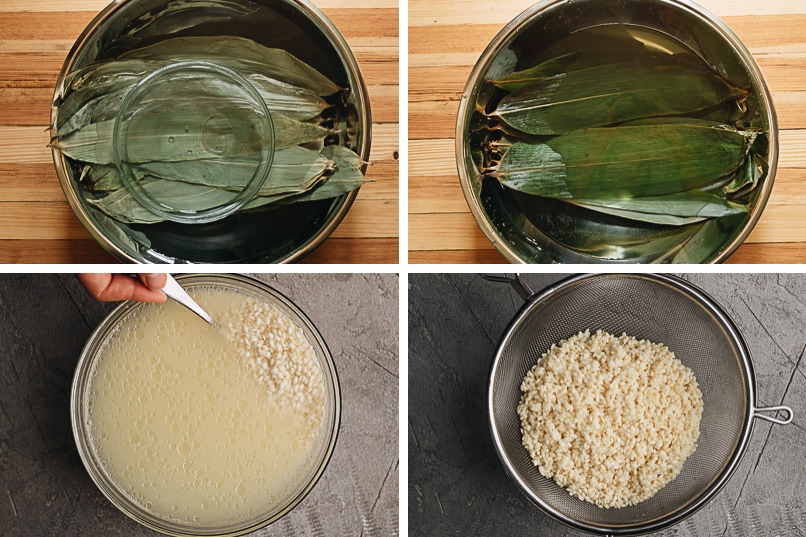
You will need to be organized and do a few things the night before wrapping the zongzi. To soak the bamboo leaves, you will need to find a very big bucket or basin to fully submerge them. If using a bucket, rinse the leaves with water and gently bend them so they can be placed against the side of the bucket. If you don’t have either, you can use your kitchen sink.
How to wrap alkaline dumpling (zongzi)
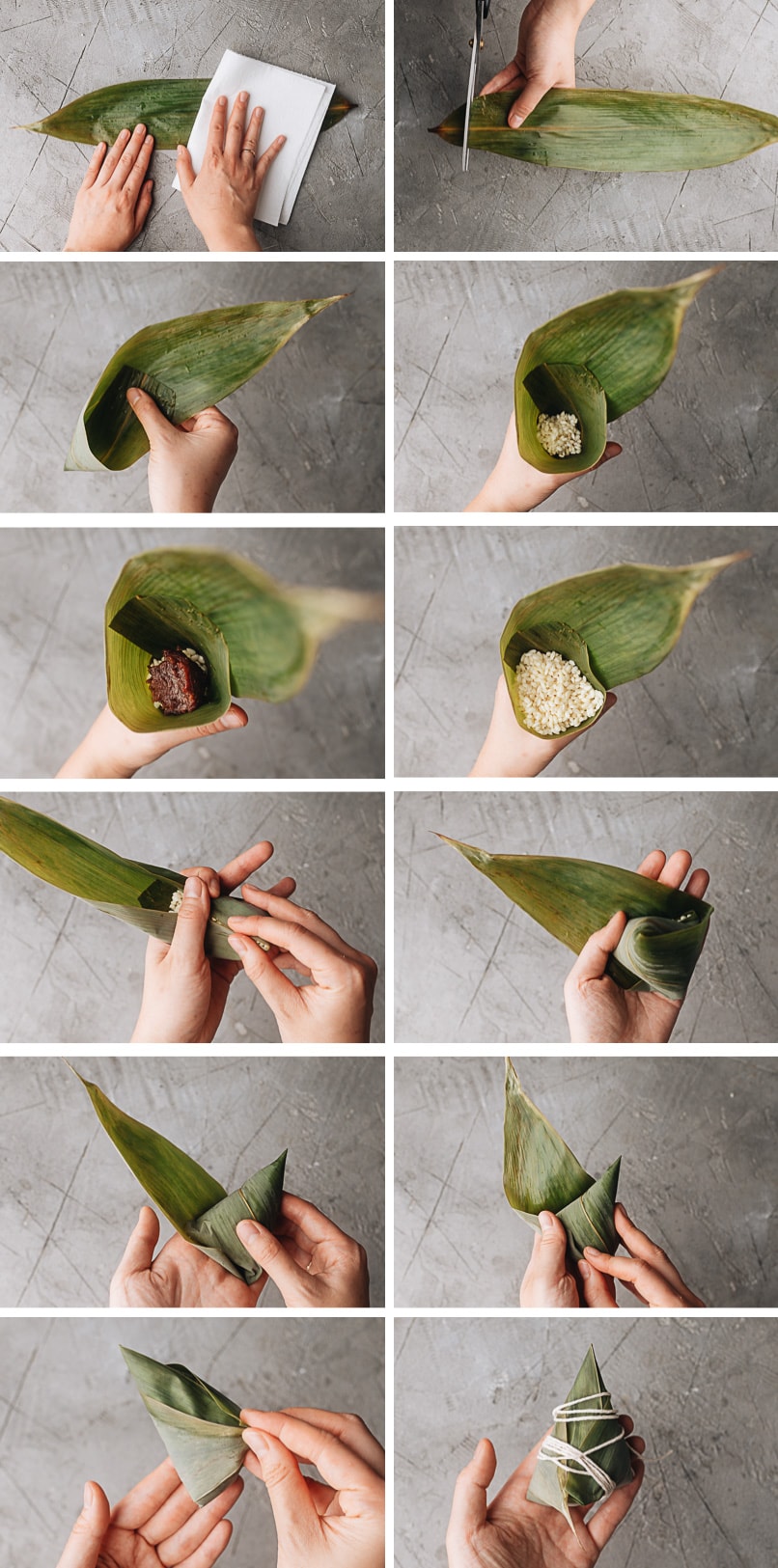
It took me quite a while to practice and make good-looking zongzi. The process can be a bit tricky if you’ve never made them before. That’s why I included a lot of pictures below, and made a video for it. Just so you can see how it’s done. Also, just remember that there are many ways to wrap zongzi and you can choose any of the methods. The wrapping method here uses only one piece of bamboo leaf to make small zongzi. I like to use this method to make alkaline dumplings because it’s the perfect dessert size. If you prefer bigger zongzi, you can use the method from this post.
How to cook alkaline dumplings
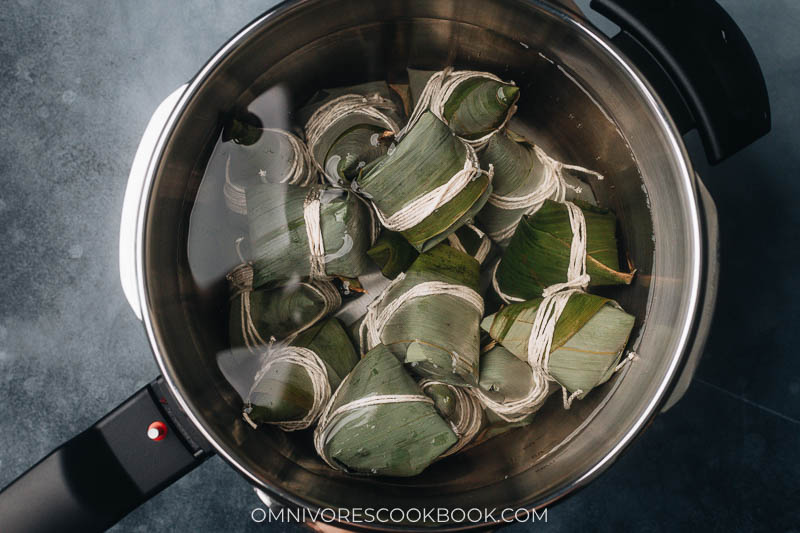
You can cook alkaline dumplings on the stovetop or in an Instant Pot (or pressure cooker). I personally prefer the Instant Pot method because it’s much faster and you can set it up and forget about it. If cooking on the stove top, you will need about 3 hours and you should check on the zongzi during that time. In an Instant Pot, the zongzi take about 1 hour of cooking time. Although you will need to leave about 40 minutes to 1 hour on top of it, to add and release the pressure.
How to serve alkaline dumplings
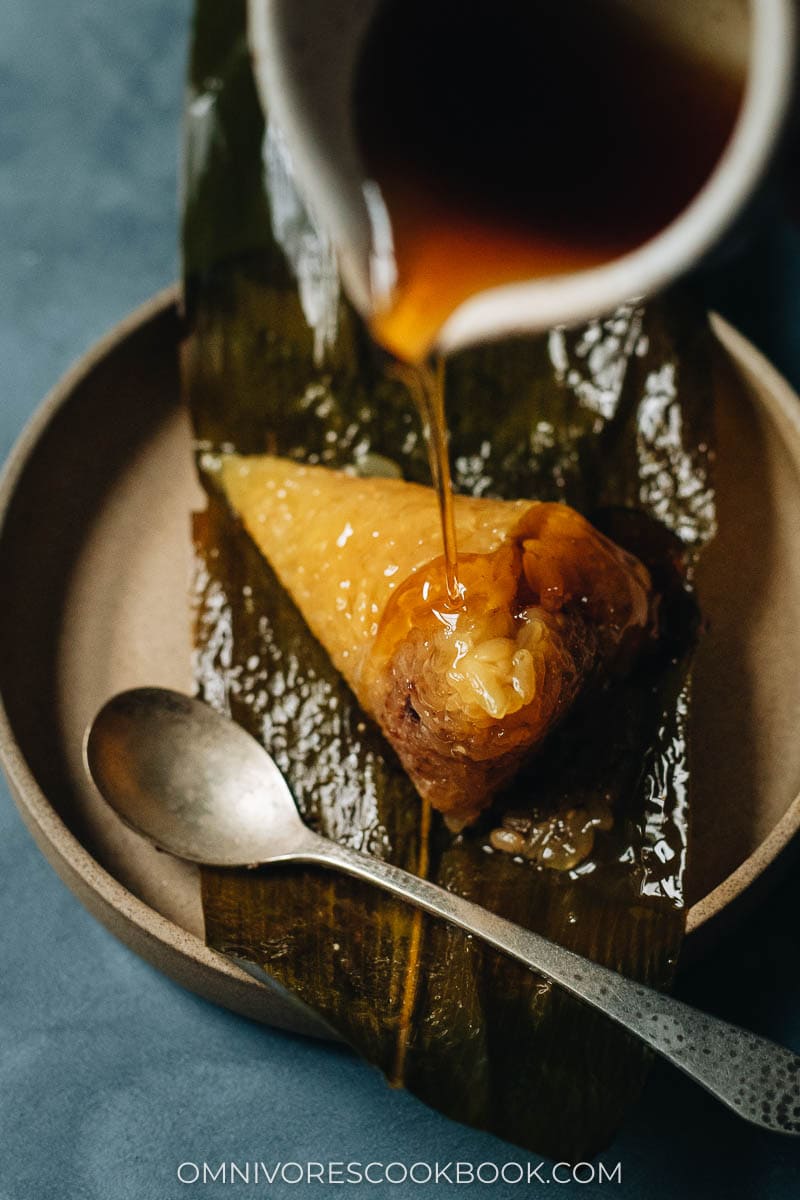
Plain alkaline dumplings are usually served with white sugar or syrup. I like to use maple syrup, but you can use other types of syrup as well. If you happen to find osthamus syrup at a Chinese market, definitely give it a try because it has such a lovely fragrance. If you use sweet bean paste as the dumpling filling, you might not need other sweeteners. But I do like to pour a ton of syrup on my sweet bean paste zongzi 🙂
How to store and reheat alkaline dumplings
Alkaline dumplings can be refrigerated or frozen once cooked. The refrigerated ones will stay good for about 1 week and the frozen ones up to 3 months. To properly reheat them, steaming or boiling works best. For refrigerated ones, the microwave works pretty well.
Afterthoughts
Making any type of zongzi is definitely a special event that requires time and patience. Back when I was living in China, it was usually a family event and the process was so much easier when working as a team. In the US, it takes me way longer to prepare and wrap zongzi. But I love to share them with my friends and it always makes me so happy when I get tons of positive feedback. I hope you enjoy these alkaline dumplings and happy dragon boat festival!
More Dragon Boat Festival Recipes
Pork Zongzi (Cantonese Savory Sticky Rice Dumplings)Zongzi with Red Bean Paste (Sticky Rice Dumplings)How to Make Red Bean Paste