Spam & Chinese cooking
The word Spam might make you think of high-sodium military rations. But in China, Spam is a popular ingredient that people use in comfort food. Spam and pepper stir fry, Spam omelet, Spam ramen, Spam fried rice, or Spam sandwich. You name it. Spam is also a common ingredient in Chinese Hot Pot and Sichuan Mala Dry Pot – a popular type of Chinese restaurant where you choose a spicy sauce and various ingredients that are cooked in it and then everything is served in a big pot. Every time I go to Mala Pot restaurants with friends, I remember to order a few slices of Spam and it’s always the most popular ingredient in the pot. Spam is so intertwined with Chinese food culture that I’d never considered Spam a foreign food until I moved the US. Then I started to wonder when it came to China. After some digging, I found out the following. According to Wikipedia: “In China, Hormel decided to adopt a different strategy to market Spam, promoting it as a foreign, premium food product and changing the Spam formula to be meatier in order to accommodate local Chinese tastes.” Apparently, Hormel also decided to name it “luncheon meat” (午餐肉) instead of Spam, to make it sound glamorous. No wonder. Back in old days, Spam was considered a fancy thing that people would serve for dinner on Chinese New Year.
A Common Table Cookbook
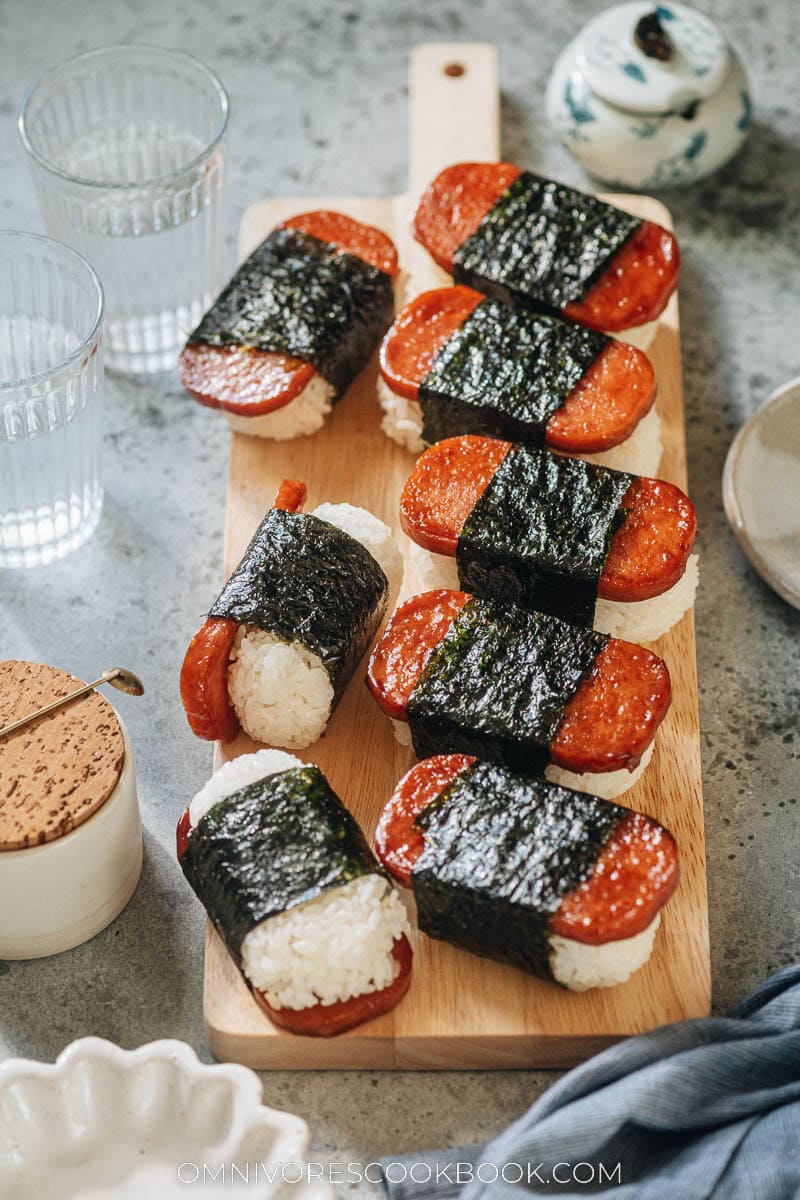
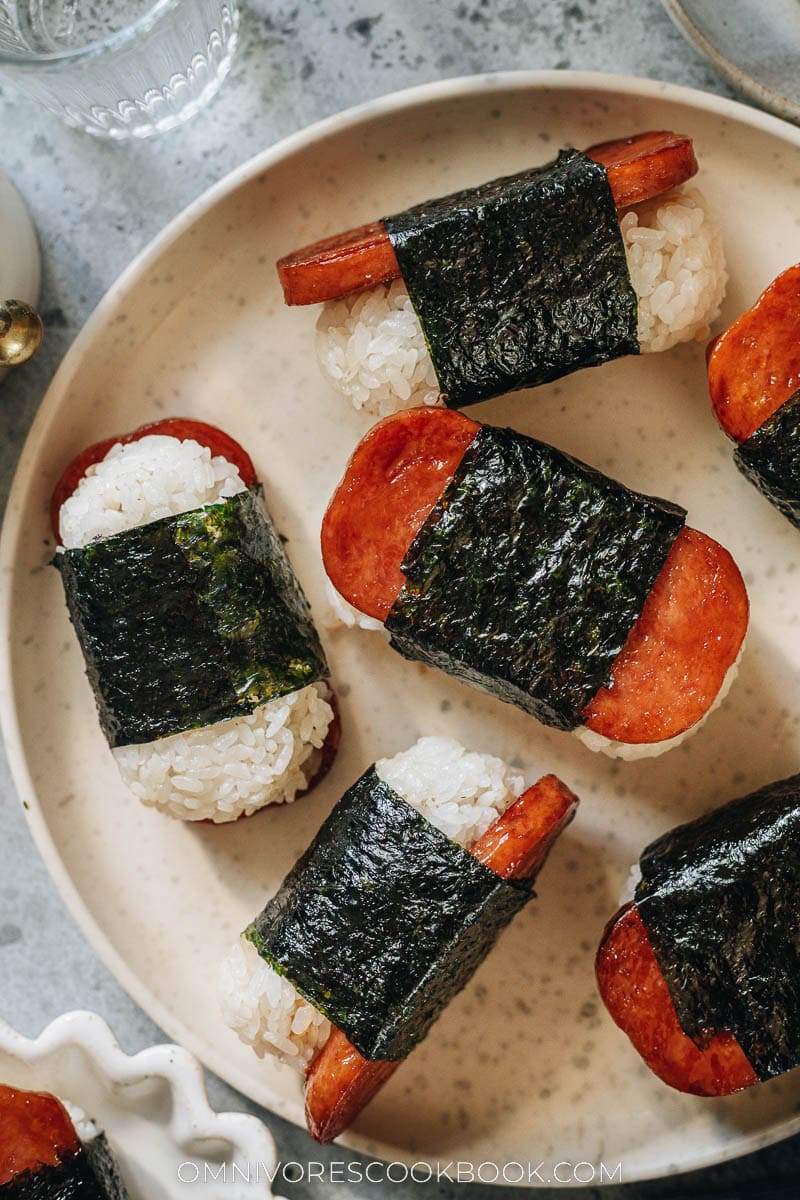
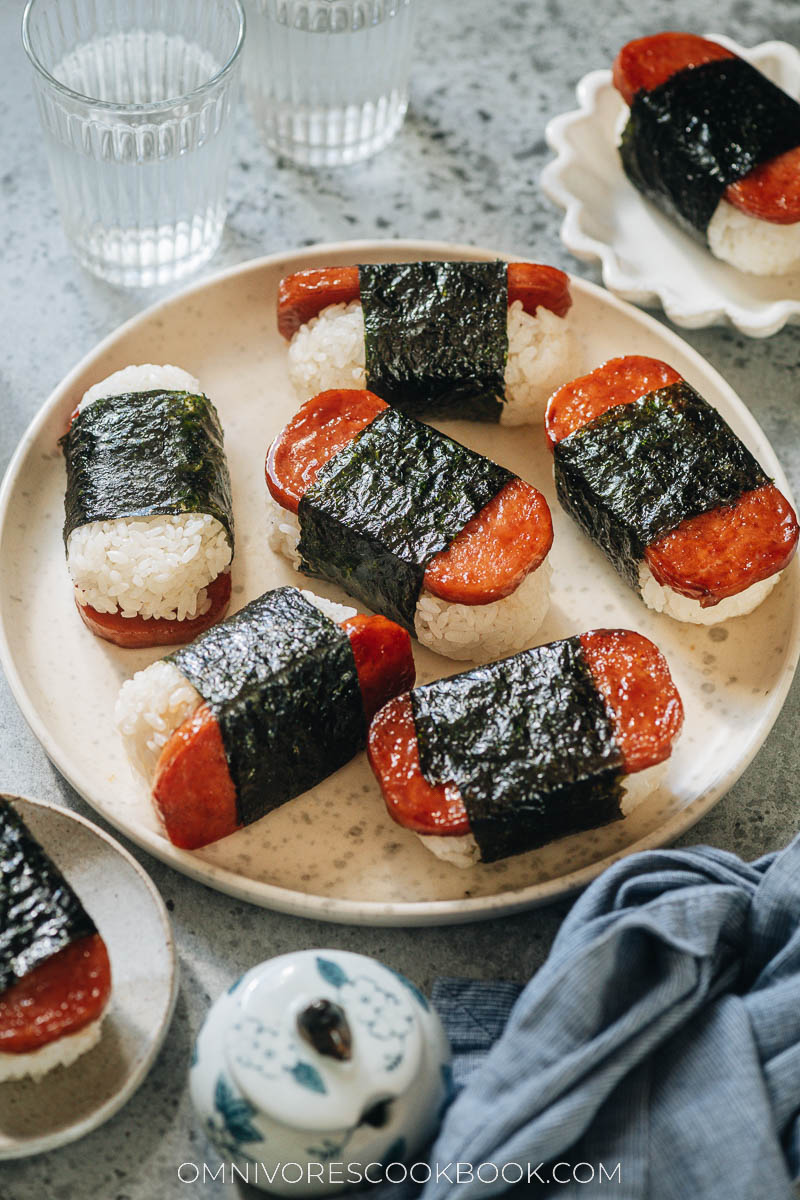
This spam musubi recipe is slightly adapted from one in the cookbook A Common Table – 80 Recipes and Stories from My Shared Culture, written by my friend Cynthia Chen McTernan, who is the author behind the award-winning blog Two Red Bowls. I decided to share her Spam Musubi recipe – a great representation of how Asian food inspired local cuisine and became a part of its culture. Even though I got to know this Hawaiian dish only after moving to the US, it makes me feel nostalgic because of the use of Spam, an ingredient that reminds me of time spent with family and friends.
Spam musubi Ingredients
You only need a few very simple ingredients to make spam musubi:
Cooked riceSpam (I prefer the low sodium type)Strips of crispy seaweed (nori)Soy sauce and sugar for seasoning
Experiment with sushi rice
The original Hawaiian spam musubi does not use sushi rice, which has added rice vinegar and sugar. But when I make my own spam musubi, I always use sushi rice. The refreshing acidic note cuts the greasiness of the Spam, mellows its saltiness, and works perfectly with the sweet taste. If you’re feeling adventurous, use the sushi rice recipe from Just One Cookbook. The extra 5 minutes is definitely worth it. Her recipe includes a rice cooker version. Check out this post if you need a detailed instruction on how to make rice on the stovetop.
Seaweed (nori)
Make sure you get the large nori sheet that is about 8” (20 cm) to 9” (22 cm) long. It is usually labeled as sushi nori, yaki nori (roasted seaweed), or laver for Gimbap (if you visit a Korean store). They usually come in large, thin, square packages. And you will need to cut them into strips for this recipe.
How to make spam musubi
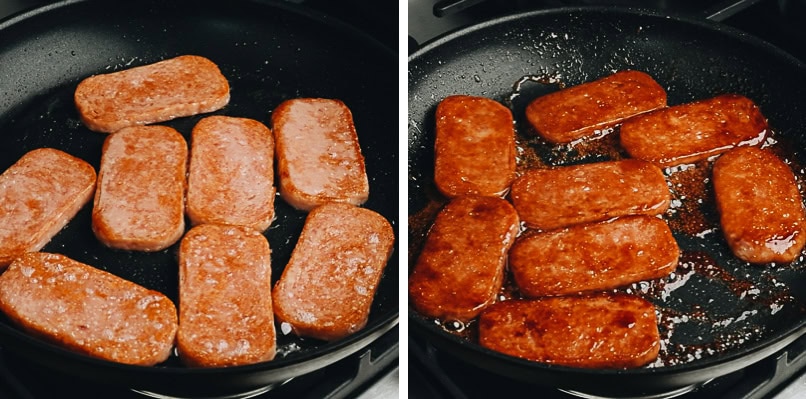
Cook the Spam
It’s very important that you brown the spam slowly and thoroughly. It renders some fat and makes a very crispy crust. Then you will use some sugar and soy sauce mixed with water to quickly braise the Spam. You will end up with a beautifully caramelized dark brown surface that is still chewy and sticky. It’s perfect.
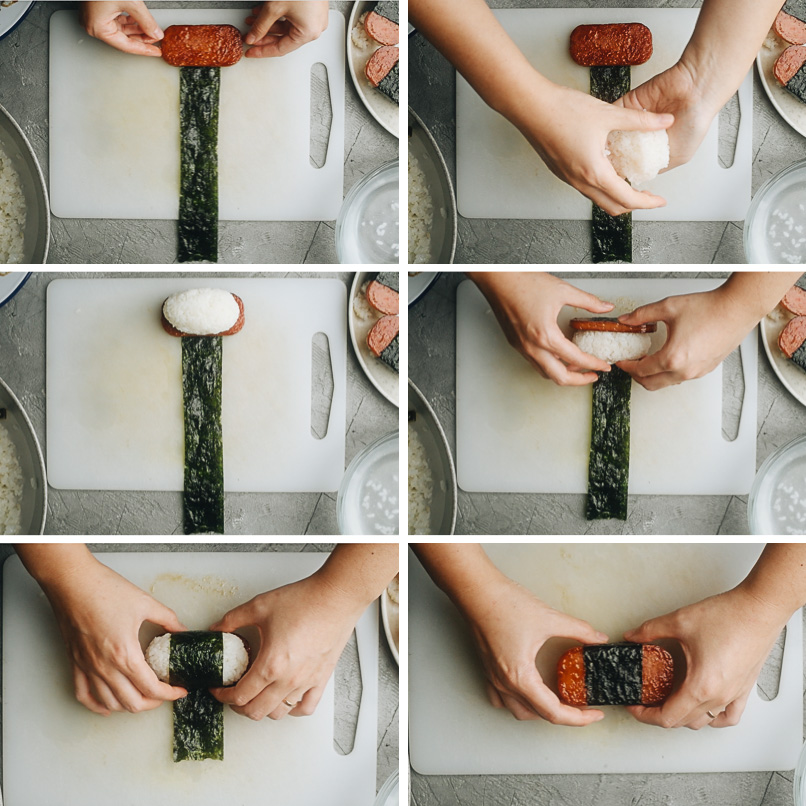
Wrapping the spam musubi
Tips on shaping the rice
You can use a musubi mold to make the rice pressing process much easier and less messy. I only included the traditional way in the recipe, where you use your hands to press the rice. If you like to DIY, you can even use a Spam can to make your own musubi mold (you need to remove the bottom of the can and cut the can a bit shorter). To make sure the rice doesn’t stick to your hands too much, make sure to always wet your hands before rolling each musubi. When you press the rice by hand, it’s important to use proper strength so that the rice is pressed together but not overly mashed. If you don’t press enough, the musubi might fall apart when you bite into it. If you press too hard, the rice texture will be too dense. It takes a bit of practice but once you make a few musubi, you’ll get the idea.
How to store and reheat spam musubi
Spam musubi will taste the best when it’s freshly made and you can appreciate the crunchy spam, tender rice, and crispy seaweed. If you serve it within a couple of hours, it’s OK to store them in a container at room temperature. For longer storage, you need to store them in the fridge. If you store them in the fridge, you should always reheat the musubi in a microwave to warm up the rice, to avoid a tough texture. I’ve not tried freezing spam musubi, but I think it’s totally OK. You should thaw the frozen musubi in the fridge completely, and reheat them before eating.
More delicious recipes for your next party
Air Fryer Chinese Chicken WingsCurry Egg Salad Wonton CupsPork Lettuce Wrap (San Choy Bow)Old-Beijing Fried Carrot Fritters (炸素丸子)Chinese Fried Stuffed Eggplant (炸茄盒, Zha Qie He)
This spam musubi recipe is slightly adapted from the cookbook A Common Table – 80 Recipes and Stories from My Shared Culture, written by my friend Cynthia Chen McTernan