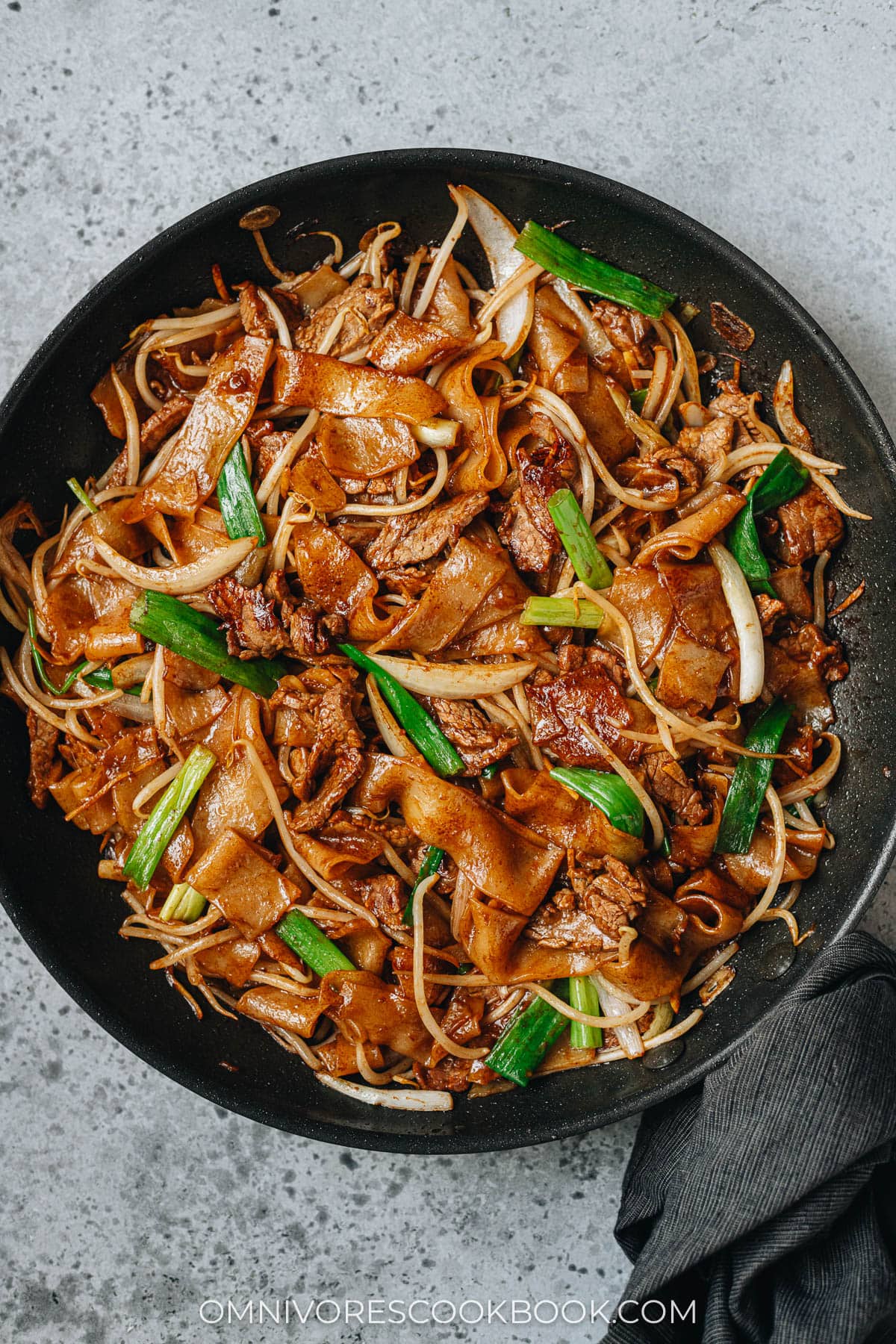
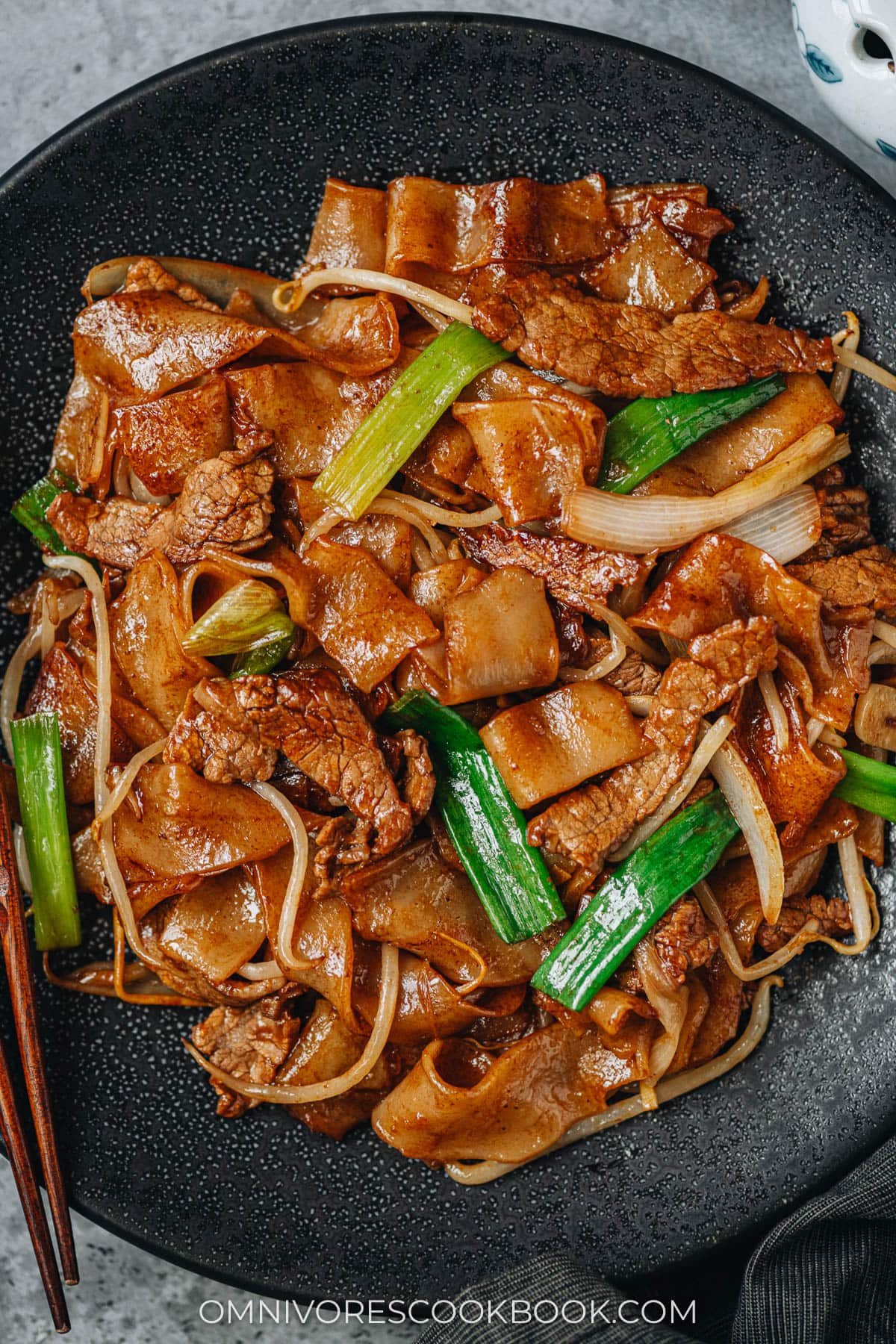
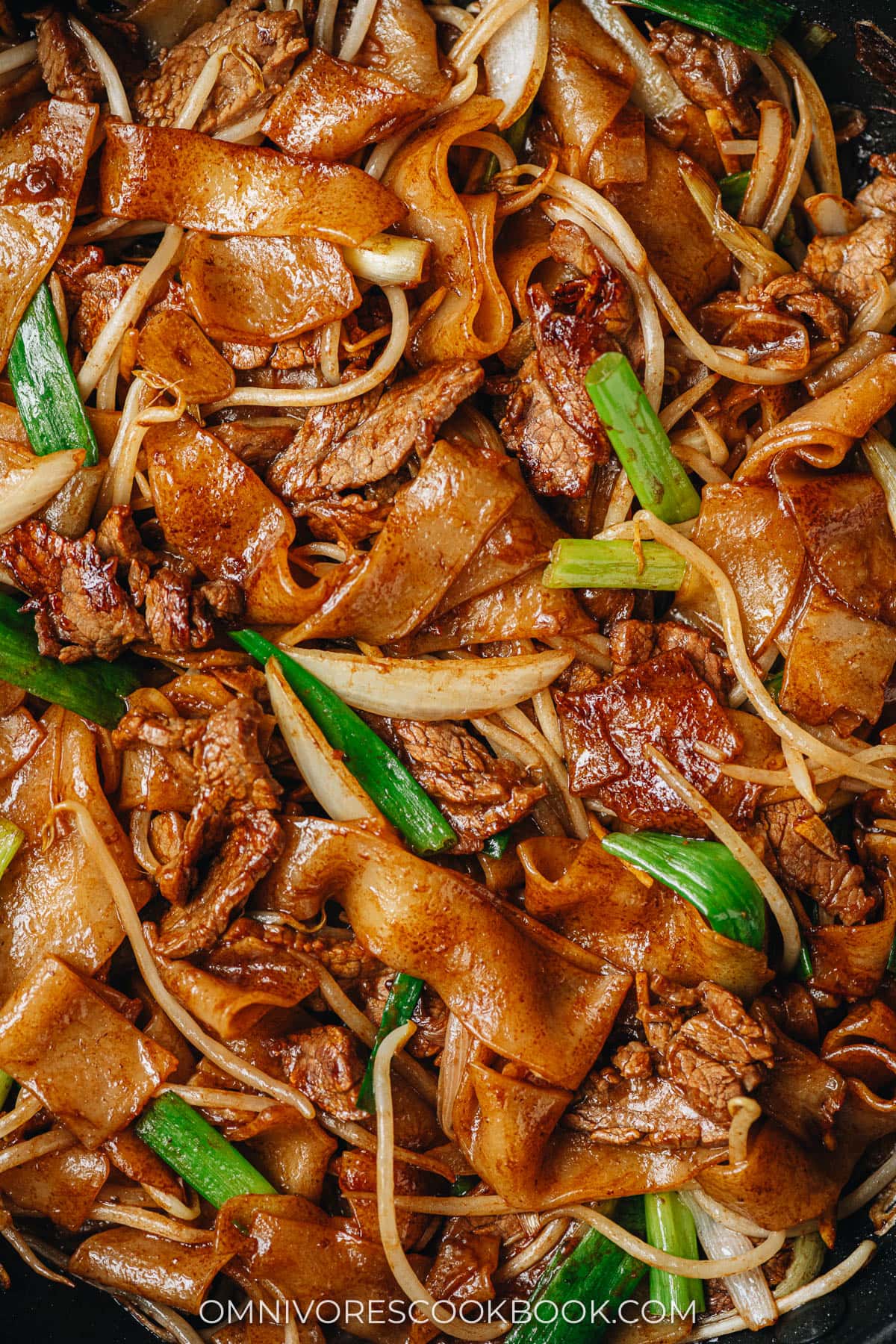
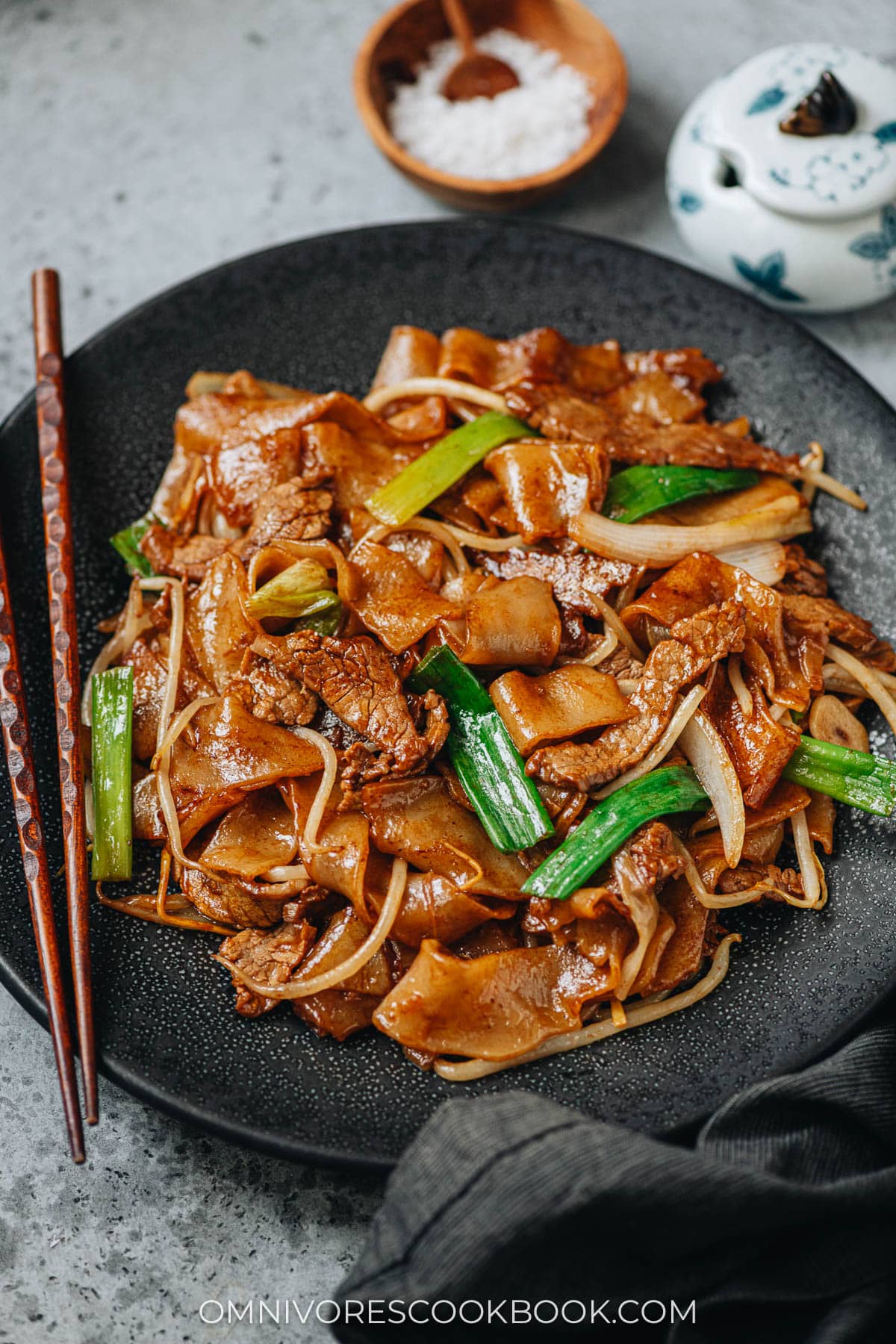
Beef chow fun is a classic and popular Cantonese dish that everyone loves. The dish combines wide rice noodles (ho fun) with beef slices and vegetables stir fried with aromatics and a brown sauce. It might be a dish that you often order from a Chinese restaurant. But did you know that it’s quite easy to make it in your own kitchen as long as you can gather the right ingredients?
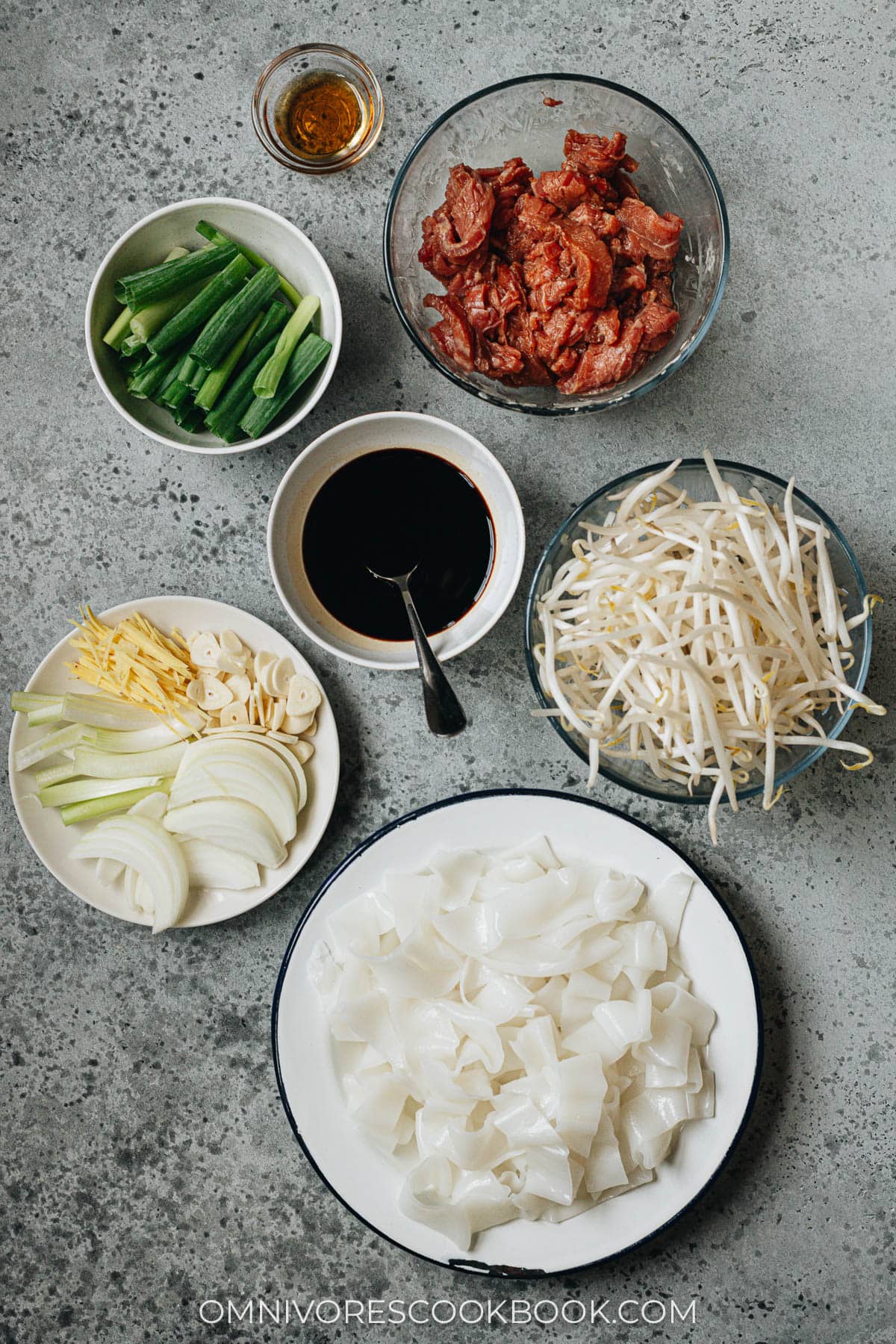
Beef chow fun ingredients
What type of rice noodles to use?
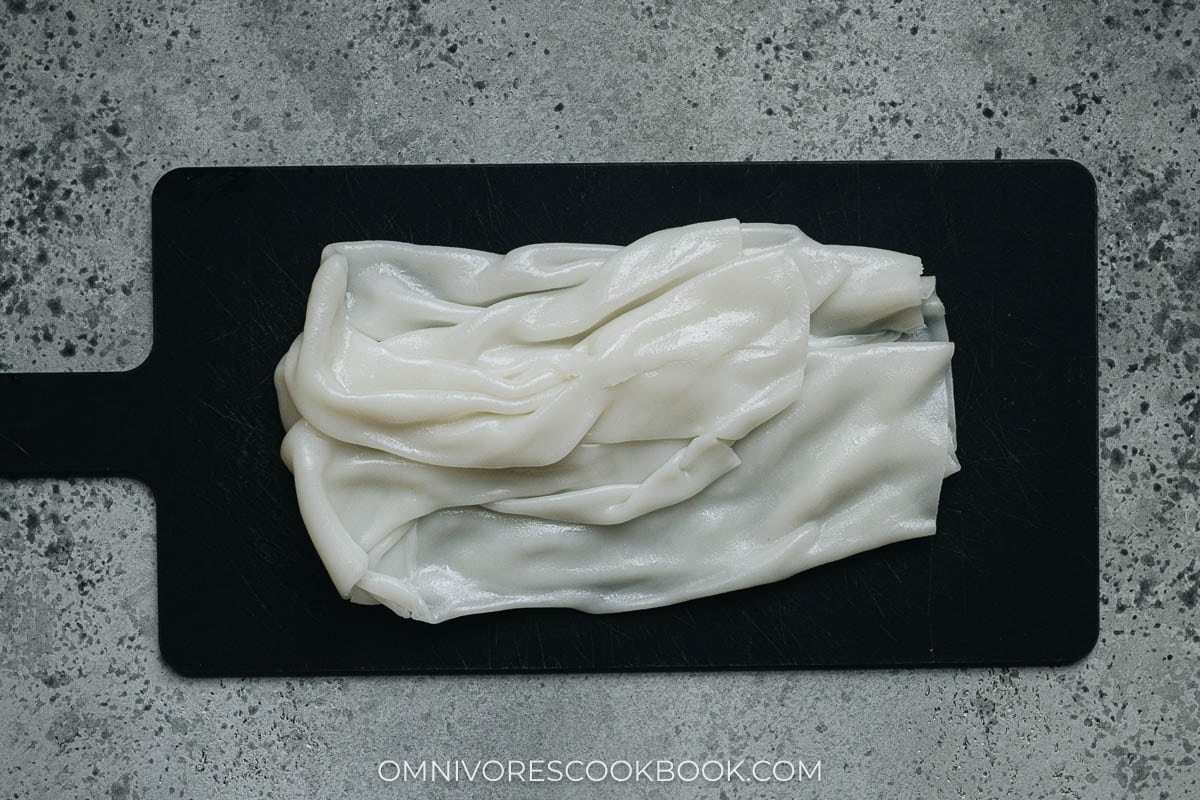
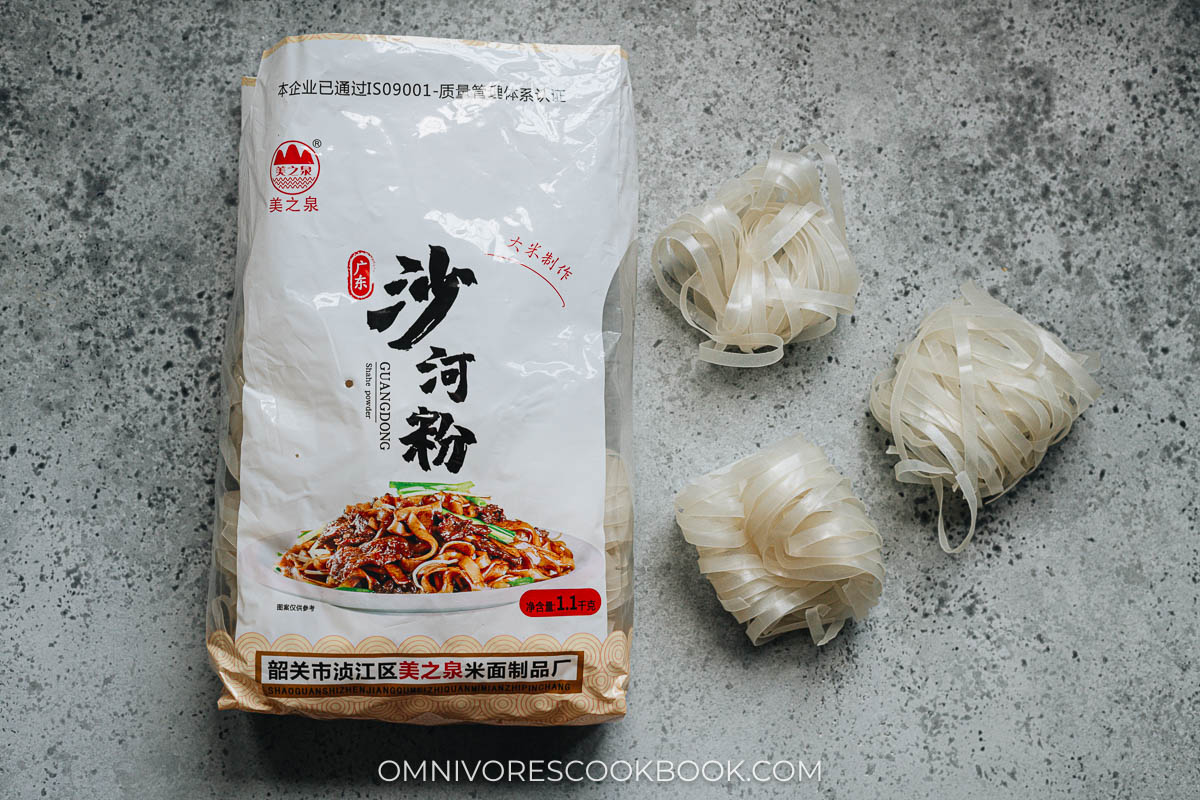
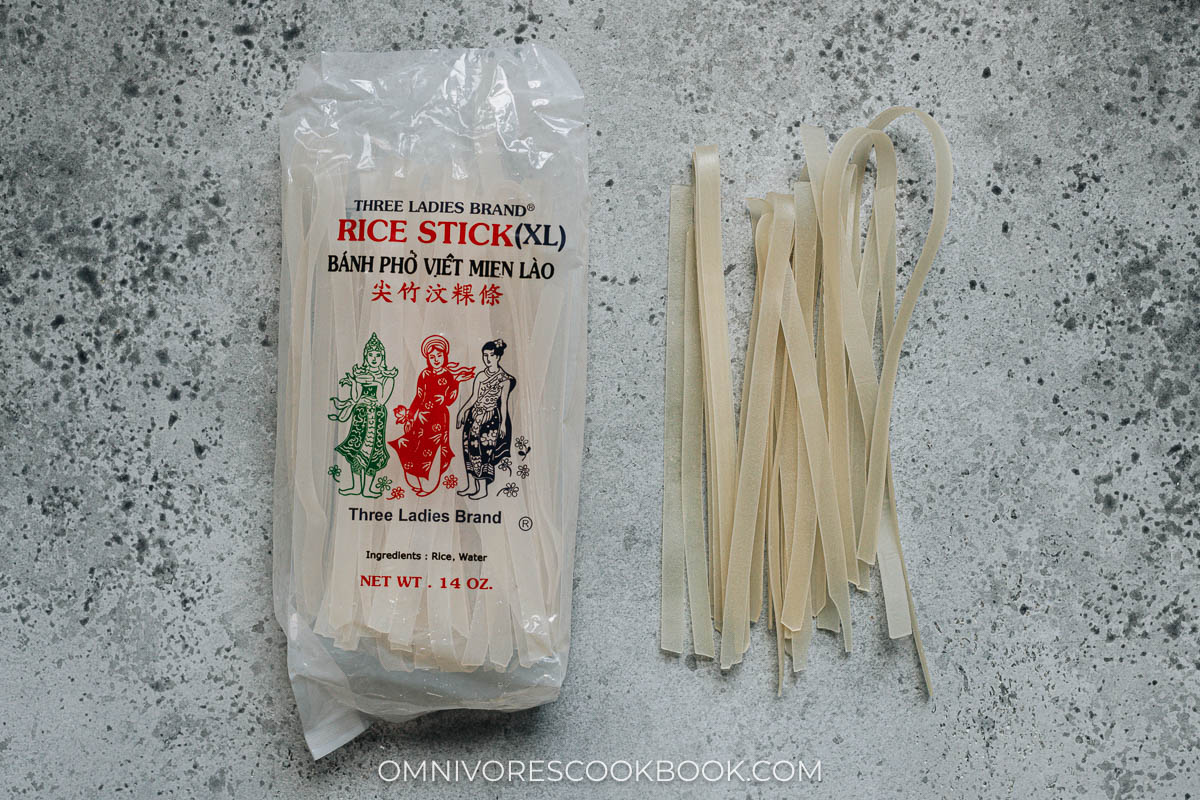
The type of rice noodles you use makes the biggest impact on beef chow fun. Fresh rice noodles The best type of rice noodles are the fresh rice noodles and it’s the type we always use in China. They are fat, chewy noodles made with rice flour and water. Sometimes they are sold in large sheets, and sometimes cut into noodles. You can find them in Chinatown, Chinese markets, and Thai markets. The noodles are usually in a plastic bag and sold with other fresh ingredients (not refrigerated). It’s the best type of noodle to use, if you can find them, because they yield the best texture. Dried Chinese ho fun Sha he fen (沙河粉), also known as ho fun or sha hor fun, are wide, flat rice noodles that originate from the town of Shahe in Guangzhou, China. These noodles are a staple in Cantonese cuisine and are known for their smooth, slightly chewy texture. My favorite type of dried ho fun is the one from the Mala Market. Once cooked, it has a thin, light and smooth texture, and it absorbs sauce very well. Dried Thai or Vietnamese rice noodles The other more commonly seen rice noodles are the Thai or Vietnam type. Both Taste of Thai and Three Ladies have the wide type that is great for beef chow fun. Compared to the Chinese sha ho fun, the Thai and Vietnamese type rice noodles are thicker and chewier. You might prefer this texture depending on your personal taste, but I think the Chinese style works slightly better in this dish.
A word on beef chow fun sauce ingredients
There are many ways to put together the beef chow fun sauce. I’ve seen many recipes that use oyster sauce. But my Cantonese chef friend told me that they only use soy sauce, for a cleaner, more refreshing taste. My beef chow fun only contains four ingredients:
Chicken broth Light soy sauce (for umami) Dark soy sauce (for the light caramel flavor and the dark brown color) Sugar
If you use plenty of fresh aromatics (like in this recipe) and some good rice noodles, you only need this simple sauce for a very flavorful noodle dish that is full of umami.
Mise en place
Since cooking beef chow fun requires you to move quickly, you want to have everything prepared prior to the stir fry:
Sliced and marinated beef Mixed sauce Sliced aromatics (onion, green onion white part, ginger, and garlic) Bean sprouts Prepared rice noodles Sesame oil
Note, I grouped some ingredients together because you will add them at the same point in the stir fry. It makes the workflow easier, plus you’ll have fewer plates to wash.
How to cook beef chow fun
Prepare the rice noodles
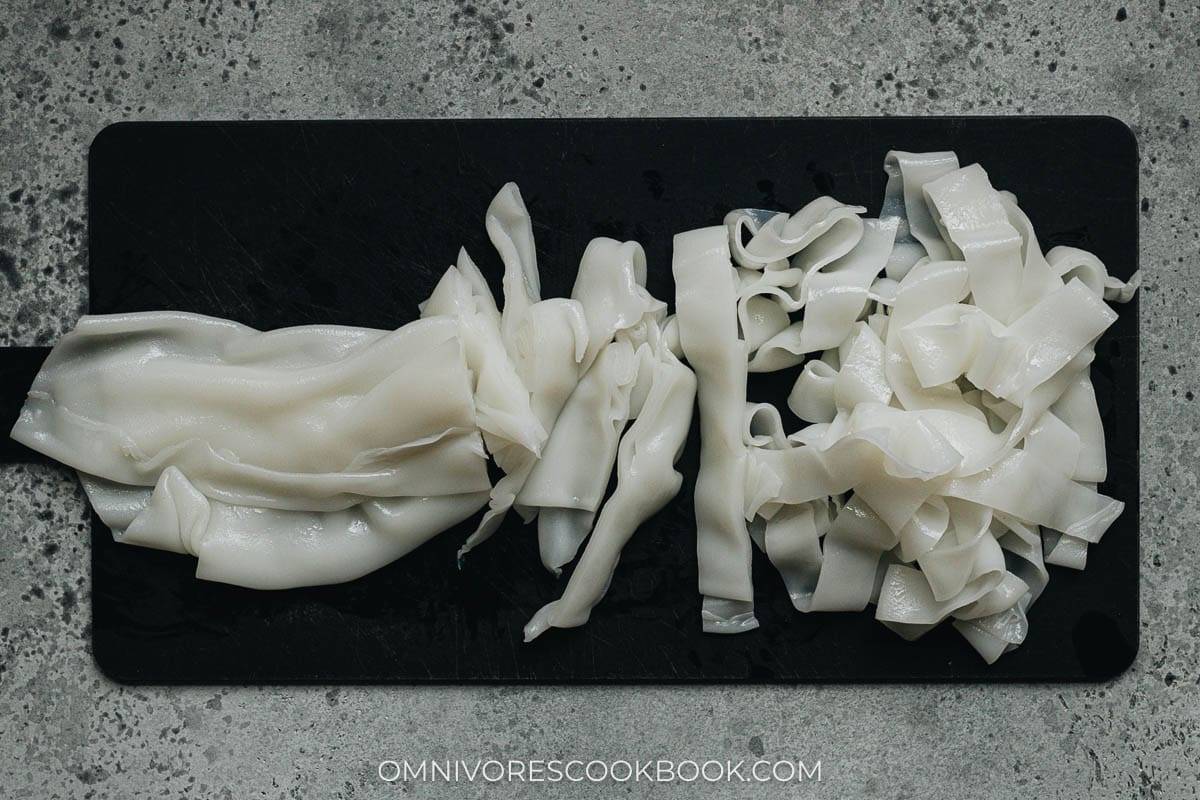
Dried rice noodles If using dried rice noodles, you will need to pre-soak or cook them prior to the stir fry. You should always follow the package instructions, but soak or cook the noodles a little shorter for an al dente texture. This way, the noodles won’t fall apart easily during the stir frying and will keep a nice, chewy texture. Fresh rice noodles If using fresh noodles, you will need to cut the rice noodle sheets into wide noodles. After cutting, use your fingers to separate the noodles so they don’t stick together. NOTE: Do not use water to rinse the noodles. It might make the separation process easier, but this step makes the noodles soggy and prone to falling apart during the stir fry. You should also avoid storing the fresh noodles in the fridge, which makes them rigid and hard to separate later.
Make the stir fry
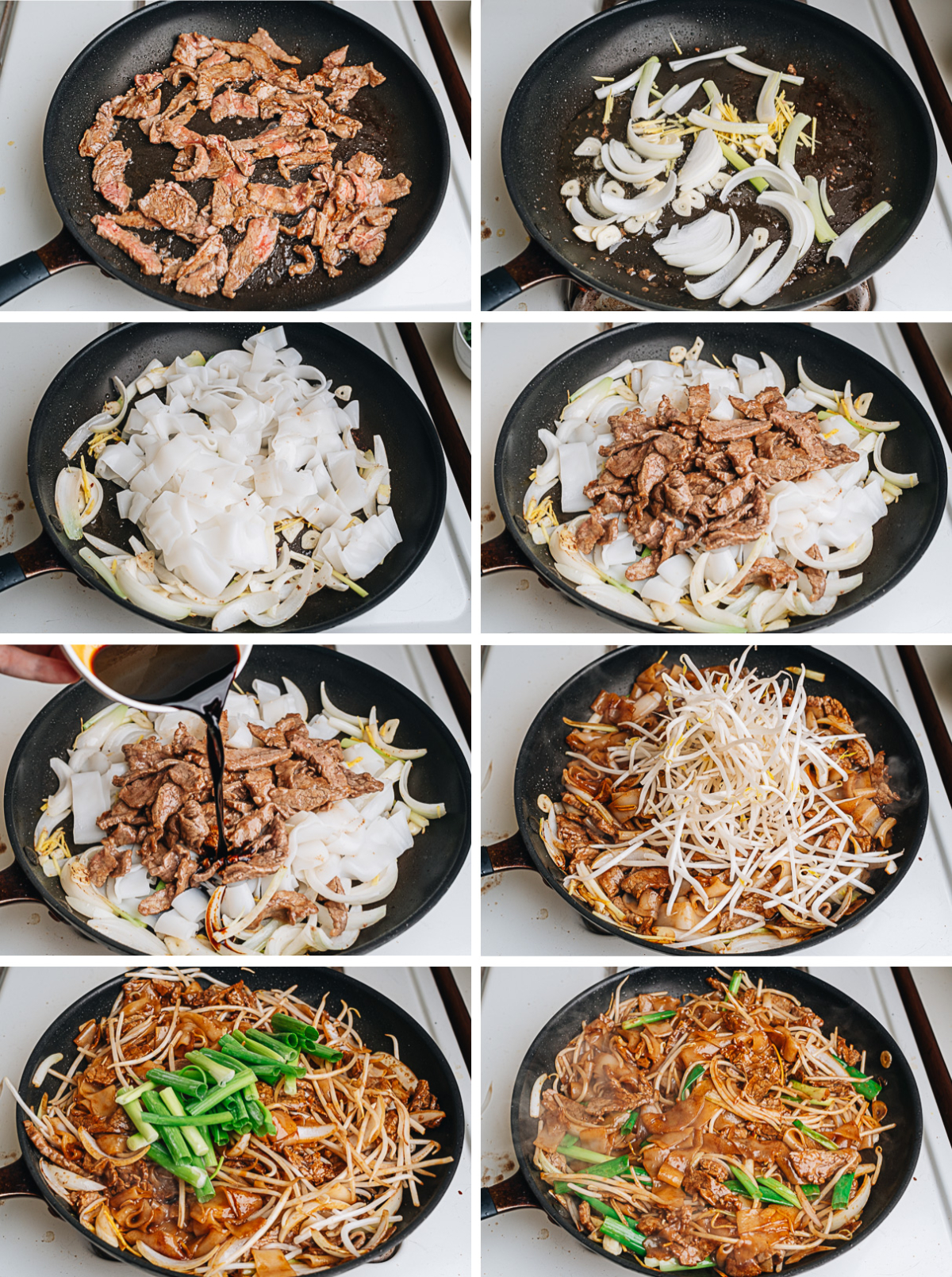
Making beef chow fun is quite easy once you have all the ingredients ready: Once done, you will have a plate of super fragrant noodles that taste just like the ones you find in Chinese restaurants. The noodles will be chewy and full of flavor, the beef juicy and tender, and the vegetables crunchy and crispy.
Cookware for making beef chow fun
You don’t need a wok
If you look at any authentic beef chow fun recipe, it always calls for a wok and a gas range. However, this setup might not be practical for every home cook, especially when you have an electric stove, or a gas stove that is not super powerful. Read more on why I do not recommend a wok for beginners, and how to choose between a wok and a skillet for your stir fry station. If you follow my recipe, you can achieve great results with a large nonstick skillet.
Prepare a large skillet with a pair of tongs
If possible, pick a heavy nonstick skillet for your beef chow fun and every other stir fry you cook. We are not using a wok here, but high heat is still a crucial factor to creating a great dish. The reason we need a large skillet is that it will heat up faster on an average range due to its large contact surface. And a heavier pan always holds heat better, so the pan temperature won’t drop the second you add in the sauce; such a drop would cause all your ingredients to be steamed instead of seared. A pair of tongs (or cooking chopsticks) is a must-have for tossing noodles, so you don’t end up splashing half of the ingredients onto your kitchen counter.
How to make the perfect beef chow fun
(1) How to create juicy tender beef with a perfectly seared surface
First, always cut against the grain. It is OK to slice the beef thinly, such as 1/8-inch thick pieces. Or you can cut it into 1/4-inch thick strips. Your call. Second, always marinate the beef and use some cornstarch in your marinade. Not only will it make your beef extra flavorful, but it will also tenderize the meat and protect it from overcooking. It’s an “ancient” Chinese cooking hack that I use even when searing meat for pasta and other Western dishes. If you follow these two steps, you can choose almost any cut of the steak and still produce great results. However, my favorite choice is always flank and skirt steak, which are cheaper in price, yet well-marbled.
(2) Use a generous amount of oil
Do not skimp on the oil when making beef chow fun. If you order this dish in a restaurant, sometimes you even see oil pooling on the bottom of the dish. The homemade version uses less oil than the restaurant, but you still need enough to properly cook the noodles. The oil not only prevents the noodles from sticking and falling apart, it also infuses the great flavor from all the aromatics to make the noodles tastier. You also need to use more oil if you do not use a nonstick pan, because rice noodles tend to stick to the pan.
(3) When it comes to fried noodles, less is more
Just like with pizza toppings, using fewer ingredients will yield better results because the ingredients won’t crowd your pan and transform the noodles into a stew.
(4) How to replace ingredients
Beef chow fun is a very versatile dish and you can tweak it with other ingredients you have at home. In fact, I’ve asked my Cantonese friends about this dish and everyone has their own version. Feel free to add some vegetables such as gai lan (Chinese broccoli) or bok choy. You can skip the bean sprouts and use a bit more white onion for texture. As a rule of thumb, you want to use some crisp, crunchy veggies to enhance the texture of the dish.
Want to learn more about stir fry?
Check out my most popular posts below:
7 Best Chinese Stir Fry Sauce Recipes Scallion Beef Stir Fry (葱爆牛肉) Chinese Eggplant with Garlic Sauce General Tso Tofu (Crispy Tofu without Deep Frying) Sweet and Sour Chicken (Without Deep-Frying)
Recipe update notes This recipe was published back in 2017 and I updated it in 2024. I’ve made it countless times over the years, trying to perfect the recipe. In the latest version, I eliminated the broccolini and increased the amount of bean sprouts, to give the dish a more authentic presentation. For the sauce, chicken broth is used in place of Shaoxing wine for a more balanced taste. The ratio of light and dark soy sauce was slightly adjusted for the perfect dark brown color (Total is still 3 tablespoons. Depending on the dark soy brand you use, you might still want to use 2 tablespoons light and 1 tablespoon dark.)