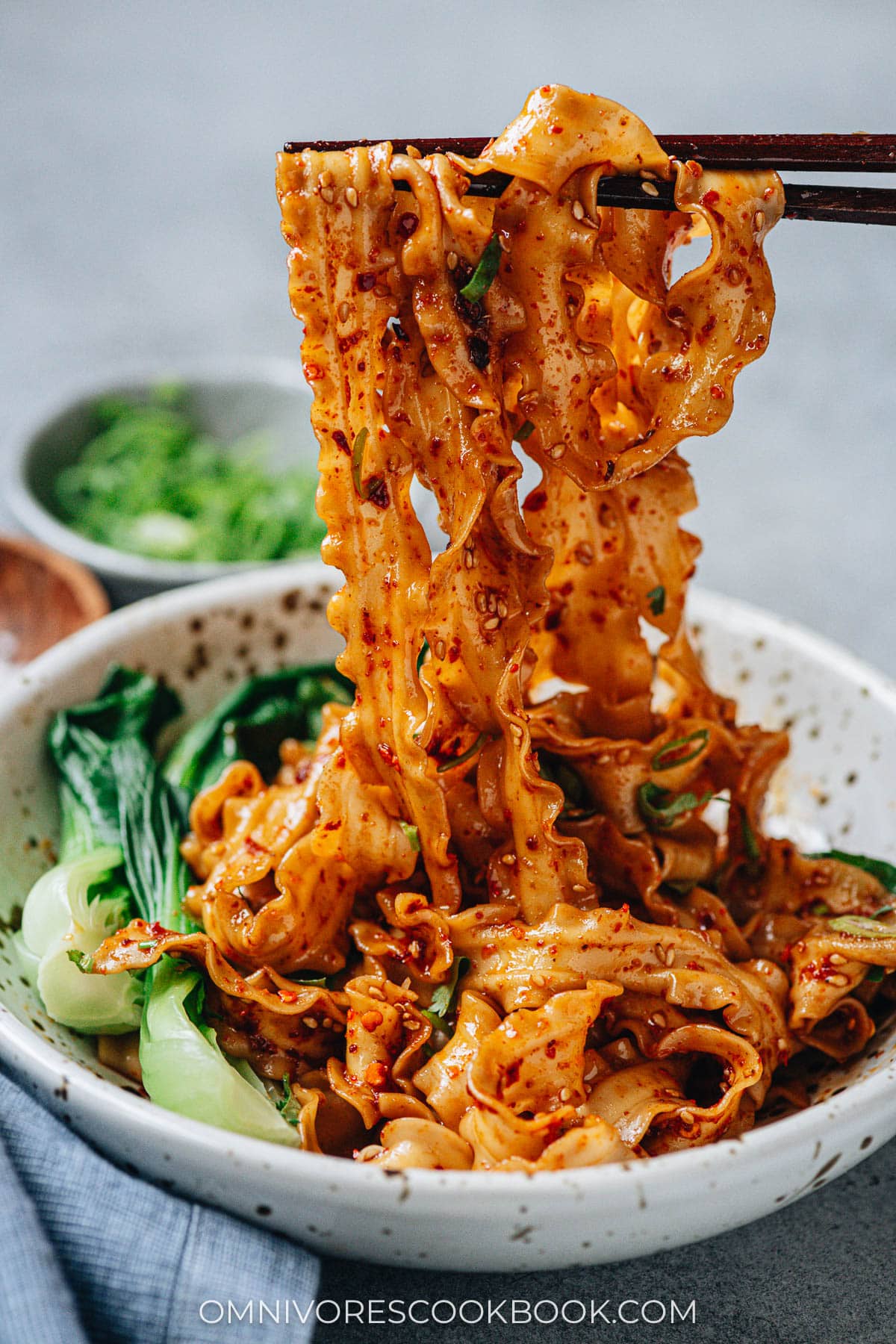
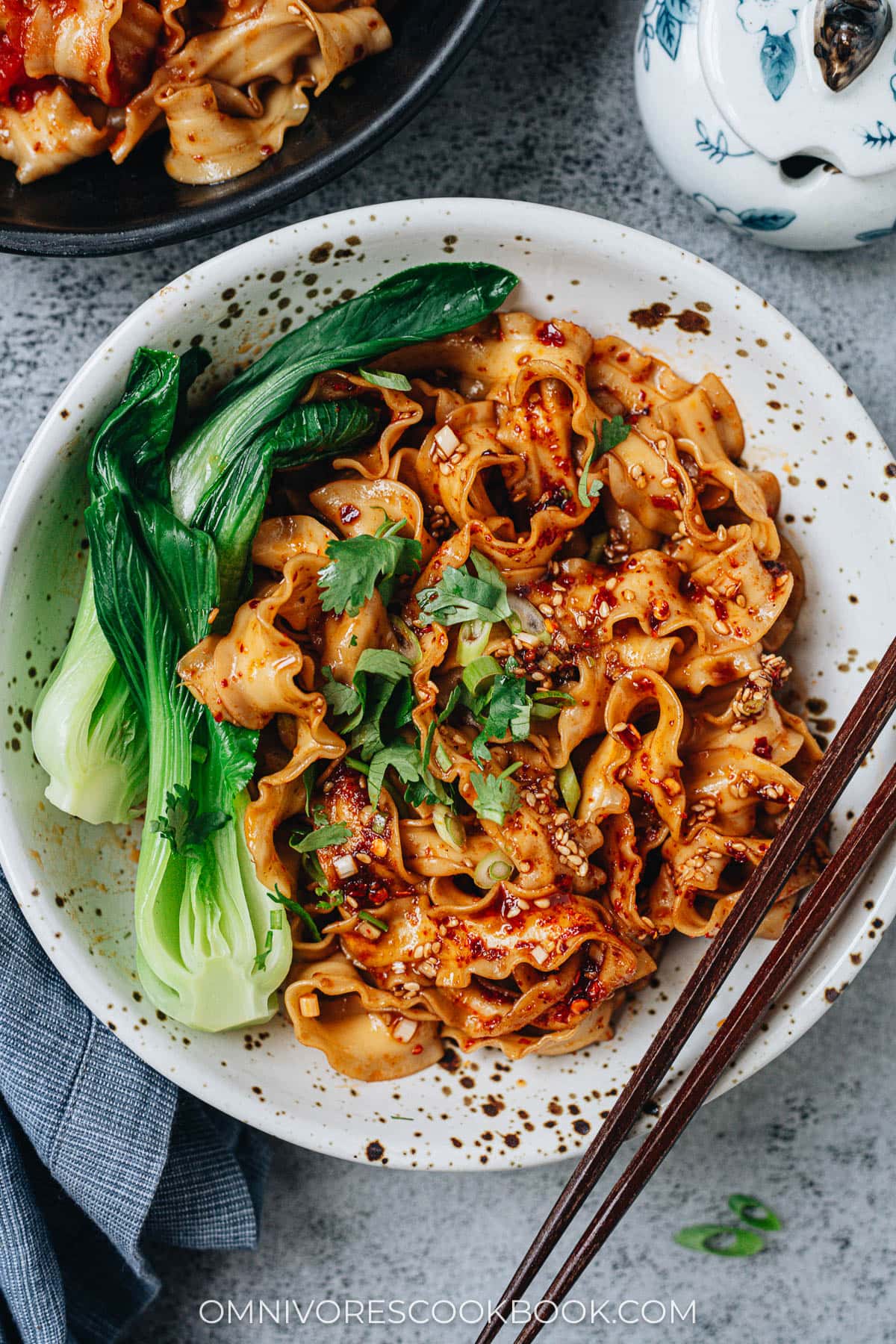
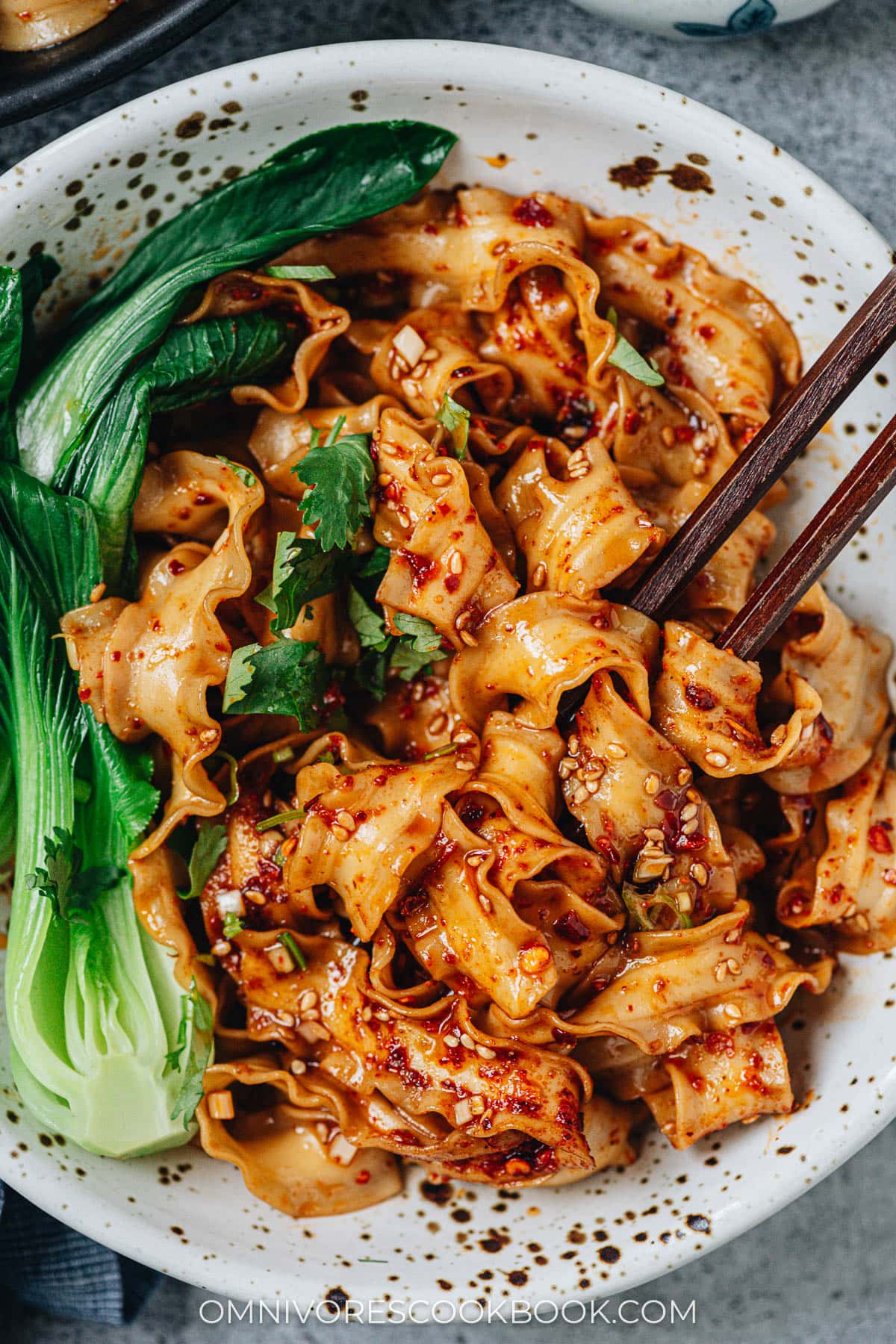
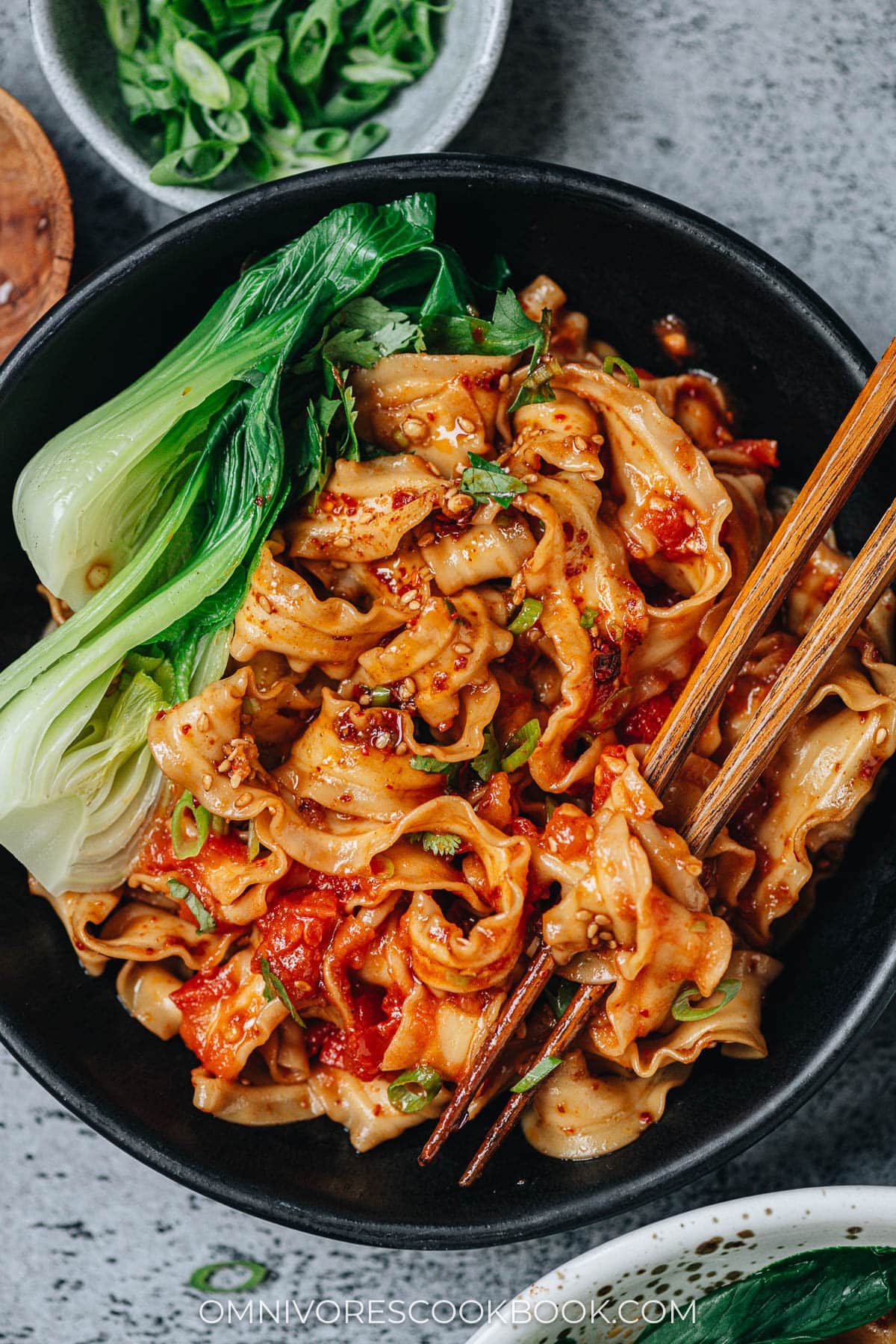
Biang Biang noodles (also called Yu Po Mian, 油泼面) are a type of Chinese noodle originating from Shaanxi province. The word “biang” is an onomatopoeia – it mimics the sound made in the process of making the noodles, when the dough is pulled and slapped against the working surface. Known for their length and thickness, these noodles are hand-pulled, creating a chewy texture. They are served in a spicy, tangy sauce made with chili oil, soy sauce, vinegar, ginger, garlic and Sichuan peppercorns. The dish is known for its bold flavors and distinctive preparation method by pouring hot oil into the spices (literally translated to Yu Po, or pouring hot oil). The character for “biang” is also famously complex, with many strokes, making it one of the most intricate Chinese characters. If you ever try this dish, even once, you’ll learn that its popularity is due to its simplicity and great flavor.
Why this recipe
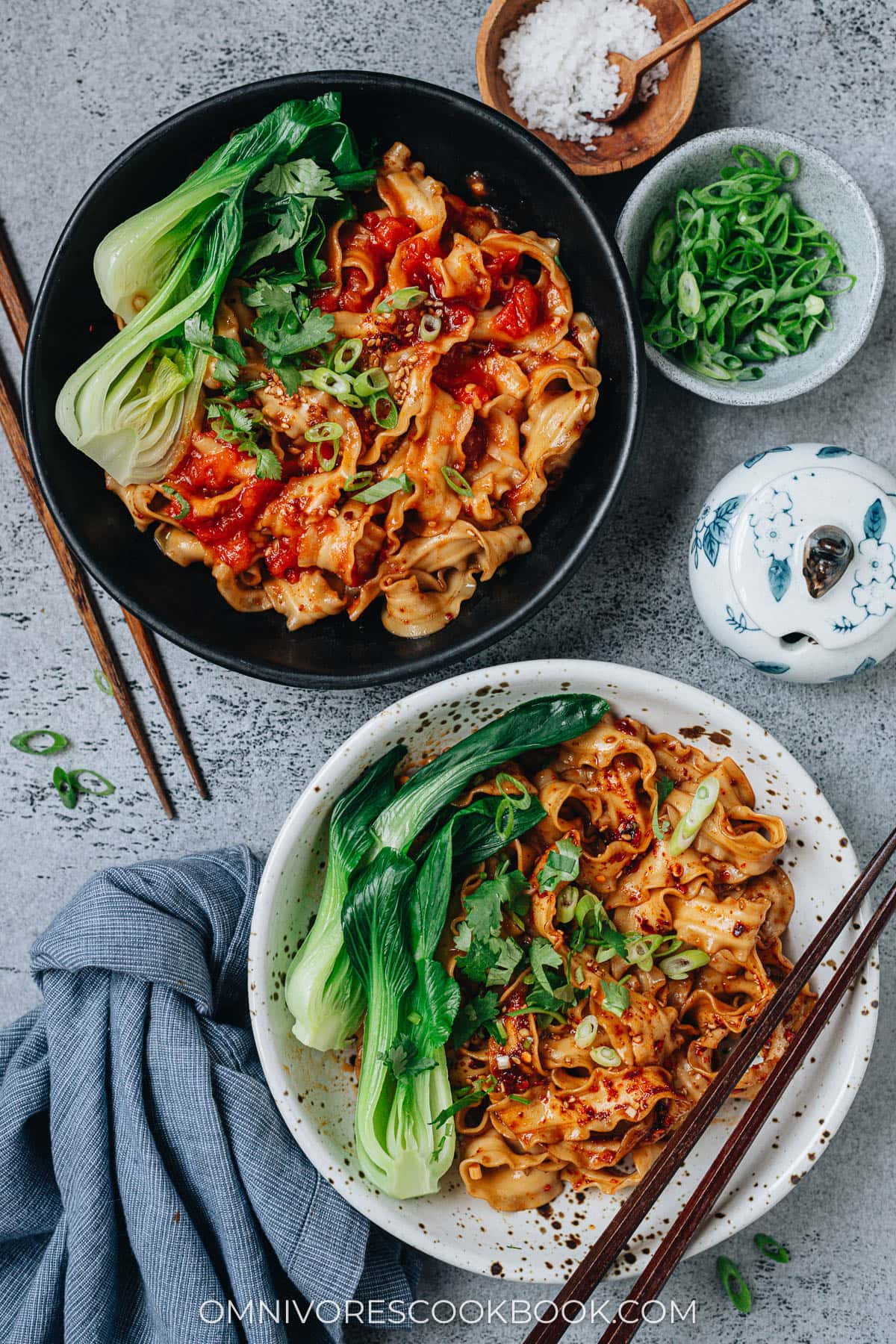
I had the best bowl of Biang Biang noodles when I was visiting Xi’an (the city of origin for this dish) with my husband Thomas. It wasn’t even a famous restaurant, just a random small shop that we came across on the side of the road. The big bowl of fat noodles was topped with a savory tomato sauce, and a complex and well balanced chili sauce. It was so simple, yet also rich and satisfying. When trying to recreate the Xi’an version of these noodles at home, I tried several methods and finally found a perfect one. My recipe uses:
Well balanced savory sauces with soy sauce, vinegar, and sesame oil for the base. Chili flakes with other hidden flavors such as Sichuan peppercorns and cumin powder for a more complex chili oil. A simple two-ingredient tomato sauce to further enhance the taste and texture, rounding out the spiciness of the chili oil.
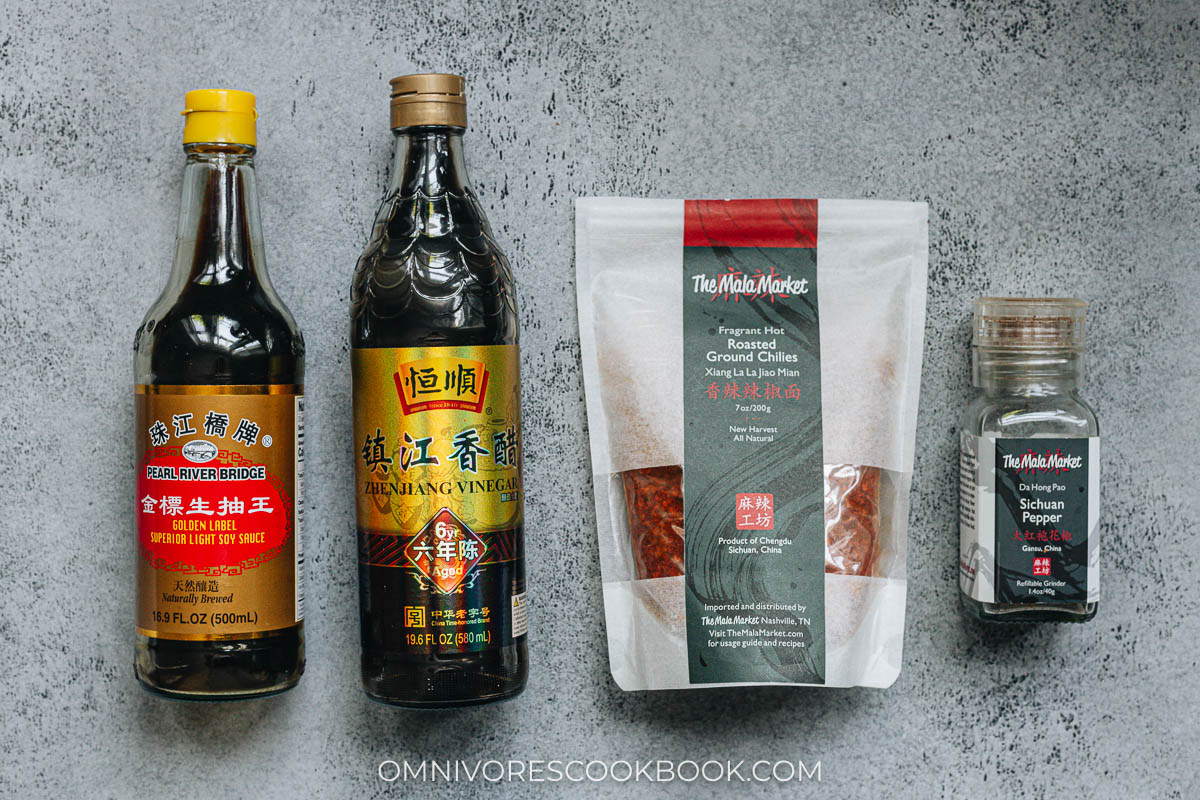
Ingredients for biang biang noodles
What type of noodles to use
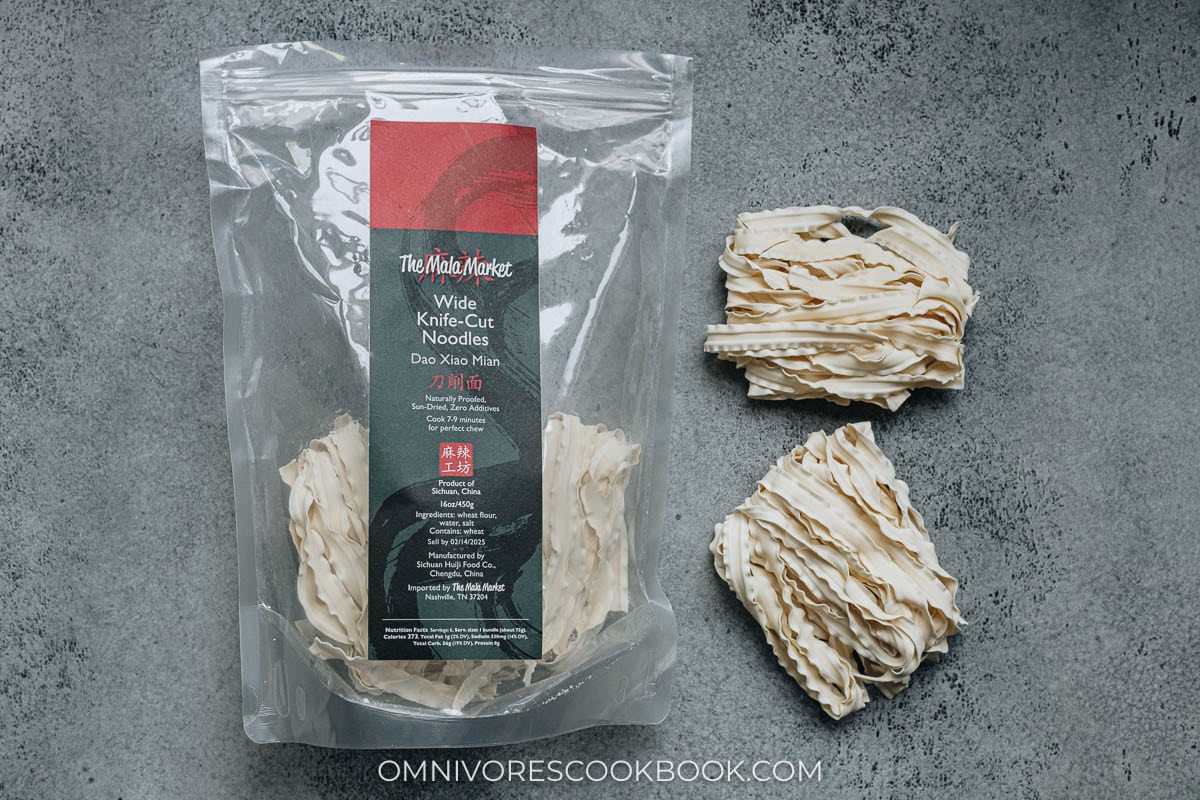
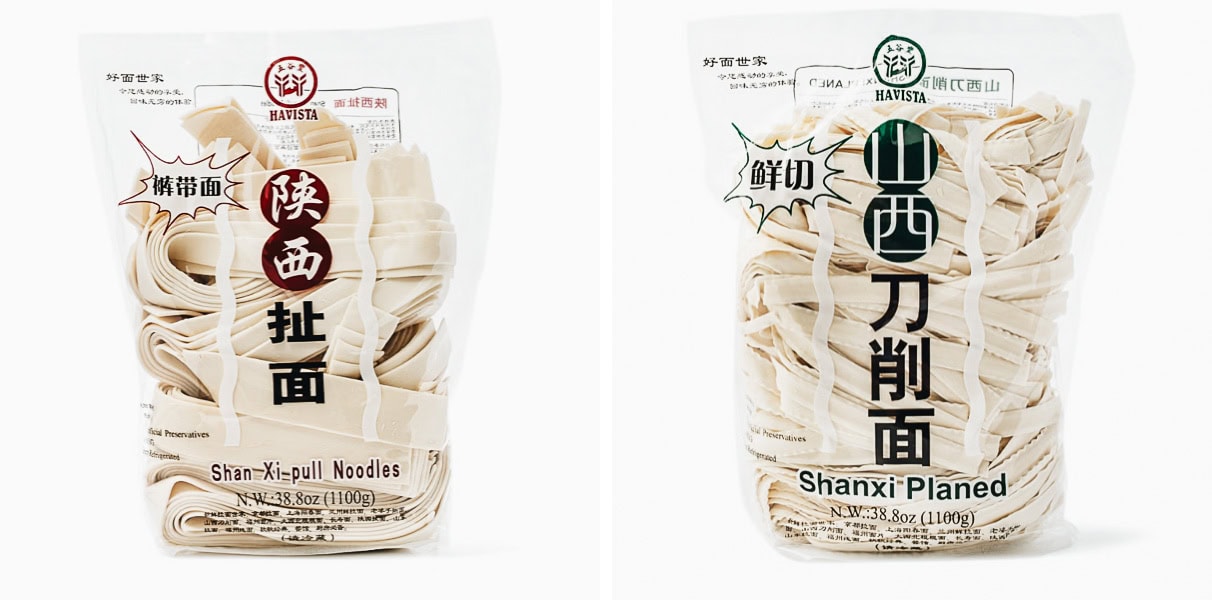
Noodles are one of the most important components of the dish. For the best result, I highly recommend making your own hand-pulled noodles (the extra wide type in my recipe). It yields chewy noodles with the best texture. The next best option is semi-fresh noodles that have a wide shape. The Havista brand Shan Xi Pull Noodles and Shanxi Planed Noodles are both great options. For these noodles, you can often find them in the refrigerated section of Chinese grocery stores or large Asian markets such as H-Mart. In my recipe, I used the Dried Wide Knife Cut Noodles from The Mala Market. You can purchase them online and they stay in your pantry much longer.
Chinese chili flakes (辣椒面)
Chili flakes are another important ingredient. To prepare biang biang noodles, you will be pouring hot oil over the chili flakes and other spices to make a chili oil. And chili flakes are the main ingredient for a great tasting sauce. The Chinese chili flakes used in this recipe are a coarse ground blend with a few types of Chinese chili peppers, ranging from smoky peppers to spicy peppers. The chili oil made with these chili flakes is moderately spicy and very fragrant, with a beautiful bright red color. I highly recommend the chili flakes from The Mala Market, because they source the freshest spices directly from Sichuan, China.
Other seasonings
Chinese soy sauce (both the light and the dark type) and Chinkiang vinegar make the base of the biang biang noodle sauce. I also used Sichuan peppercorns and cumin powder as hidden ingredients. Fresh ginger, garlic and green onion, plus sesame oil add extra aroma and umami to the dish.
How to make biang biang noodles
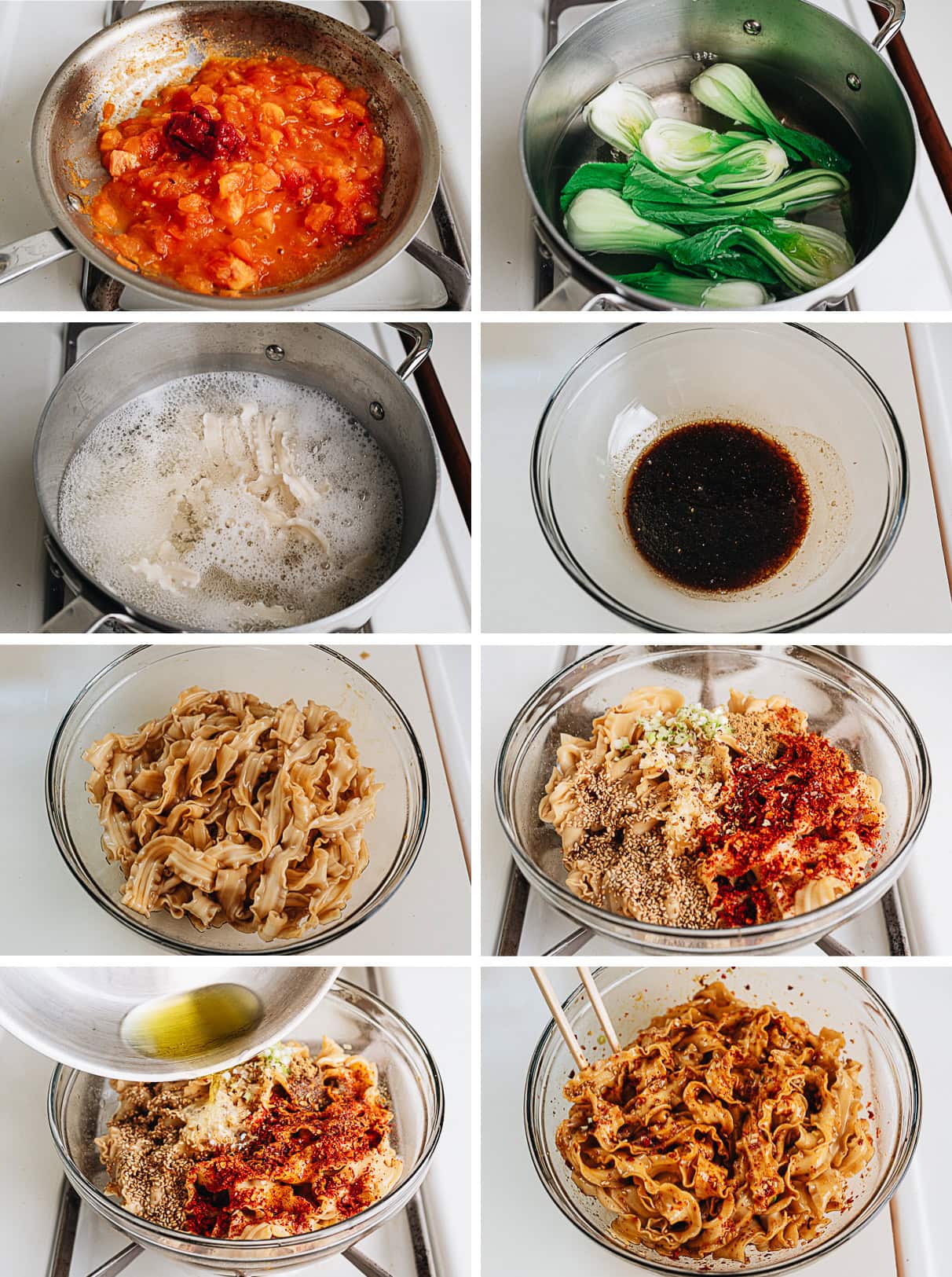
Making biang biang noodles requires a few simple steps: The hot oil will briefly cook the spices and aromatics, making a fresh rich chili oil that is bursting with umami. It’s important to spread the spices evenly, then drizzle the hot oil onto all the spices, as much as possible. The hot oil draws out the fragrance of the ingredients and makes the sauce extra delicious. I like to add a tomato sauce onto my biang biang noodles. The sour taste and tender texture of the tomato balance out the spiciness of the chili oil, making the dish more rounded with a better mouthfeel. But it’s also OK to skip the tomato sauce, if you prefer to keep the dish very simple. If you order biang biang noodles in China, the restaurants usually assemble the noodles and the spices individually. In this recipe, I made two servings together in a big bowl so it cuts down on the cooking steps.
How to serve biang biang noodles
You can serve biang biang noodles as a side dish or a main dish for a light lunch. In China, it is often served as a savory snack that you can enjoy at any time of day. You can pair biang biang noodles with these dishes for a satisfying meal:
Cucumber salad Xinjiang Lamb Skewers (新疆烤串, chuar) Air Fryer Salt and Pepper Chicken Chinese Corn Soup with Chicken (鸡蛋玉米羹) Chinese Beef Salad Pork and Cabbage Stir Fry Dried Tofu and Celery Stir Fry (西芹炒香干)