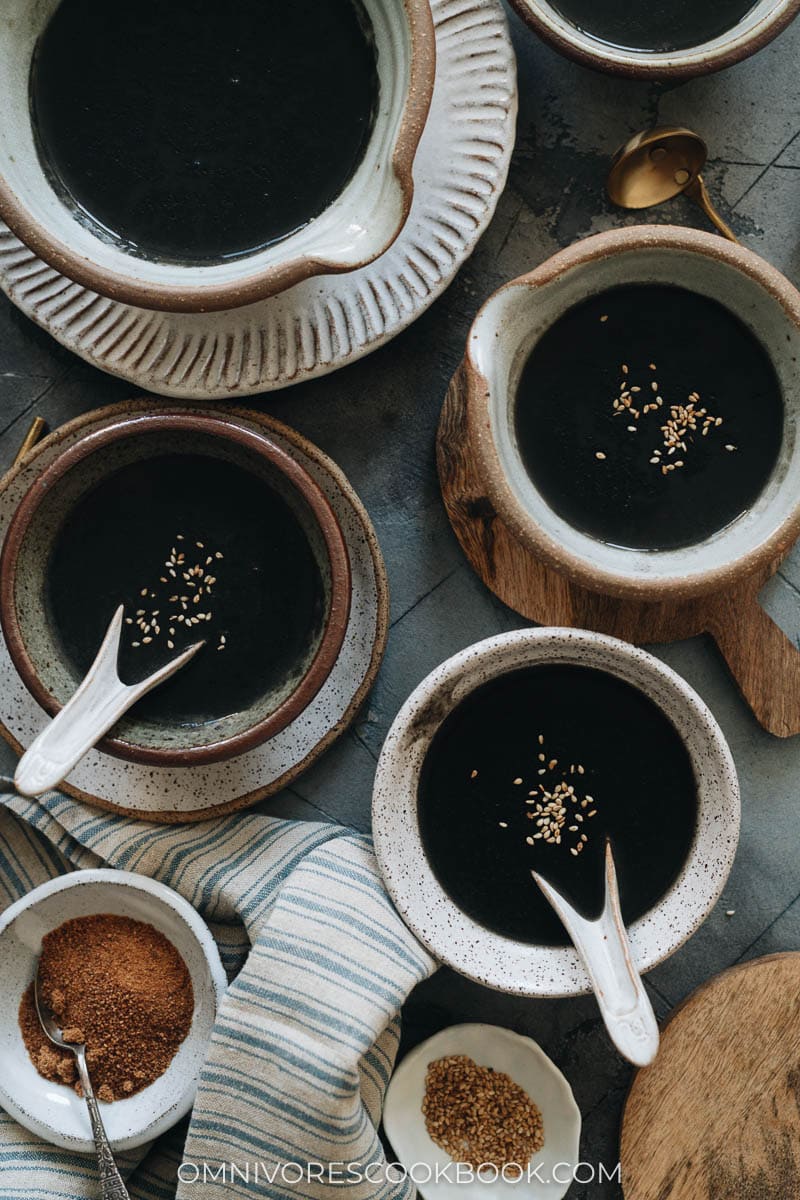
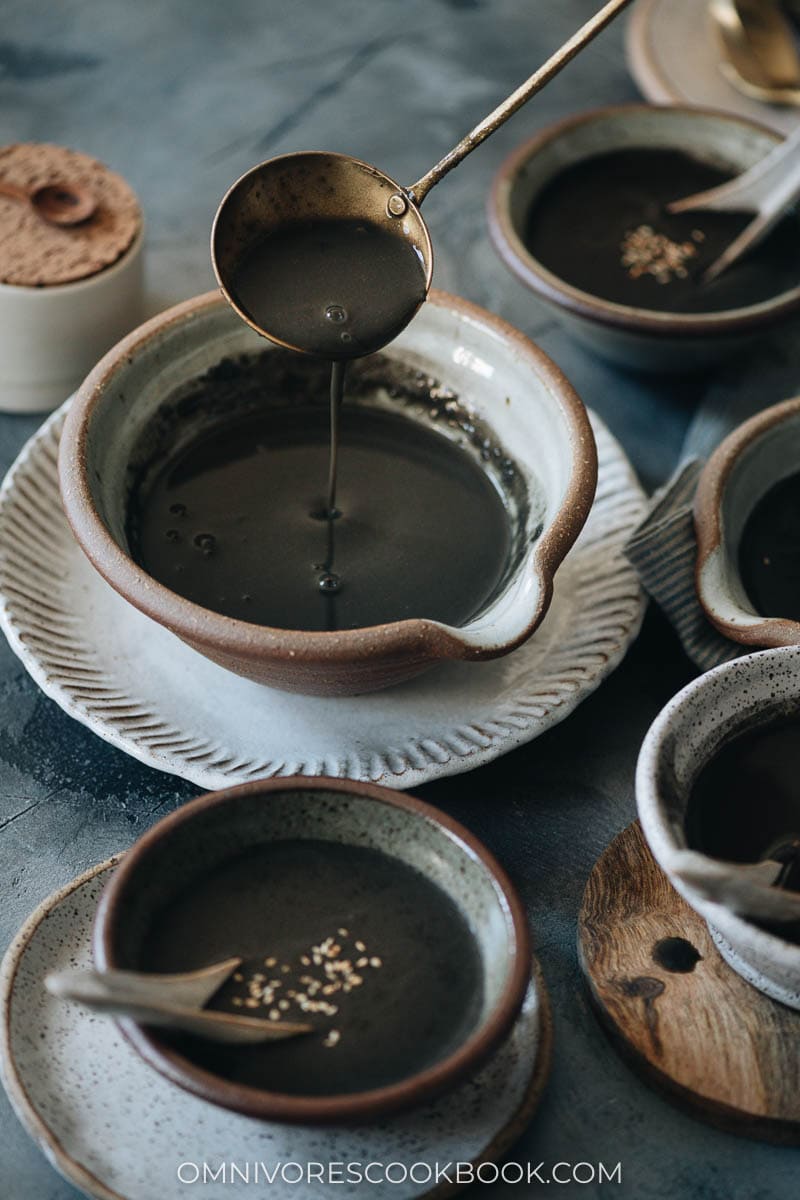
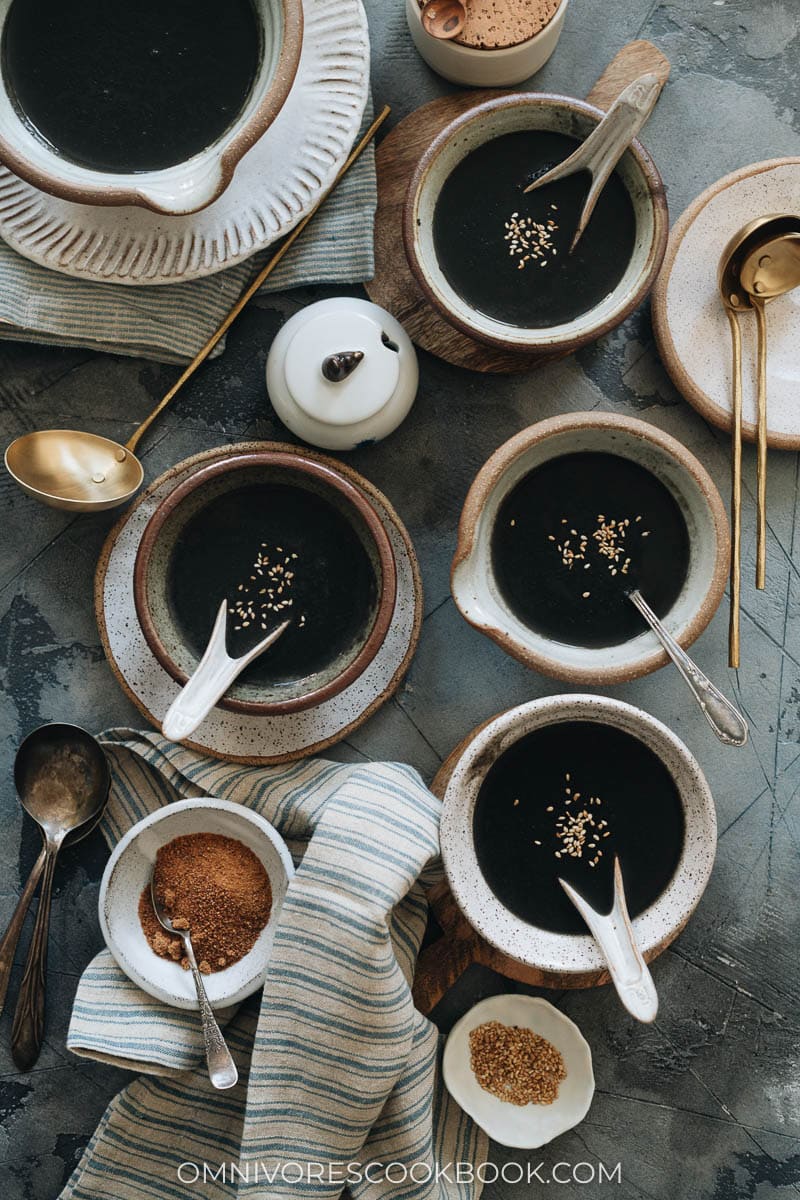
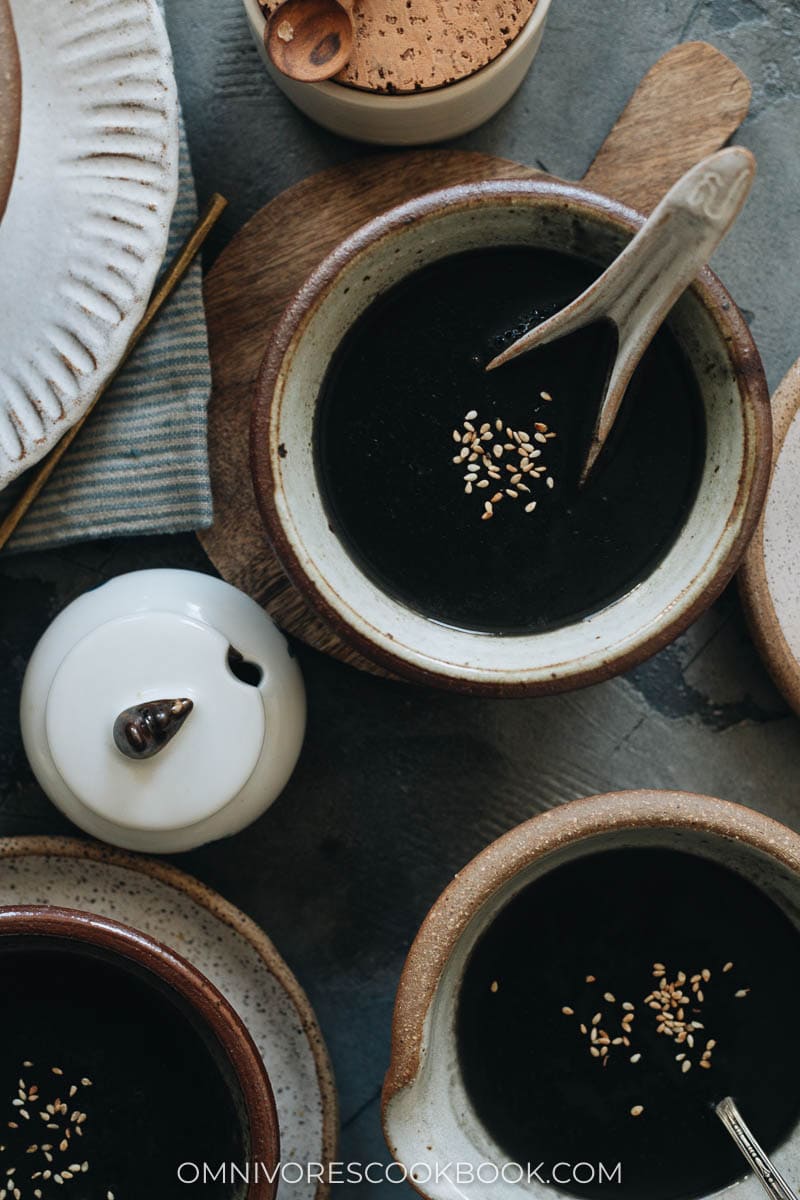
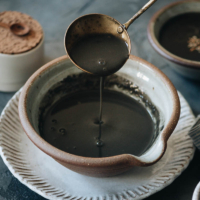
In China, it’s very popular to have little dessert dumplings that are filled with black sesame cream. You will also see the filling served as a black sesame soup. Americans are used to soup at the start of a meal. And they’re typically savory. But this black sesame soup is sweet and eaten like a dessert. It sometimes comes packaged in powdered form. And you can simply add hot water and have it any time. I grew up eating it and it’s one of my favorite comfort foods.
Ingredients
I would love to introduce you to my homemade version of black sesame soup. It doesn’t have any additives so all you’re getting is fresh ingredients. In fact, there are only three of them! All it takes is glutinous rice, black sesame seeds, and brown sugar, and you can make this all from scratch. NOTE: If you do not have glutinous rice, you can replace it with regular rice. It will alter the texture of the soup slightly, but is just as tasty.
Toasted sesame seeds vs. raw sesame seeds
You can use either kind. But if you use raw sesame seeds, you’ll need to toast them longer so they are fully cooked through. It usually takes about 10 minutes on the stovetop over medium-low heat using a large nonstick skillet, so you can spread out the sesame seeds into a thin layer. You will hear the sesame seeds popping and sizzling as they’re cooked. NOTE: Toasting the sesame seeds too much will result in a mild bitterness. If using toasted sesame seeds, you only need to heat them up to release the fragrance.
Cooking process
All you need to do is: When all is said and done, you’ll have a very smooth and creamy textured soup. It has a sweet and nutty flavor that will pleasantly surprise you (consider it a Chinese-version of PB and J!). And the best part? It’s very healthy and nourishing while satisfying that need for sweetness.
How to serve
You can serve the black sesame soup as a dessert at the end of a Chinese meal. Although I just love to have it for a snack in the middle of the day. My favorite way to eat it is hot, right after it’s finished cooking, though you can serve it at room temperature or cold as well. Want to learn more about Chinese Cooking? Sign up for my newsletter to receive the 5-Day Chinese Cooking Crash Course and ongoing recipe updates! If you give this recipe a try, let us know! Leave a comment, rate it (once you’ve tried it), and take a picture and tag it @omnivorescookbook on Instagram! I’d love to see what you come up with.
More Chinese dessert recipes
Eight Treasure Rice (Chinese Rice Pudding)Chinese Almond CookiesRed Bean SoupMango Sticky Rice4-Ingredient No-Churn Black Sesame Ice Cream
Lilja Walter is a part of the Omnivore’s Cookbook team and worked closely with Maggie to develop and test this recipe.