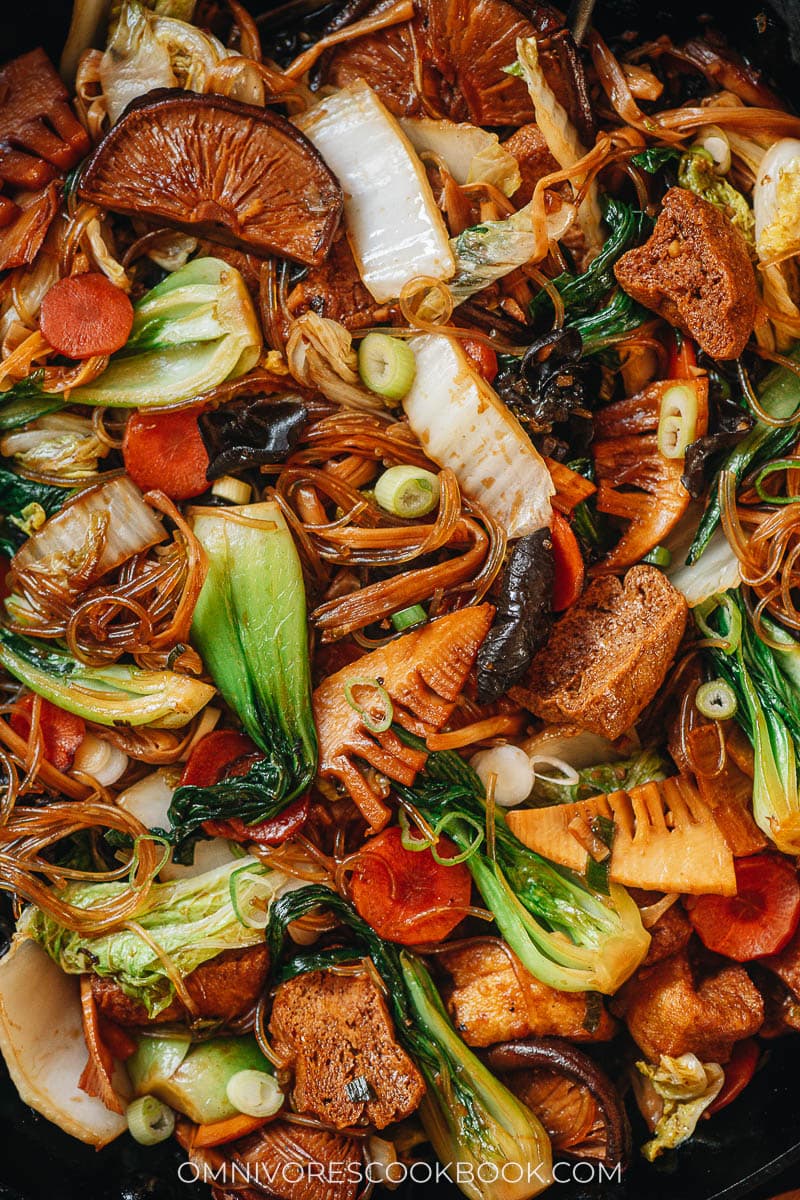
What is Buddha’s Delight?
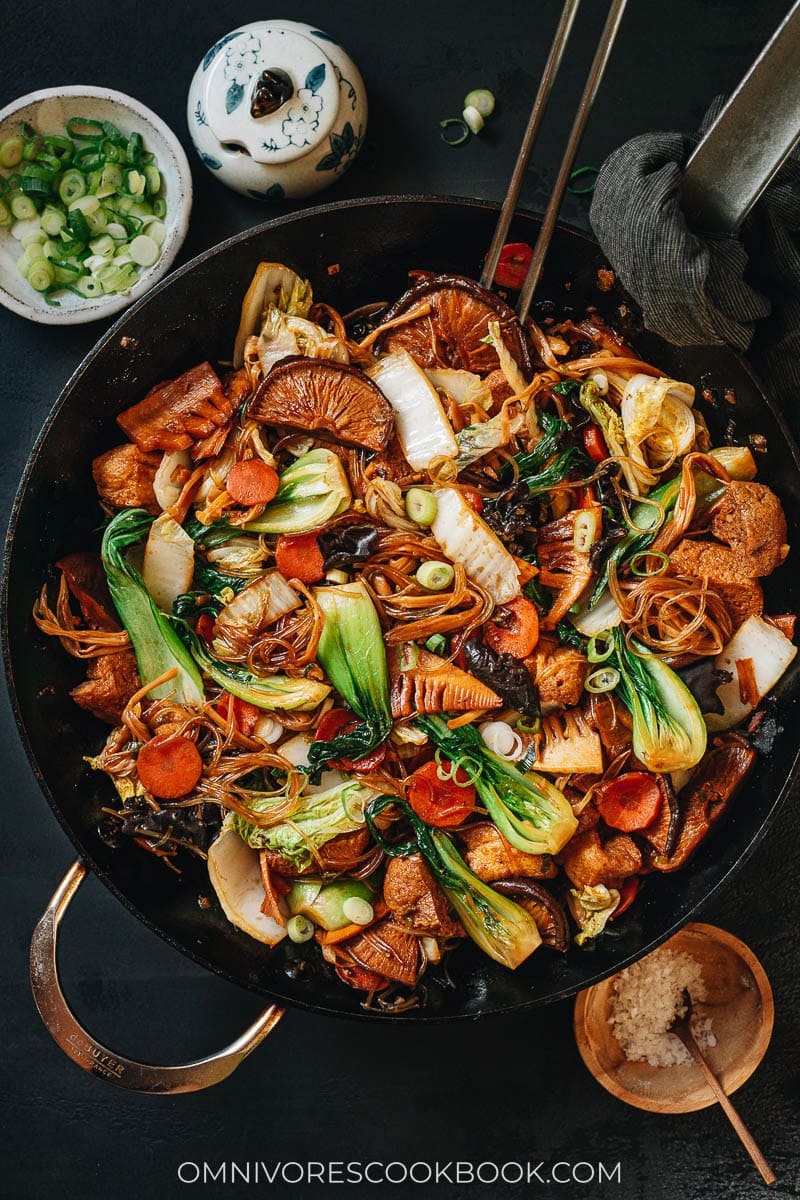
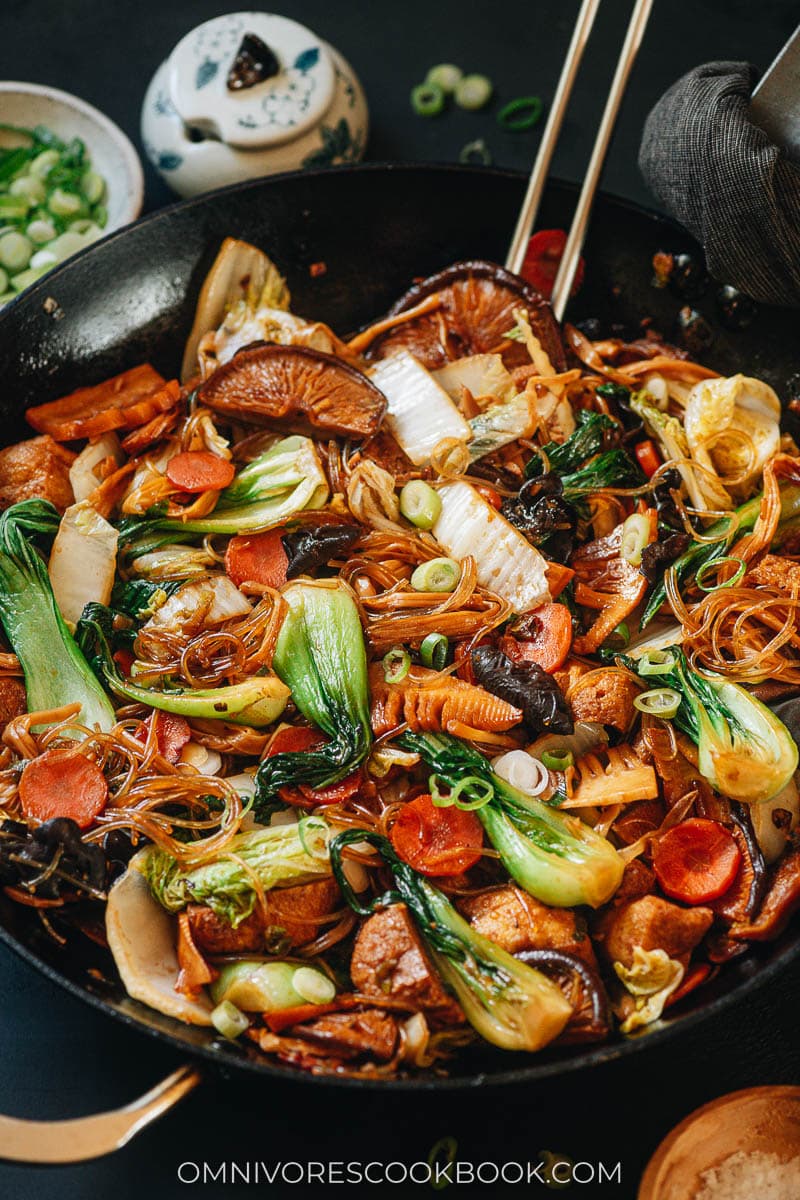
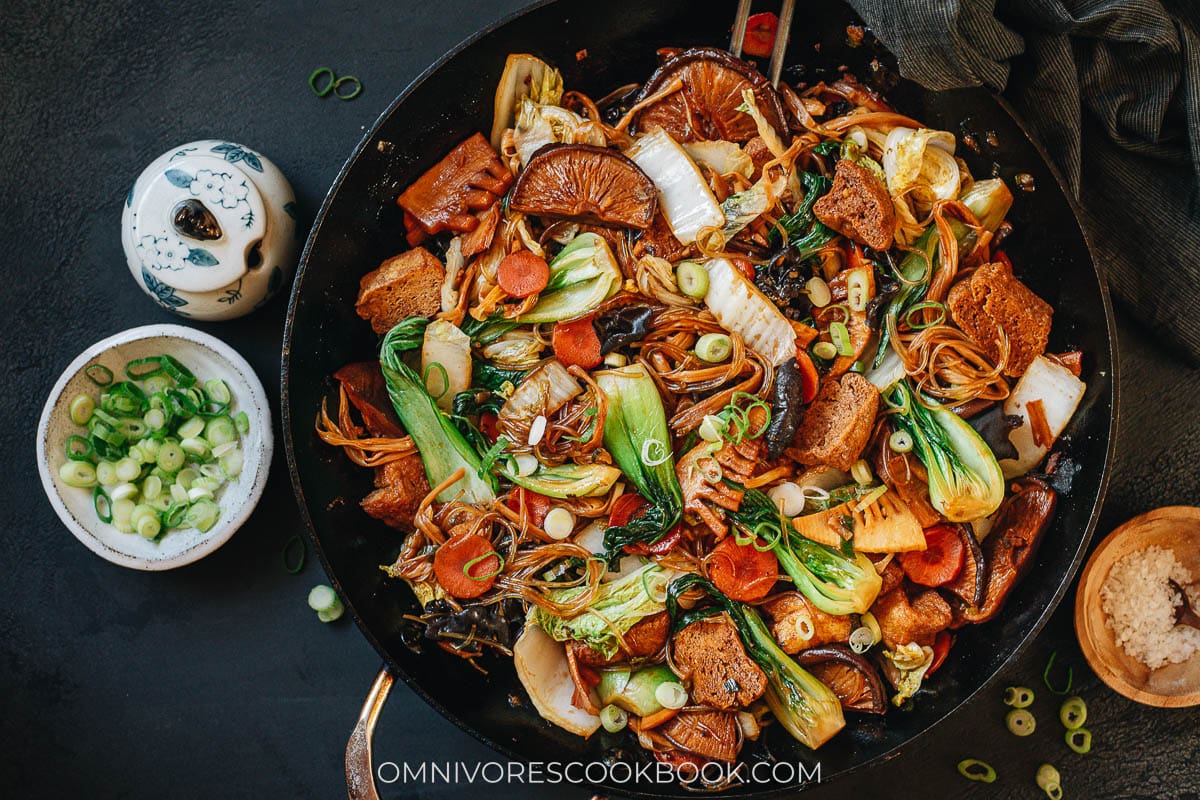
Buddha’s Delight (罗汉斋) is also called lo han jai in Cantonese and luo han zhai in Mandarin. Jai or Zhai literally means Buddhist cuisine, which is basically a vegetarian diet that uses very simple seasonings and minimal oil. Among all the Jai dishes served in temples, Buddha’s Delight is the most famous, and is well-known even outside of China. It has been said that the unabridged version of Buddha’s Delight contains 18 vegetables or even more. However, for family cooking, people usually use fewer ingredients. In southern China, there is a tradition to serve this dish on the first day of the Chinese New Year. One theory says it’s derived from Buddhist practice and represents self-purification. Some people believe it brings good luck. And some say it’s great for digestion after eating tons of meat and other protein on New Year’s Eve. In northern China, we don’t call this dish Buddha’s Delight, but we enjoy cooking a vegetarian stew that uses very similar ingredients and seasonings. Here is my northern-style Buddha’s Delight – a delicious, comforting, and healthy way to enjoy various vegetables.
Why this version?
The combinations of ingredients that can be used to make Buddha’s Delight are countless. If you look at the list given on Wikipedia, there are 34 commonly used ingredients and 11 seasonings. Among them, a few of the items are not even vegetarian. The version I cooked today is vegetarian. I chose the vegetables below, because I wanted to create a dish that is great in taste, pleasant in appearance, and relatively easy to cook. Why is it “relatively” easy? If you check some classic Buddha’s delight recipes, you’ll find that cooking the dish is generally fairly time consuming. Because you need to prepare so many different kinds of vegetables and cook each one separately. It’s the kind of dish that you would only cook once a year. After a few modifications and adjustments to the ingredient list, I created this version. This recipe is very flexible and quite practical for cooking at home on a daily basis.
Ingredient options for Buddha’s Delight
In this dish, the ingredients can be separated generally into three groups:
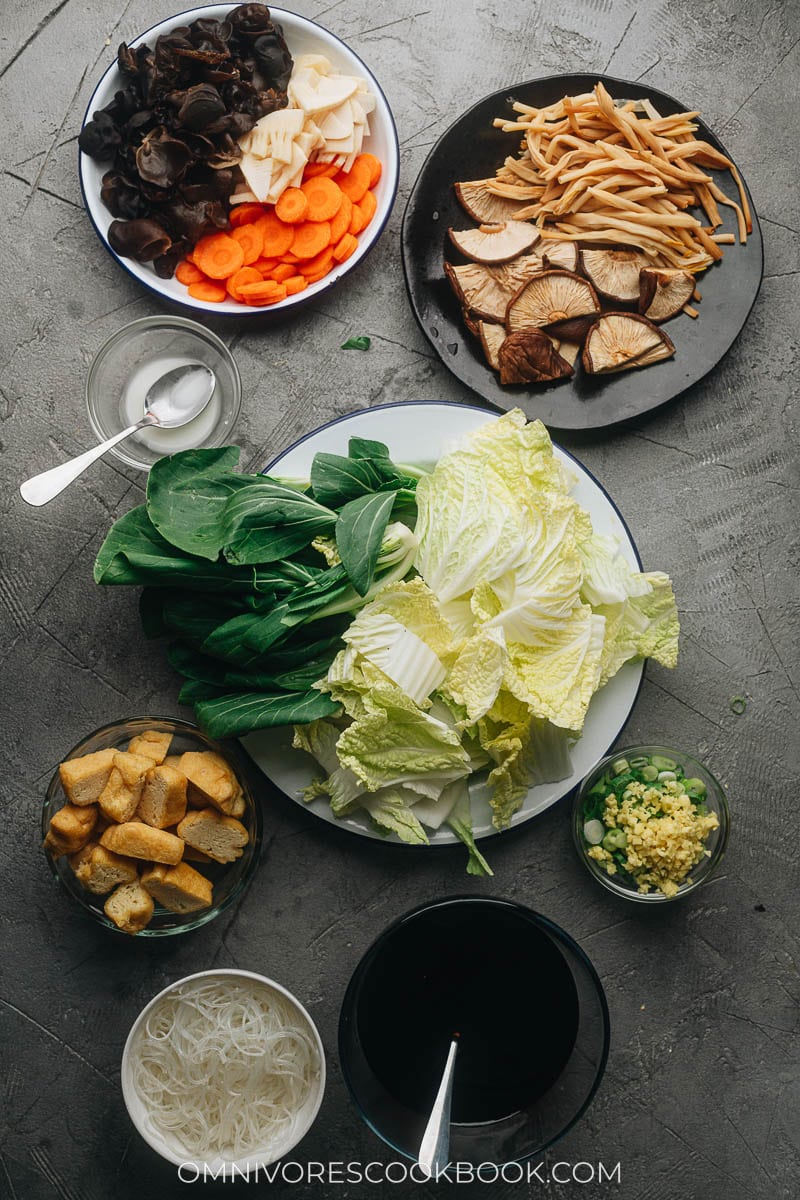
A – Dried ingredients that are crucial for flavor and textureB – Vegetables and others that add texture, mouthfeel and absorb flavor wellC – Vegetables and others that add texture, mouthfeel and absorb flavor wellIngredients that add color, and / or nutrition but won’t absorb a lot of flavor
When you understand the difference between the three groups, you can create the combination of this dish depending on what you have on hand. The rules are as below:
Group A is a must.
You can use any of them, but I recommend you choose at least two. When rehydrating dried lily flowers and dried shiitake mushrooms, the re-hydrating liquid will become a perfect vegetable broth. It’s very flavorful and aromatic. Use at least one of them (although I strongly recommended dried lily flower, because it has a very distinctive aroma), and doing so will eliminate the need to use vegetable / mushroom stock. Deep fried tofu and Chinese seitan (the fried type) are quite “meaty” and make the dish more substantial. They also absorb flavor very well, and almost taste like meat once cooked (we call them vegan meat in Chinese cooking). I suggest using at least one of them.
Choose at least two items from group B
Add these because they are delicious and have great texture. In this recipe, I used six items from group B. But you can use just two or three, to make the dish simple and tasty. I suggest you choose at least one of: bok choy and napa cabbage. They add liquid to the dish and make the dish juicy and comforting. The rest of the items are all optional. Bamboo shoots and water chestnuts add crispness. Mushrooms add meaty texture and umami. Bean curd sticks add a firm and meaty texture.
Group C is optional
You can use carrots or snow peas to add color, but you can also skip group C entirely. These items are added to lend nutrition to the dish, but they don’t absorb flavor very well. If you decide to add them, keep the amount small (much less than the items from group B). By the way, I used a lot of ingredients in this recipe and it filled a 12-inch skillet. You should be careful not to exceed the total volume of veggies given in this recipe.
Mise en place
It’s important to have everything prepped before you start cooking. I like to group my ingredients together on big plates according to the cooking order so I’m organized during cooking.
Cooking process for your own version of Buddha’s Delight
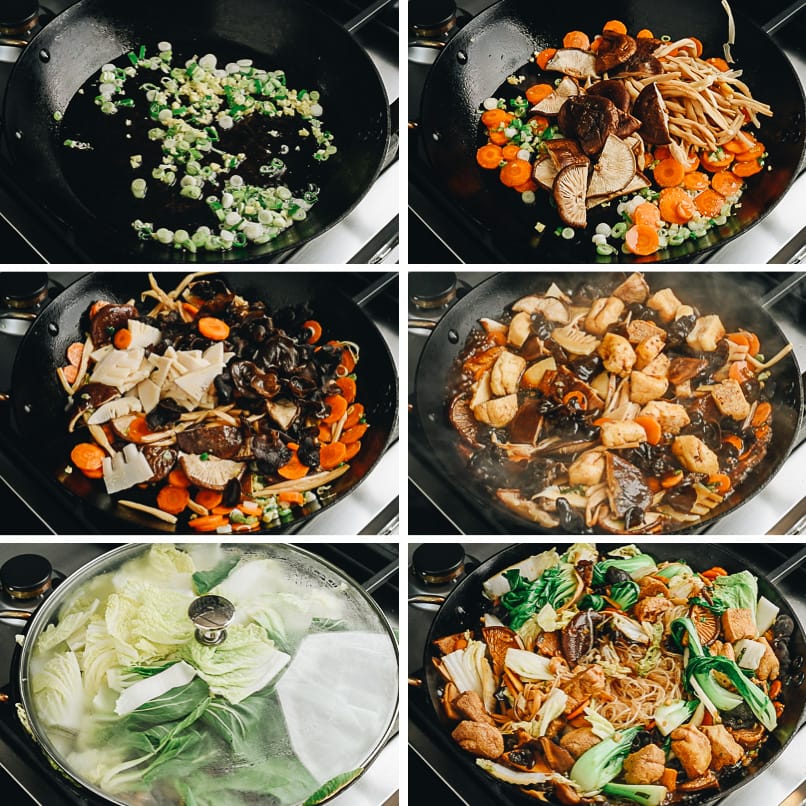
The First thing you should do is soak the dried ingredients (marked with a * in the chart above). While soaking the dried ingredients, cut the vegetables and prepare the sauce. Once done prepping:
How to serve buddha’s delight
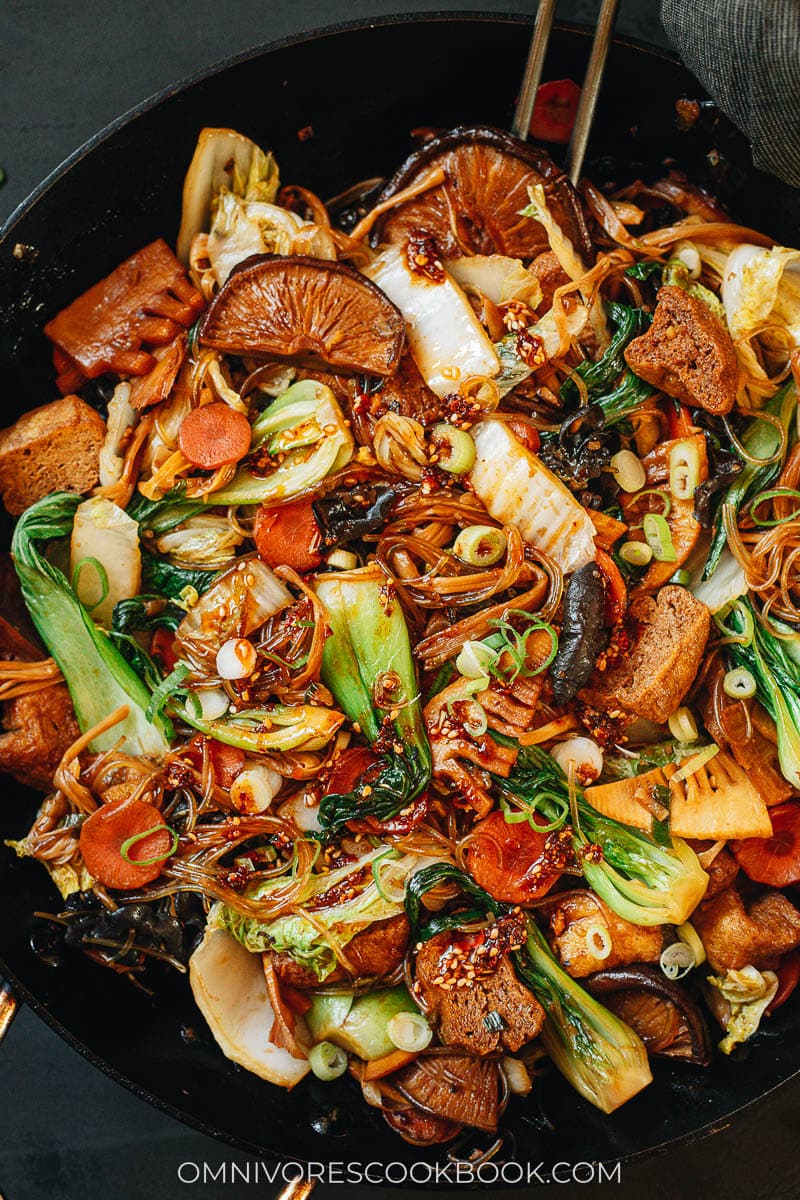
Buddha’s Delight is such a versatile dish that can either serve as your festive centerpiece or a hearty main for your family dinner. You can serve the dish by itself as a main, but I prefer to pair it with steamed rice for a balanced meal. To add extra kick to the dish, try to add some homemade chili oil on top and the stew will become even more irresistible!
Afterthoughts
The ingredients for Buddha’s Delight might look long, but you can tweak them according to what you have in stock. The beauty of the dish is that, with some dried pantry staples, you can make a rich and flavorful vegetable stew with only a few sauces. There are so many ingredients you can use to add texture to the dish and make it very fulfilling. My vegetarian friends have commented that this is the best Buddha’s Delight they ever had, and it’s much tastier than the ones from Chinese restaurants. I hope you enjoy this one as much as I do! The post was published in Feb 24, 2015 and updated by July 19, 2022 with new pictures, video, and minor edits on the recipe.