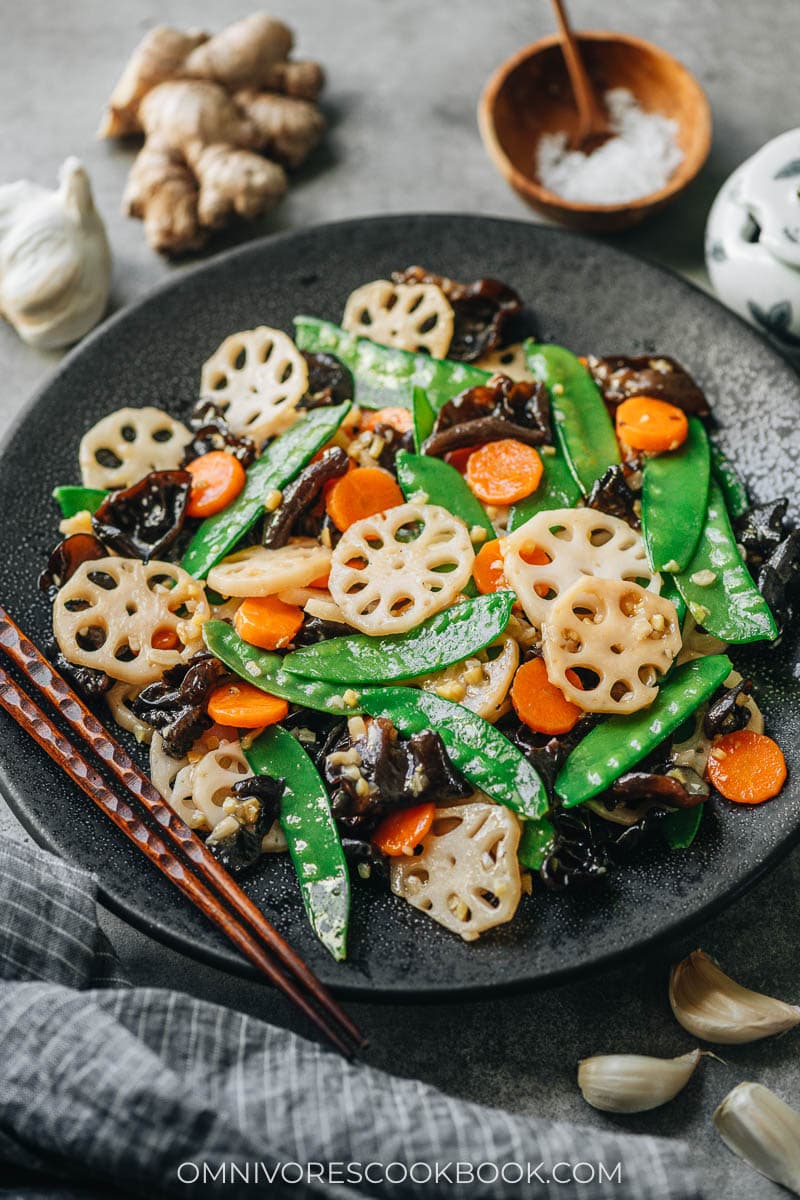
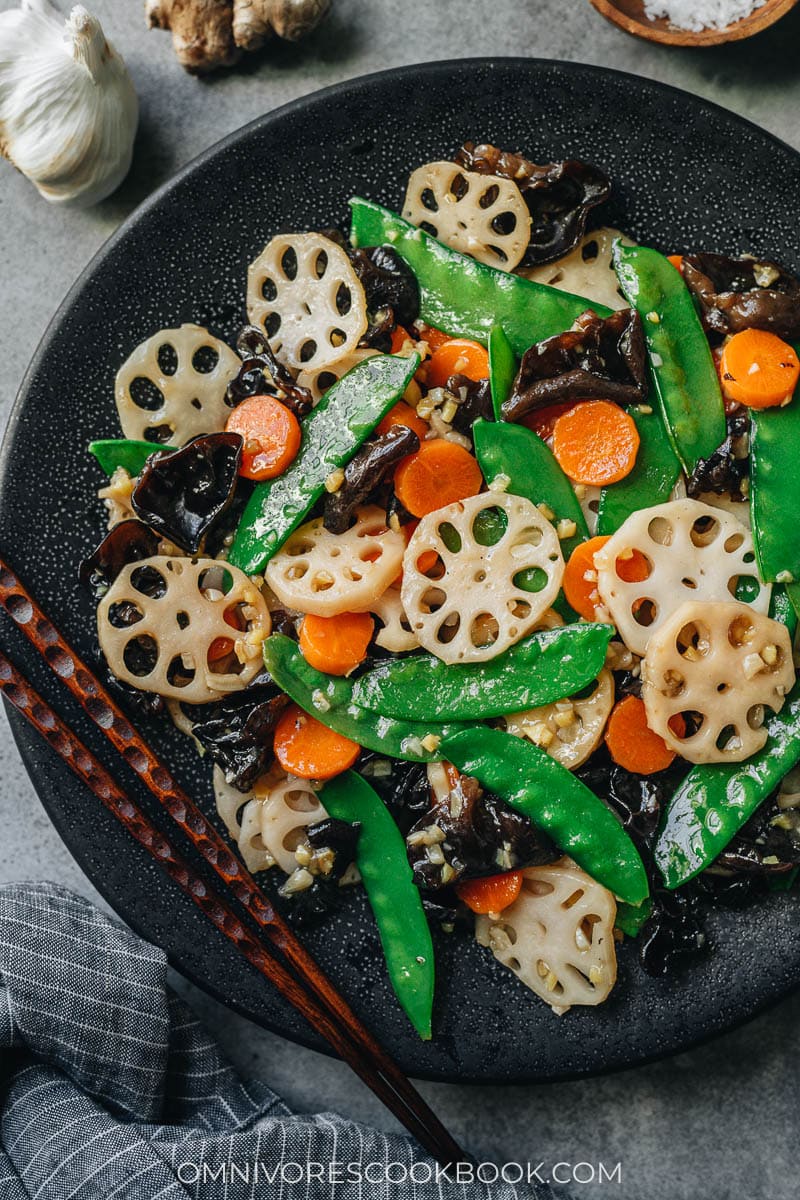
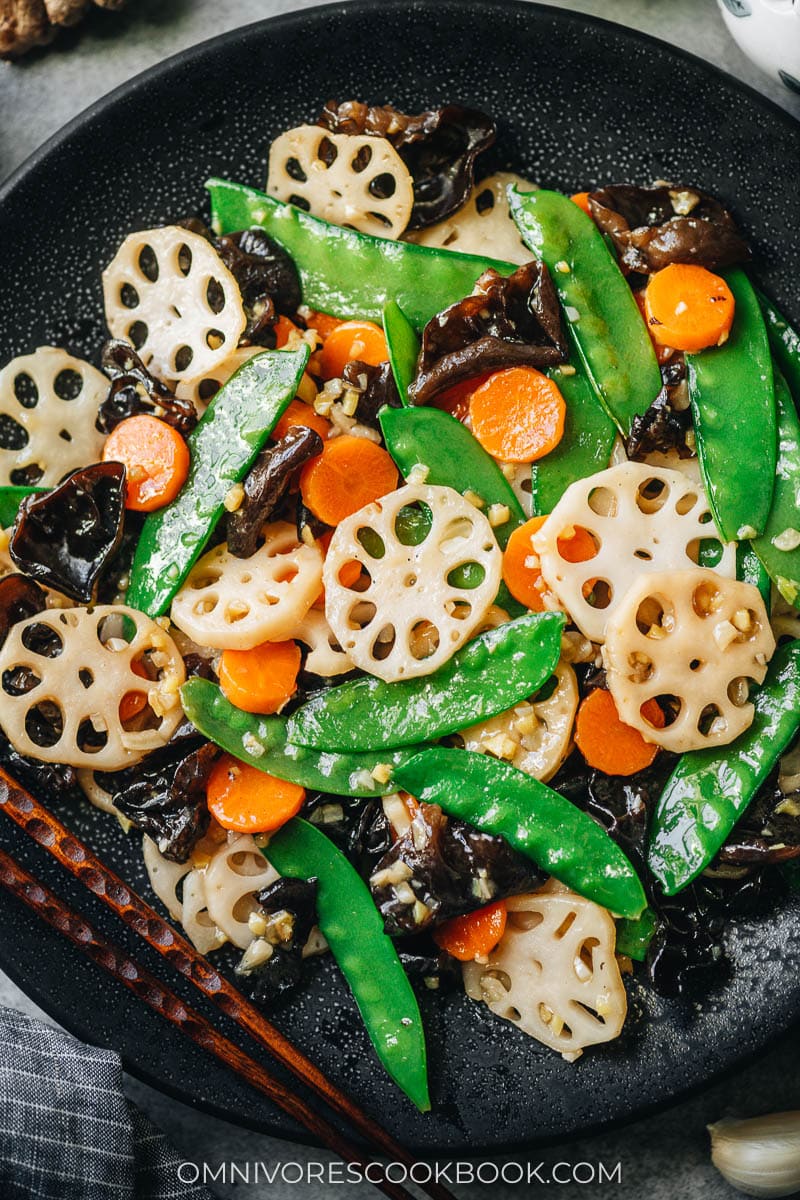
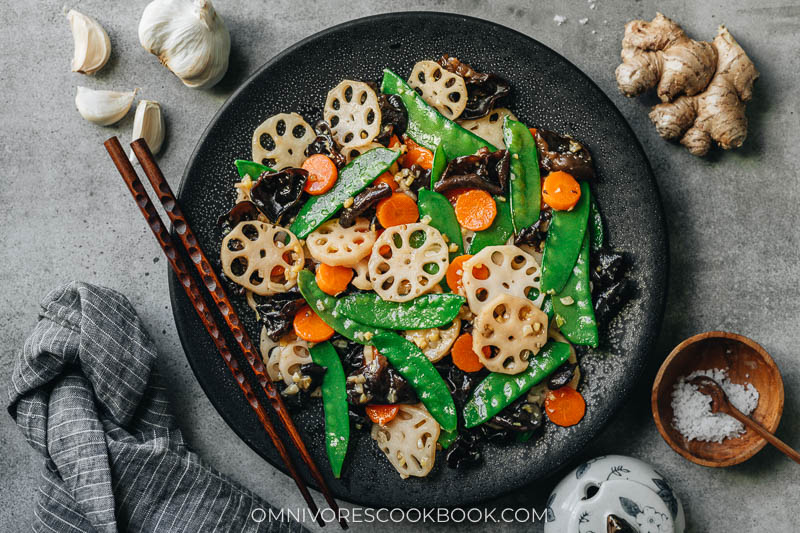
Nothing is more appropriate for celebrating springtime than lotus root stir fry, a famous Cantonese dish that uses lotus root along with several colorful vegetables to create a light vegetable dish that’s full of color and amazing textures. The Chinese name of lotus root stir fry is He Tang Xiao Chao, which can be translated literally as lotus pond stir fry. Traditionally the dish is made from several vegetables that grow in the mud, such as lotus and yam. When in season, some Chinese restaurants serve this dish on a piece of lotus leaf layered on a serving dish, further enhancing the fragrance.
Ingredients
There are many ways to put a lotus root stir fry together. One of the most common and popular ways includes lotus root, snow peas, carrot and wood ear mushrooms. Other vegetables such as peppers, celtuce, yam, and lily flower pedals are often used as well. In my recipe, I tried to use minimal ingredients that yield the best texture. But do feel free to replace them with other vegetables you have on hand.
Lotus root
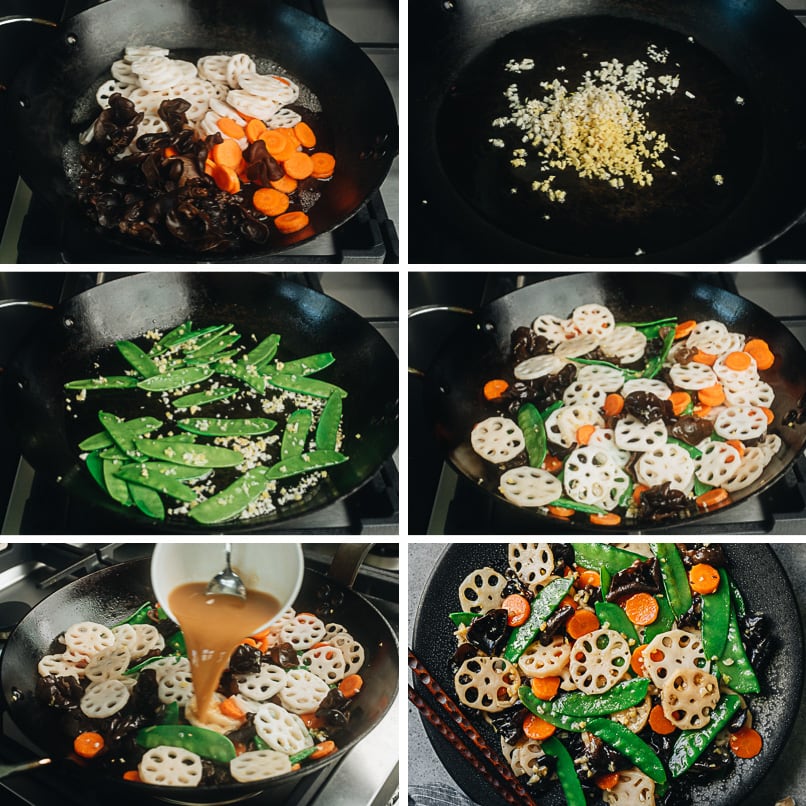
You can usually find lotus root at Asian markets such as Chinese and Japanese markets. I usually purchase the sliced and blanched lotus root in a bag submerged in water. You can find them in the refrigerated produce section. You can also use fresh whole lotus root for this recipe. If using the fresh one you will need to wash it thoroughly, peel it with a peeler, then thinly slice it. When cooking with fresh lotus root, you also need to blanch / steam it for a longer time. So in step 3, add the lotus root first and steam it for 2 minutes before adding the carrot.
Wood ear mushrooms
Wood ear mushrooms (Mu’er, 木耳) are your best friend when it comes to adding texture to a dish. They are usually sold in the dried form and you will need to rehydrate them before using. Once rehydrated and cooked, they have a tender texture with a very mild earthy taste. They don’t add much flavor to a dish and will taste like whatever sauce they’re cooked in. The great part is, because of its uneven surface, they grab onto sauce well and pair very well with crisp vegetables.
Seasoning
Traditionally, lotus root stir fry is made with very simple seasonings – garlic, ginger and chicken bouillon or condensed chicken broth are used along with salt to bring the dish together. To make this dish enjoyable by people who follow a vegetarian or vegan diet, I tried using mushroom powder and the result was great. Traditionally this dish does not use any soy sauce, to keep the lotus root color bright and white. I tried that traditional method but found the result a bit lacking. That’s why I used just a touch of soy sauce in the recipe, to enhance the umami. It makes the lotus root a bit yellow, but I liked the flavor much better.
Mise en place
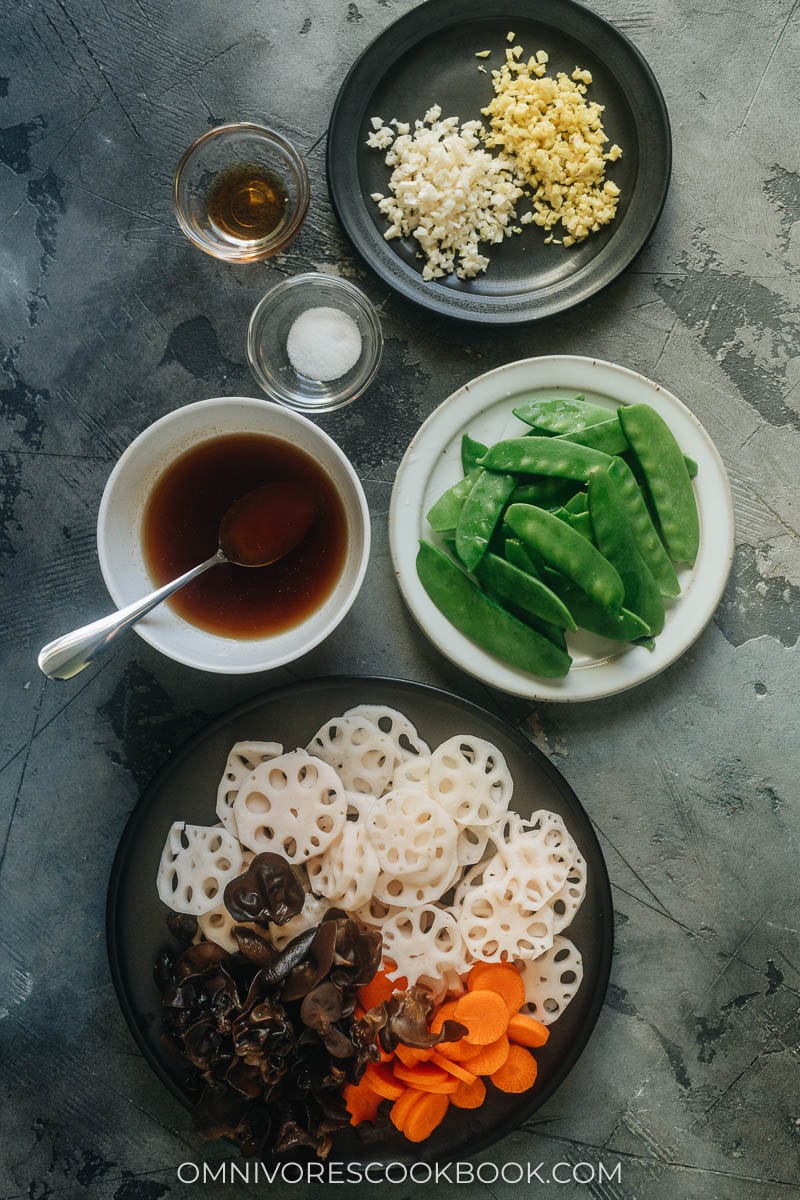
When you’re ready to cook, your table should have:
Lotus root, rehydrated wood ear mushrooms, and carrots on a plateSnow peasSauceSaltSesame oilGinger and garlic on a plate
How to cook lotus root stir fry
Cooking lotus root stir fry is super easy. That’s it! Traditionally, the vegetables would be blanched in a pot of water until al dente, according to their texture and cooking time. I found that process a bit redundant, so I steamed the vegetables in the pan instead.
How to serve lotus root stir fry
Serve lotus root on the side of your main dish with rice to make a full meal!
Soy Sauce Pan Fried Noodles (广式豉油皇炒面)Easy Salt Baked Chicken (简易盐焗鸡)Beef and Chinese Broccoli (芥蓝牛肉)Tofu Lettuce WrapsXO Fried Rice with Char Siu