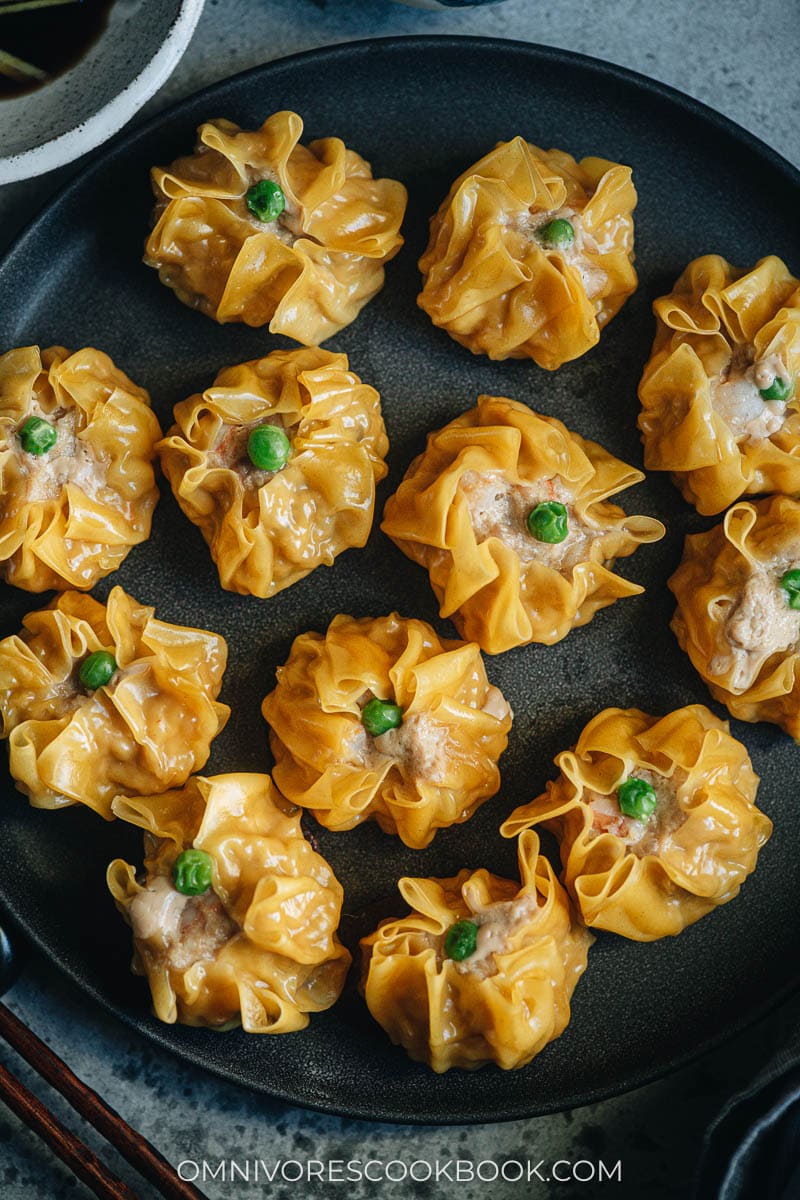
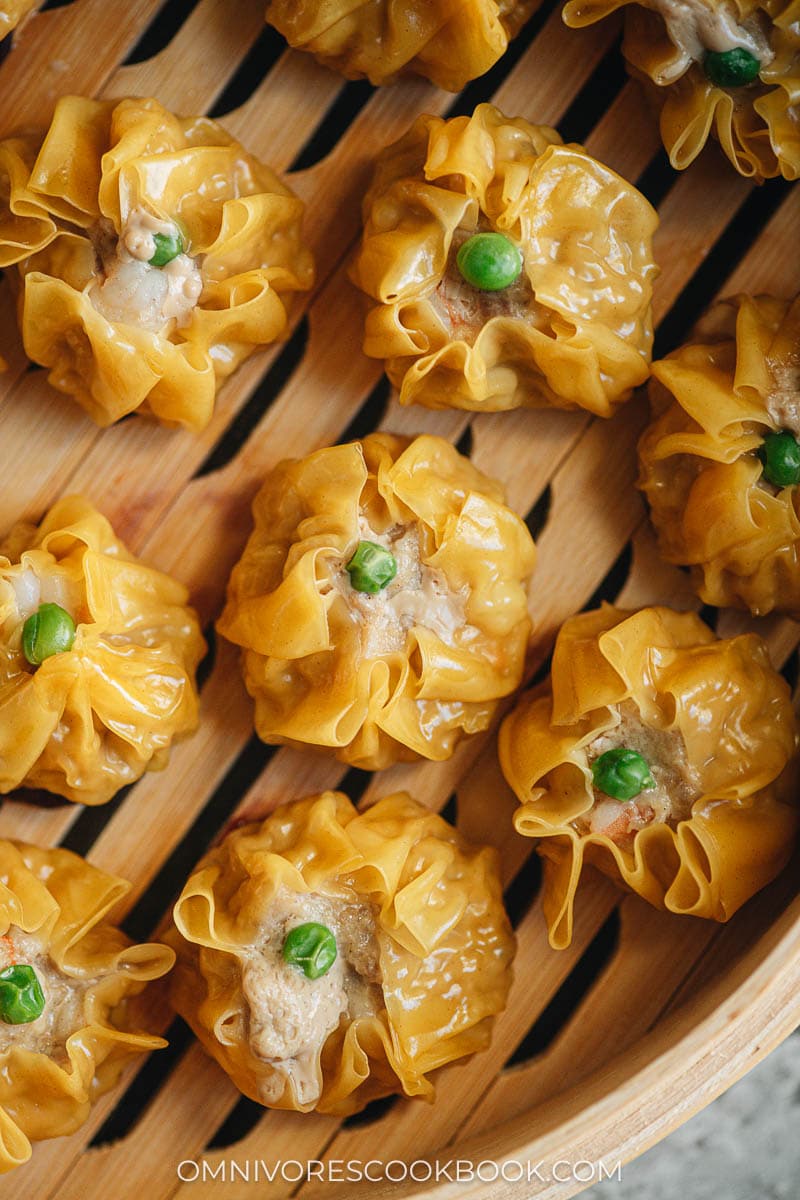
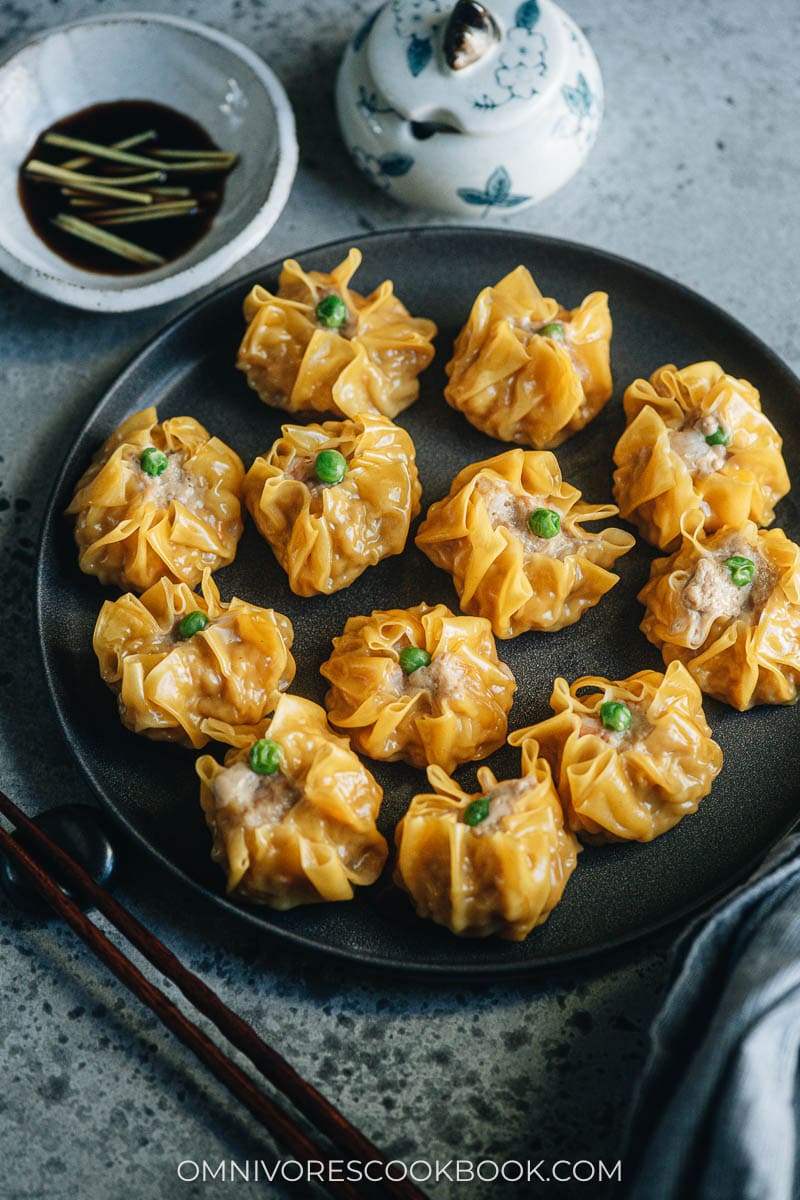
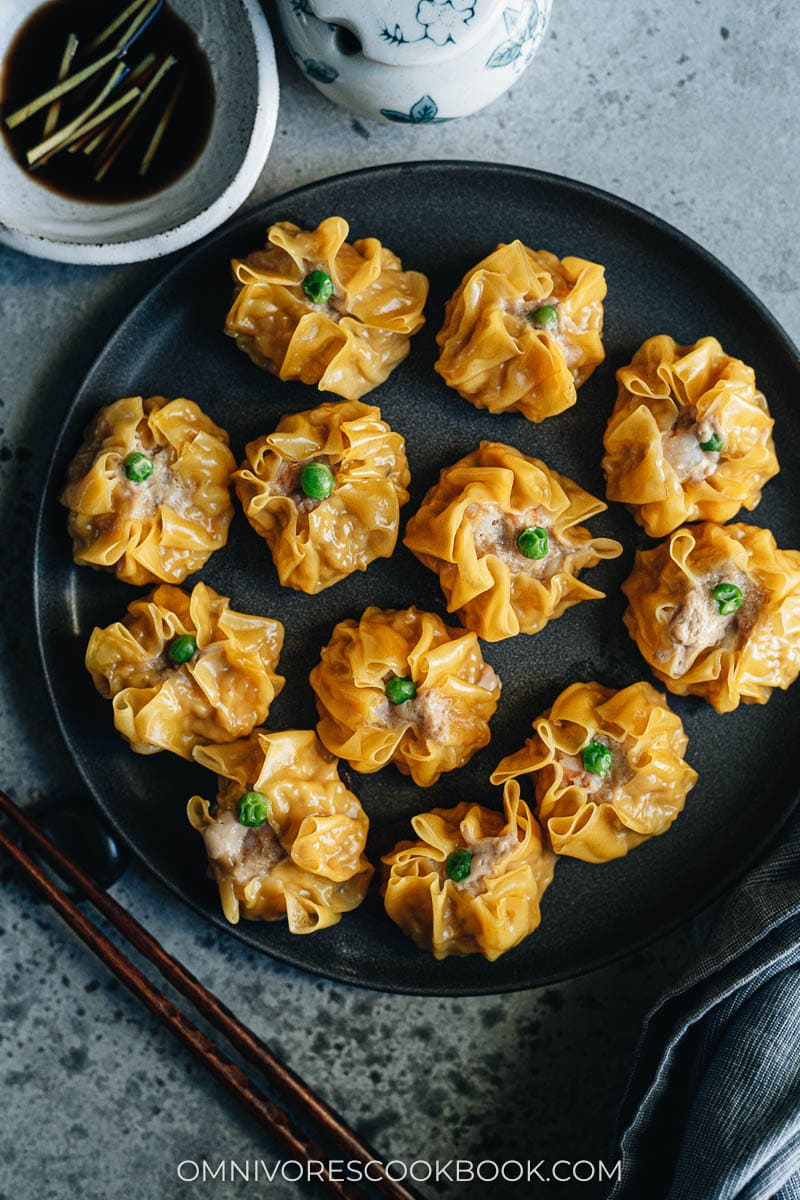
Cantonese shumai (烧卖, Shao Mai) are one of the most popular dim sum dishes. They are steamed open-face stemmed dumplings filled with pork and shrimp. Back in China, whenever we’d have Cantonese dim sum, the pork and shrimp shumai and crystal shrimp dumplings (har gow) were our must-order dishes.
Shumai ingredients
What type of wrapper to use
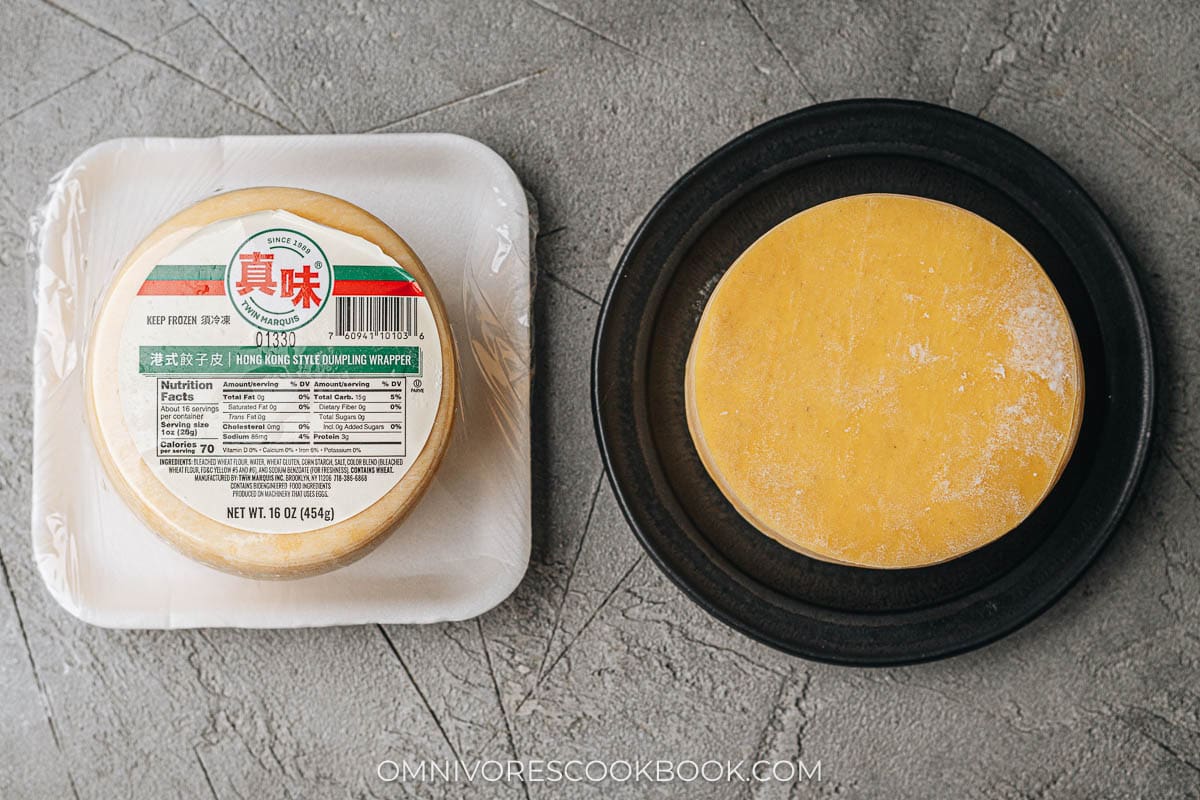
To make the most authentic tasting Cantonese shumai, you should use Hong Kong Style Dumpling Wrappers. They are thin round wrappers that have a yellow color. You can find this type of wrapper at Chinese markets and some Asian markets (such as H Mart). They are usually located in the refrigerated or freezer section. If you cannot find this type of wrapper, it’s OK to use a regular dumpling or gyoza wrapper with a white color.
The filling
The classic Cantonese shumai always use a pork and shrimp combo filling for the best mouthfeel and taste. If possible, pick a fattier mix of ground pork so the filling is juicier. For the shrimp, you will mince most of them and mix it into the pork. A small portion of shrimp will be chopped into small pieces for a distinctive texture. This recipe uses a traditional approach – hand chopping all the ingredients for the filling. Alternatively, you can also use a food processor to make the filling. I have included both methods in the recipe below.
Seasonings
Cantonese shumai seasoning is quite different from the one used for northern style steamed dumplings. Shumai emphasizes a clean taste that brings out the freshness of the ingredients. Also all the ingredients should be well blended together to form a chewy texture, without any large bits of aromatics. After many experiments, I found a perfect combination and quantity for the ingredients below:
Shaoxing wineOyster sauce Light soy sauce Grated gingerToasted sesame oilSugarSaltWhite pepper powder
Some common dumpling ingredients such as shiitake mushrooms and green onions are eliminated, to create a taste that is just like they have at dim sum restaurants.
How to make Shumai
Make the shumai filling
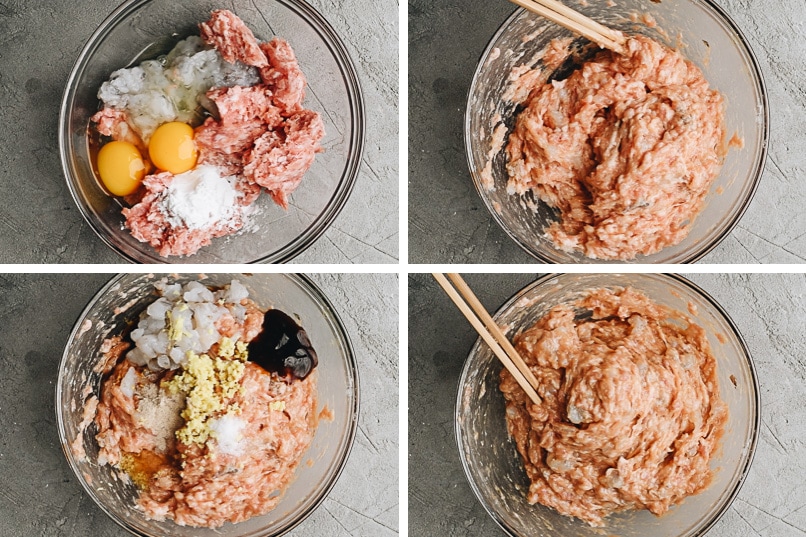
The most important part of making shumai filling is to beat the pork and shrimp mixture with cornstarch and eggs to form a sticky paste (上劲, Shang Jin). By doing this step, the meat will absorb the liquid and become juicy, without turning soggy. The meat will become quite sticky, which makes the wrapping easier, and it yields a chewy texture once cooked. Once the meat and shrimp are properly beaten, you can then add the rest of the seasonings.
Assemble shumai
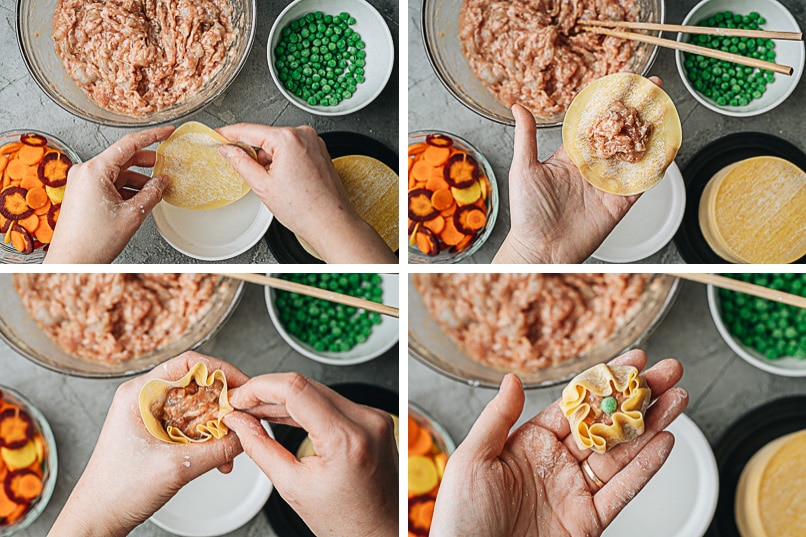
Assembling Shumai is very easy and forgiving, and it is much easier than making potstickers. P.S. Making shumai usually does not require wetting the wrapper, because you don’t need to seal up the opening. However, I found this step to be helpful when the wrappers have gotten a bit dry, and it makes the wrapping easier.
How to cook shumai
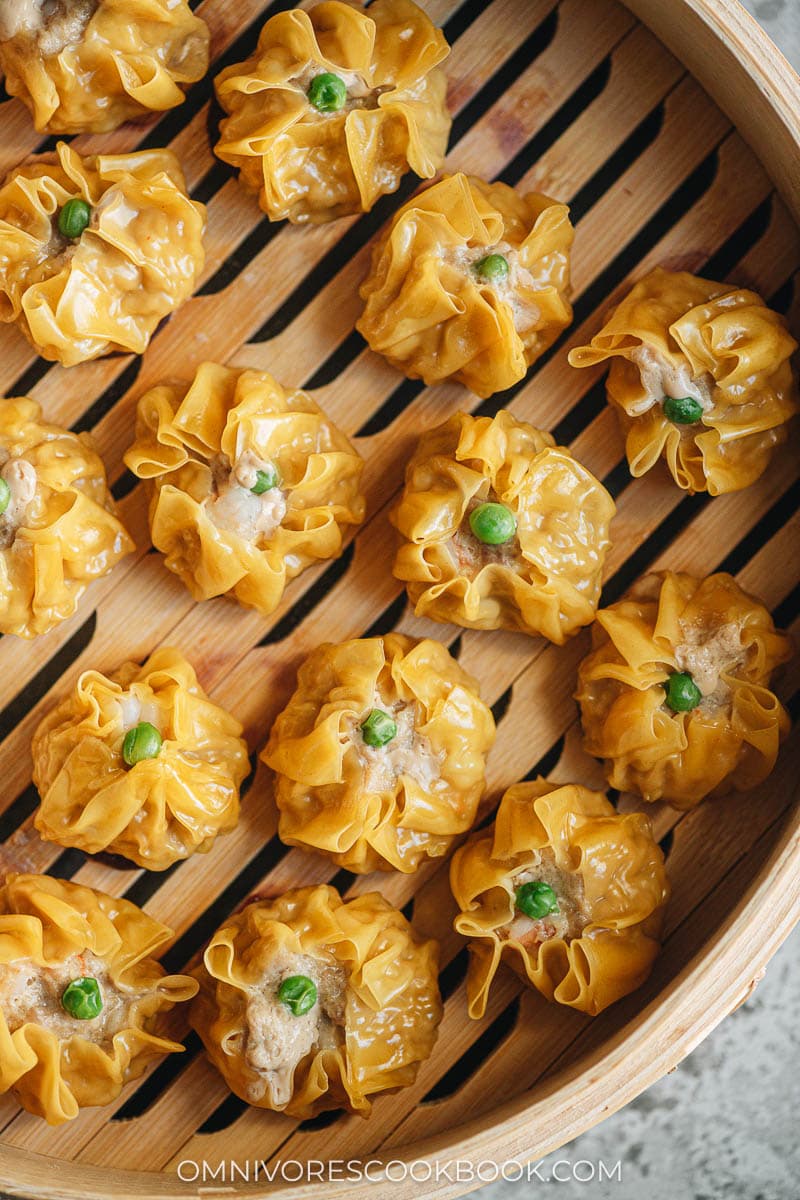
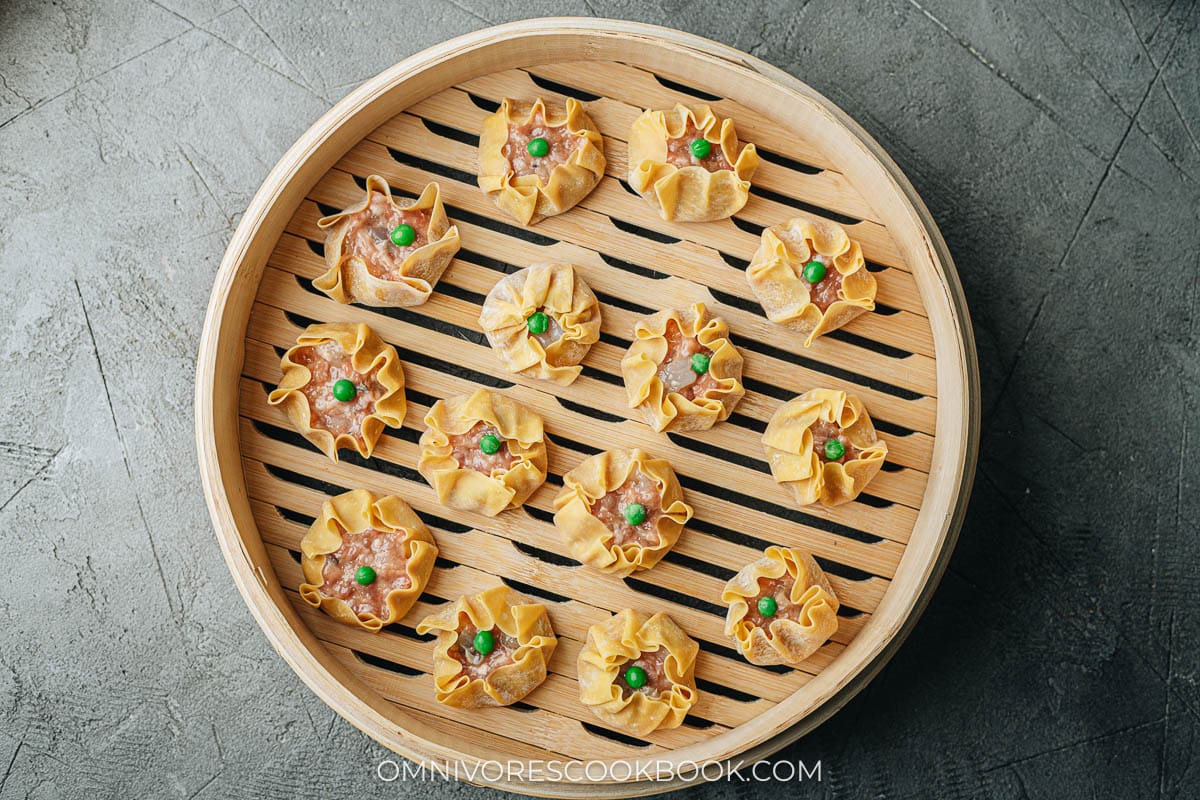
You will need a steamer to steam the shumai. You can either use a stainless steel steamer or a bamboo steamer. If you use a bamboo steamer, you will need a big pot such as a wok to hold the steamer. For either steamer, you usually need to use a parchment paper liner or cheesecloth to line the basket so the shumai won’t stick. In this recipe, I used sliced carrots under each shumai, to prevent it from sticking. I learned this trick from my favorite dim sum restaurant back in China. If you do not want to use the carrot method, make sure to line your steamer before cooking. Once you set up the steamer, it only takes a few minutes to cook the shumai.
How to serve shumai
Shumai are usually served hot in small quantities as an appetizer, or as one dish of a multi-course meal. Since Cantonese dim sum is all about freshness, you should always cook the shumai right before serving, and only cook the portion you plan to eat. Most Cantonese restaurants serve the shumai as they are, without any dipping sauce. If you want to use a dipping sauce, I found that Chinkiang vinegar with a few slivers of ginger works extremely well. When you dip the shumai into the vinegar, it somehow tastes a little like crab. If you think these shumai are not salty enough, you can also add a few drops of soy sauce into your dipping sauce.
How to store and reheat shumai
Shumai store very well in the freezer, so they make a perfect dinner party dish. You can wrap the shumai and store them uncooked. Right before serving, simply steam the frozen shumai without thawing. They taste just as great as fresh ones.
Afterthoughts
Shumai is one of my favorite dim sum goodies to make at home, because they are very easy to wrap and they store very well. They look very pretty and impressive, too – a perfect appetizer to serve at any dinner party. I hope you enjoy this one and happy cooking!
More dim sum recipes
Cantonese Wonton Noodle SoupPineapple Buns (Bolo Bao)Steamed Ribs in Black Bean Sauce (豉汁蒸排骨)Chinese Turnip Cake (Lo Bak Go, 萝卜糕)Air Fryer Char Siu Pork (空气炸锅叉烧肉)