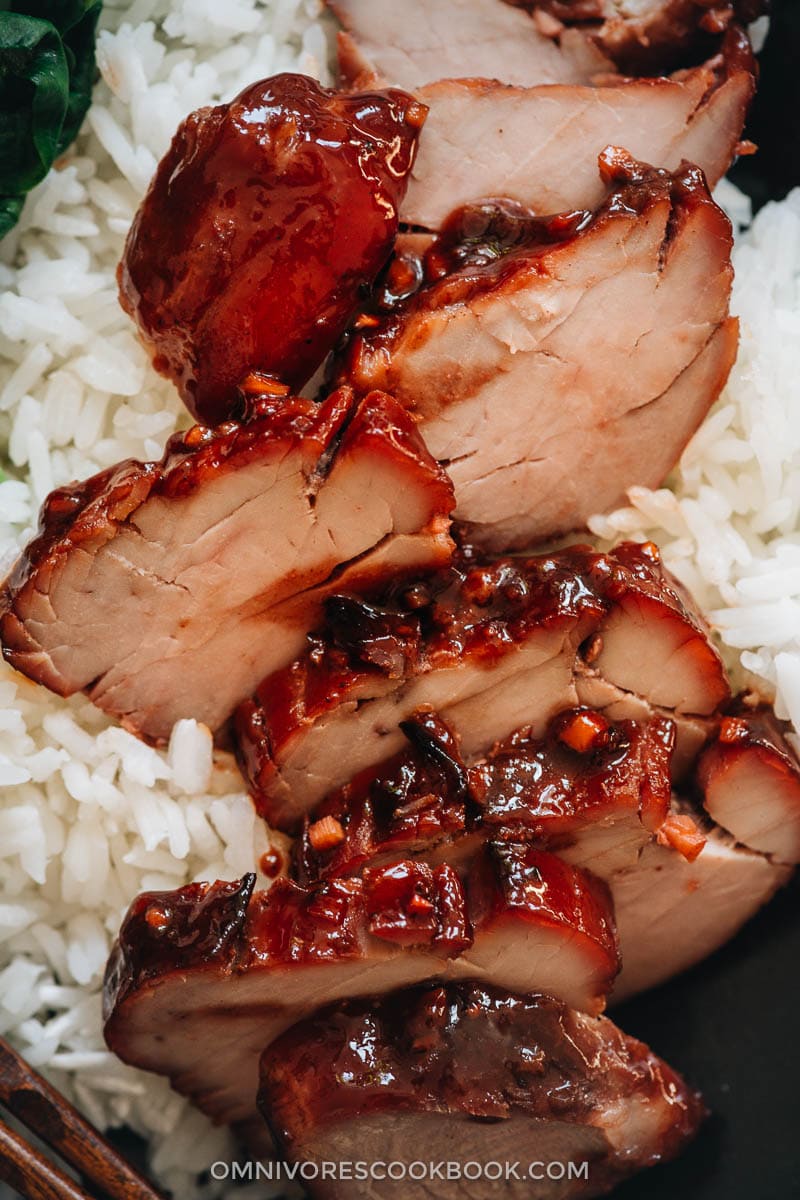
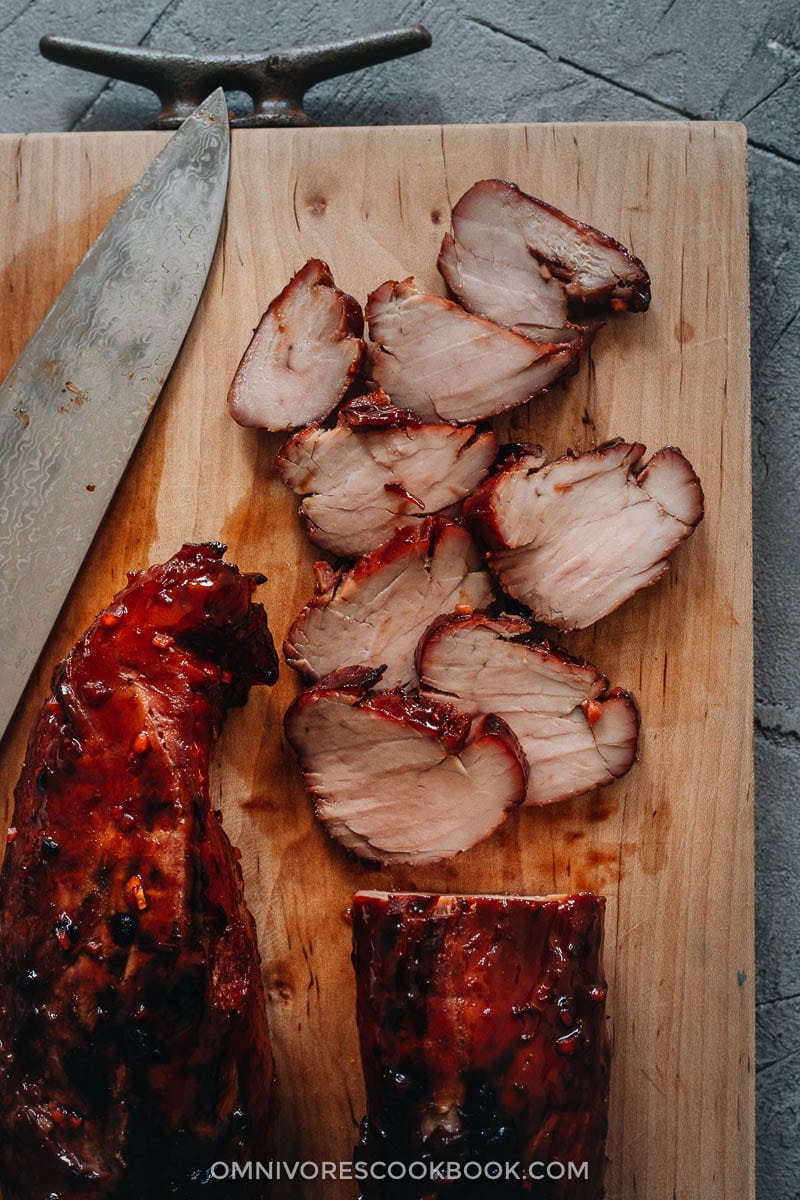
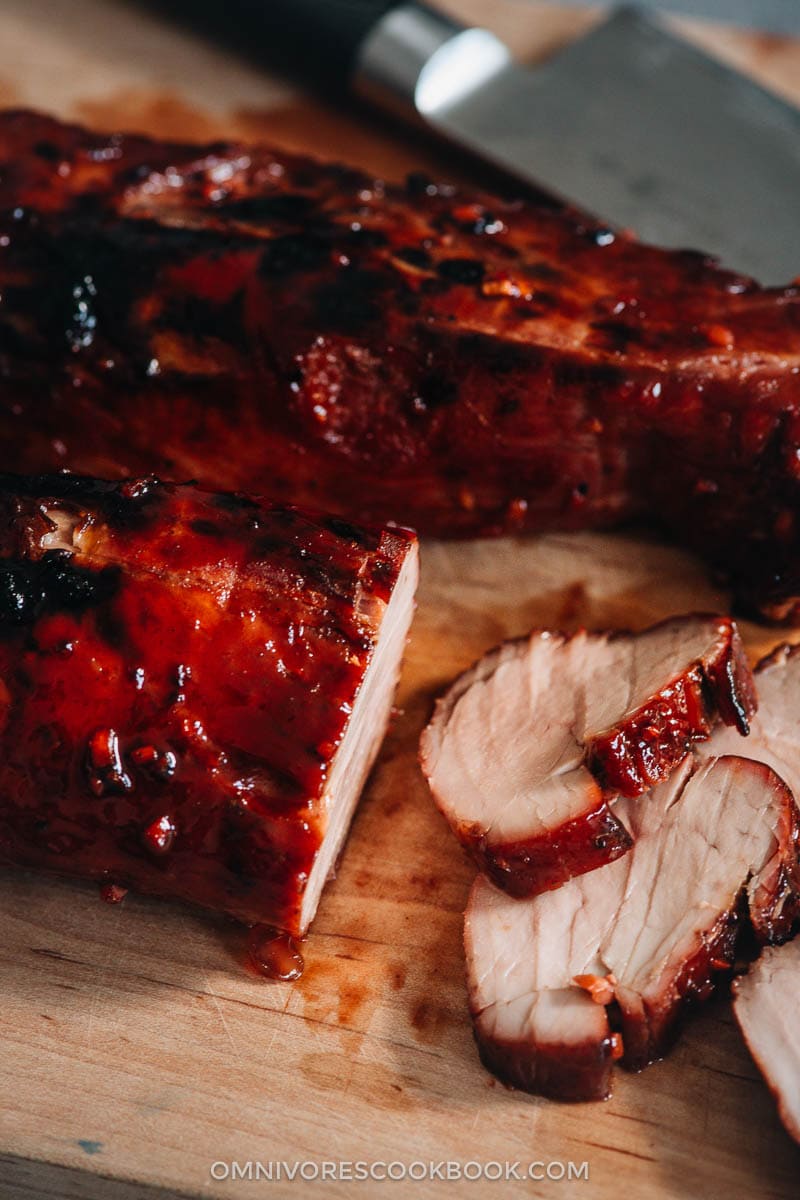
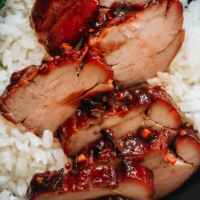
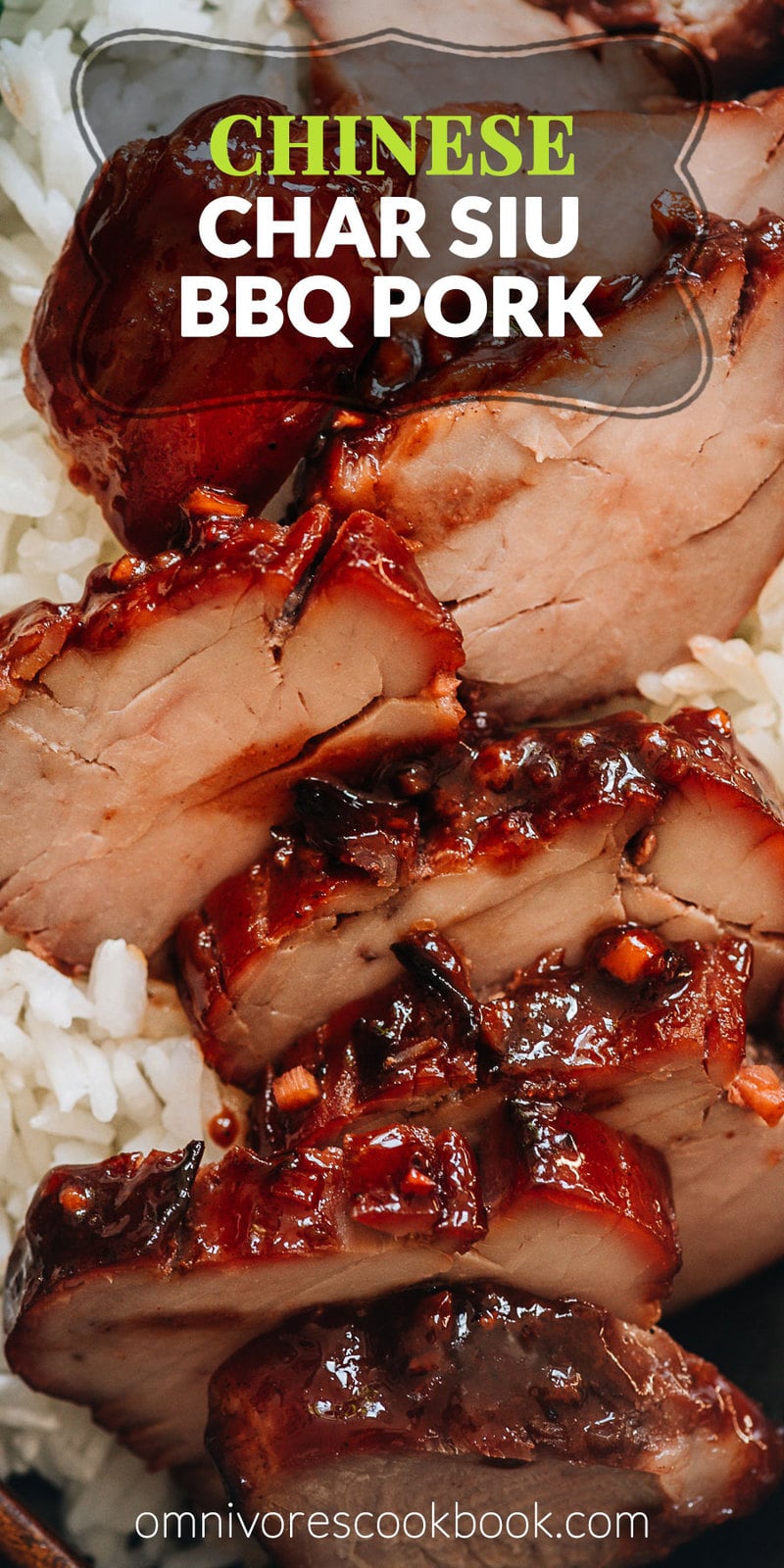
Hailing from Guangdong province in the south of China, char siu or barbecued pork is one of the darlings of dim sum, firmly in the catalog of Cantonese cuisine. It doesn’t do the dish justice, merely to describe char siu with words. But it is a lean cut of barbecued pork, given a deep red color and shiny coating from the glaze. And it’s famously sweet. However, simply calling it sweet does not convey the complex flavors that result from the long marinating process. The name Char Siu (or Cha Shao), literally means ‘fork roast’ due to the traditional way of cooking. After marinating, the pork is hung on a special fork and placed in the oven for roasting. During the roasting, the chef will baste the pork with a sugary glaze many times, giving it that appetizing glossy look. A good char siu should be slightly chewy, juicy, with a vibrant, rich color and an equally alluring aroma. There are so many char siu recipes out there that simply yield a sweet piece of pork. For me, it’s important to create a good marinade base to give the cut a fragrant taste, and add just enough sweetness to complete it. That’s why you will see a lot of fresh aromatics and maybe less sugar in this recipe.
Cooking notes
1. Recipe update
The recipe was originally published three years ago. Over the years I’ve been trying to perfect the process. Today I’m sharing an updated version. In this version I made a few small changes:
Added molasses to the marinade to give the pork a better glaze. Reduced the soy sauce to create a thicker sauce, so it hangs onto the pork during roasting. Used maltose so the pork will have a glossy look, like in Cantonese restaurants. Simplified the baking and basting process.
2. What cut of pork for Char Siu
In this recipe I used pork tenderloin which is the lean cut traditionally used in Cantonese restaurants. You can also use pork loin if you want a slightly cheaper cut. Some people enjoy Chinese BBQ pork made from a fattier cut, for example, pork leg, or even pork belly. You can adapt the recipe according to your preference. No matter which cut you use, you should cut it into pieces about 2” (6 cm) wide and 1”(3 cm) thick, so the baking time will remain the same.
3. An introduction to Maltose
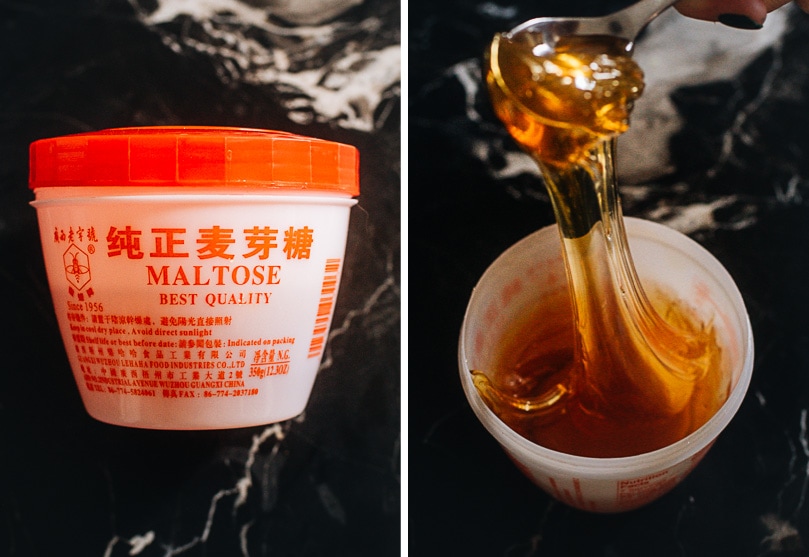
Maltose is a super thick syrup that’s commonly used in traditional Chinese cooking. It is the secret ingredient that gives the char siu its beautiful glossy look. Maltose is made from rice and malt. At room temperature, it’s ten times thicker than your regular syrup. It won’t fall from the cup if you hold it upside down. If you dig your spoon into it, it will feel very tough and difficult to stir. It will become more runny once heated up, but still quite sticky. That’s why it gives the BBQ pork a better glaze that sticks to the surface.
To use maltose, I usually microwave the jar for 20 seconds to get the surface softened. Otherwise it’s very hard to measure the correct amount. Once heated up, the sugar gets VERY HOT. Avoid touching the hot sugar with your hand. A quick tip: coat your measuring spoon with a thin layer of oil before scooping out the maltose. The sugar will fall from the spoon much easier. If you don’t want to use maltose, you can use honey to replace it. The coating will not stick as well but it will still end up delicious.
4. Workflow
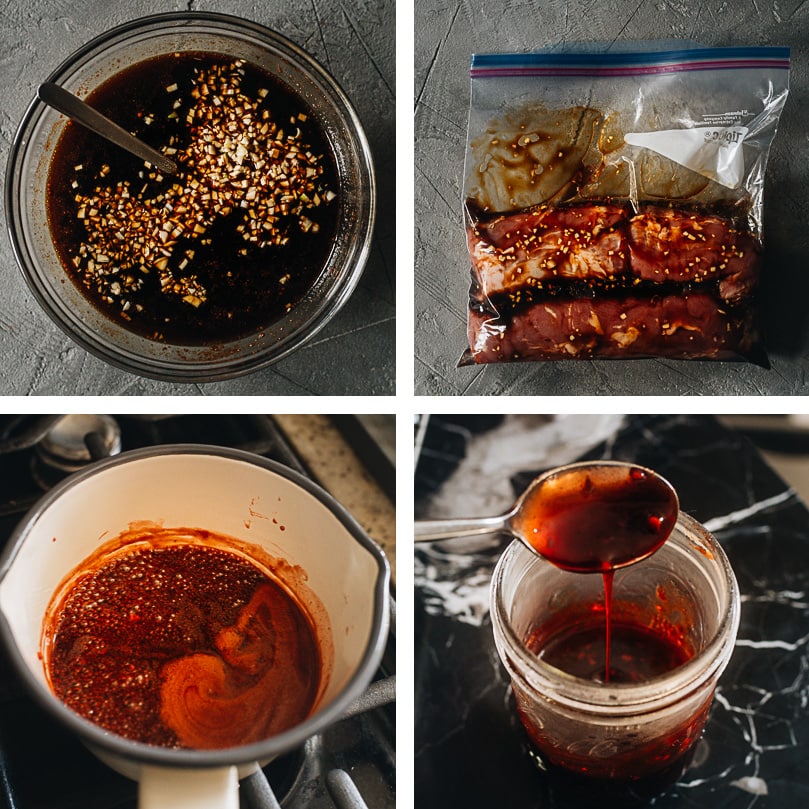
Making char siu is a two-step process. If you plan ahead and get organized, it’s quite simple to make. (1) Mix the sauce and marinate one day before cooking
You will use half of the sauce to marinate the pork. To give the pork as much flavor as possible, make sure to marinate it overnight. Cook the other half of the sauce with maltose. Store it in a jar to use for the glaze.
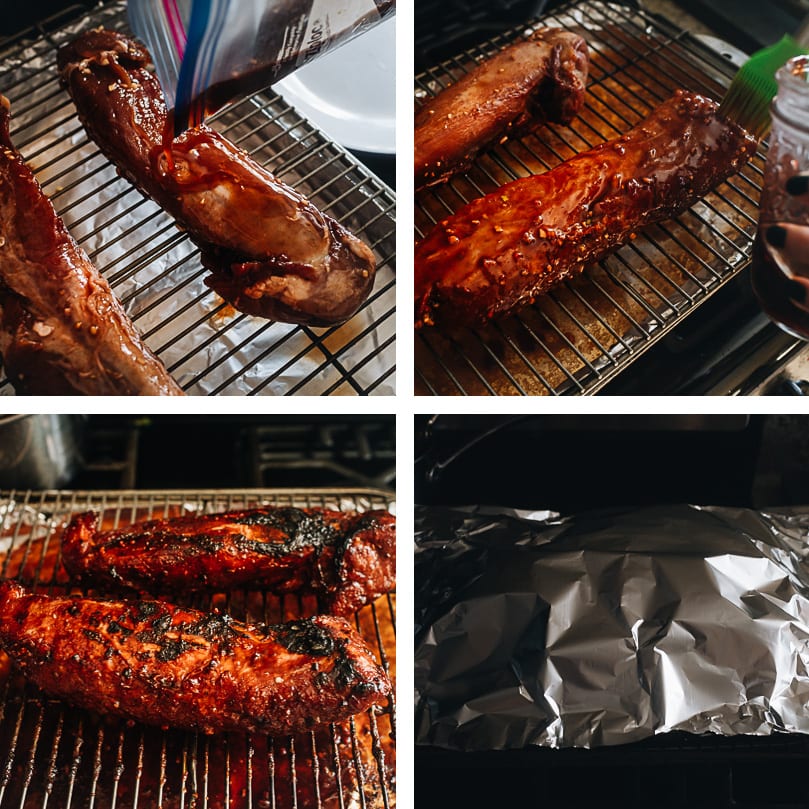
(2) Roast (or grill) the pork
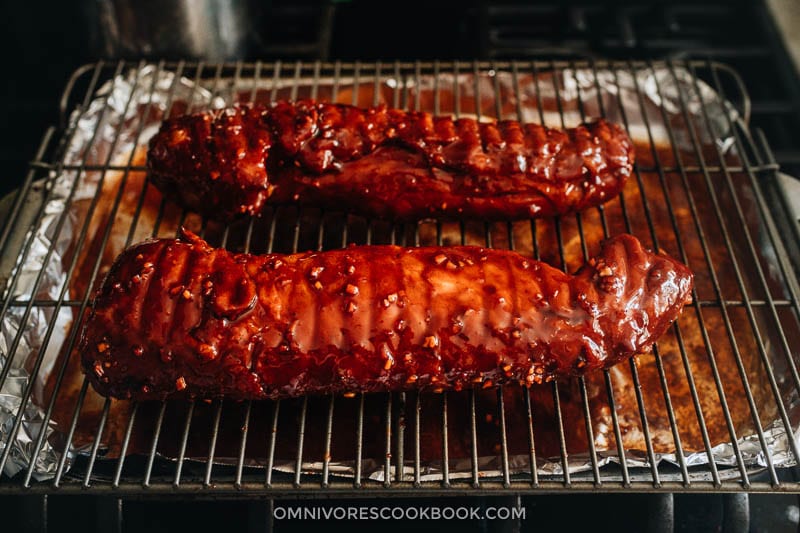
Set up your oven or heat up the grill. Brush the glaze over the pork multiple times while roasting (or grilling). To make the sauce stick better, use a brush to dab the glaze onto the pork. Cook until the pork reaches 165 degrees F (74 C) and is lightly charred on the surface. Rest the pork covered loosely with foil. Then brush on the final layer of glaze.
That’s it! Sounds pretty easy doesn’t it?
5. Leftovers
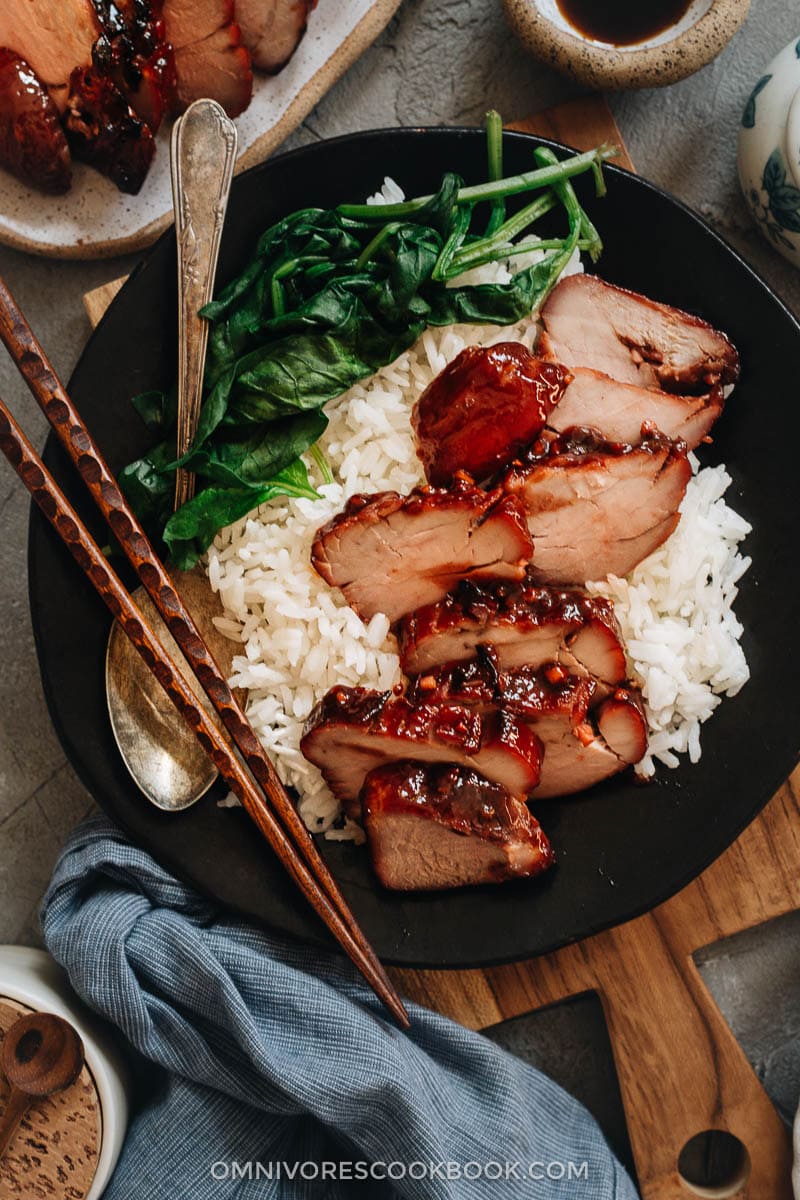
Here is the best part. Usually when you have leftovers, they are just waiting to be reheated and consumed the same way. Not with char siu! If there is any leftover char siu, you can use it to make many popular dishes such as char siu fried noodles, char siu fried rice, steamed char siu buns, baked char siu buns, char siu pastries, and much more. And you’re not just limited to traditional Cantonese dim sum – Lilja and I just made these scallion biscuits with char siu gravy using the drippings we collected from the pan.
Afterthoughts
No matter whether you’re planning the menu for your next dim sum party or simply brainstorming for next week’s dinner, Chinese BBQ pork is a great choice. It is easy to prepare ahead of time. It tastes great served either fresh out of the oven or cold. And you can use the leftovers to create so many other delicious dishes.
More delicious pork recipes
Sweet and Sour Pork Chinese Lion’s Head Pork Meatballs Slow Roasted Crispy Pork Belly (Siu Yuk) Mom’s Best Braised Pork Ribs Asian-Style Instant Pot Pulled Pork
If you give this recipe a try, let us know! Leave a comment, rate it (once you’ve tried it), and take a picture and tag it @omnivorescookbook on Instagram! I’d love to see what you come up with. Lilja Walter is a part of the Omnivore’s Cookbook team and worked closely with Maggie to develop and test this recipe. The original recipe was published on Jan 25, 2016 and updated by Oct 16, 2019.