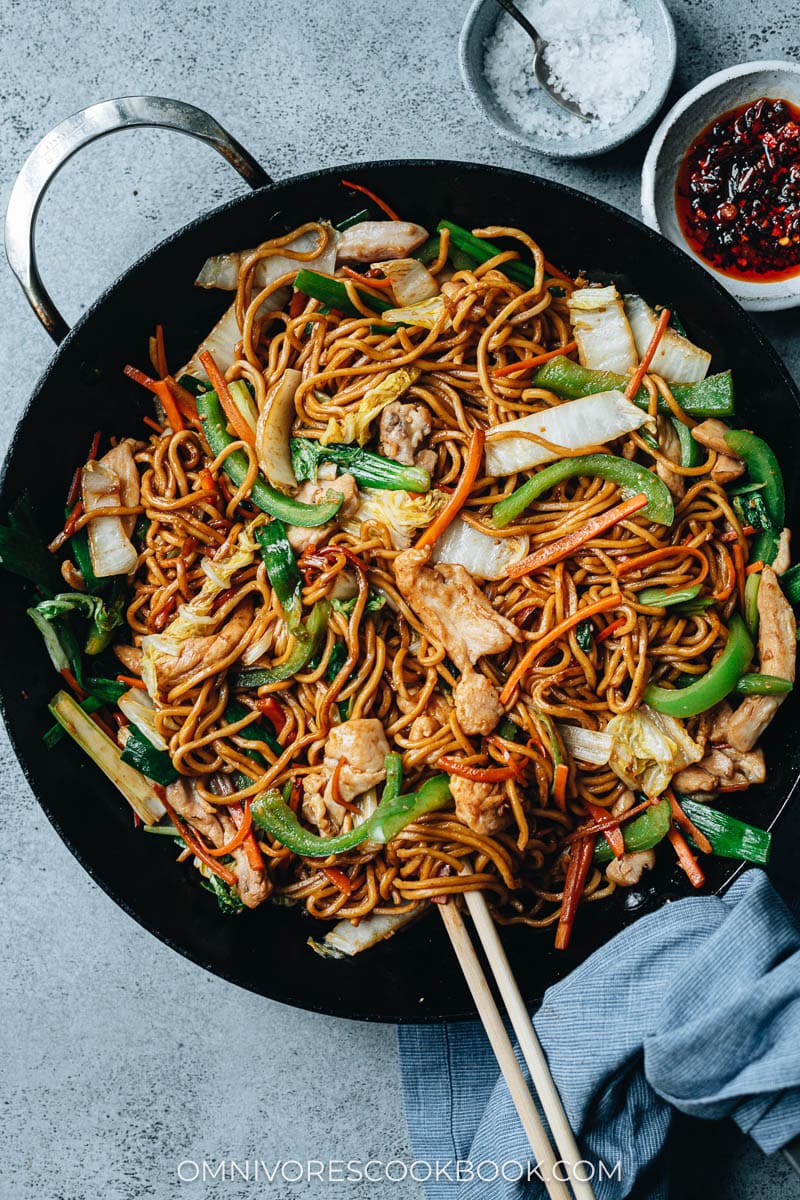
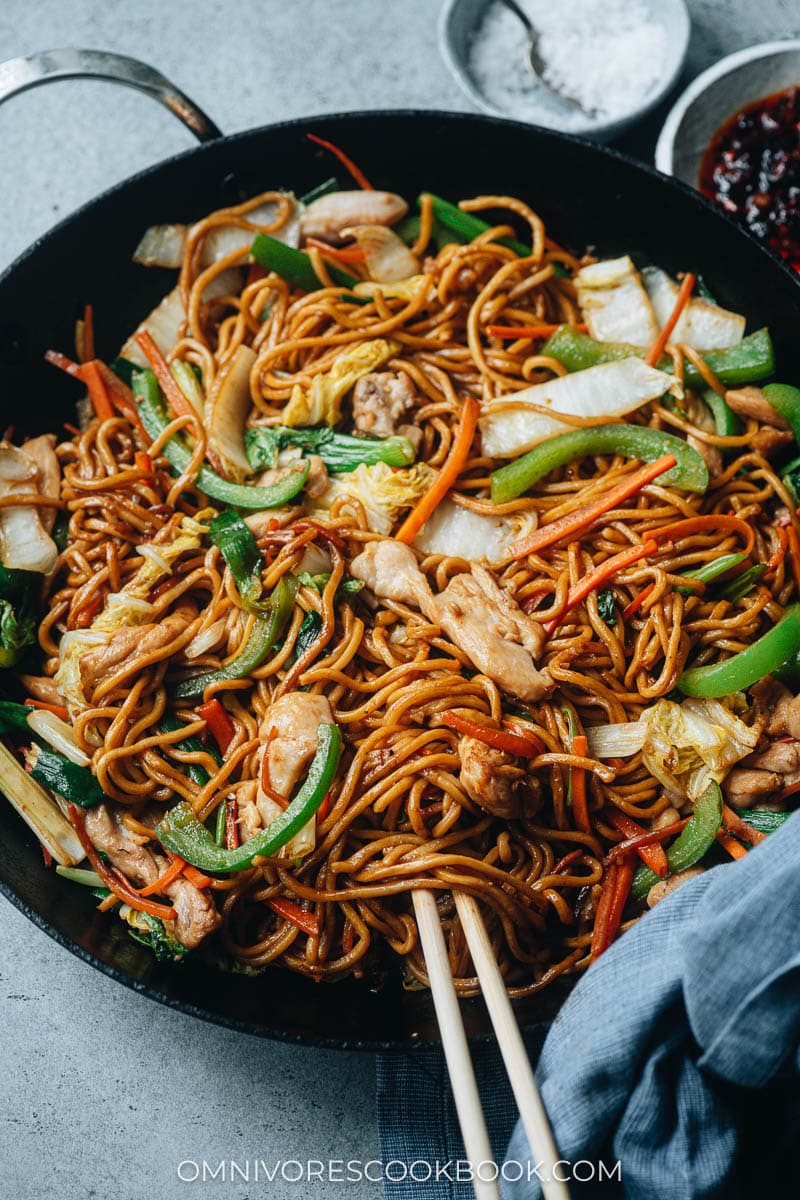
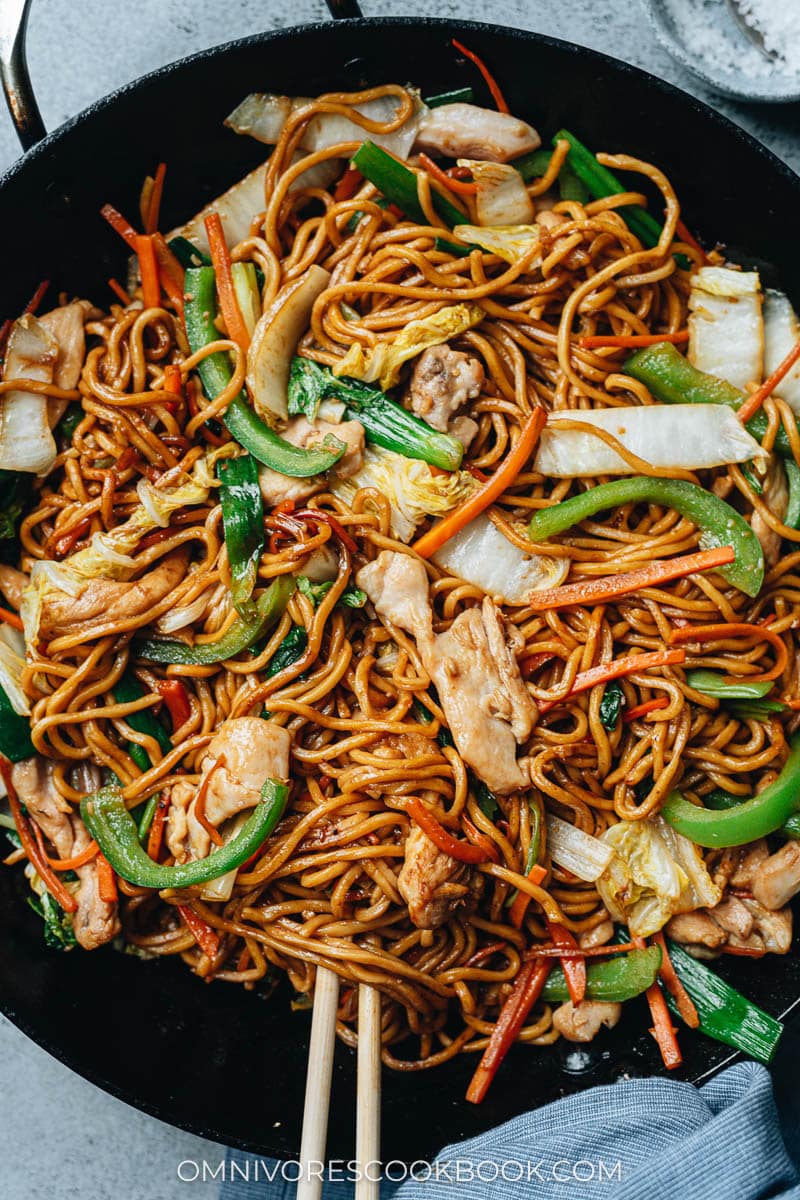
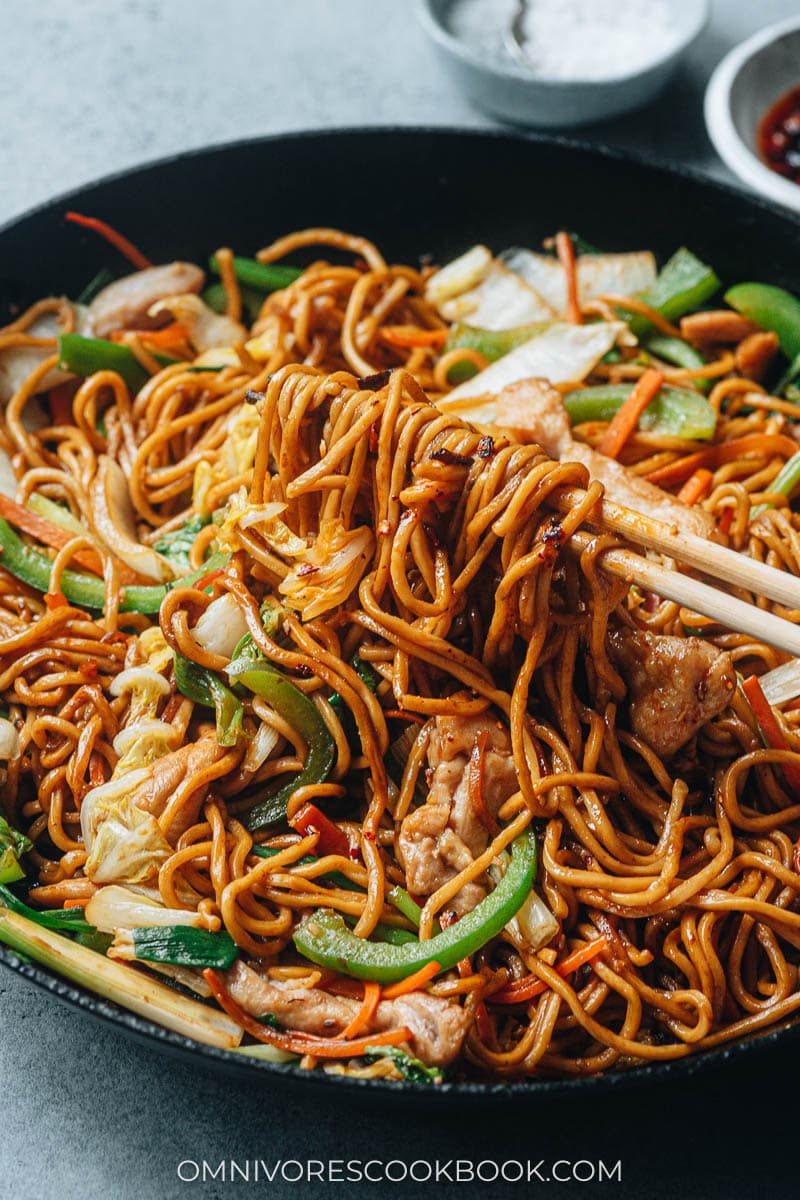
Chicken lo mein is one of those comfort foods like pizza and burgers, that you might find yourself craving on any occasion. No matter whether it’s a busy Monday night, or when you’ve just come home after a trip, or are feeling cozy and want to stay in and watch TV, you might want to reach for that small box of Chinese takeout that is loaded with flavorful noodles and tender chicken. I’m not surprised that many people associate chicken lo mein with Chinese takeout. It’s definitely one of the iconic dishes of Chinese cooking. Here is the fun part – you can make chicken lo mein at home, one that is not only practical and easy enough for a home cook, but my recipe will also help you make it as tasty as the restaurant version. Let’s jump into the details!
Chicken lo mein ingredients
What type of noodles to use
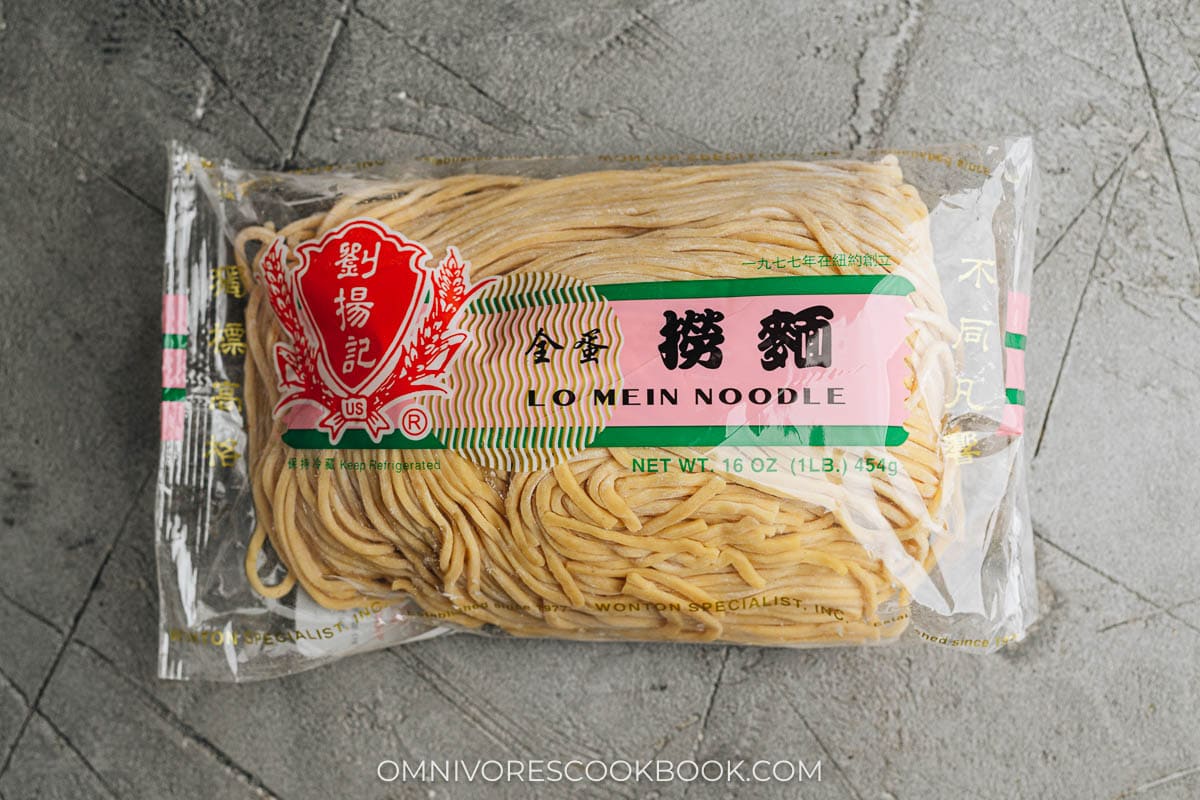
The biggest difference between chicken chow mein and chicken lo mein is the type of noodles used. Chicken chow mein uses thin chow mein noodles that create a crunchy crispy texture once fried in oil. Lo mein uses thick egg noodles that yield a chewy texture once cooked. The best noodles for chicken lo mein are fresh lo mein noodles. You can find them at Chinese markets or large Asian markets such as H Mart. They are usually stored in the refrigerated or freezer section. You can also find them at online Asian grocery stores such as Umamicart. Alternatively, I’ve found that udon noodles and thicker dried wheat noodles also work in this dish. However, I highly recommend sourcing fresh lo mein noodles if you want to replicate the restaurant experience. Unlike dried noodles, fresh lo mein noodles yield the satisfying chewy texture that is the highlight of the dish.
How to create the most tender and flavorful chicken
Always always marinate your chicken before cooking. It only takes a minute to prepare and 10 minutes to marinate. But it makes a big difference. Your chicken will end up juicy and more tender and bursting with flavor. The cornstarch not only tenderizes the chicken, but it also protects it from overcooking in the hot pan. It’s an important practice in Chinese cooking that I never skip.
What vegetables to use
I love adding tons of vegetables to my chicken lo mein, as they give the dish a delightful texture and make your meal more balanced. In this recipe I used napa cabbage, carrot and pepper. You can also replace them with other vegetables you might have on hand. The rule of thumb is to choose vegetables that have different textures and colors. Here are some alternative vegetables to use in chicken lo mein:
Cabbage, baby bok choy, spinach, Chinese broccoli (to replace napa cabbage)Bamboo shoot, water chestnuts, hot peppers (to replace green pepper)Onion, zucchini, mushrooms, bean sprouts (to replace carrot)
Note, the cooking time of the different veggies varies. As a rule of thumb, hard vegetables such as carrots, water chestnuts and carrots take longer to cook (3 to 4 minutes). Spinach and bean sprouts take the shortest time to cook, as little as 1 minute. If you’re not sure about the proper order to add the veggies, cook them individually until almost done, then add them back into the pan later on. This way, your veggies will always cook perfectly and maintain their vibrant colors.
Mise en place
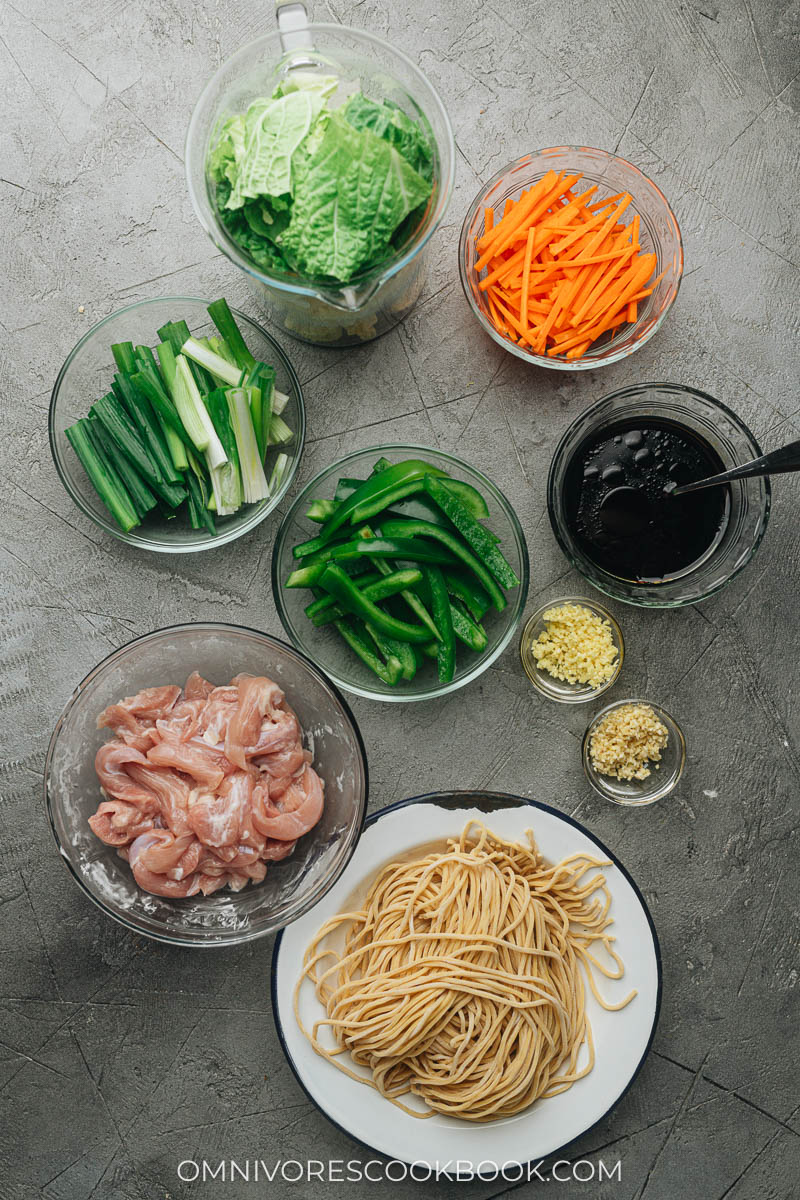
Once you’re ready to cook, your table should have:
Chopped veggies: cabbage, pepper, carrot, green onionMixed sauceMarinated chickenChopped aromatics: ginger and garlicCooked noodles
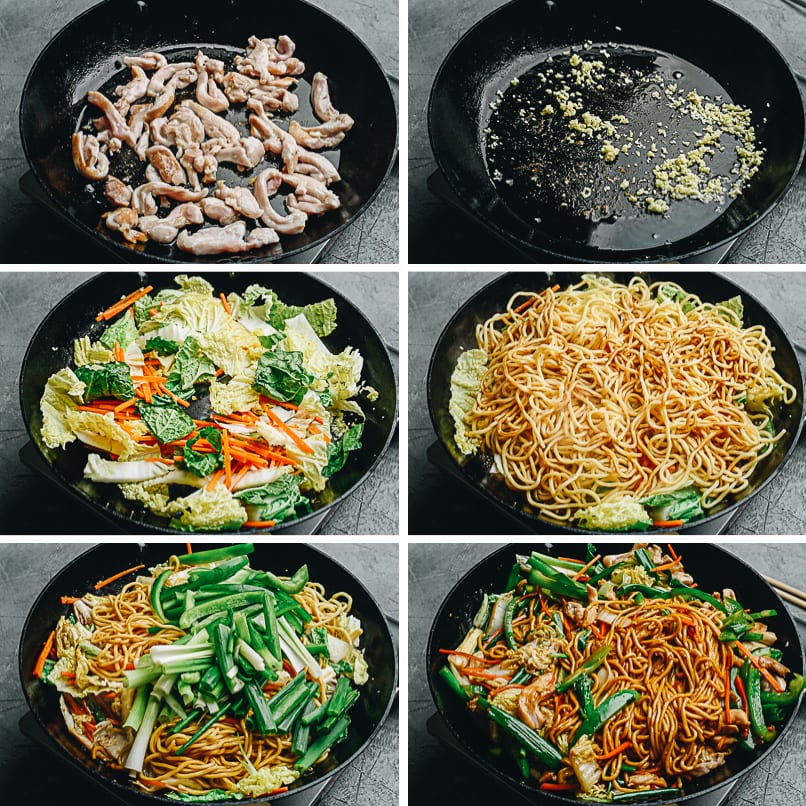
How to make restaurant-style chicken lo mein
Cooking chicken lo mein is super easy once you have prepared the ingredients. PS: I like to have very crunchy peppers, so I add them at the very end. If you prefer a more tender texture, you can add the pepper and green onion before adding the noodles and give it a quick 30-second stir fry.
Why you don’t need a wok
I expanded on this topic in my post Wok vs. Stir Fry Pan and you can find more information there. But, long story short, you can make a delicious chicken lo mein without a wok as long as you use a lot of aromatics (fresh ginger and garlic), a great lo mein sauce, the correct type of noodles, and a pan that’s hot enough. You can achieve all of these by following my recipe below with a large nonstick skillet or a carbon steel pan. In fact, if you have an electric stove or induction stove at home, a skillet will heat up better than a wok because it has a larger contact area with your stove. I toss my noodles using a pair of tongs to prevent the ingredients from flying out of the pan.
What NOT to do
The biggest mistake when making lo mein is to crowd the pan with too many ingredients. When you do this, the pan will take a long time to heat up, so all your food will be steamed instead of seared. The dish will end up watery, soggy, and generally lacking in flavor. The recipe below fills up a large 12.5” (32 cm) frying pan. If you want to tweak the recipe, make sure not to use too many ingredients that crow the pan.
Afterthoughts
OK, this might be a lot of information to take in. But trust me, if you simply follow my recipe and try this dish once, you’ll be impressed at the results – the flavorful chewy noodles, tender chicken, crisp veggies, and rich sauce that is bursting with flavor. I love homemade chicken lo mein even more than the restaurant version because I like to load it up with a lot of vegetables and I can choose higher quality ingredients. I hope you like this one and happy cooking!
More Chinese takeout dishes
Beef Chow FunPork Chop SueyCashew Chicken (腰果鸡丁)Sweet and Sour ChickenEgg Drop SoupBeef and Broccoli