One of the complaints I’ve heard the most over the years is, how am I supposed to use the leftover Chinese ingredients I bought for a specific dish. Imagine that you’ve bought dried chili peppers, Sichuan peppercorns, and Doubanjiang to make your favorite Mapo Tofu or Sichuan Mala Chicken. After you’ve made the dishes, you’re left with all the ingredients that take up space in your pantry and lose fragrance over time. It’s such a waste! That’s why I want to introduce you to more non-Chinese dishes that are even tastier when they incorporate Chinese ingredients. For example, this gorgeous Roasted Whole Chicken uses the traditional tea smoked duck seasoning but is much easier to make at home. I’ve made Spiced Candied Walnuts with a warm, savory spice blend that makes the sugary nuts even more addictive. And I made these finger-licking Soft Cinnamon Rolls using Chinese sesame paste. See? You can totally utilize your existing Chinese pantry to create your favorite foods with a mildly exotic flavor profile, while keeping them just as comforting as the originals.
Why Chinese chili
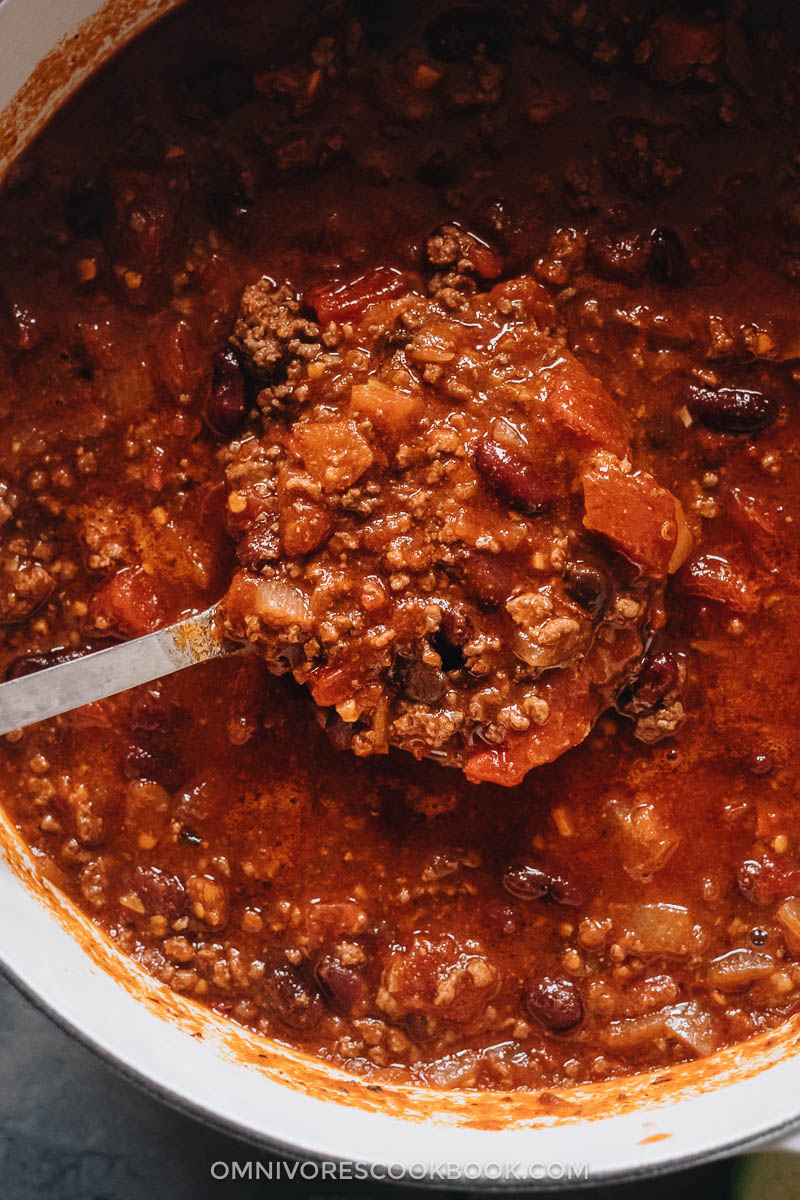
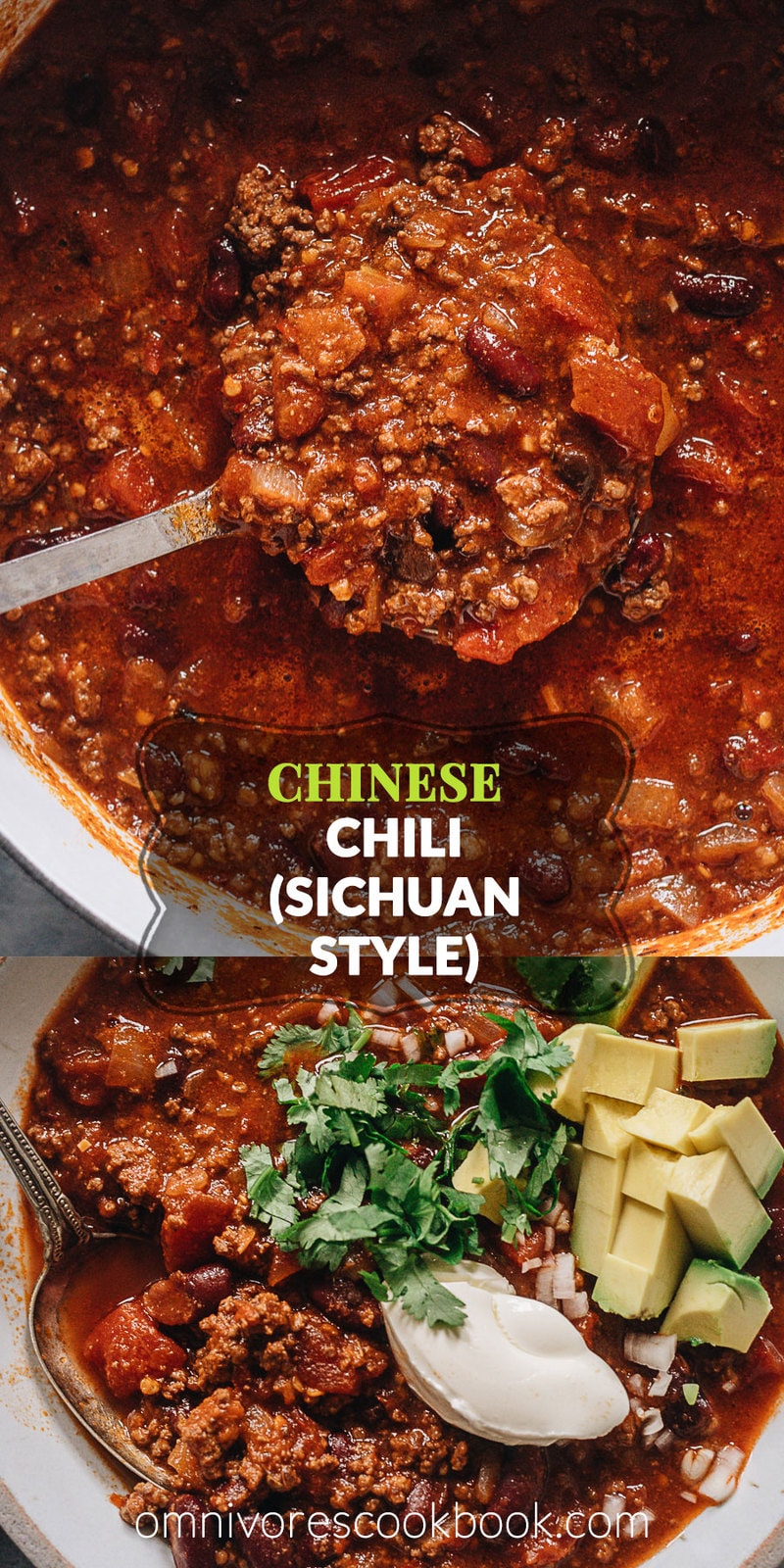
We created this Sichuan style Chinese chili using the flavor profile of Mapo Tofu.
The Chinese chili blend uses Sichuan peppercorns to create a distinctive fragrance and a numbing tingling sensation that makes this dish stand out. The chili is well-balanced and tastes just as hearty as the traditional version. We introduce a new method to make a chili blend that brings out the flavor of the chili peppers. Clean up your pantry while making something delicious that everyone will enjoy. The dish is perfect to make in advance and serve later. It freezes well and is suitable for meal-prep as well.
My American friends tasted the chili and they all raved about it. They commented that it’s a very well executed chili but has something unique about it that tastes so good. That’s the magic of Sichuan peppercorns!
Ingredients
The recipe uses a chili blend made with Chinese ingredients:
(1) Chinese Facing Heaven dried chili peppers
Facing Heaven chili peppers are the most common in China. They have a deep red hue and taste medium-hot. They’re used abundantly in Sichuan cooking.
(2) Chinese Red Lantern dried chili peppers
These cute, round, and fat chili peppers are medium-hot and have a smoky taste. I added them into the chili paste to add smokiness to the dish. You can find premium Facing Heaven chili and Red Lantern chili peppers at The Mala Market, which imports freshly harvested dried chili peppers directly from Sichuan. Alternative: If you do want a simpler cooking process or do not have these peppers, you can also use Chinese chili flakes or a regular chili blend to replace the whole dried chili peppers (tips are included in the recipe footnotes).
(3) Sichuan peppercorn
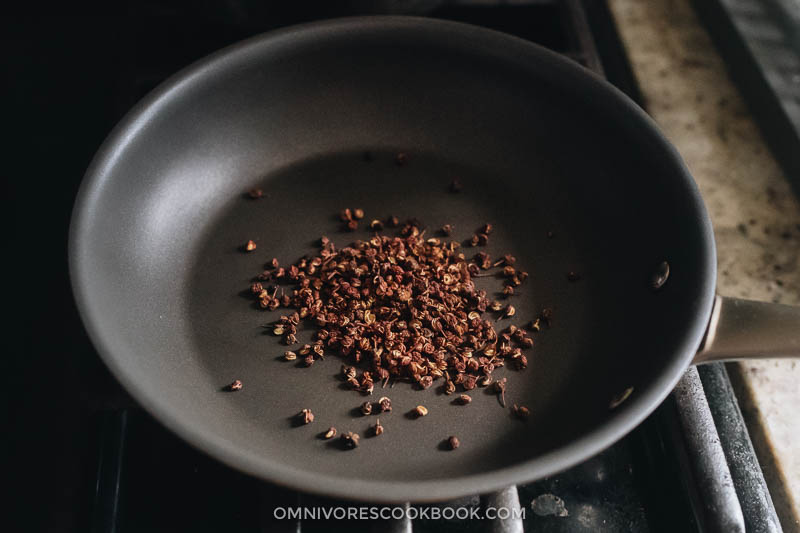
Sichuan peppercorn is the key ingredient in this recipe. It creates a very rich aroma that no other pepper will be able to replace. You can read a bit more on Sichuan peppercorns in this post. To find good Sichuan peppercorns, the first thing to look for is the color. Fresh Sichuan peppercorns have a vibrant red color, and the numbing aroma will be right up your nose as soon as you open the package. I highly recommend the high quality Sichuan peppercorns from The Mala Market. Fresh Sichuan peppercorns make a big impact on all your favorite Sichuan dishes and are definitely worth the investment.
(4) Doubanjiang
Also called fermented spicy bean paste, Doubanjiang is a key ingredient in Mapo Tofu. It adds a deep fermented savory umami like soy sauce, only richer.
Cooking process
Make the chili blend
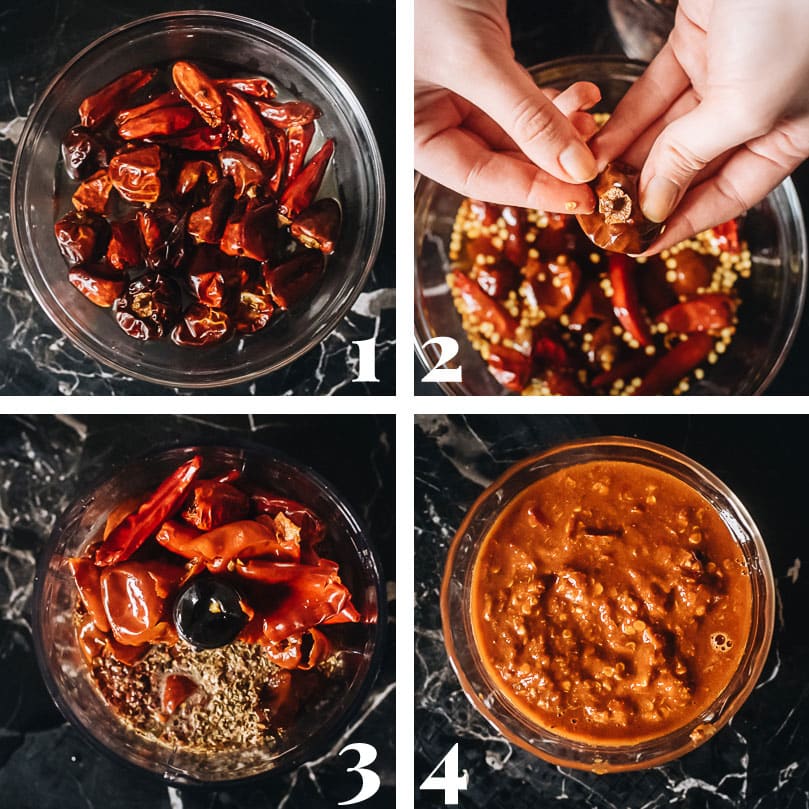
The chili paste blend is the main star of the dish. It creates a very balanced, smoky, and not-too-spicy chili paste that is fragrant and has a unique aroma. To make the chili blend: If you do not want to make the chili paste, you can use 1/3 cup of chinese chili flakes (or 1/4 cup chili powder) to replace the whole chili peppers. Grind the Sichuan peppercorns into powder in a spice or coffee grinder. Mix all the ingredients for the chili blend and toss them in a hot pan to release the fragrance. Then use the dry chili blend instead of the paste.
Cook the chili
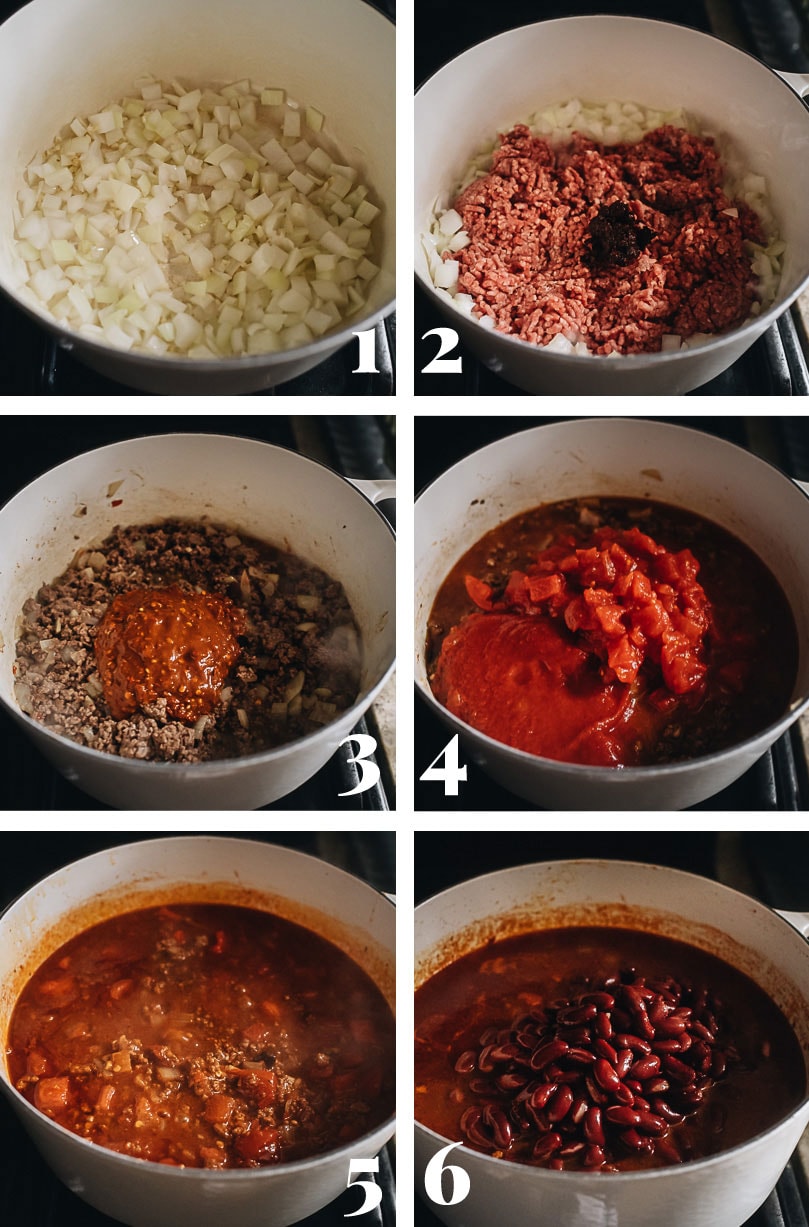
This is the easy part, just like if you were making a pot of traditional chili, almost! Super easy isn’t it?
Serve and store
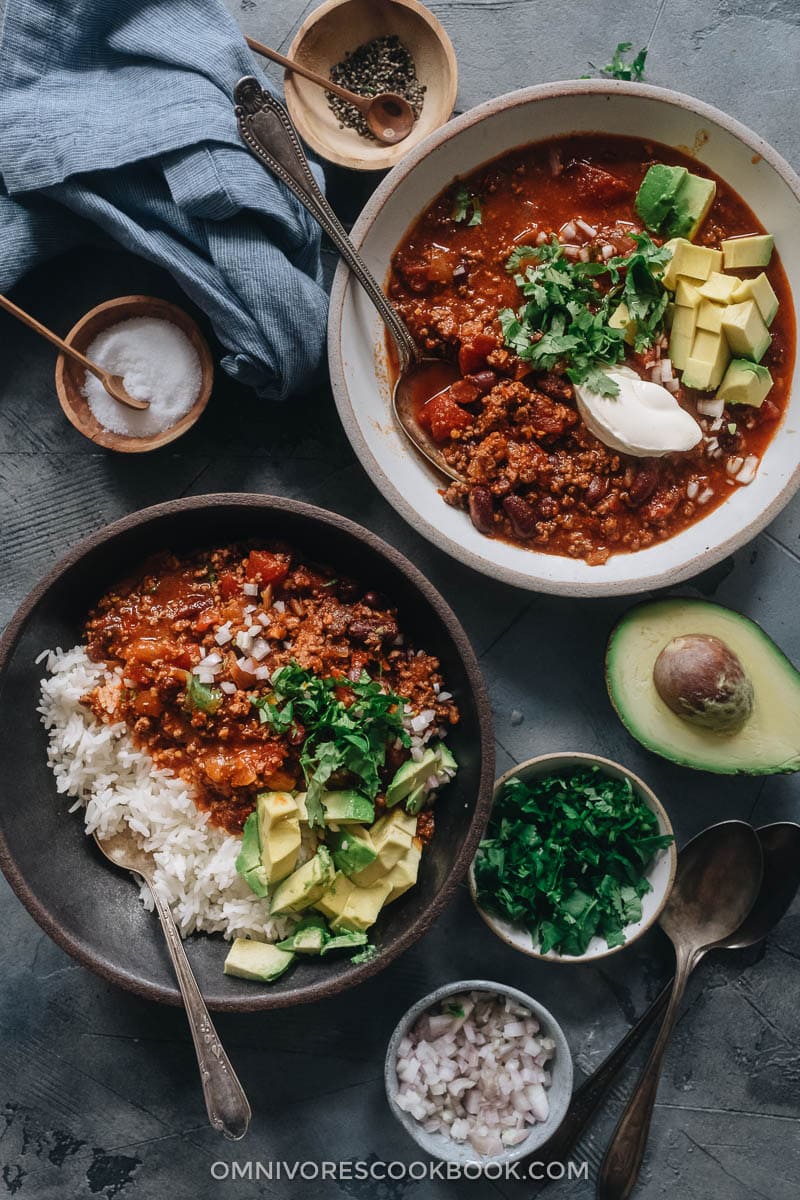
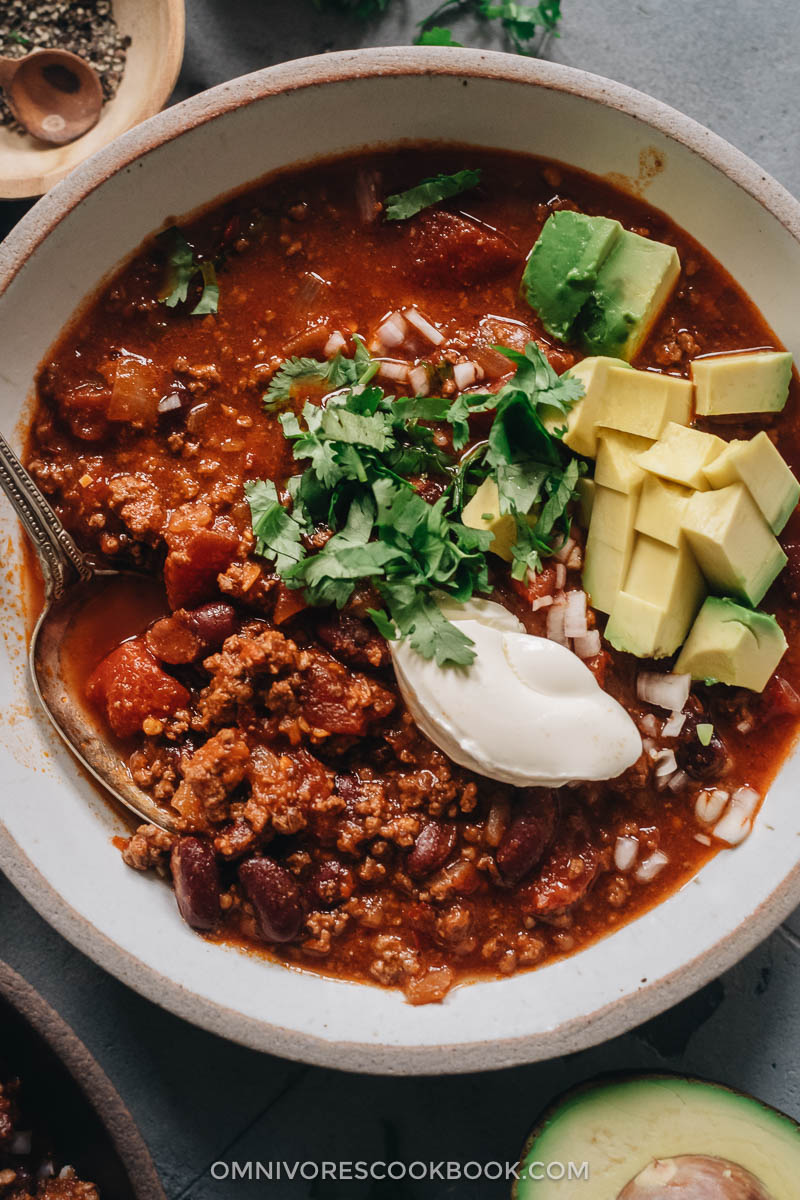
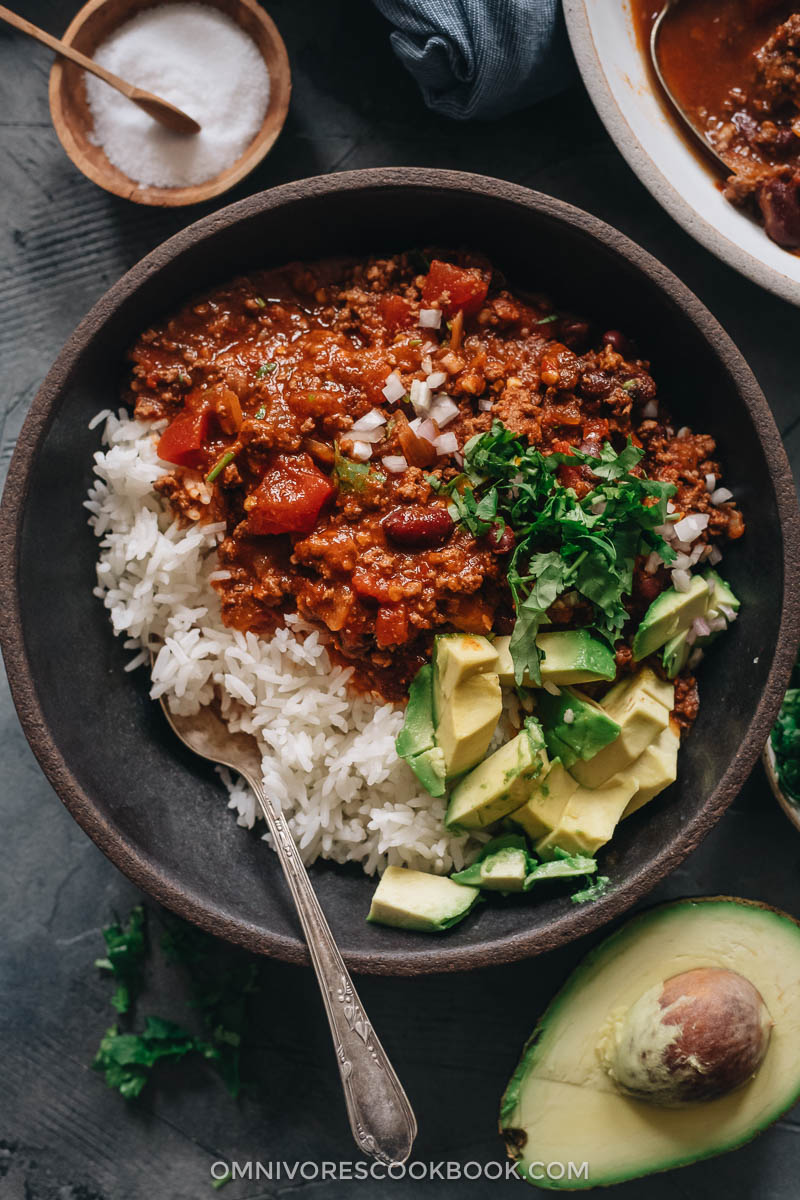
You can serve the chili the traditional way, with chips, crackers, or cornbread. Or simply eat it with a spoon. I enjoy serving the chili over steamed rice, China style. For the toppings, you can go with cream cheese, sour cream, or shredded cheese. Although I highly recommend topping it with avocado. The chili is very rich and flavorful by itself, so the mild avocado will add a nice touch to it without overpowering the star. This recipe makes a big batch, because, believe or not, it’s easier to make a big batch than a small one. You can use the chili for meal prep or freeze the leftovers for longer storage. You can also use the leftovers as pasta sauce, make it into tortilla soup, or make chili dogs! If you want to learn more about how to use leftover chili, leave a comment to let me know! I’d love to develop some fun leftover chili recipes.
More comfort food recipes
Korean Fire Chicken (Cheese Buldak) Instant Pot Pork Ribs (Chinese-Style) Steamed Salmon in Black Bean Sauce Chicken Udon Soup Barter-Worthy Spam Musubi
If you give this recipe a try, let us know! Leave a comment, rate it (once you’ve tried it), and take a picture and tag it @omnivorescookbook on Instagram! I’d love to see what you come up with. Lilja Walter is a part of the Omnivore’s Cookbook team and worked closely with Maggie to develop and test this recipe.