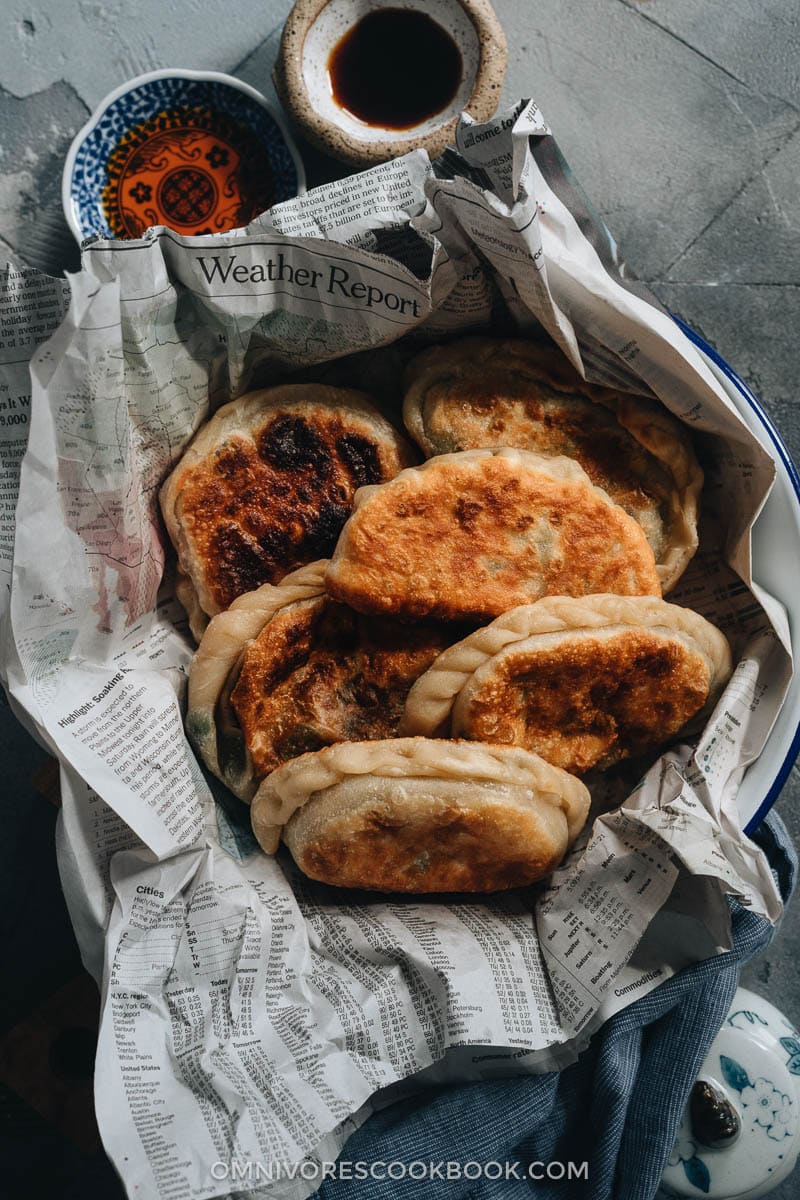
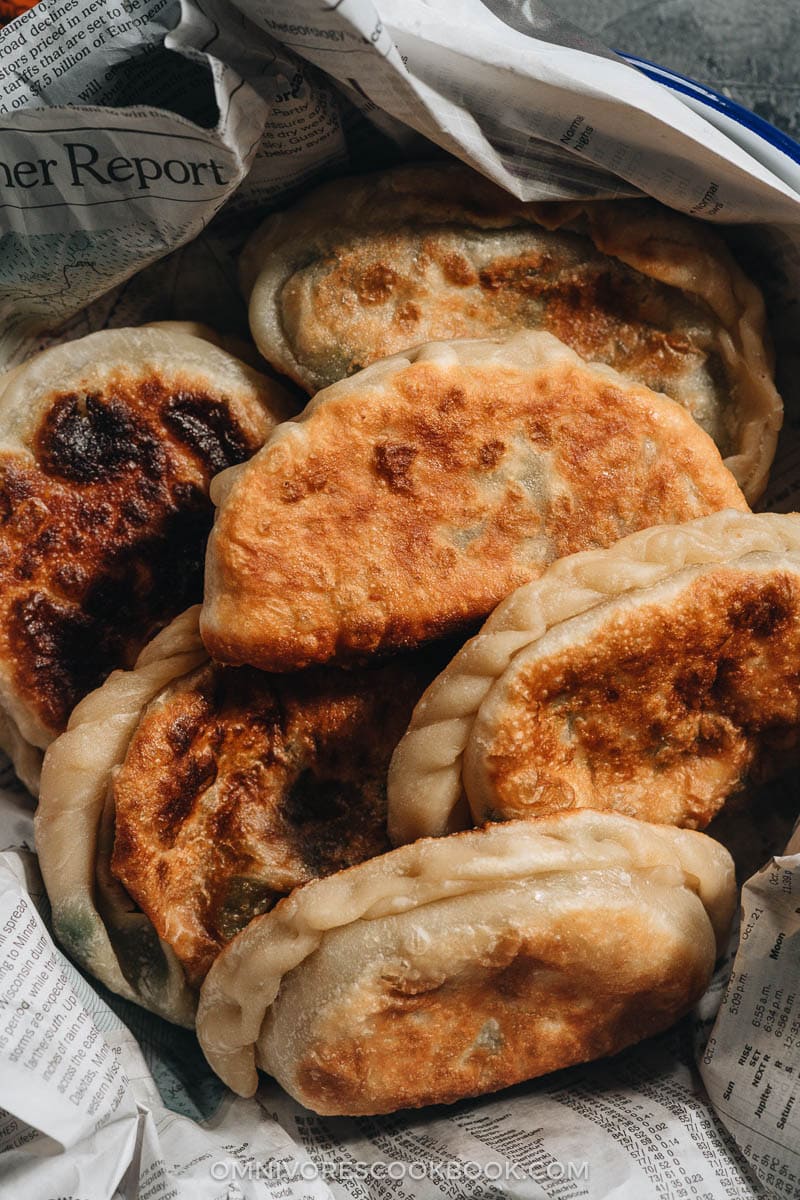
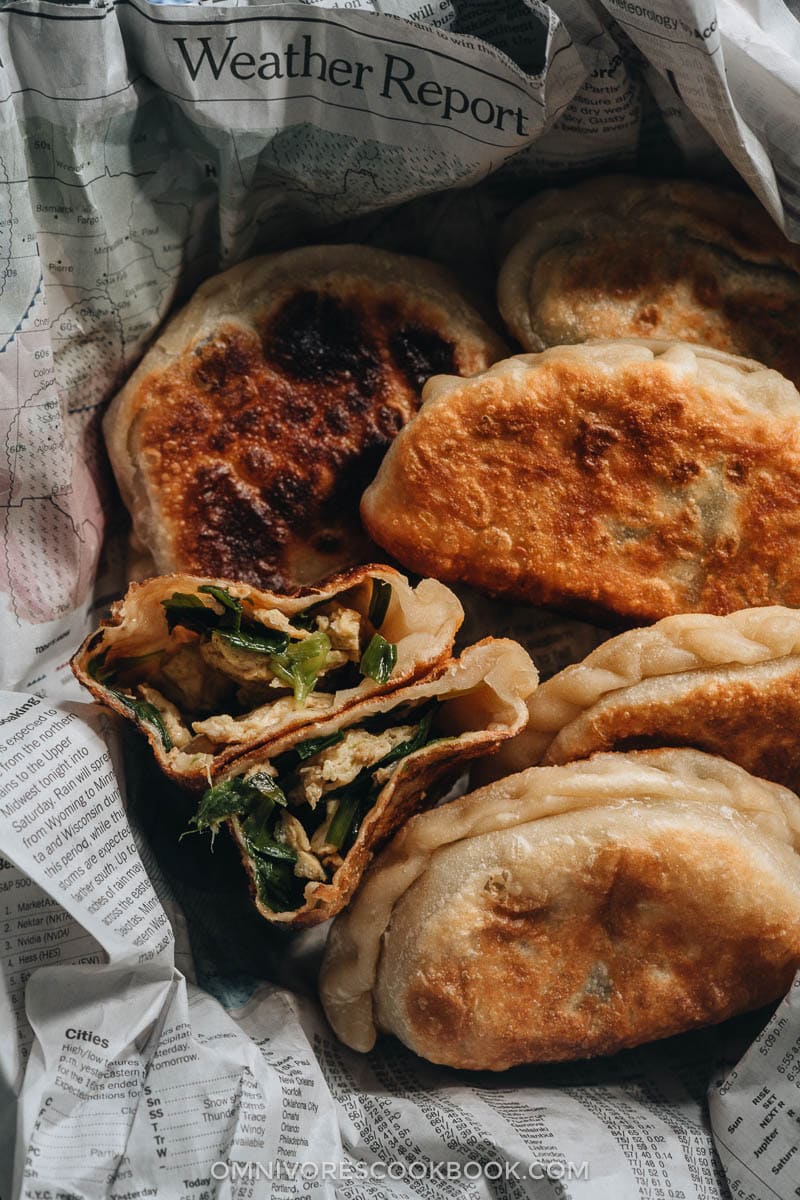
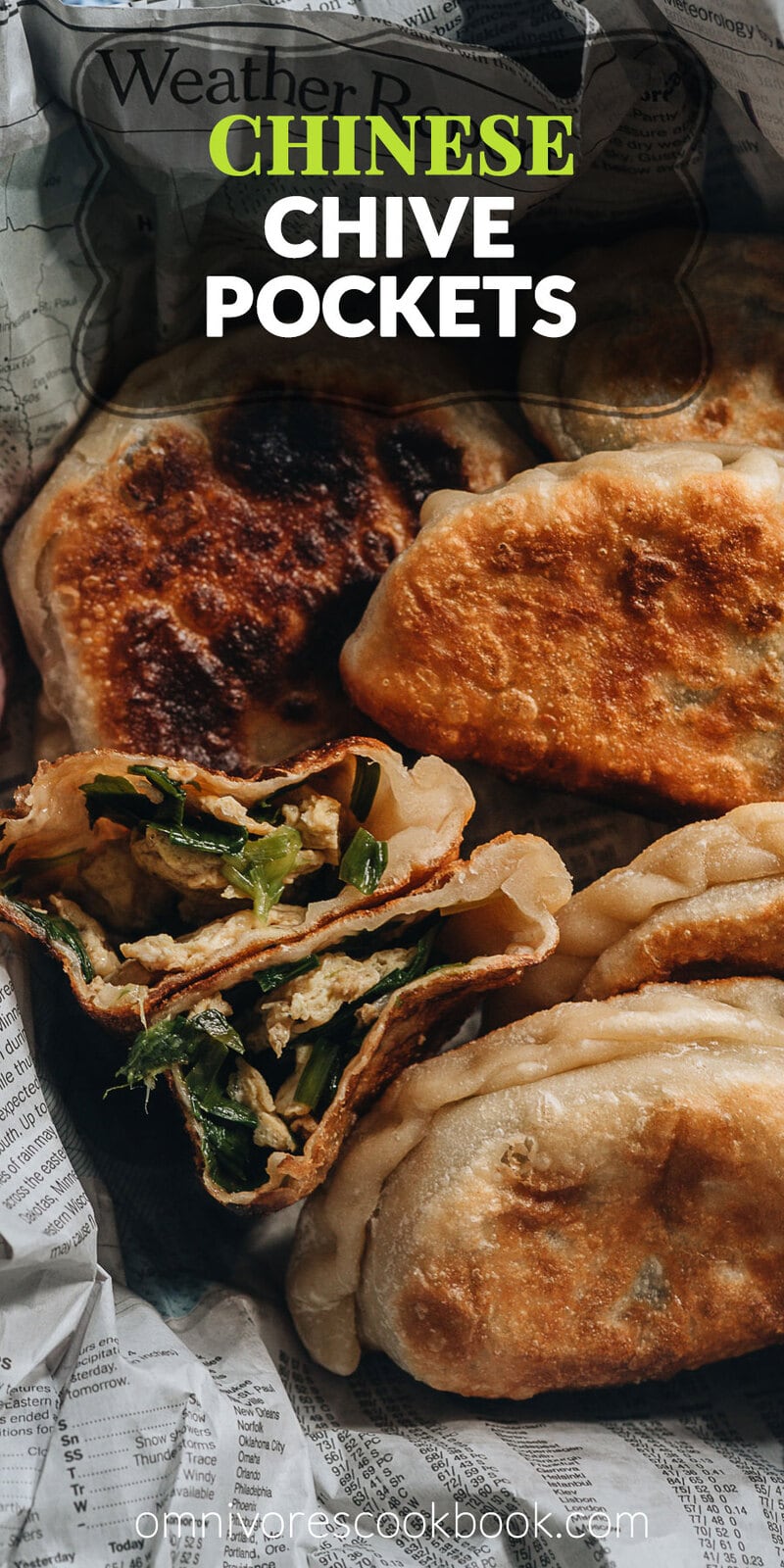
Chinese Chive Pockets are a kind of omelette-dumpling hybrid that’s massively popular in the northern part of China. Made predominantly from eggs, green chives, flour, and dried shrimp, they have a crispy golden outer layer and a tender filling. It’s a beautiful combination of distinct textures and flavors. So what is a pocket? I think you can liken it to dumplings (or potstickers), only bigger in size. Which translates to – more filling! I introduced a northern Chinese beef meat pie recipe in the past. It’s in the same genre as the Chinese chive pockets. Only the beef pie has a more complicated dough – it’s made with layered dough with oil in between, to create a very buttery and crispy texture. These chive pockets are quite different. They use a very simple hot water dough that is very forgiving and easy to work with. If you’re new to dumpling making, you can try out this recipe because it’s very easy to wrap.
Cooking notes
1. What are Chinese chives?
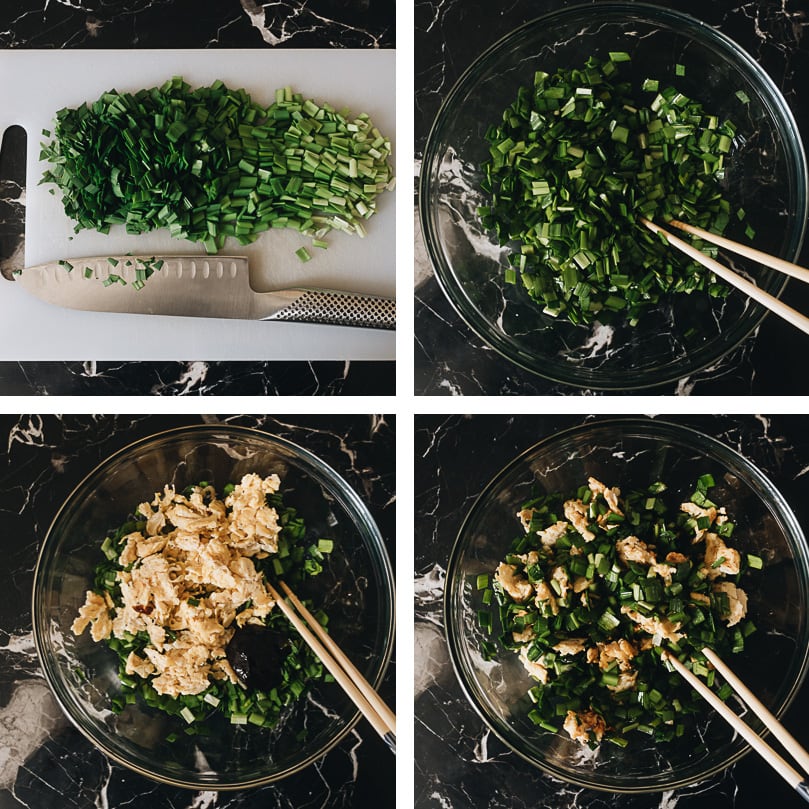
Chinese chives resemble regular chives in shape and color, but with much larger, longer, and meatier leaves. Unlike chives which are usually used as a garnish to finish up a dish, Chinese chives are commonly used as the main ingredient in stir-fried dishes or add to dumpling filling. These delicate emerald straws have a garlicky taste and soft texture once cooked, which gives a kick to whatever dishes they’re used in but they’re not as overwhelming as green onions. They pair surprisingly well with egg-based dishes. If you see Chinese chives at the market, definitely try out this dish because you’d be surprised how delicious the dumplings taste with such simple filling.
2. Papery shrimp
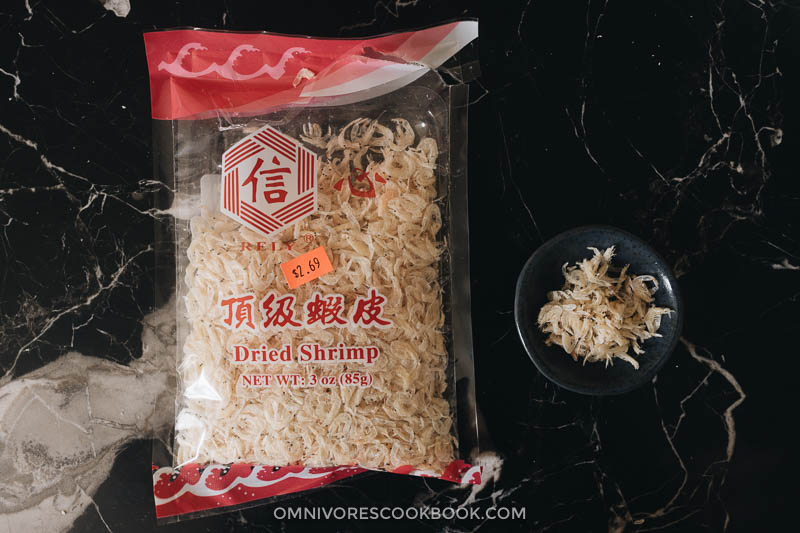
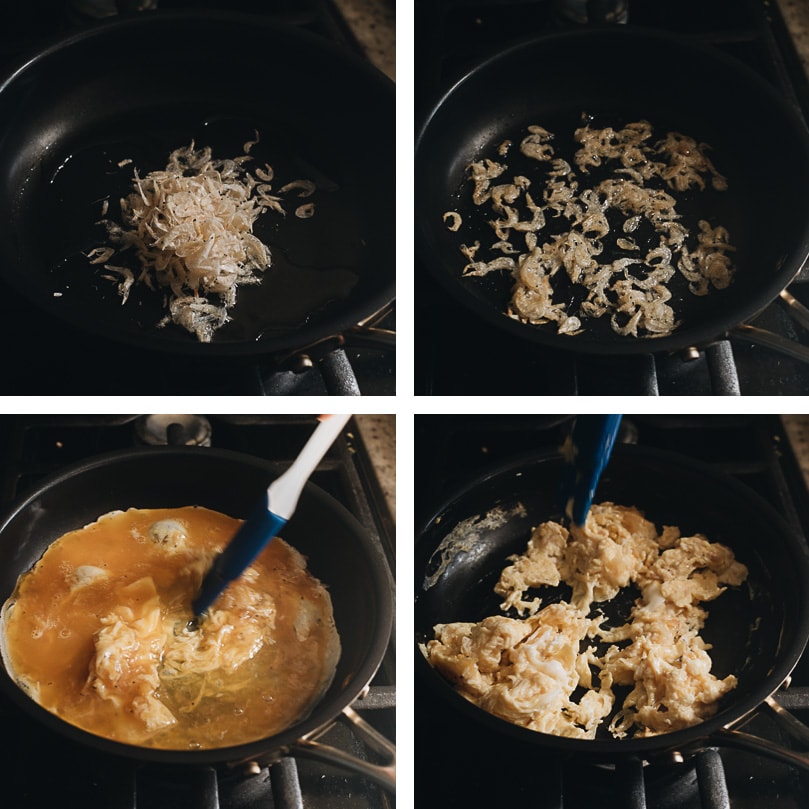
Papery dried shrimp, Xia Pi (虾皮) in Chinese, means shrimp skin. They are tiny dried shrimp that are very tender in texture and have a strong taste of the sea. Different from the larger and meatier Asian dried shrimps, you don’t need to rehydrate them before cooking with them. Although in this recipe I gently toasted them in hot oil to give them a crispy texture and eliminate the raw taste. It’s a very handy ingredient to add umami to a soup, fried rice, or stir fry, such as the traditional wonton soup or the Little bok choy stir fry.
3. Hot water dough
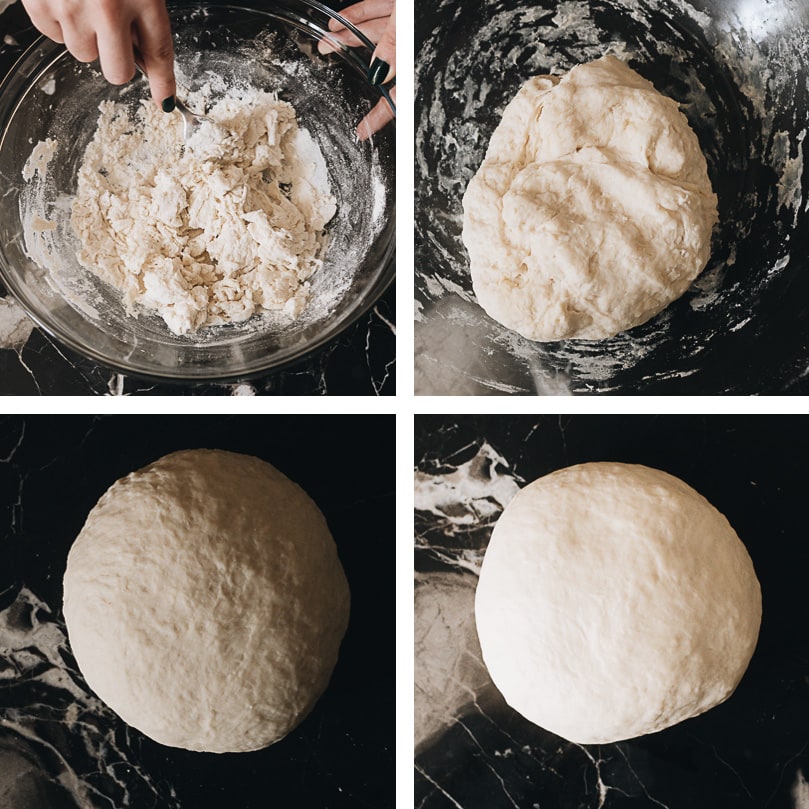
This recipe uses a hot water dough. It uses all-purpose flour, salt, sugar, and peanut oil to create a silky and tender dough that is very palpable and will crisp up nicely once pan fried. You only need to knead the dough for a couple minutes once it comes together. After resting for 30 minutes, it will become smooth and easy to work with. Although you can dust the working surface with dry flour to work with the dough, I highly recommend you grease your working surface with a bit of oil. Not only does it prevent the dough from sticking, it doesn’t change the dough texture and will make the end product crispier.
4. Seasoning
You might find it weird to add Shaoxing wine into the scrambled eggs. Because this recipe uses very simple ingredients, the wine adds a very nice tangy aroma to the pockets. If you don’t want to use alcohol in your dish, you can use chicken stock instead. Some traditional Chinese chive pockets use only salt to season the filling. I found that adding some oyster sauce boosts the taste a lot and makes a difference.
5. One word on the thickness of the wrapper
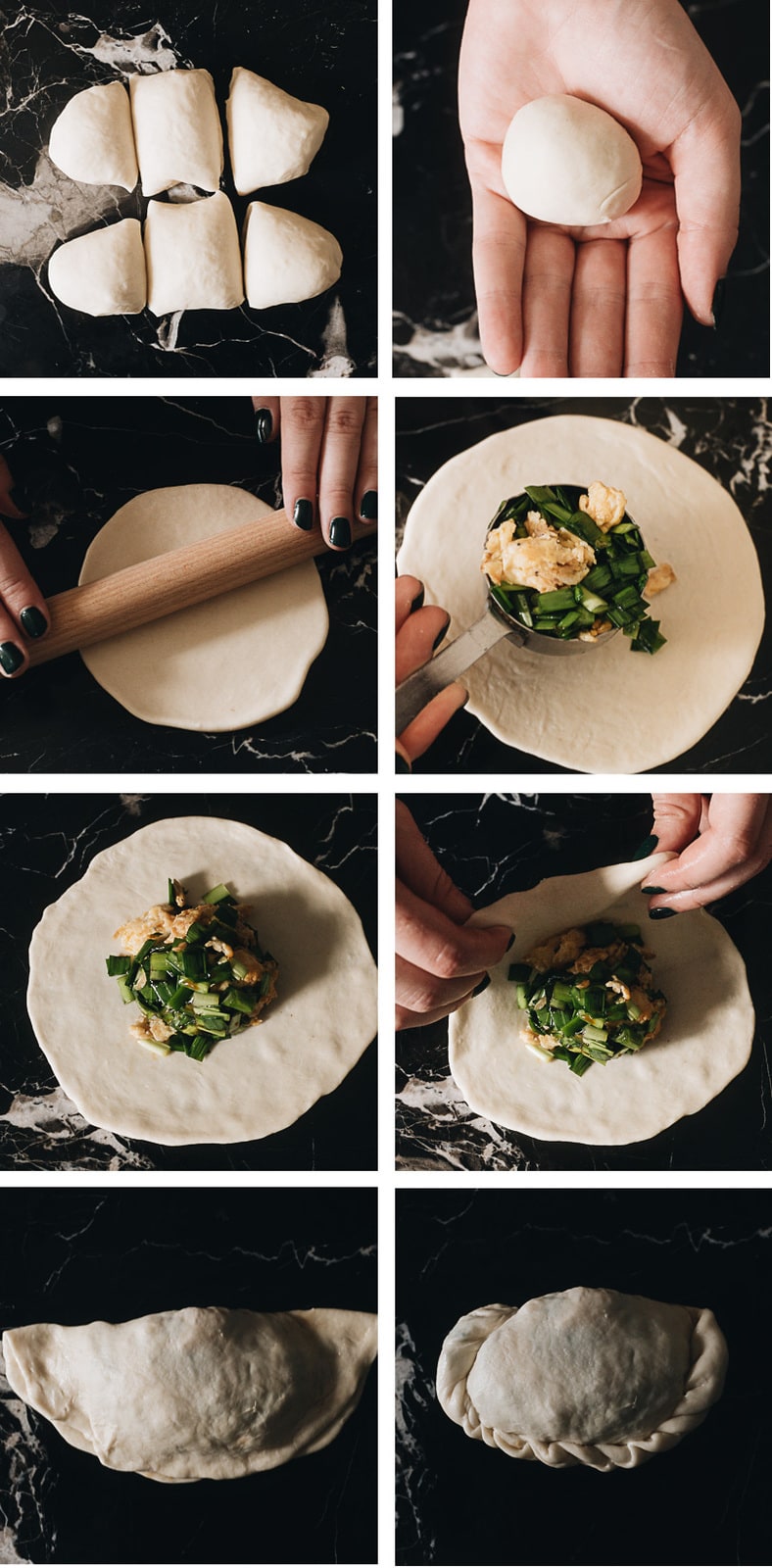
If you buy chive pockets from a street vendor in China, you’ll be amazed at how skillful they are at wrapping so much filling into paper-thin pockets. When it comes to home cooking, it might be safer to roll the wrapper a bit thicker so it’s easier to wrap. When I made these chive pockets, I rolled the dough very thin and the end result was amazing. But I did find it more difficult to wrap and the pocket shape was not perfect. The recipe is quite forgiving in any case. So roll the dough to the thickness you’re comfortable with, and I promise the end result will taste just as great.
6. How to wrap the pockets
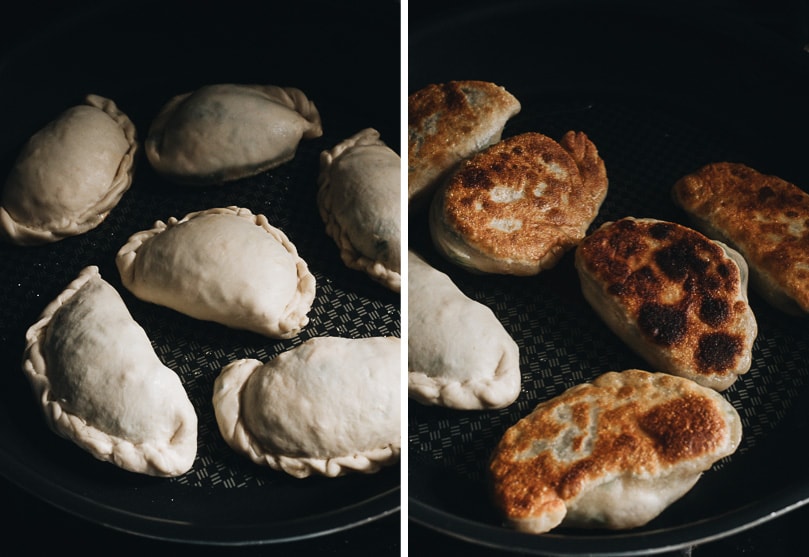
Chive pockets are very easy to wrap. Different from dumplings that require pleats, you can simply roll the dough into a large round sheet, add the filling in the center, and fold it into a half-moon-shaped pocket. Once folded, you can use your finger to fold the edge, one finger width at a time, until it forms a pretty pattern. Alternatively, you can simply press the dough together. It’s OK as long as the pocket doesn’t fall apart during cooking.
7. Pan fry the chive pockets
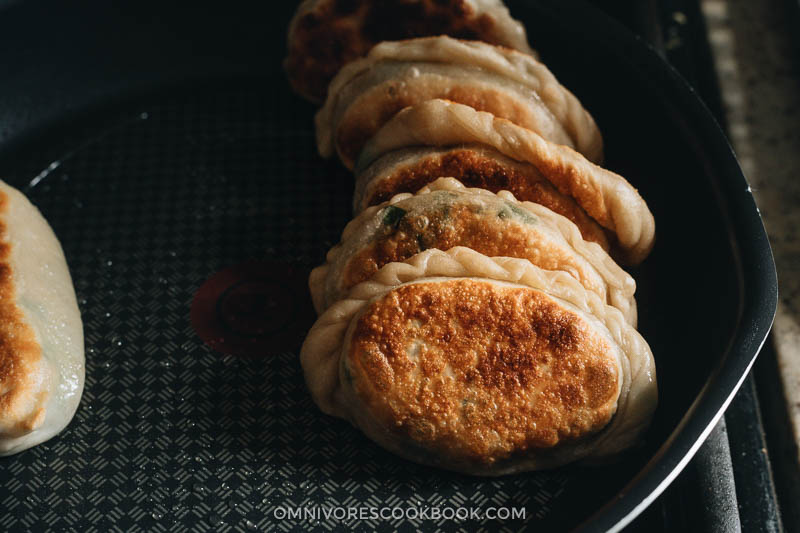
You simply need to pan fry the Chinese chive pockets to create the super crispy crust. If you like an extra crispy crust, use a bit more oil. If you prefer a healthier dish, use less oil. The crust will be more crunchy than crispy, but the result will still be tasty.
Afterthought
My grandma used to make a dozen chive pockets and freeze them for later. It was one of my favorite childhood snacks. We usually served them with a bowl of congee, making it a hearty and delicious dinner. It brings back good memories whenever I eat this dish. If a chive and egg dumpling sounds weird to you, you can change up the filling by using my vegan dumpling filling or pork dumpling filling. The result will be super delicious, too.
More Chinese dumpling recipes
How to Make Shumai (Steamed Dumplings) Chinese Beef Dumplings How to Make Chinese Dumpling Sauce Cantonese Chicken Egg Roll How to Make Chinese Dumplings from Scratch
If you give this recipe a try, let us know! Leave a comment, rate it (once you’ve tried it), and take a picture and tag it @omnivorescookbook on Instagram! I’d love to see what you come up with. Lilja Walter is a part of the Omnivore’s Cookbook team and worked closely with Maggie to develop and test this recipe.