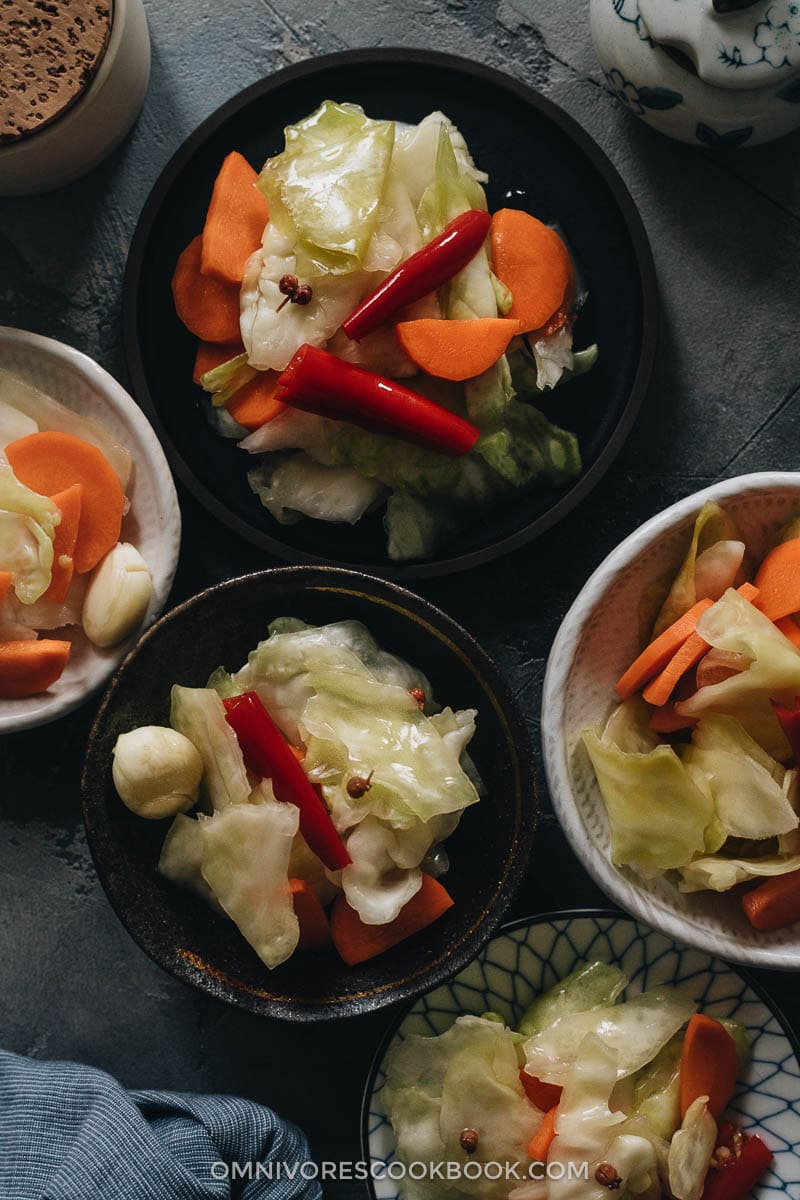
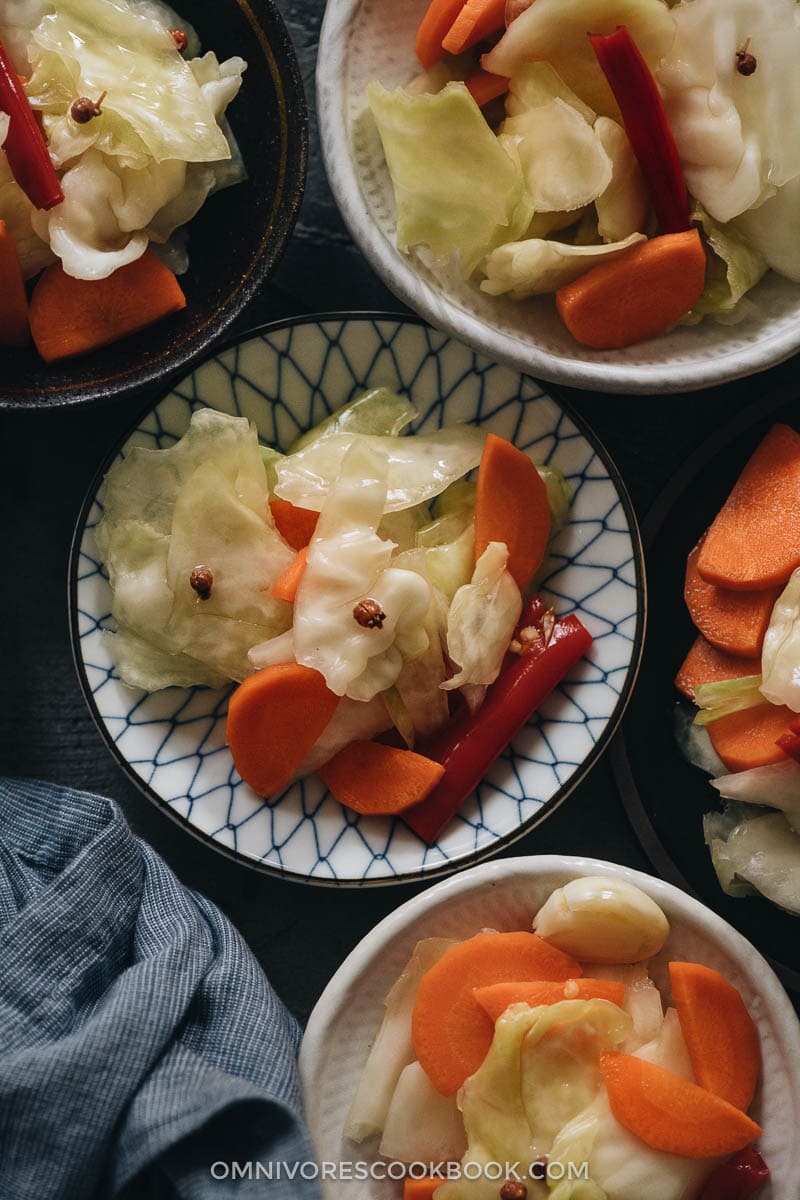
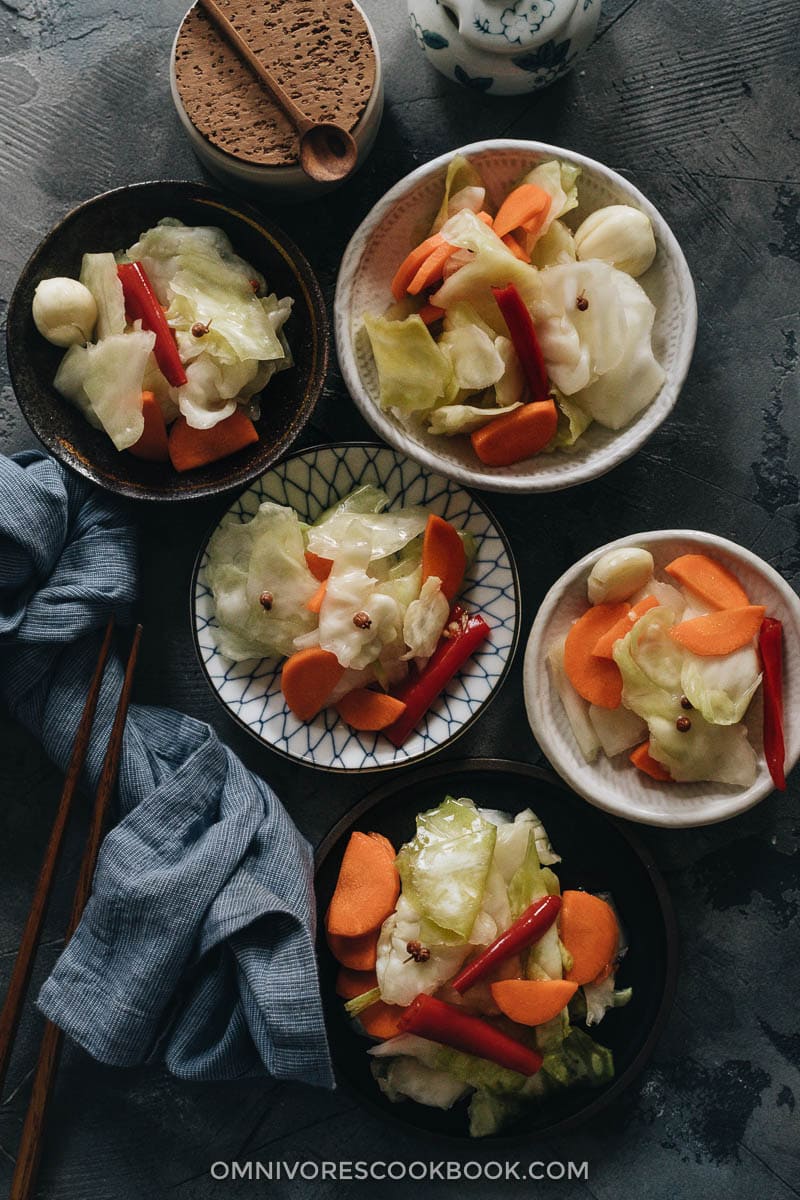
Pickled cabbage, known in Chinese as pào cài (泡菜), is such a humble yet popular dish that decorates tabletops all over China. Traditionally enjoyed as a tangy, crisp condiment for simpler foods such as millet, rice porridge, and steamed buns in home cooked meals, it’s also served in restaurants as an appetizer to snack on and clean your palate while waiting for the main dishes to arrive. Pickled cabbage is such an elemental part of Chinese cuisine that it would almost be a crime not to share a recipe for it! When winter comes to the northern parts of China, the harsh cold sets in and it becomes difficult to grow or harvest many kinds of leafy vegetables. Luckily, the northerners have a thousand-year-old solution. Just before the freezing weather, large trucks are loaded up with cabbage, ready to be taken for pickling. This means that everybody will have veggie nutrients to get them through the season. No wonder pickling is such an important concept in Chinese gastronomic culture! The great thing about this quick pickle recipe is, once you prepare the veggies and the pickling liquid, it’s ready to eat in just three days. After that, you can just leave it for weeks and take small serving amounts whenever needed. Not only does it taste wonderful, but the aesthetic of the jar itself also adds a beautiful burst of color to your kitchen.
Cooking notes
1. Quick pickle
To simplify things and make this dish more accessible, I want to show you how you can make your own Chinese pickled cabbage at home, without needing huge amounts of time (or cabbage!). The ingredients are really basic, probably the type of thing you already have in your pantry. All you need to do is:
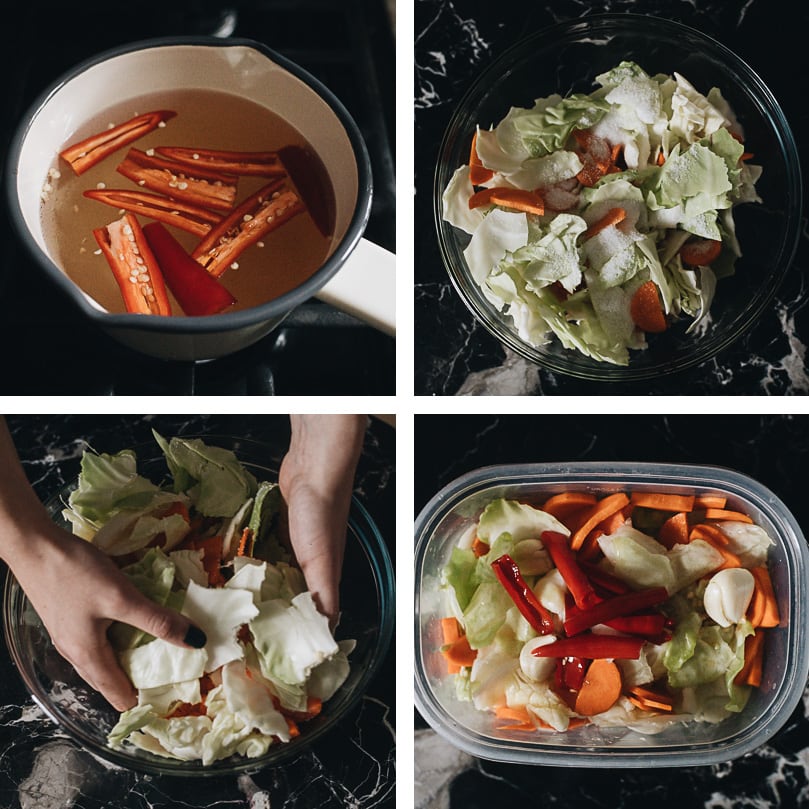
Combine the ingredients for the pickling liquid in a small pot and simmer. It will dissolve the sugar and release the spiciness from the chili pepper. Rub the cabbage with salt and let it sit for 30 minutes, then squeeze out excess water. It will draw the water out of the cabbage and give it a crunchy texture. Combine the pickling juice and cabbage.
That’s it! I added some carrots to the cabbage to add color, just like at a Chinese restaurant. But you can make the pickles with or without the carrots.
2. Spice adjustment
This recipe yields a Sichuan-style pickle that is balanced with sour and sweet taste without being overwhelmingly spicy. You can jazz it up a little with extra spice from the red chilis and Sichuan peppercorns if you like. I used 4 red chili peppers in this recipe because these chilis are quite mild. If you are using spicy ones like Thai bird’s eye or habanero, you probably only need one. For medium-spicy peppers like jalapenos, you can use one or two. This recipe contains Sichuan peppercorns to give the pickle a nice fragrance, but it doesn’t add a lot of numbing taste. You can add 1 to 2 teaspoons more if you want to actually taste the peppercorns.
3. For longer storage
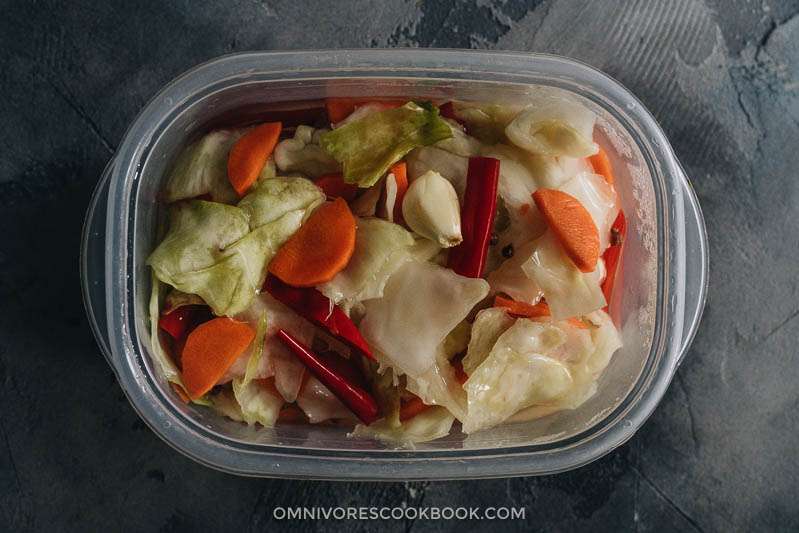
This is a quick pickle recipe that will be ready in three days (you can start eating it after pickling overnight, but the flavor will come through on day three and it will taste much better). I’ve stored these pickled in the fridge for two weeks without any problems. However, if you prefer canning these pickles and storing them for even longer, you should follow the standard canning process to sanitize and seal the jars. These pickles are great to have in your fridge, so when you whip up a super simple dinner such as a quick fried rice or noodle soup, you can add some veggies to your meal. I hope you enjoy!
More delicious veggie (vegan) recipes
Easy Chinese Cucumber Salad Chinese Cauliflower Stir Fry Stir-Fried Pea Shoots with Garlic Steamed Eggplant in Nutty Sauce Homemade Vegan Dumplings
If you give this recipe a try, let us know! Leave a comment, rate it (once you’ve tried it), and take a picture and tag it @omnivorescookbook on Instagram! I’d love to see what you come up with. Lilja Walter is a part of the Omnivore’s Cookbook team and worked closely with Maggie to develop and test this recipe.