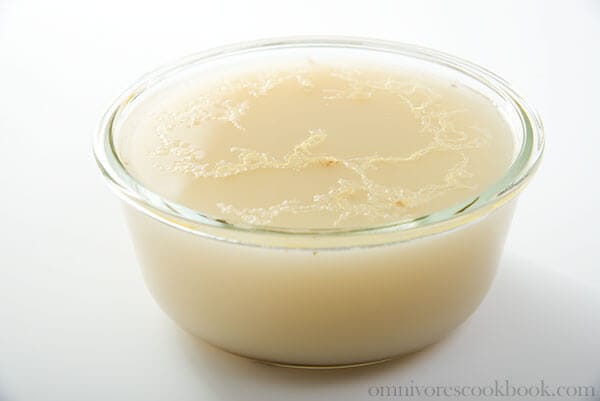
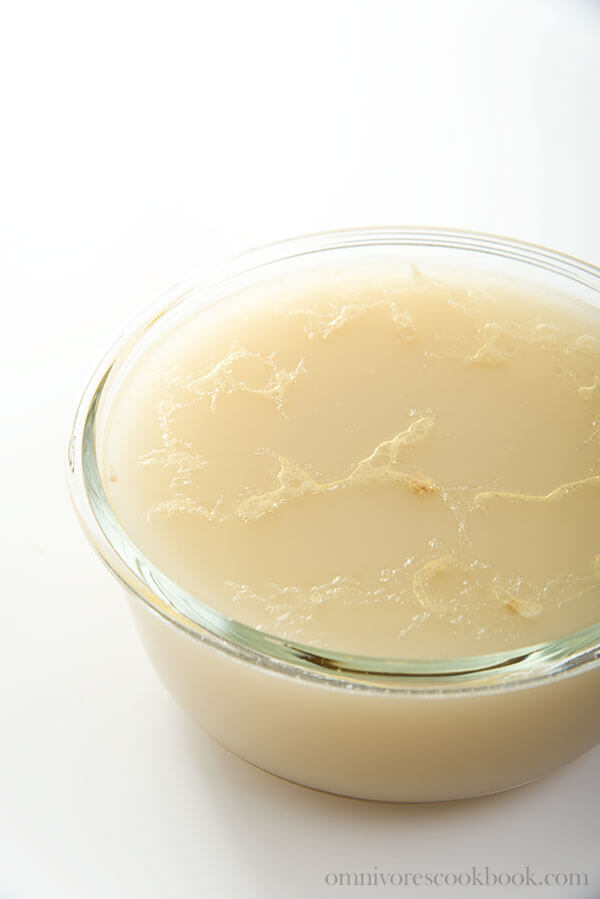
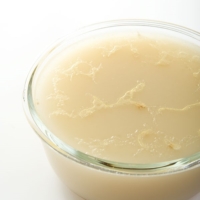
Pork stock is an essential ingredient in the Chinese kitchen, especially in the winter. It has a white semi-transparent color and a meaty taste. It can be added to all sorts of vegetable soups, noodle soups, and stews as a flavor enhancer. Compared to chicken stock, pork bones can be had at a fraction of the cost of a whole chicken, and thus provide a more economic way to make a soup base. Soup is a necessary dish on our dinner table every day, and the same goes for millions of other Chinese families. Depending on the region, Chinese people’s eating habits toward soup vary significantly, but soup is generally considered a must-have item on people’s daily dinner tables. In the southern part of China, people especially enjoy 煲汤 (bao tang), which is a slow cooked soup with various ingredients, including Chinese medicinal herbs. The soup usually has a superior flavor, is high in nutrients, and has a lot of health benefits.
On the other hand, people in northern China are lazier about cooking soup. Instead of cooking meat and vegetables for hours, people tend to create a quick and easy soup that only contains a few ingredients. A classic example is hot and sour soup. If you look at the ingredient list, you’ll be surprised that it uses water instead of stock as a base, to create a hyper-flavorful soup in under 20 minutes. The other trick to creating a super simple and delicious soup is to add meat stock to the soup base. This way, you’ll only need to add a few vegetables and the soup will turn out full of flavor and satisfying. The process of making pork stock is extremely easy. The only seasonings you’ll need are ginger and Shaoxing wine. They eliminate the unpleasant flavor of the raw pork bones without adding too much extra flavor to the soup. The aim of the boiling the bones is to create a condensed and neutral soup that you can easily use in other dishes. For this reason, pungent spices and salt are excluded from the ingredient list.
How to Create A Beautiful Pork Stock
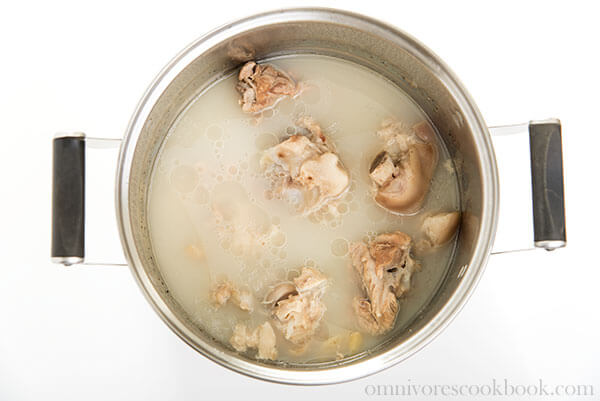
Use pork leg bones. They contain marrow, which adds great flavor to the stock and really makes a difference. Ask the butcher to chop the bones into several parts, so the bones will release flavor quickly. Wash the bones carefully before cooking. I don’t know about you, but I wash all meat before I cook it. Who knows where it’s been? Drain the soup after the first boil. This will eliminate the clotted blood and brown foam so that the stock will have a beautiful white color instead of turning brown. Keep the broth boiling throughout the whole cooking process. This way you’ll get a semi-transparent soup instead of a clear one.
Bonus Tips
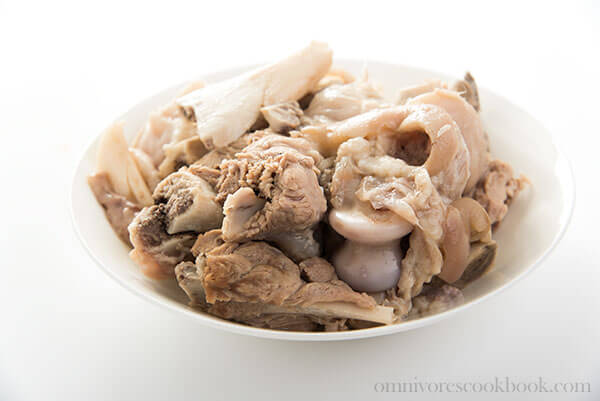
Enjoy the meat that falls from the bones. I added a few tips in the recipe below, so the tender meat won’t be wasted. Cook the second batch of broth after the first batch is finished. The second batch will be finished faster, but won’t be as dense as the first. Still, it can easily be used as a soup base to feed four people. Boil the soup down so it’ll be easier to store. Just remember to blend in enough water when you use the stock, so you’ll get a nice broth without consuming too many calories.
After cooking the pork stock, you can use it as a soup base and for making stew. Check out my winter melon meatball soup recipe to learn how to use pork stock!