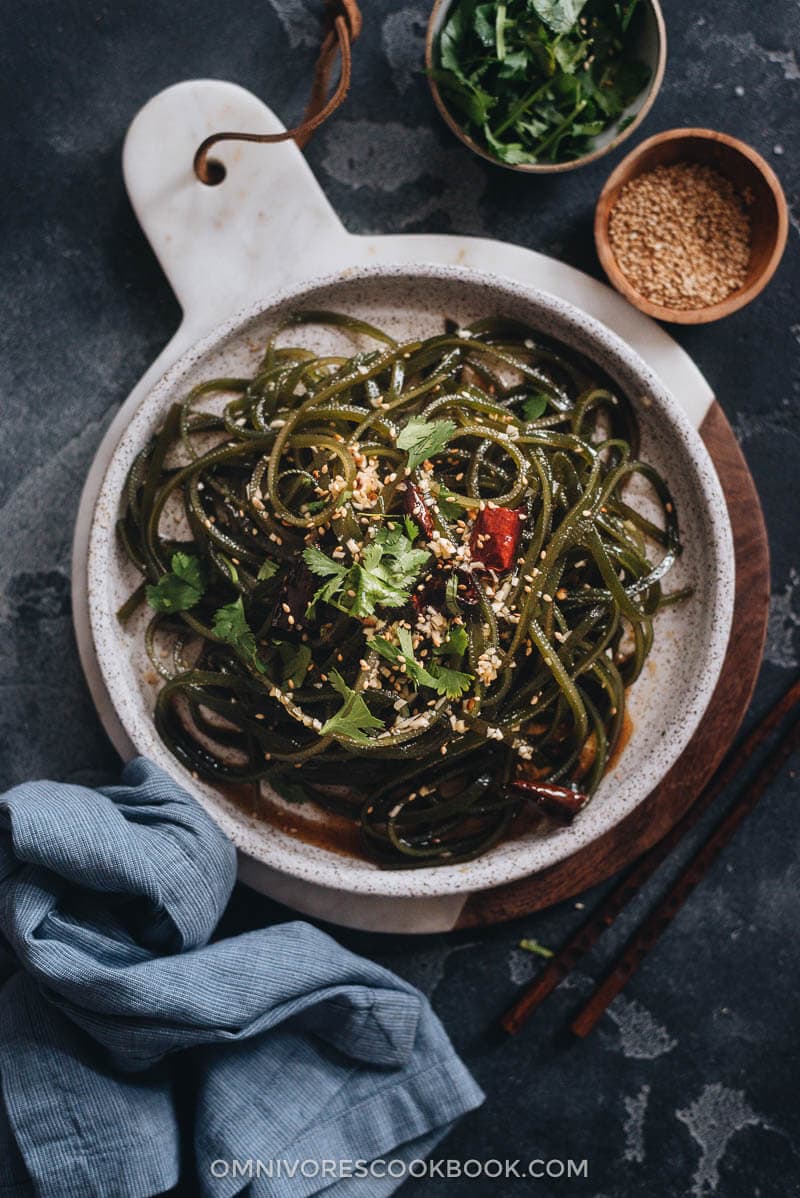
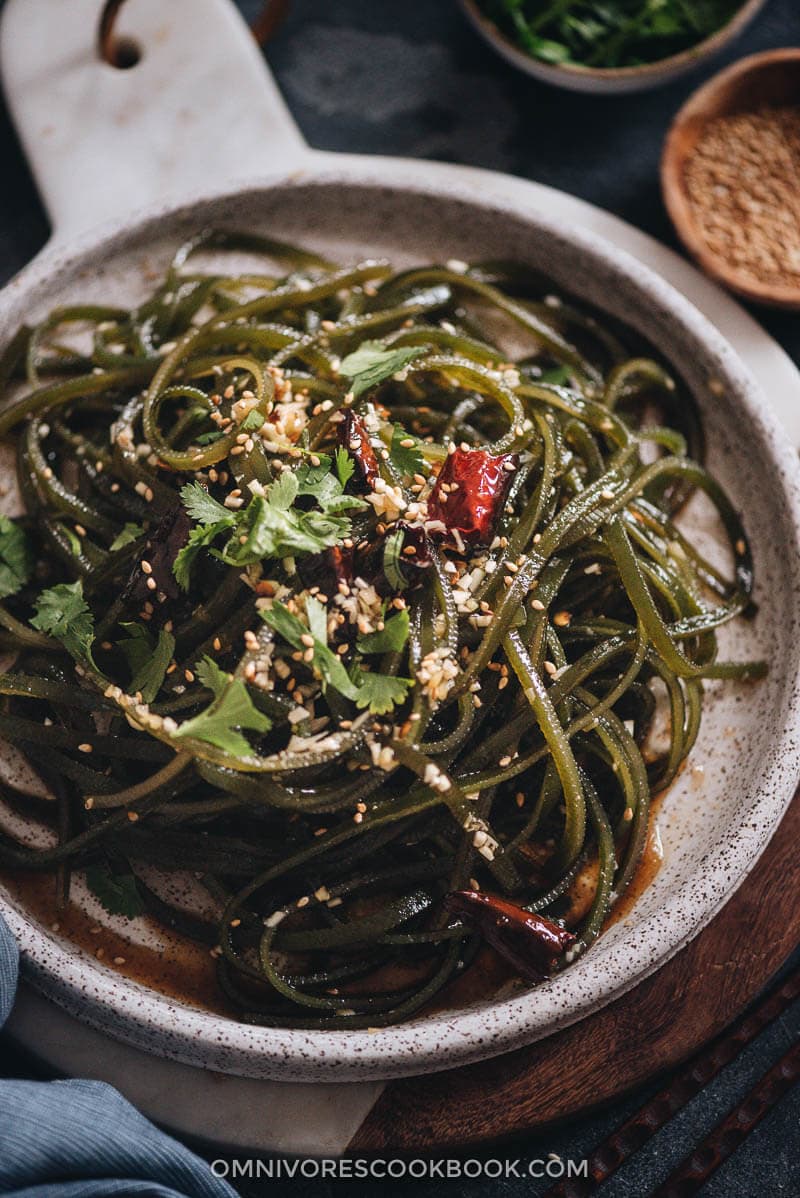
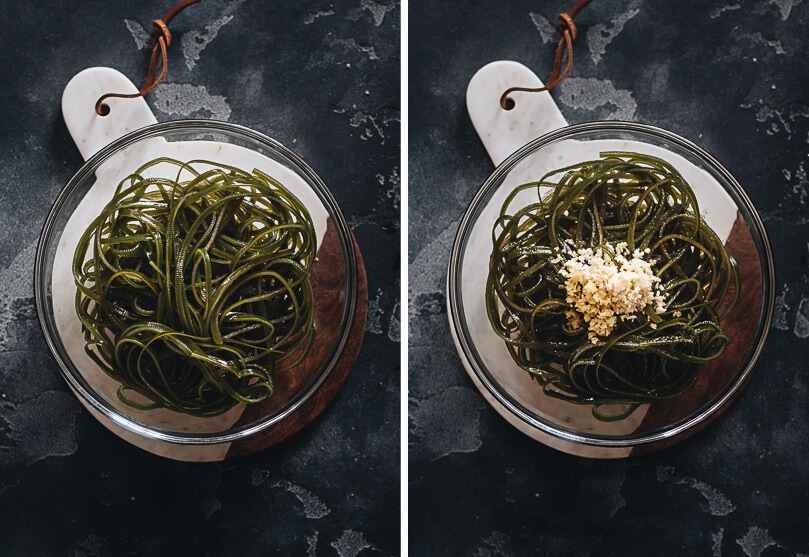
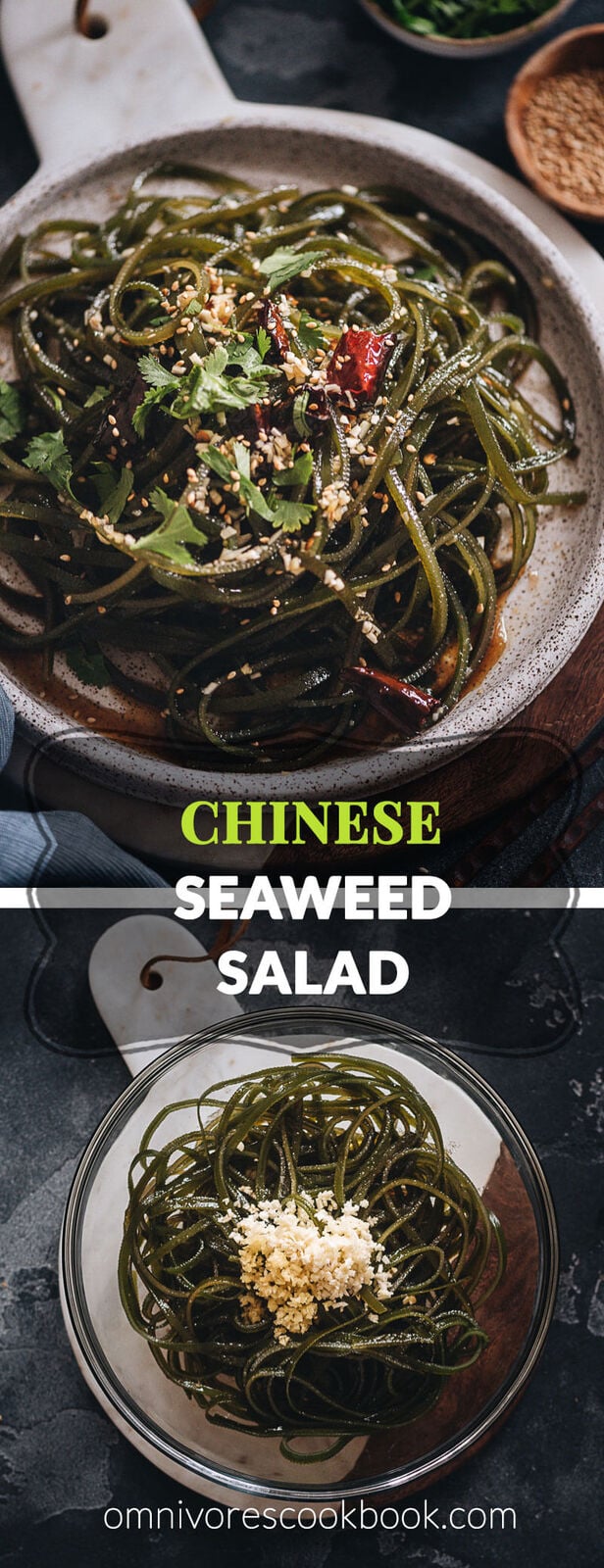
If you think that seaweed is a relatively modern food fad for health junkies and detoxing vegans, you’d be wrong. As an ingredient, seaweed (海带, hǎi dài, sometimes known as kelp) has been eaten in China since prehistoric times and is one of the foods to which Chinese people attribute their first-rate health and longevity. We add seaweed to various dishes to add texture, flavor, and nutrition. For example, my mom sometimes adds a thin type of seaweed (rehydrated dried wakame) to egg drop soup. She uses thick-cut seaweed strips (like in this recipe) to braise pork to cut the grease and infuse a rich taste into the sauce. The seaweed will end up tasting so good served with the sauce. One of our summer staples is this cold seaweed salad. It is made with tender and meaty seaweed strips, mixed in a savory and sour sauce and finished up with garlic-infused hot oil. It’s easy to make, tastes good, and stays well after being stored in the fridge. When it’s too hot to make stir-fried veggies, my mom usually serves this quick cold appetizer with congee and dumplings.
Cooking notes
1. Which type of seaweed to use in Chinese seaweed salad
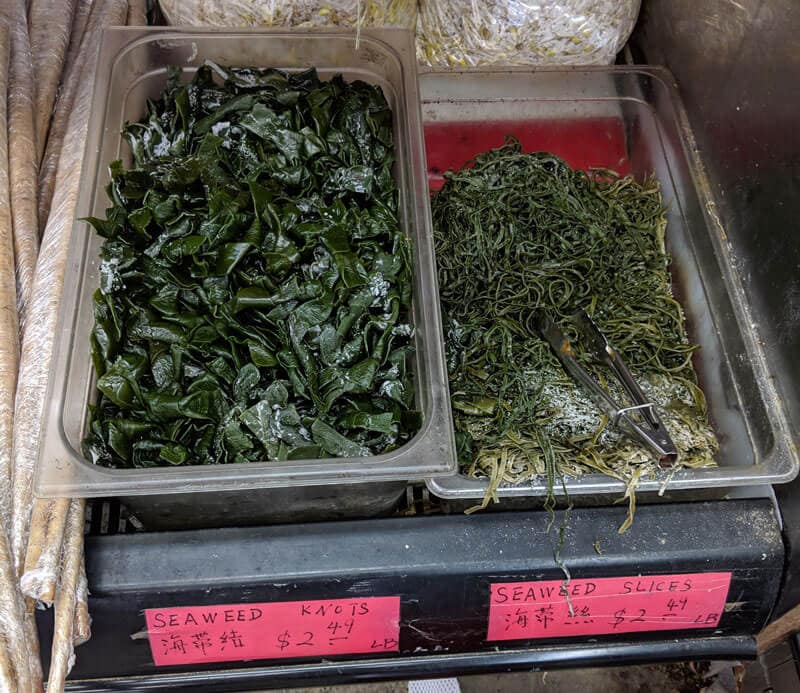
Edible seaweed comes in all shapes and sizes and is used differently. For example, the thin and tender wakame is often used in Japanese seaweed salad and soup. The Small needle-like hijiki is used in stews and appetizers. The Chinese seaweed salad requires the thick meaty seaweed (or kombu). Similar to other Chinese vegetables, it is often sold dehydrated (and labeled “kombu”) for longer storage. But you do need to rehydrate it prior to use. If you’re lucky, you might find fresh seaweed sold in your Asian market or local Chinatown. You can spot it in room temperature (some time refrigerated) as pliant, forest-green sheets, sliced into smaller strips or even tied into adorable little butterfly knots. This variety is super versatile and can go in a wide array of dishes. On its own, seaweed has a salty, brackish flavor with a pasta-al-dente texture, and is therefore sometimes used as a condiment. Once cooked, however, this flavor mellows and seaweed takes on whatever seasonings you add to it.
2. How to prepare seaweed
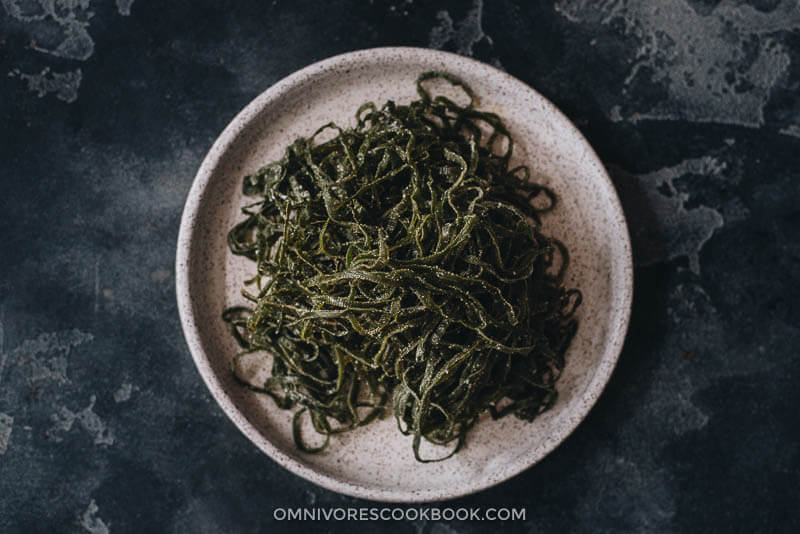
If you bought dried seaweed, you’ll need to rehydrate it before using. To do so, simply submerge the seaweed in hot water and let it sit for 10 to 15 minutes, or until tender. If you’re using fresh seaweed, you should always rinse it before boiling it. To preserve fresh seaweed, it is usually coated with salt. If you boil it without rinsing, the seaweed will end up tasting very salty. No matter whether you’re using rehydrated or fresh seaweed, you’ll need to boil it before making the salad. The boiling time varies depending on how the seaweed is cut, its thickness, and the texture. I found that sometimes it takes as little as 10 minutes to cook, and other times it takes up to 20 minutes. The best way to go is to keep an eye on the seaweed and taste it until it reaches your desired texture. When it’s finished cooking, the seaweed should turn tender but not mushy. Like pasta, you can cook it until al dente if you prefer a chewy texture. Or cook it until very tender (which is the way I prefer).
3. Garlic infused oil
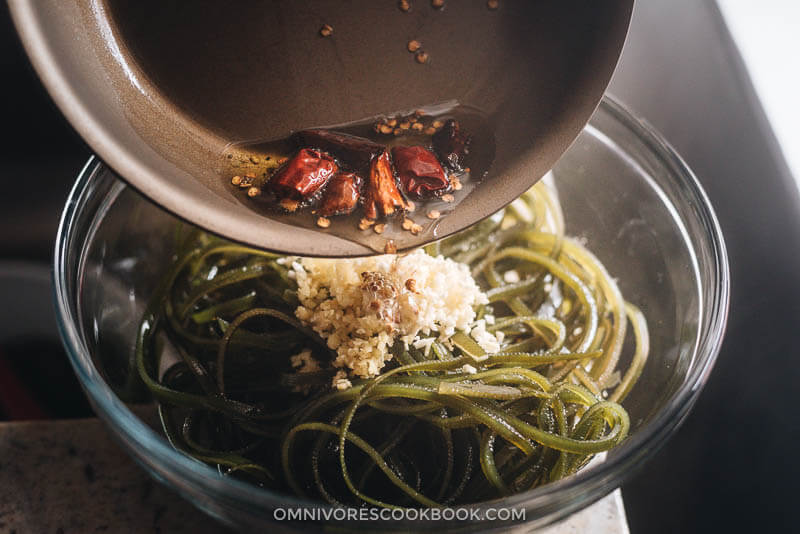
It’s a common practice to heat up some oil with dried chili peppers and pour it over the seaweed salad. It will quickly “cook” the ginger and garlic in the sauce, making them less pungent and more aromatic.
There is a shortcut if you don’t feel like heating up the oil. You can simply add a spoonful of homemade chili oil to the seaweed salad. It’s a condiment I usually have on hand and it further shortens the prep time. The seaweed salad will come out super tasty as well. We traveled to LA last week. When we returned to New York, the weather had turned to full-bloom summer. I think it’s the perfect time to share this Chinese seaweed salad that’s refreshing and nutritious. I hope you enjoy it!
More cold dishes that are perfect for summer
Easy Chinese Cucumber Salad (拍黄瓜) Wood Ear Mushroom Salad (凉拌木耳) Real-Deal Sichuan Chicken in Red Oil Sauce (口水鸡, Saliva Chicken) Dan Dan Noodles (担担面) Real Deal Sesame Noodles Chinese Spinach and Peanut Salad
If you give this recipe a try, let us know! Leave a comment, rate it (once you’ve tried it), and take a picture and tag it @omnivorescookbook on Instagram! I’d love to see what you come up with.