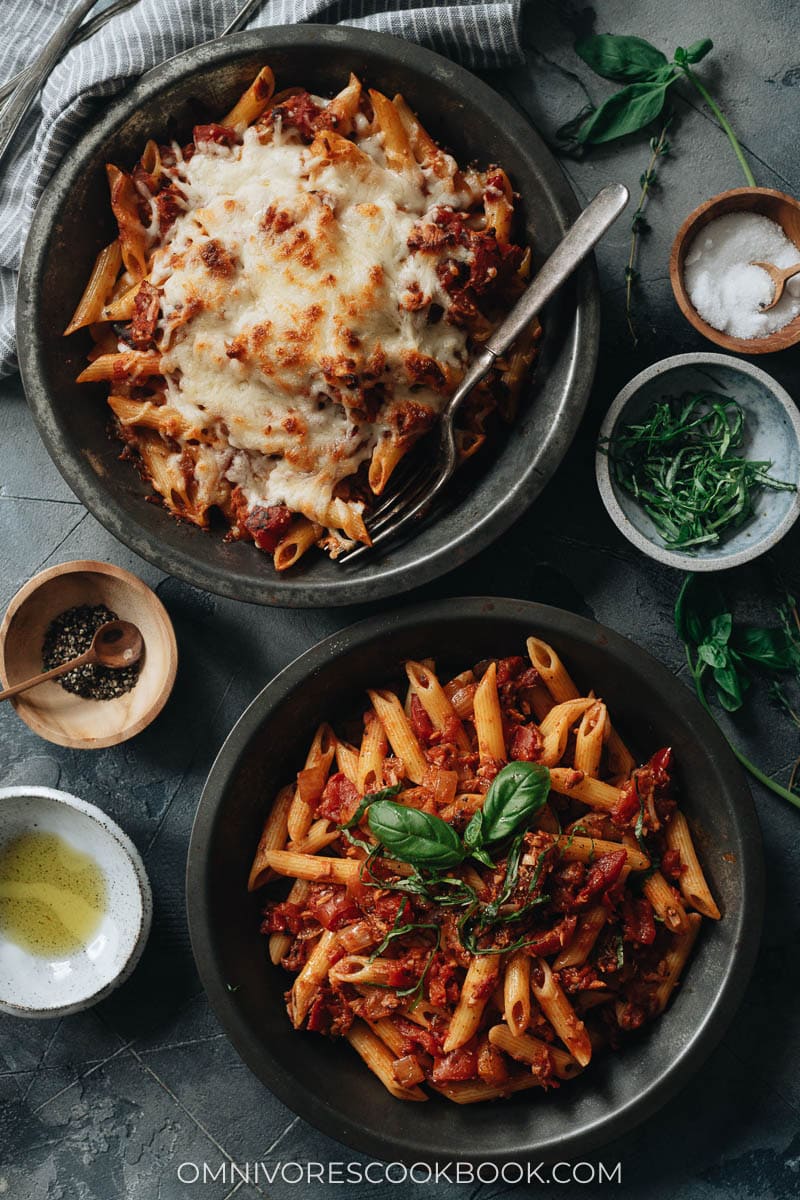
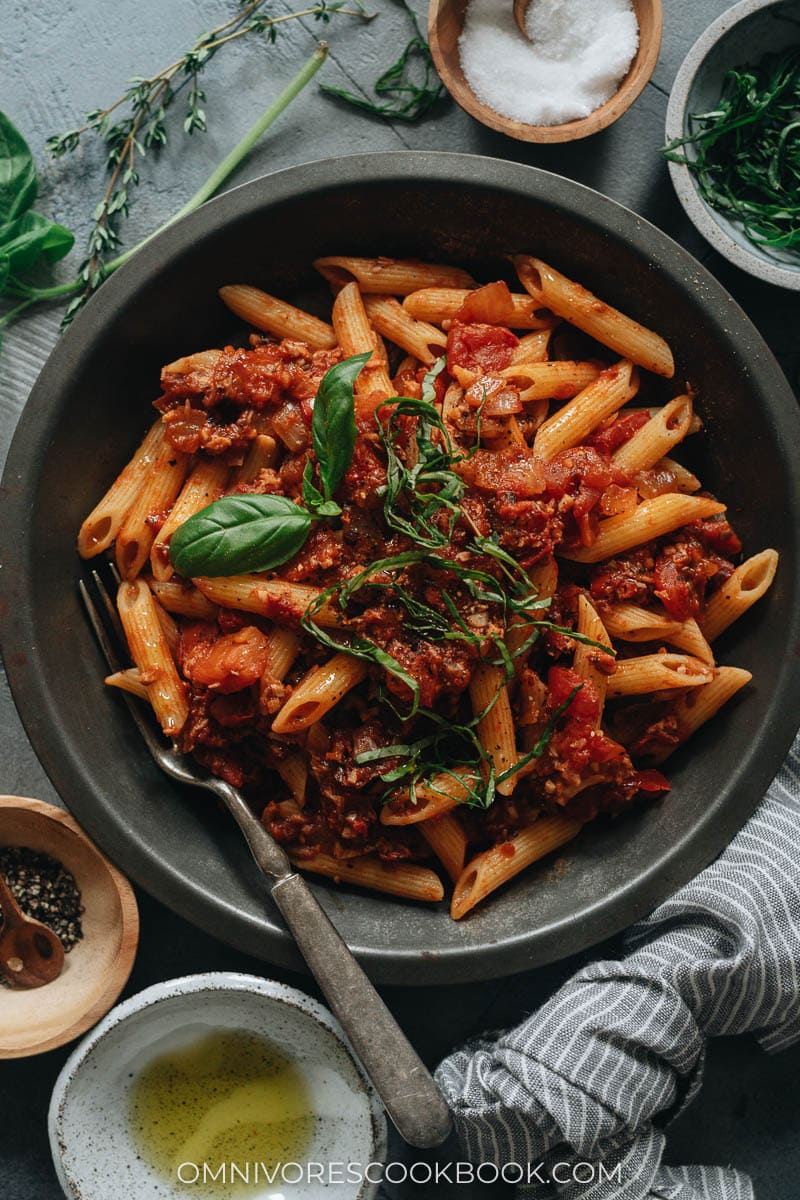
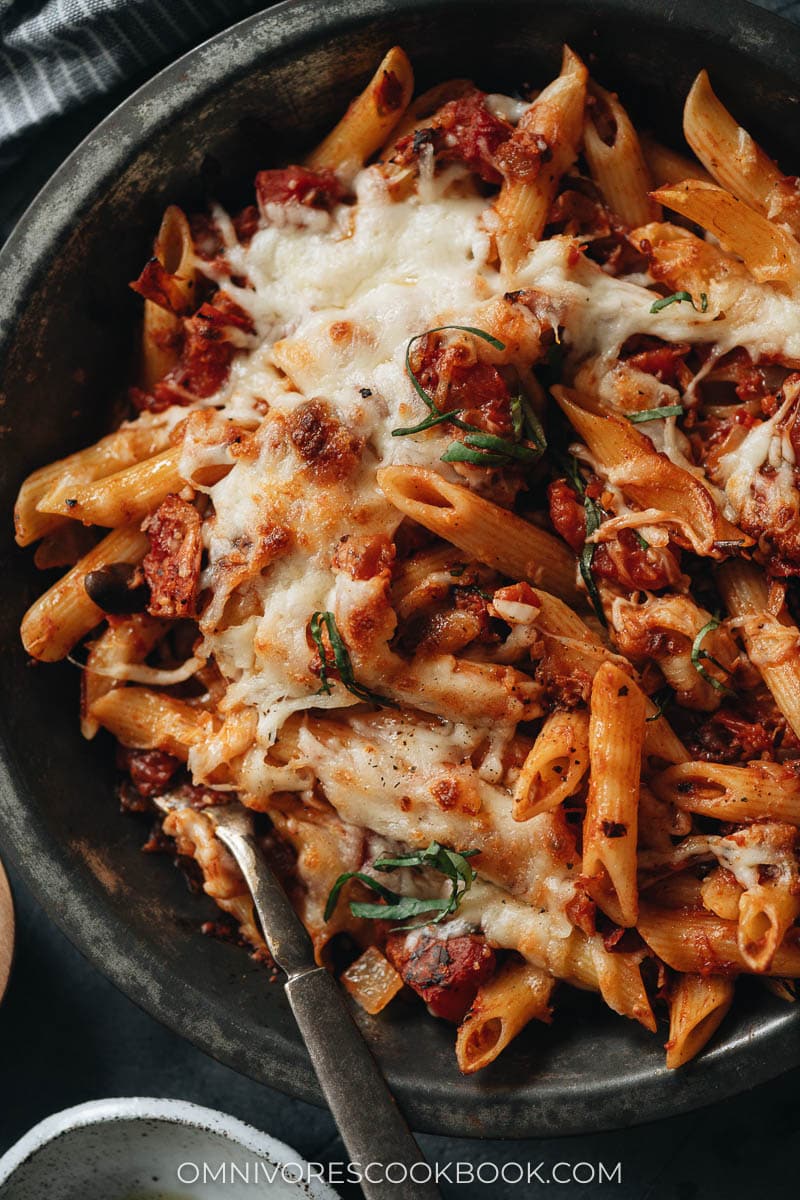
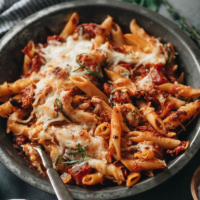
Since we’re all spending more time at home, finding ways to make what you have in your kitchen stretch is a good way to stay busy. If you keep looking in the pantry and can’t figure out what to make, my Chinese-style Arrabiata pasta with (or without!) tuna is for you.
Secret Ingredient
My secret for creating a rich, savory sauce is to add doubanjiang to the tomato sauce. You’ve got to taste it to believe it because it mimics the flavors of parmesan, making it a great option for dairy-free eaters.
What is Doubanjiang
Doubanjiang (豆瓣酱), also known as spicy fermented bean paste or broad bean sauce, is a key ingredient in Sichuan dishes such as Mapo Tofu. And it has a strong fermented savory, salty and spicy taste. I used it in the arrabiata sauce to give it a savory umami, like that of parmesan cheese. The great thing about doubanjiang is that it is so much cheaper than cheese and it lasts forever in your fridge.
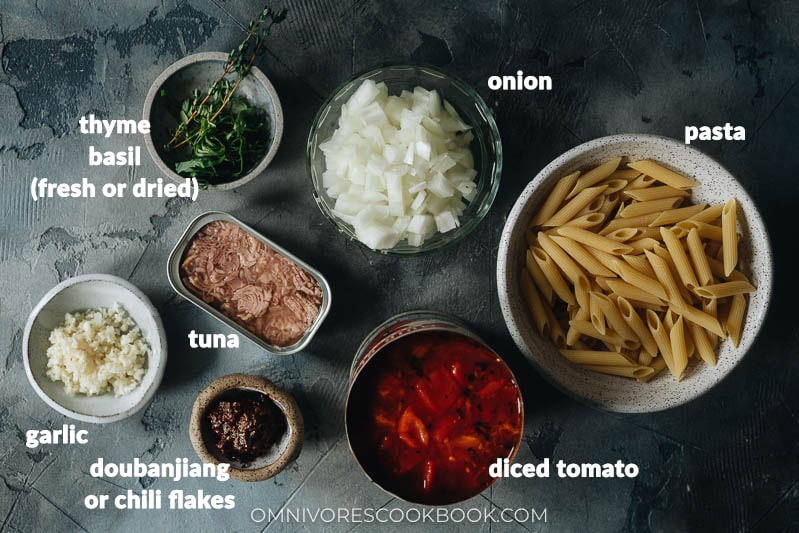
Other ingredients
Vegan adaptable
Arrabiata pasta is a very simple one-pot meal that makes use of those canned and dry goods in your pantry. The tuna adds more protein to the dish, though if you’re not a fan or want to keep it vegetarian or vegan-friendly, you can omit it. With or without tuna, it’s still a robust meal.
No fresh herbs, no problem
My Arrabiata pasta is very versatile with the herbs, too. You’ll use thyme and basil, though it will be delicious if you use dried herbs or fresh ones, all the same. Use what you can and you’ll discover a new way to do pasta. It’s a quick and upbeat meal that keeps you from having lots of dishes stacked up afterward.
Baked version
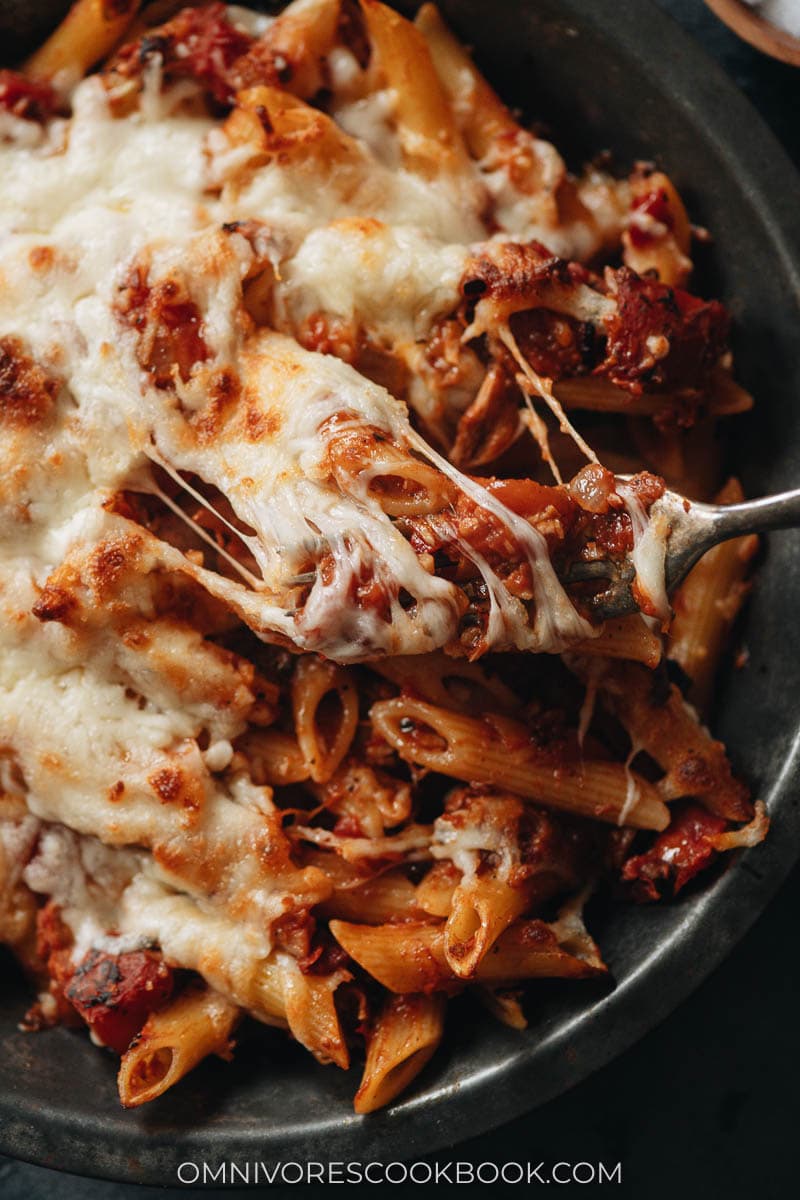
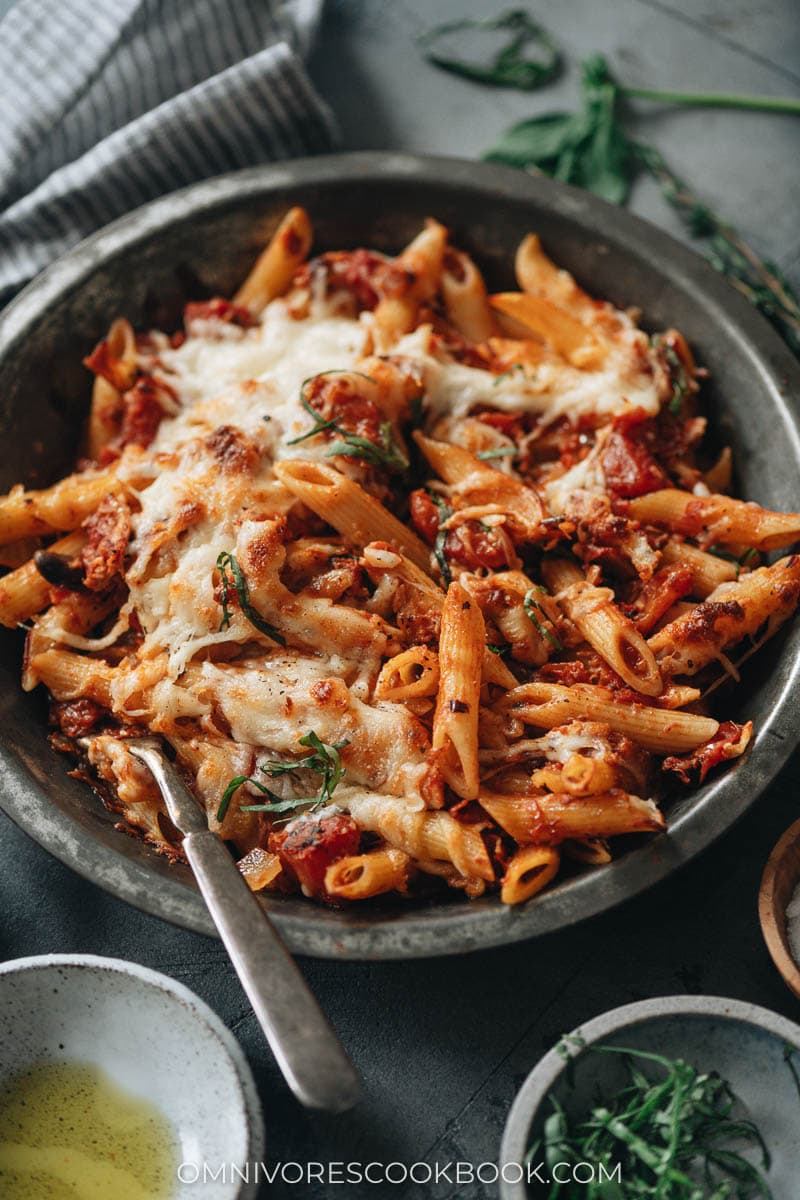
If you love cheese (guilty as charged), you can add mozzarella and follow my steps for the baked version. It gets even more scrumptious when you go all out. I realize that lately it can be hard to find some of these luxuries, but to cheese lovers with cheese on hand, take any excuse you can to add it on top.
Cooking process
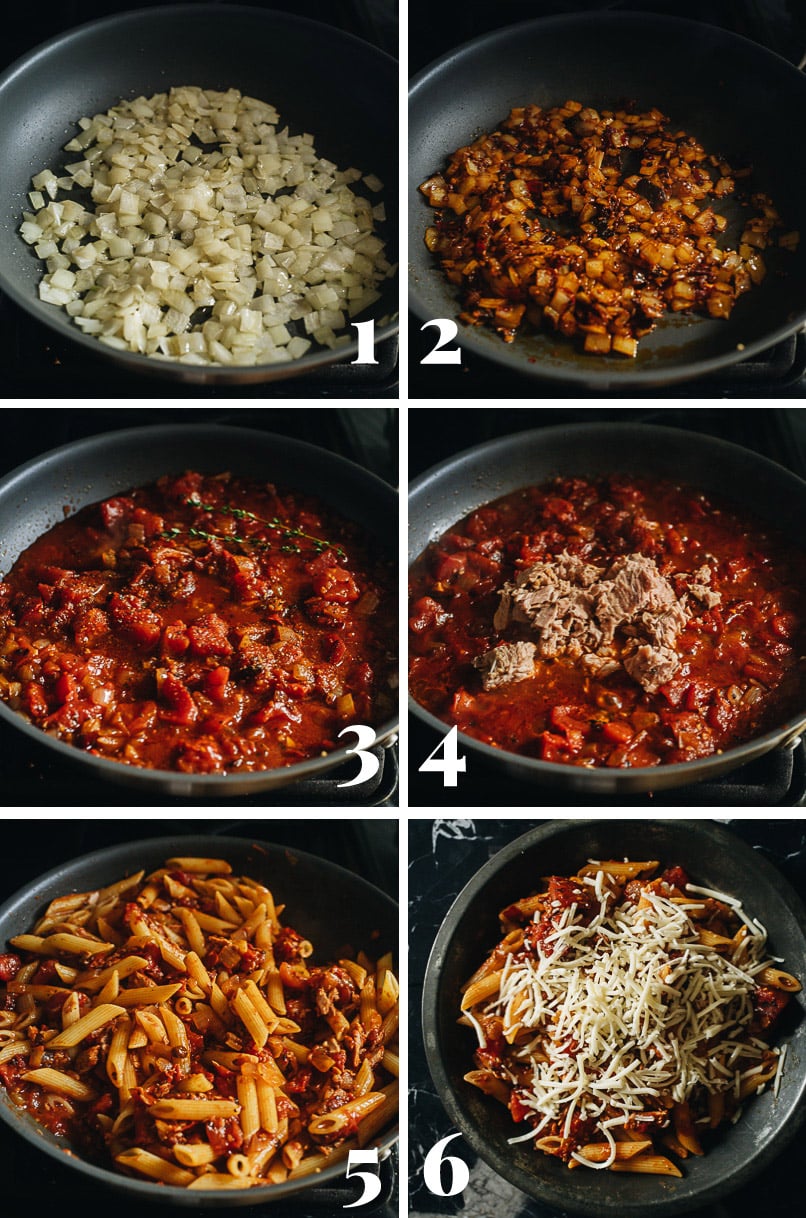
Cooking Arrabiata pasta is super easy. This one will be a keeper in your weeknight meal roster and is impressive enough for guests when you have them. A little wine pairing never hurts either!
Behind the scene secret
Believe it or not, this was the first post I published on Omnivore’s Cookbook back in 2013. And it was not Chinese nor Italian (lol). I included the original photo here just to remind myself how far this blog has come. Want to learn more about Chinese Cooking? Sign up my newsletter to receive the 5-Day Chinese Cooking Crushing Course and recipe update! The recipe was published on July 10, 2013 and updated by April 3, 2020. If you give this recipe a try, let us know! Leave a comment, rate it (once you’ve tried it), and take a picture and tag it @omnivorescookbook on Instagram! I’d love to see what you come up with.
More delicious noodle recipes
Vegetable Lo MeinJapchae (Korean Sweet Potato Noodles)30-Minute Salmon Noodle Bowl with ColeslawThai Peanut Butter Ramen15-Minute Korean Noodle Soup
Lilja Walter is a part of the Omnivore’s Cookbook team and worked closely with Maggie to develop and test this recipe.