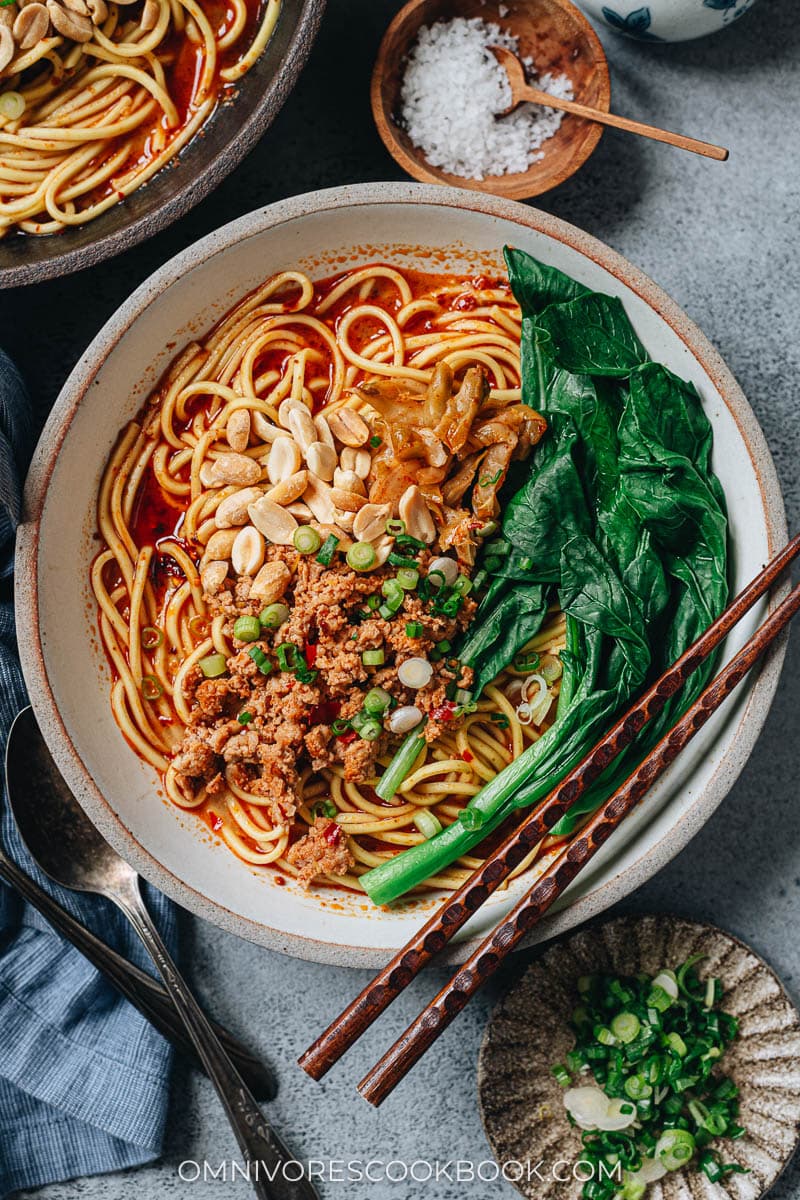
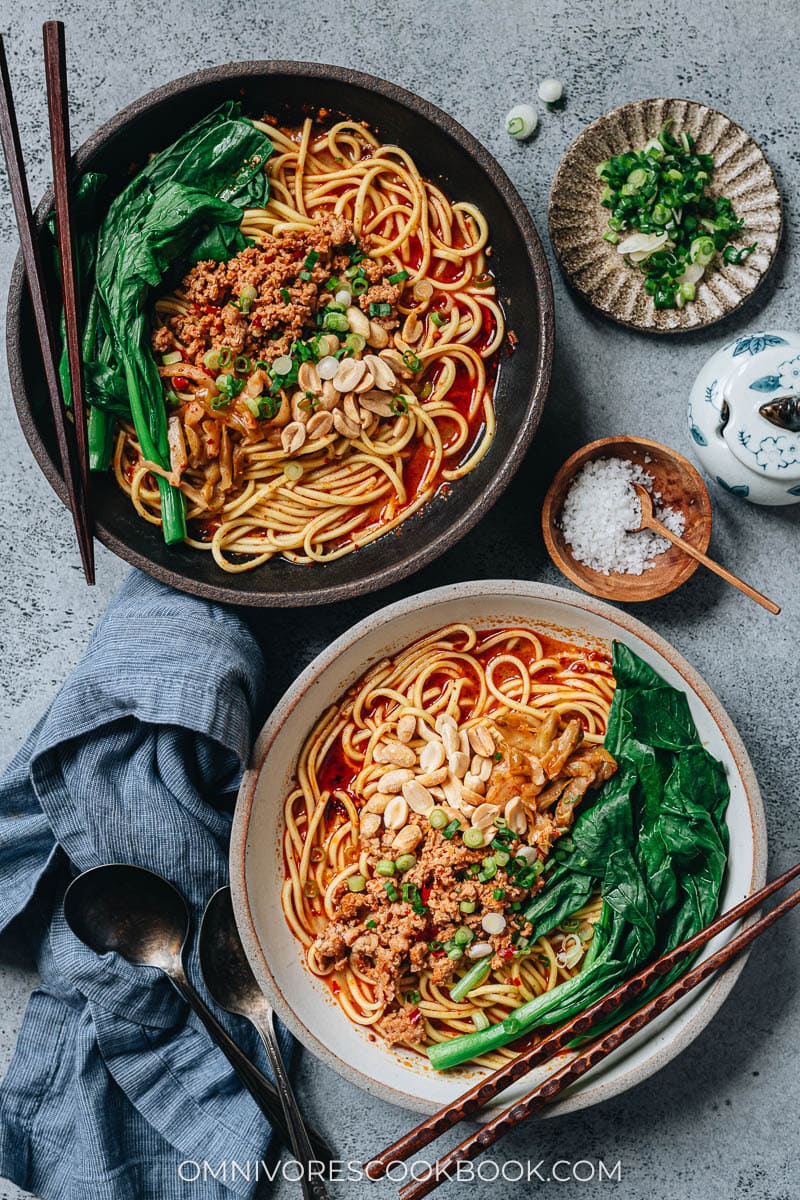
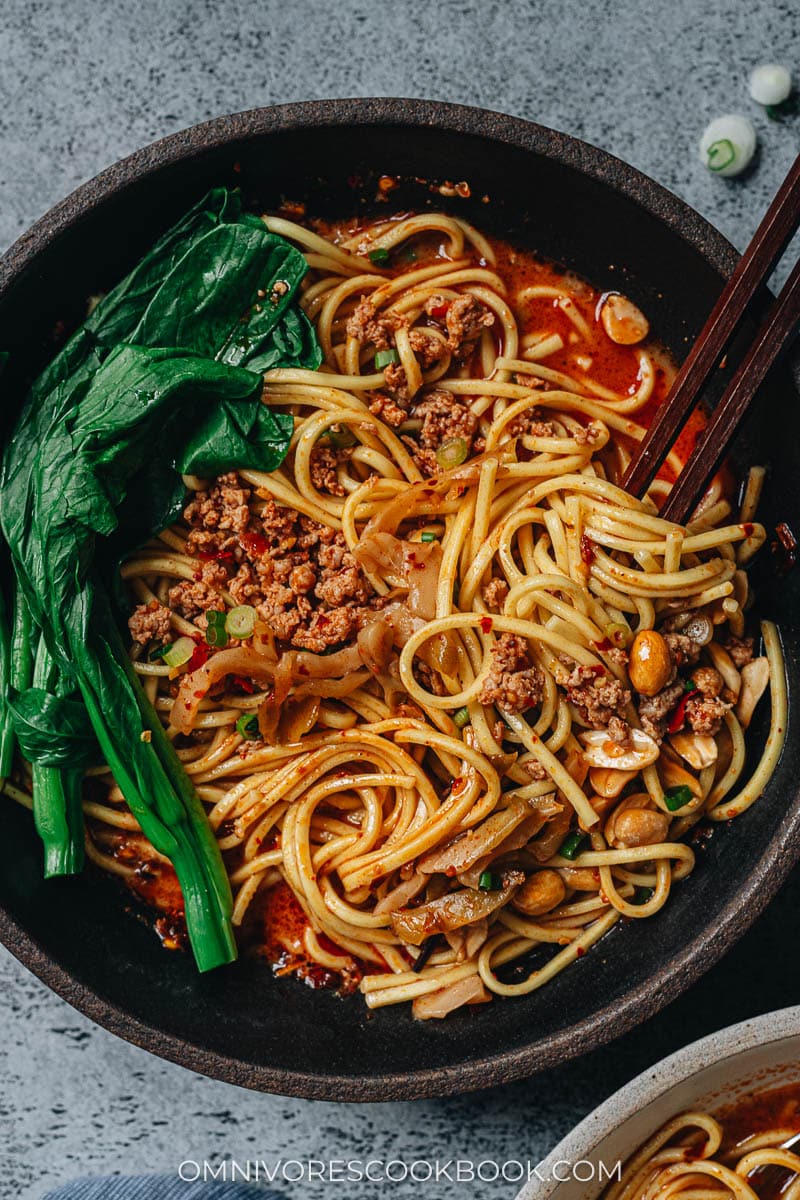
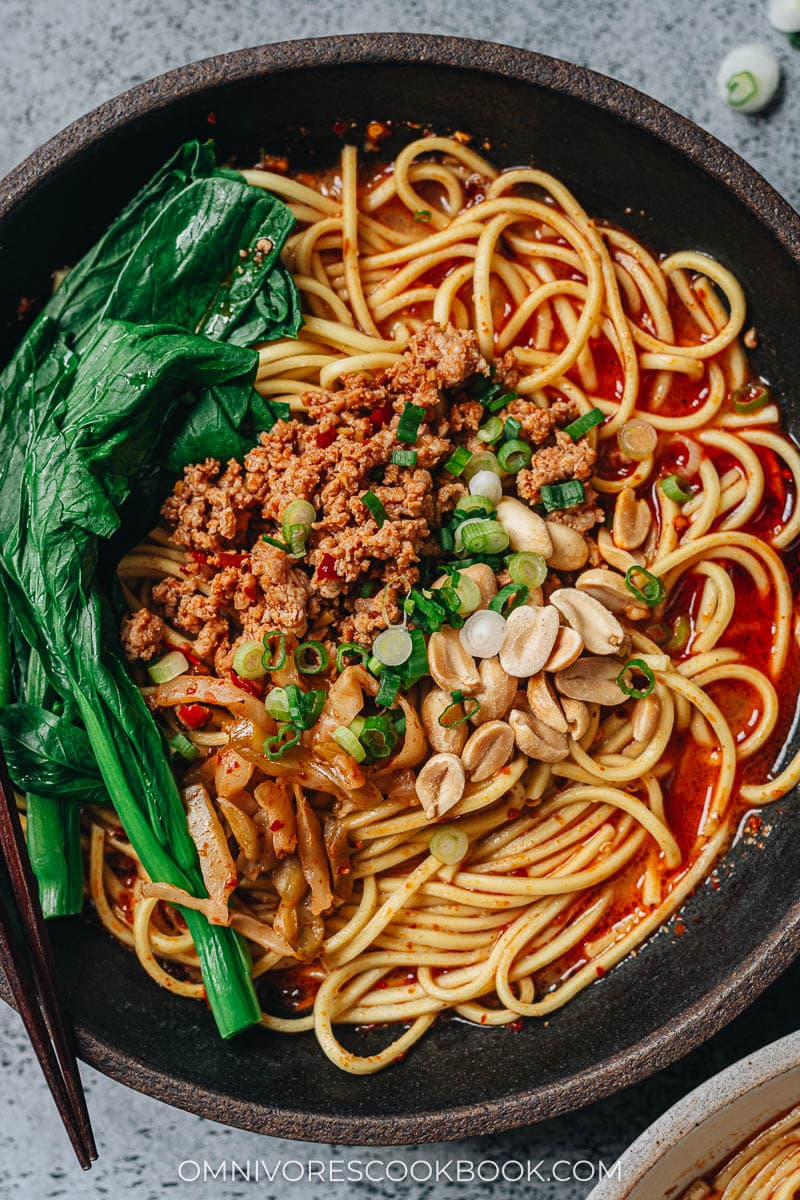
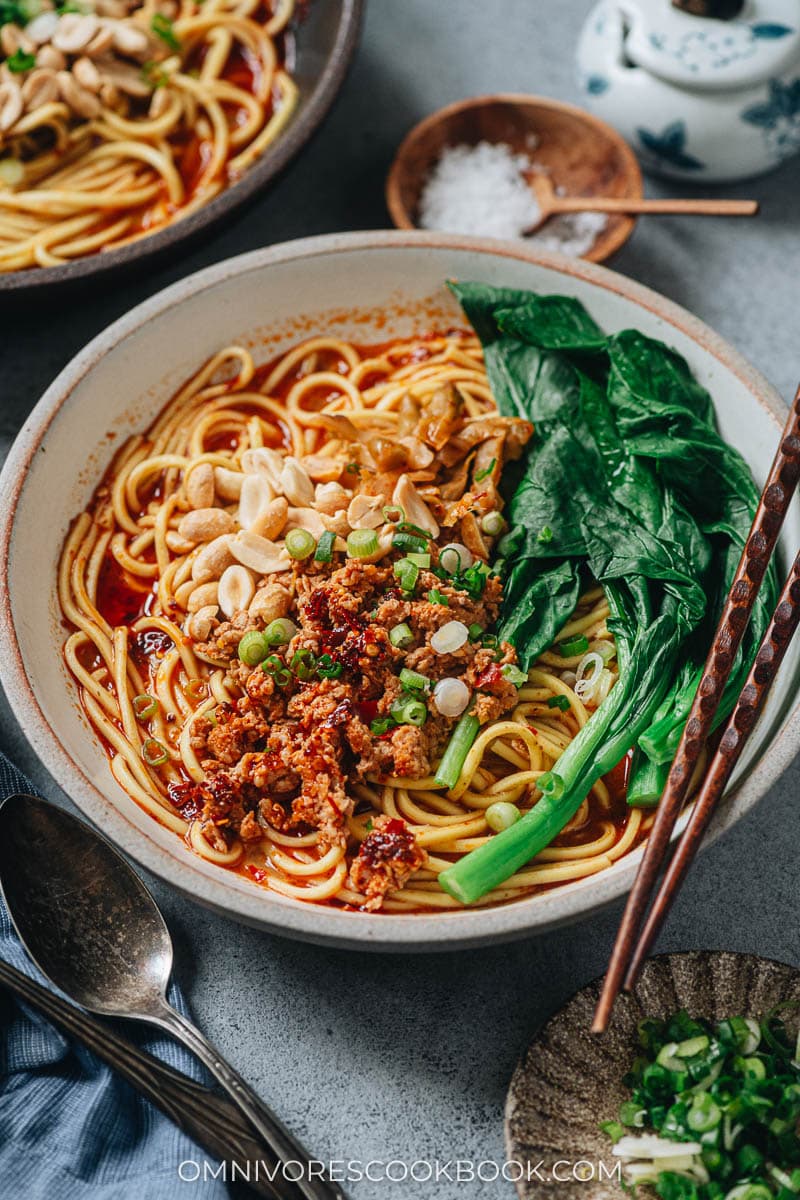
Chongqing noodles is a very popular dish originating from the city of Chongqing, often served as street food or a quick bite for lunch. It was one of my favorite things to get for lunch when I was living in China. It is quite cheap, extremely filling, and tastes addictive. If you like bold flavors or enjoy a bowl of spicy noodles, Chongqing noodles is a dish you can’t miss.
What are Chongqing noodles?
Chongqing noodles (重庆小面), or Chong Qing Xiao Mian, literally means Chong Qing little noodles in Chinese. In English, it’s also known as Chongqing hot noodles or Chongqing spicy noodles. These noodles are characterized by their spicy and numbing flavor, achieved through the use of Sichuan peppercorns, chili peppers, and various spices. Every noodle shop uses their own secret combination of ingredients to make the noodles very flavorful. But they are typically served in a flavorful broth made with ingredients such as pork bones, dried shrimp, and other aromatics. Additionally, toppings such as minced pork, pickled mustard greens, peanuts, and green onions are commonly added to enhance the flavor and texture of the dish.
Chongqing noodles ingredients
The ingredient list for Chongqing noodles might look quite long, but it forms the foundation of a very bold and rich noodle dish. Once you gather all the ingredients, the dish is quite straightforward to put together. Moreover, you can prepare the ingredients ahead of time, making the dish a great one to cook in advance and serve later for a quick meal.
Chili oil
Chili oil is the main ingredient in the noodle broth. I highly recommend making chili oil from scratch using my chili oil recipe. It is quite simple to make and tastes much fresher than the store bought variety. Using the correct ingredients, it doesn’t taste super spicy and has a rich aroma. If you do not wish to make your own, I highly recommend the chili oil from The Mala Market.
Sichuan peppercorn
Sichuan peppercorn (花椒, hua jiao) is another main ingredient in Chongqing Noodles. It has a citrusy taste with a numbing tingling sensation when you chew on it. It makes the noodle broth very bright, and quite spicy if you use a lot. Start with a small amount and see how you like it. You can purchase Sichuan peppercorns at Asian grocery stores, but I highly recommend these premium fresh ones from The Mala Market.
Doubanjiang
If you wish to make the dish less spicy, replace the doubanjiang with soy sauce.
Chinese sesame paste
Chinese sesame paste (芝麻酱, zhi ma jiang) is a thick paste made from toasted sesame seeds. Although many Chongqing noodle recipes do not use this ingredient, I prefer to use it to make the sauce creamier. It also balances the spiciness to round out the flavor. It adds great umami too, so your sauce will still taste great if you don’t want to add too much chili oil. You can find Chinese sesame paste in most Asian grocery stores, or purchase it online. If you don’t want to purchase Chinese sesame paste, you can also use natural peanut butter with a few teaspoons of sesame oil mixed in.
Pickled mustard stems
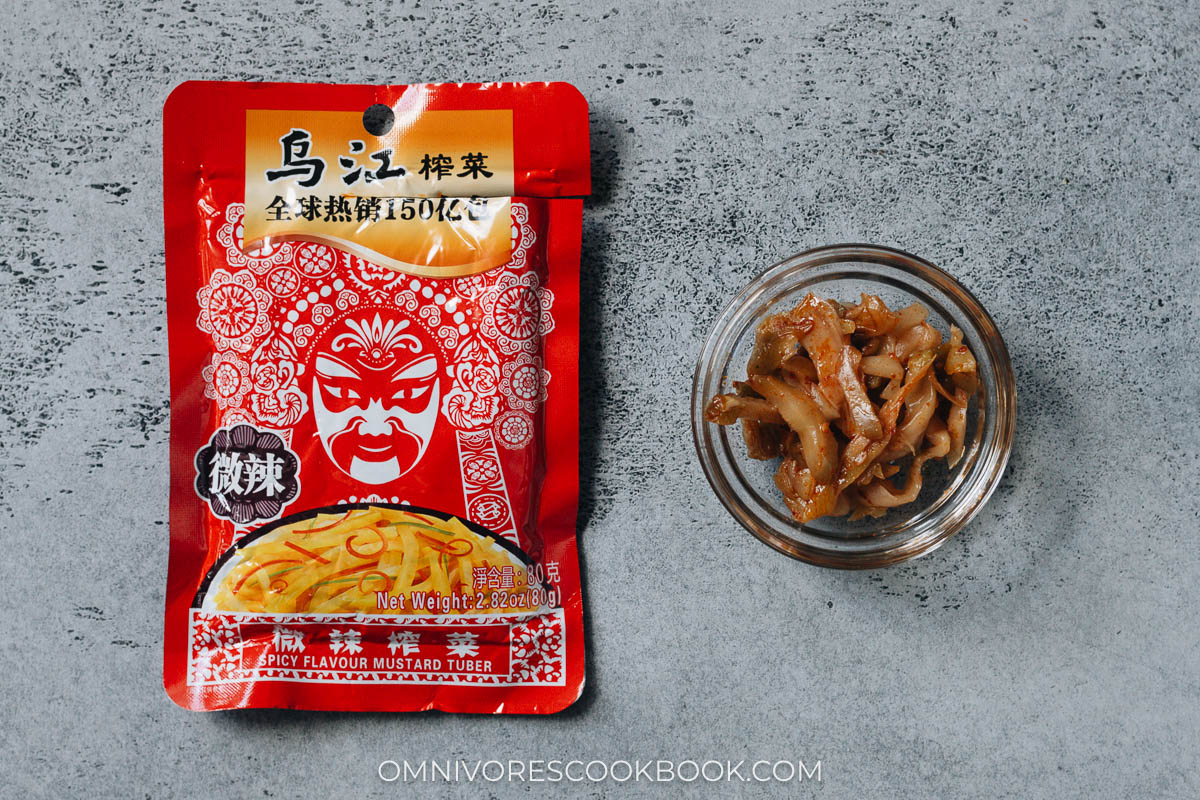
Pickled mustard stems (榨菜), or Zha Cai, are fermented tubes of mustard greens. They are savory, crunchy, and salty, adding another layer of fun texture to the noodles.
Alkaline noodles
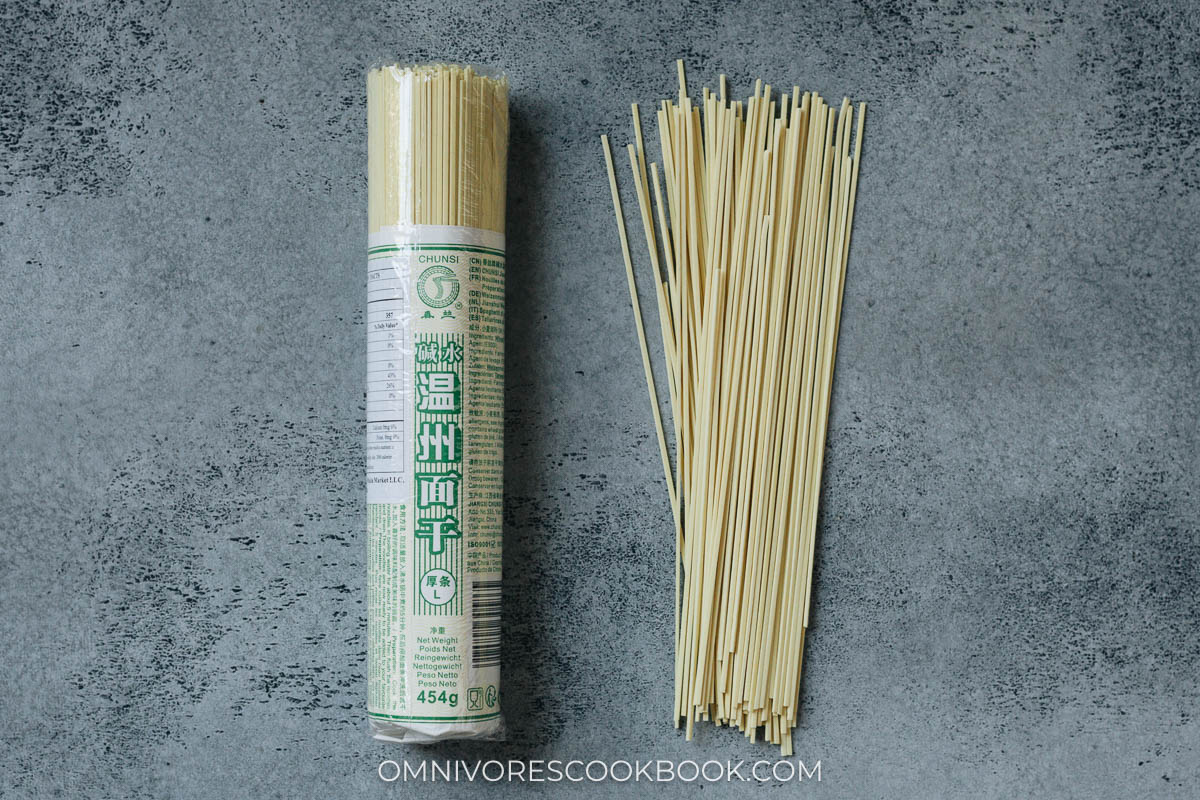
Alkaline noodles (碱水面) are the type of noodles used in Chongqing noodles. They are quite similar to ramen noodles, which use alkaline water (kan sui) to make the noodles. The noodles have a chewy and springy texture, with a yellow color. I highly recommend the dried alkaline noodles from The Mala Market. They have a toothsome, chewy texture once boiled, just like the freshly made type.
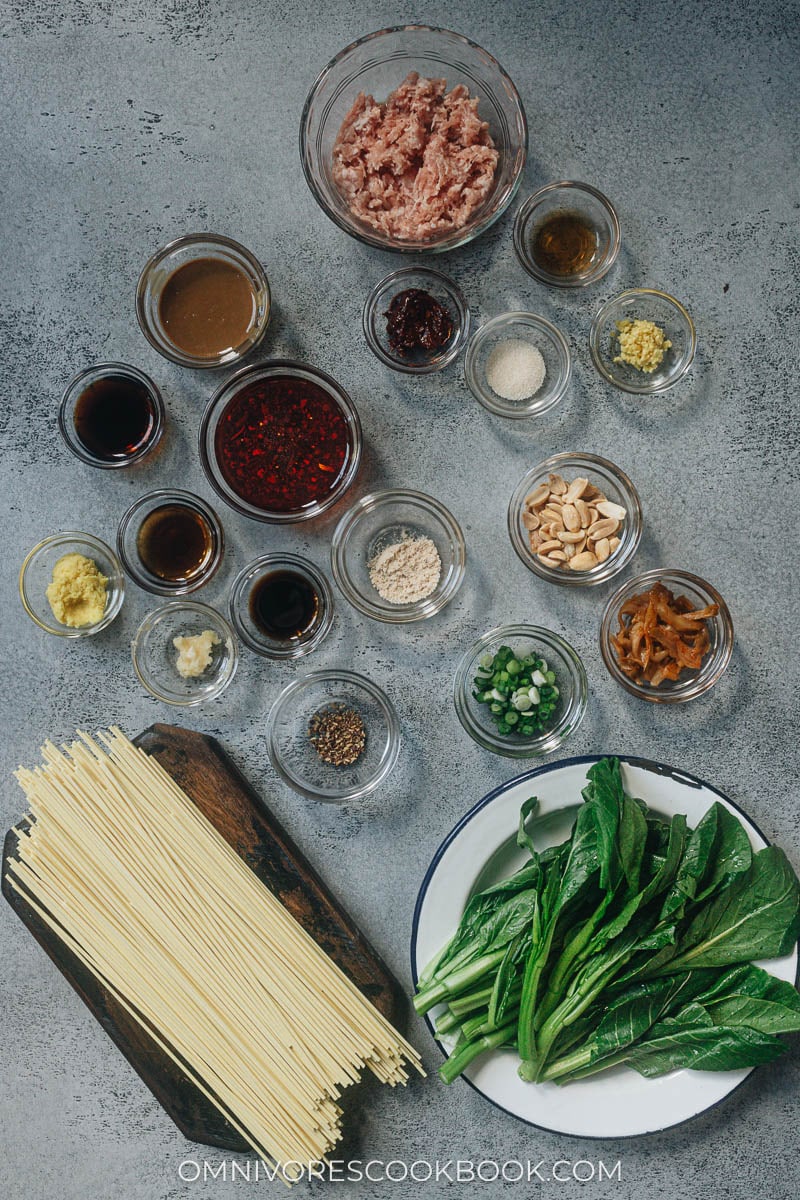
Mise en place
Unlike a stir fry dish, you do not need to measure out each ingredient and put it in a smaller plate. I’m showing the picture below just so you have a general idea of the ingredients used in Chongqing noodles. Simply follow the recipe below when preparing the dish.
How to make Chongqing noodles
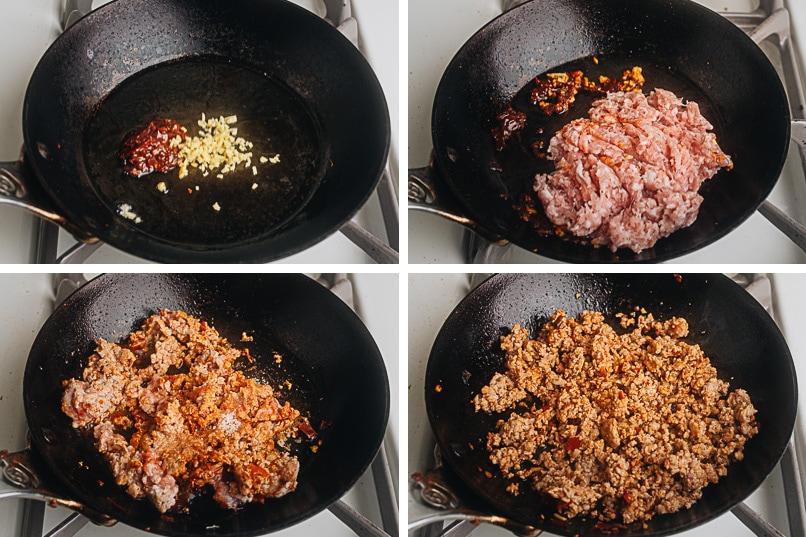
Prepare the pork toppings
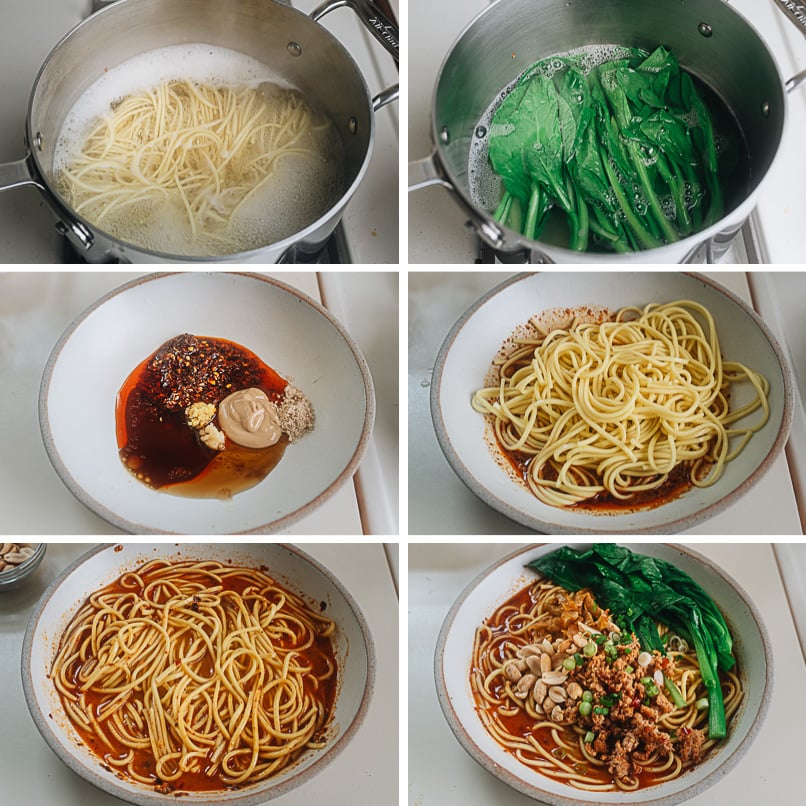
Assemble the noodles
As you can see, making Chongqing noodles is quite easy despite the long list of ingredients.
How to make the process faster
This recipe is similar to how street vendors prepare this dish – by adding small amounts of each ingredient to individual serving bowls. This way, you can adjust the flavor, saltiness, and spice level according to each individual’s palate. However, it’s also OK to mix the ingredients for the soup base in a single bowl and portion it out later. It’s convenient if you’re making a bigger batch of the sauce in advance and serving it later. If you’re unsure about the spice level, start from the lower end of the chili oil, taste it, and gradually increase from there.
How to serve Chongqing noodles
Chongqing noodles are perfect for a one-bowl lunch. If you’re hosting a dinner party, you can also prepare all the ingredients ahead of time and serve a small bowl as an appetizer or side dish. My recipe makes two bowls of Chongqing noodles, but you can easily scale it up by doubling the ingredients.
Other delicious noodle dishes
Dan Dan Noodles (担担面) Green Bean Noodles (豆角焖面) Suan La Fen (Hot and Sour Noodle Soup, 酸辣粉) Hot Dry Noodles (热干面) Lanzhou Beef Noodle Soup (兰州拉面) Cumin Lamb Noodles