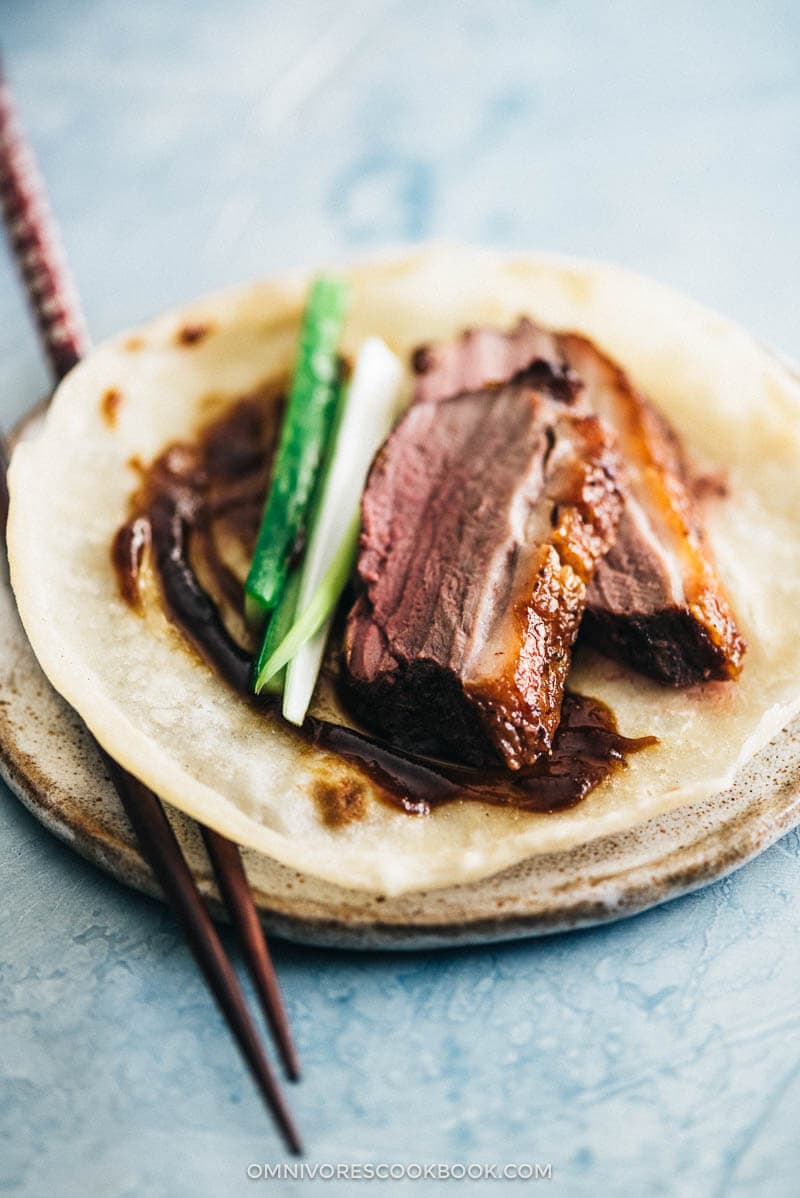
Growing up in Beijing, I was spoiled by fantastic duck dishes. Imagine hunting down the best BBQ joint in Texas, or the best Fish n’ Chips in London. In Beijing we’d weed through hundreds of Peking duck restaurants to find the best spot. Some famous brands have a long history and many branches; for example Quan Ju De (全聚德), the most well-known restaurant, opened their first store in 1864. Bian Yi Fang (便宜坊), another famous chain, was created in 1416. Even for top chains like these, we’re very picky about which eatery to go to get the highest quality duck. Over the years I’ve received quite a lot of requests for Cantonese roast duck and Peking duck recipes. I’ve been working on them constantly, but so far I haven’t found a recipe that I’m satisfied enough to publish on this blog. Mastering the technique of roasting Peking duck is a long journey that I have yet to conquer. That being said, it doesn’t mean that we have to book a trip to Beijing to enjoy delightful Peking duck rolls. Recently I received some fresh duck from Tasty Duck – a well-known duck supplier in North America. They partner with 27 local farm families throughout Pennsylvania to raise Peking ducks. The flocks are humanely raised free-roaming in temperature-controlled barns, fed only corn and soybean without antibiotics or hormones. Today I want to introduce an easy duck recipe that is practical to cook even on a weekday evening, and two great ways to serve to curb your duck cravings!
Chinese duck – how to marinate and prepare
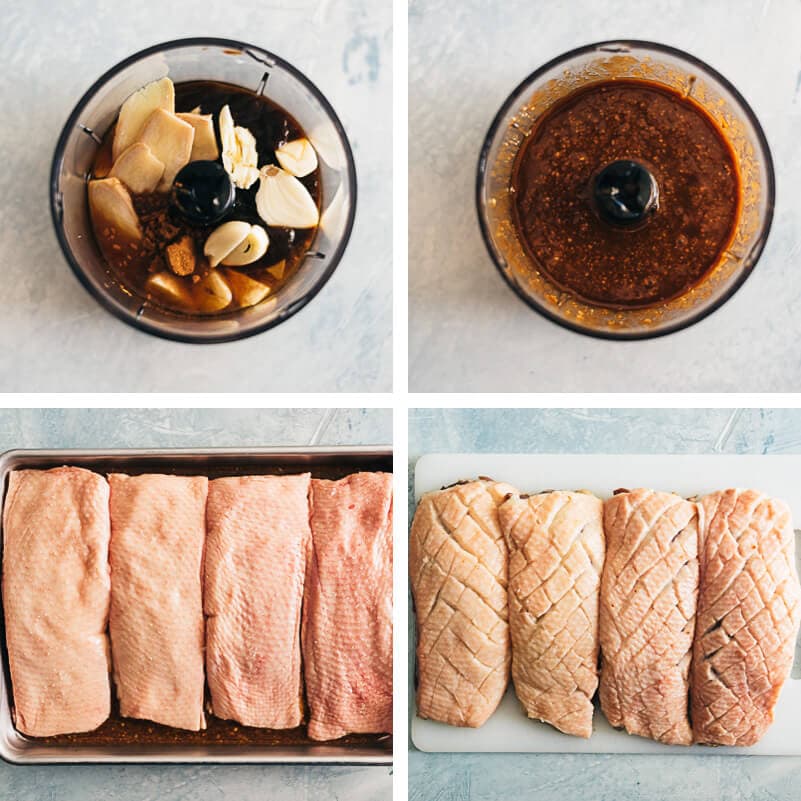
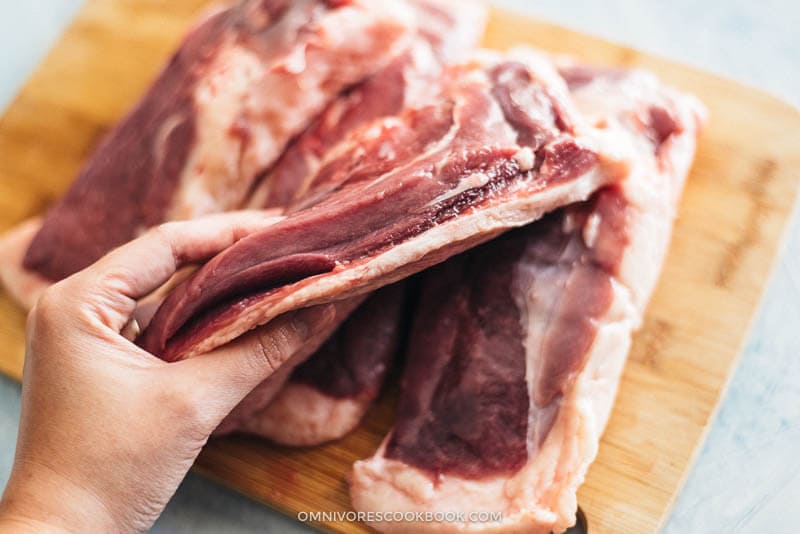
No matter whether you’re ordering Peking duck or Cantonese roast duck in a Chinese restaurant, you will find the duck skin is super crispy and the meat well-done. It is contrary to the mainstream way – always serve duck breast medium-rare. The truth is, if you marinate the duck before roasting, the meat will remain juicy and tender even when it’s cooked medium or medium-well. In this recipe we use a simple marinade made with hoisin sauce, cooking wine, five spice, garlic and ginger. Not only does it infuse the duck breast with a nice fragrance and keep the meat tender during cooking, it also eliminates the gamey taste from any wild duck. The other key step is scoring the duck before cooking. I’ve compared cooking scored and unscored duck breast – a scored duck breast will render almost double the amount of fat! To score the duck without piercing the meat, use a sharp knife and gentle pressure to slice the skin. Note, duck skin is not even and one end is always thicker than the other. So make sure to gradually reduce pressure as you move down.
How to cook duck breast
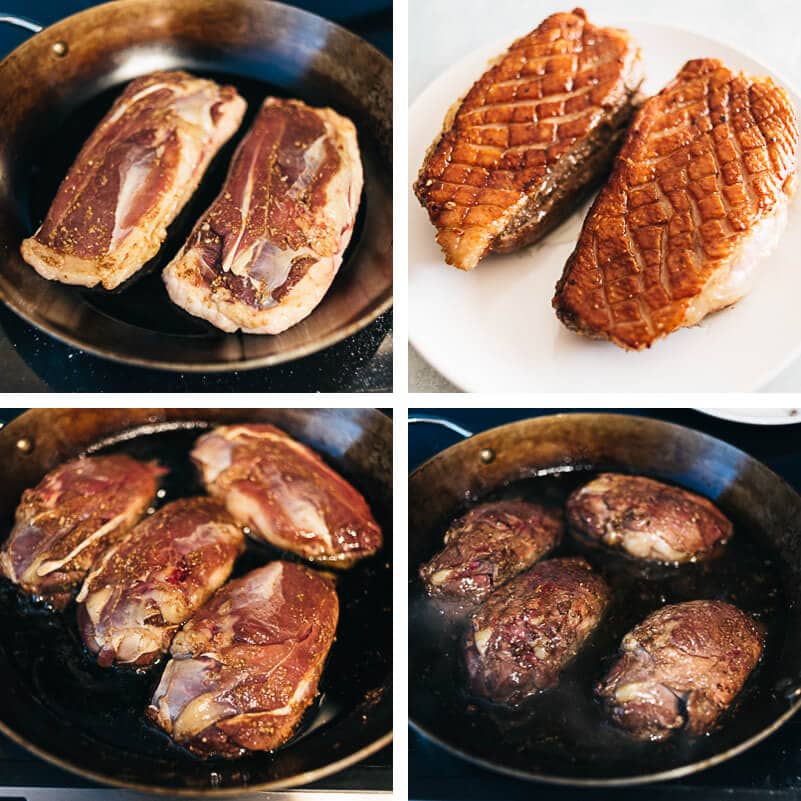
There are two approaches to cook duck breast: the stovetop method, and the stovetop + oven method. When you use wild duck or any cut of duck breast that is smaller in size and has a thinner skin, the first method is the quickest way to go. For example, when I cook duck breast that weighs about 7-ounces (200 grams) per piece, I simply pan fry it in a skillet (See recipe here). In this case, simply sprinkle salt on both sides of the duck. Cook the duck breast, skin side down, in a preheated pan with butter (or oil) over medium-low heat. Mallard or Muscovy duck breast skins take about 6 to 8 minutes to crisp up. A small wild duck only needs about 3 to 4 minutes (on medium heat). Then you flip the duck breast to cook the other side, until it reaches medium or medium-rare in the center. It takes another 4 to 5 minutes for larger pieces, and 1 to 2 minutes for small wild ducks. However, the pan-frying method will not create the best results when you cook with larger and fattier duck breast (or goose). For example, the duck breast I used in this recipe weighs about 12 ounces (340 grams) per piece. The skin is about 1/4-inch (1/2 cm) thick, and the thickest part is almost 1/3-inch (1 cm) thick. To cook large pieces like these, you need to use the second approach to render the duck fat more thoroughly. In this case, I used an approach I learned from Duck, Duck, Goose – a cookbook written by Hank Shaw, an award-winning writer and chef whose expertise is cooking with wild game. Here is the stovetop + oven method:
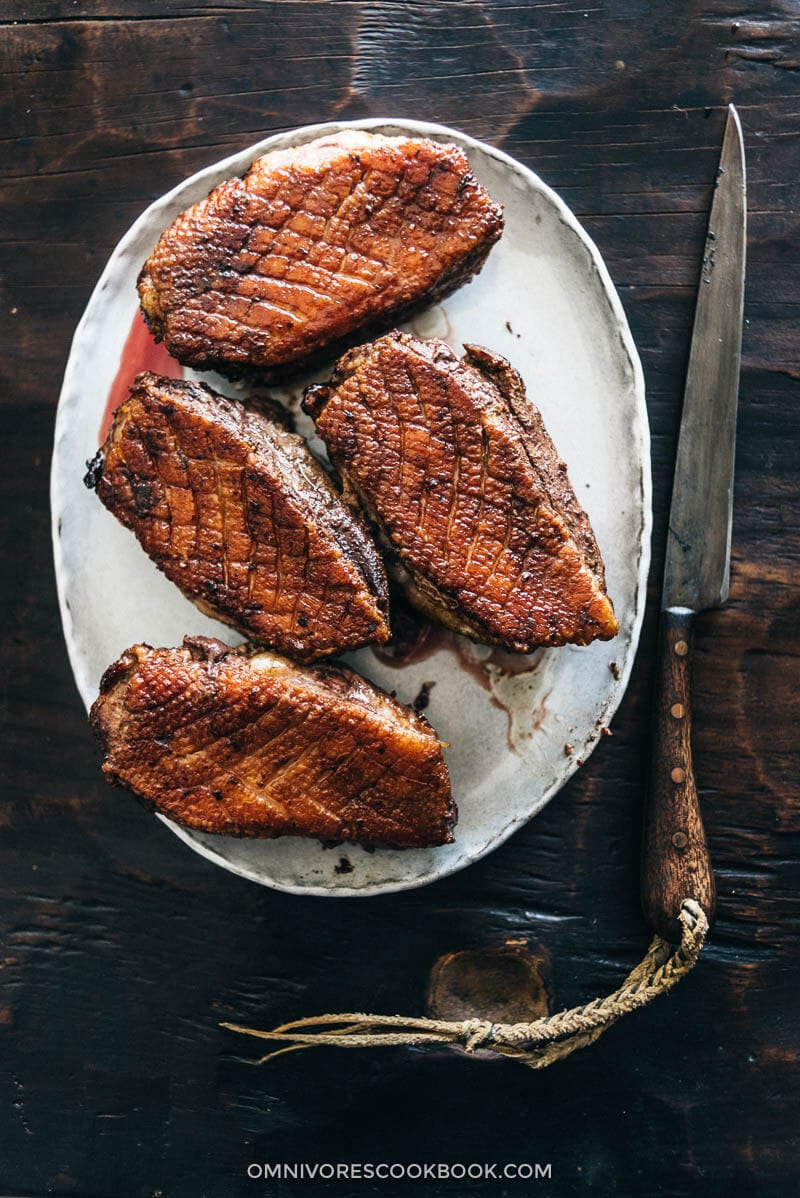
Place the duck breast skin side down in a cold skillet and cook over medium heat.Once the skin starts to simmer gently, turn to medium-low heat and cook for 10 to 12 minutes. This process is like rendering bacon fat; you want to proceed low and slow.Once the skin turns golden brown, transfer the pan into a preheated oven and bake at 425°F (218°C). Keep rendering fat skin-side down for 8 minutes.Flip the duck breast and continue to bake for 6 to 8 minutes. The duck will reach medium inside, and the skin will crisp up perfectly.Rest the duck without cover, for 10 minutes. This step is very important, because the duck breast will turn crispier when it’s slightly cooled.
How to serve – Cantonese and Peking duck styles
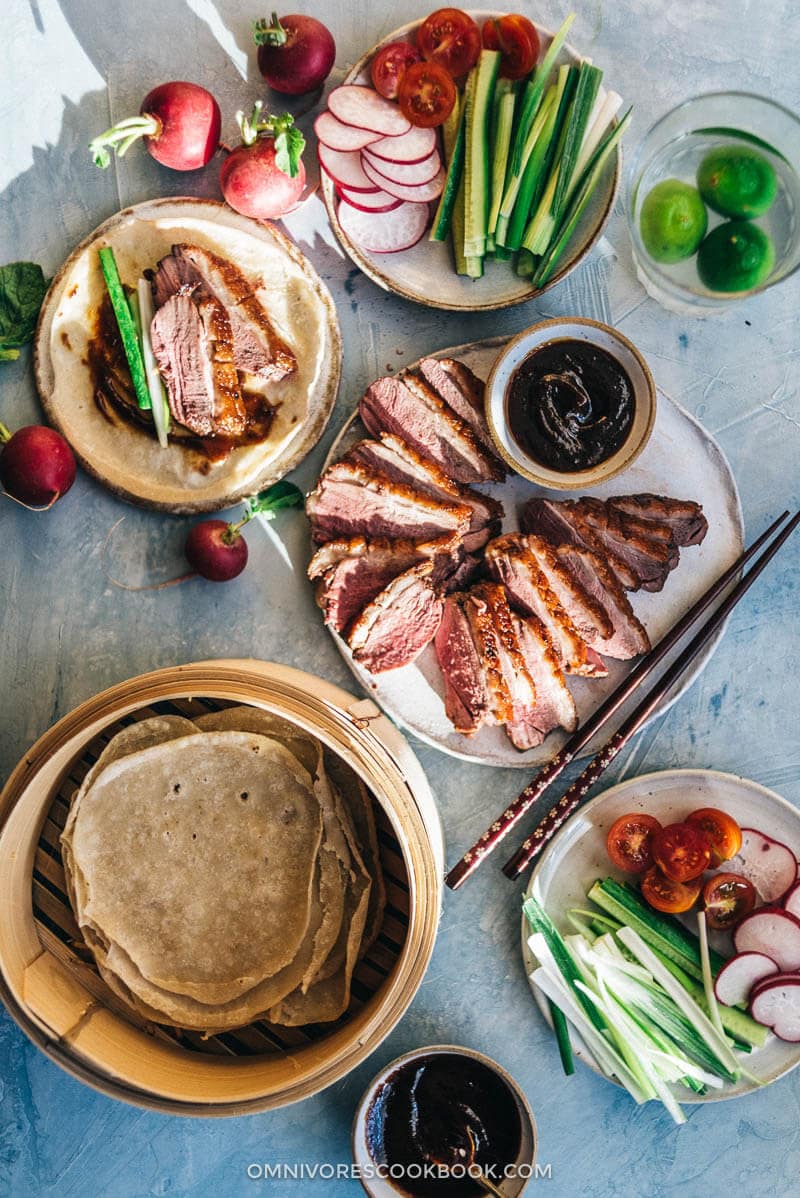
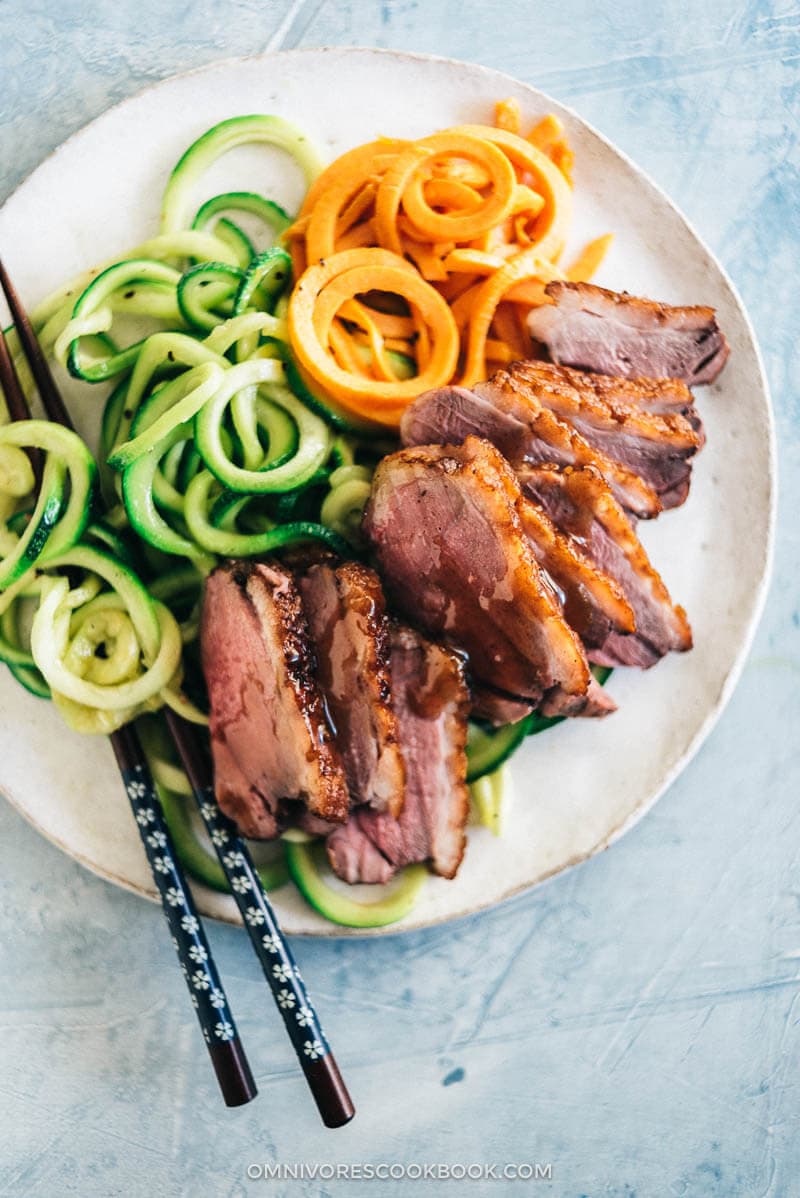
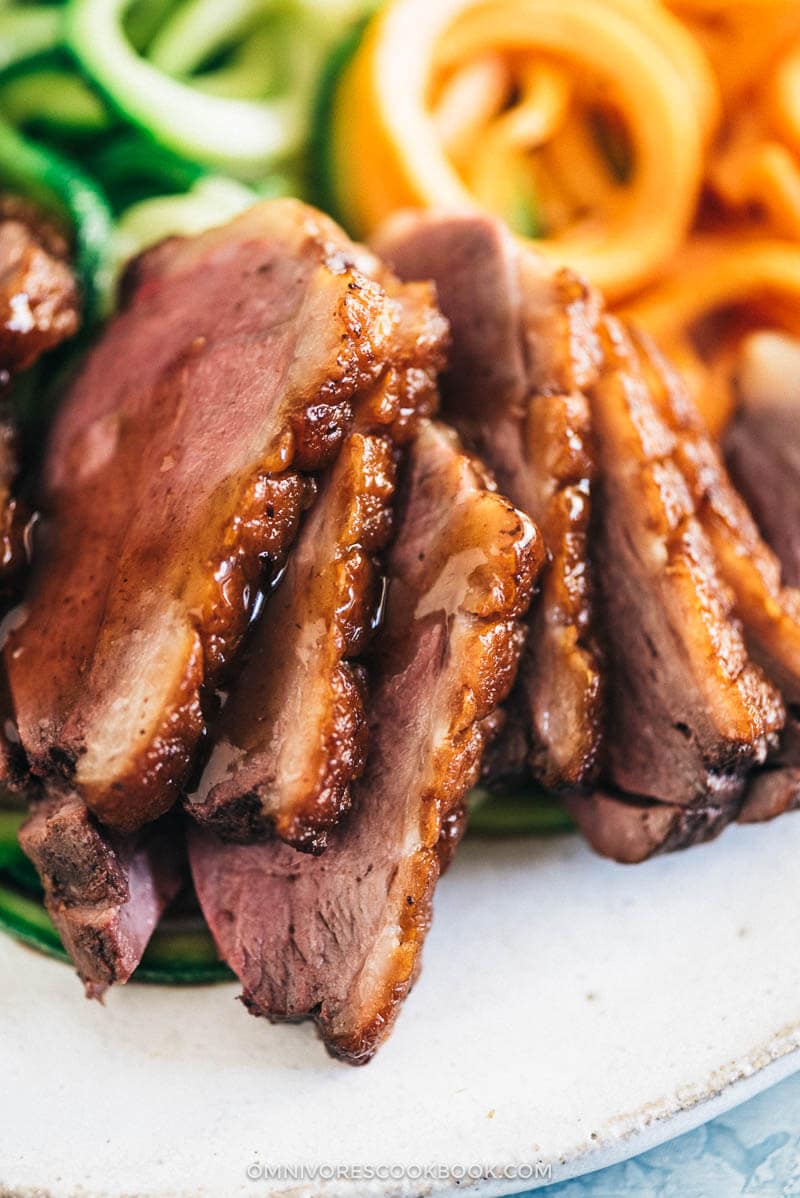
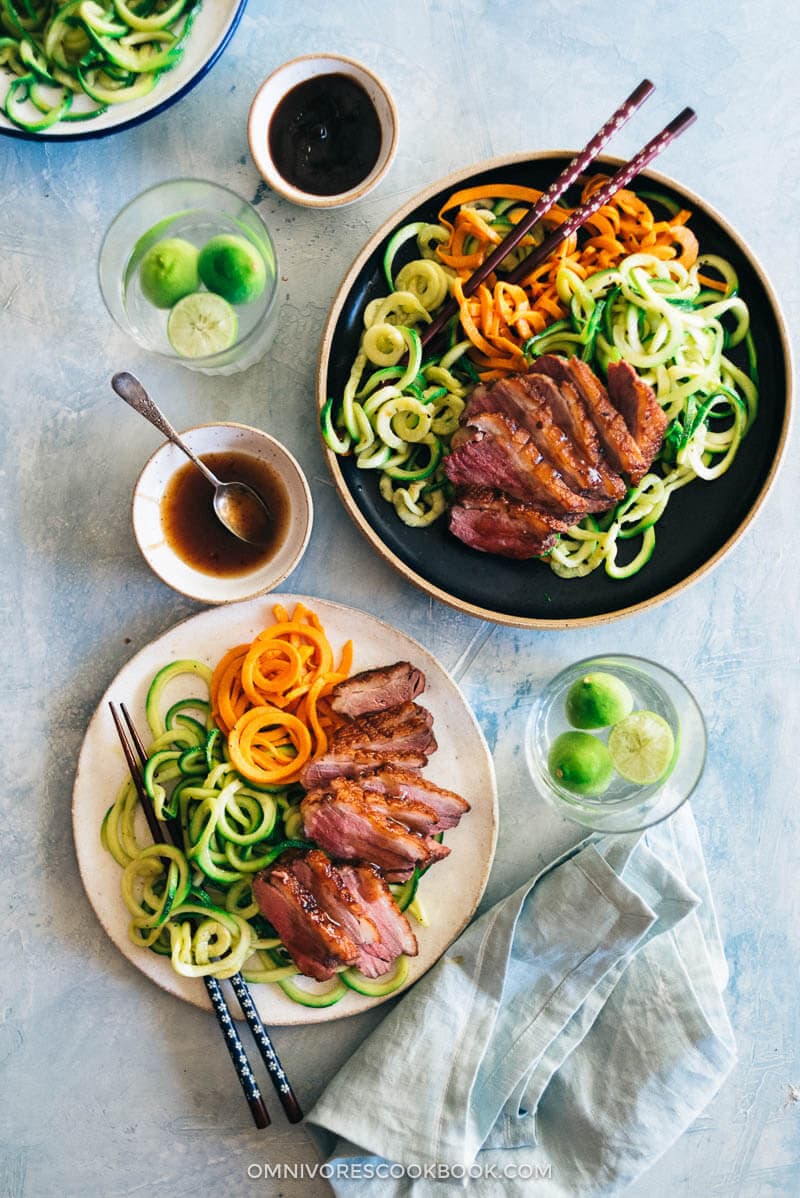
This is the fastest way to serve the duck. Right before baking the duck, transfer 2 tablespoons duck fat into another skillet. Cook spiraled vegetables in the duck fat to get extra delicious veggies – my favorite sides are zucchini and sweet potatoes. Season the veggies with a pinch of salt and black pepper, and cook until tender and caramelized. Then you’ll have a main dish and a colorful side for dinner. For the duck, we simply dip it in plum sauce. YUM! If you’re craving Peking duck, this is the best way to go. To get the top results, check out my mom’s secret Duck Pancake recipe. You will need an hour to prepare and cook the pancakes, but you will get the most unbelievable pancakes that taste 10 times better than the ones from a frozen package. If you’re hosting a party, you can make these pancakes a few days ahead and reheat them before serving. It is by far the best way to showcase your duck dinner and impress all of your guests! When you’re ready to serve, slice the duck breast to thin pieces, then serve it with hot pancakes, sliced cucumber and onion, and sweet bean sauce (or hoisin sauce). One word about sweet bean sauce (Tian Mian Jiang) – it is the authentic accompaniment to Peking duck – it tastes very similar to hoisin sauce, but less sweet and a bit more savory. Recently I discovered an interesting thing: many Chinese restaurant in the US will give you sweet bean sauce when you order Cantonese roast duck or moo shu pork, but they call it hoisin sauce. If you like the sauce that comes with your Chinese takeout but find it tastes different from your hoisin sauce, try out sweet bean sauce – that’s probably what you’ve been eating!
More duck recipes
The Best Slow Roast Duck – The most popular duck recipe on this blog, I got the recipe from a restaurant chef 🙂Mom’s Best Duck Pancakes (春饼, Mandarin Pancakes) – Must-have for Peking duckPan Seared Duck Breast with Persimmon Grapefruit Sauce – A great recipe for smaller cut duckPeking Duck Fried Rice – In case you have leftoversMediterranean Slow Roast Duck with Olive Sauce
[one_half_last padding=”0 0 0 5px”]