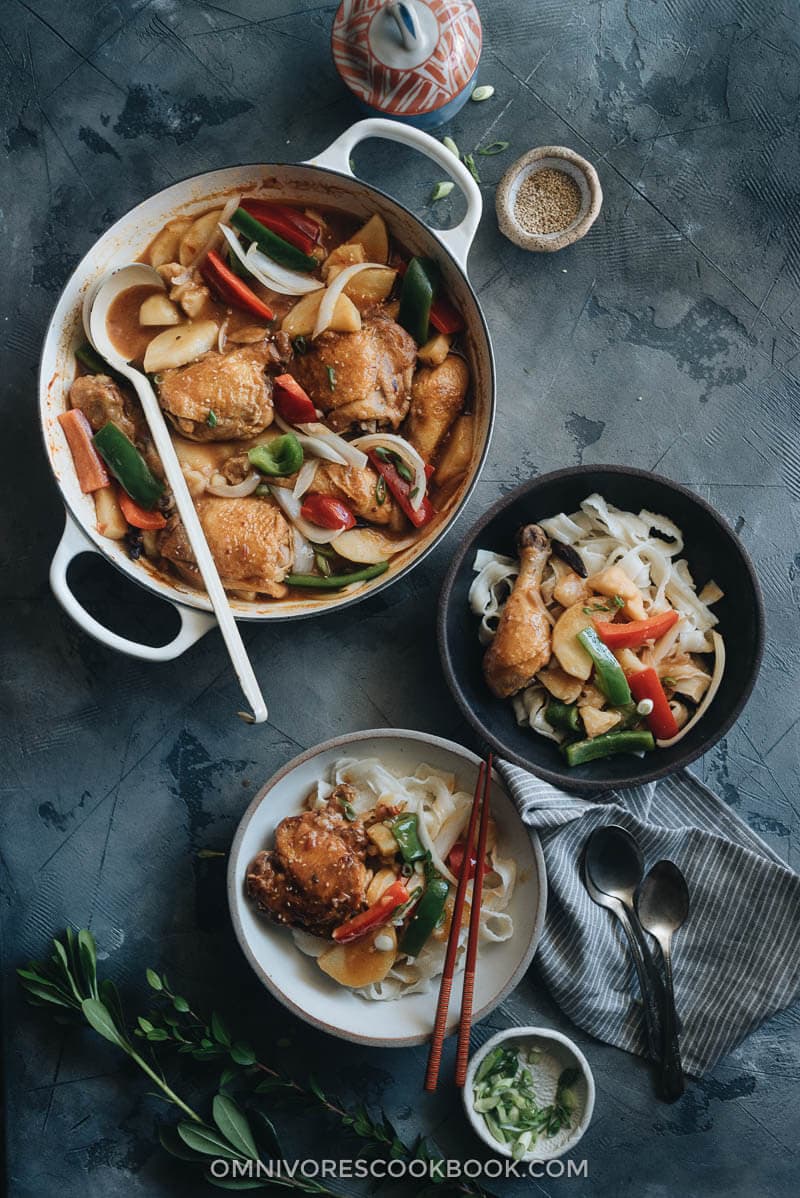
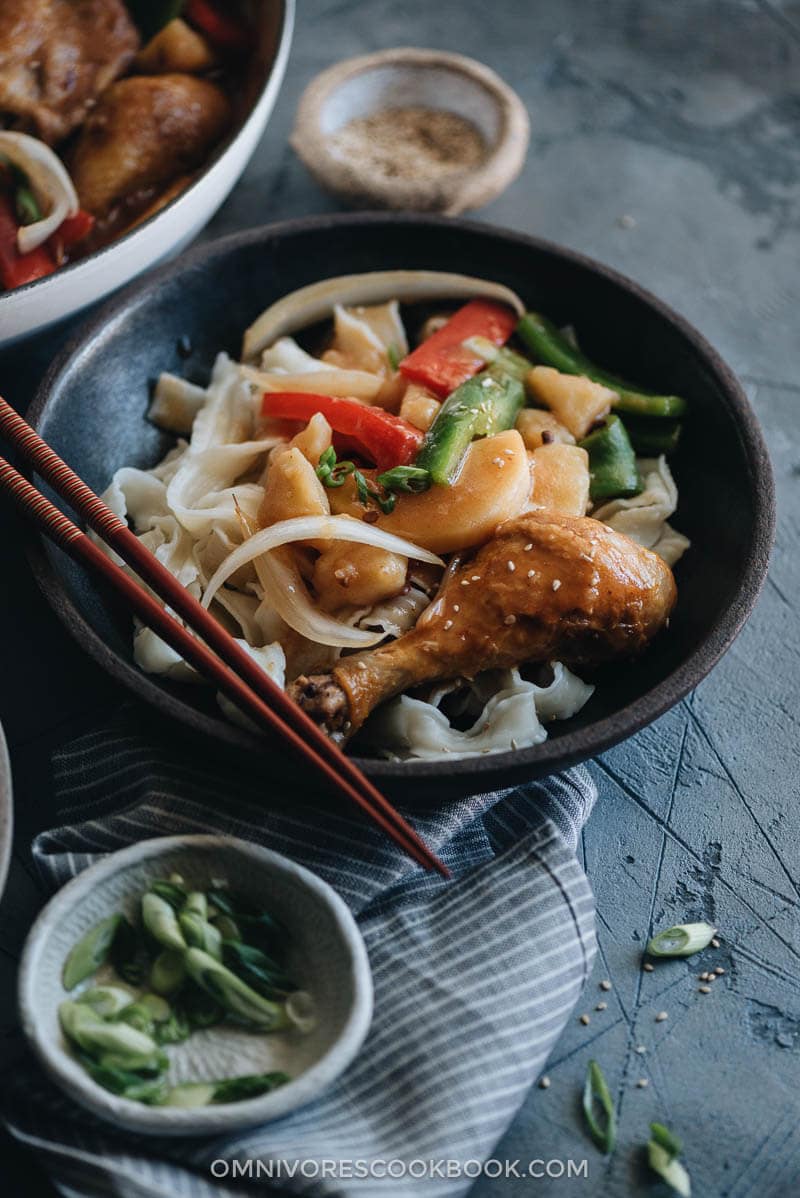
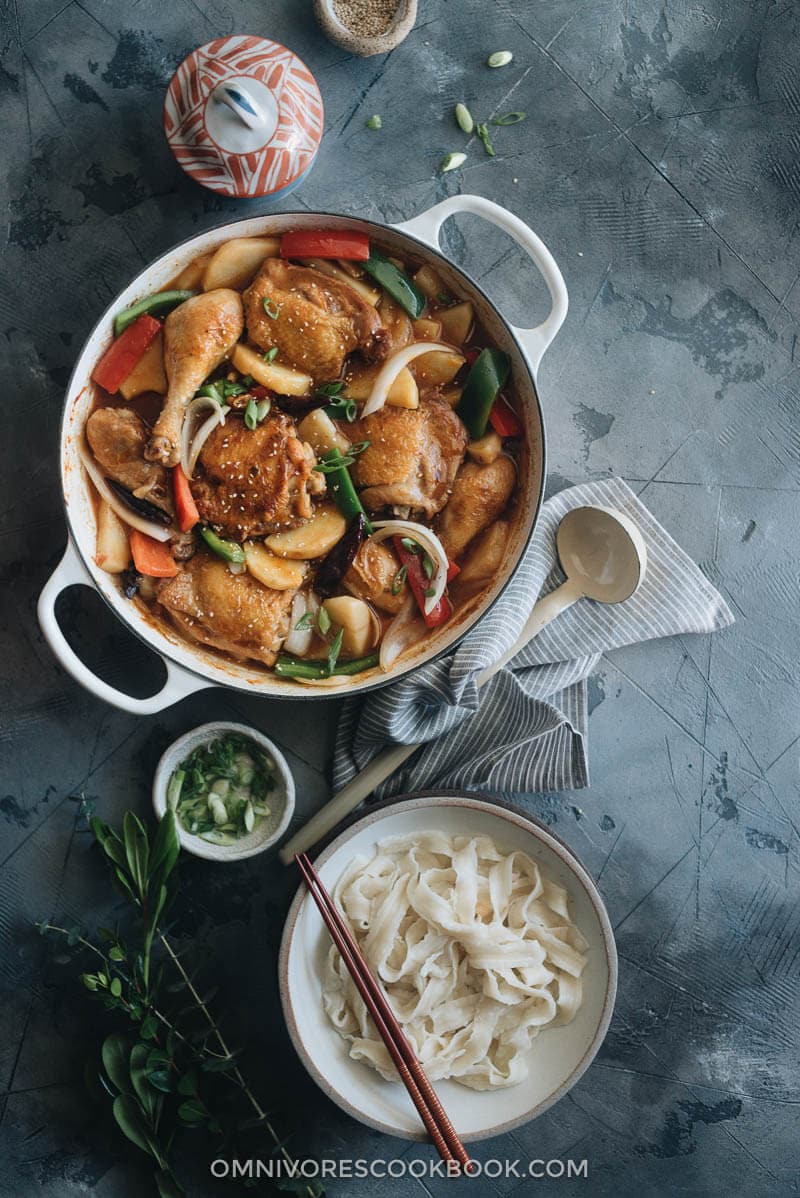
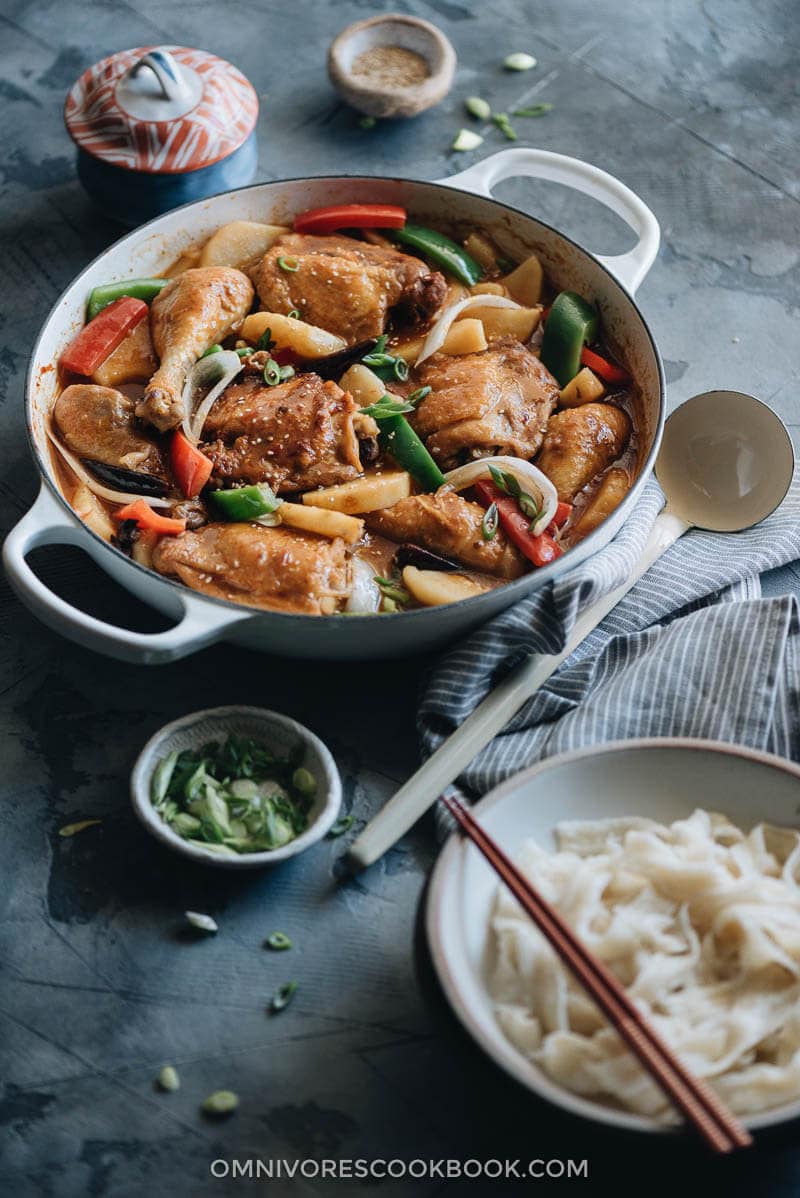
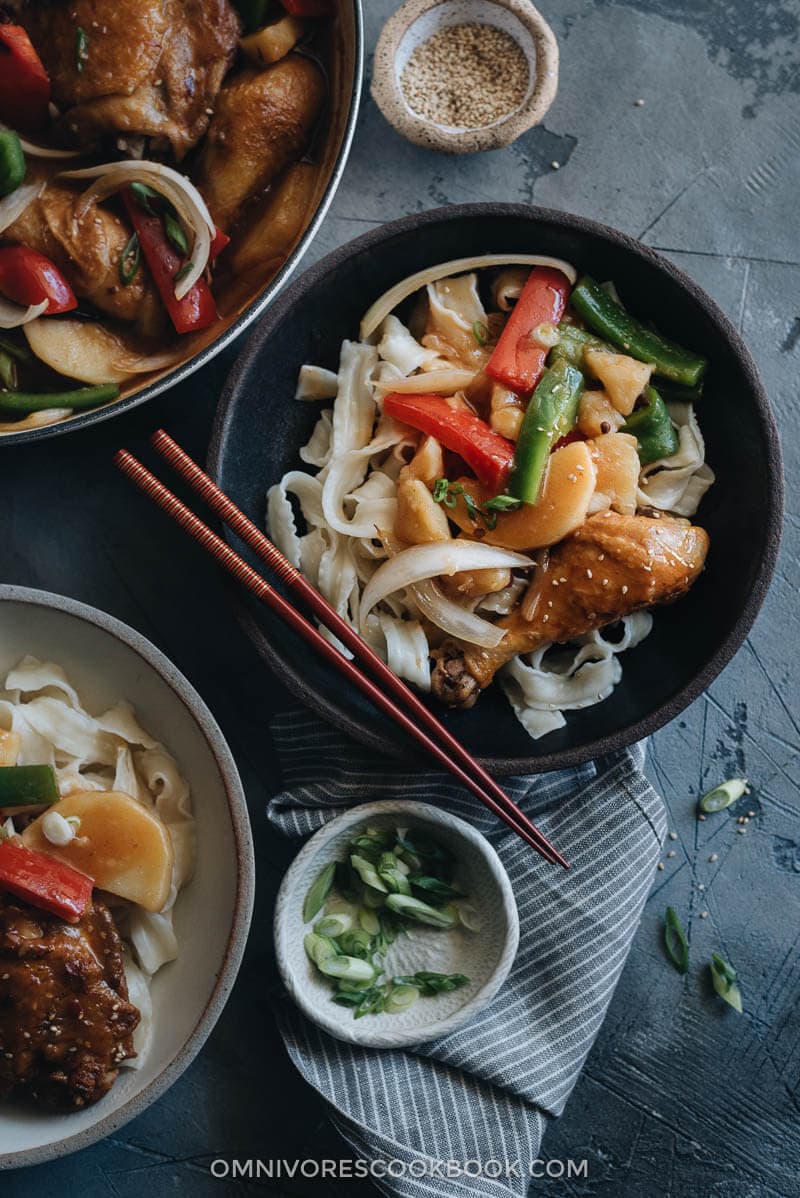
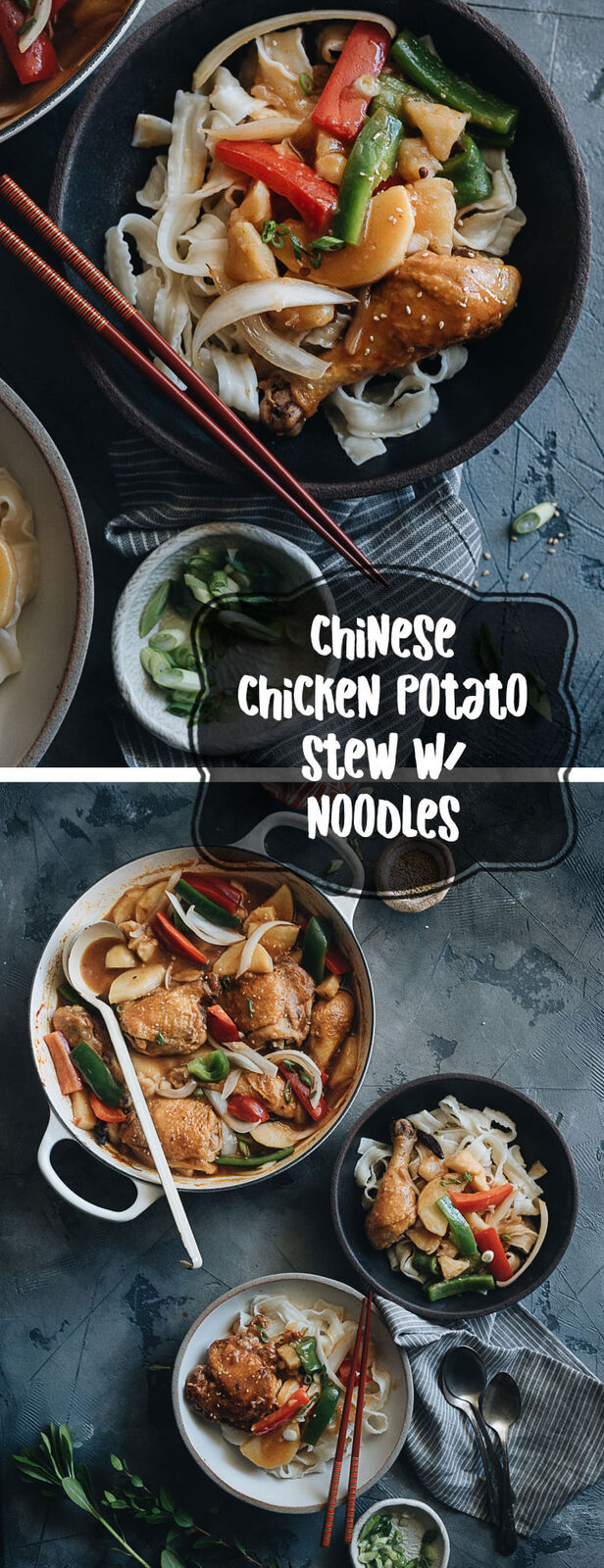
Da Pan Ji, which can be translated literally to “big plate chicken”, is a hearty chicken potato stew from Xinjiang Cuisine. It is one of those dishes that you might never have heard of outside of China, but will fall in love with the first time you try it. Combining the flavor profiles of Middle Eastern cuisine and interior Chinese cuisine, the dish uses tons of garlic, ginger, star anise, chili peppers, cumin, fermented bean paste, and Sichuan peppercorns to create a super rich broth. The stew is loaded with chicken, potatoes, peppers, and onions. In Xinjiang restaurants, it is often served on hand-pulled noodles, and sometimes with naan, as well. It is a dish that many families cook at home. But it is so popular that it is a top dish for every Xinjiang restaurant.
Cooking notes
It took me a while to decide how to approach this recipe, because I wanted to keep it as authentic as possible, but also more practical to make in a Western kitchen. Eventually I came up with a happy solution to make a modern Da Pan Ji without losing the original taste.
Cuts
To make the dish the authentic way, you should always use a whole chicken and chop it into bone-in bite-size pieces. The reason is that the bones will make the broth extra flavorful, and the meat will be seasoned well due to the small size. Cooking in an American chicken, chopping up a whole chicken is my least favorite thing to put on a daily to-do list. It requires a heavy cleaver that I don’t have and it’s messy. However, I did want to use bone-in cuts instead of boneless ones. In the end, I settled on bone-in thighs and legs. They are the next best thing to a chopped whole chicken. They are much easier to deal with and the result is just as good.
Cooking utensils
The original Da Pan Ji (and almost every Chinese meat stew, for that matter) is cooked in a wok. It’s a great way to braise meat because you can use less liquid to cover all the ingredients. In this recipe, I decided to use my dutch oven to make this dish. There are two reasons I made the change:
Serve
I love serving this dish with wide, thick noodles. If you live close to an Asian market, you can find them in the refrigerated section. You can also use other types of wide dried noodles such as udon noodles. If you’re feeling extra fancy, you can also serve the dish with hand pulled noodles. One last word. Always make a full batch because it takes the same amount of time and you’ll always want to save some leftovers for later.
More Xinjiang recipes
Lamb Skewers Ding Ding Chao Mian Lamb Samosas (Kao Bao Zi) Lamb Pilaf Cumin Lamb Stir Fry
If you give this recipe a try, let us know! Leave a comment, rate it (once you’ve tried it), and take a picture and tag it @omnivorescookbook on Instagram! I’d love to see what you come up with.