How to make Greek meatballs
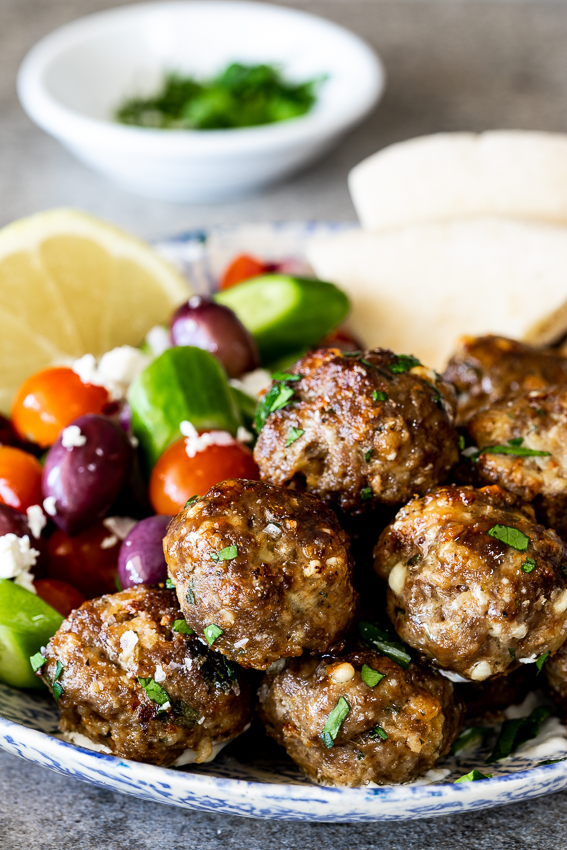
This recipe is a version of one of my favorite Greek recipes, Keftedes, that I fall back on all the time. The added feta cheese in the meatball mixture is all kinds of delicious. Combine beef and lamb (you can add pork too), with finely minced red onion, garlic, oregano, lemon zest, rosemary and crumbled feta cheese. Add egg and fresh breadcrumbs to bind and season generously with salt and pepper. I always like to fry a small amount of the mixture to test for seasoning and then adjust where necessary. With wet hands, form meatballs approximately 3cm/1in in diameter. Fry the meatballs in a non-stick frying pan in a a small splash of olive oil until golden brown on all sides and cooked through. Remove from the heat and serve.
Why do my meatballs fall apart?
Meatballs usually call for a binder of egg or breadcrumbs (or both) to help them stick together. Too much of either can result in a texture-fail so my rule of thumb is 1 large egg + ½ cup fresh breadcrumbs per 500g/1lb of ground/minced meat.
Why are my meatballs tough?
The binders in a meatball recipe also act as a way to keep the meatballs soft and juicy. I prefer fresh breadcrumbs to dry but you can use either. Many recipes also call for bread soaked in milk which will result in crazy juicy meatballs and was the way my gran always made her meatballs. Just be careful not too add too much liquid to the meatball mixture as this can cause them to fall apart. Tough meatballs can also be a result of overmixing the meat. The meatballs can end up dense and chewy instead of light and juicy.
What to serve with Greek meatballs
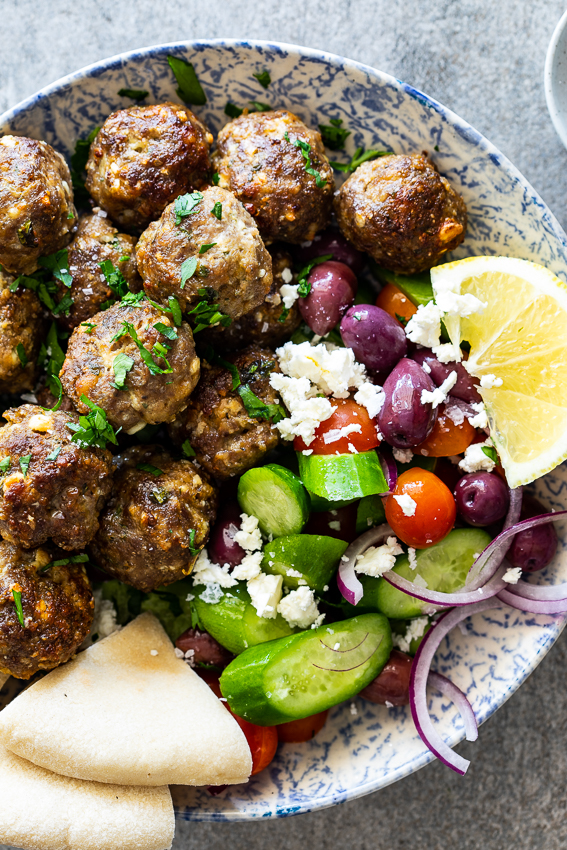
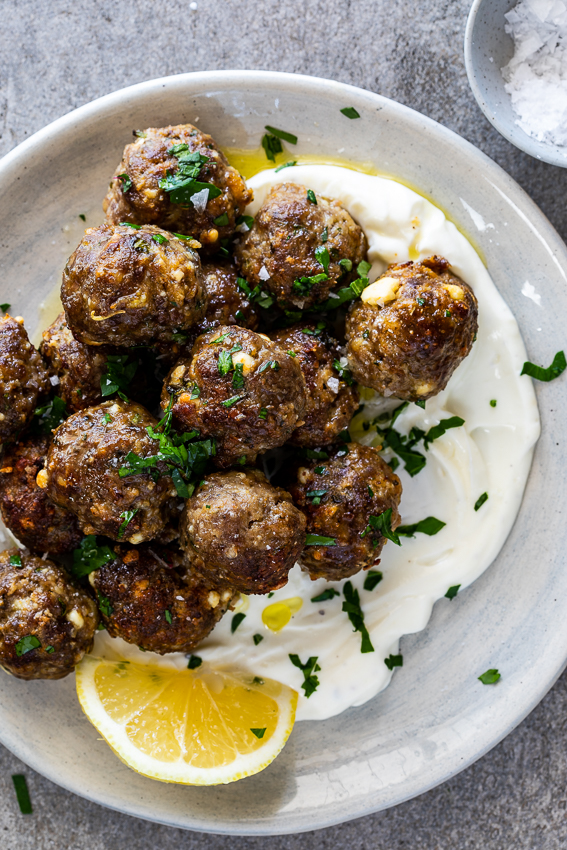
These Greek meatballs are perfect served with a simple Greek salad and toasted pita bread as a great lunch or dinner. They work just as well served with an easy Greek yogurt dip (made with garlic, lemon, olive oil and Greek yogurt) as an appetizer or quick snack.
Other sides to serve with meatballs:
Greek recipes