Noodles are one of the most important elements of Chinese food culture. Handmade noodles might be a rarity, and even a pricey proposition outside of China. However, back in the old country, they are a cheap everyday comfort food. No matter whether it’s a hot bowl of noodles in a restaurant or freshly made noodles to cook at home, it is one of the cheapest ways to get a fast, fulfilling, and hearty one-dish meal.
Why make hand pulled noodles at home
Despite the low cost of noodles at restaurants, a lot of people still enjoy making them from scratch at home. The reason? Because: There are countless types of noodles in China and I will introduce you to the hand-pulled (拉面, la mian) variety. It might sound daunting to make this type of noodle at home, especially if you’ve ever watched a noodle dance in China. But the truth is, hand-pulled noodles are one of the easiest handmade noodles for a beginner to make.
Why this recipe
A fool-proof recipe that works even if you never made hand pulled noodles before. The dough requires minimal kneading and it’s easy to put together. The recipe only uses three simple ingredients – flour, salt, and water.
There are two different approaches to making hand-pulled noodles. In most professional kitchens, the most common way is to knead the dough for a very long time to develop the gluten, then let it rest for even longer so the dough is relaxed enough to pull. However, we found that method not practical in the home kitchen since no one wants to knead the dough for an hour (it takes a similar amount of time, even with a KitchenAid mixer). After many test runs, we found that the key to making hand-pulled noodle dough is to knead just enough to get the dough smooth without developing too much gluten. So you do not need to rest the dough for too long before pulling. Our method requires very little active kneading, and it will yield a soft and springy dough that’s very easy to work with.
How to make hand-pulled noodles
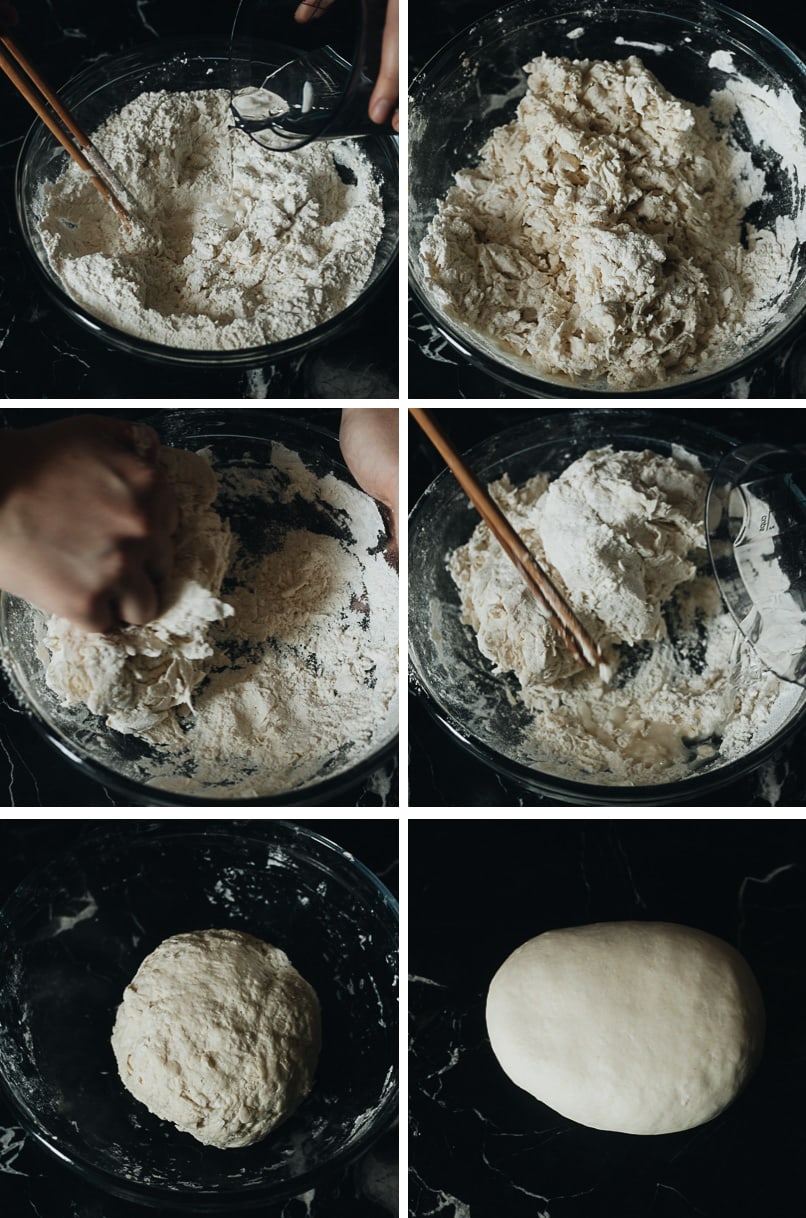
(1) Prepare the dough – 1 short rest
To make the dough without developing too much gluten, you will need to rest the dough three times before pulling the noodles.
(2) Shape the dough – 2nd resting
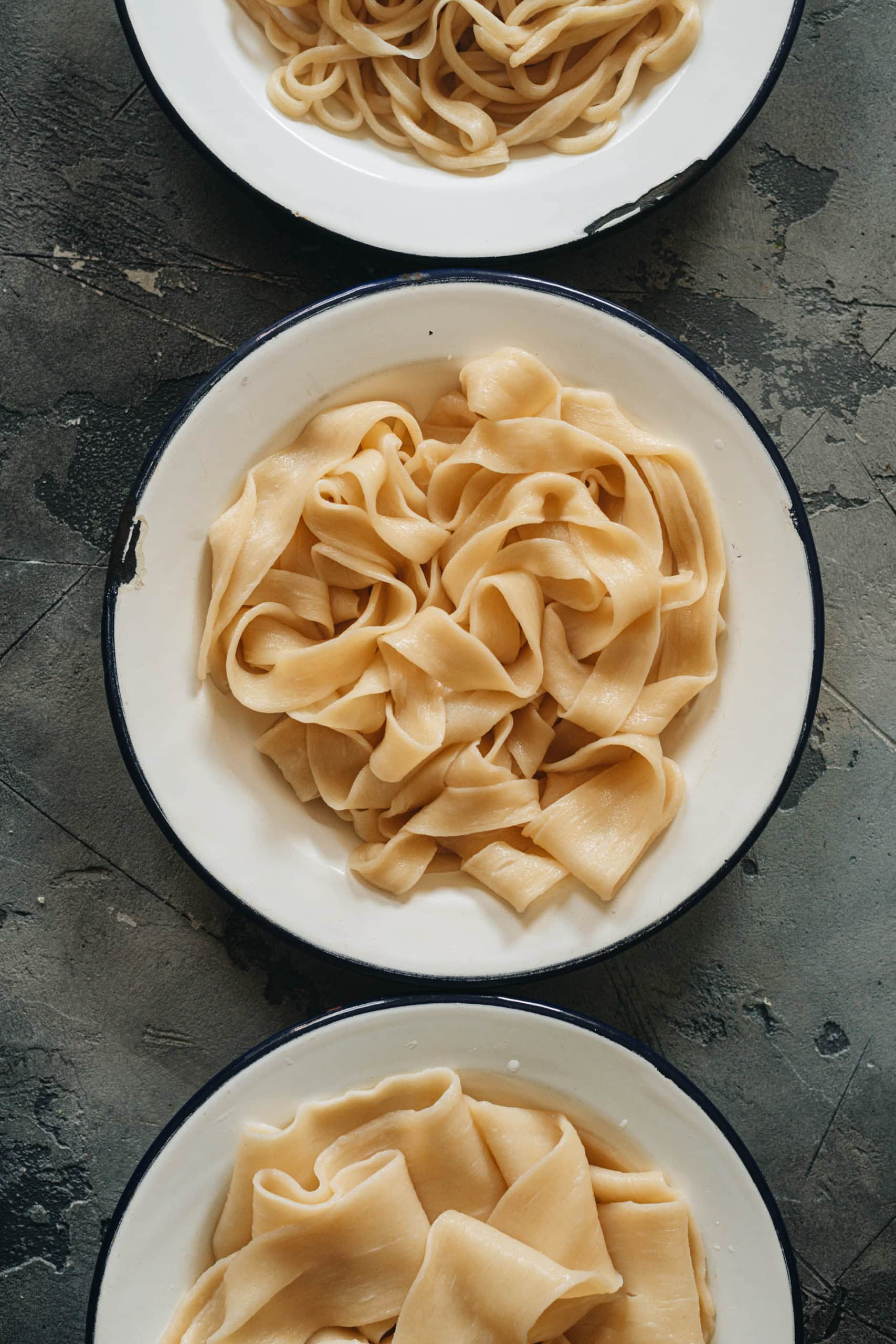
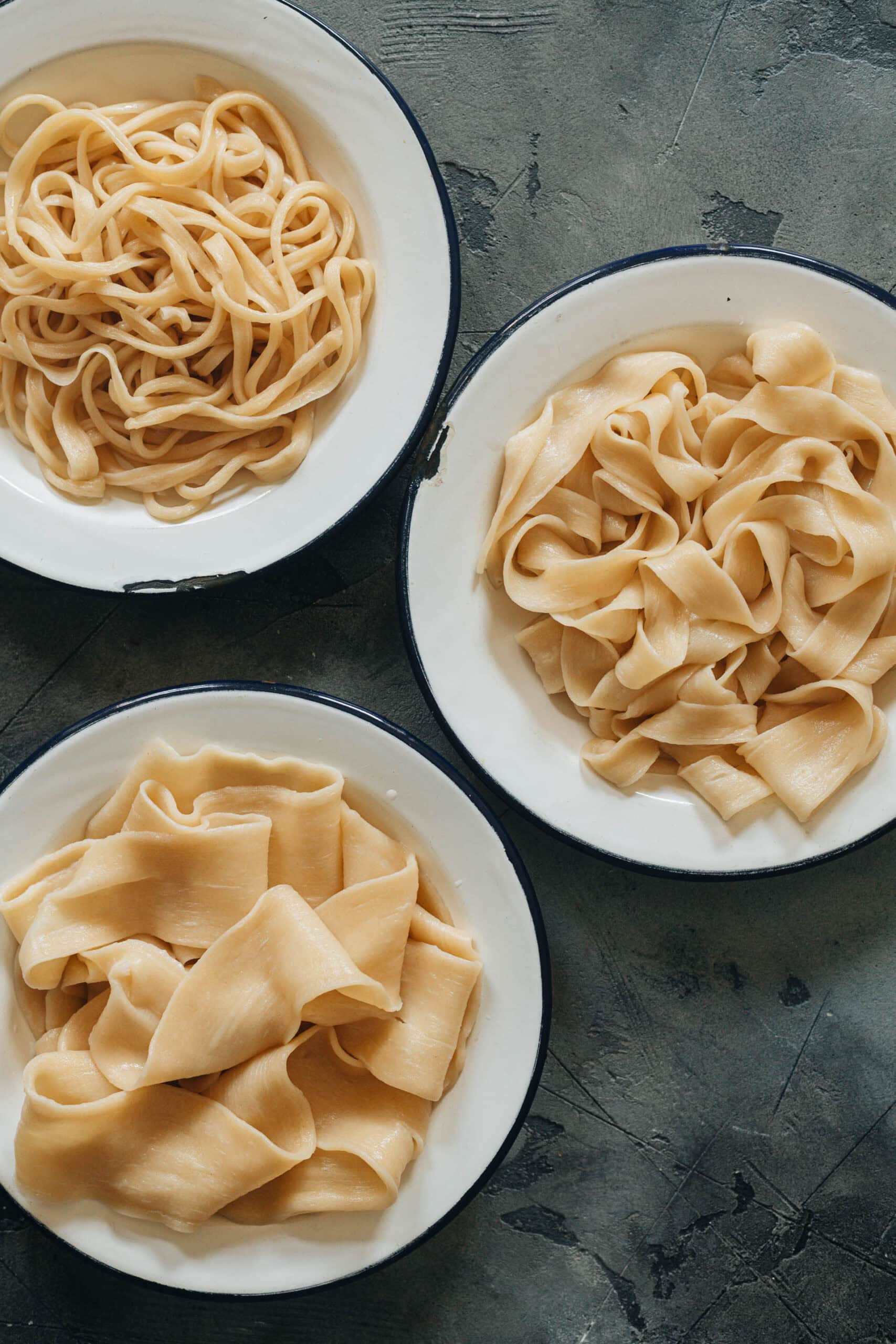
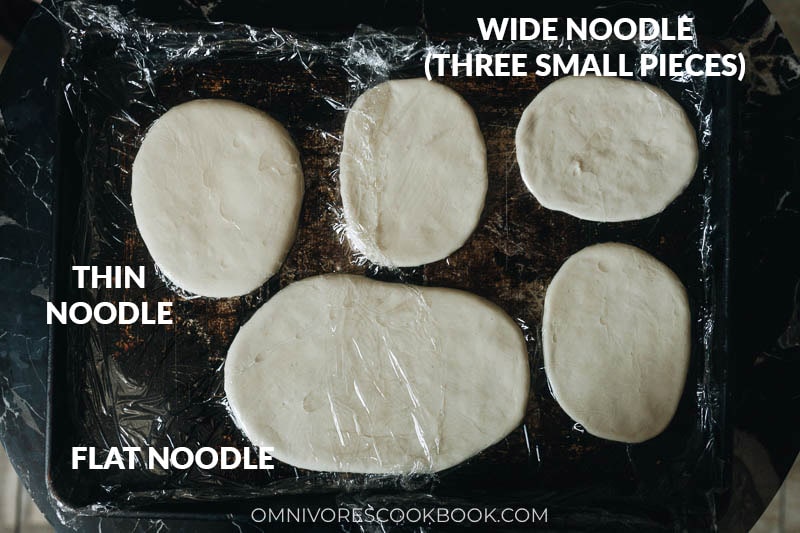
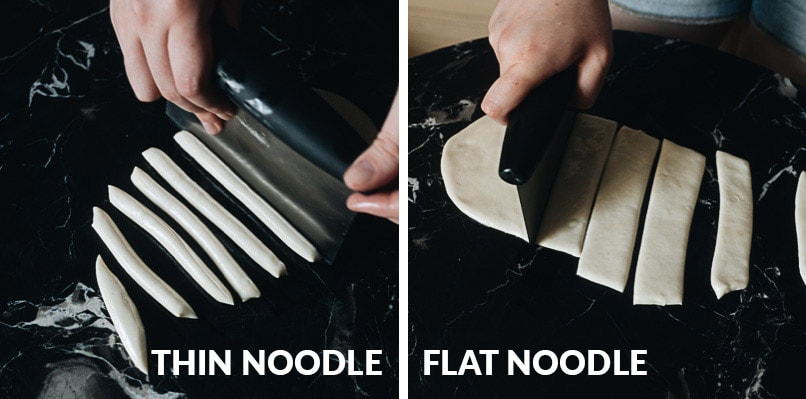
Roll out the dough depending on the type of noodles you want to make and let it rest for 2 hours to fully relax the gluten before pulling and cooking. We’ve included three types of noodle doughs in this recipe, so you can choose the type you prefer:
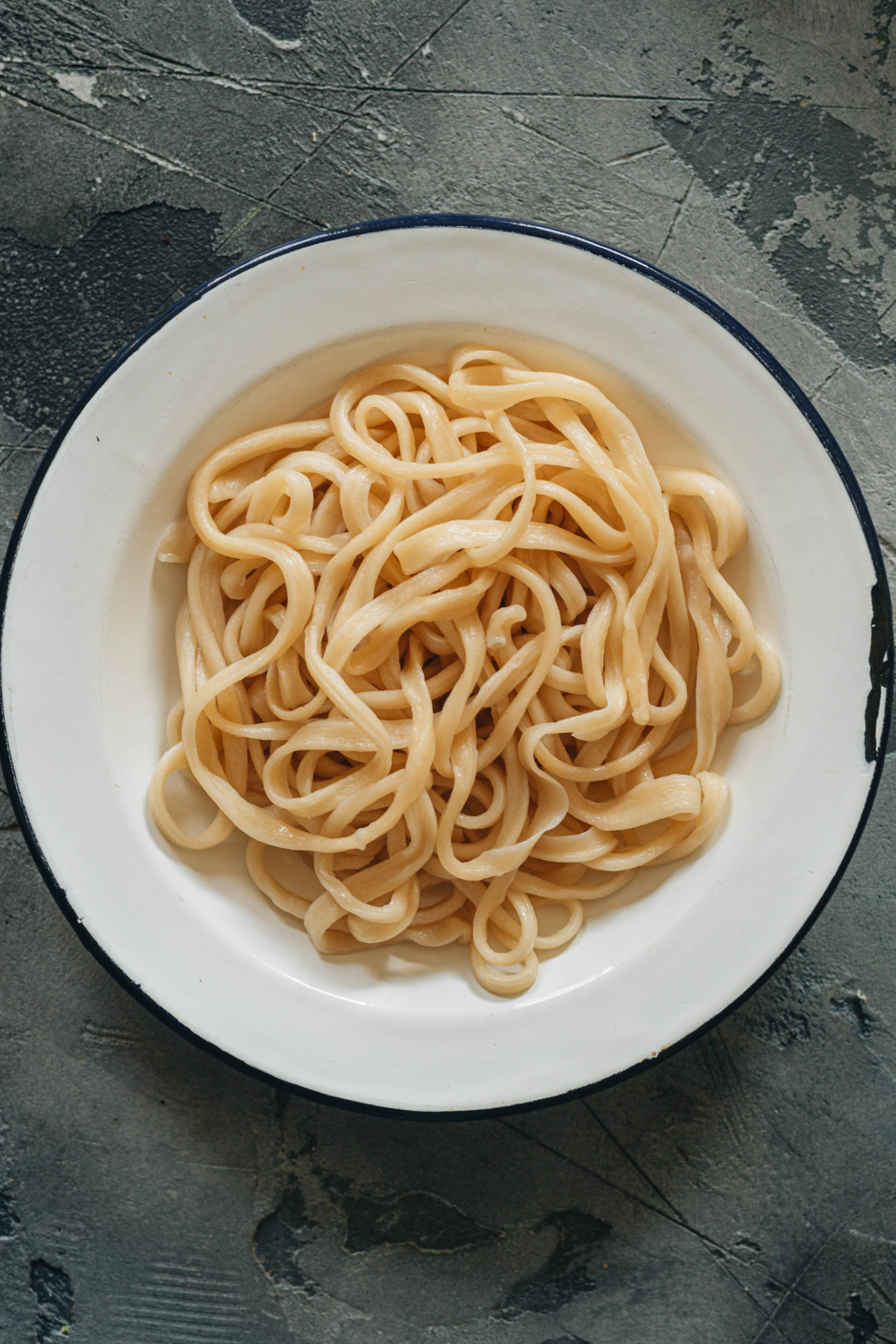
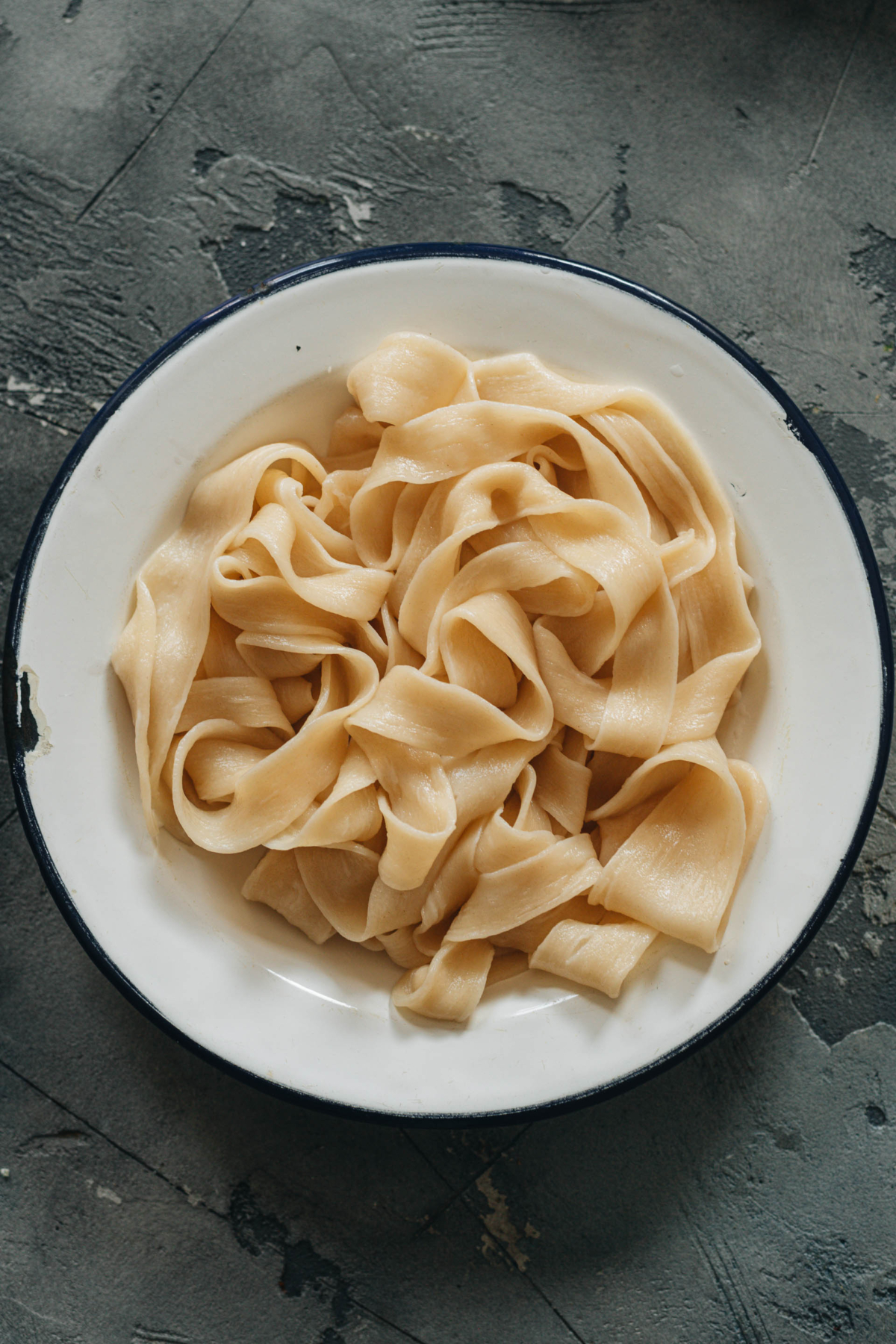
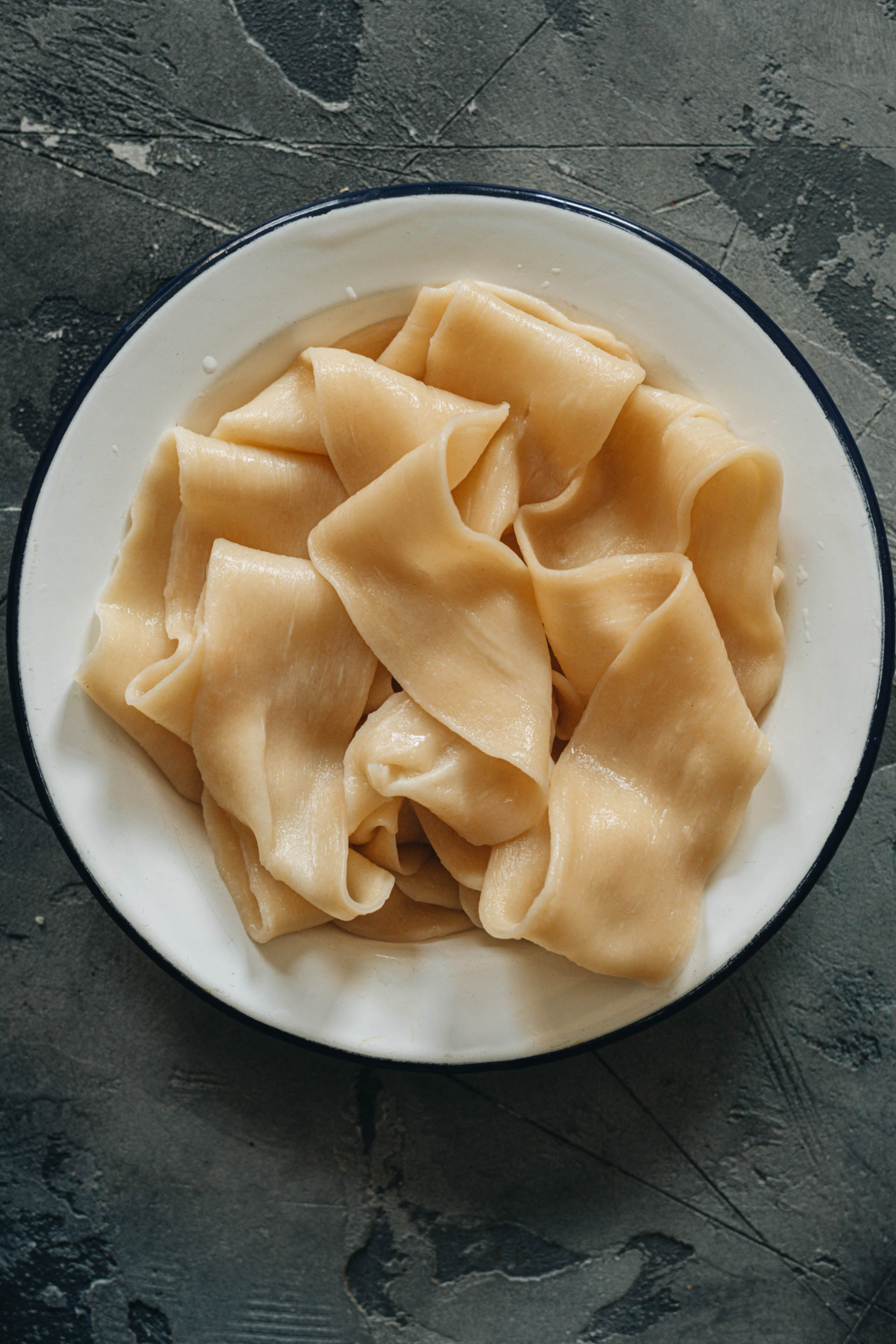
Thin noodles: great for noodle soup, fried noodles, or lo mein noodles Flat noodles: good for noodle soup or noodles served with a sauce Wide noodles: good with a super heavy sauce such as cumin lamb or da pan ji
NOTE: it’s important to oil the dough and cover it, to prevent them from sticking and drying out.
(3) Pull the noodles
First, you need to cut the dough according to the width of the noodles you want to make.
PS: It’s important to keep the cut noodles covered with plastic wrap so they don’t dry out.
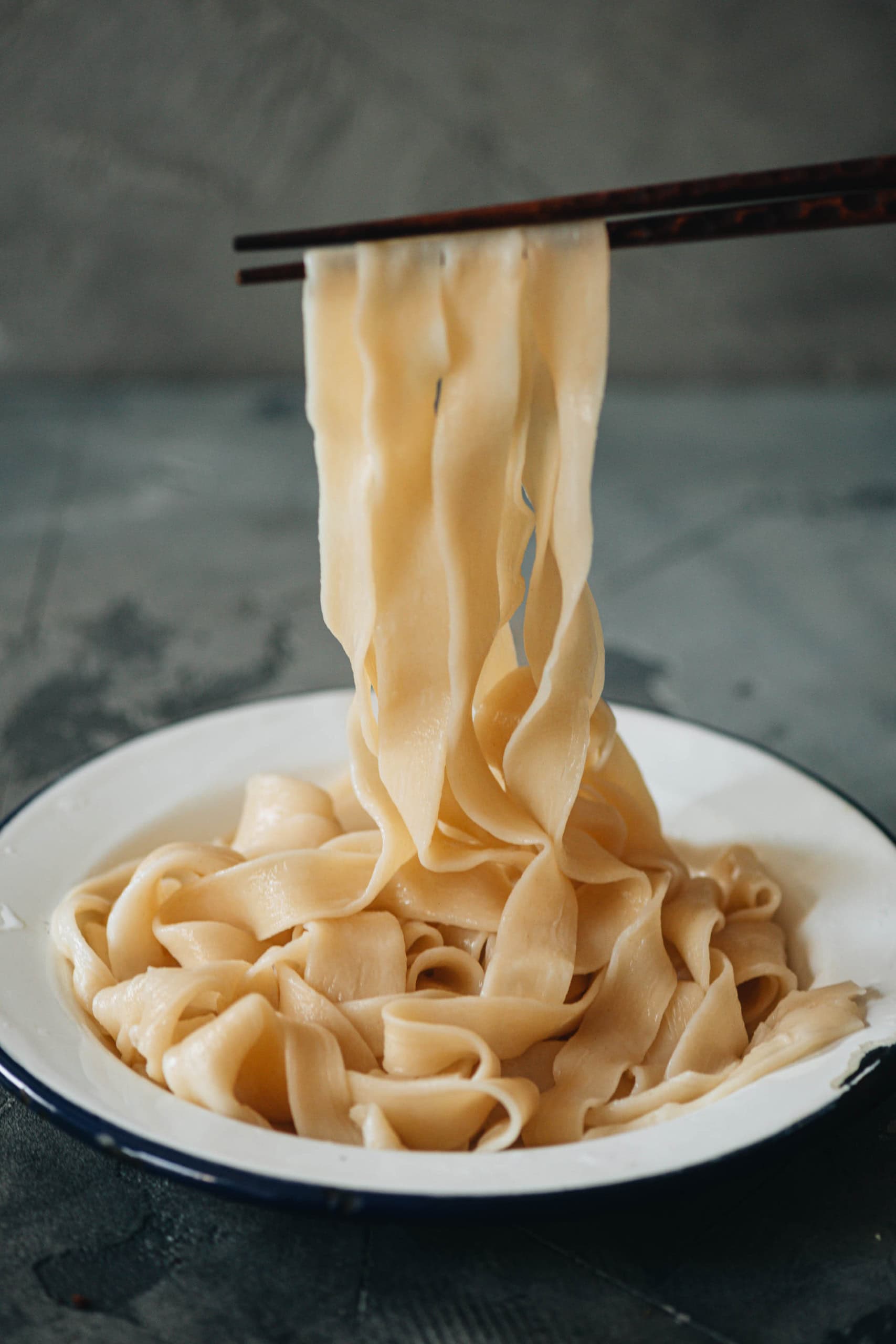
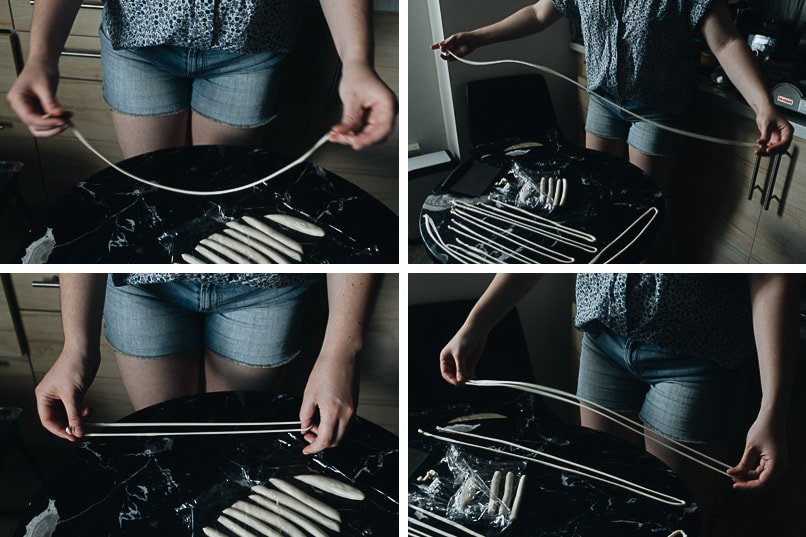
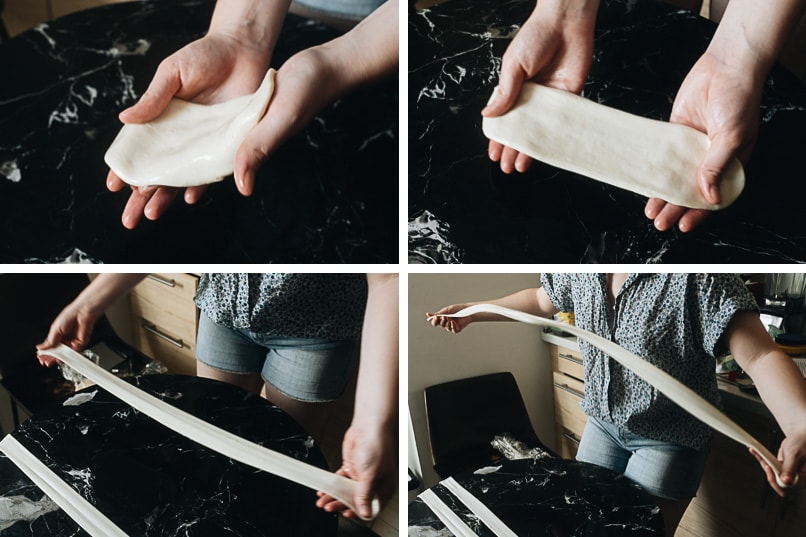
The process of pulling the three types of noodles is the almost same – pull the dough into a thin strip with one motion, and keep pulling and bouncing on the table into a thin shape, then fold it, pull it, and bounce it again until it reaches the desired thickness (except for flat or wide noodles, which you don’t need to fold).
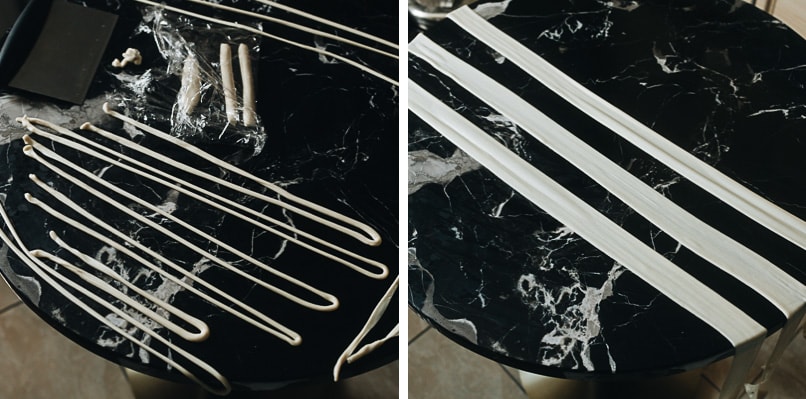
Once you’ve pulled the noodles, rest them on the working surface without overlapping. If you have a small working surface, you can dust the noodles with flour so they don’t stick together if placed too closely together.
(4) Cook the noodles
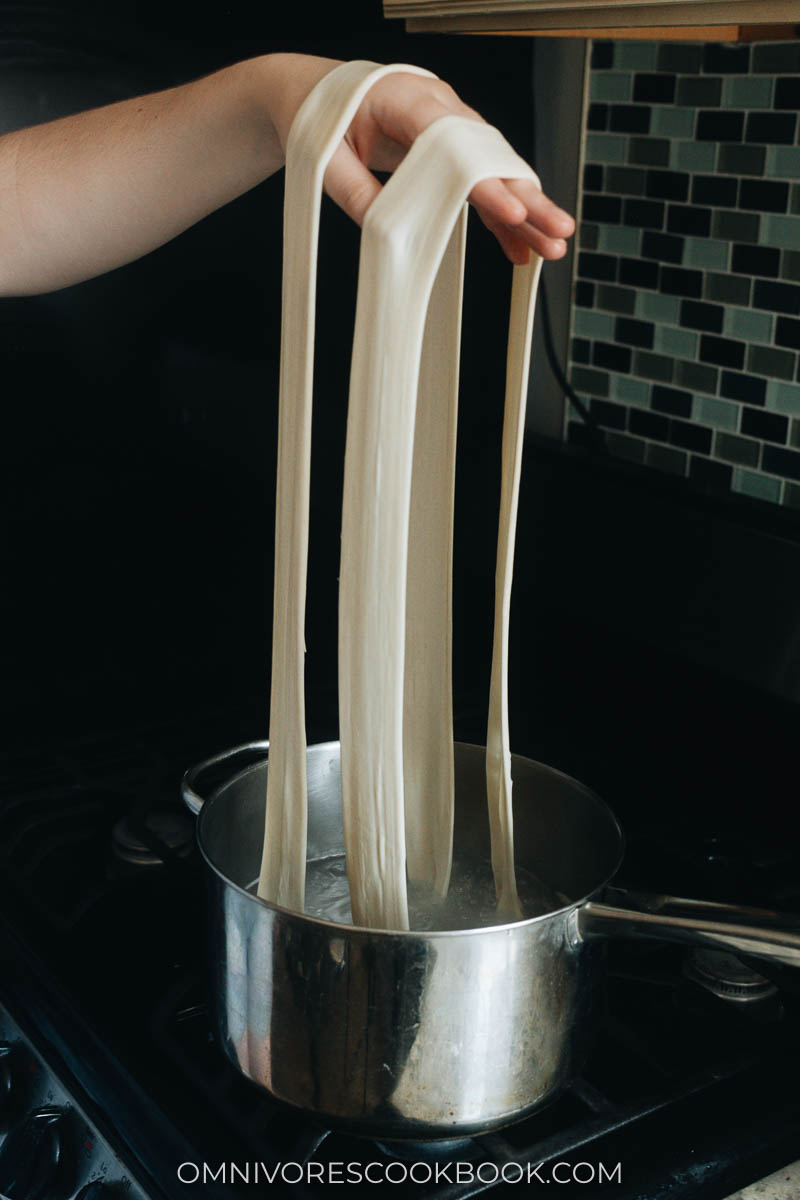
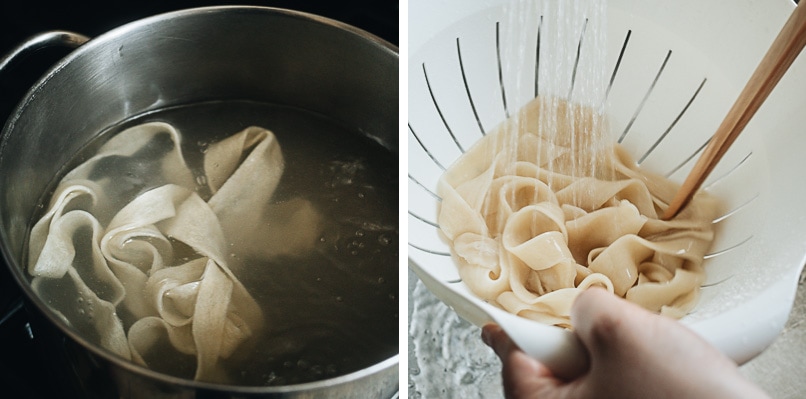
To cook the noodles, drop a few strands of noodle into the boiling water at a time and cook until they’re cooked through and springy. If you prefer the texture to be softer, boil them a bit longer. Once done, remove the noodles to a colander and rinse them with tap water to stop the cooking.
(5) Serve and store hand pulled noodles
The freshly made noodles can be enjoyed with a simple sauce and made into various noodle dishes including soup and stir fries. Here are some ideas on how to use them:
Cumin Lamb Noodles Vegetable Lo Mein Easy Soy Sauce Noodles Real Deal Sesame Noodles Dan Dan Noodles Da Pan Ji (Chicken Potato Stew with Noodles) Lanzhou Beef Noodles Biang Biang Noodles (Chinese Hot Sauce Noodles)
You can find detailed information in the recipe below on storage.
Frequently asked questions
Recipe update notes
I created this recipe back in 2015 while I was still living in China. It’s a family recipe and I created a short video to show the process. Over the years I’ve received many readers’ positive feedback and questions. Moreover, I have since moved to the US and realized that all-purpose flour here is different from the ones in China (namely, they have more protein content). The old recipe still works but sometimes it does not produce consistent results depending on the brand of flour you use. That’s why we decided to retest the recipe using various types of flour in the US, slightly refining the process to make the result more consistent and closer to perfect each time. We also added instructions on making different shapes of noodles according to your suggestions. Lilja Walter is a part of the Omnivore’s Cookbook team and worked closely with Maggie to develop and test this recipe.