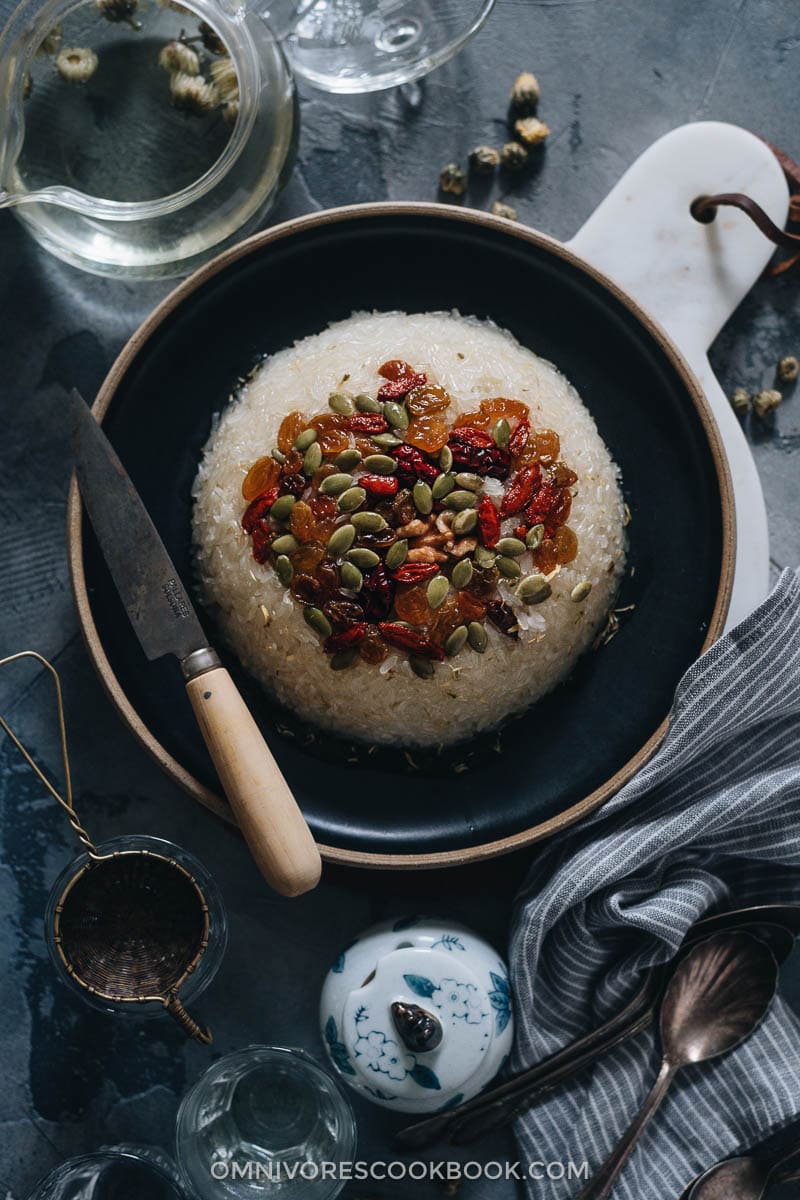
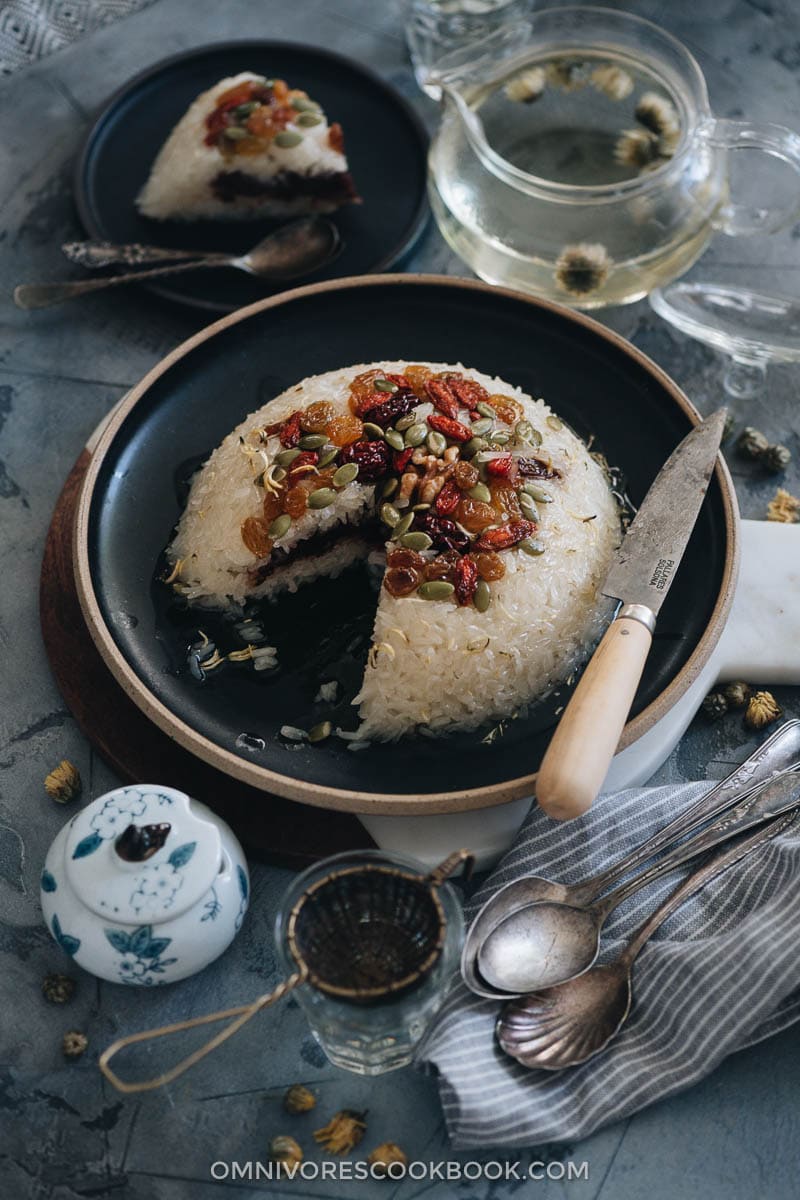
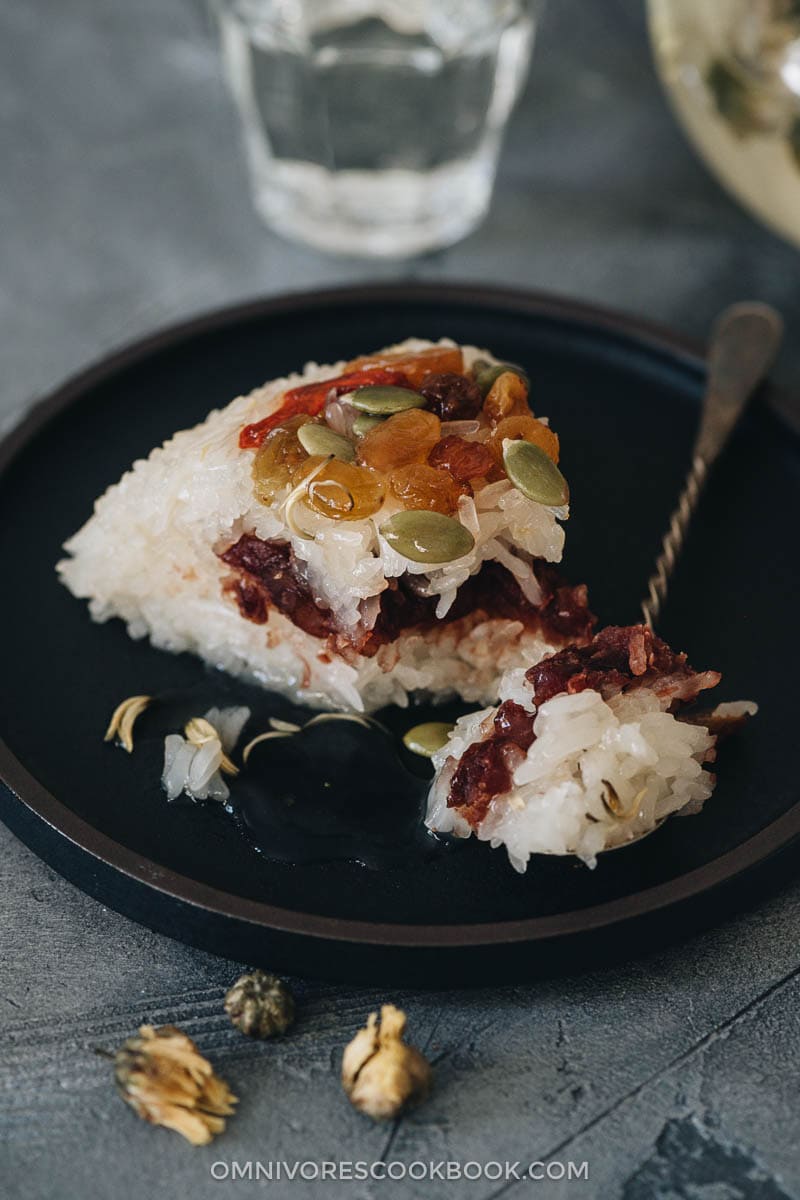
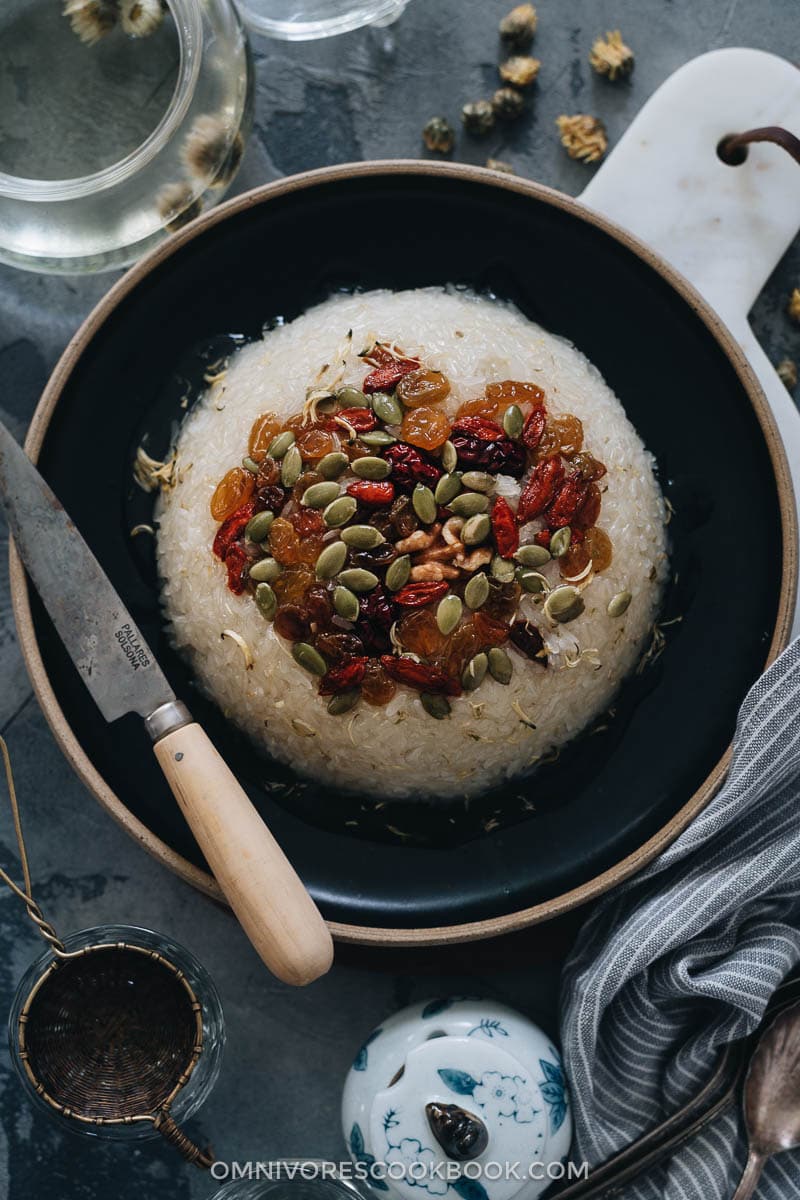
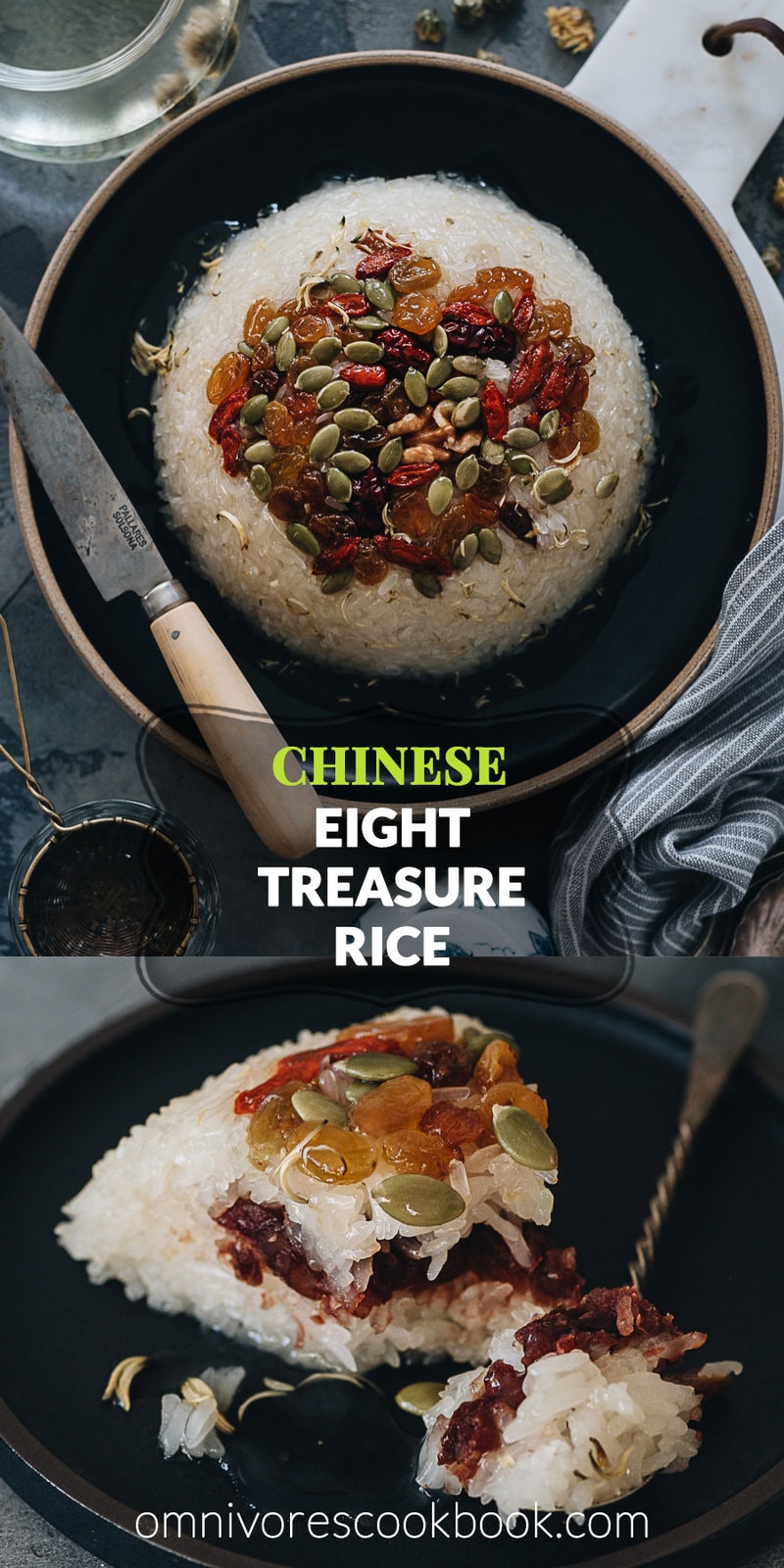
Sometimes food tastes better when it’s slightly upgraded from the traditional version, such as the Chinese Almond Cookies. This eight treasure rice is another good example. If you’ve never heard of eight treasure rice, it’s a dessert made from sweetened sticky rice. It’s quite similar to Mango Sticky Rice, but topped with dried fruits and seeds. Traditionally, the dish uses eight different toppings, A.K.A. eight treasures. It a dish commonly served during Chinese New Year and other Chinese festivals. I was never into eight treasure rice until I tasted the dish at Birds of a Feather, one of my favorite Chinese restaurants in Brooklyn. Unlike the traditional eight treasure rice, their version uses fewer toppings to create a more balanced texture and taste. They also use Osmanthus Syrup to give it a floral and herbal aroma that makes the sticky rice shine. I was so impressed with their eight treasure rice so I decided to make a version similar to it.
Why this recipe
Traditionally, eight treasure rice includes a TON of toppings. For example, things like candied lotus seeds, dried mangoes, dried apricots, dried prunes, ginkgo nuts, chestnuts, peanuts, canned oranges, and pickled cherries. Let’s face it, the combination of all these ingredients doesn’t taste that good. They are common ingredients in China and I always think people put them together more as a symbol of abundance than one of taste. That’s why I modernized the traditional version by:
Using fewer toppings to create a better taste. The toppings I used are also easier to find. I’ve also included notes on how to use alternative ingredients. Using coconut oil to replace lard (yep, traditional recipes use lard!) to further add fragrance. I also tried regular oil and butter. Neither of those worked. Using homemade chrysanthemum syrup to add an earthy aroma. Making the recipe flexible enough to create a single-serving sized dessert.
The result is a beautiful (and healthy) dessert that you actually want to eat or serve at your Chinese New Year party.
Topping options
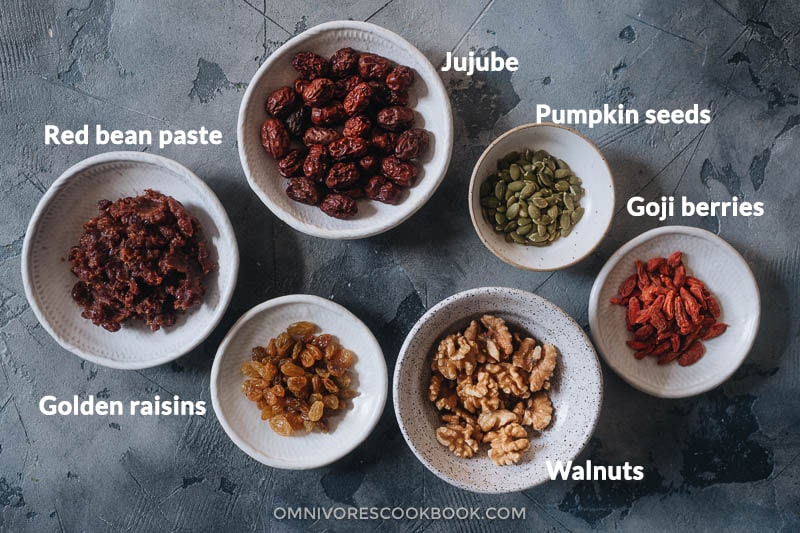
The eight treasure rice I ate at Birds of a Feather only had three toppings – dried jujubes, pumpkin seeds, and golden raisins. The combination tasted great. I added two more ingredients – walnuts and goji berries. I do like the nice zing and health benefits of goji berries. The walnuts are more for appearance (although they ended up half-buried in the rice).
If you want to customize the toppings, I highly recommend you use only 3 to 5 ingredients to create a cleaner taste. You can use a combination of dried fruits, nuts, and seeds, adding whichever ones you have on hand. Some of my other favorite toppings include: dried lotus seeds (you need to soak them overnight before using them), pine nuts, sunflower seeds, dried mango, cranberries, and cooked chestnuts.
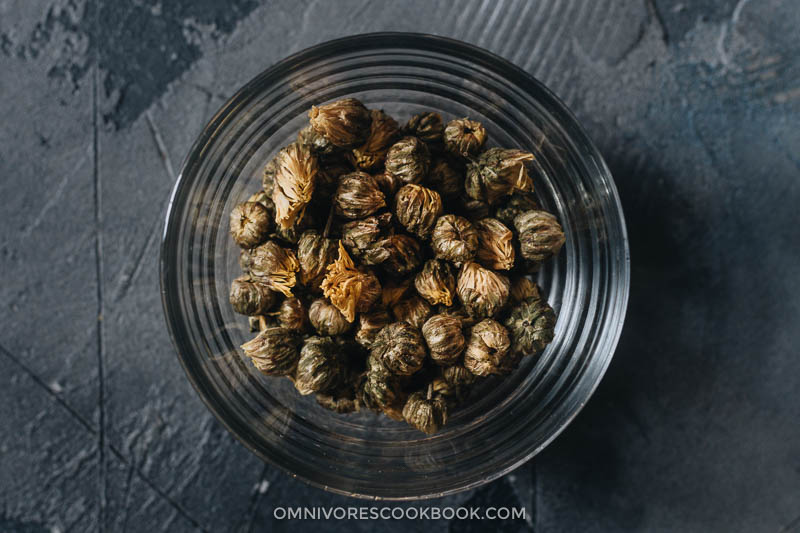
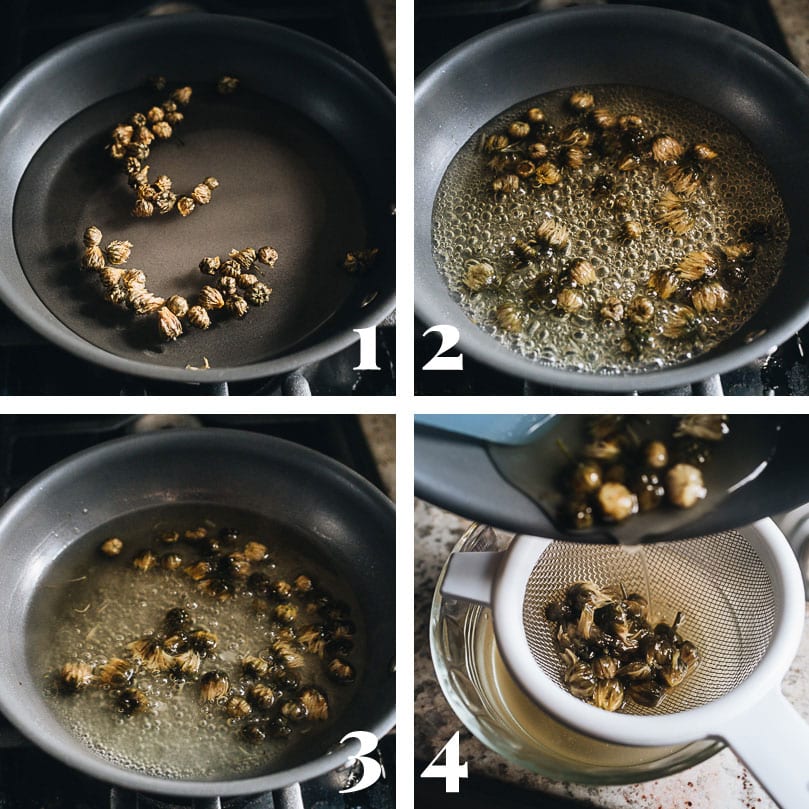
Chrysanthemum syrup
Making chrysanthemum syrup is easy. Just: I used a small amount of sugar to create a less sweet syrup, so the chrysanthemum tea flavor would come through. The flavor works perfectly with the dessert.
How to make eight treasure rice
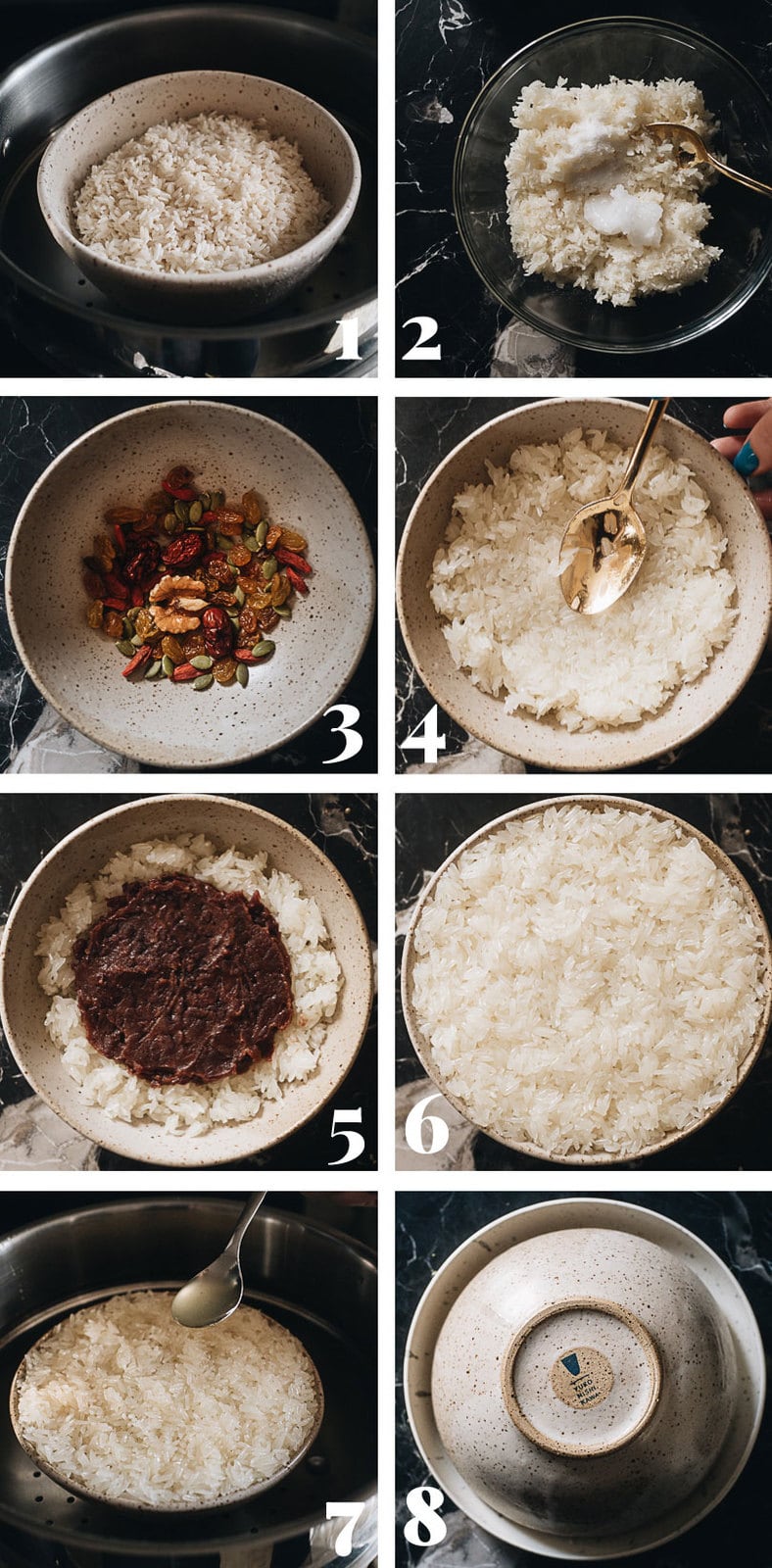
Soak the glutinous rice
You have to soak the glutinous rice before cooking it. Ideally, you should soak it overnight. But if you’re short on time, 3 hours of soaking will be enough. In this case, you’ll need to cook the rice longer.
Cooking process
What type of bowl to use
You’ll need to use a heat-proof bowl. For example, a ceramic bowl will work perfectly. As for the shape, a shallow bowl with a big surface area is perfect, so you can spread on more toppings that pair with the rice. The bowl I used can hold 2 1/2 cups of water. It’s about 6.5” (16 cm) in diameter and 2” (5 cm) tall. It fits perfectly for this recipe. You can use a bowl of similar size. Or you can use smaller bowls to make serving-sized desserts. The assembly method is the same.
One word on the red bean paste
Some eight treasure rice recipes do not use red bean paste. I think the paste adds a great taste so I always prefer to use it. Homemade red bean paste is the perfect option, because you can control the sweetness and the texture of the paste. If using store-bought, try to find a high-quality red bean paste, preferably a Japanese brand. This is the brand I used. I like it because it has some bean texture and is not completely smooth. Avoid cheap-looking red bean pastes. They taste really bad and will ruin the dish.
Afterthoughts
Chinese cuisine is not well-known for its desserts, but there are some great dishes here and there. If you’re looking for something to serve at the end of your Chinese dinner party or a healthy sweet dish to satisfy your midnight hunger, I would highly recommend this recipe. It might look a bit long, but it’s actually surprisingly easy to make. And you can make it in advance because it reheats well.
More delicious Chinese dessert recipes
Chinese Almond Cookies Soft Cinnamon Rolls with Sesame Sesame Checkerboard Cookies Red Bean Soup Chinese Banana Fritters
If you give this recipe a try, let us know! Leave a comment, rate it (once you’ve tried it), and take a picture and tag it @omnivorescookbook on Instagram! I’d love to see what you come up with. Lilja Walter is a part of the Omnivore’s Cookbook team and worked closely with Maggie to develop and test this recipe.