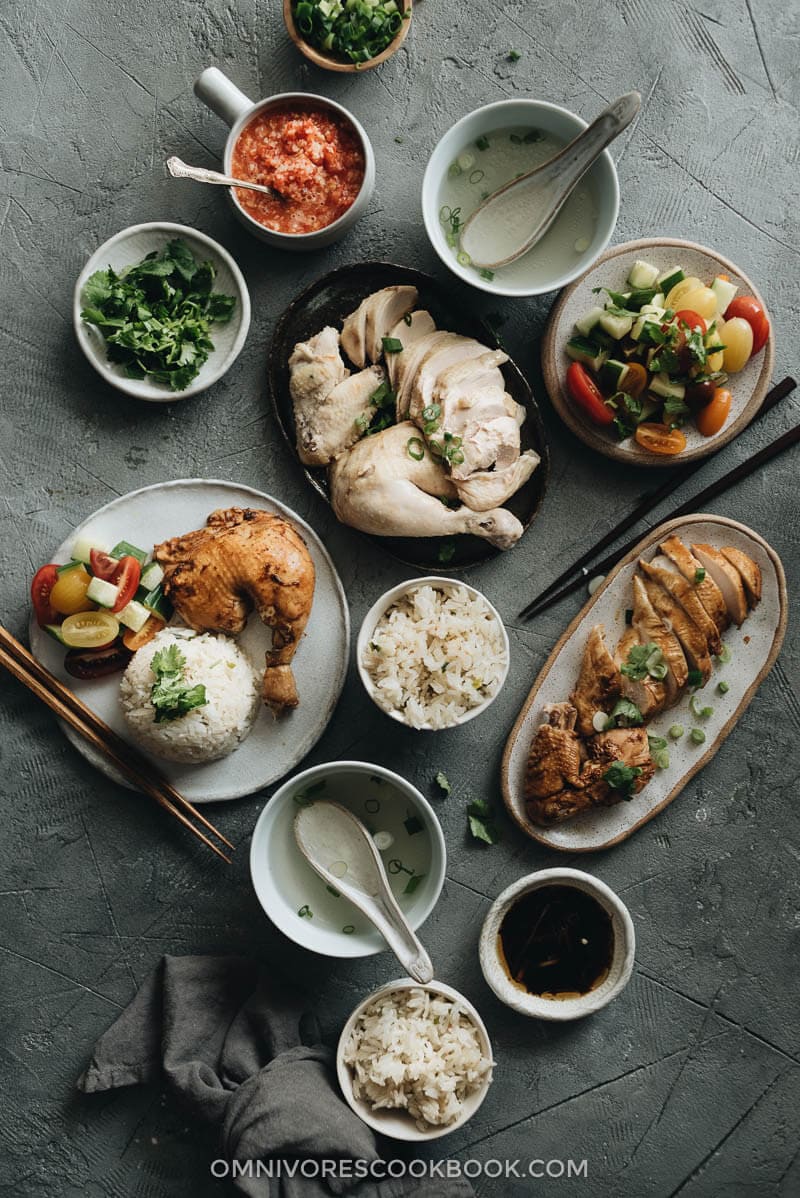
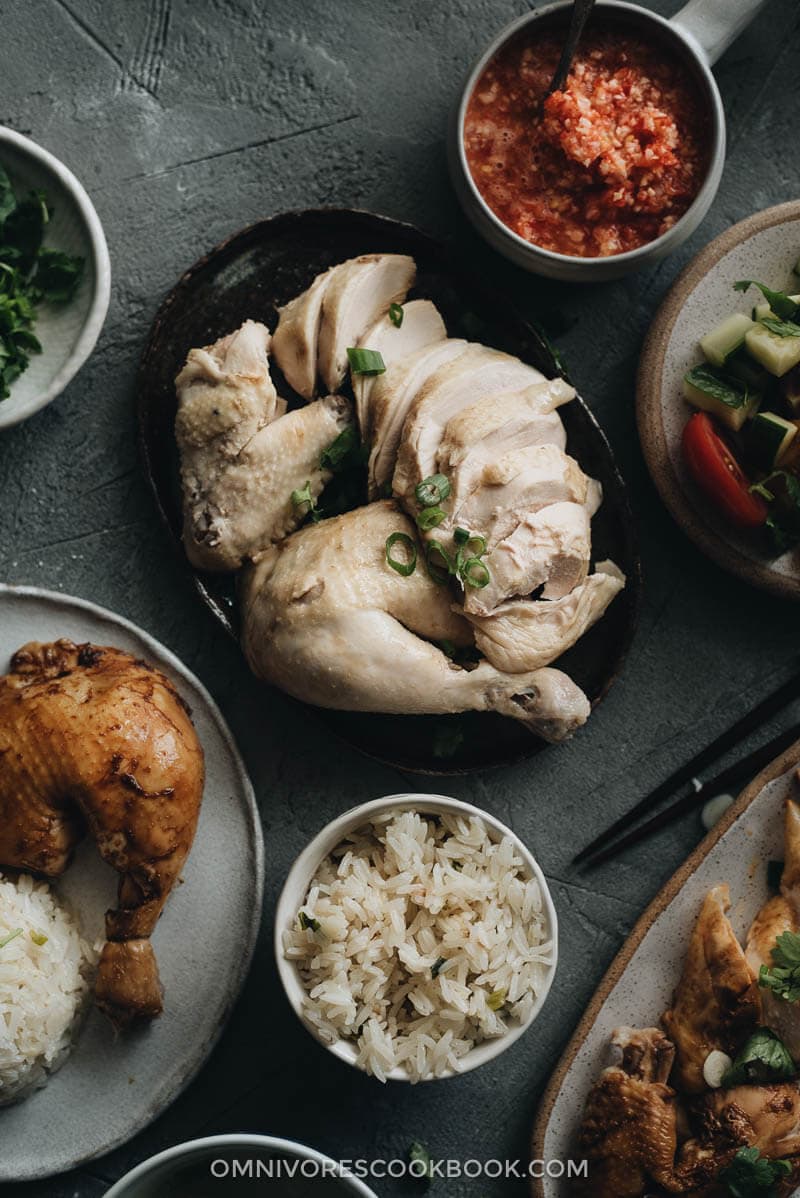
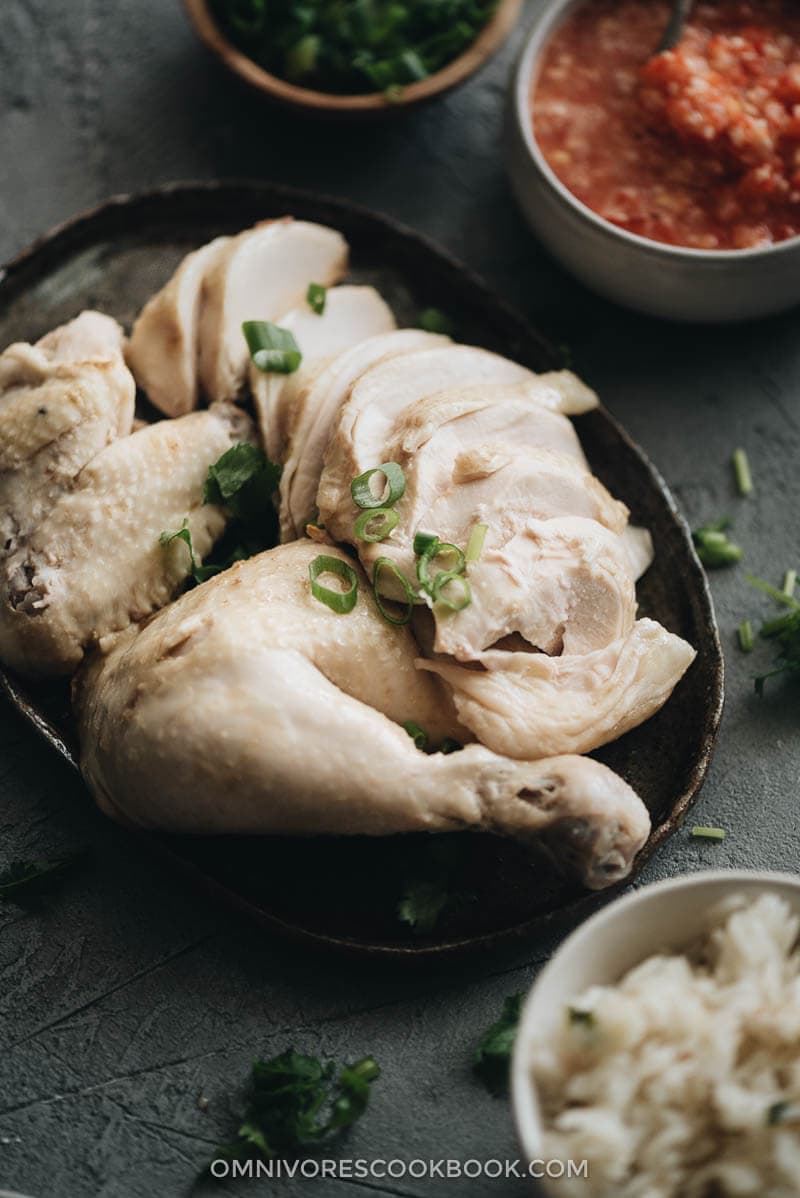
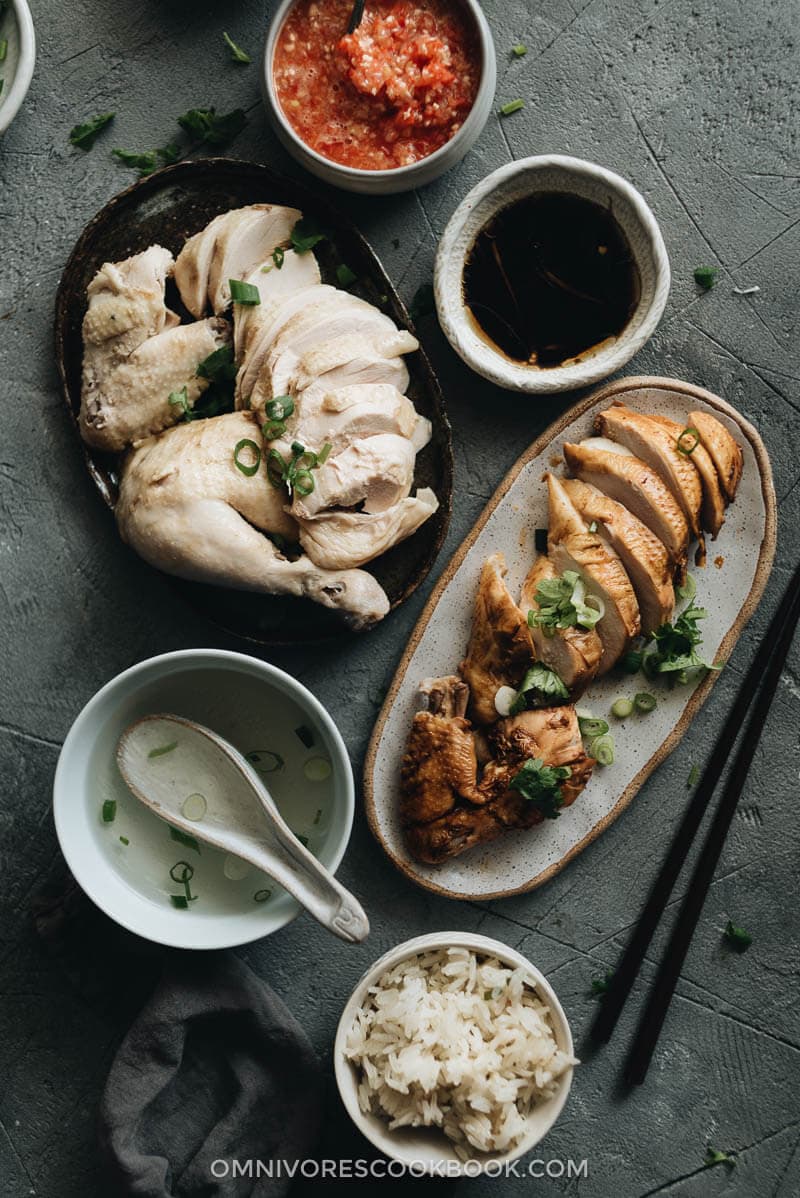
According to Wikipedia, Hainanese chicken rice originated in Hainan, but then grew so popular in Singapore that it became one of their national dishes. Growing up in northern China, I’d never heard of or tried this dish until I moved to Japan in college. It was interesting to learn a bit more about my own culture when living in a foreign country. Although I never tried the dish after seeing the picture of it – boiled chicken on white rice? Huh, it seemed kinda lame… The first time I tried Hainanese chicken rice was when I was on a business trip to Singapore. It BLEW MY MIND. A local colleague took me to a hawker center and we ordered the dish. It was totally the opposite of my first impression of the dish. The chicken was juicy and tender, and was so refreshing and delicious paired with the dipping sauce. The rice was definitely the best part. It was cooked in chicken fat and chicken broth, with plenty of ginger and garlic. It was so rich and bursting with flavor. I almost licked my plate clean after eating a big serving, craving for more afterwards.
Now that I’m living in the US, it’s quite hard to find a properly done Hainanese chicken rice in a restaurant. So I have to head to my own kitchen when I need a fix. This dish definitely doesn’t belong in the “Weeknight Dinner” genre. It’s more of a weekend project dish. The recipe might look very long, but believe me, it’s really straightforward and not as complicated as it seems.
One dish, two versions
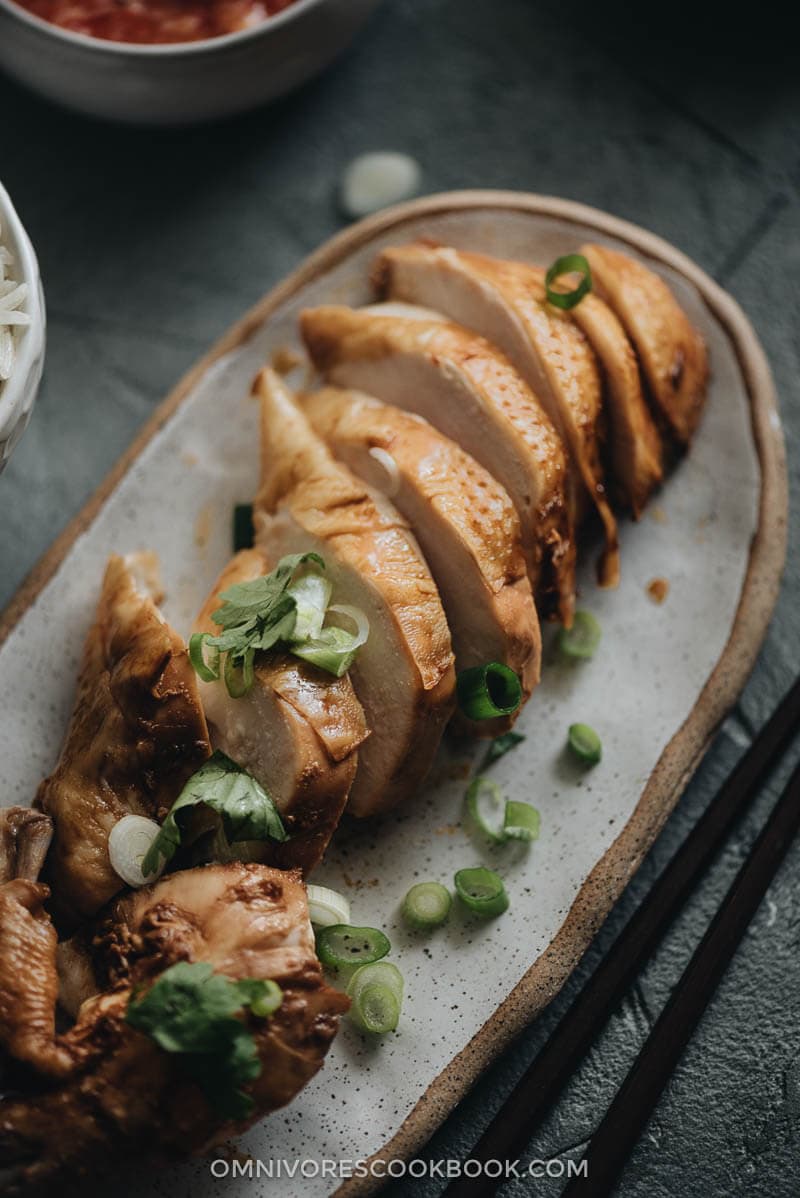
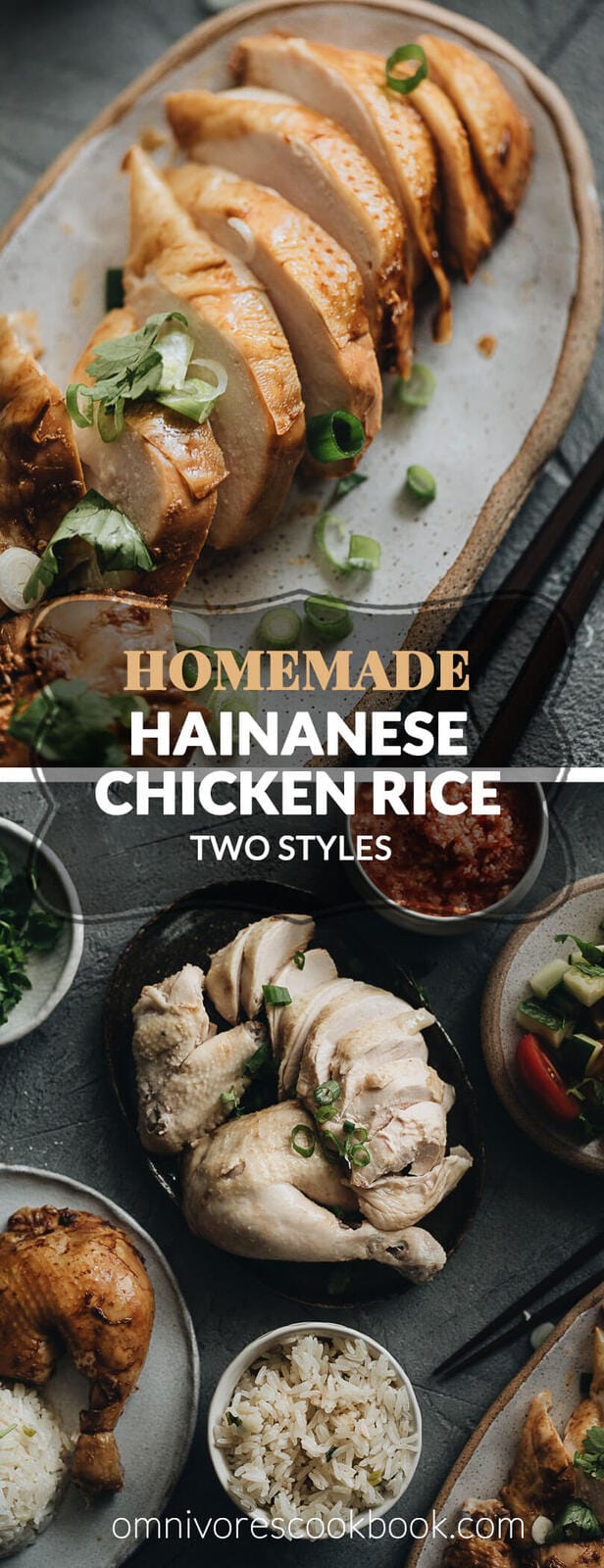
When I had my first Hainanese chicken rice in Singapore, my colleague ordered two types of chicken for me to try. He told me that even although the mainstream one is the white chicken, the soy sauce version is actually more popular and tastier. He was not lying! Making the soy sauce version is extremely easy. You simply need to brush a few layers of sweet soy sauce on the chicken once you’re done boiling it and letting it air dry. Then you’ll have a chicken that’s more flavorful without covering up the original taste.
I used my homemade sweet soy sauce because I always keep a jar of it in my fridge. I made it with braising ingredients, so it has a more complex taste than the store-bought version. Of course, you can use a bottled sweet soy sauce as well. You can also make the original version by brushing some sesame oil on the chicken and skipping the soy sauce. For those who do not like boiled chicken skin, here is a quick way to make the dish taste even better: Sprinkle a bit of salt onto the chicken skin and grill the chicken skin-side-down on a lightly oiled frying pan. Now you have a perfectly cooked juicy chicken with crispy skin. Isn’t that wonderful?
Cooking notes
1. What type of chicken to use
The rule of thumb is, the smaller the chicken, the better. I used a 2.6-lb chicken in my recipe. In fact, an authentic Chinese recipe would ask you to find an organic free-range heritage chicken. The recipe uses very minimal seasoning to bring out the natural essence of the chicken, which requires a bird with a smaller body to absorb the seasoning and taste great by itself. But I found that a small-ish chicken that I purchased from Central Market came out really great. If you can not find a smaller chicken, a normal-sized one will work just as well. But you will need to increase the cooking time depending on the size of the chicken. A four-pound chicken will take about 45 minutes to simmer, and a five-pound one about an hour.
2. Not overcooking is the key
You want to cook until the chicken just cooked through, so you’ll have super tender and juicy meat that has a nice aroma. Overcooking will end up with dry, tough chicken meat that’s not delicious at all. You can use a thermometer to test the chicken and monitor it closely. But I found that the easiest way is to insert a small paring knife into the joint between the thigh and body. Lightly slice the skin and push the thigh away from the body. If the juice is clear and the meat white, the chicken is fully cooked. Once you cook the chicken, immediately immerse it in an ice bath so the chicken won’t continue to be cooked by the residual heat.
3. How to use chicken parts instead of a whole chicken
I always highly recommend using a whole chicken to cook this dish, because you will end up with juicier, more flavorful meat. However, it’s possible to use chicken parts such as breasts and legs, as well. The cooking time is largely based on the size of the chicken and the quantity of pieces, but here are some general guidelines:
Boneless skinless breast – 15 to 20 minutes Bone-in skin-on breast – 20 to 30 minutes Boneless skinless thigh – 15 to 20 minutes Bone-in skin-on thigh – 20 to 30 minutes
When you use chicken parts, cook them in a smaller pot and add just enough water to cover. Cook uncovered, bringing the water to a simmer (not a boil), and let it simmer until just cooked through. The chicken will turn out just as tender. Note, when using chicken parts, you might not get enough chicken broth to serve as chicken soup on the side.
4. Dipping sauce
The most authentic sauce is the chili dipping sauce, but I’ve included a ginger soy sauce, as well. The ginger soy sauce is a family recipe and we use it with almost everything. If you don’t feel like making a sauce, you can serve the chicken with Sriracha, as well.
5. How to make extra fragrant rice
The rice is my favorite part of this recipe because it is so so fragrant. To make the best rice, make sure you use plenty of fresh ginger, garlic, and green onion. Authentic Hainanese chicken rice uses rendered chicken fat in the rice. If you’re not comfortable with that, or if your chicken is too lean, you can use butter instead. When you saute the rice with the aromatics, your house will smell heavenly 🙂
A final thought
I would highly recommend you make the Hainanese chicken rice in advance. Especially if you’re making the sweet soy sauce version. If you apply the sauce 2 to 3 times and let it dry, the sauce will infuse into the chicken and make it so much more flavorful. The chicken tastes great cold or hot. If you make everything ahead of time, you can simply heat up the rice, soup, and chicken. Serve it with a simple cucumber salad, and you’ll have a delicious and healthy meal that tastes even better than the restaurant version!
More real-deal Chinese recipes
How to Make Shumai Chicken Wonton Soup Steamed Ribs in Black Bean Sauce (豉汁蒸排骨) Real-Deal Sichuan Chicken in Red Oil Sauce (口水鸡, Saliva Chicken) Mom’s Best Pork Dumplings with Cabbage
If you give this recipe a try, let us know! Leave a comment, rate it (once you’ve tried it), and take a picture and tag it @omnivorescookbook on Instagram! I’d love to see what you come up with. The recipe was published on Jan 21, 2014 and updated by Jun 22, 2018.