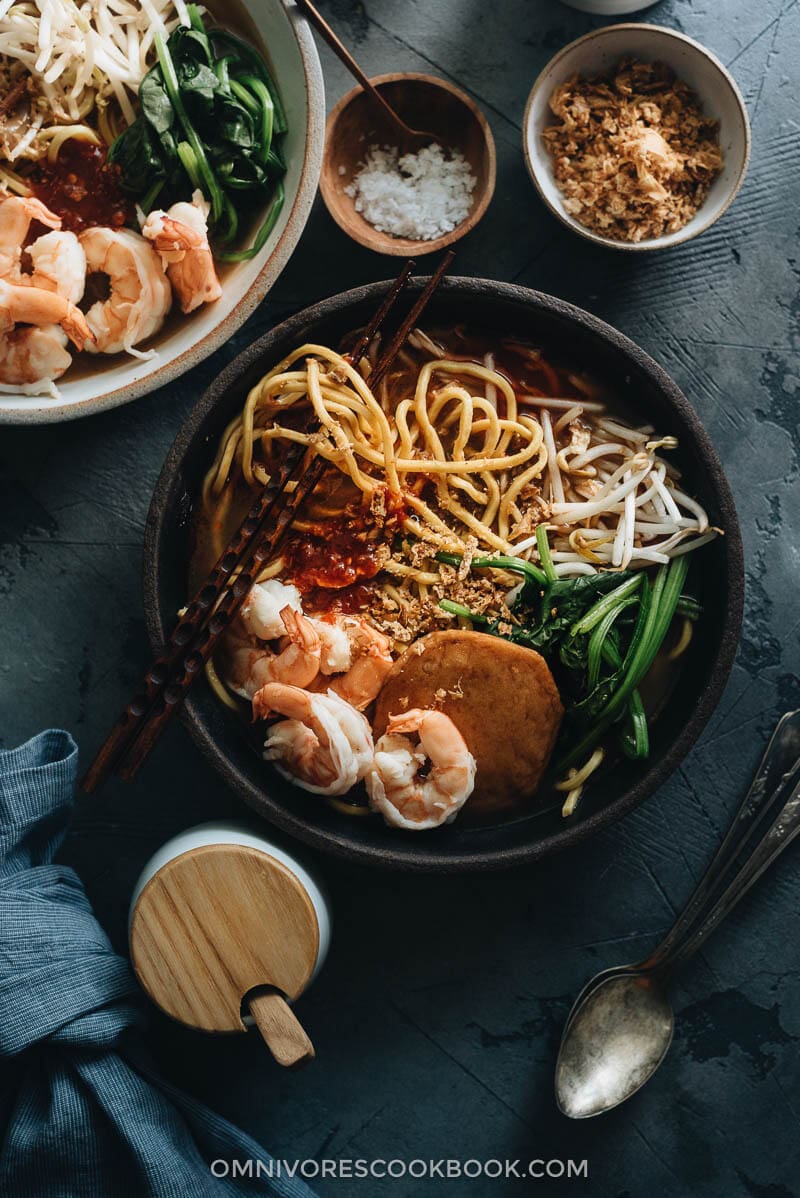
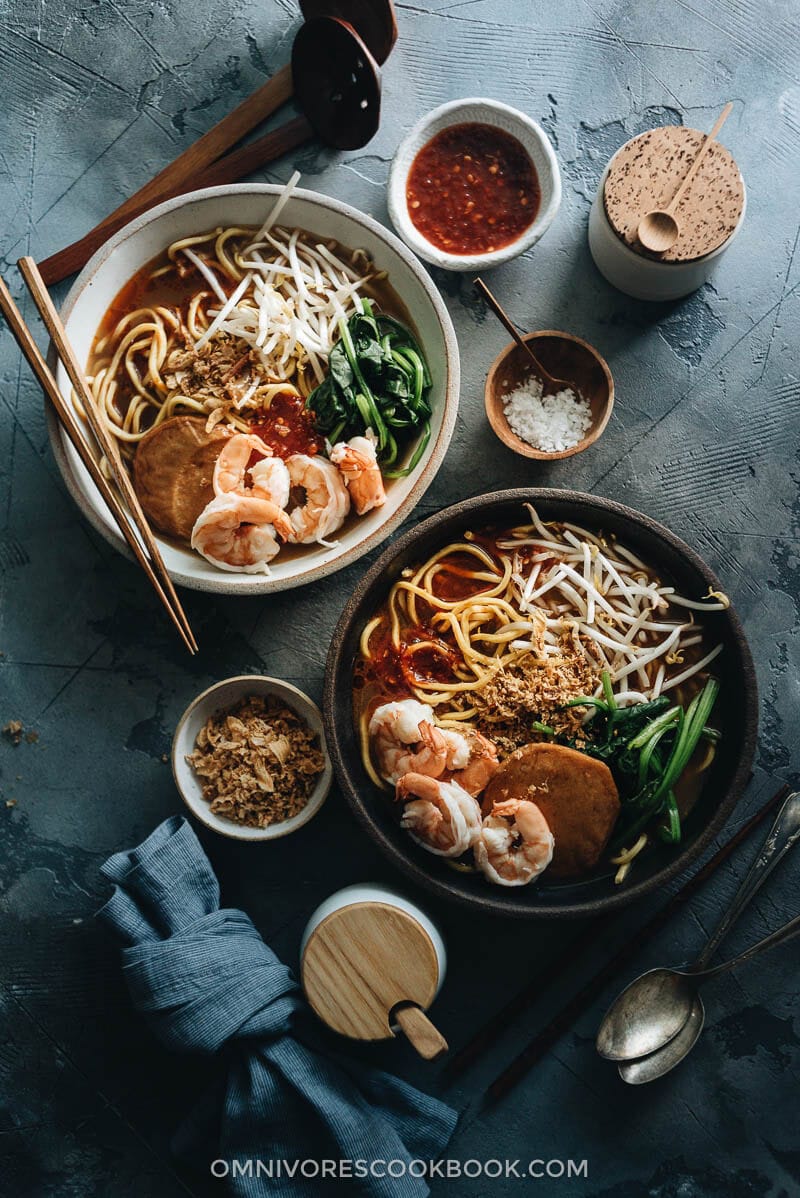
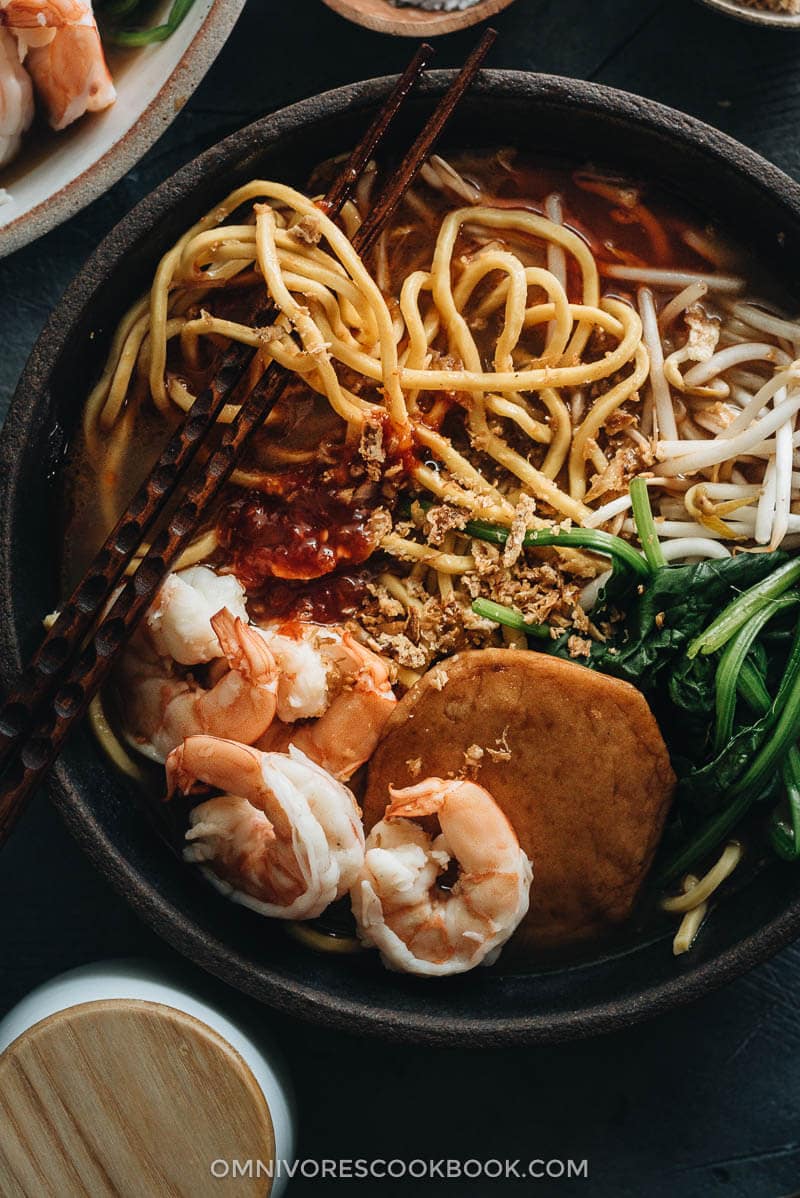
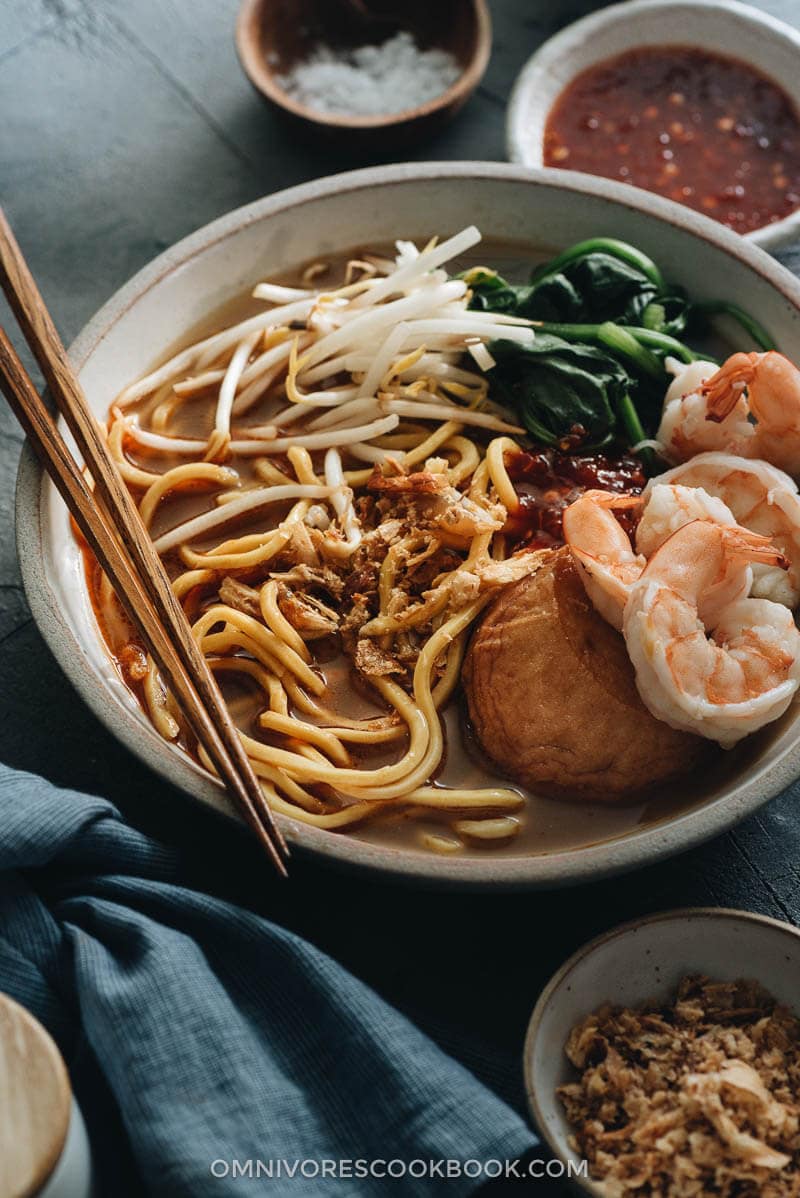
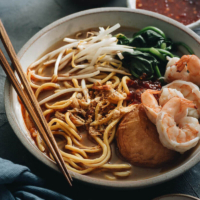
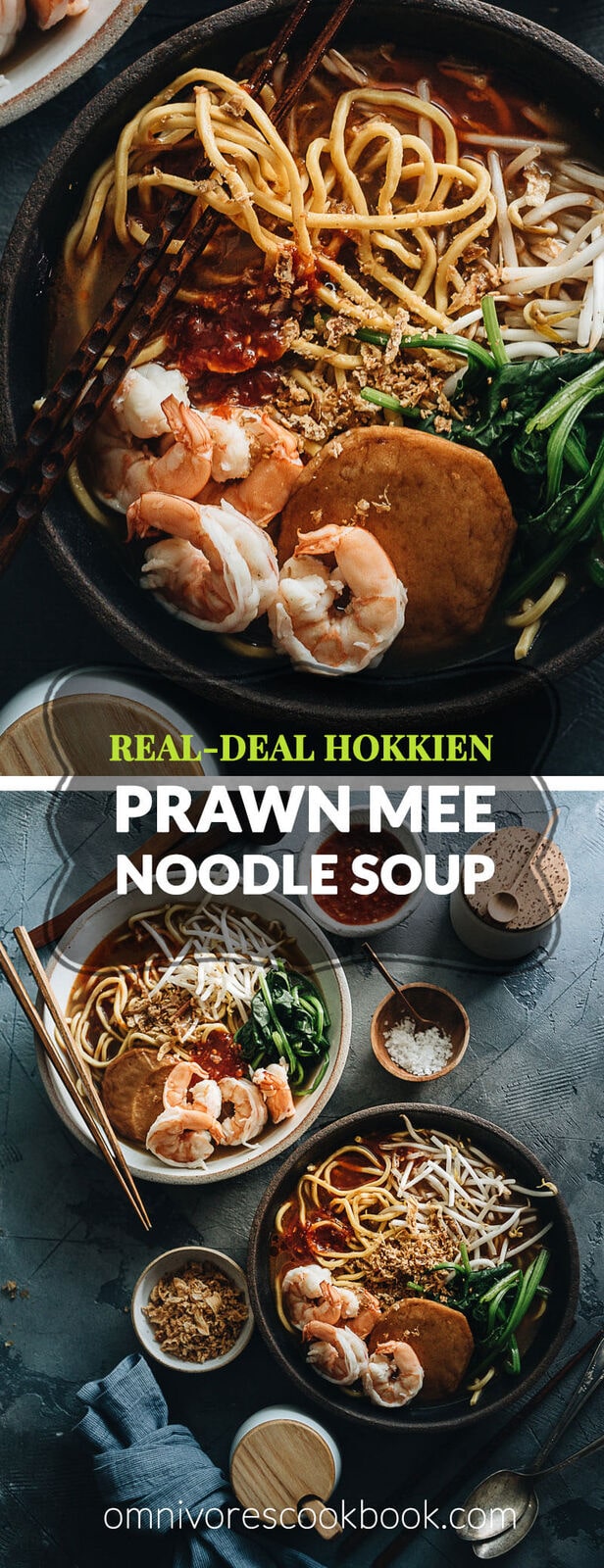
Hae Mee, or Hokkien prawn mee noodle soup, is a popular dish in Singapore and Malaysia, It is a wonderful take on the Hokkien food originating from Taiwan and the southeast of China. The cuisine has been popularized in coastal city homes all over the continent. When I first saw this recipe in Lace Zhang’s refreshingly homey cookbook Three Dishes One Soup, it called out to me. Not only because of the exquisite images of plump prawns and sliced fish cakes sitting on a bed of thick mee noodles, in a soup whose fiery hue warns you of its spicy heat. But also because I’ve been relishing the challenge of creating southern Chinese food at home. And her book gives a great insight into upgrading this street-food staple into a labor of love for the special people in your life. China meets southeast Asia in this sumptuous bowl, it’s a dish you can’t miss if you’re a big noodle fan like me. Making the dish does require some time and effort, but believe me, you’ll find the results worth every minute you spent.
Hae Mee Cooking notes
The recipe is slightly adapted from the one in Three Dishes One Soup. I changed a couple ingredients based on what I was able to get at my local Asian market. I also reworded the instructions, so it’s easier to follow if you don’t have experience with Asian cooking. But the core spirit of the recipe remains unchanged.
1. Cooking the right cuts to make the noodle broth
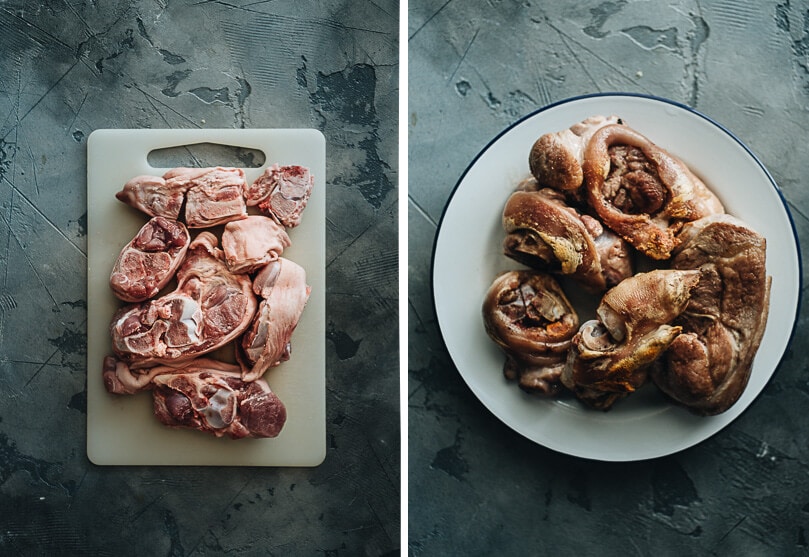
Hae Mee uses a pork bone and shrimp based broth. The best pork cuts for the noodle soup should contains bones, meat, some fat, and some skin. The fat and gelatin will melt into the soup during braising and make the soup extra rich. The original recipe calls a combination of pork ribs and a pig tail. Since pork ribs are a bit expensive and I was unable to find pigtail, I bought a pig foot with the shank attached from the Asian market. It provides a great meat-bone-skin ratio. The meat will still be juicy and flavorful after braising in the soup (See notes below on how to use the meat). And it’s very affordable. It cost me $6 to buy 3 pounds of pork that can make a big pot of soup for 4 to 6 servings. For these bone-in cuts, you usually can find the chopped ones in an Asian market. Otherwise, ask the butcher to split the bone-in pieces using the electric saw. You can cook with a larger cut too. But smaller cuts will be so much easier to cook with and the flavor takes less time to infuse into the soup.
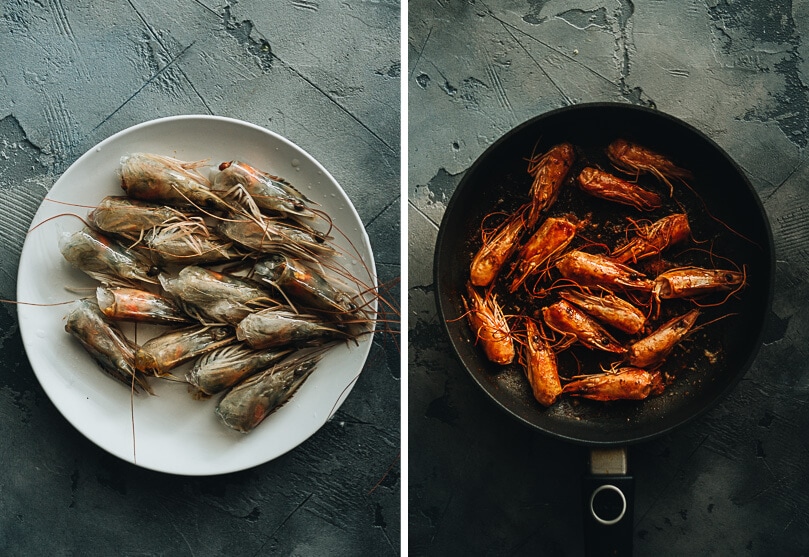
Even though traditional hae mee uses a lot of shrimp heads in the soup base, you can skip this part if you cannot find head-on shrimp. I’ve slightly adjusted the recipes with fish sauce so it will have a good taste of the sea even without the shrimp heads.
2. Simple broth, big flavor
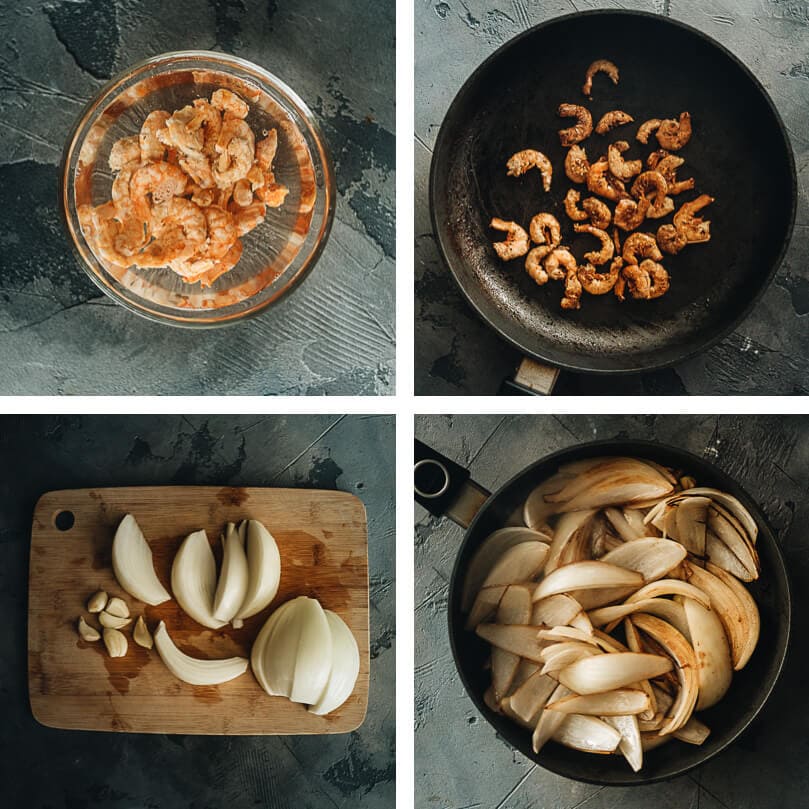
One of the key processes to create rich hae mee broth is to brown the ingredients. In this case, browning the pork cuts, shrimp heads, onion, and rehydrated dry shrimp in a separate pan until they are well caramelized. Like other Hokkien dishes, Hae Mee uses quality ingredients to create pure broth, without adding tons of aromatics (which we use more in northern Chinese dishes). So it’s important to brown the ingredients to add another rich layer to the soup. A side note, do use a nonstick pan or a cast iron pan for the browning process. The first time I made the dish, I mistakenly used my dutch oven to brown the pork. I thought it’d be easier to clean up if I just used one pot. Big mistake! The gelatin from the pork skin stuck to the bottom of the pan so easily, even with added oil. At the end of cooking, my white Le Creuset had turned brown and I couldn’t get the brown bits off the pan, no matter how long I soaked it… When you brown the pork, it will cause a lot of spatter no matter how well you dry the cuts. You can use a cover to loosely cover the pan, with a small gap to let out the steam. It helps.
3. Type of noodles for Hae Mee
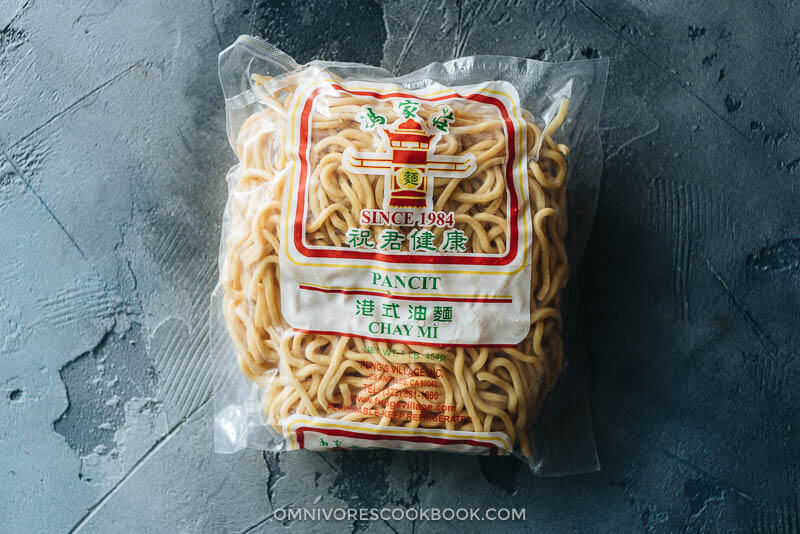
The fat, round, yellow noodles are the type you should use in Hae Mee. You can usually find them in an Asian market. Some of the Hae Mee recipes call for a mixture of rice vermicelli and the yellow noodles. However I prefer my soup with the yellow noodles only. On the other hand, you can use rice stick noodles or rice vermicelli to make the dish gluten-free. They have a different texture but work well in the recipe.
4. Topping options
Water spinach, bean sprouts, fish cakes, and boiled shrimp are highly recommended. If you cannot find water spinach, regular spinach, baby bok choy, and mustard greens work as well. Some other great topping options include fried shallots, and sambal oelek sauce, and Sriracha sauce. The fried shallot adds a crispy texture. The sambal or Sriracha sauce can add spiciness and a hint of citrus. And of course, you can use some of the braised meat from the soup broth as a topping. Although I did include another method below to make the meat taste more interesting.
5. How to use the meat used in making the noodle broth
Traditionally, the meat from the bone soup will be discarded. Because the braising process usually overcooks the meat, so it becomes dry and tasteless. Not in this case. I found the meat from the pork shank still very juicy and tender. It’s such a waste to throw it away! Here are two ways to use the meat.
Afterthoughts
Making Hokkien prawn mee noodle soup at home is truly a labor of love. But the result is so rewarding, plus it yields four big servings of noodle soup, plus some meat for a couple more meals. It’s also a great dish to make ahead and serve later, so it’s perfect for a dinner party if you want to impress your guests with authentic Asian noodle soup. Happy cooking and I hope you enjoy the dish as much as I do!
More Asian noodle recipes
Beef Chow Fun Easy Singapore Noodles Dan Dan Noodles Traditional Sesame Noodles Cantonese Wonton Noodle Soup Lanzhou Beef Noodle Soup
If you give this recipe a try, let us know! Leave a comment, rate it (once you’ve tried it), and take a picture and tag it @omnivorescookbook on Instagram! I’d love to see what you come up with.