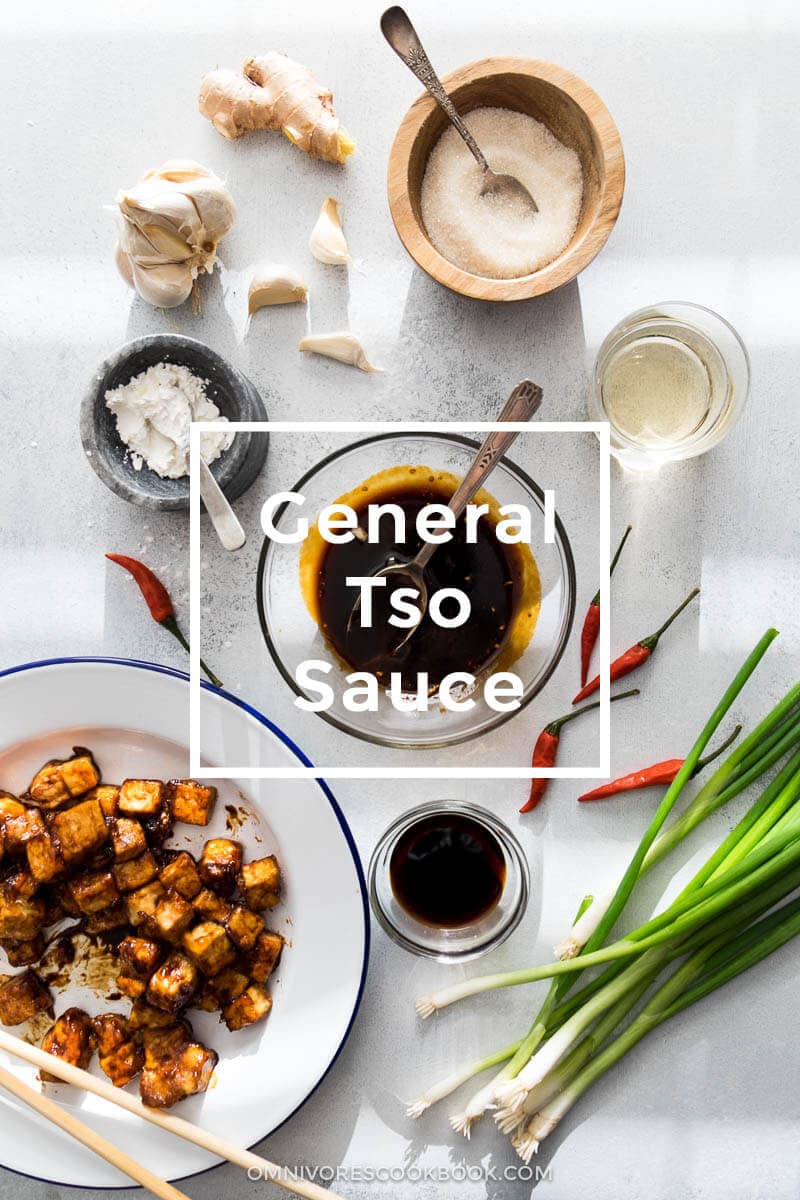
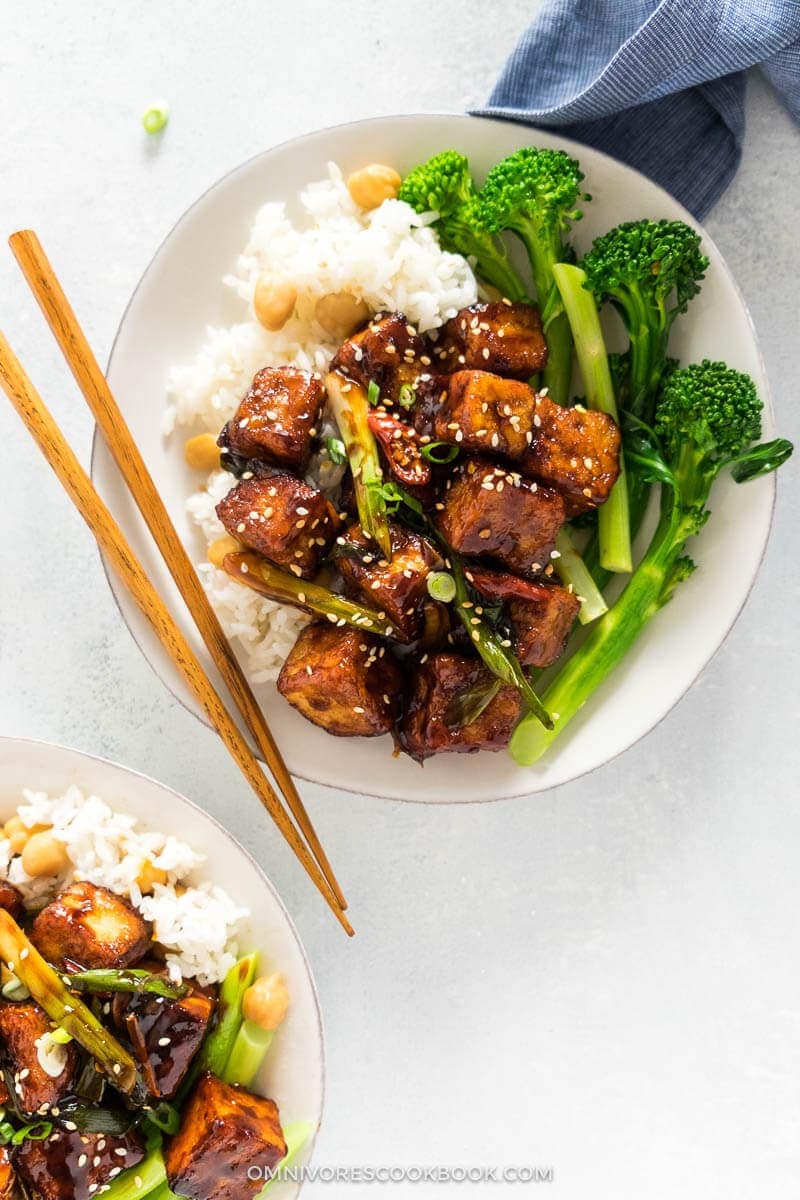
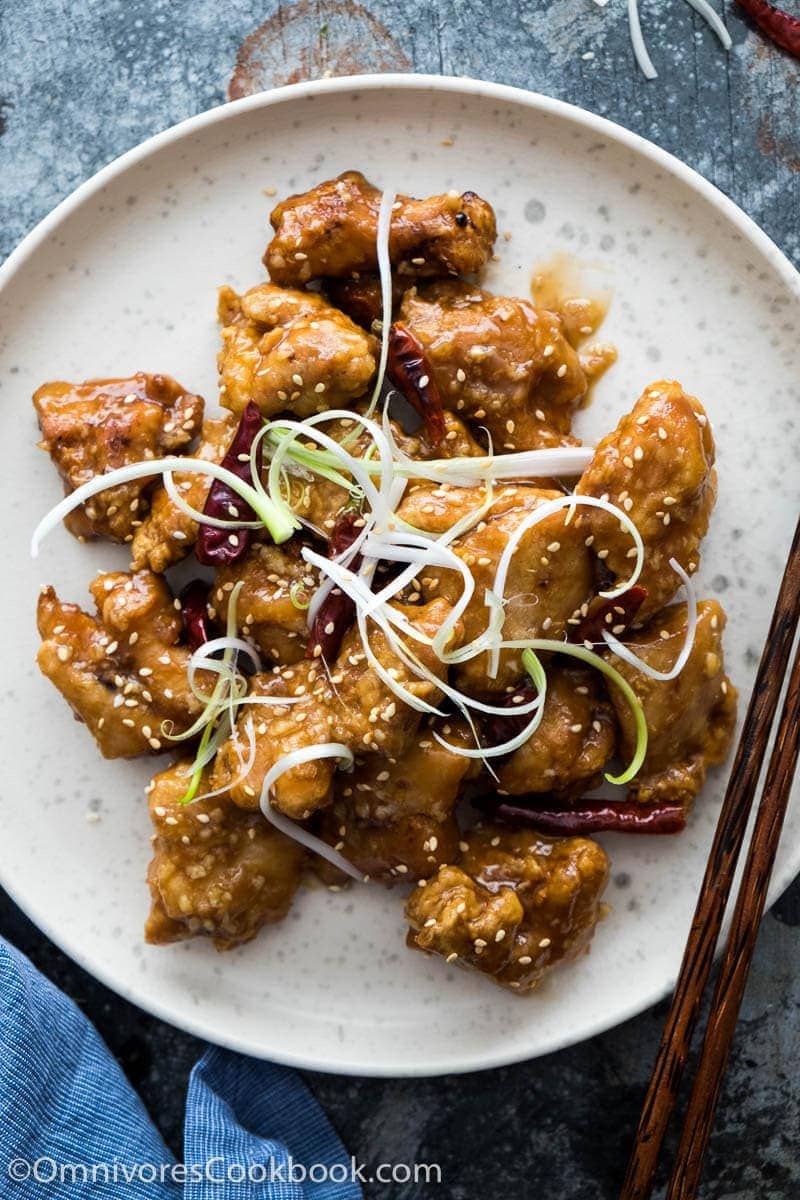
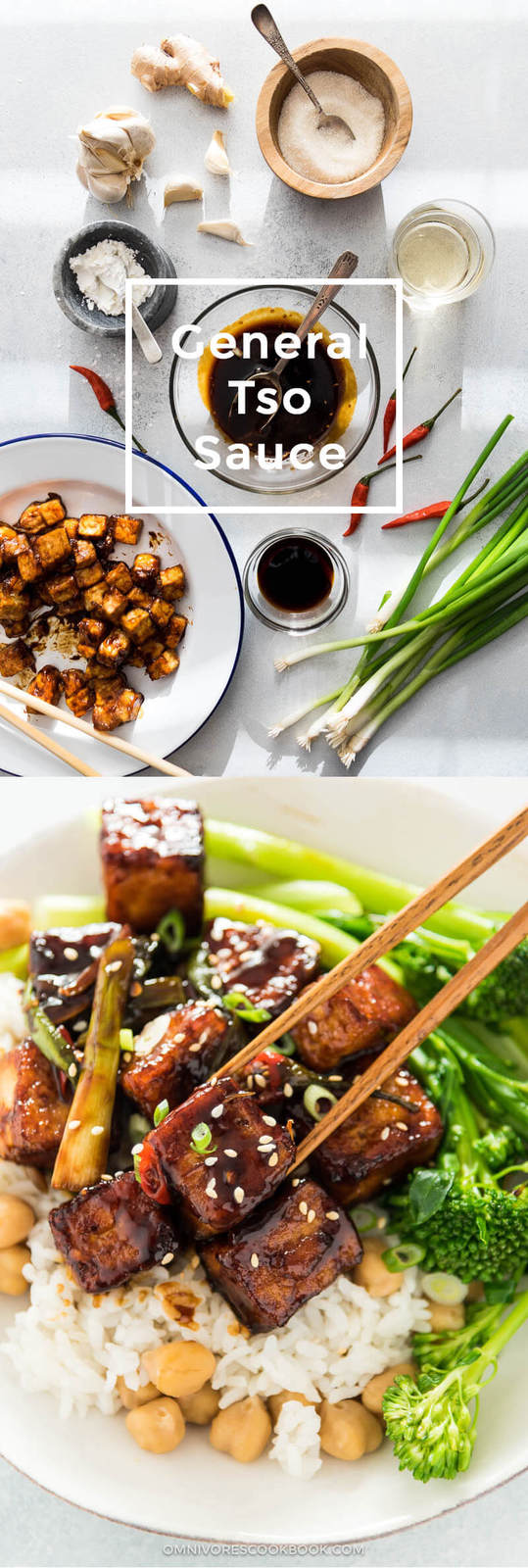
General Tso sauce is one of the most versatile stir fry sauces that I recommend every home cook store a jar in their fridge. Not only does it takes merely 3 minutes to make, but it also goes well with almost everything. If you’ve never cooked a stir fry before and feel intimidated by words such as “wok” and “cook with high heat” – now is your best chance to cook your favorite takeout dish by simply following three steps. Sounds simple enough, right? To get a better idea of how to make a dish using this sauce, check out my extra crispy General Tso Tofu recipe.
Introducing Homemade General Tso Sauce
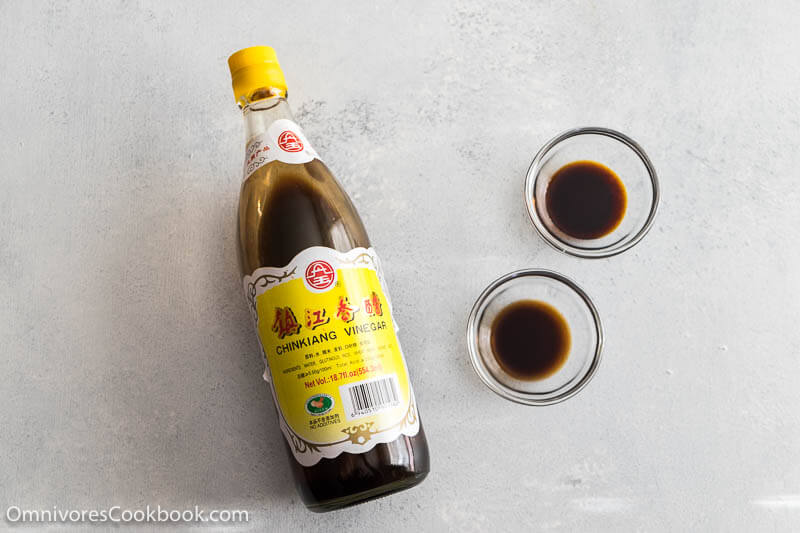
The one ingredient that made this recipe stand out is the Chinkiang vinegar. Chinkiang vinegar (Zhenjiang vinegar, 镇江香醋) is a type of Chinese black vinegar. It is made from various grains and is aged until the color turns dark brown or inky black. It has a fermented malty taste and woody character that distinguishes it from the light colored and fruity rice vinegar. Consider this ingredient the balsamic vinegar of Chinese cuisine, as it has a rich, pungent, and tart flavor, sometimes with a hint of sweetness. This vinegar will make your General Tso sauce really stand out – different from the other recipes out there. Although I always try my to give different alternatives for unique Chinese ingredients, I found this vinegar hard to replace. I’ve tried using the light color rice vinegar and balsamic vinegar. I won’t say the result was bad, but there was something lacking. If you cook Chinese food once a year, then I’d recommend you to replace Chinkiang vinegar with another vinegar in your pantry. The rest of the sauce is quite simple. Just mix everything in a jar and keep it in the fridge for months.
How to use the sauce
To use the sauce, simply shake it and cook with aromatics until it thickens. Assuming that you are going to cook 2 servings, that can be 450 grams (1 pound) protein, or 6 to 8 cups vegetables, or 220 grams (1/2 pound) protein and 3 cups vegetables. You will need 1/4 to 1/3 cup sauce. (1) Pick 1 to 2 aromatics. Prep according to the list below. General Tso sauce is very pungent and always benefits from more herbs. Garlic and dried chili pepper are the two common aromatics that are used in most General Tso sauces. You can use the others on the list as well. But adding one pungent herb, such as ginger or garlic, is highly recommended. Recommended aromatics
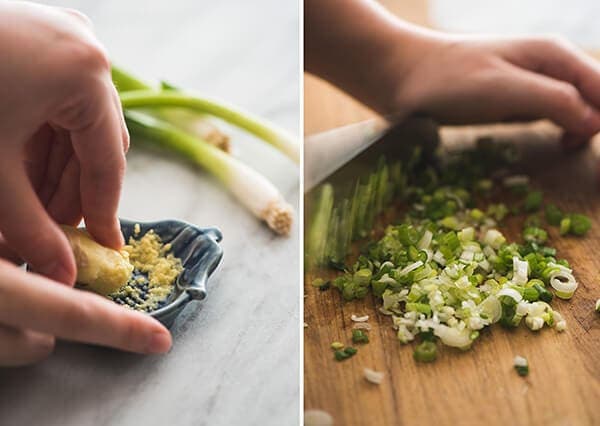
Ginger – 1 large piece minced (yields 2 teaspoons to 1 tablespoon) Garlic – 3 to 4 cloves, minced Green onion – 4 to 6 green onions, coarsely chopped Dried chili pepper – 2 to 4 peppers, torn into 3 to 4 pieces. (Or, keep whole for less spiciness.) Shallot or onion – 1 big shallot or 1/2 onion, thinly sliced or diced. (It taste better when combined with another more potent herb, such as ginger or garlic.)
(2) Choose and cut the protein. Recommended Protein
Beef (flank steak or short ribs) – thinly sliced (1/8 to 1/4-inch thick), or cut to strips Chicken (skinless boneless breast or thigh) – Diced to 1-inch pieces, or sliced to 1/4-inch thick Pork (tenderloin or loin) – thinly slice (1/8 to 1/4-inch thick), or cut to strips Shrimps – peeled and deveined Tofu (firm or extra firm) – Diced to 1/2 to 2/3 inch pieces
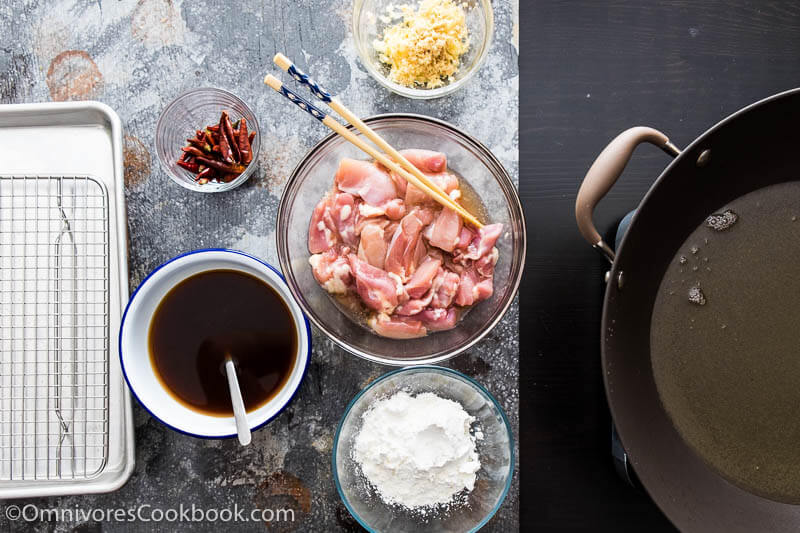
(3) Marinate and prep the protein. For each pound of meat or seafood, mix with 1 tablespoon vegetable oil (or peanut oil), 1/2 teaspoon salt, and 1 tablespoon cornstarch. Let it marinate for 5 to 10 minutes. To create a crispy restaurant-style chicken, learn this method so you can achieve the goal without deep-frying. For tofu, marinate with 2 tablespoons soy sauce and 1 tablespoon syrup (or honey) for 10 to 15 minutes. Drain and coat with a thin layer of cornstarch. See this post to learn how to cook crispy tofu without deep-frying.
(4) Cut and prep the vegetables. To make a quick dinner, my favorite way is to only use one type of vegetable. You can use two, but no more. Recommended vegetables
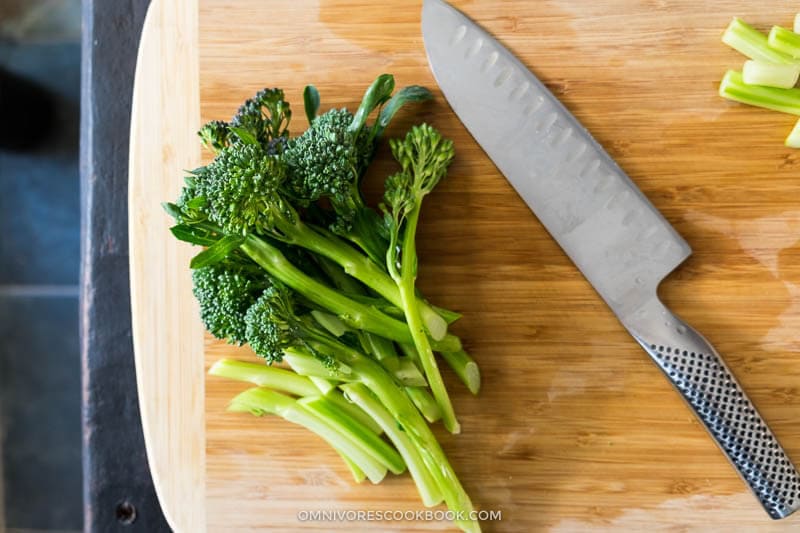
Asparagus – Chopped to 1-inch pieces Baby bok choy – Tear off large leaves and halve lengthwise, halve or quarter the rest Bell peppers – Sliced or chopped Broccoli (fresh) – Divide to small florets; steam or blanch (see this post to learn how to blanch the broccoli quickly in the same stir fry pan) Broccoli (frozen) – Microwave for 2 to 4 minutes (depending on the quantity), so the broccoli is thawed and luke warm, but not heated up Brussels sprouts – Roasted (see this post for how to roast Brussels sprouts) Cabbage – Coarsely chopped Cauliflower (fresh) – Divide to small florets; steam, blanch, or roast Cauliflower (frozen) – Microwave for 2 to 4 minutes (for stir fry), or roast (see this post to learn how to crisp up frozen cauliflowers in the oven) Carrot – Sliced into pieces or strips (by using a julienne peeler); or cut to chunk and roast Celery – Sliced or diced Eggplant – sliced (see this post to learn how to prep eggplant so it crisps up during stir frying) Green peas (fresh or frozen) Kale – Stalk chopped to small pieces, leaves coarsely chopped Onion – Sliced Snow pea Zucchini – Seeded and sliced
(5) Make the stir fry, or use the stir fry sauce on baked or steamed food. Read this post to learn the basic steps of making Chinese stir fry. To learn how to use this General Tso sauce now, go to:
General Tso Tofu Orange Chicken (replace the sauce and make General Tso’s Chicken) Roasted Orange Cauliflower (replace the sauce and make General Tso’s Cauliflower) Orange Shrimp and Asparagus (replace the sauce to cook the dish in 15 minutes)
[leadmagnet] If you give this recipe a try, let us know! Leave a comment, rate it (once you’ve tried it), and take a picture and tag it @omnivorescookbook on Instagram! I’d love to see what you come up with.