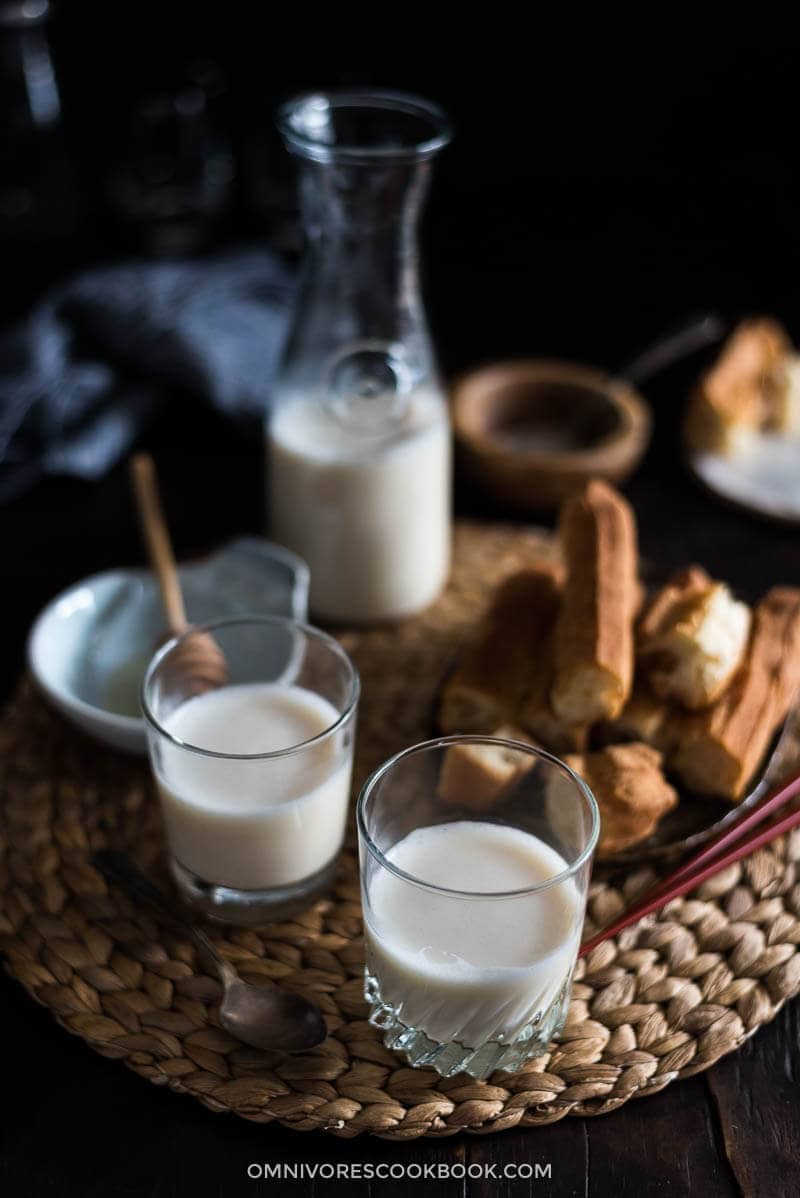
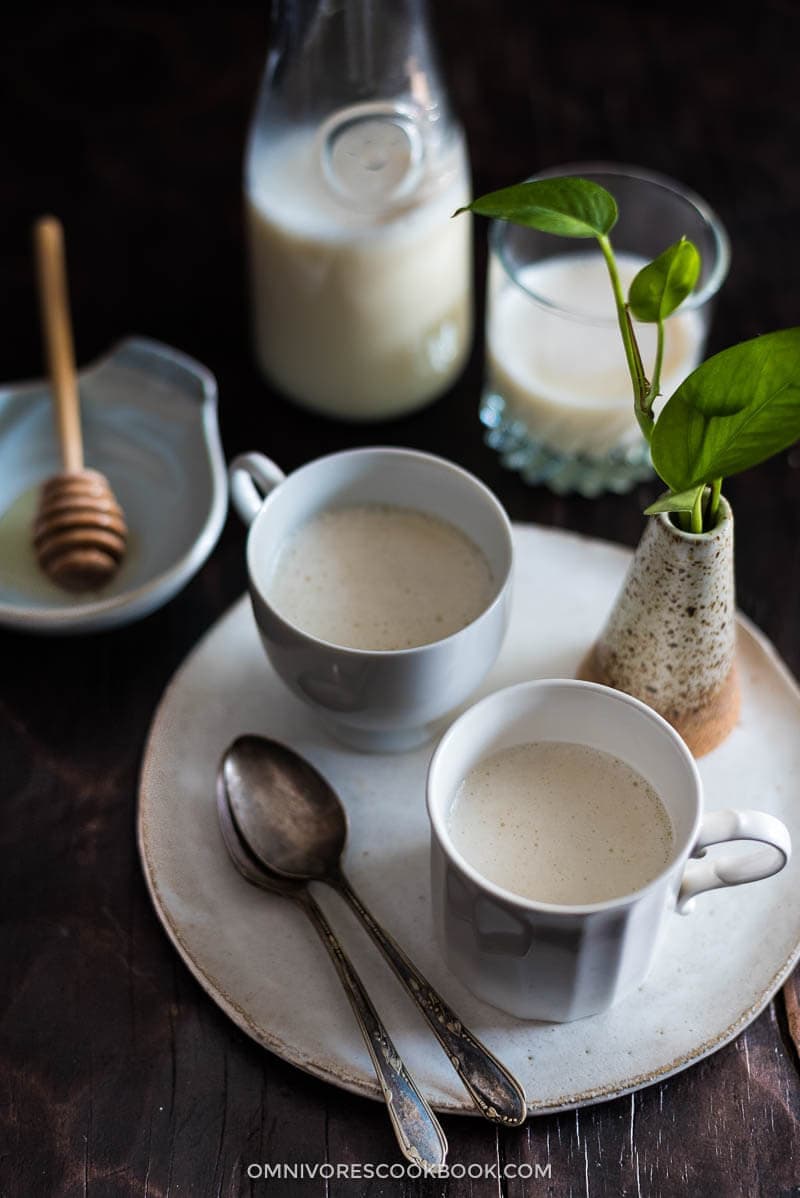
After moving from Beijing to the US, one of the things I’ve missed most has been the breakfast. The freshly made hot soy milk (豆浆) and the crispy, fluffy fried dough sticks (油条) are the best best combo to start a day happy. One of the most famous all-day breakfast chains – Yung Ho Dou Jiang Restaurant – has “soy milk” in its name. So you can imagine how important this morning staple is for Chinese people! In my parent’s home, the soy milk maker sits right next to the rice cooker. My mom always used it 2 to 3 times a week to make fresh soy and multi-grain milk. Compared to the stuff you buy from the supermarket, homemade soy milk does not contain additives, and you can adjust the sweetness by using less sugar. The fresh and fragrant taste of homemade soy milk is something that manufactured versions cannot get anywhere near.
Why homemade soy milk?
Since I moved to the US, I started off just drinking boxed soy milk. One time I left an opened carton in the fridge and completely forgot about it. To my biggest surprise, it was not spoiled and still tasted fine after sitting in the fridge for more than a month…. when it really shouldn’t last more than a few days! That’s when I decided I needed to eliminate all plastic- and paper-packaged milk and start making my own. Homemade soy milk has three major benefits:
It does not contain additives, preservatives and chemical sweeteners You can choose to add less sugar, which translates to a lower calorie consumption The cost of homemade milk is $1 / gallon (or 4 liters), which is 8 times cheaper than the manufactured versions
Why use a soy milk maker?
Yes, you can always make soy milk without a soy milk machine – I used to do it before I purchased my soy milk maker. But if you enjoy drinking soy milk (or other plant-based milk) on a daily basis, the complicated cooking process might not be very practical. The problems of using the traditional method to cook soy milk are:
It requires using and cleaning up lots of equipment It requires an expensive, powerful blender, otherwise you end up with a lot of bean pulp and a watery milk You need to monitor the cooking process closely so the milk won’t spill and make a mess on your kitchen counter It requires removing the bean pulp before cooking the milk, which results in a less flavorful drink with less nutrients
In contrast, a soy milk maker provides solutions to all these problems and offers further benefits:
You only need 3 minutes to set it up and then you can leave it The whole cooking and blending process is done in one machine. This creates less hassle and zero monitoring required You can even make soy milk from dry beans without needing to soak them Cleaning up is very easy and only takes 3 minutes You save 40 minutes active cooking and prepping time The soy milk tastes better and is more nutritious, because the bean pulp is cooked in with the milk
How do I use a soy milk maker?
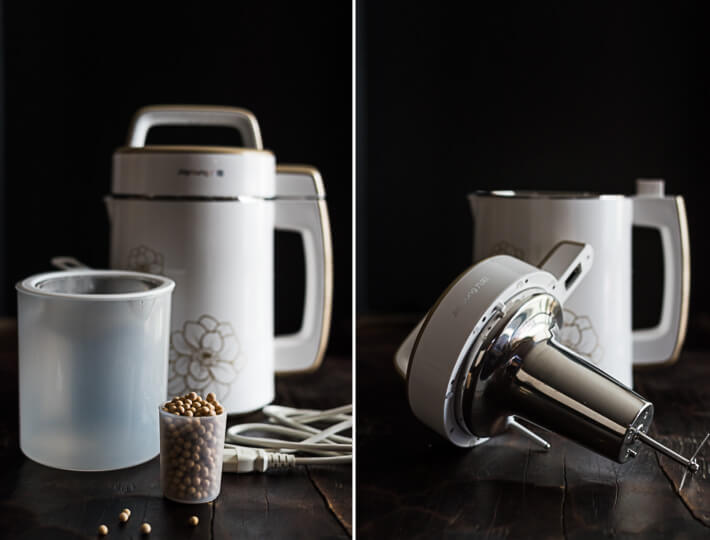
The soy milk maker comes with two parts. A body that is plastic on the outside and stainless steel inside, and has a lid with a heating element and a blender attached. When you close the lid and plug in the cord, you’re basically done with setting up the machine. There are a few other things that come with the package.
A small bag of dried soybeans that’s enough for making one batch of soy milk A plastic cup for measuring the beans A plastic container and a fine stainless steel mesh to strain the milk A not-very-detailed manual (which is my only complaint)
Starting a batch of milk is very easy. You only need to:
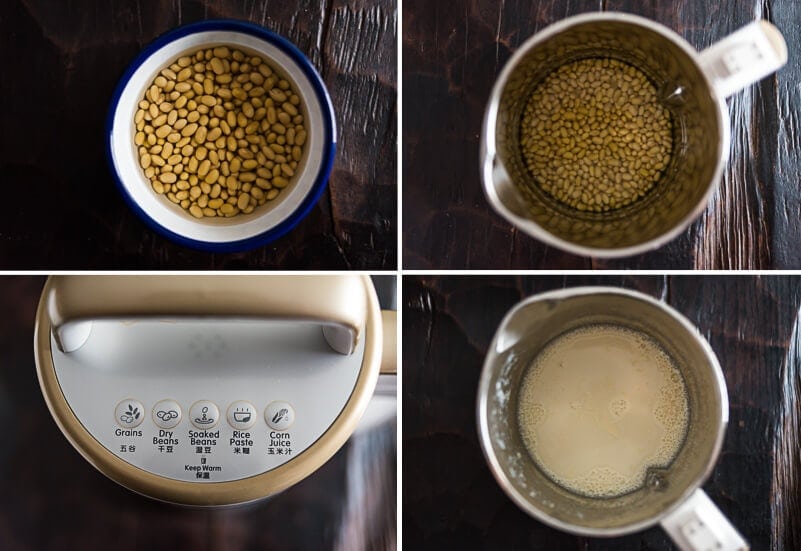
Soak the beans overnight (or not, if you prefer!) Add the beans into the soy milk maker and add water to the mark Start the machine by pushing one button
That’s it! It only takes like 3 minutes to set up and then you can forget about it.
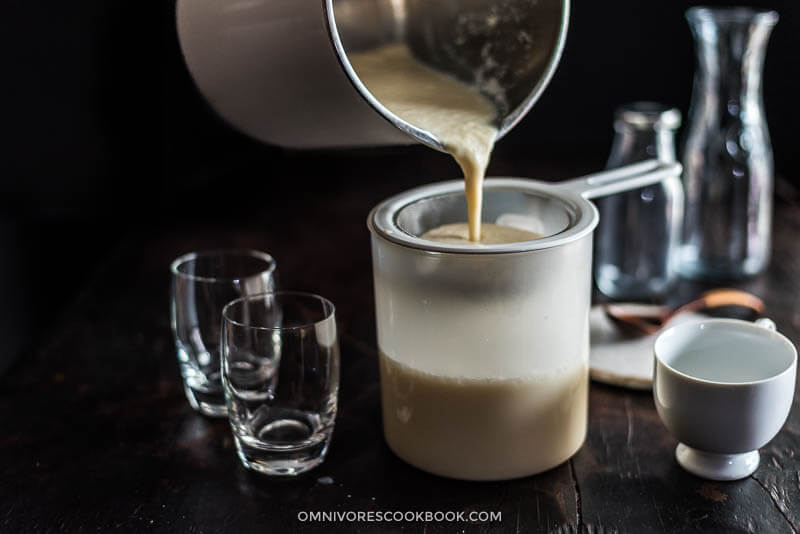
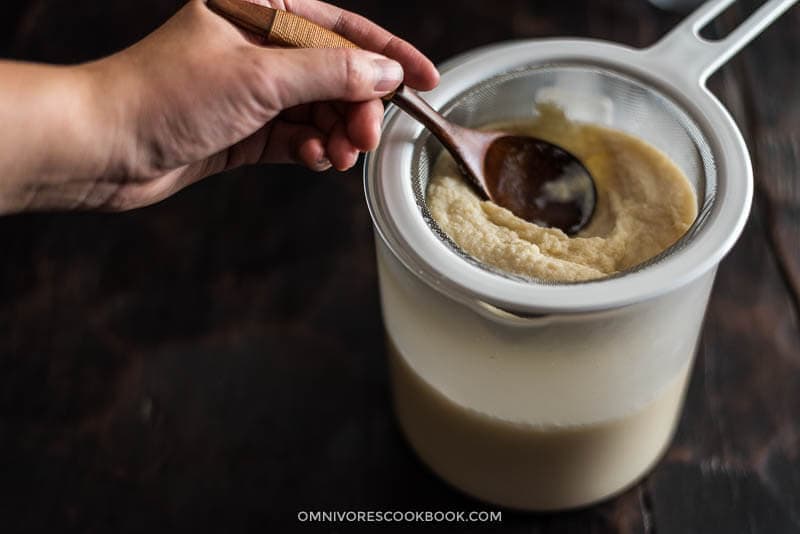
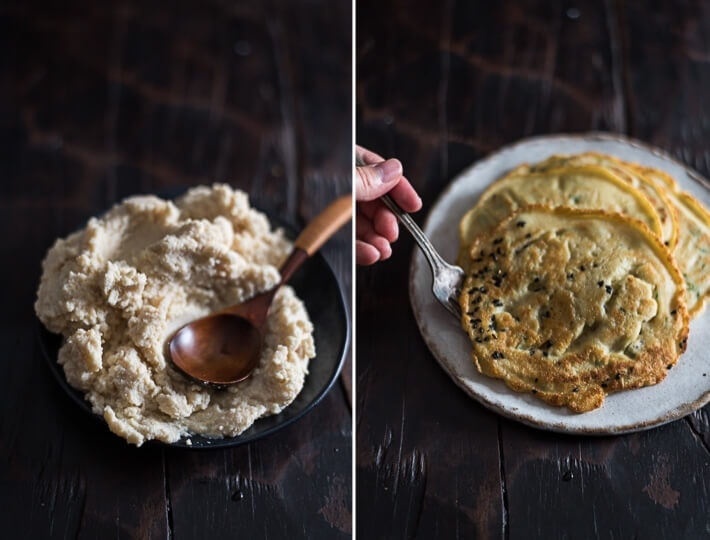
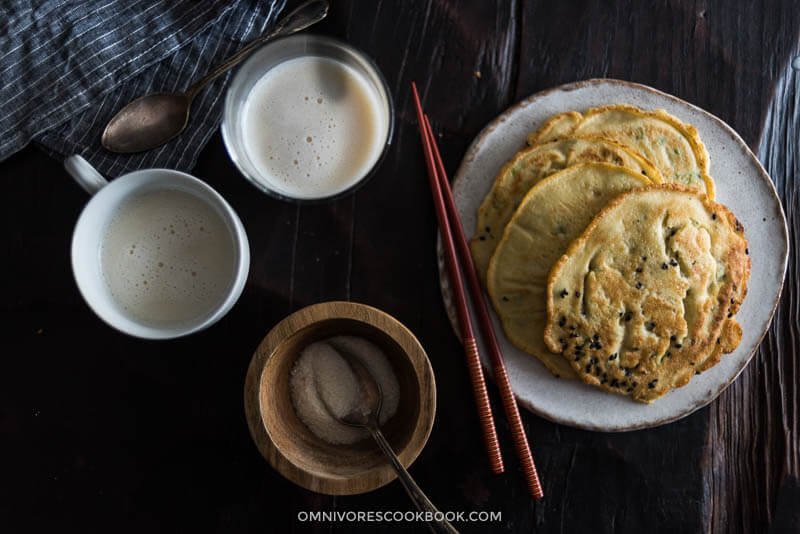
Once the machine beeps again, you will have a pot of freshly made soy milk! Here we need to do one more step to make the milk more smooth – strain the milk through a fine mesh. This process will remove most of the bean pulp, which you can save and use for cooking pancakes (see recipe below).
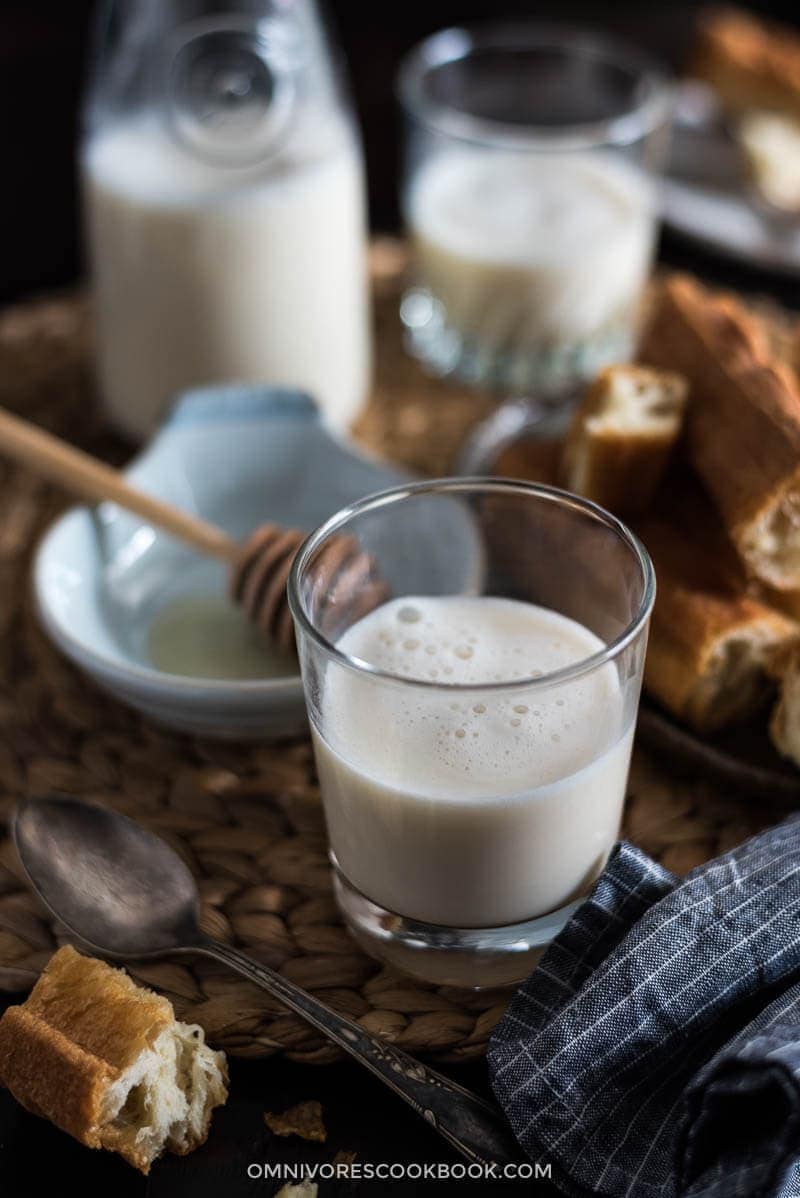
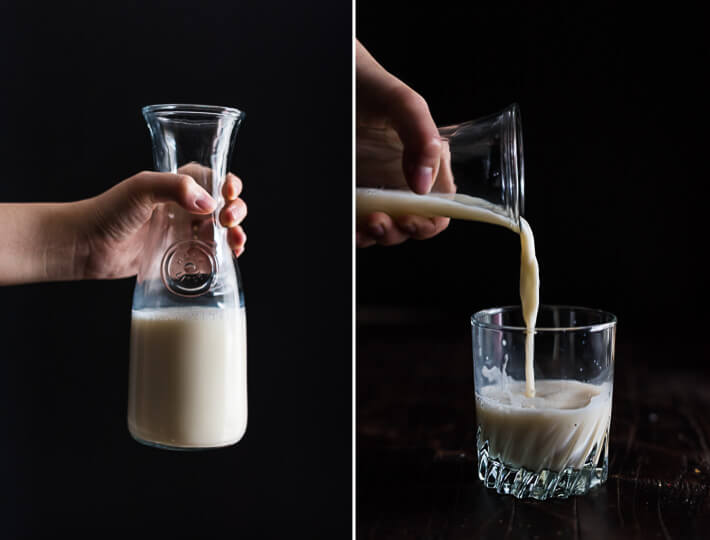
I enjoy my soy milk hot with a little syrup, the same way we do in China. But if you prefer your soy milk cold, you can always cool it off or add ice cubes. I like to store leftover soy milk in mason jars. Once I finish making a batch of soy milk, I always to wash the machine immediately while it’s warm, so the bean pulp residue comes off easily. Alternatively, you can fill the machine with hot water and place the lid back on to soak it before you’re ready to wash.
What about the leftover bean pulp (okara)?
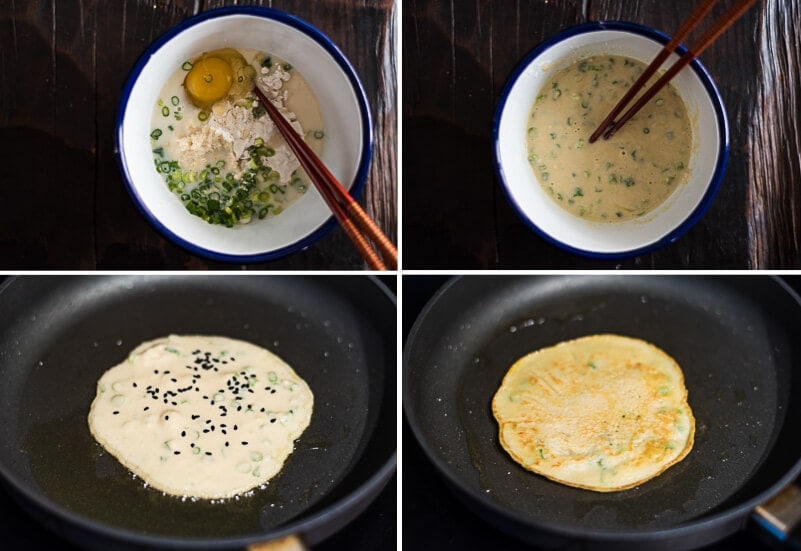
Most recipes will tell you to throw it away, which is a massive waste. The bean pulp, or kara in Japanese, contains high dietary fiber and calcium and is abundant in protein, carbohydrates and potassium (according to the Japanese Tofu Association). This bean pulp has a coarse texture that isn’t particularly pleasant if you eat it directly, so you’ll want to use it with other ingredients to alter the texture. My favorite method is to mix the pulp with egg and flour to make green onion pancakes. It takes 10 minutes to whip this together and then you have a full breakfast! You can see the full okara pancake recipe right next to the homemade soy milk recipe below.
For more vegan recipes using okara, check out this website: okaraproject.blogspot.com Since I got my soy milk maker, I’ve been making plant-based milk 2 to 3 times a week because it’s unbelievably easy! Homemade soy milk is a great snack that I drink in the morning, with dinner, or during the day. I like the fact that it keeps my stomach satisfied and my body hydrated.
What is your favorite plant based milk? Leave a comment below to share your thoughts!