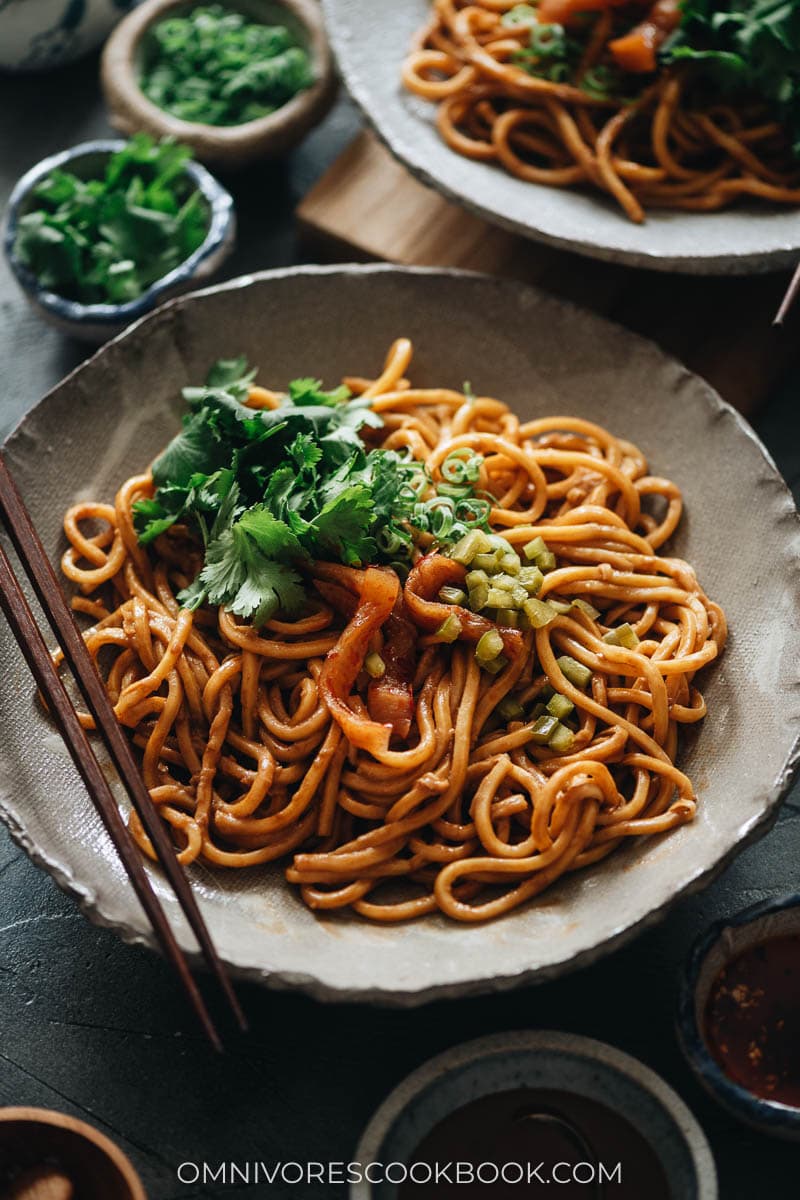
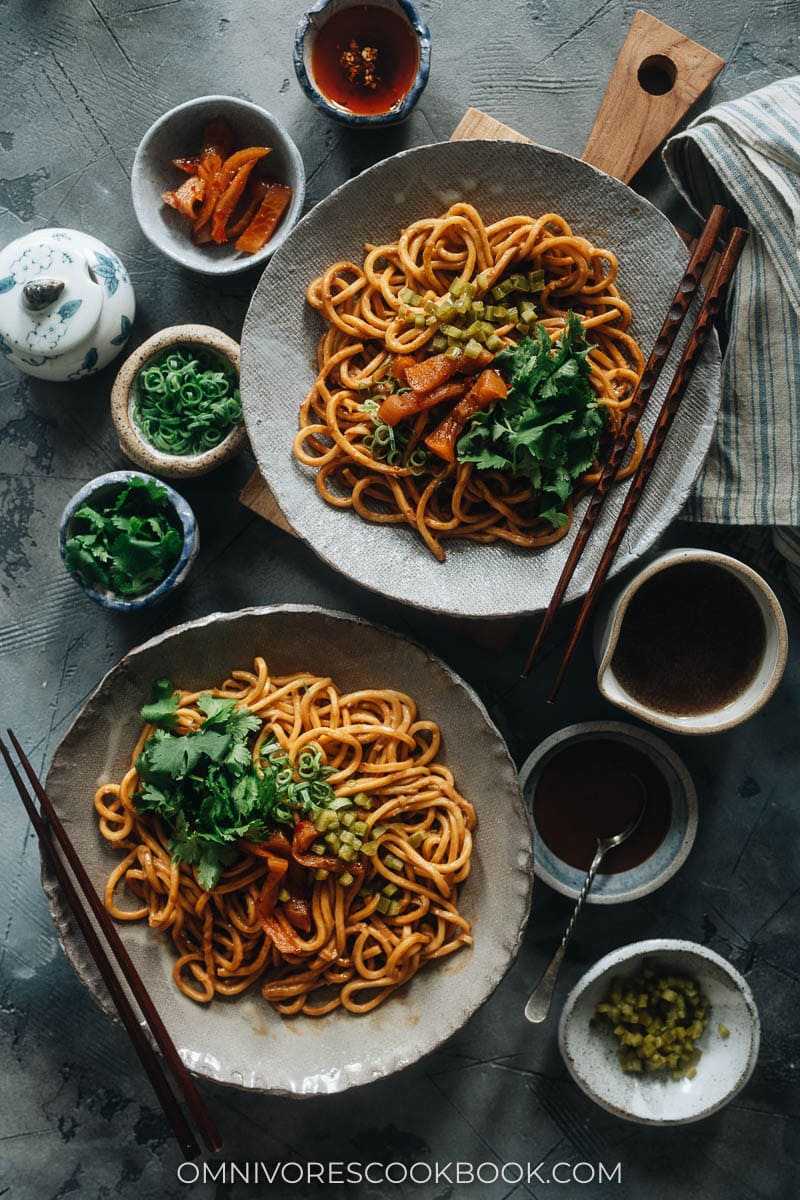
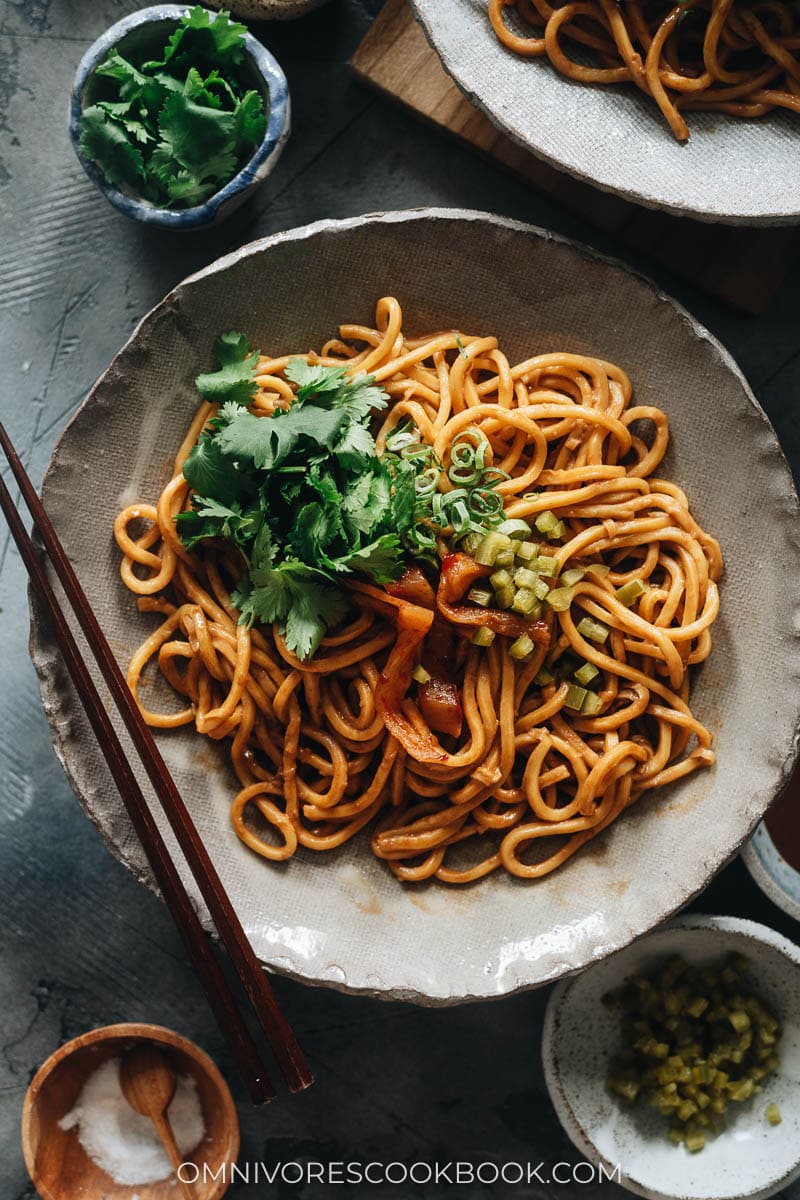
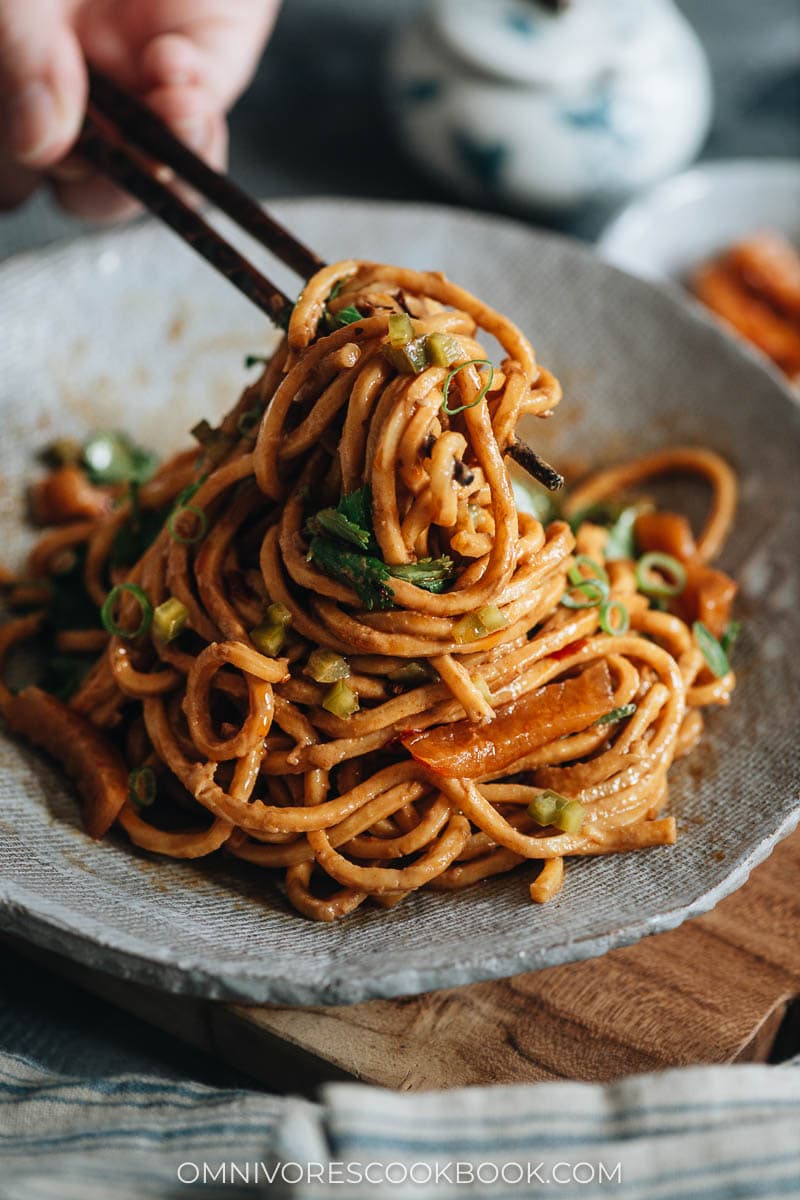
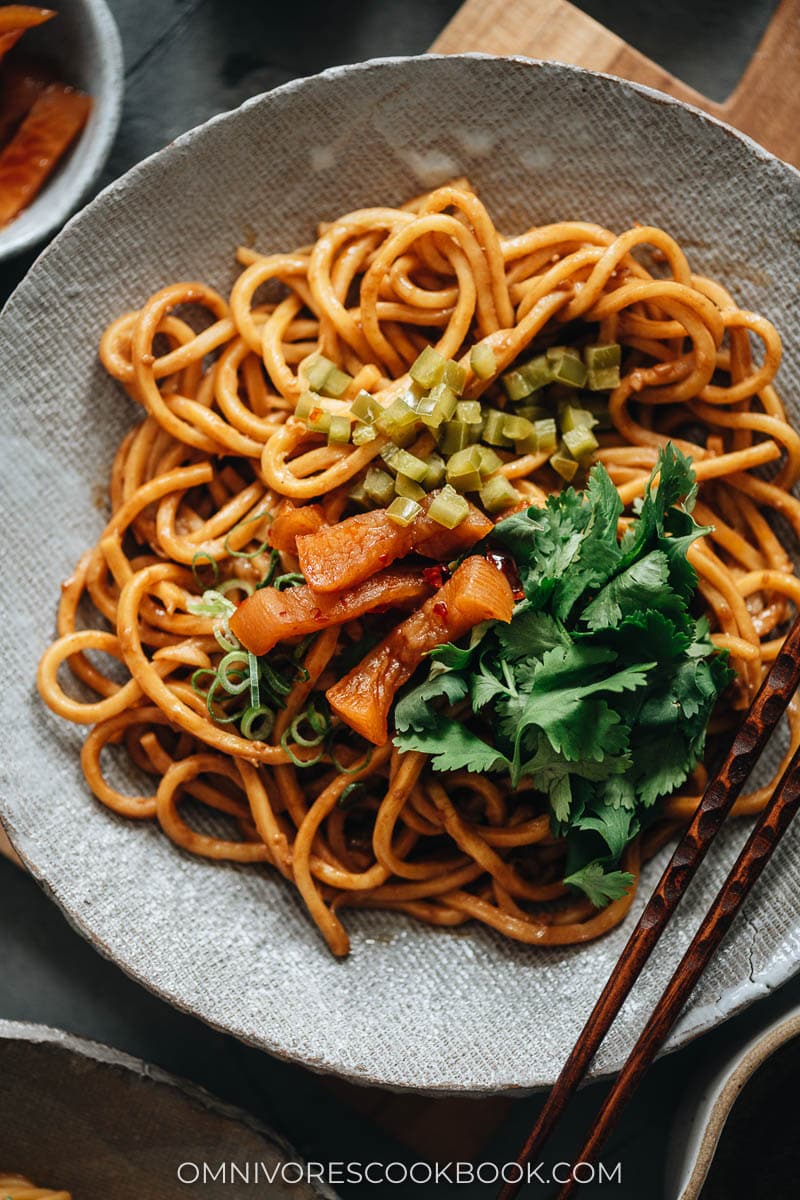
Hot dry noodles, or ‘re gan mian’ (热干面), is a classic Chinese summer dish that’s often eaten for breakfast in Hubei province though it’s very popular throughout China. It’s also one of the 10 most famous noodle dishes in China. The vendors are out at dawn serving up heaping portions of this historic noodle dish, quite like the way they serve Dan Dan Noodles in Sichuan. Once you order it, the vendor will assemble your bowl using thick noodles, a sesame-paste-based sauce, aromatic broth, and assorted pickles. It is so simple, yet very bold and satisfying in flavor. I want to introduce this dish to you because it’s a perfect dish for the summer. It’s funny that even though this dish is called hot dry noodles, it is usually served cold and it is very saucy. Another great thing about these hot dry noodles is that they’re an outstanding meal prep dish. You can make a big batch of the sauce to use later. Simply assemble the noodles before you serve and it’s a done deal. Enjoy them hot or cold, anyway that you like!
Why this recipe
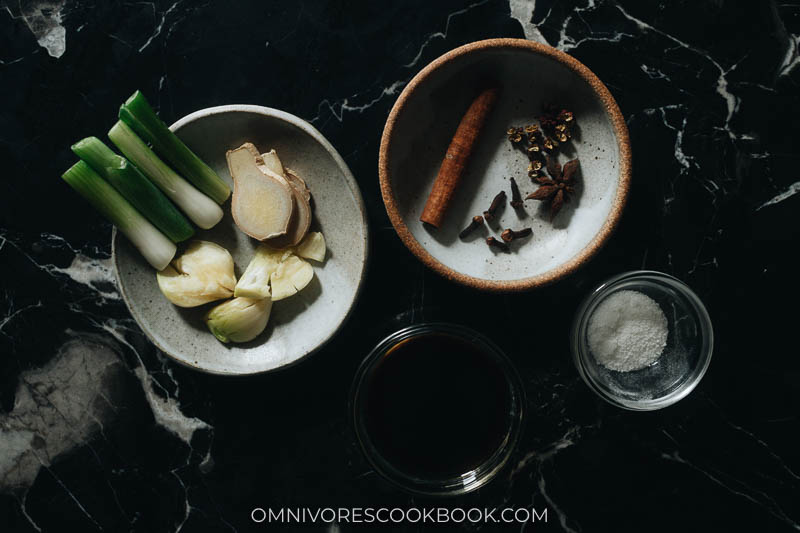
If you travel to China, you’ll find two distinct and popular versions of hot dry noodles. There’s one that is made with a simple sesame sauce. Then there’s another that has a wonderfully savory broth on top of that sesame sauce. For my hot dry noodles, I went with the brothy style because it is quite easy to make and it adds a wonderful umami to the dish. Don’t worry about the list of ingredients for the broth of these hot dry noodles. I know it looks long, but it’s all pantry staples you likely have on hand and it is so easy to put together. We often refer to this as a ‘master sauce’ or ‘Chinese thousand-year broth’ because it is the same sauce base you see in so many traditional dishes in Chinese cuisine. I like the broth version best because it adds tons of fragrance, plus it keeps the hot dry noodles nice and saucy. Without the broth, the noodles become really dry once they’re chilled.
Ingredients
What type of noodles to use
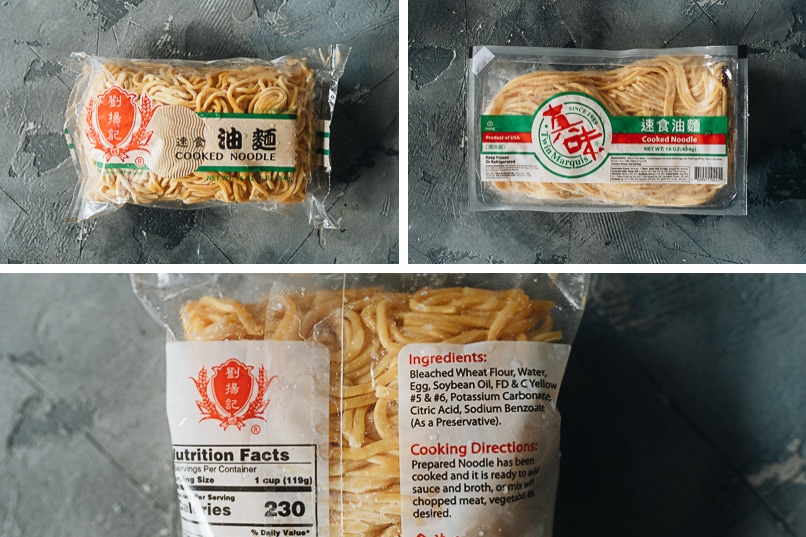
Authentic hot dry noodles always use chewy alkaline noodles. The best kind to use in this recipe is the pre-cooked type. It’s called You Mian (油面) in Chinese and simply labeled “Cooked Noodle” in English. In a Chinese market, you might find them in the refrigerated section and they’re ready to be used right out of the package. More often though, you’ll actually find them in the freezer section. The noodle texture may be a bit off once thawed. So I usually bring a pot of water to a boil and quickly rinse the thawed noodles before using them, just to bring back their texture. If you cannot find the “Cooked Noodle”, ramen noodles are a good alternative. They are alkaline noodles in a thinner form. Whole Foods even sells fresh ramen these days, so you can skip a run to the Asian market. If you cannot find either, you can simply use a wheat noodle or use the thin form of my homemade hand pulled noodles.
Pickles
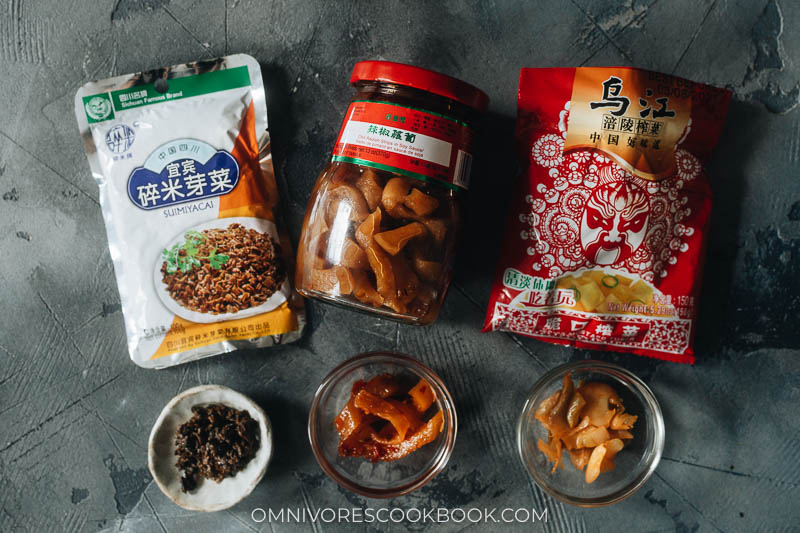
In the traditional method of serving hot dry noodles, it comes with Chinese pickled radish, pickled mustard stem, and pickled sour green beans. In the picture below, I’ve showed:
Sui Mi Ya Cai (left): you might have it on hand if you’ve made Dan Dan noodles from my blog. It’s not the traditional pickle to use in this dish but you can use a small spoon of it to boost the flavor.Spicy pickled radish (middle): it’s my favorite. These radish pickles are salty, sweet, spicy, with a nice crunch. Traditionally used in hot dry noodles, I highly recommend them.Zha Cai (right): a common mustard stem pickle. It’s salty and sweet. Also not used in this dish traditionally but it might be easier to find.
If you have a Chinese market near you, you can easily find these ingredients. But if not, you can always use your own favorite pickles. Or follow my pickle recipes to make quick pickles of your own. I love these! I have pickled cucumbers, pickled cabbage, and pickled peppers and they are each wonderful with this hot dry noodles recipe.
Sauce
The sesame-based sauce is packed with flavor. To make it a bit more fragrant, we used hot water to make a garlic-infused water to release the garlicky fragrance without tasting the raw, pungent flavor. The garlic water also thins out the sauce a bit without diluting its flavor. Chinese sesame paste is the best way to go. But if you cannot find it, you can use unsweetened natural peanut butter. I think tahini would create a great flavor too, though it will be quite different from the original.
Cooking process
Prepare the master sauce
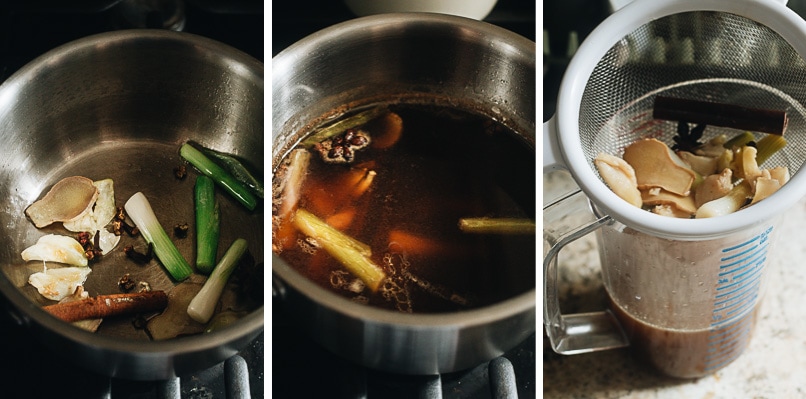
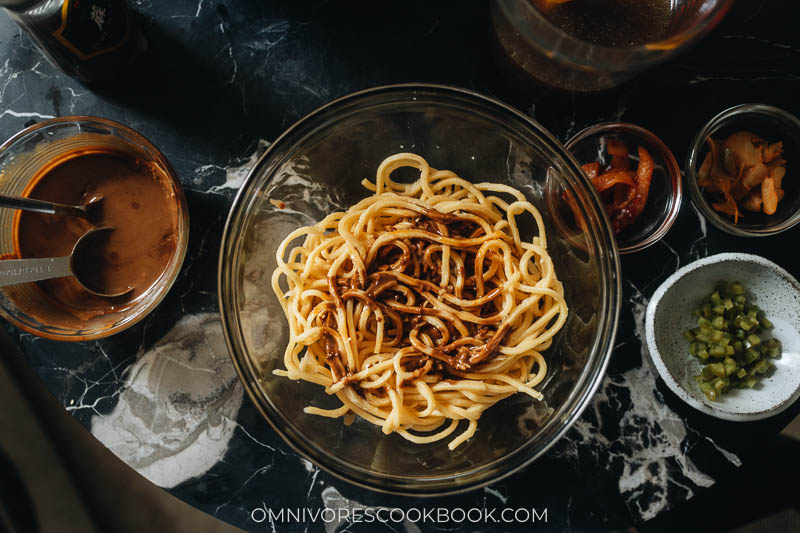
For this dish, you only need to cook the master sauce and prepare the noodles. To make the master sauce
Saute the aromaticsBoil with broth of your choiceStrain and it’s ready to use
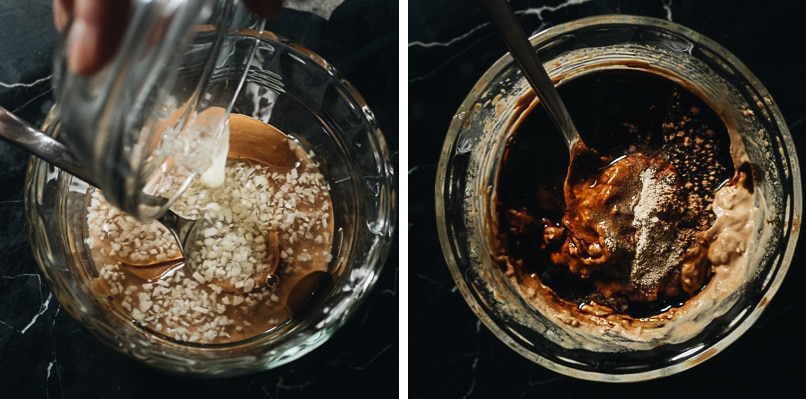
Mixing the sesame sauce
Mix the garlic with hot water to infuse the aroma, then add it to the sesame pasteAdd the rest of the seasonings to make the super rich and nutty sauce
Cook the noodles
If you use the cooked alkaline noodles, you only need to quickly rinse the noodles in hot water to bring back their texture. If you use other noodles, you will need to boil the noodles according to the package instructions. Once you’re done preparing the noodles, the master sauce, and the sesame sauce, all you need to do is mix them together and top them with your favorite pickles! It’s super simple.
Afterthoughts
I know this recipe might look intimidating. But once you try it, you’ll find it surprisingly easy to put together. The traditional version does require many special ingredients. But the best part is, you can get around that by using more common ingredients and still create a delicious bowl of noodles. Besides the pickles, you can top other ingredients such as cooked meat and blanched veggies to make a more filling meal. Want to learn more about Chinese Cooking? Sign up my newsletter to receive the 5-Day Chinese Cooking Crash Course and recipe update! If you give this recipe a try, let us know! Leave a comment, rate it (once you’ve tried it), and take a picture and tag it @omnivorescookbook on Instagram! I’d love to see what you come up with.