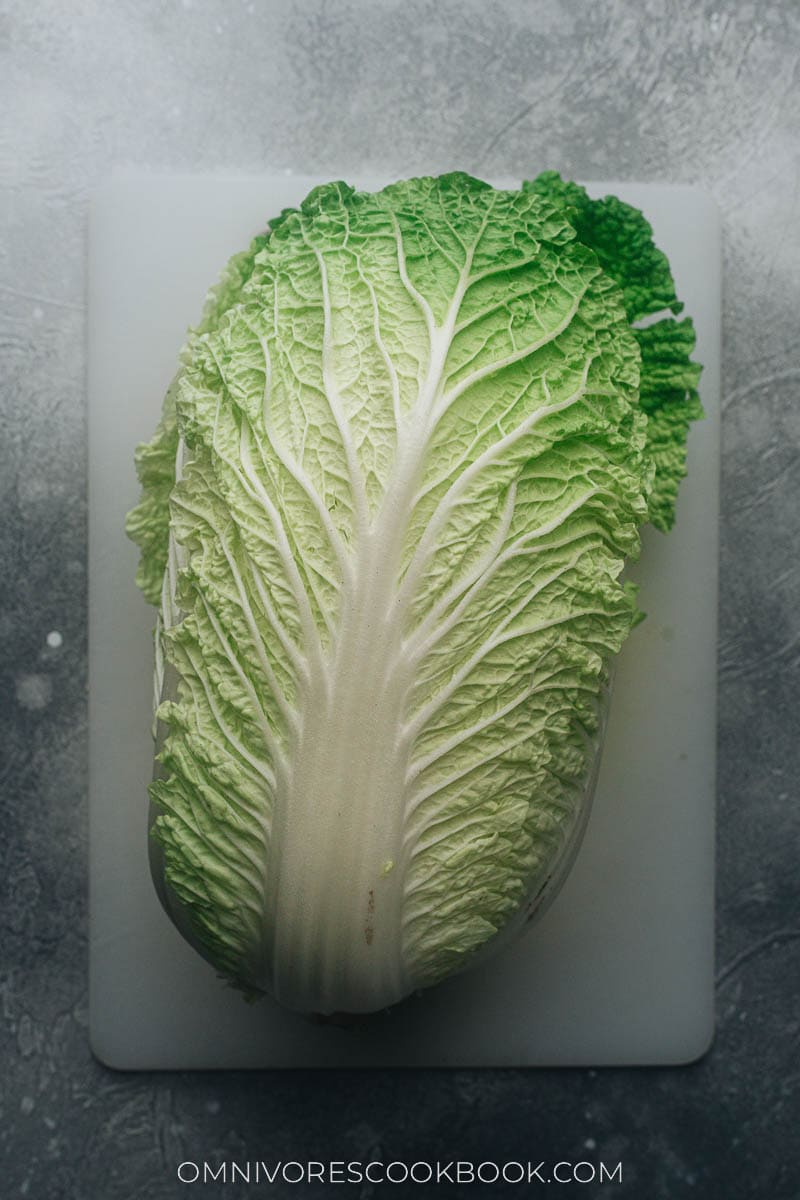
Napa cabbage, also known as Chinese cabbage, is called Bai Cai (directly translates as “white cabbage”) in China. Compared to regular cabbage, napa cabbage is bigger and longer. The leaves have a white thick part that is quite crisp and juicy. The leaves are more wrinkled than regular cabbage and they turn tender after cooking. It is a very versatile vegetable and one of the most popular vegetables in Northern China, where I was born and grew up. In the early 90’, modern supermarkets were not widespread and we didn’t have many varieties of vegetables from the South like we do these days. In the winter, napa cabbage was one of the few green vegetables we could get our hands on. There are many ways to cook with napa cabbage. We often add it to soups, make napa cabbage stir fry, make it into a stew to serve with rice, and make sauerkraut with it.
How to cut napa cabbage
There are a few ways to cut napa cabbage to use in Chinese cooking. And it’s important to prep it properly so you get the best texture.
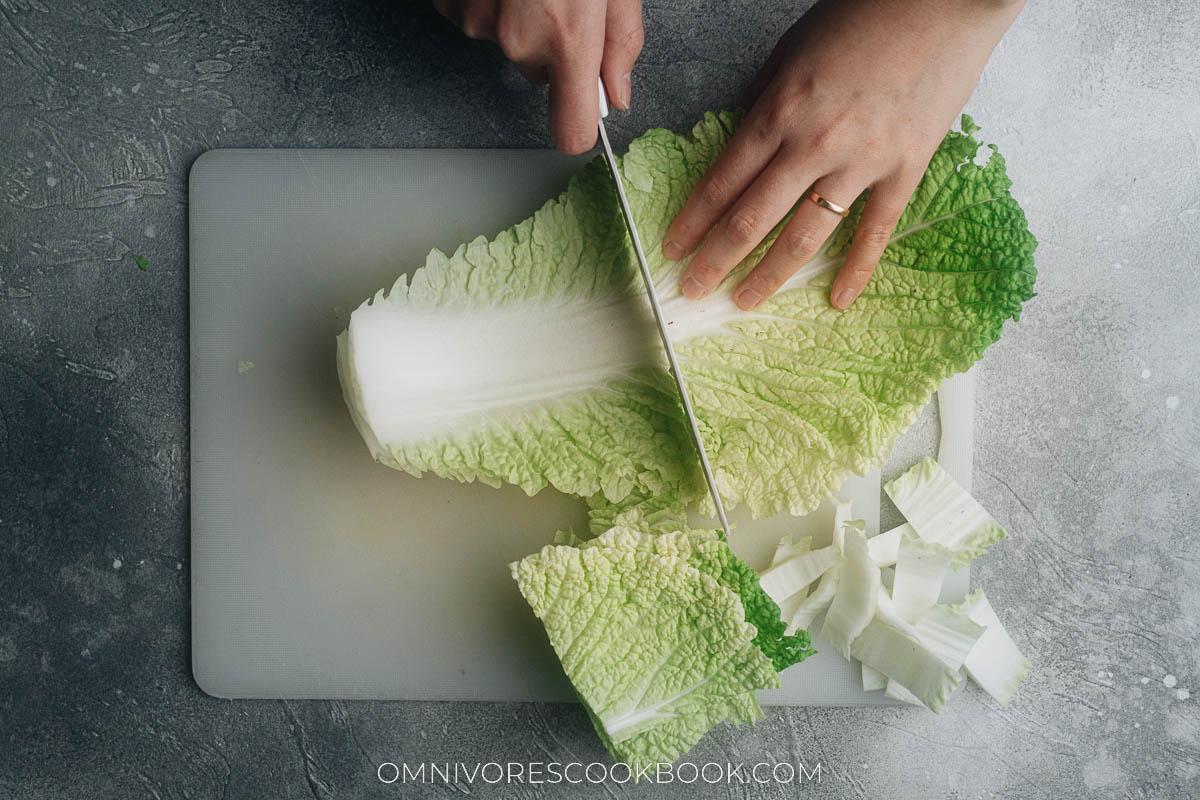
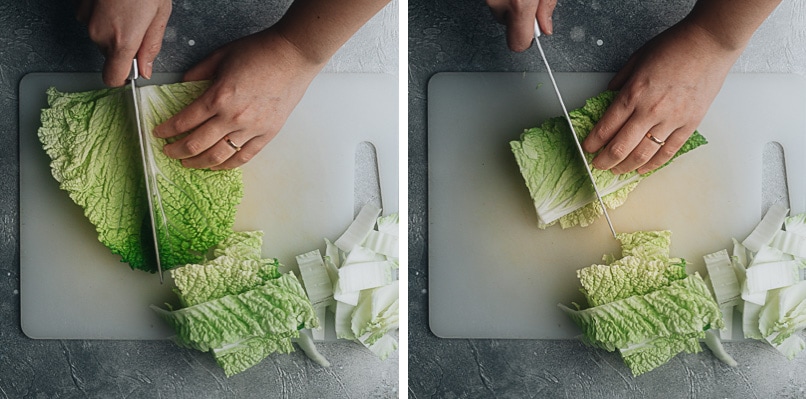
Method 1 – the best texture
This method is suitable when you need a smaller amount of napa cabbage in the cooking. And it is especially helpful when cutting outer leaves, which have a thick and tough white part. This method can take an extra minute, but it is my favorite way to cut napa cabbage. The white part usually takes a little longer to cook, and it tastes the best when it becomes tender. The greens are faster to cook, and they shrink a lot. So I keep the cut pieces quite large to yield a good texture.
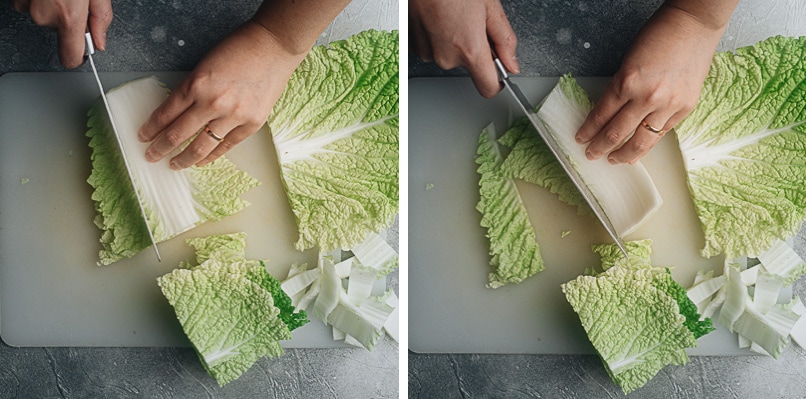
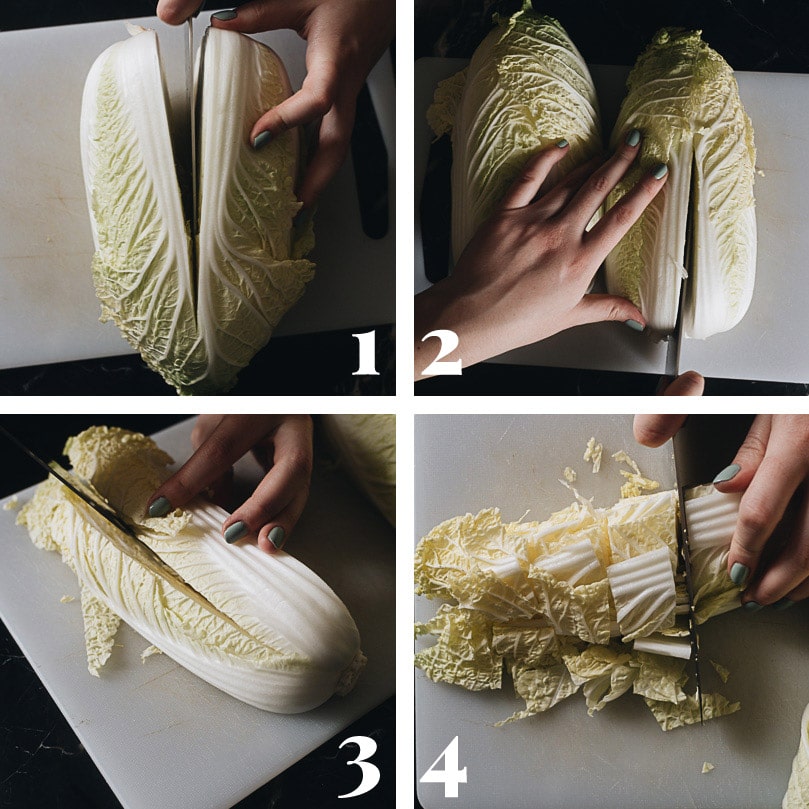
Method 2 – a fast way
This cutting method is very fast, and it is suitable for when you need to cook with a large amount of napa cabbage. This cutting method is great for braising, when it is OK to slightly overcook the greens or keep the white part a bit al-dente.It is also great for younger and smaller napa cabbages, or when you’ve used the outer leaves and need to use the tender core. In this case, the white part is thin and tender, so it cooks almost as fast as the green part.
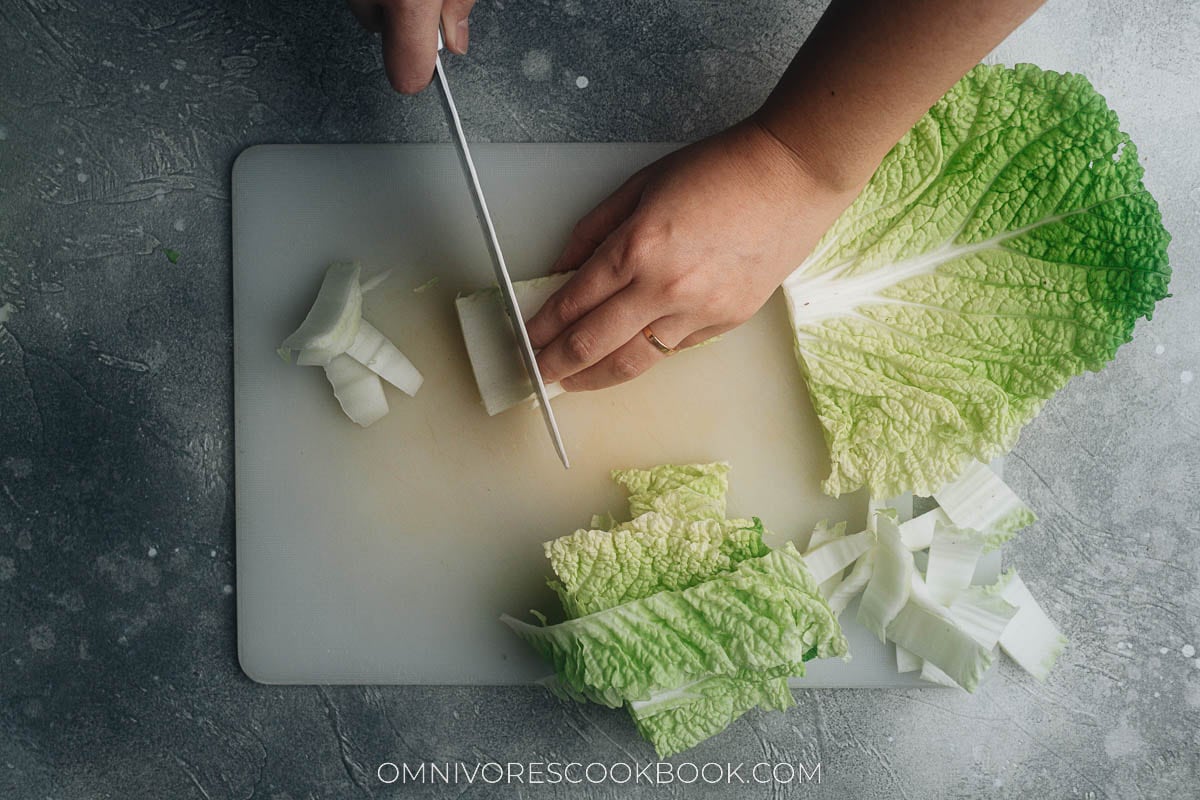
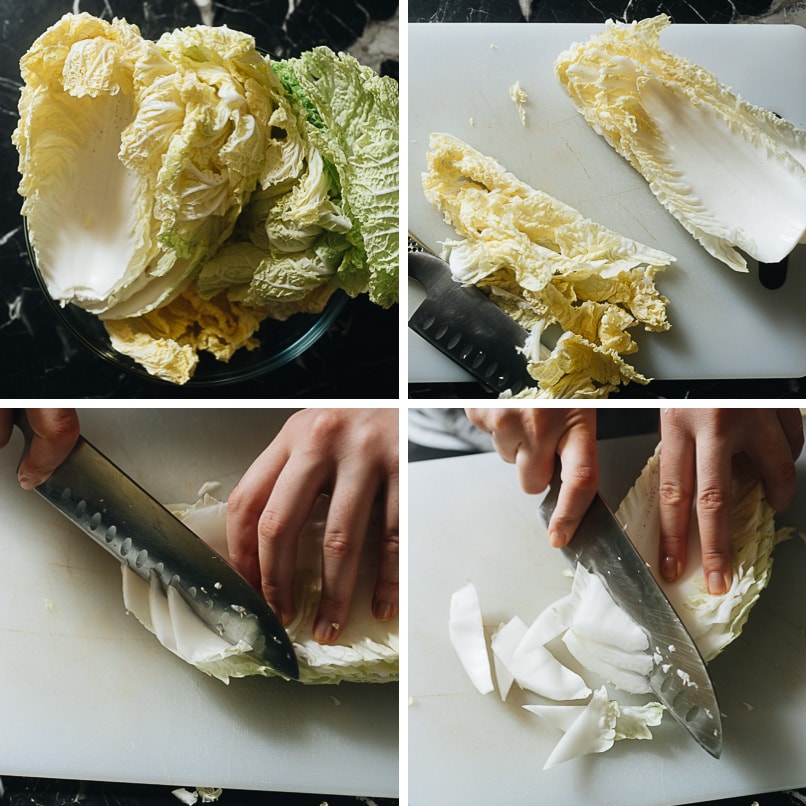
Method 3 – for stir fries
The third cutting method is especially helpful when you deal with extra thick white stem parts, especially in a stir fry. This method is perfect for a stir fry, when you need to cook the white part within a shorter period of time so it won’t release too much water. By tilting the knife, the white part pieces are thinner and easy to cook through. The irregular shape further increases the surface area to help the white part absorb more sauce. That’s it! I hope this post helps you cut napa cabbage according to the dish you’re preparing, so you enjoy this great vegetable even more!
More napa cabbage recipes
Napa Cabbage Tofu Soup (白菜豆腐汤)Napa Cabbage Stir Fry with Vinegar Sauce (醋溜白菜)Chinese Napa Cabbage with Glass NoodlesNapa Cabbage Soup with MeatballsPork and Napa Cabbage DumplingsBuddha’s Delight (Jai, Chinese Vegetarian Stew)