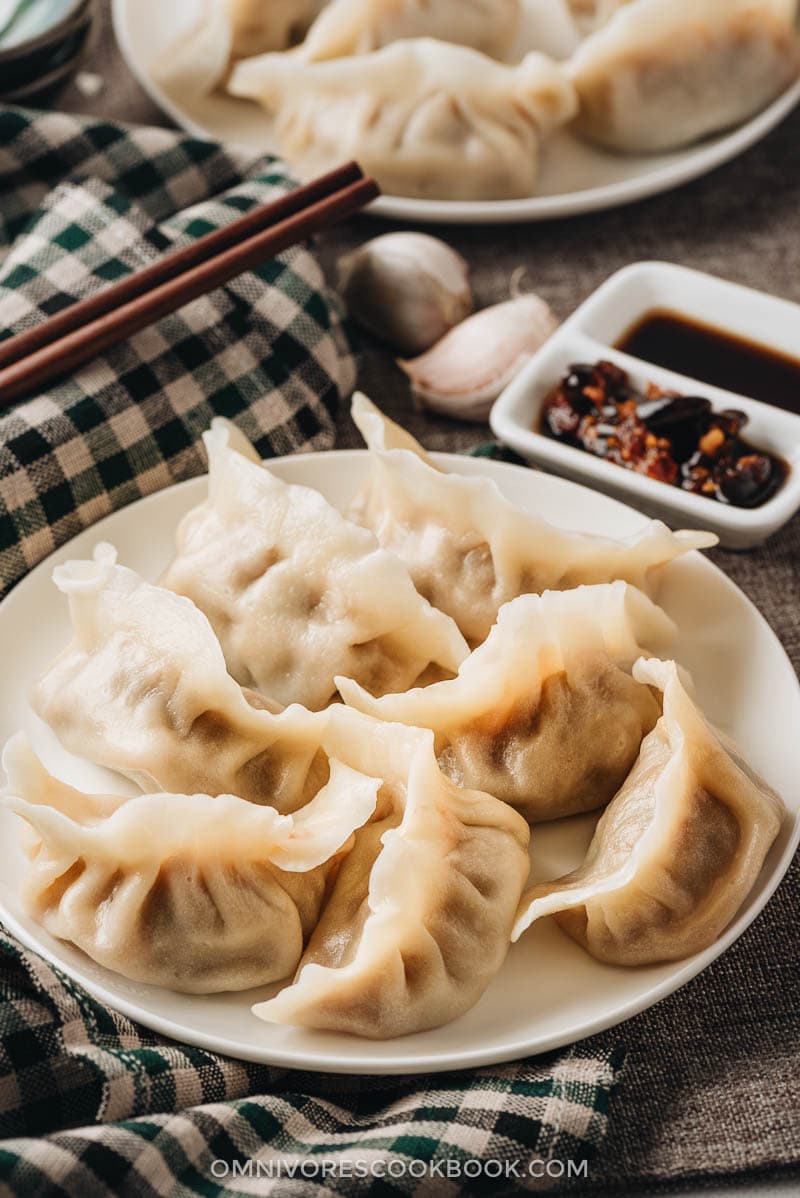
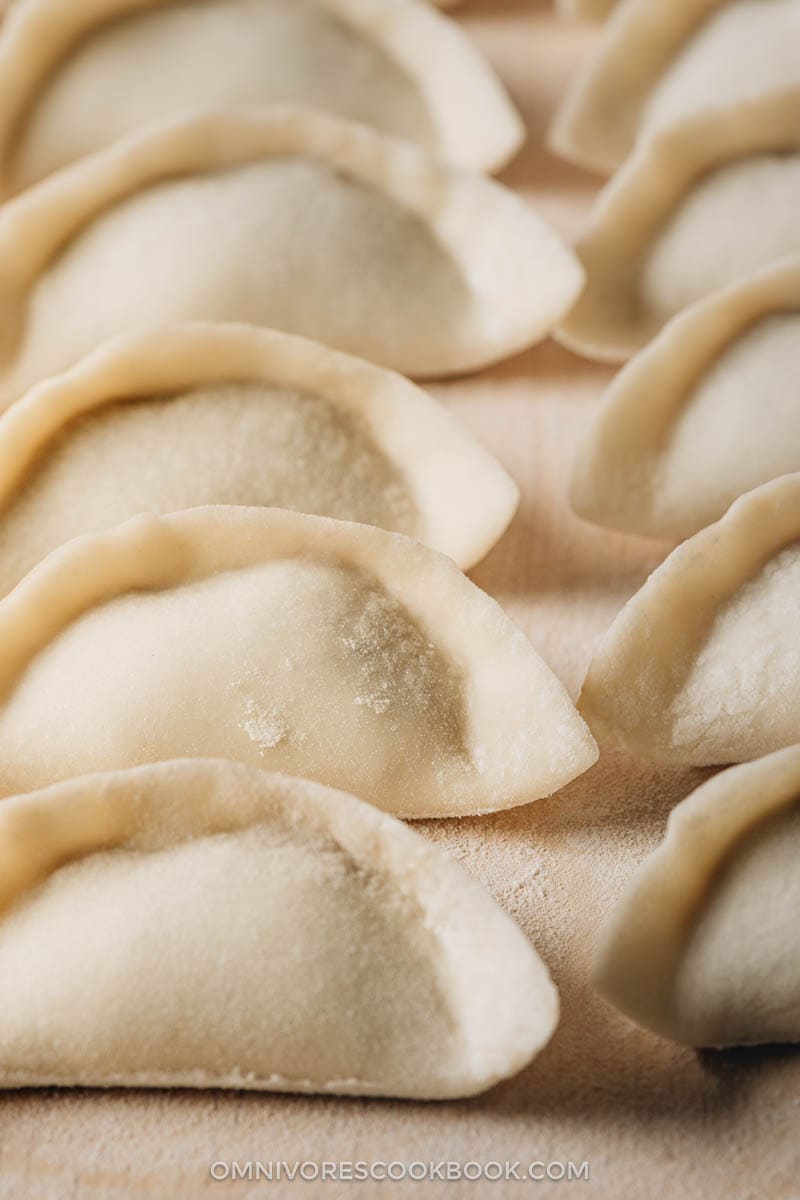
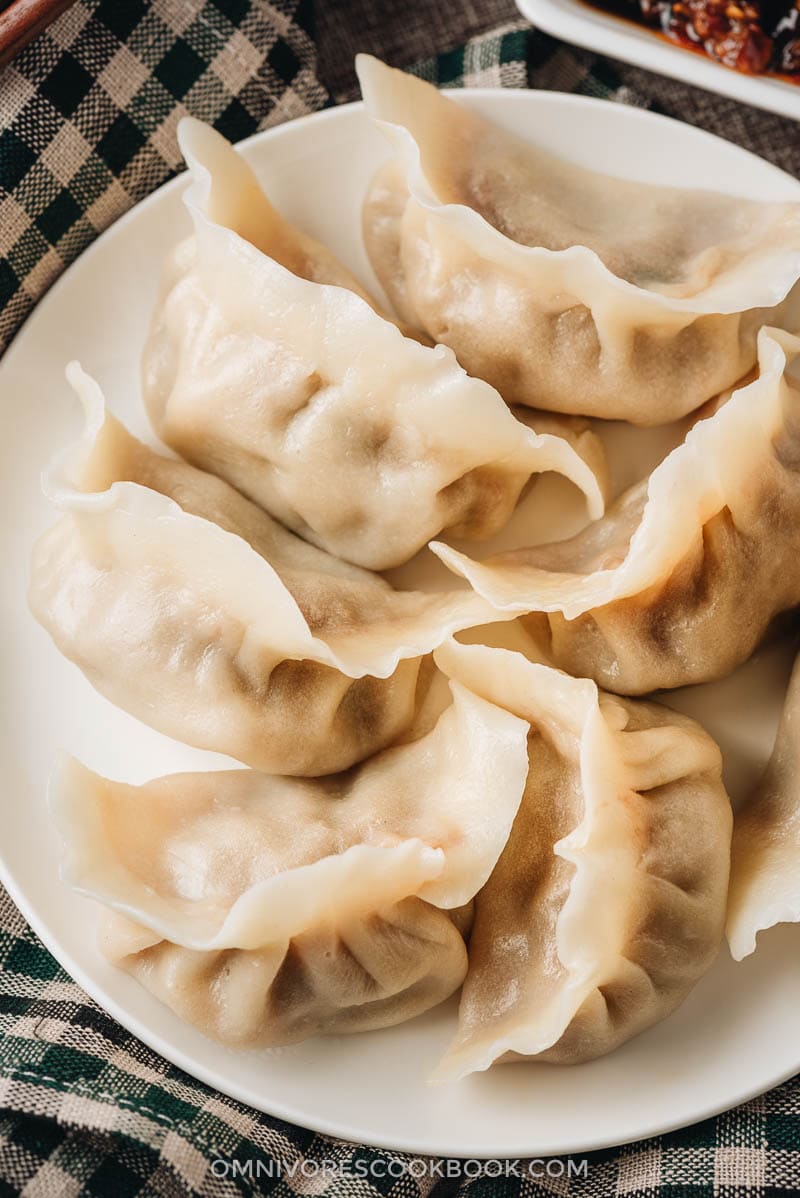
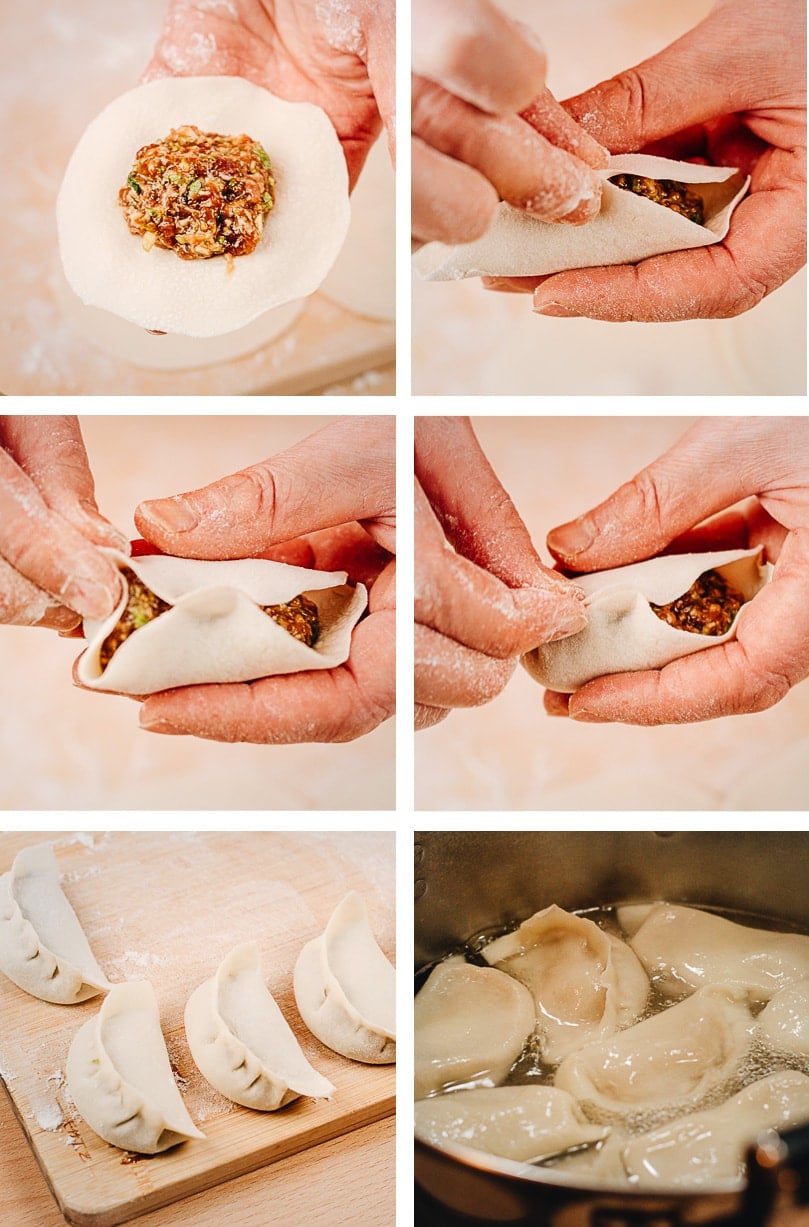
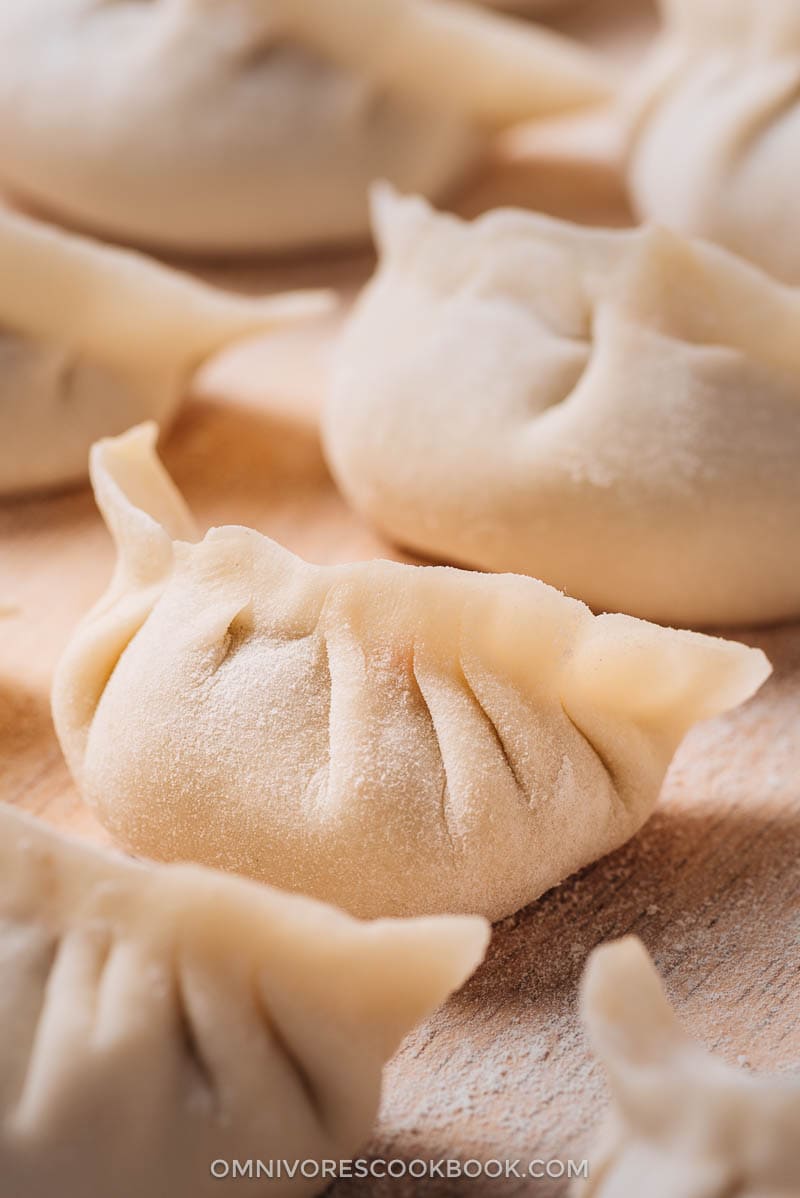
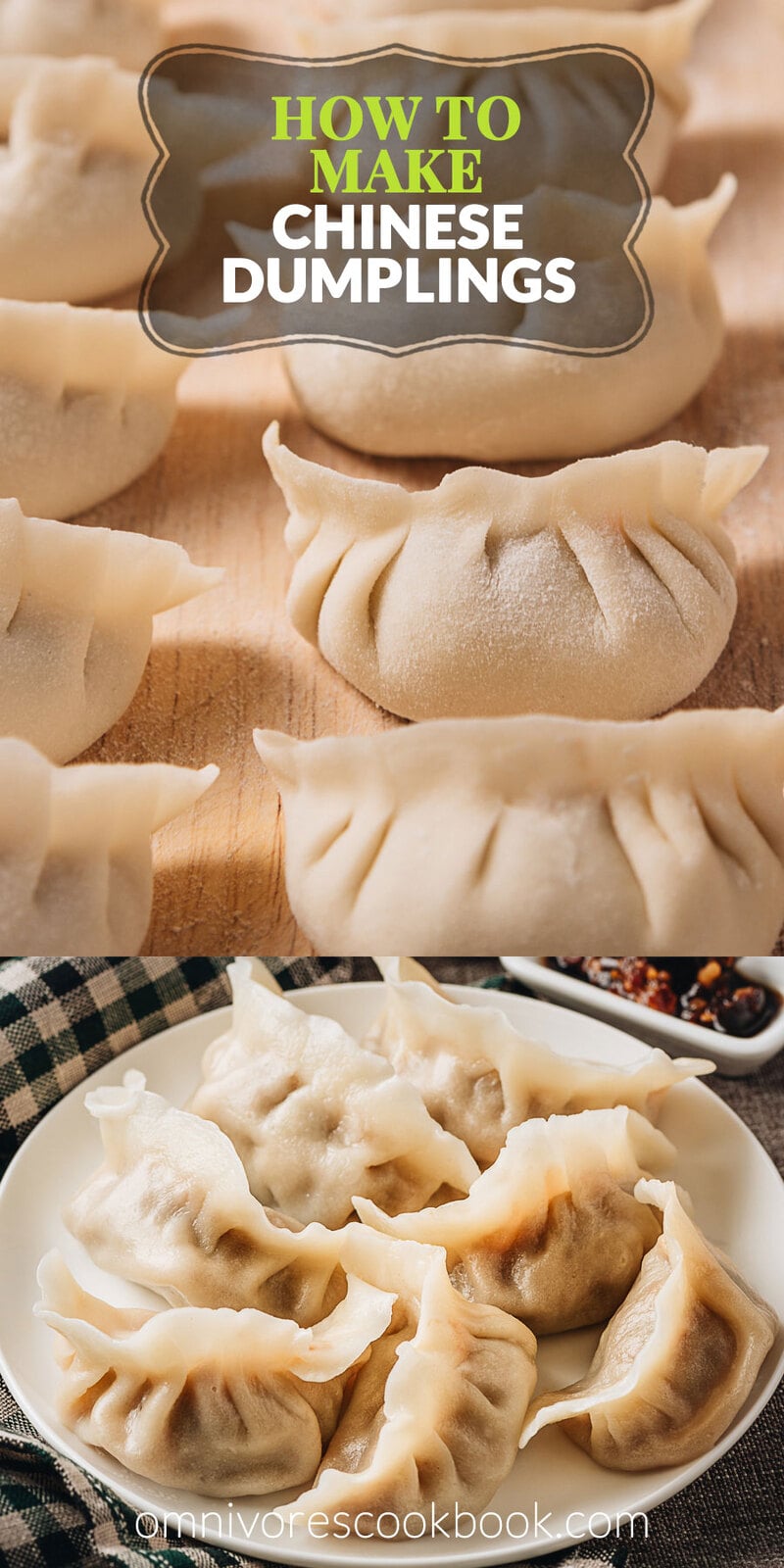
In China, when we talk about dumplings, we’re usually referring to boiled dumplings (or shui jiao, 水饺). Not potstickers, not steamed dumplings, but boiled ones. We consider it a staple, a delicious alternative to rice and noodles. You might think boiled dumplings are not as tasty as potstickers. After all, potstickers have a nicely charred surface and crispy texture and look great, right? But to us, boiled dumplings are the ultimate comfort food that we eat every week. They’re super delicious if you make them the right way.
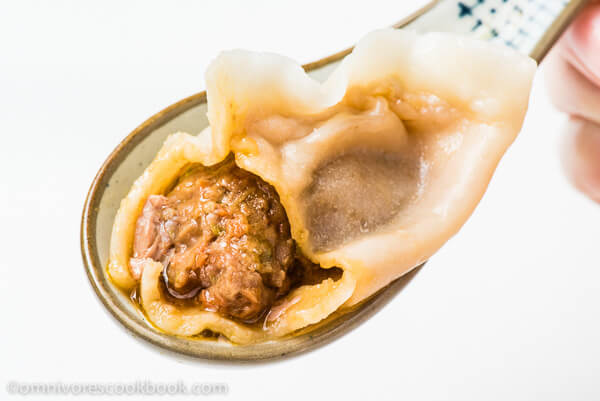
Boiled dumplings are moist and juicy. With a small bite of a dumpling, the hot and flavorful soup will drizzle from the filling. If you’ve ever tried Shanghai soup dumplings (xiao long bao, 小笼包), you know what I’m talking about. The handmade dumpling wrappers are thin, tender, and delicious. The filling is well balanced with meat and vegetable, not too greasy, nice in flavor, and comforting. Everything works perfectly together to create a fulfilling, healthy, and hearty one-dish meal. Boiled dumplings are also the most important dish for celebrating Chinese (Lunar) New Year in northern China. My family eats them on New Year’s Eve, when all the family members are gathered at home. It is a ritual comparable to that of the roast turkey at Thanksgiving. The pronunciation of dumpling (饺子, jiao zi) phonetically also refers to the turning point between the old year and the new year. A dumpling is shaped like an ingot (the kind used as ancient Chinese money), and this shape symbolizes wealth. Eating dumplings is a way to bring good luck, so that everything goes well in the coming new year and that family can be together.
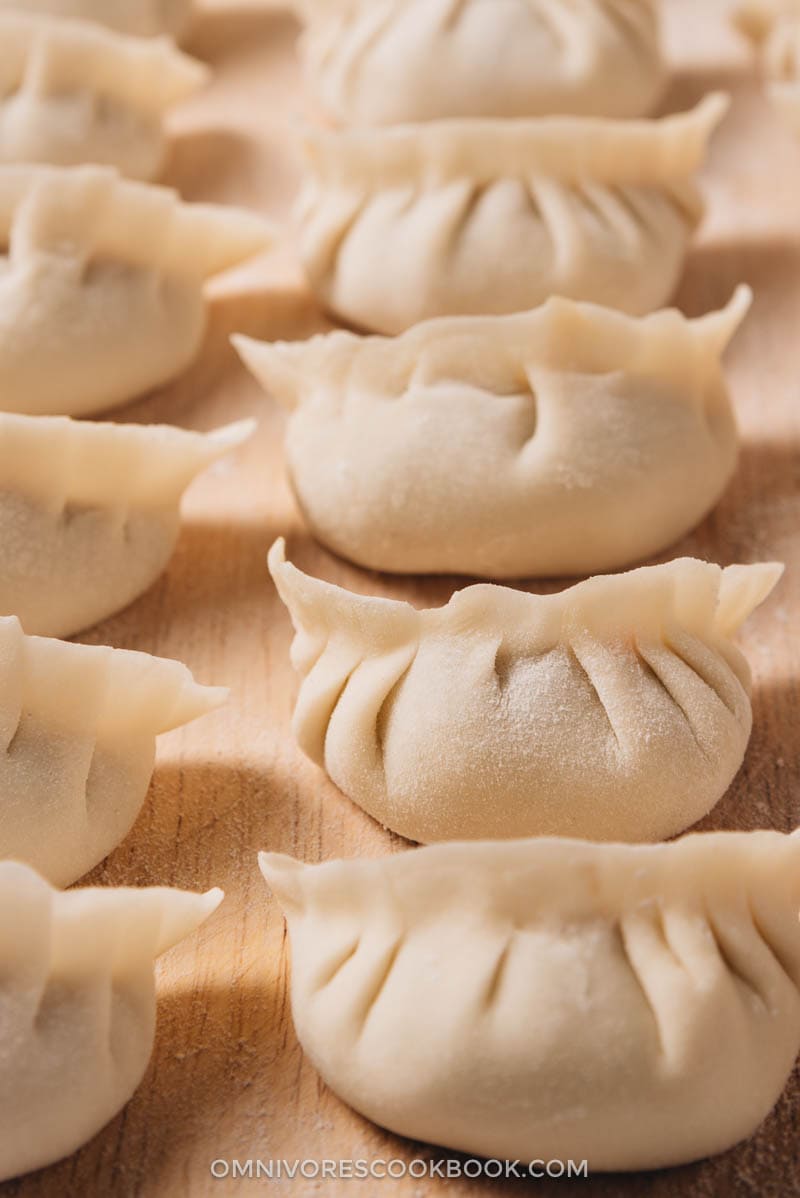
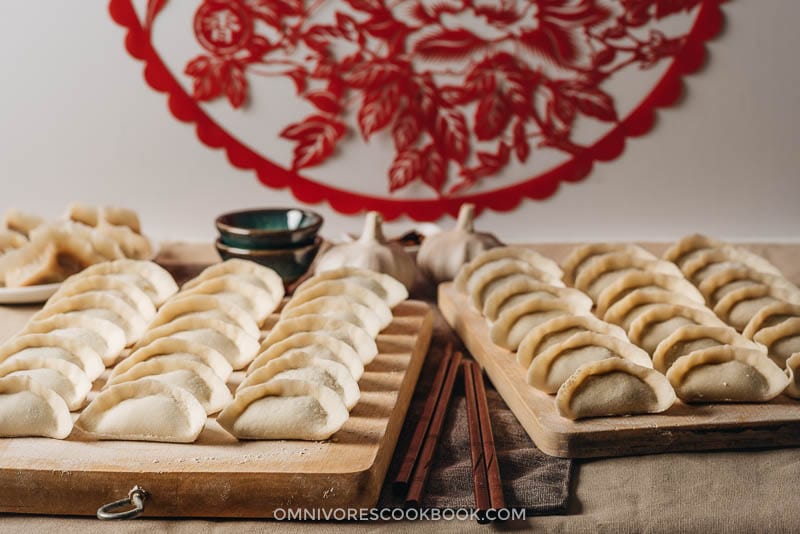
As for the fillings that can be used for boiled dumplings, the list never ends. Today I’ll give you a thorough introduction to making dumpling wrappers from scratch, wrapping dumplings, and cooking and storing them. So no matter which filling you prefer, you can always refer to this recipe to make dumplings. I will discuss dumpling fillings in another post. Before diving into dumpling making, I need to warn you:
Why you should NOT cook boiled dumplings
If you haven’t closed the tab before reading this point, great! Let me explain:
Why you SHOULD cook boiled dumplings
Have I convinced you to cook some dumplings at home yet? If yes, keep reading.
Things you should take note of
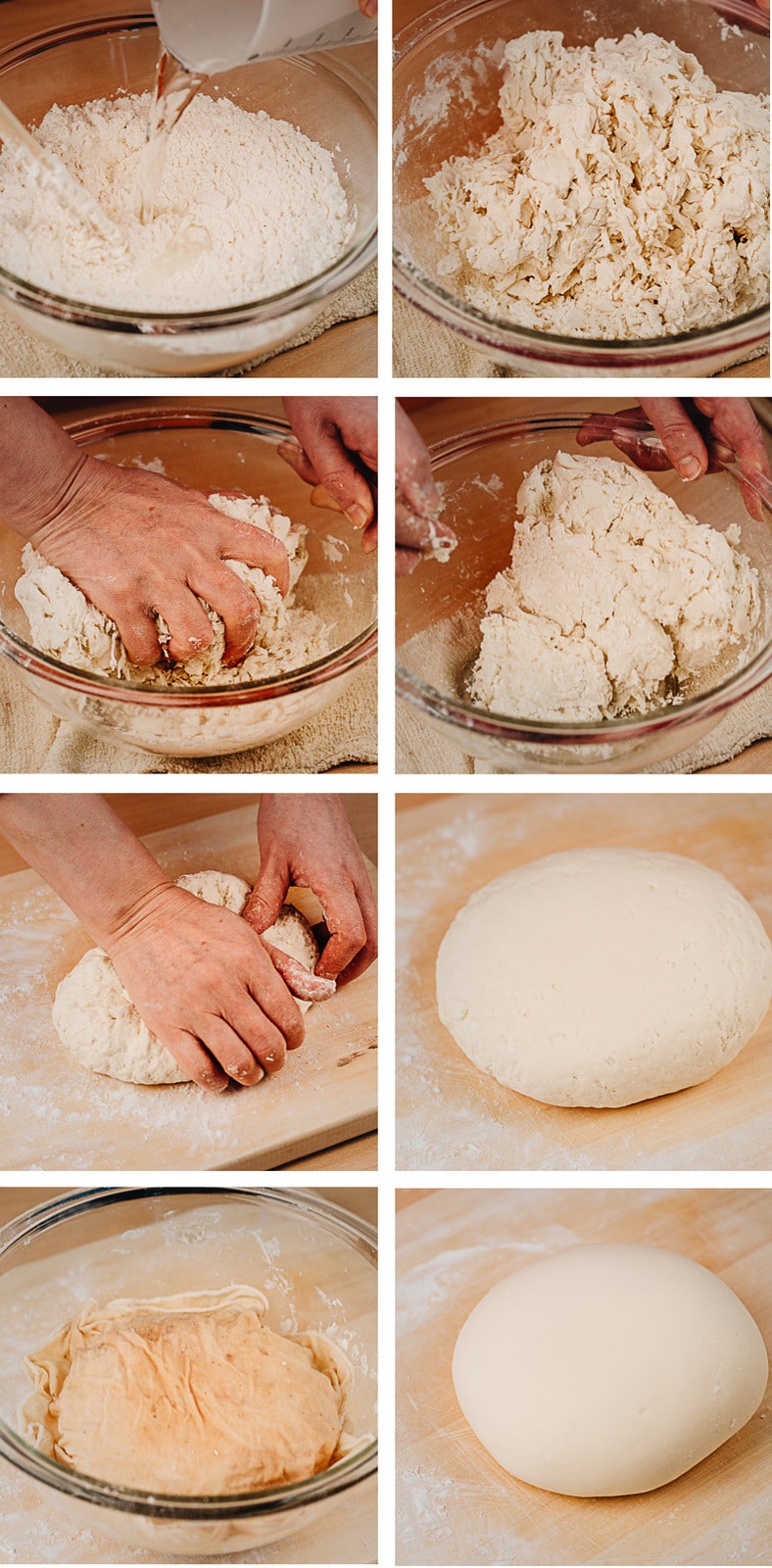
Let the dough rest enough. If you don’t have enough time, you can use the dough after it’s rested for 1 hour, at least. But the dough will be smoother and more springy if you let it rest longer.
Make tougher dough. To make the dough work, it’s better to make it a bit tougher than softer. If the dough is too tough and difficult to roll, let it rest for 3 to 4 hours; it will become soft enough to work with. But if the dough is too soft, it’ll be difficult to wrap and the dumplings won’t keep their shape.
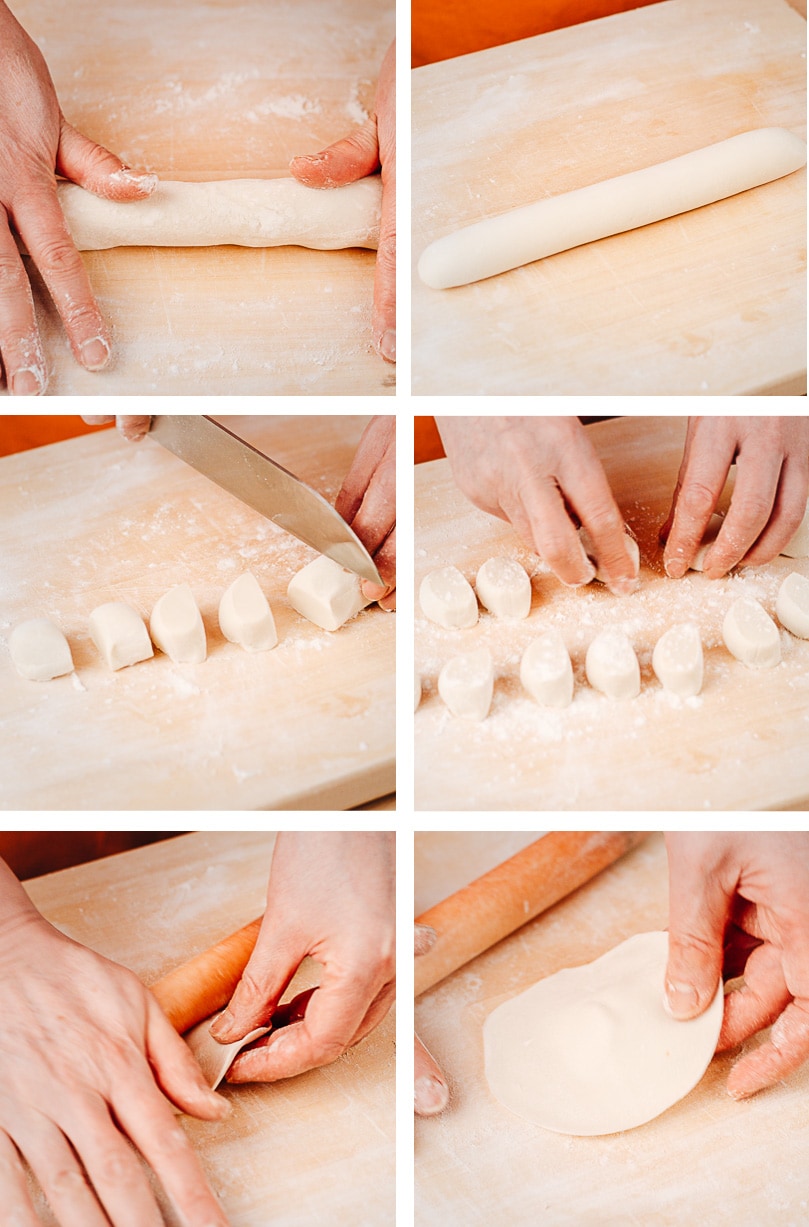
Move fast once the wrappers are ready. Because they dry out very fast, and it will become difficult to seal the dumplings later. If you work solo, you can make small batches of wrappers (10 to 12) each time and fold the dumplings soon after. Or, you can work as a team. One person can roll the wrappers while the other person simultaneously wraps the dumplings.
Cook or store the dumplings soon after they’re wrapped. The dumpling filling usually contains liquid from the vegetables, and this will make the finished dumplings moist. But if you let the dumplings sit too long, the moisture will be absorbed by the dough. This will cause the dumplings to fall apart during cooking. What you can do is to freeze each small batch you just wrapped before moving onto the next batch. Cook the frozen dumplings before servings, so their texture is as good as the fresh ones. Cook dumplings in small batches in a large pot. Cook 20 to 25 dumplings at a time, or fewer if the dumplings are larger, so the dumplings won’t stick to the pot. Never take your eyes off the pot when boiling the dumplings. This is the trickiest part. The whole boiling process will be less than 5 minutes. If you leave the dumplings to cook in the water a bit longer than they need, they will start to fall apart. Check the recipe below to see how to make sure the dumplings are cooked just right.
Here is a short cooking video about how to make Chinese dumplings.
What if I still want to cook potstickers?
That is OK, because the dough can be used for both boiled dumplings and potstickers. For cooking potstickers, the process from dough-making to dumpling-wrapping is exactly the same. You can refer to the “to cook potstickers” session in the recipe next page. When you cook potstickers, it won’t cause a big problem if the dumplings aren’t sealed well. However, I still suggest you seal them carefully. If they fall apart during cooking, the liquid will spill and evaporate, and the finished potstickers won’t be as juicy or moist. Also take note, this dough is not for steamed dumplings. For cooking steamed dumplings, you should use hot water to make the dough, so it will be tender after steaming. See my recipe for making steamed dumplings here.
More delicious dumplings recipes
How to Make Chinese Dumpling Sauce How to Make Steamed Dumplings from Scratch Mom’s Best Pork Dumplings with Cabbage Chinese Beef Dumplings Homemade Vegan Dumplings Mom’s Best Lamb Dumplings Carrot Dumplings
If you give this recipe a try, let us know! Leave a comment, rate it (once you’ve tried it), and take a picture and tag it #omnivorescookbook on Instagram! I’d love to see what you come up with. Cheers, friends!