An introduction to plain congee
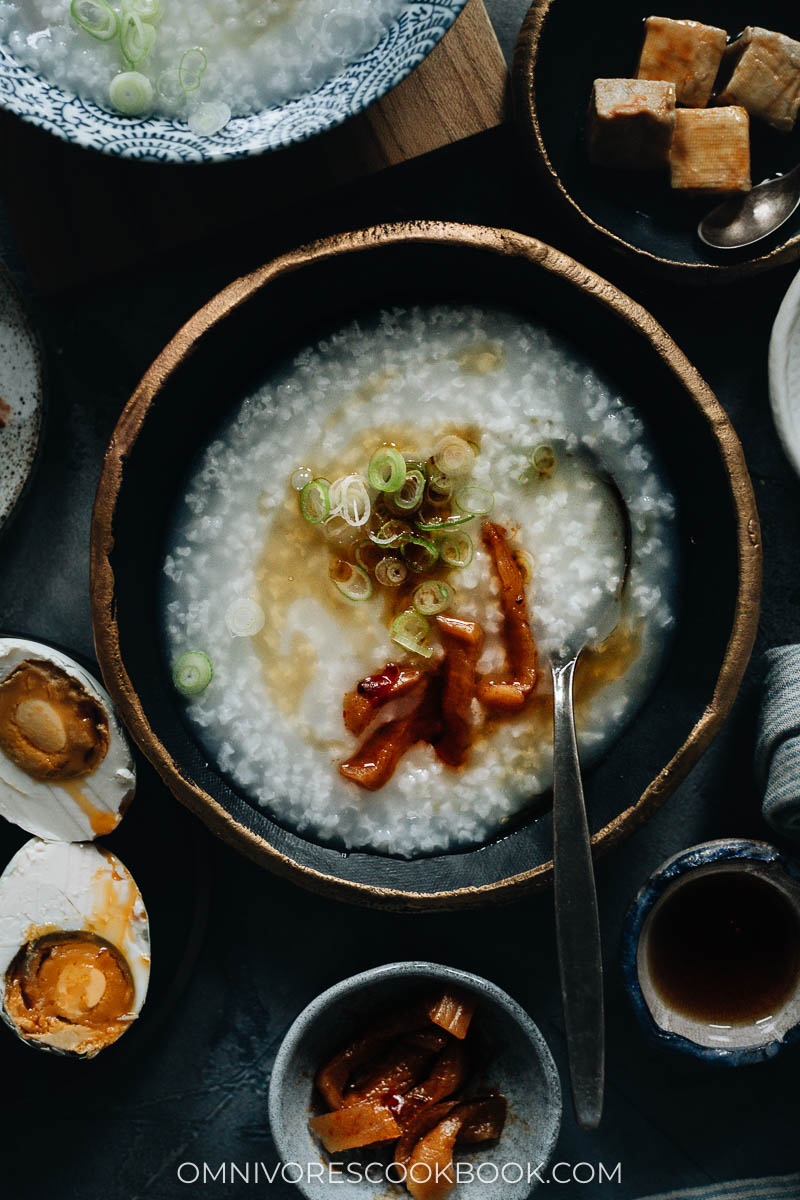
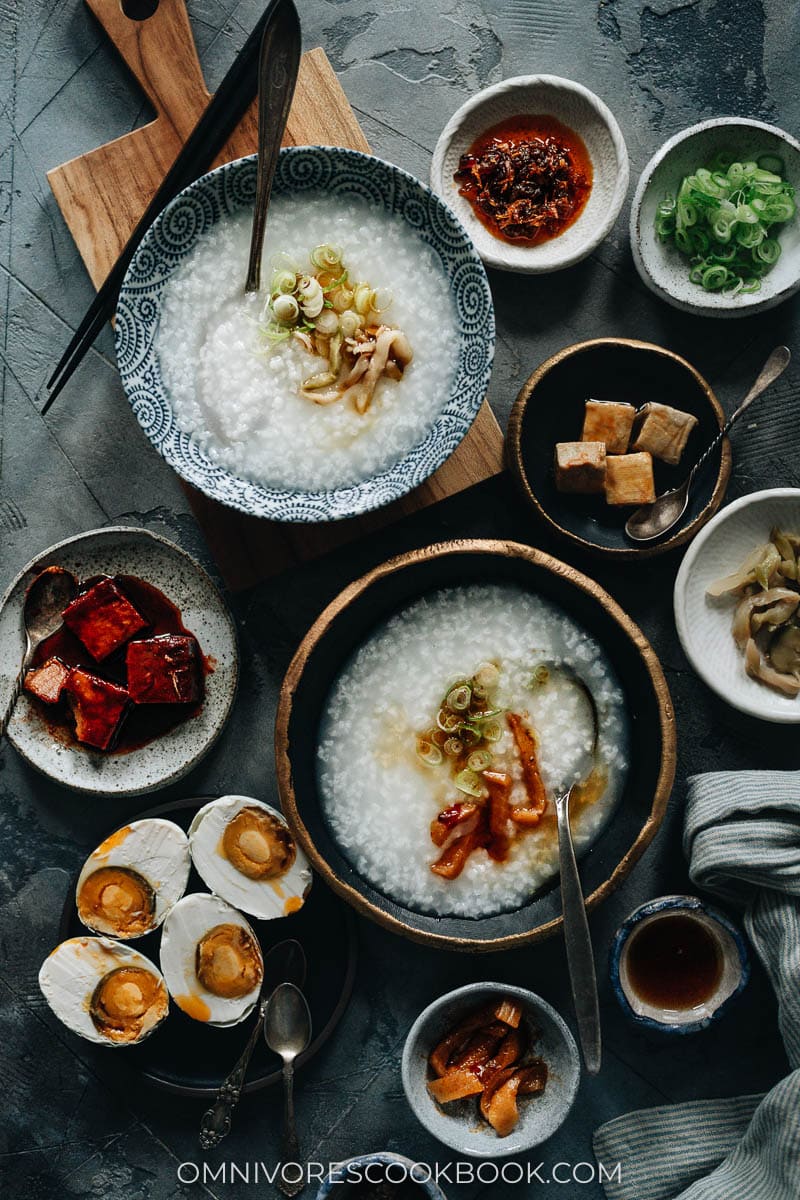
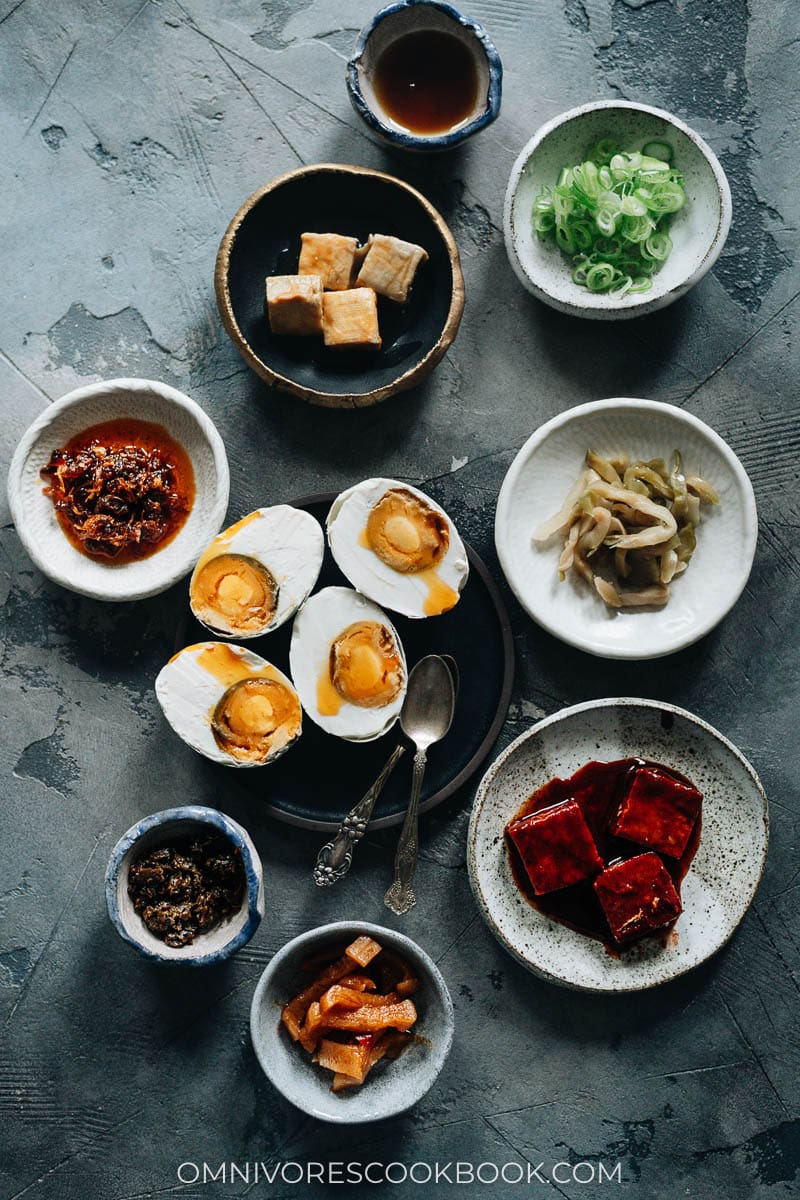
Growing up in Beijing, white plain congee appears on our dinner table just as often as steamed rice. It is usually served as a side dish that compliments the other mains, such as stir fried veggies and braised meat. I consider the function of congee to be half soup and half starchy staple. Because a full Chinese meal usually contains three dishes and one soup (三菜一汤) with a starchy staple (rice, noodle, bread etc). The soup is especially important because we love to wash down the “dry” food with something runny. The congee is a convenient way to add a soup without too much effort or cost. The plain congee itself is very simple and humble, usually only containing rice and water. Unlike many Western-style congees I’ve seen after moving to the US, our daily congee does not use chicken or other types of broth, which is considered a luxury in China (most broths are homemade and not store-bought). And we usually add a few small dishes on the side, such as pickles or salted duck eggs, to add flavor to the congee.
How to make plain congee
What type of rice to use
My favorite rice to use for congee is short grain rice. It creates a creamy and starchy texture that I love. You can use medium grain as well, which produces a very similar result. I would avoid long grain rice (including jasmine rice). It yields a goopy and mushy result with more starch released into the water and the grain breaking down, but the texture is much thinner.
Two cooking methods
Making congee is super simple although it does take more time than making steamed rice. You can either use a regular pot to cook it on the stovetop or use an Instant Pot (or pressure cooker). Personally, I prefer to cook my congee in the Instant Pot. It is hands-off and it generates a better result. NOTE, it won’t really save time to use an Instant Pot. Although you only use a fraction of the cooking time (25 minutes instead of 1 hour), it takes a while to add and release the pressure. So you’ll end up using the same amount of time as you would on the stovetop. The main appeal of using an Instant Pot (or any pressure cooker) is that it’s very hands-off and you don’t need to monitor it during the one-hour span. Unlike the stovetop method, where you need to keep an eye on it to prevent it from spilling and scorching the bottom. Plus, pressure cooked congee will have a slightly starchier result, if that’s the texture you’re looking for. Either way, you will need to rinse the rice prior cooking, then simmer the rice with water until it’s fully cooked.
Water ratio
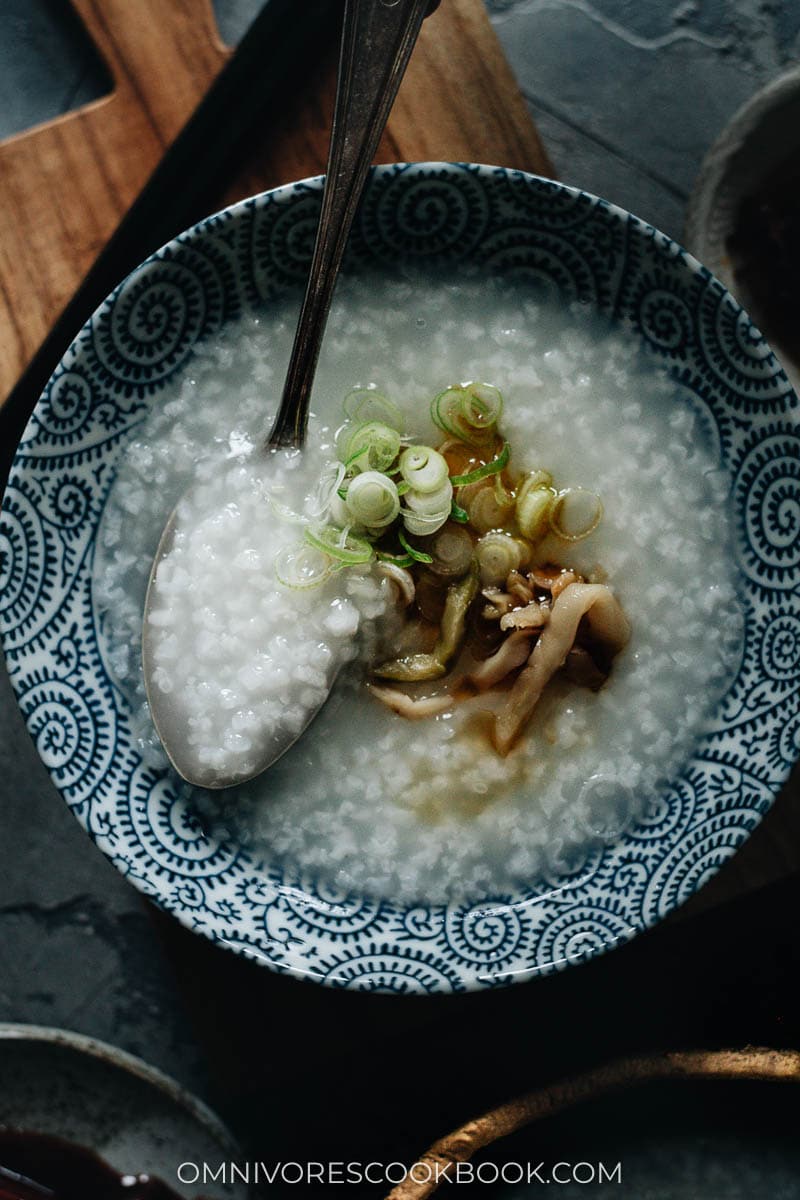
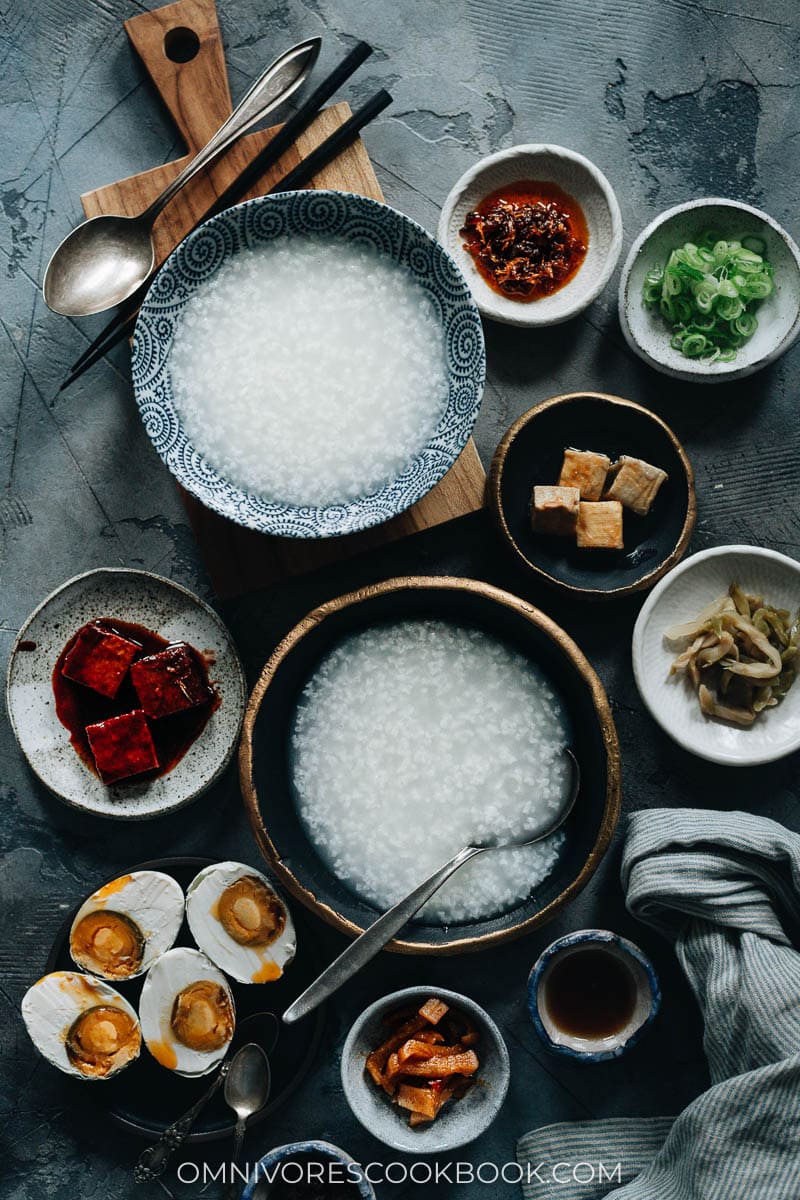
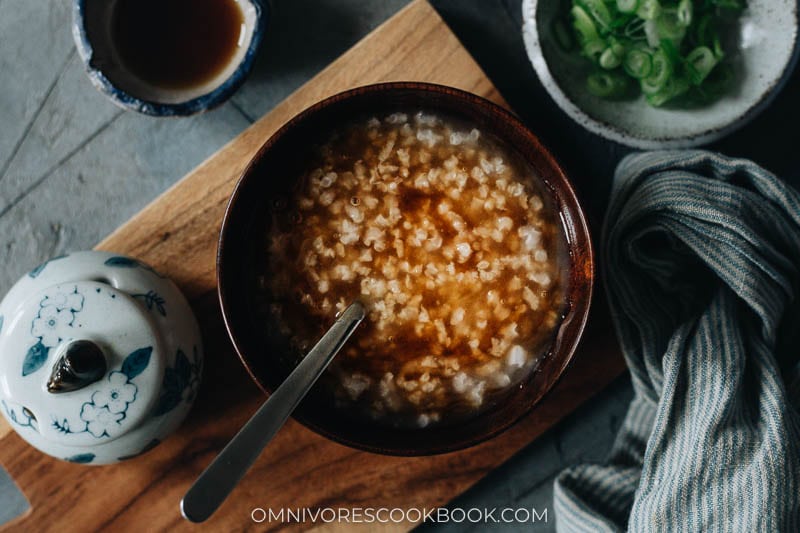
Everyone has their own preferred texture when it comes to congee. Personally, I like mine thin and runny if I plan to serve it as a soup. Or medium-thick if I want it a bit more prominent with a few toppings. On the other hand, you might like your congee very thick and cozy, like a bowl of creamy oatmeal. In the recipe below, I listed three options – thick, medium-thick, and runny. NOTE: pay attention at the end of the cooking if you’re using the stovetop method. The congee will thicken up quite a lot towards the end and you need to frequently stir it to prevent the bottom from scorching. Especially if you cook the thick type of congee, you should stir constantly at the end (just like when cooking oatmeal).
Topping options
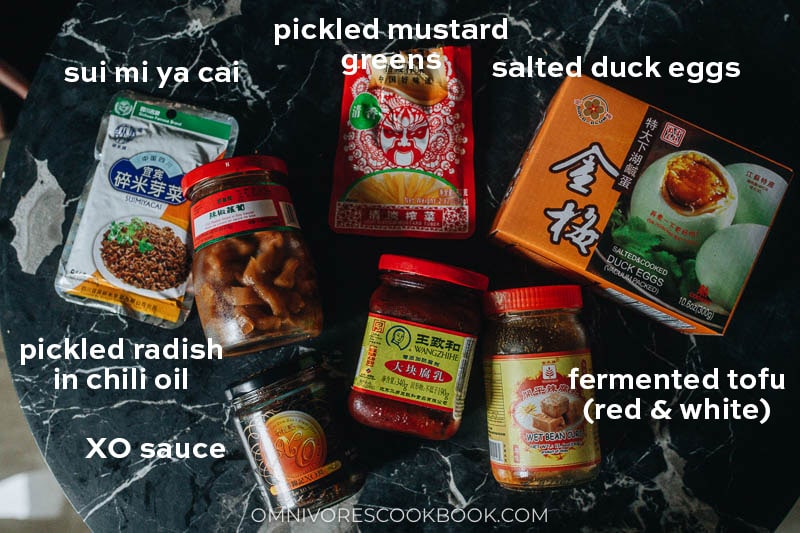
I’ve shared a few topping options I like the most. They’re more for inspo than a specific prescription and you’re very welcome to top it with whatever ingredients you love the most. Because I’m originally from Beijing, my family’s favorite congee toppings include salty pickles, fermented tofu (quite funky and some people call it Chinese blue cheese), and salted duck eggs. All of them are very rich and salty, but would pair perfectly with plain congee. NOTE: The pickles I serve with the congee are usually the salty type, such as pickled mustard tubes, pickled radish in chili oil, and Sui Mi Ya Cai. You can also top the congee with XO sauce, which is more of a southern Chinese style. For a thicker congee, it’s also great to add soy sauce, chili oil (or sesame oil), and fried shallots (similar to how I make savory oatmeal). Another option is to sweeten your congee. It was one of my favorites when I was a kid. You can use regular sugar, brown sugar, or any other type you prefer.
Afterthoughts
If you’re looking for a fancier congee, my seafood congee and the century egg congee and chicken might be great options. If you prefer to make a fancier congee, it’s totally OK to replace the water with chicken broth. In this case, you might consider to salt your congee once it’s done, drizzle a bit of sesame oil and serve it with some chopped green onions. You can also throw in some cooked meat (leftover rotisserie chicken or roast pork) to add volume. For me, the humble plain congee made with water and served with salted duck eggs gives me the ultimate comfort. Want to learn more about Chinese Cooking? Sign up for my newsletter to receive the 5-Day Chinese Cooking Crash Course and recipe update! If you give this recipe a try, let us know! Leave a comment, rate it (once you’ve tried it), and take a picture and tag it @omnivorescookbook on Instagram! I’d love to see what you come up with.
Other homestyle comfort food
Chinese Steamed Eggs (鸡蛋羹)Bean Sprout Stir FryHow to Make Steamed Dumplings from ScratchChinese Napa Cabbage with Glass NoodlesWonton Soup
Lilja Walter is a part of the Omnivore’s Cookbook team and worked closely with Maggie to develop and test this recipe.