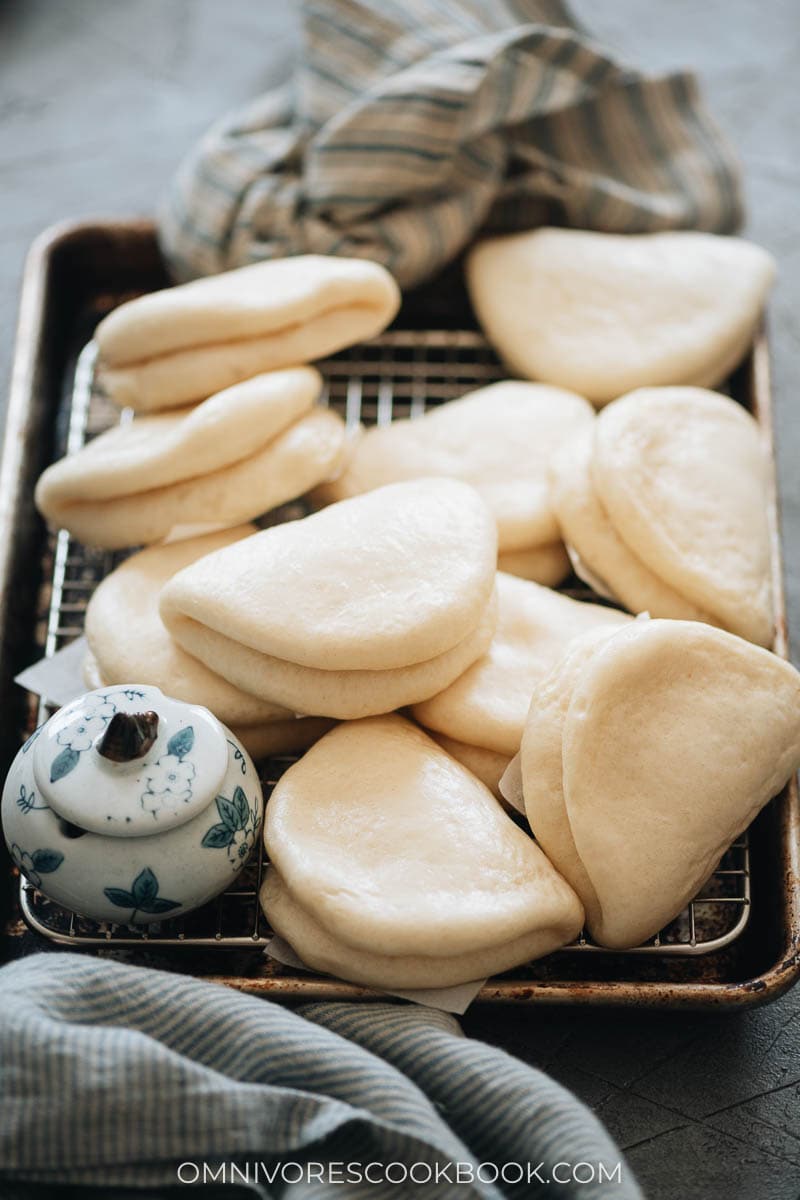
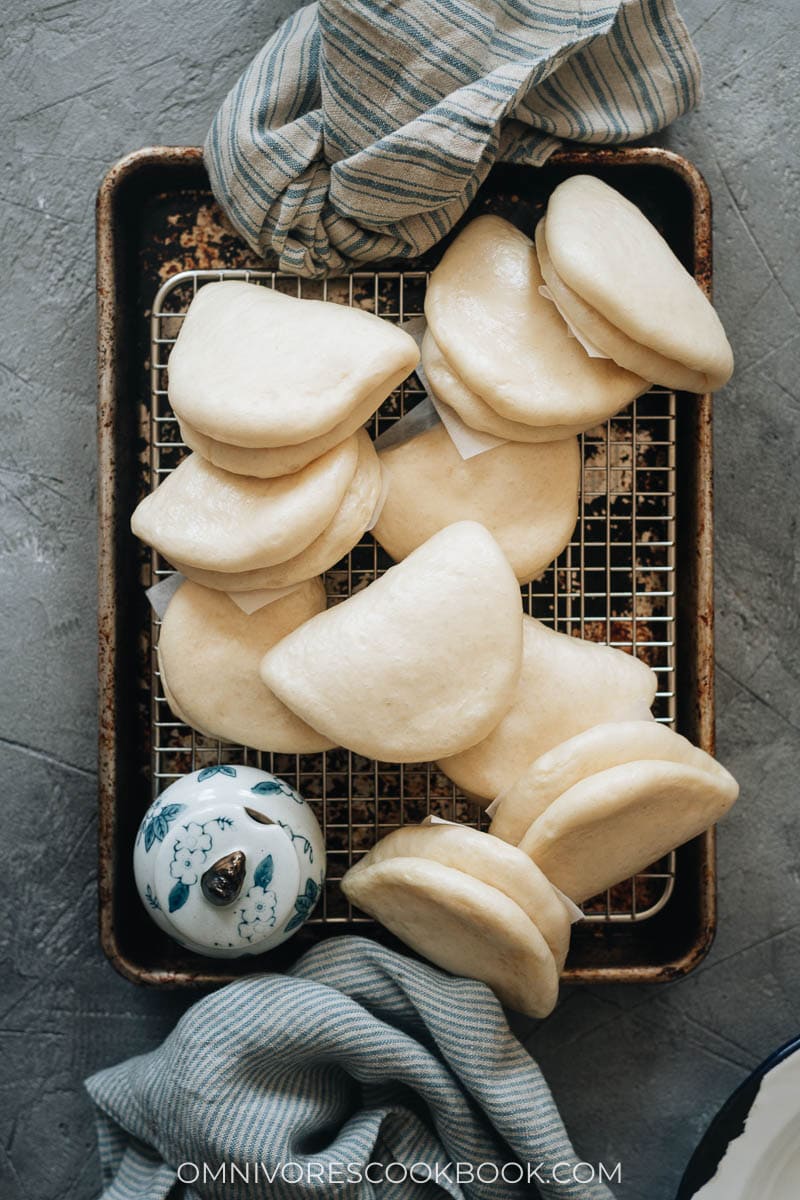
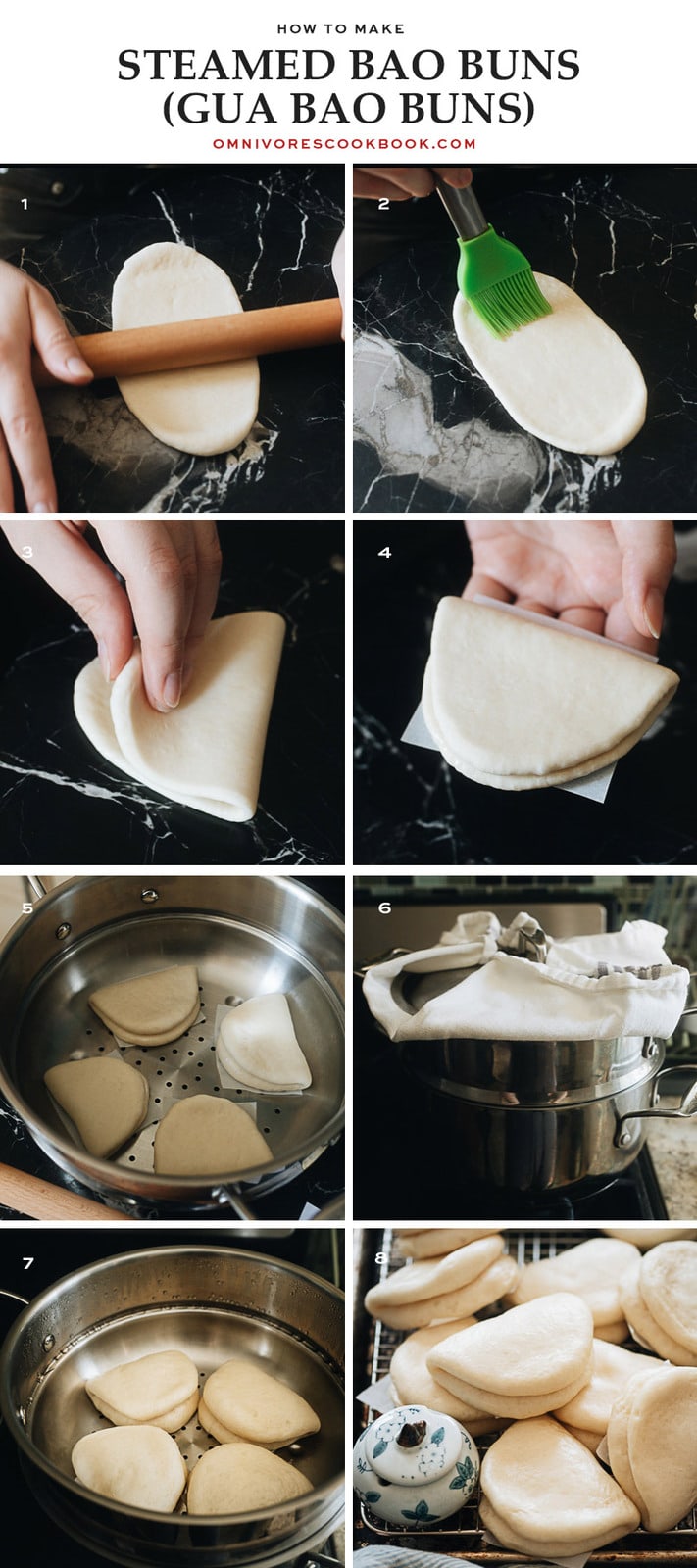
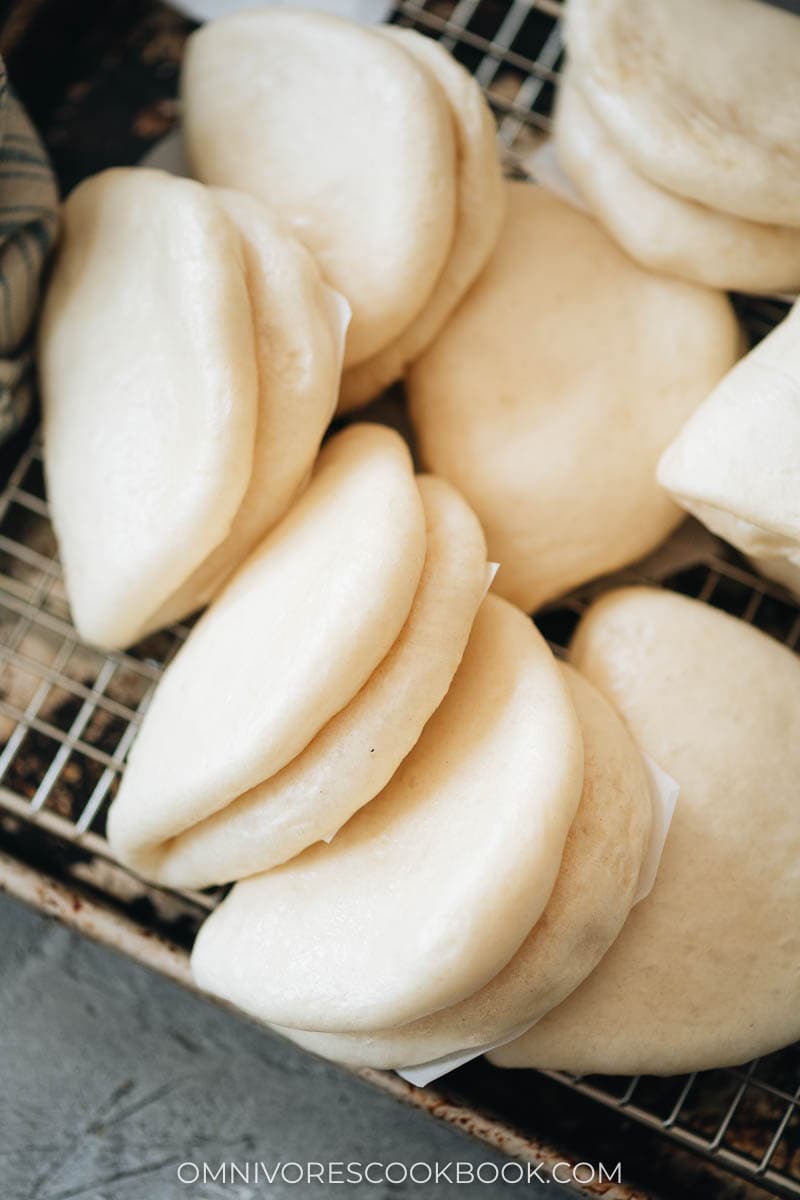
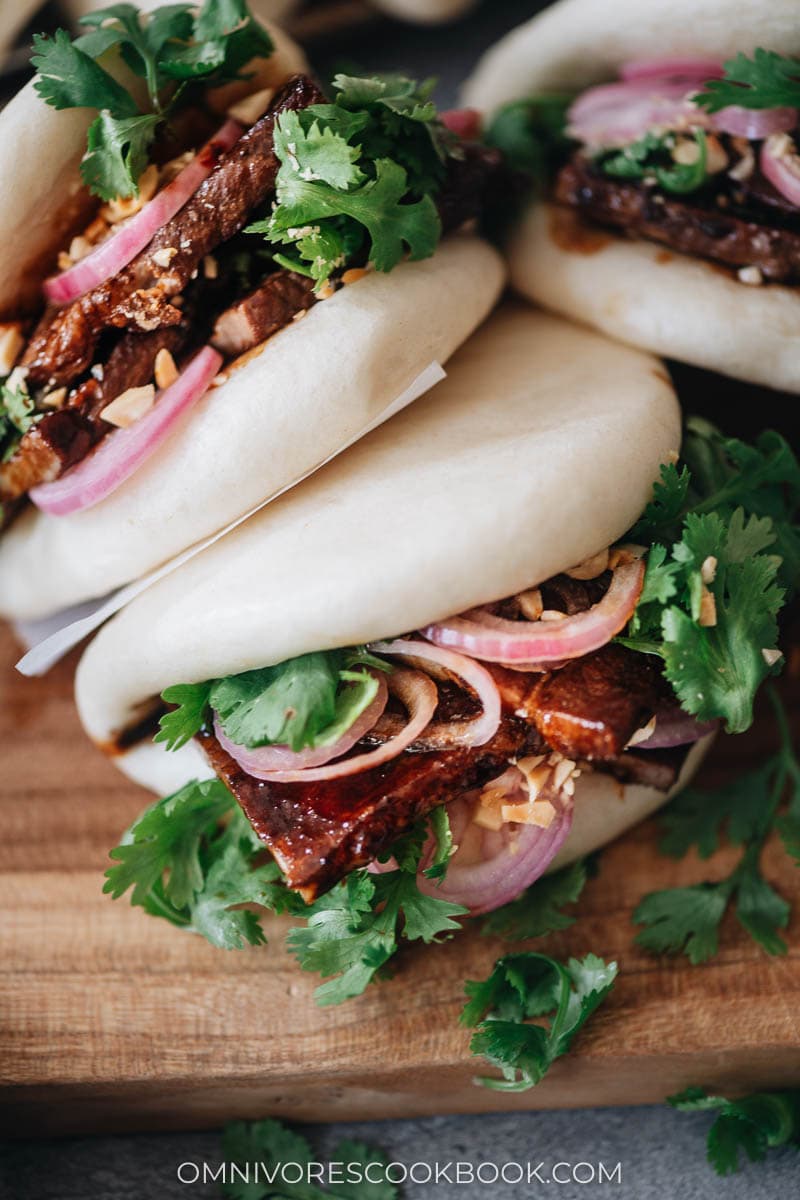
Bao buns are such a great thing to have around. I personally love making Gua Bao, and that’s where these bao buns come in. They are the essential ingredient for making gua bao, though plenty of other goodies can be stuffed into these buns. I love serving moo shu chicken and braised beef in the bao buns. You can get really creative with the fillings. For example, stuff the buns with Chinese fried pork chops and hot sauce to create a fancy restaurant-style sandwich. The light, fluffy texture of the bao buns comes from steaming them. Since they’re made from such simple ingredients, you should already have everything you need to make them in your pantry.
Bao Buns cooking process
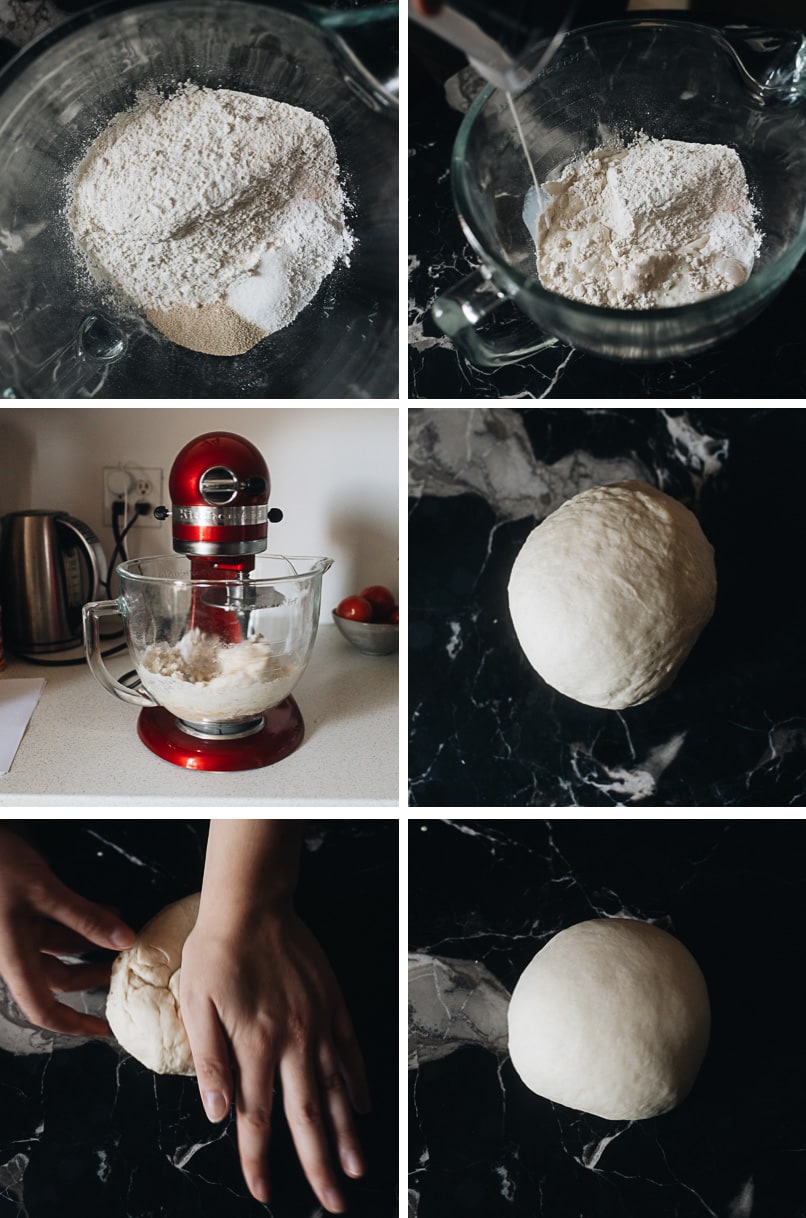
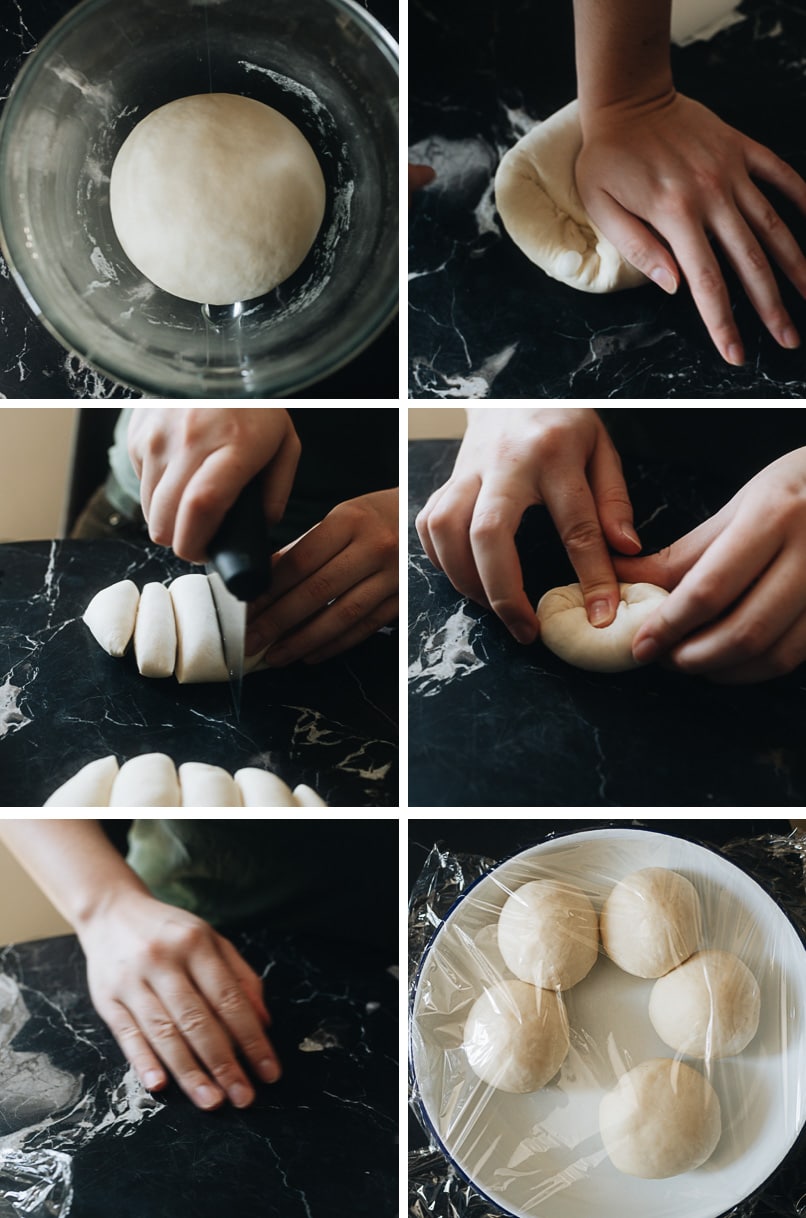
However, despite the simplicity of the ingredients, the process of making steamed bao buns can be a bit tricky. That’s why, when you look below, you’ll see I’ve prepared super-detailed step-by-step instructions, complete with photos and a video, so you’ll feel like I’m with you in your kitchen making these bao buns. I’ve also attached notes for troubleshooting below.
Part 1 – prepare the dough & 1st rise
Part 2 – divide the dough
Part 3 – form the buns, 2nd rise & cook
The keys to making bao buns and troubleshooting
Some parts of the buns have brown and yellow spots after steaming and the texture is chewy
This is a very common issue for steamed buns and it’s usually caused by a sudden increase and/or decrease in pressure while steaming. To avoid it, you should:
Slowly heat up the bun dough in the steamer. Do not boil the water in the steamer and add the steaming rack directly. Instead, place the steamer over the water, then start cooking. So the temperature of the steamer rack will rise gradually.Use medium or medium-low heat during steaming. High heat and rapid steam might also cause the buns to scorch.Rest the buns without lifting the cover for at least 10 minutes after cooking. This is very important. So the pressure in the steamer will drop gradually.
The buns deflate after steaming
This is usually caused by over-proofing. If the dough has risen too far, it will expand then collapse during cooking. The tricky thing is, the proofing time can vary quite a lot depending on your environment and the ingredients you use (e.g. how fresh your yeast is). Our recipe uses instant yeast instead of active dry yeast to prevent this issue. However, you will still need to keep an eye on the dough and use your judgement and experience to decide if the dough has risen enough. For the 2nd rise, if you’re taking time to shape and prepare the dough, you can store the rest of the dough covered in the fridge to prevent over-proofing.
The buns have expanded too much and look weird
This issue can also be caused by over-proofing. The buns will come out extra fluffy and this doesn’t affect the taste, but they will not look as pretty. You can refer to the above paragraph for the solution.
Afterthoughts
Making perfect bao buns does require a bit of patience and some practice. But the result is very rewarding. Once you make them, you’ll find countless ways to put them to use. Turn them into sandwiches with leftover meat from dinner and fresh veggies and take them for lunch. Add some quick pickled shallots to them for more zing. Trust me, you’ll find ways to make bao buns a staple in your kitchen. Because bao buns can be a bit of a process to make, you can (and should!) make more. They are fridge- and freezer-friendly so you can have a stash of them ready to go. Then it will be easy to enjoy bao buns whenever the craving strikes. Look for my recipe for Gua Bao to see one of the best ways to enjoy your bao buns!
How to use bao buns
Try out these recipes below for the stuff to make fancy Asian sandwiches in your own kitchen!
Char Siu (Chinese BBQ Pork, 叉烧肉)Chinese Bang Bang Chicken (棒棒鸡)Chinese Pickled Peppers (Quick Pickled Pao Jiao)Crispy Chinese Duck BreastMoo Shu VegetablesHomemade Hoisin Sauce
Want to learn more about Chinese Cooking? Sign up for my newsletter to receive the 5-Day Chinese Cooking Crash Course and recipe update! If you give this recipe a try, let us know! Leave a comment, rate it (once you’ve tried it), and take a picture and tag it @omnivorescookbook on Instagram! I’d love to see what you come up with.
More homemade dim sum recipes
Baked BBQ Pork Buns (Char Siu Bao)Chinese Scallion Pancakes (葱油饼)Pineapple Buns (Bolo Bao)Wonton SoupChinese Turnip Cake (Lo Bak Go, 萝卜糕)
Lilja Walter is a part of the Omnivore’s Cookbook team and worked closely with Maggie to develop and test this recipe.