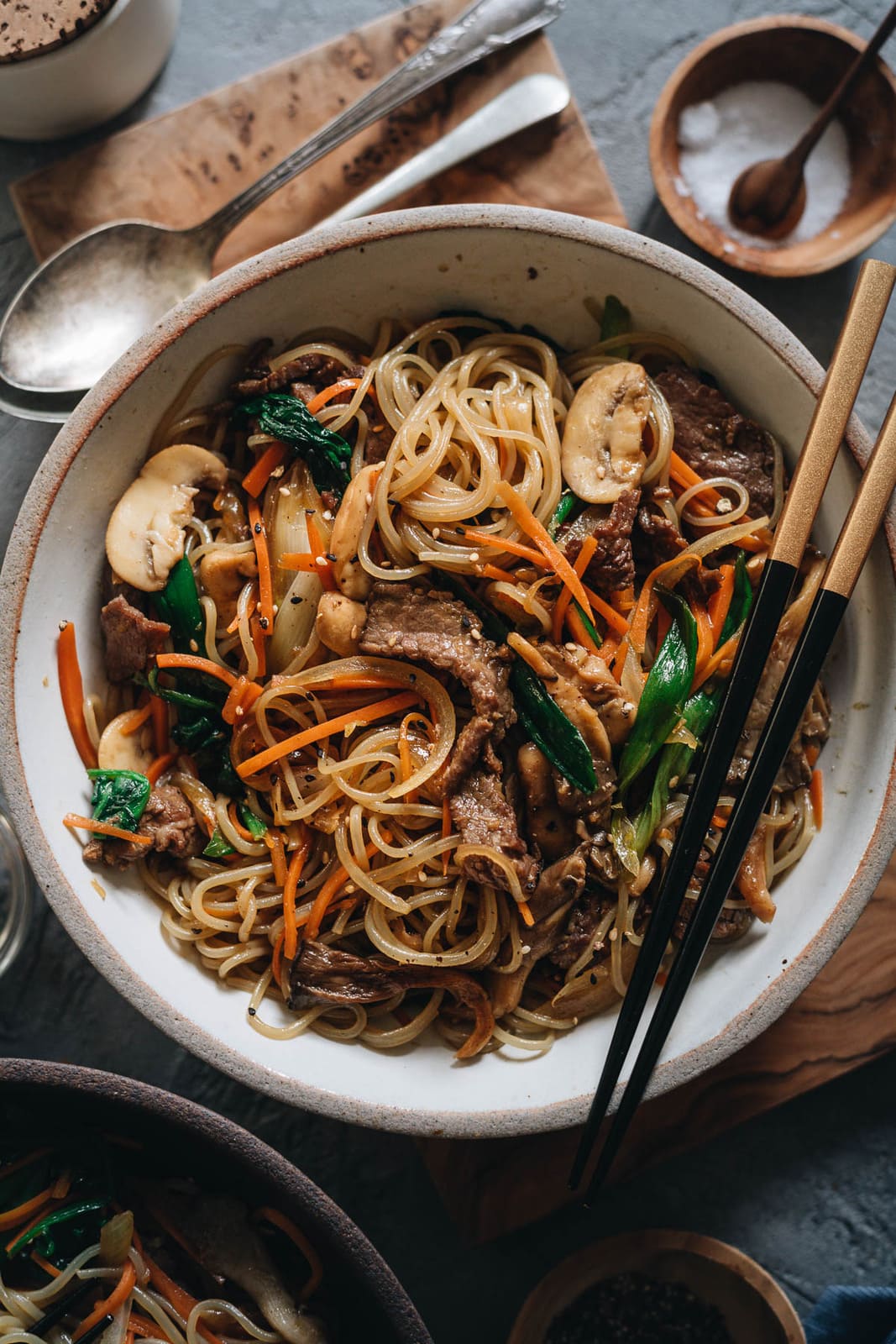
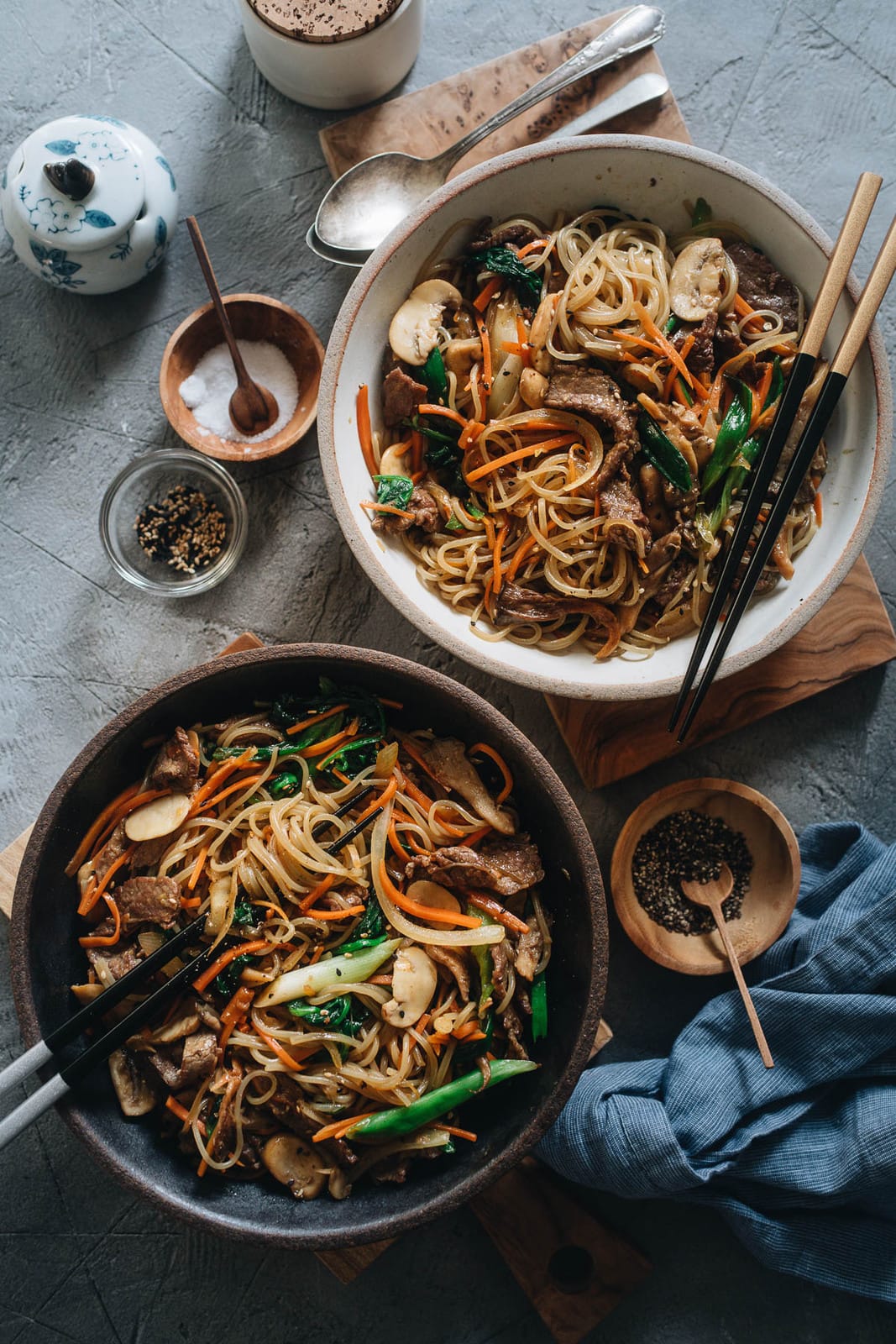
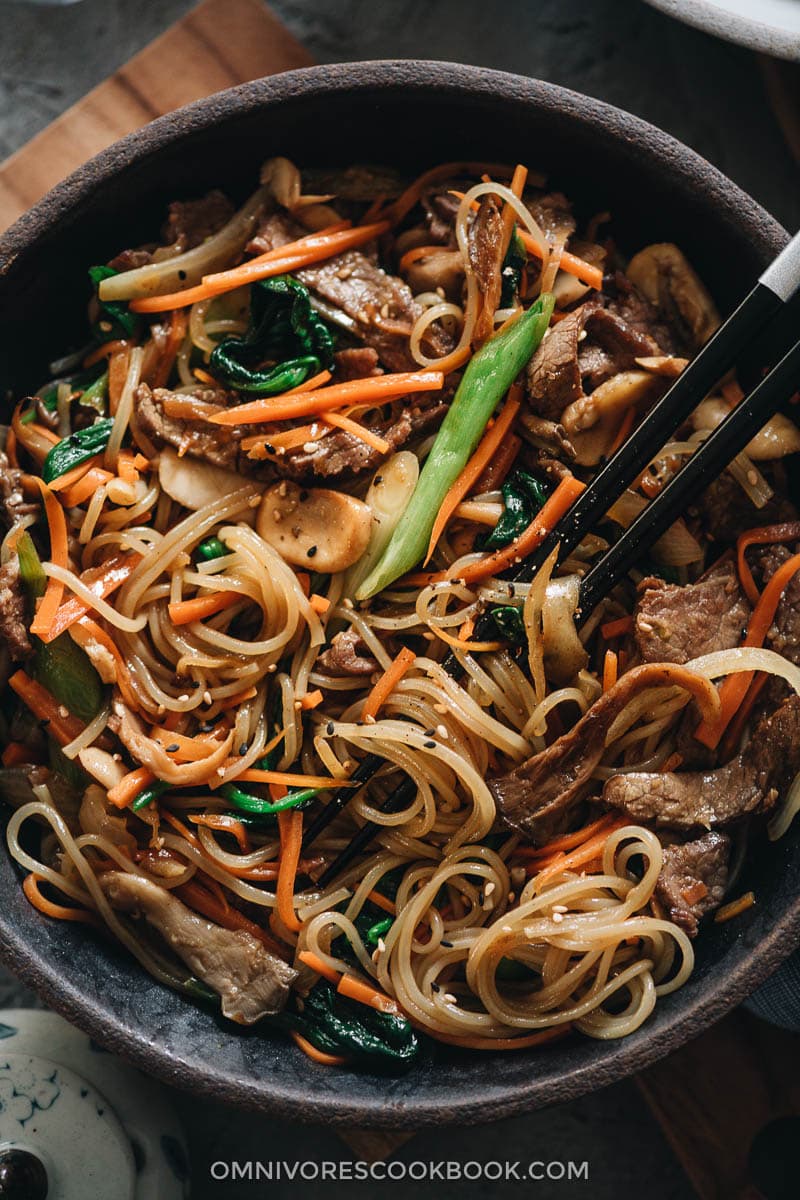
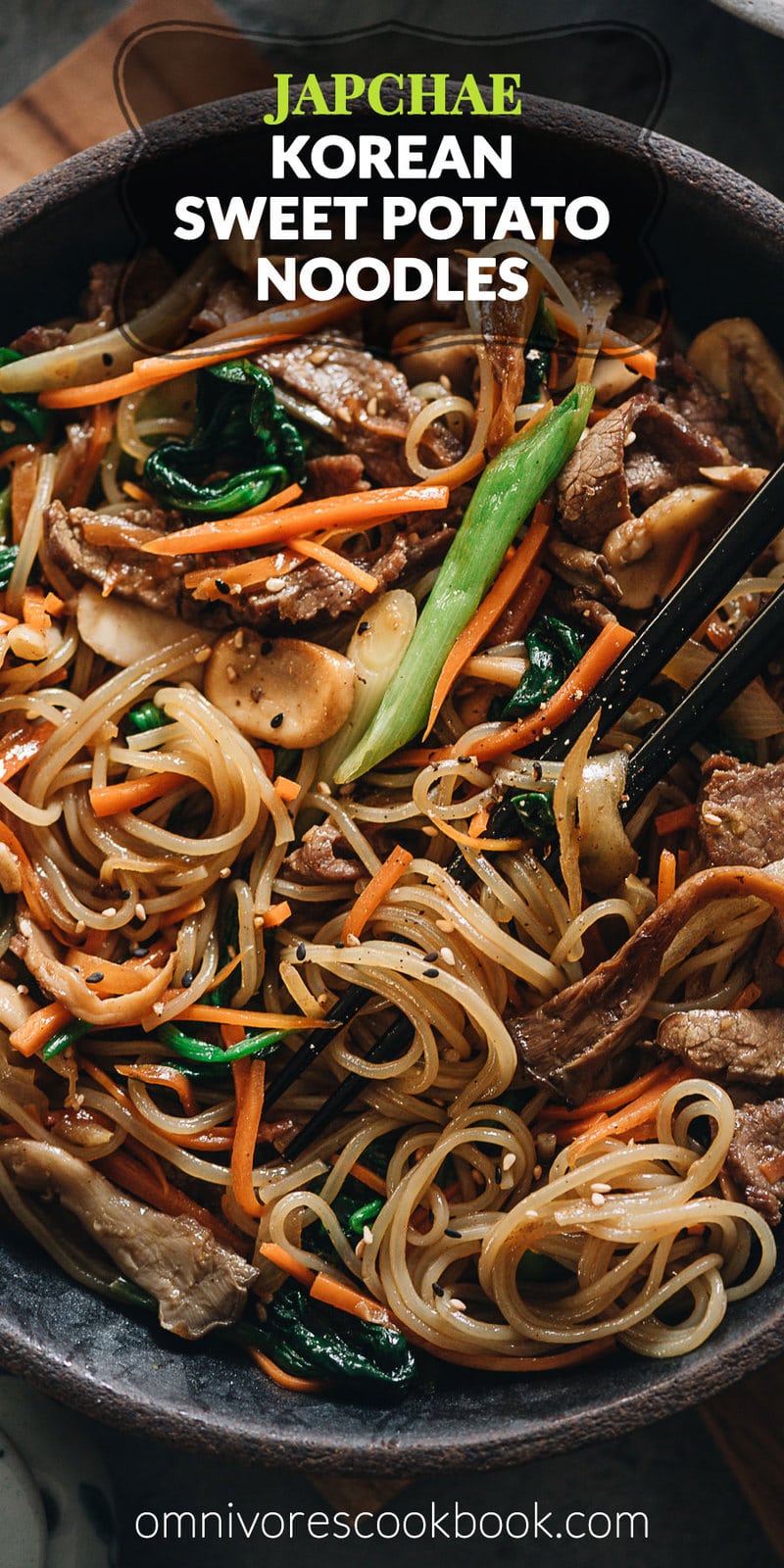
Almost every week or two, you’ll find some Korean dishes on our dinner table. My husband Thomas is American, but he was born in Korea and lived there until he was 2. He told me that his nanny started sneaking kimchi into his food after he was born, until his mom found out and furiously banned it from his diet. But the damage was done! Since then, he has always had a keen taste for kimchi and all kinds of Korean food. When we were dating, he made kimchi fried rice with melted cheese on top for me and it has been one of my favorite dishes since then. We always have a giant jar of kimchi in the fridge, no matter whether for cooking or snacking. Some of our favorite dishes are Korean Army Stew (Budae Jjigae), Kimchi Stew with Tofu and Meatballs, Kimchi Pork Steamed Bun, Kimchi Chicken Quesadillas, and Kimchi Pancakes, Today I want to share another delicious Korean dish we love – Japchae, or Korean sweet potato noodles.
Why this recipe
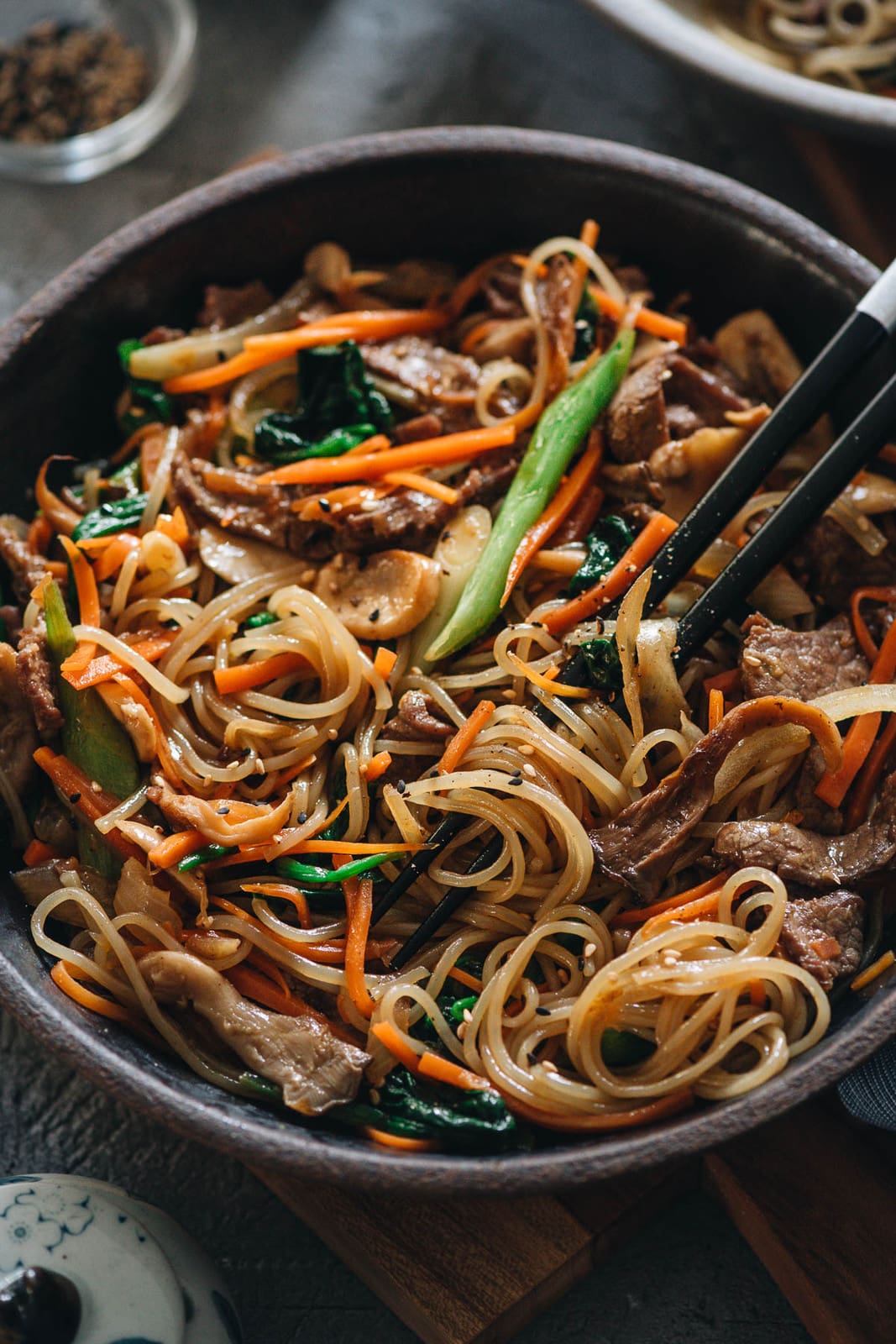
Japchae is usually made with various veggies, a protein (beef, pork, or chicken), and sweet potato noodles tossed in a sweet savory sauce. Traditional japchae recipes usually cook and season each component separately, then mix all the cooked ingredients together with the sauce. The goal is to cook each ingredient to the perfect degree, to ensure the best taste and texture. I love a properly cooked Japchae. But the process is quite tedious and time consuming. That’s why I created this easier version, based on Maangchi’s recipe, a solid Korean recipe source that I check out every time when learning a new dish. In this recipe, I:
Used one sauce that doubles as a marinade and noodle sauce. Cooked multiple ingredients in one pan to reduce the cooking time. Maintained the ingredients and flavor profile of the traditional Japchae, so you can use this easier approach without compromising on taste.
The goal of this recipe is to help you recreate the Japchae in your home kitchen with the easiest approach. If you’re looking for the most authentic and traditional method, I highly recommend you check out Maangchi’s recipe.
Cooking notes
1. Sweet potato noodles
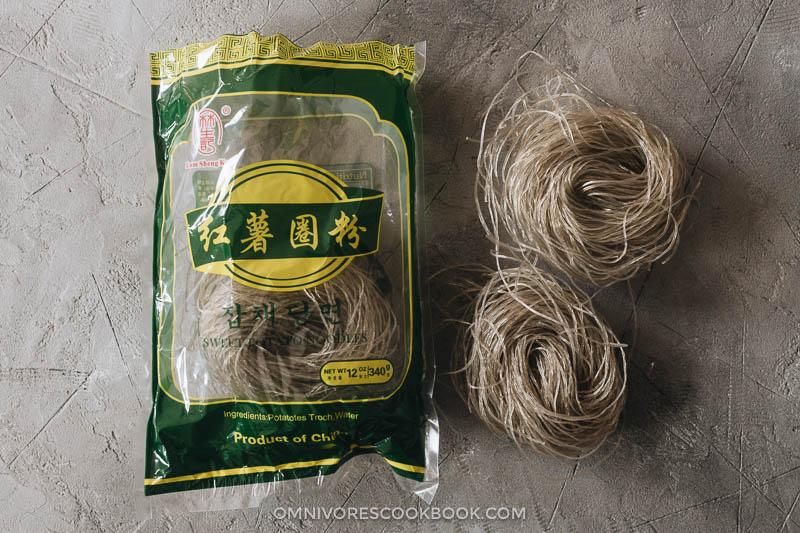
Sweet potato noodles are a type of glass (vermicelli) noodles made from sweet potato starch. They are gluten-free by nature. The noodles are usually sold in dried form and you’ll need to boil them (or soak them) to rehydrate before using. Once rehydrated, they have a chewy and silky texture with a very mild taste. The noodles soak up any flavor in your noodle sauce, making them perfect for making fried noodles and noodle soup dishes.
2. One word on the protein
You can use different types of protein to make Japchae. For example, chicken breast, chicken thigh, pork loin, and shrimp are perfect ingredients for this dish. You can also use tofu or skip the protein altogether to make this dish vegan. If you’re using meat, it’s very important to cut the slices very thin, and sear them with a very hot pan and with plenty of oil in a short period of time, to sear the meat until just done. So the meat will remain juicy. Since Chinese cooking always adds cornstarch to the meat marinade to keep the meat tender, I’m not entirely comfortable cooking stir-fried meat without cornstarch. But to keep the recipe authentic, I didn’t add cornstarch to the beef marinade in this recipe. The beef turned out a bit chewier than my usual beef stir fry, but was still delicious.
3. One sauce, two purposes
I noticed the noodle sauce in traditional japchae is very similar to the meat marinade. In this recipe, I mixed one sauce and used part of it as the marinade, and the rest for the noodles. This simplifies the recipe and makes cleanup easier.
4. Prep
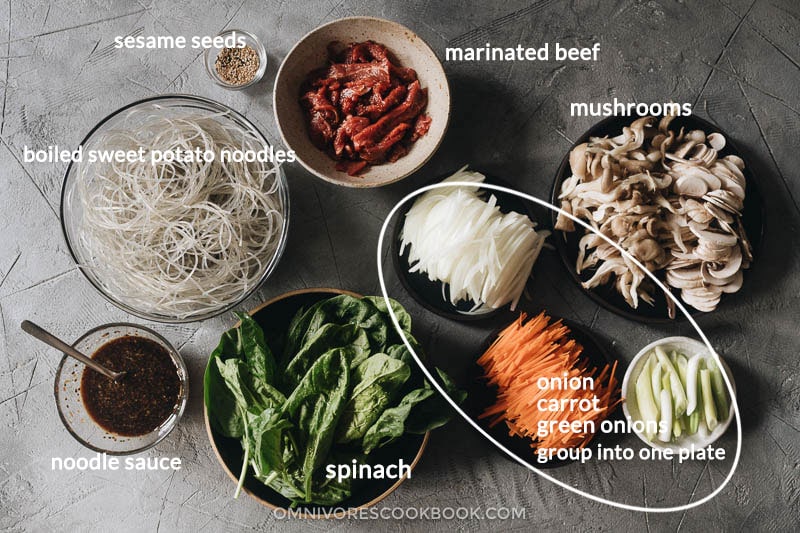
It’s very important to cut and prepare all the ingredients before starting the stir-fry, so they are ready to go when you’re ready to cook. When I prepare ingredients for a stir fried dish, I usually group the ingredients on the same plate according to the recipe. So I can use fewer bowls to declutter my countertop. Plus, it makes it faster to add ingredients in different steps. In the image below, I put the veggies on different plates, so you can see how I cut them. But in reality, you can group some of them together (according to my picture), so it makes the prep easier and faster.
5. Cooking Process
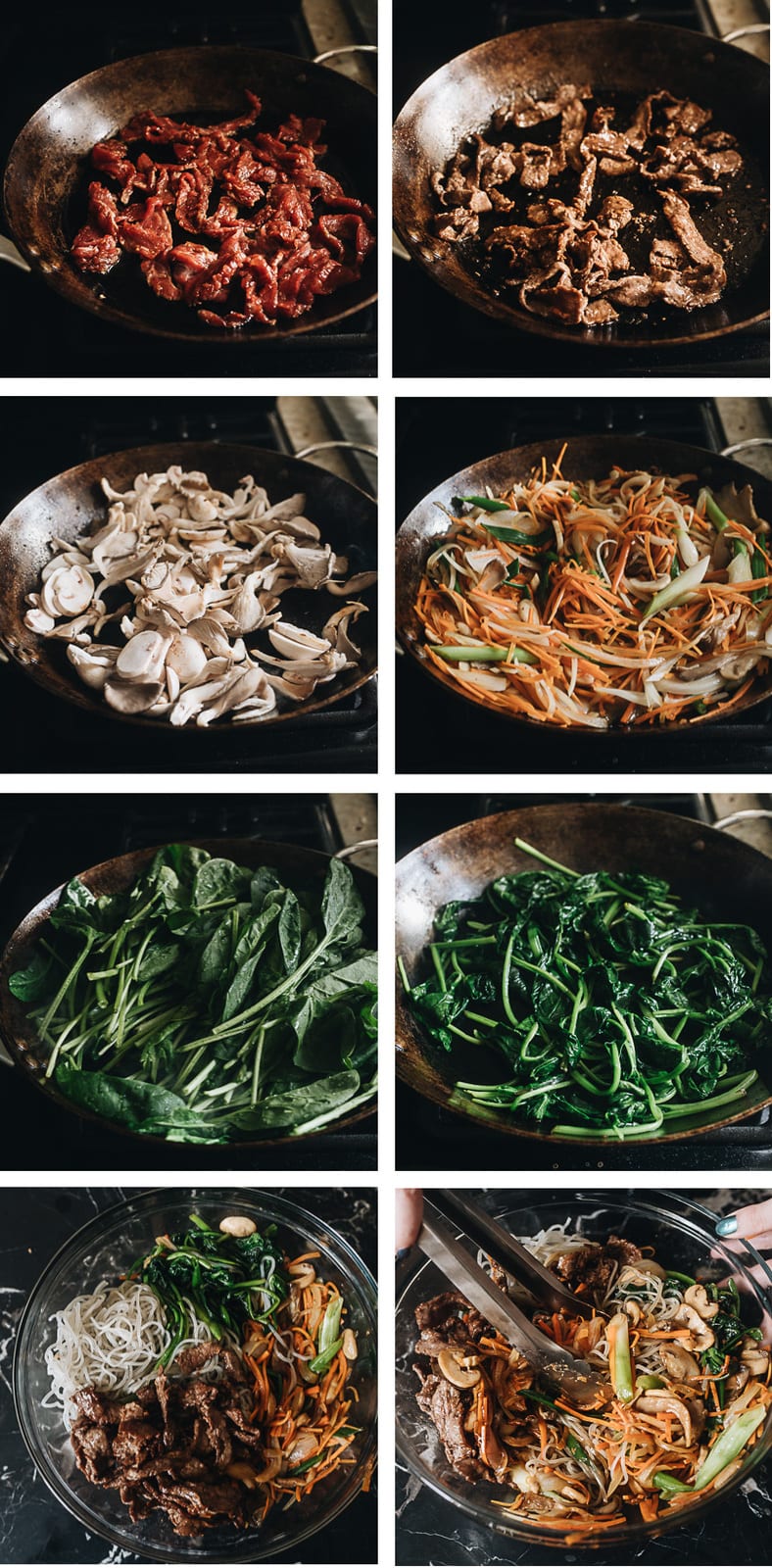
Making Japchae is very easy. You need to prep everything:
Mix the sauce, use some of it to marinate the beef. Boil the noodles and drain them. Cut all the ingredients.
Once you’re done prepping:
Saute the beef. Saute the mushrooms, then the onion, green onions, and carrots together in one pan. Cook the spinach. Toss the cooked noodles, beef, and veggies together with the rest of the sauce.
That’s it!
Afterthought
I hope you enjoy this easier Japchae recipe! The dish holds up well and can be prepared ahead and served later. I always prefer to make a bit more and save the leftovers for lunch the next day. The cooking is really simple once you try it. Do feel free to replace the veggies with whatever type you have on hand. Peppers, baby bok choy, bamboo shoots, and napa cabbage will work well with this flavor profile.
More delicious noodle recipes
Char Siu Chow Mein Chicken Udon Soup Korean Army Stew (Budae Jjigae) 15-Minute Chicken Chow Fun (Chicken Fried Rice Noodles) Chinese Beef Chow Mein Easy Singapore Noodles
If you give this recipe a try, let us know! Leave a comment, rate it (once you’ve tried it), and take a picture and tag it @omnivorescookbook on Instagram! I’d love to see what you come up with.