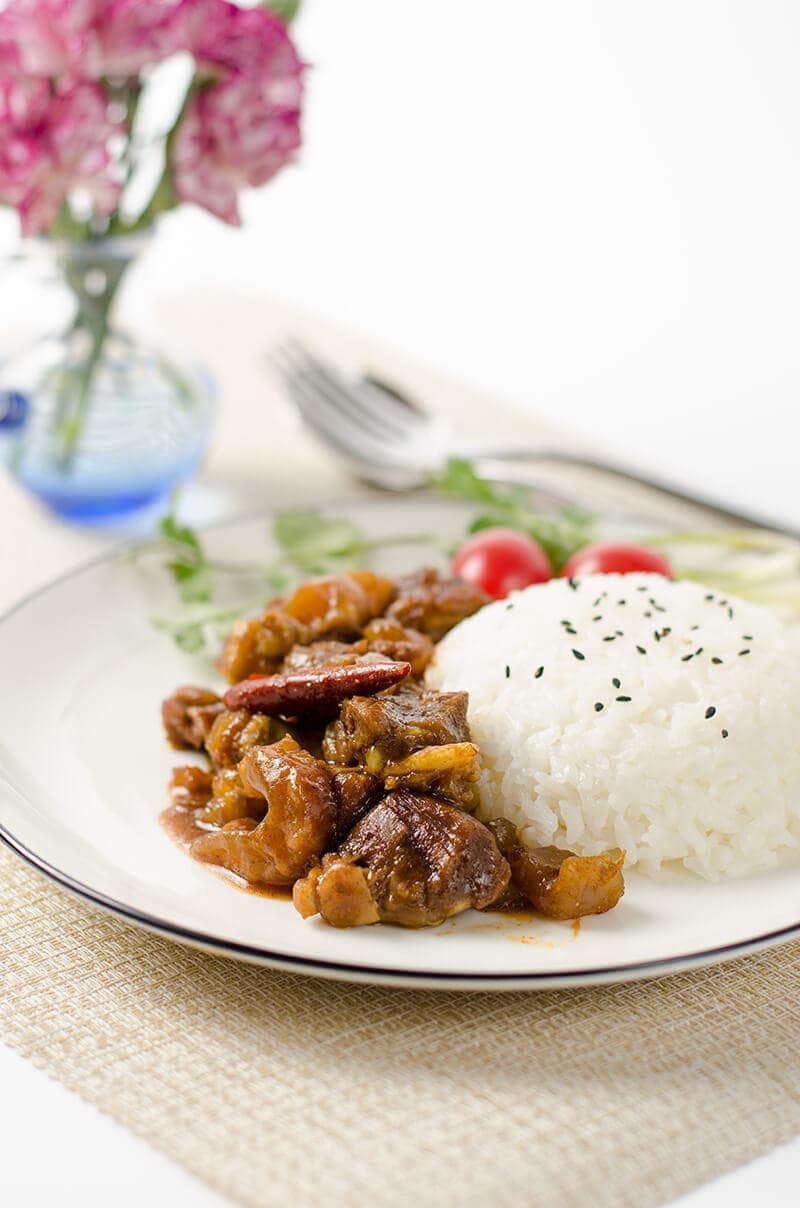
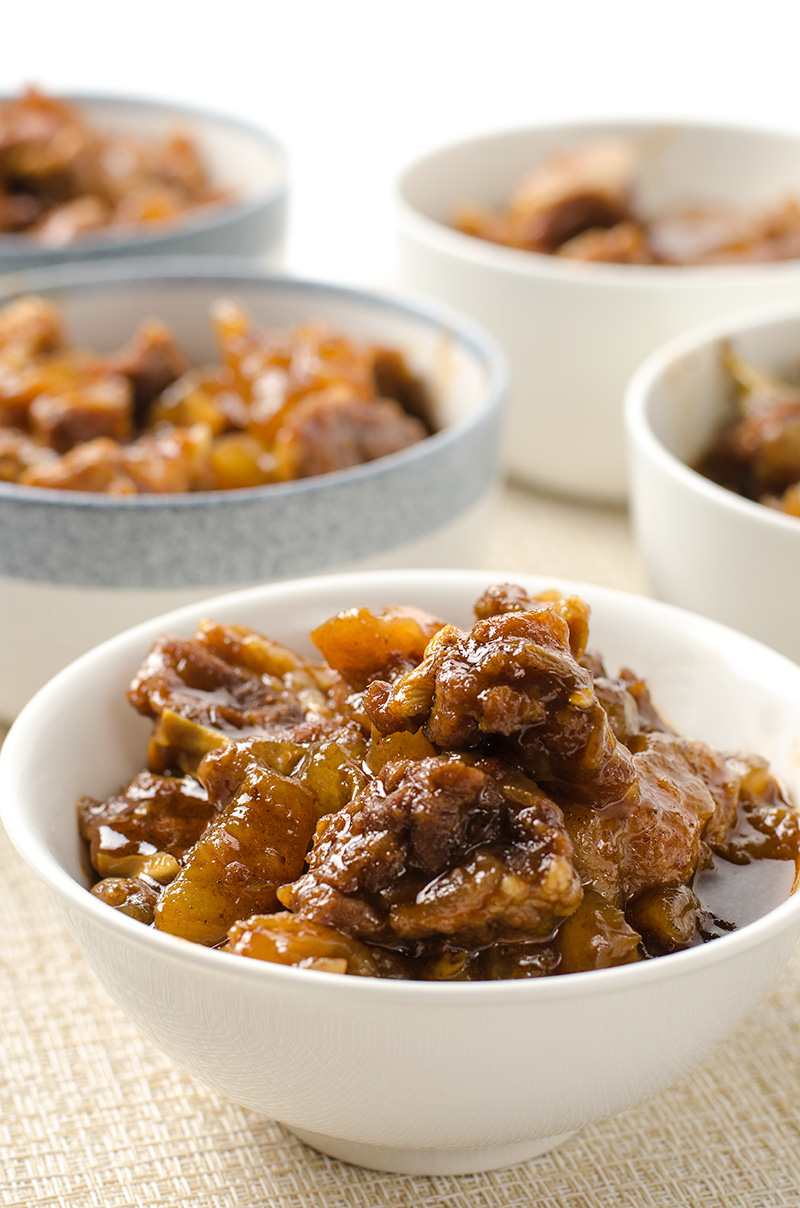
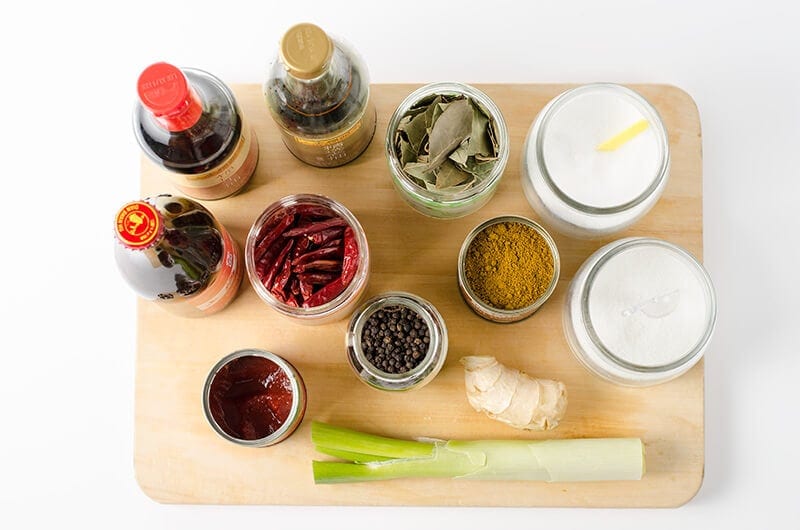
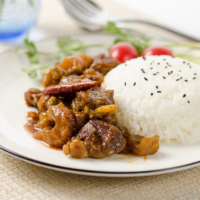
This beef stew uses soy sauce, wine, bay leaves, chili, curry powder, and tomato paste to create a balanced and rich flavor without overpowering the taste of the beef. None of the spices stands out too much. It’s neither a curry nor tomato flavored dish, but tastes much better than the combination of the two. Although most people from the US and Europe find it unappealing, beef tendon is a favorite cut in Asian cuisines. Why on earth would you put beef tendon in stew? The short answer – it’s delicious. The long answer – if cooked properly, beef tendon becomes tender and moist. Some of the tendon will even dissolve into the broth, which increases the richness and creaminess of the stew and contributes wonderfully to the flavor. The final result is a literal melt-in-your mouth sensation. This recipe teaches a good way to cook beef tendon, one that makes beef stew taste even better.
If by any chance you get your hands on some beef tendon, instead of writing it off as inedible and throwing it away, you could try experimenting with it by following the recipe below. On the other hand, if you have a really strong aversion toward beef tendon, you can still use this recipe without the tendon. This will still result in a very flavorful and rich Asian style beef stew.
Before jumping into the recipe, here are a few tips that will help you prepare this dish properly:
- Boil the tendon and discard the boiling water before braising. This is a must. Raw beef tendon is quite smelly. If you cook it in a dish directly, the dish will end up with an unpleasant (even stinky) smell.
- Simmer the tendon in a pressure cooker for 30 minutes to reduce braising time. The tendon part is so tough that it takes many hours to braising on stove top.
- Boil the beef before braising and save the broth. I like to keep the broth because it’s quite flavorful. However, if the broth smells bad (due to the freshness of the beef), discard it and use fresh water for the braising process.
- Only add non-salty spices in the beginning. Add salty spices (including soy sauce) when the beef starts to get tender, about half way through the braising process. If you add salt at the beginning, it will toughen up the beef and require more braising time.
- Use enough broth to cover the beef, and simmer on low heat until the beef becomes soft, then turn up the heat to reduce the broth toward the end. If the broth is reduced too much, it will get thick very fast and start to burn at the bottom of the skillet (or wok). Don’t forget to stir the stew several times while simmering, and add extra broth if needed.
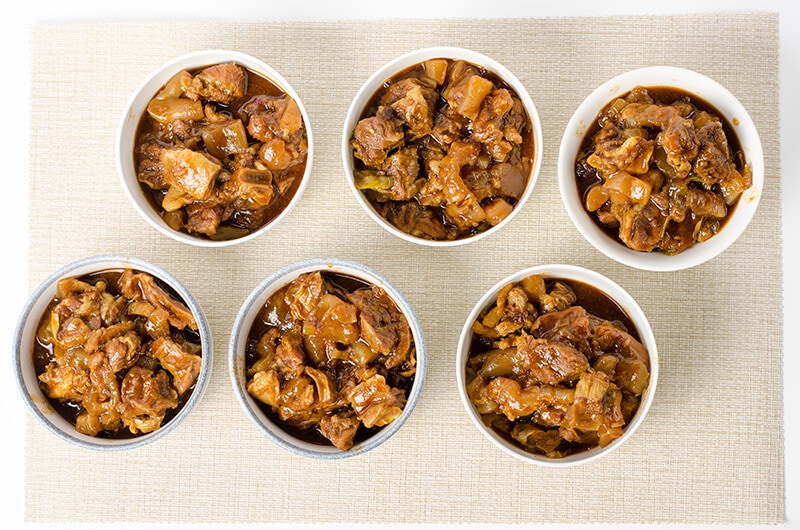
- Store the stew in small containers in the freezer after the stew has cooled down. You can enjoy the stew whenever you want, during the week or packed for lunch. For a quick dinner, simply throw in some vegetables (carrot, potato, broccoli etc.) into the stew and boil them together. A healthy and filling stew will be ready on your table in less than 30 minutes.
This is one of the recipes from my Mom’s Best series. In this series, I collect family recipes handed down from my grandma to my dad, then to my mom, and now, to me. In the same series, you can also find Mom’s best braised pork spare ribs, Mom’s best braised pork feet, Mom’s best braised duck leg and Mom’s best braised chicken stew with mushrooms. More family recipes are on the way! I also made a short video to walk you through the cooking process. It was the first time that I recorded a video with voice, and I was super nervous! I hope the video isn’t too awkward. 😉 Also, be sure to check out my cooking channel on YouTube. It contains a collection of videos which help you learn Chinese cooking skills in a straightforward way!