An introduction to Chinese pork and vegetable stew
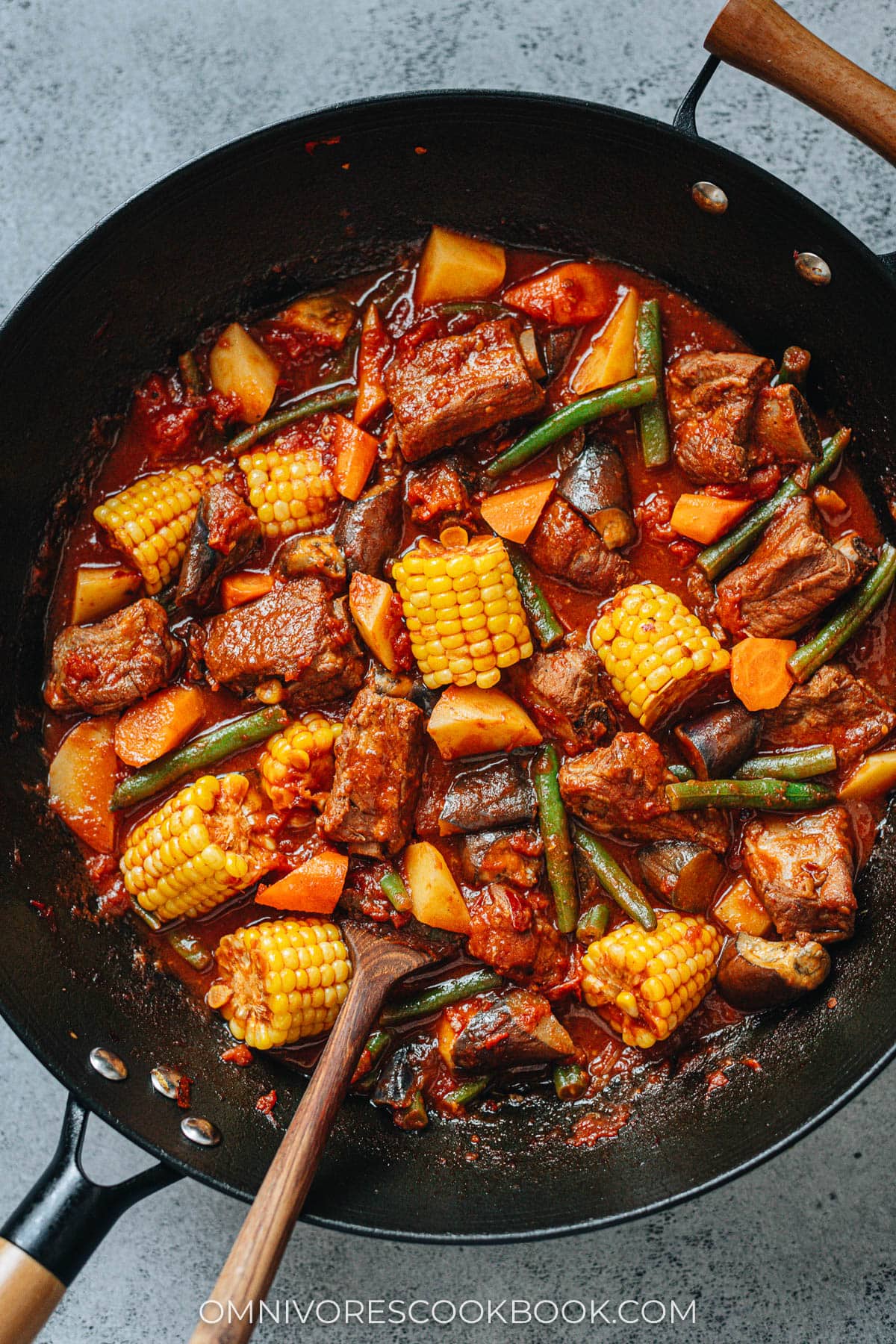
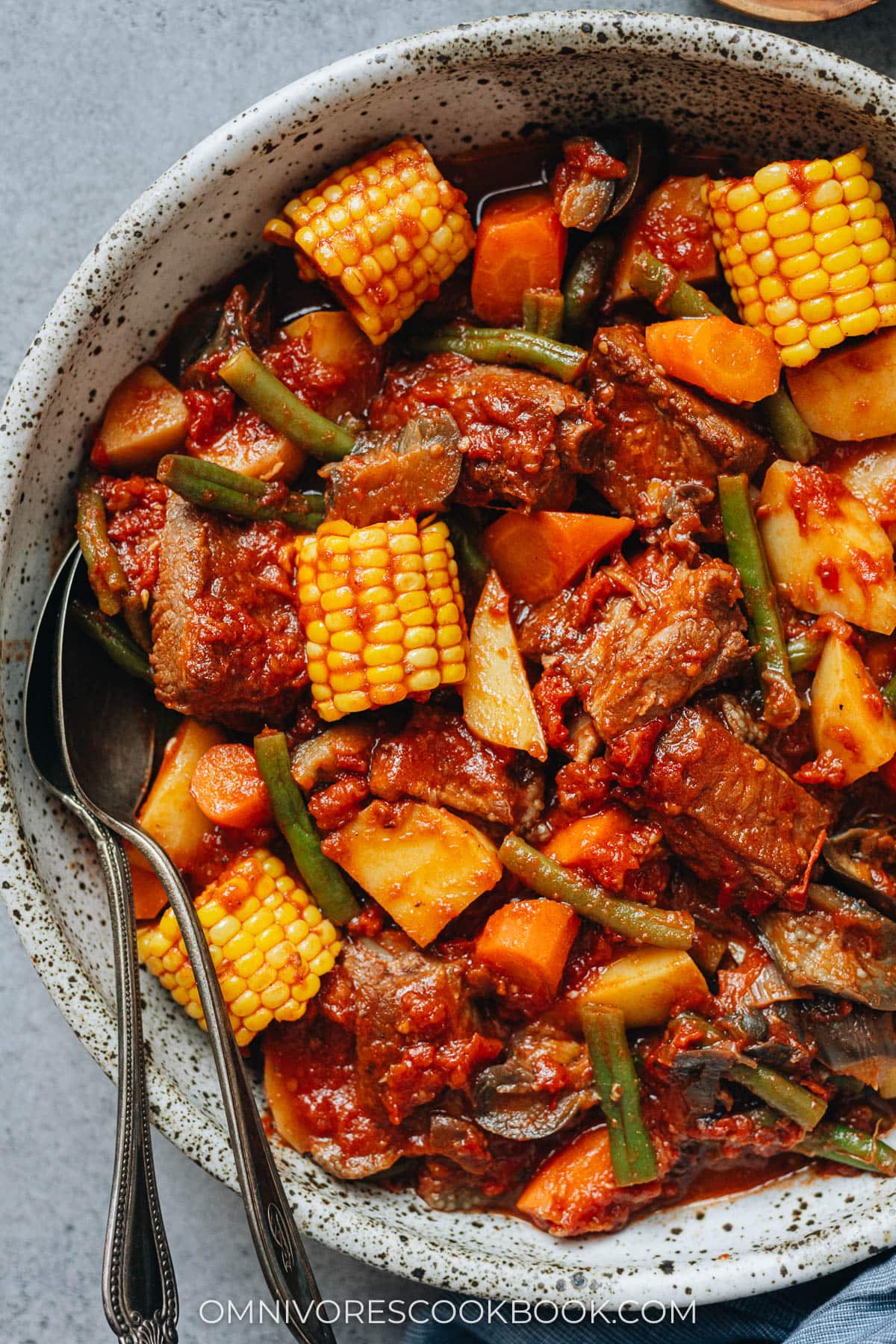
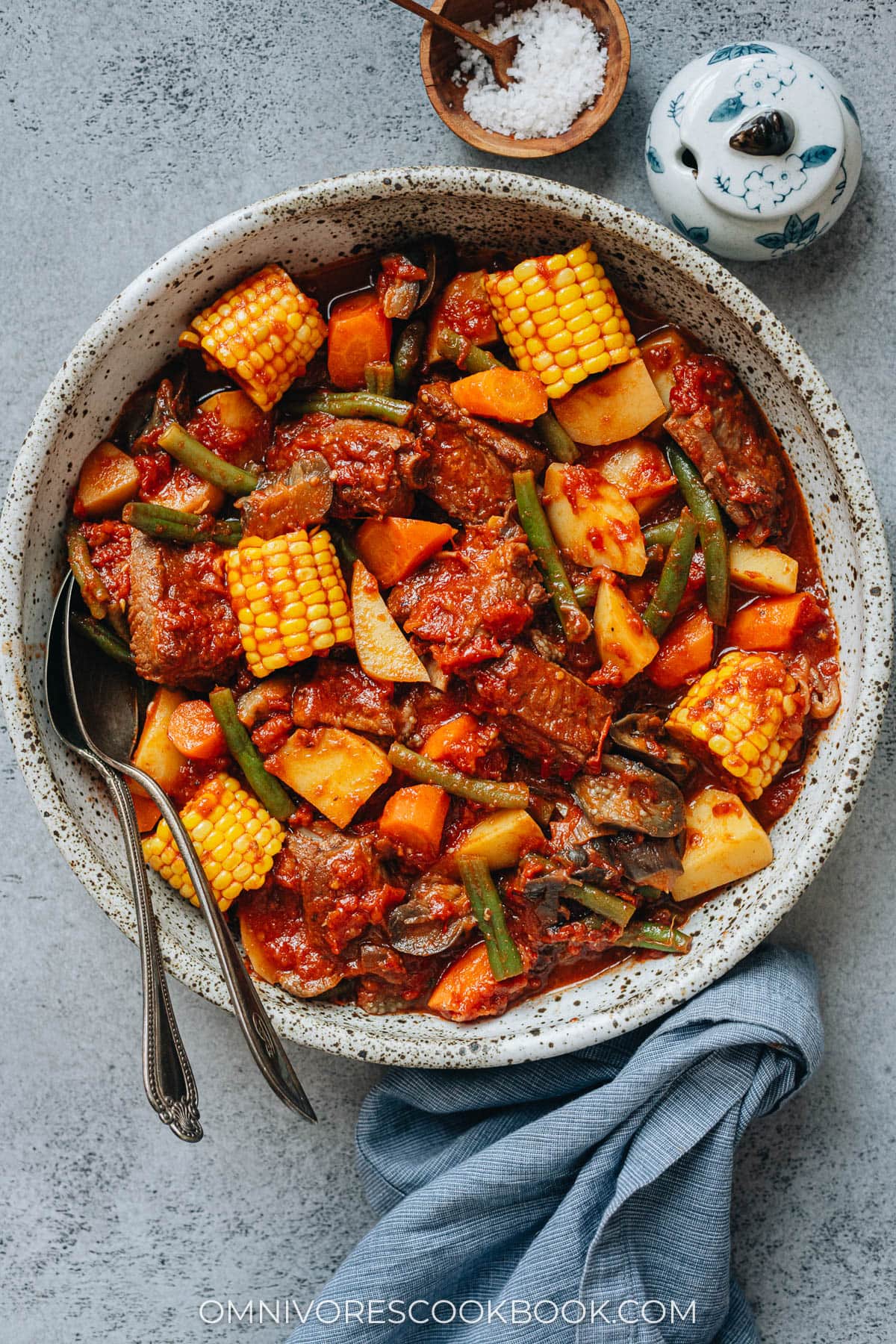
Pork and vegetable stew, or Luan Dun (乱炖) is a traditional northeastern Chinese stew known for its hearty, rustic nature. “Luan Dun” translates to “mixed stew” or “randomly stewed,” which highlights its key feature—an assortment of ingredients thrown together and slowly stewed. Luan Dun represents the harvest. The dish typically includes pork and various vegetables such as potatoes, carrots, cabbage, eggplant, tomatoes, and green beans. The ingredients can vary based on what you have on hand, but the dish is always hearty and filling. All ingredients are stewed together in a single pot with a savory broth. The seasonings are simple, often including soy sauce, star anise, and scallions, allowing the natural flavor of the ingredients to shine. The Dongbei region covers the three northeastern provinces of China that border Russia. Food there always comes in big portions. The cooking emphasizes simplicity, designed to be warm, nutritious, and packed with calories to sustain people during the harsh winters.
Pork and vegetable stew ingredients
Pork and vegetable stew is a comforting, homestyle dish often made in large portions to serve to family and friends. Each household has its own version with slight variations based on personal taste and ingredient availability. My recipe is a slightly more elevated version than the typical homestyle version, based on the dish I’ve had countless times in restaurants in Beijing.
Which cut of pork to use
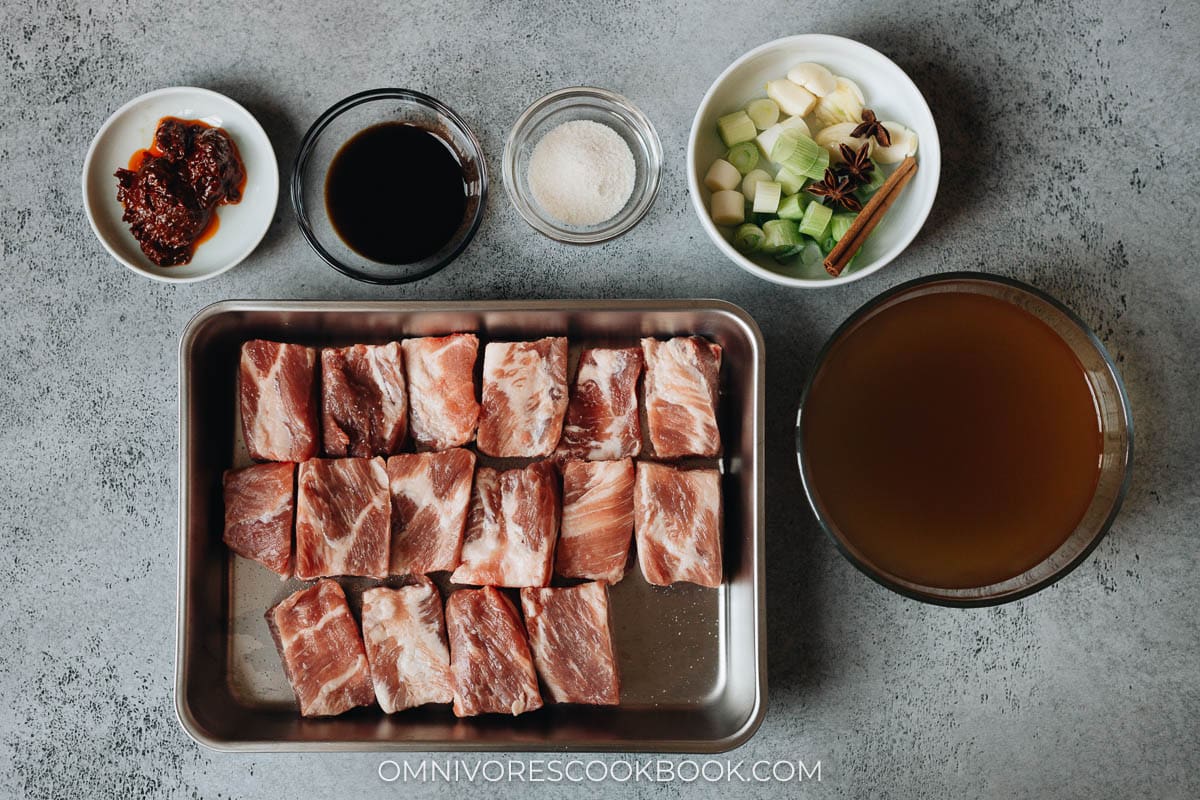
Any pork cut that is suitable for stew can be used in the pork and vegetable stew. In China, pork ribs and pork belly are the most popular options, because both create a delicious broth. Other cuts such as pork shoulder (butt) and pork shank work very well too. I used short pork ribs, which you can find in most Chinese markets. The short ribs take less time to cook and are sized similarly with the vegetables. But if you can only find regular slabs of ribs, you can use baby back ribs and cut them into single riblets.
The seasonings
There are many ways to season pork and vegetable stew, most of them soy sauce based. My recipes uses:
Aromatics: scallion and garlic Spices: star anise and cinnamon stick for a warm taste Soy sauce and sugar for the base Chicken broth Doubanjiang: for a spicy kick and fermented umami
Doubanjiang is a key ingredient in Mapo Tofu. It is a salty spicy fermented paste that is full of umami. I like to use it in my pork and vegetable stew because it adds so much flavor to the dish.
How to make the dish not spicy?
If you prefer not to use Doubanjiang, you can experiment with oyster sauce, Tian Mian Jiang (Sweet Bean Sauce), or more soy sauce.
The vegetables
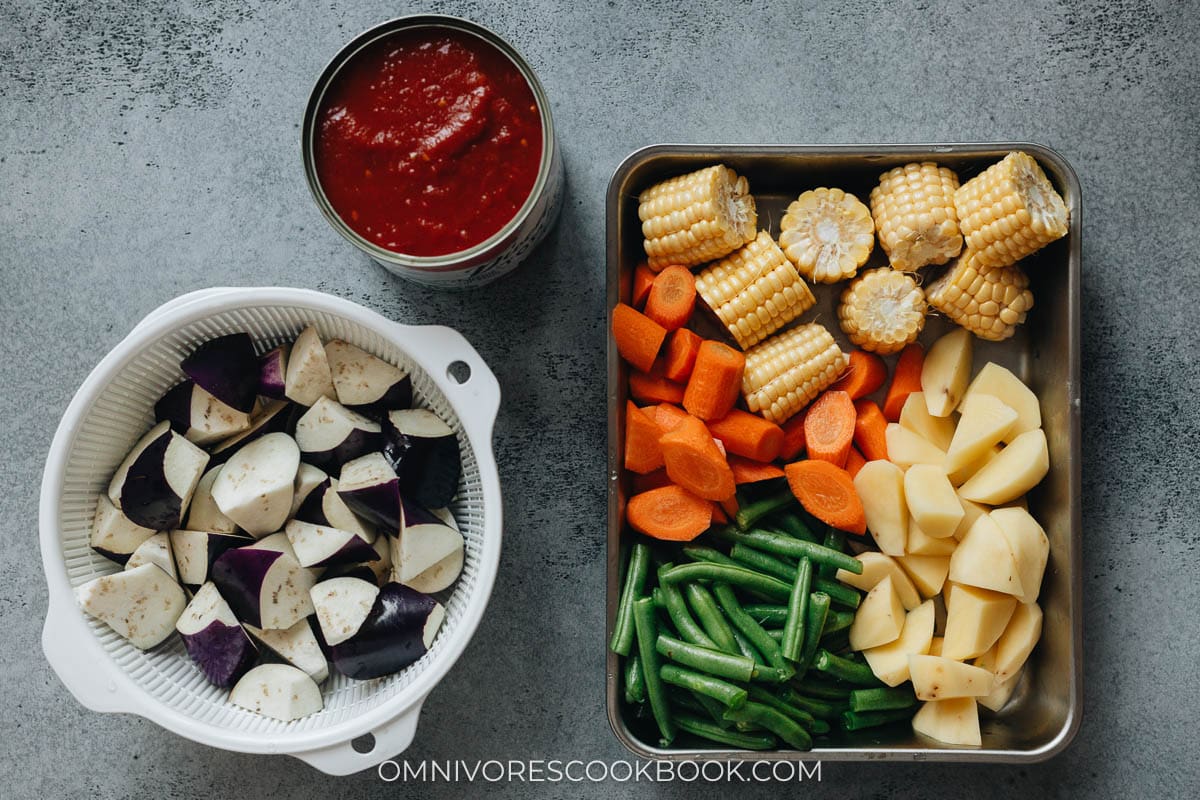
There are so many vegetables you can add to your pork and vegetable stew. I used some of the most popular ones in my recipe, including:
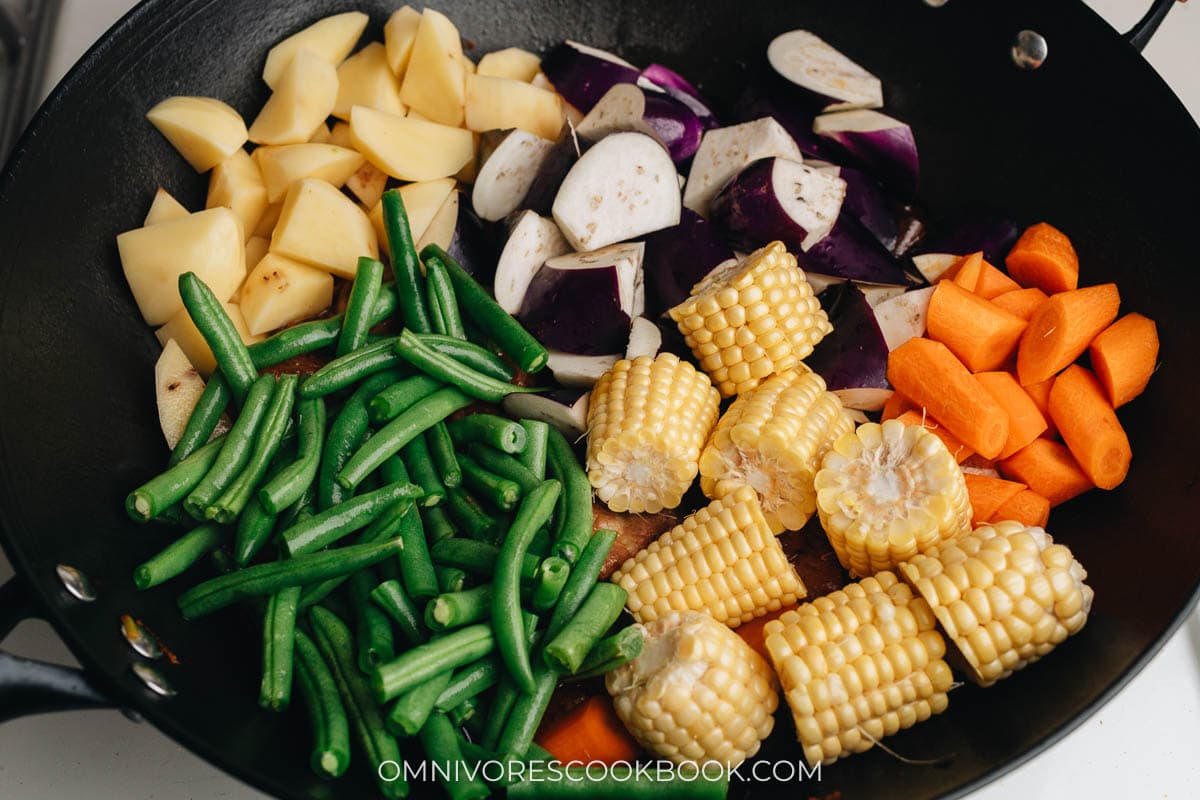
Potato Carrot Green beans Corn on the cob Eggplant Tomato
Most pork and vegetable stews use cut up fresh tomatoes as part of the veggie section. But in this recipe I chose to use canned tomato as a part of the base. I did this to create a more flavorful base without using too much salt.
Other vegetable alternatives
I also recommend using napa cabbage, pumpkin or other winter squash, mushrooms, and cabbage. These harder vegetables are great because they will hold their shape during cooking and won’t overcook easily. If you decide to use tender vegetables like bok choy, you should add them during the last 5 minutes of cooking to prevent overcooking.
How to make pork and vegetable stew
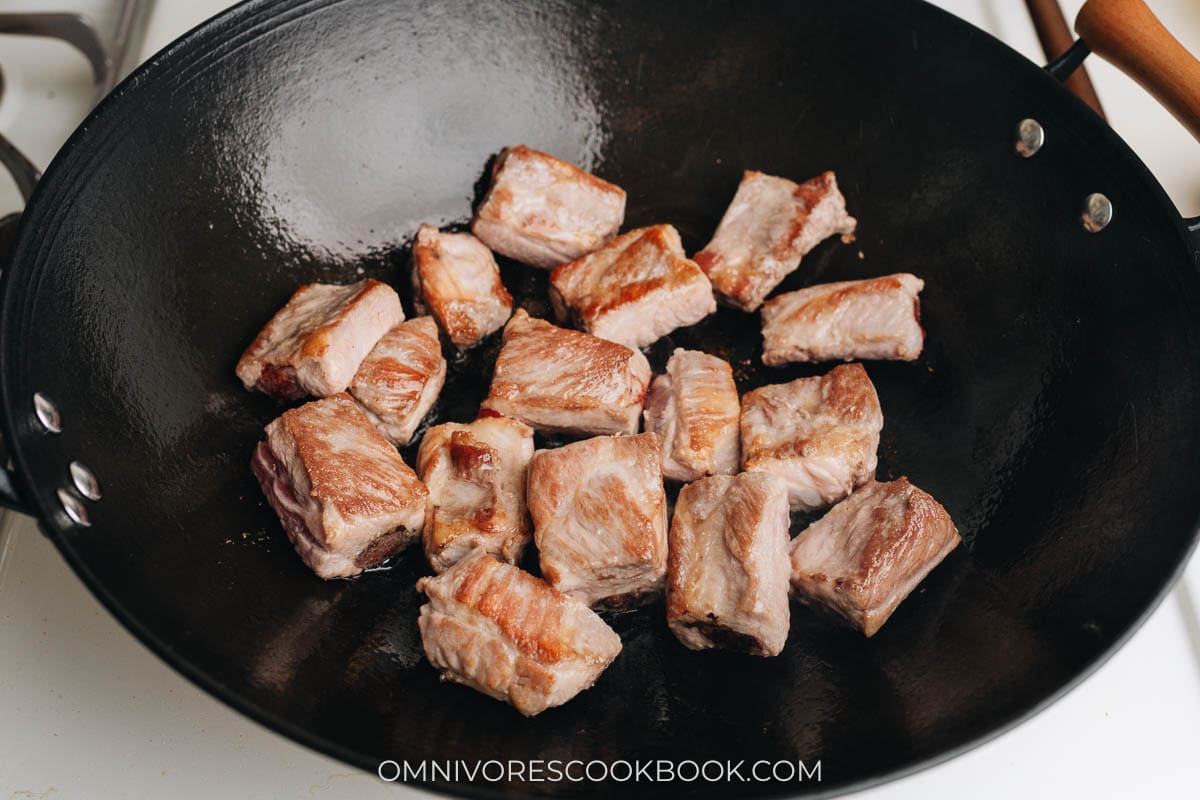
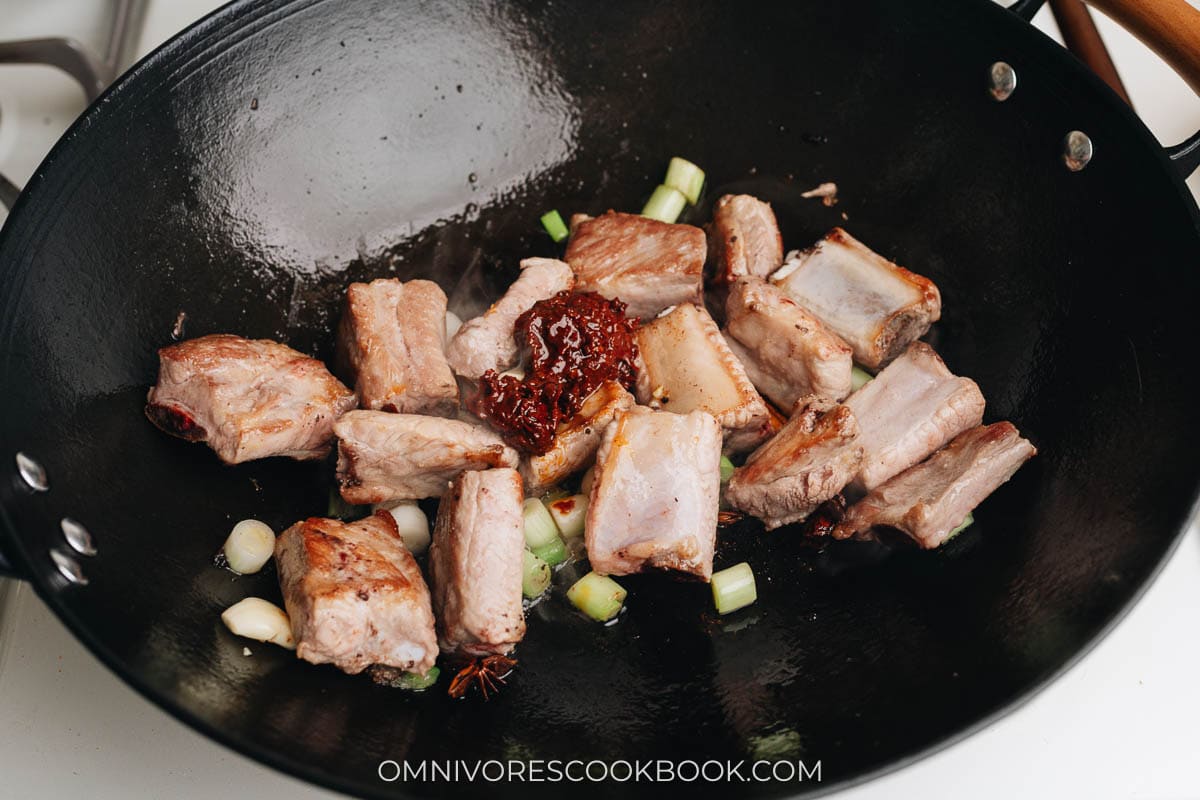
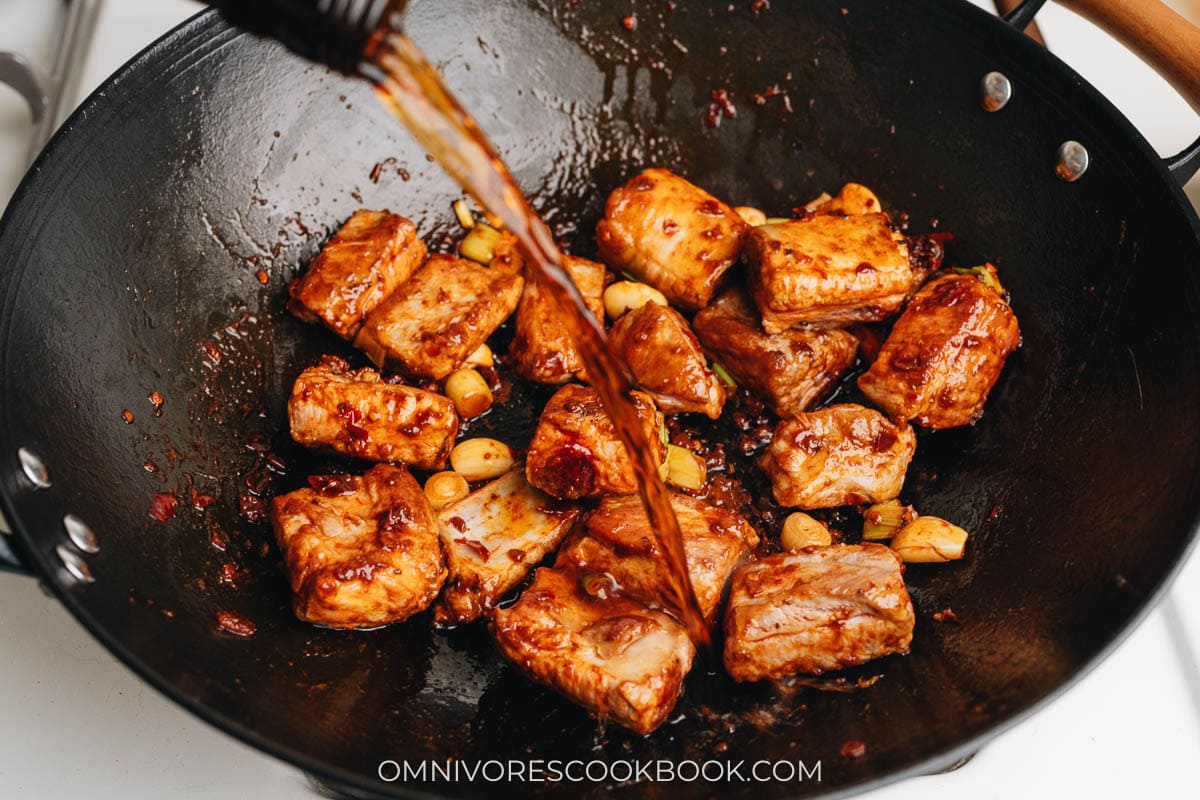
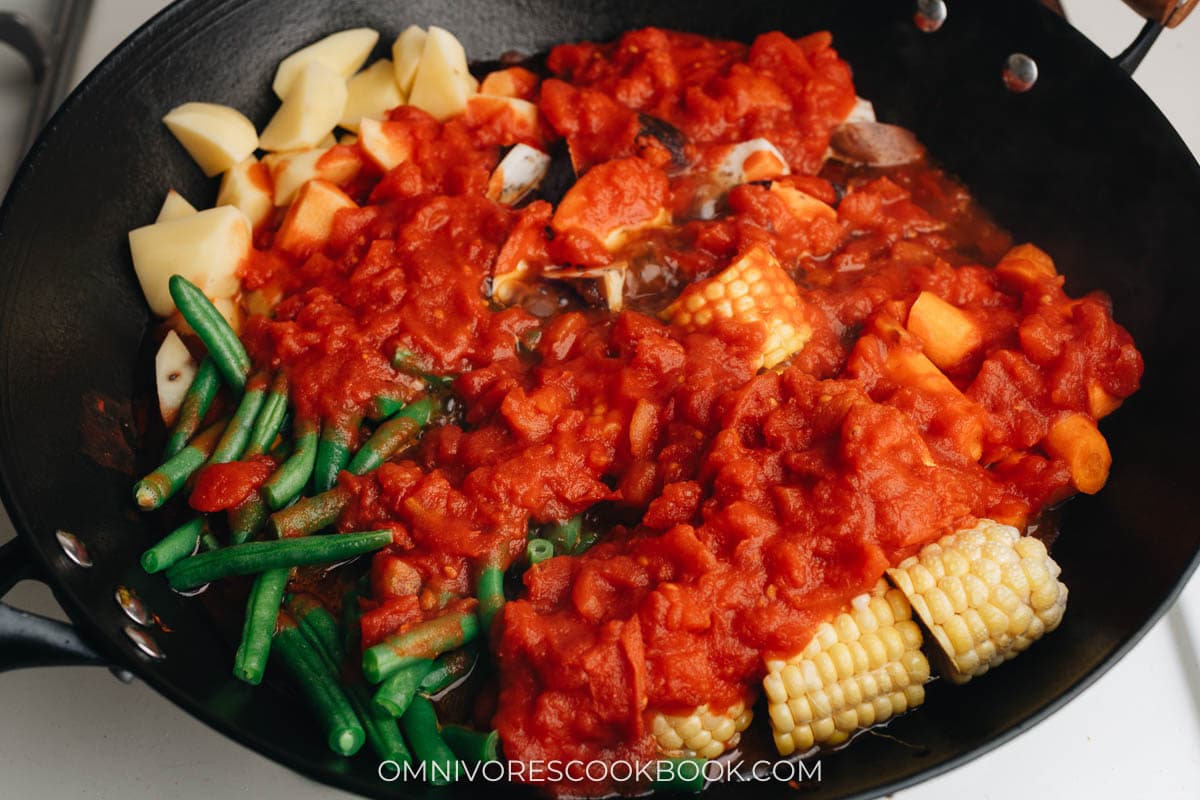
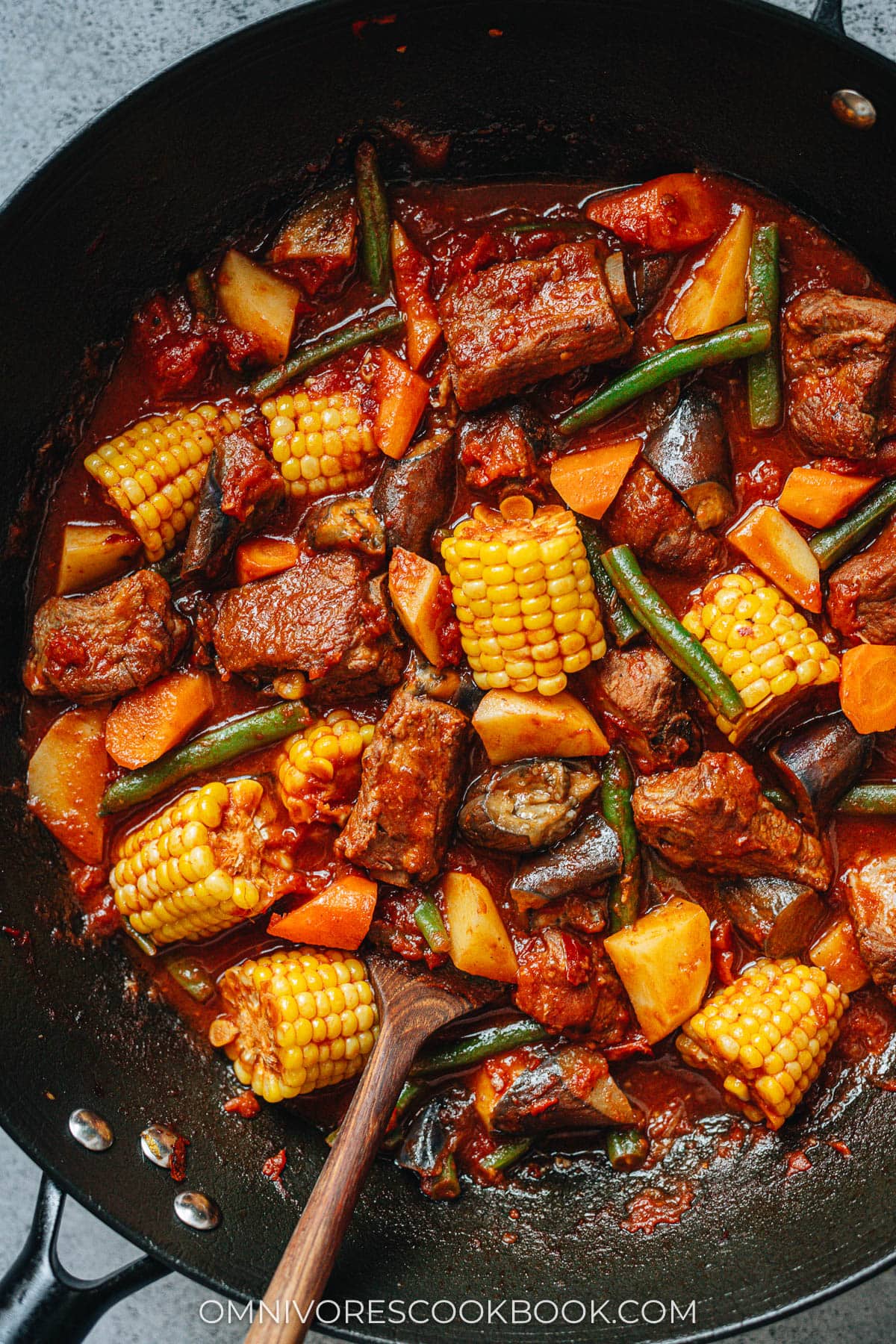
Making pork and vegetable stew requires a bit of time but it’s quite hands-off once you start cooking. First, brown the pork ribs. Then add the aromatics and spices. Stir and cook to release fragrance. Then add the Doubanjiang and gently toast it. Pour in Shaoxing wine to deglaze the pan. Add the chicken broth, soy sauce and sugar. Bring to a simmer then cook covered until pork is tender, 1 hour or so. Then add all the vegetables and the canned tomato. Let steam, covered, for 5 minutes. At this point, it will look like the vegetables are not covered in the broth. But no worries. After 5 minutes, the vegetables will release a lot of juice and surmerge all the ingredients. After 5 minutes, uncover the pan and continue cooking until the vegetables turn soft, 15 to 20 minutes. Once done, the broth will be reduced and thickened a bit, the pork and vegetables very tender and flavorful. Now you can simply top them on rice and enjoy your hearty meal!
What is the best cookware for pork and vegetable stew?
I used a 14.5” flat bottom wok for this recipe. It’s my favorite pan for this type of dish because: If a large wok is not available, you can use a large cast iron pot. It is a great alternative to the wok and it creates a great result too.
More Northern Chinese dishes
Green Bean and Potato Stew (豆角炖土豆) Chinese Braised Pork Trotters (红烧猪蹄) Chinese Red Braised Lamb (红烧羊肉) Lion’s Head Pork Meatballs (狮子头) Pork Liver Stir Fry (炒猪肝) Pork and Sauerkraut Dumplings (酸菜饺子)