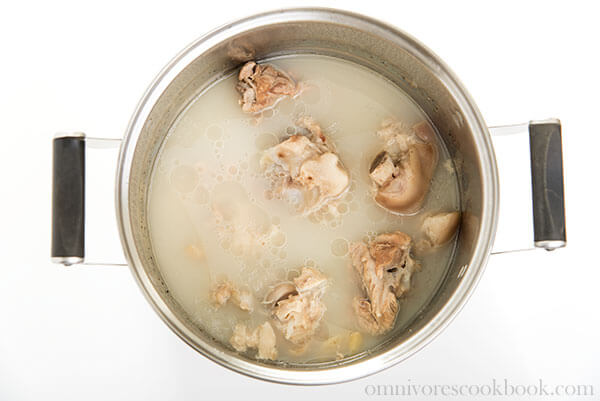
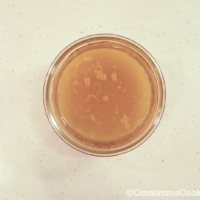
Update: I updated this recipe to a Chinese style pork stock on 24th December 2014. Please refer to the new Chinese Pork Stock recipe (picture above). Now I’m using the new version in all my noodle soup, stew and other dishes.
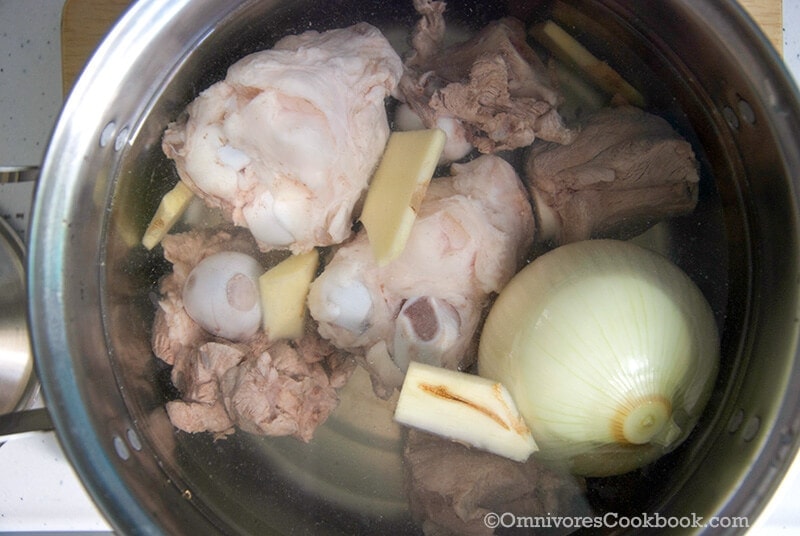
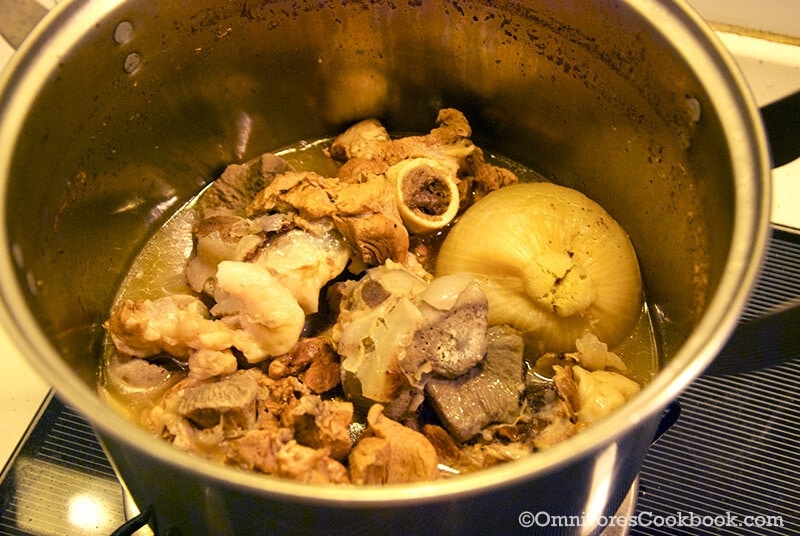
This pork stock recipe is one of several from the my ramen series. This recipe is adapted from the Food Lab. It took 6 hours to simmer and the result was quite satisfying. The broth was thick and rich with a nice flavor. I cooked the stock in order to use it as a base for Japanese style noodles, but it works perfectly as a broth for making any stew or soup. However, please take note that the broth still doesn’t taste like the real deal tonkotsu soup in a Japanese ramen restaurant, for example, Ajisen Ramen. The recipe for tonkotsu soup base is a trade secret for any ramen restaurant owner. It you do manage to get it, you already have the foundation to open your own ramenya. If you are planning to make ramen from scratch, I suggest you cook the pork stock at least one day in advance. Like the chashu (braised pork belly) and marinated eggs, it takes a really long time to prepare and simmer. You won’t be able to finish everything in one day unless you start really early. Plus, the chashu pork tastes much better if you refrigerate it overnight. Making pork stock and ramen soup from scratch might sound like a lot of trouble. And yes, you can argue that it’s a much better use of your time to spend 12 dollars at a neighborhood ramen place to get a good quality dish in under 10 minutes. However, if you enjoy the process of cooking and want to challenge yourself with something new, or if you happened upon some pork bones have no idea what to do with them, this will definitely a good option. A slowly simmered pork bone soup tastes hearty and satisfying. Even if you don’t want to make ramen with it, you can still use it as a broth in a pork or vegetable stew, or add it into soup. The stock will add great flavor to a plain dish, and enhances flavors even better than MSG. In order to make a white colored soup like at a Japanese restaurant, you’ll need to wash and boil the pork bones twice. After the first boiling, discard the liquid and wash the bones thoroughly. Then fill the pot with tap water and boil again.
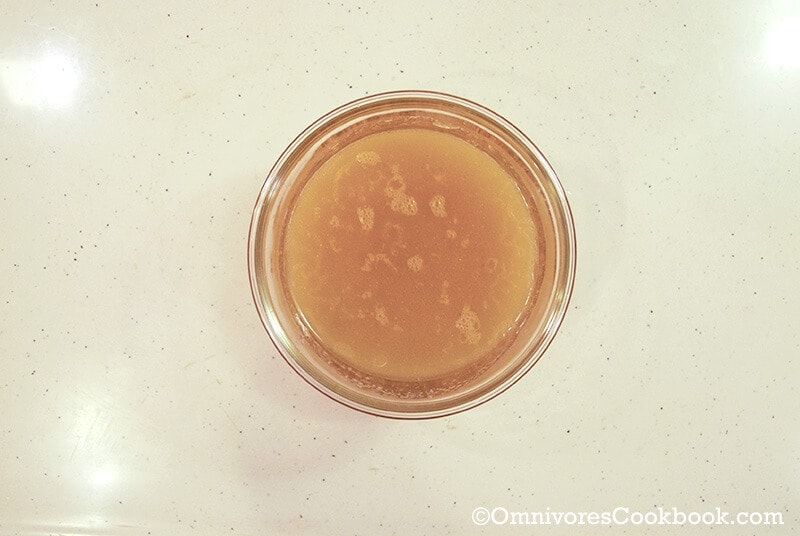
In order to fit the broth into a smaller container, I boiled the broth down to 1/3 the original volume. The bones fell apart nicely and the broth was very condensed and thick. The flavor was so rich that I had to dilute the broth with water to use it as a soup base.
Other chapters of ramen making series Chapter 1 … Chashu (braise pork belly) Chapter 2 … Marinated Eggs Chapter 4 … Tonkotsu Ramen The post is updated on 28th Oct. 2014