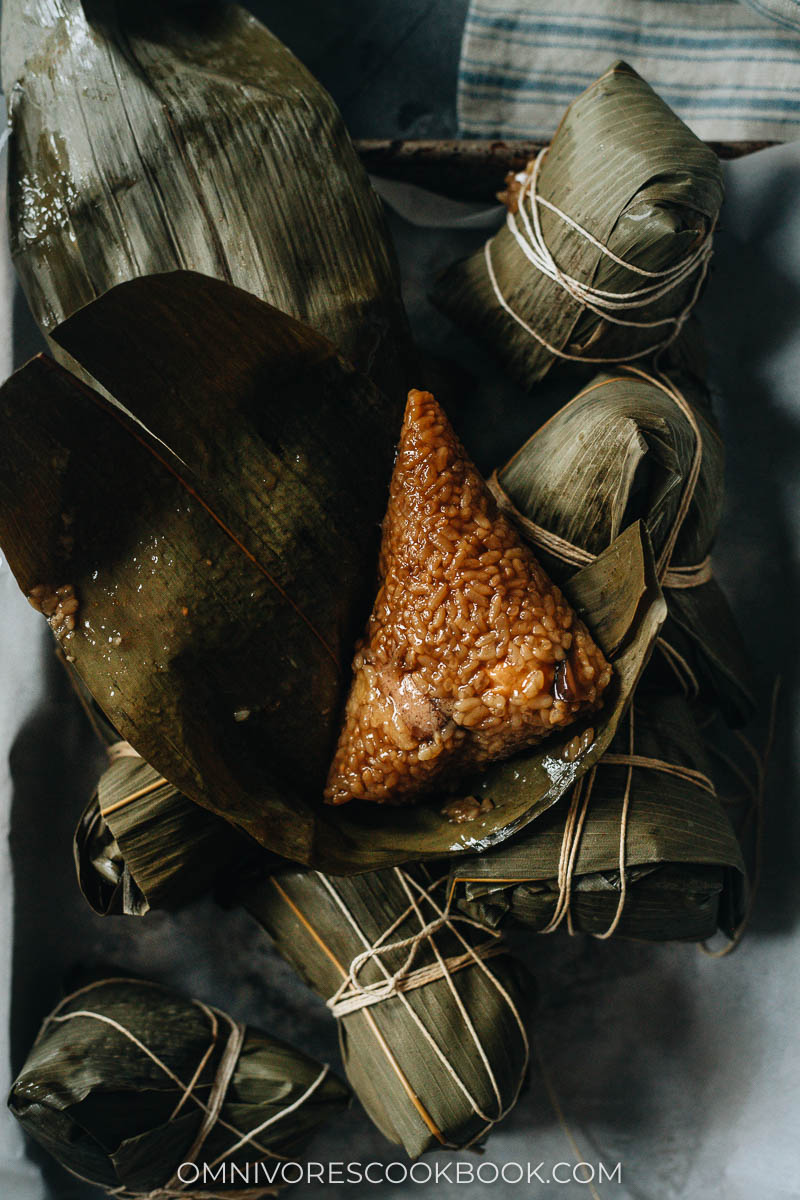
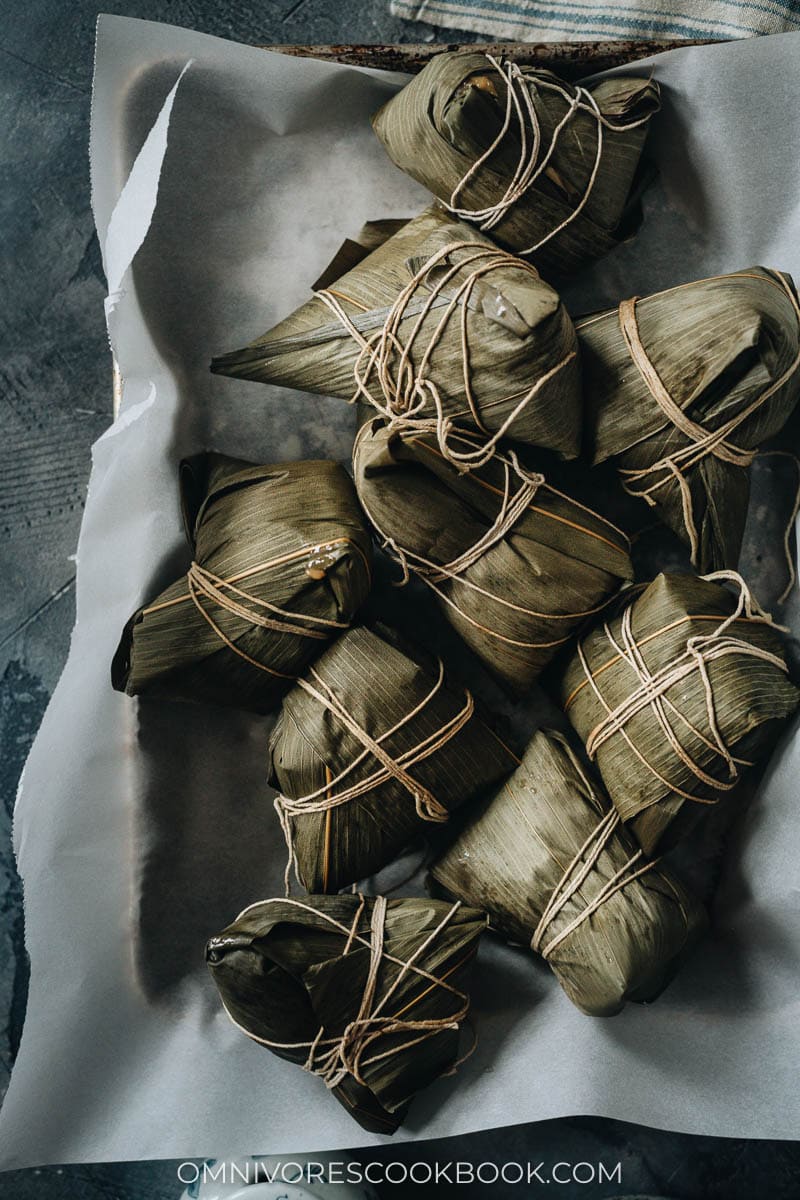
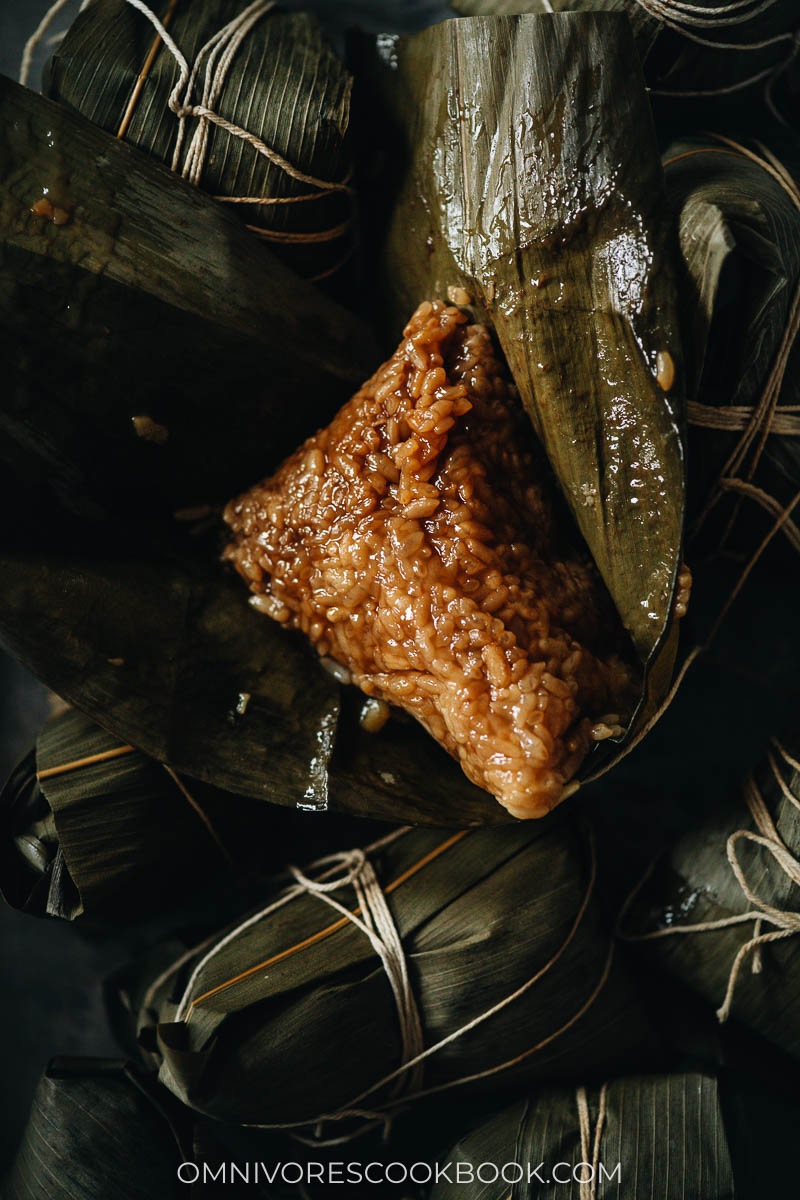
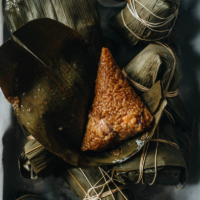
It’s almost time for the famed Dragon Boat Festival in China. Also known as the Duanwu Festival, it has been a tradition for well over 2,000 years. Mostly, the celebration has to do with customs, superstitions, and creating good health. The most traditional custom is the dragon boat race itself, though some people hang Chinese plants as decorations. And of course, no Dragon Boat Festival would ever be complete without the sticky rice dumplings known as zongzi. I have shared a recipe for zongzi before, but it was a sweet recipe. There are so many kinds of zongzi out there so I thought it would be nice to share a recipe for a pork zongzi that will hit all the savory notes you’re looking for.
Pork Zongzi
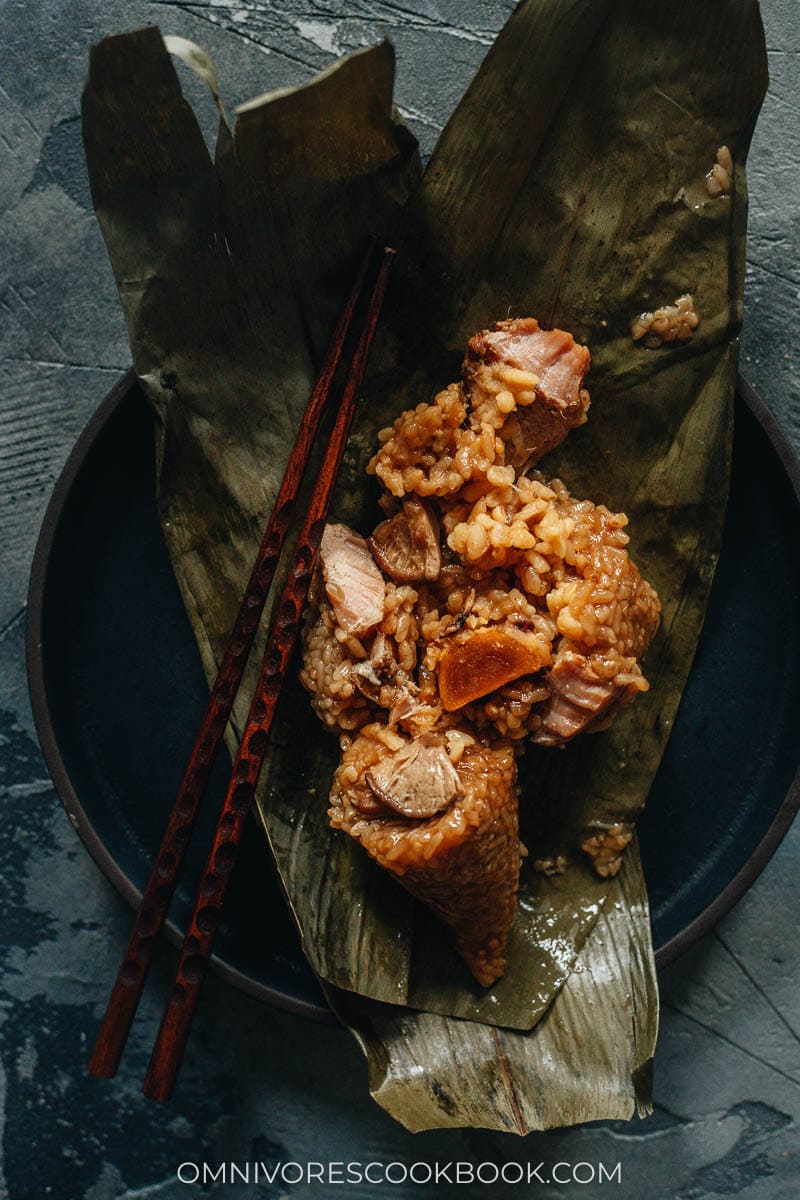
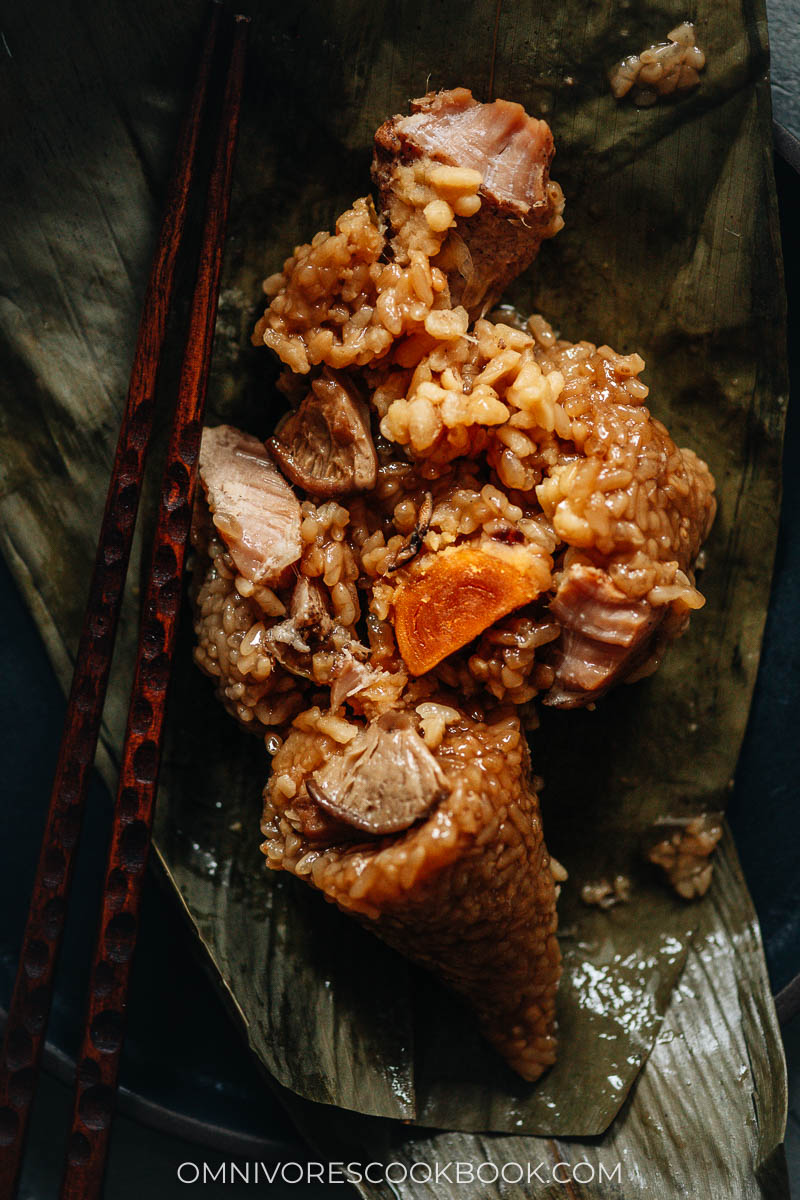
This recipe for pork zongzi has a Cantonese-style filling. It’s savory, rich with pork, and salty, with a combination of duck egg yolk, mung beans, and shiitake mushrooms. I’m not going to lie…Pork zongzi is a time-consuming project that requires a fair amount of prep work but it is absolutely worth it. Many Chinese people will buy zongzi frozen but there is nothing more delicious than fresh-made pork zongzi. Besides, the store-bought ones tend to skimp on the filling which won’t make a good impression if you’ve never tasted zongzi before. I’ve included a number of notes below so you can replace any ingredients you can’t find, assemble your own pork zongzi with what you have on hand, and fine tune it to your tastes.
Ingredients
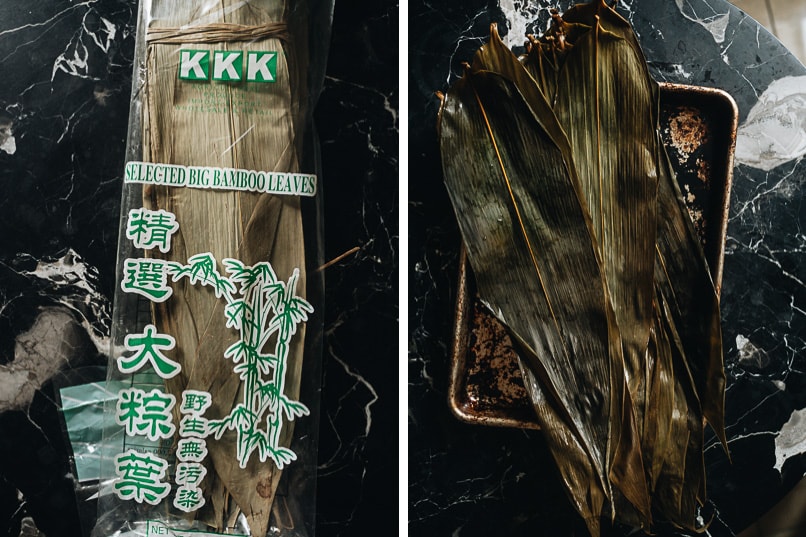
Zongzi leaves
If you use the dried leaves, you’ll need to soak them overnight before using them.
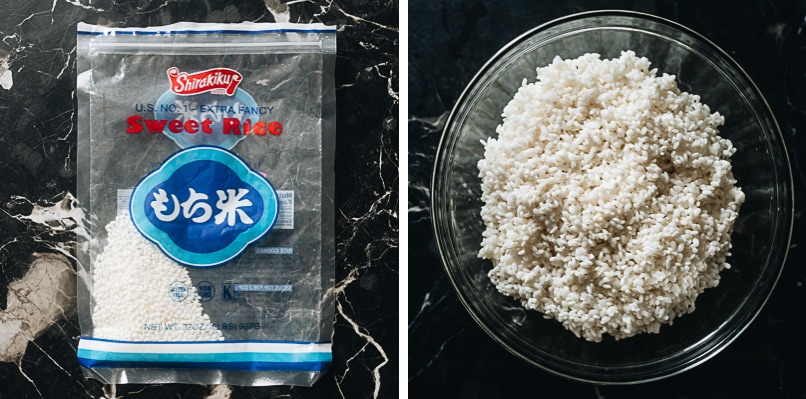
Short grain sweet rice
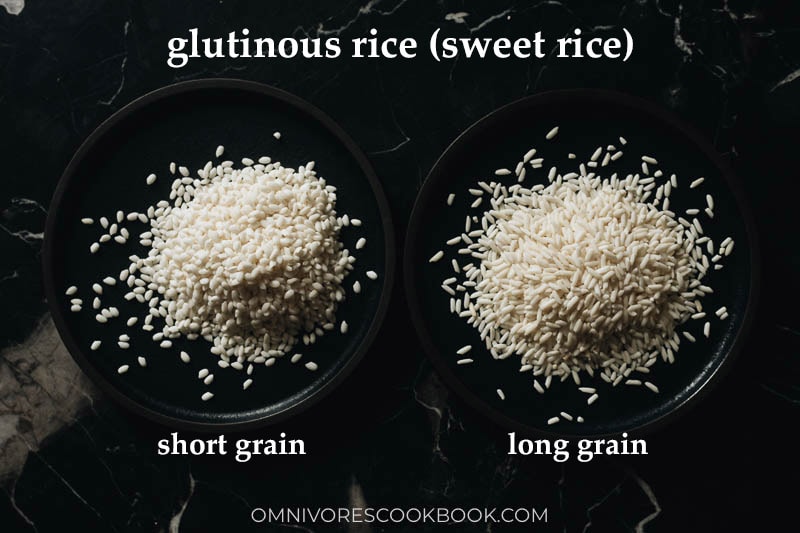
Sweet rice is also known as glutinous rice or sticky rice (it’s actually gluten-free), and it has a sticky texture once it’s cooked. It’s the ingredient, when made into flour, that gives mochi its bounciness. It’s important to use short grain sweet rice (NOT long grain) for zongzi, so once you boil the zongzi, the grains are separated and have a better texture. If using long grain sweet rice, the rice will lump together and form a uniform mass. You’ll need to soak the sweet rice overnight before using it.
What type of pork to use
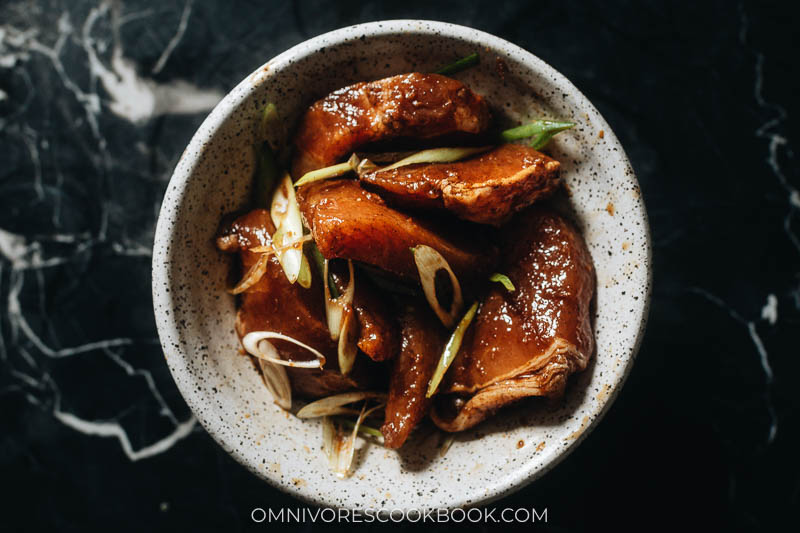
Authentic pork zongzi always use fatty pork belly. Sometimes I find it too fatty for my tastes, but you do need pork with a certain amount of fat to make the recipe work. Once the cooking is done, the fat will melt into the rice and create a very delicious result, like when you use lard to make French fries. If you have access to an Asian market, I highly recommend finding a lean chunk of pork belly that has thick strips of pork in between the fat layers. However, if you prefer the dish to be less greasy, you can use pork chops or pork loin with a good amount of fat attached. In this case, it’s important to cut the pork carefully so each chunk has some fat attached. You will need to marinate the pork in the sauce overnight so it fully absorbs the flavor.
Shelled mung beans
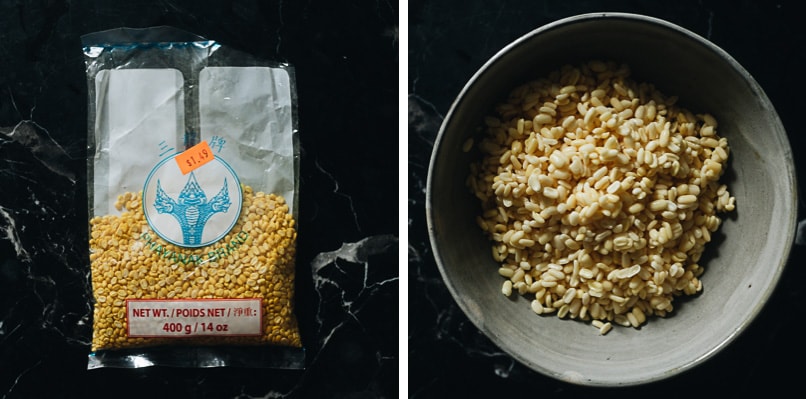
We added some shelled mung beans to the zongzi to add a fun texture. It’s important to use shelled beans, otherwise the shell will create a tough mouthfeel once cooked. You will need to soak the mung beans overnight before using.
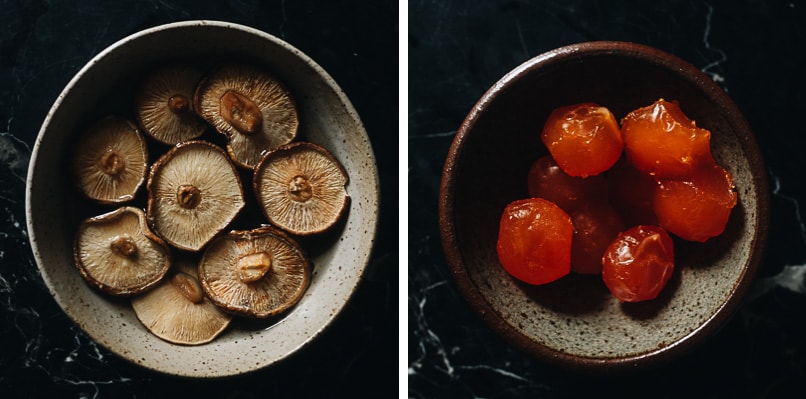
Shiitake mushrooms
Salted duck egg yolks
How to replace the ingredients
Pork belly and shiitake mushrooms are the key ingredients.
You can skip the mung beans and the duck egg yolks if you don’t like them or cannot find them. You can replace both by soaking more sweet rice. If you can find roasted and peeled chestnuts, they’re a great ingredient to add to your zongzi to replace the beans and/or the duck eggs. Alternatively, you can double up on the pork belly and make the zongzi meatier. Just remember that you’ll need to double up on the marinade as well. (This is my mom’s favorite method to make the zongzi more flavorful)You can add some chopped Chinese sausage to the zongzi as well. The sausage is quite sweet, but it works nicely with the savory seasonings in this recipe.
Workflow
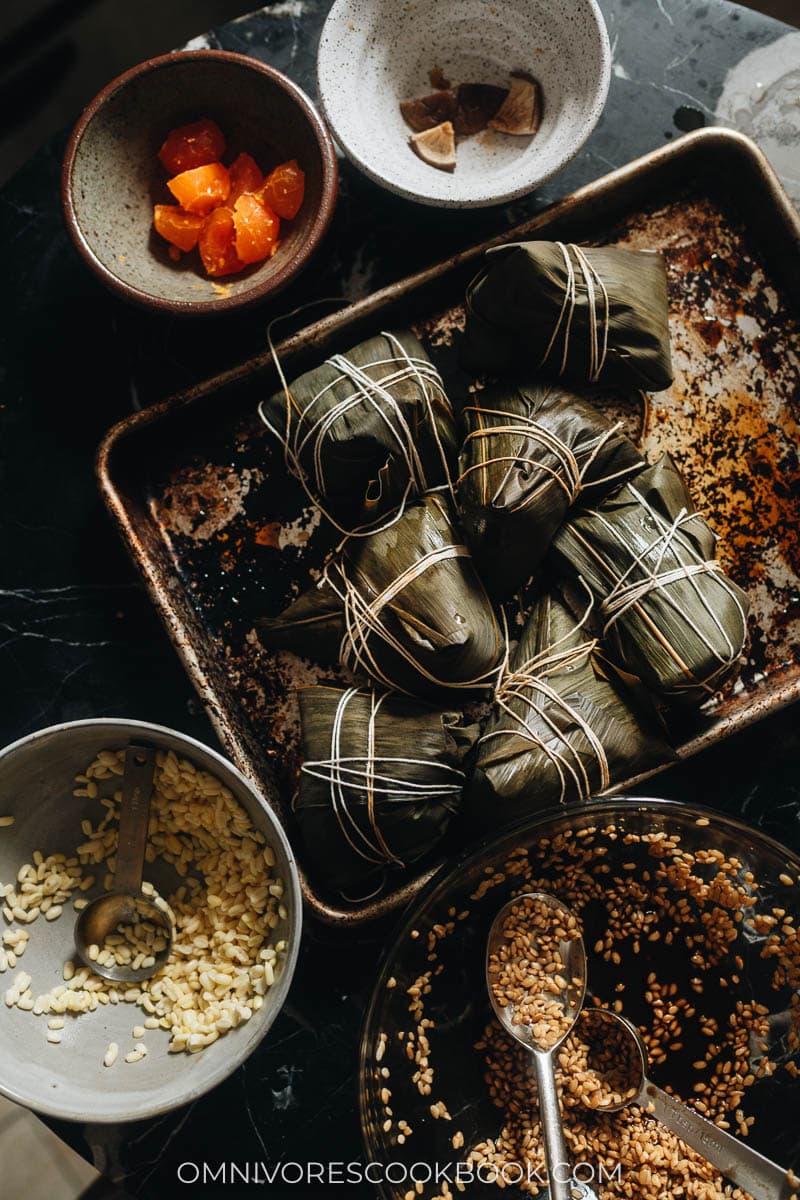
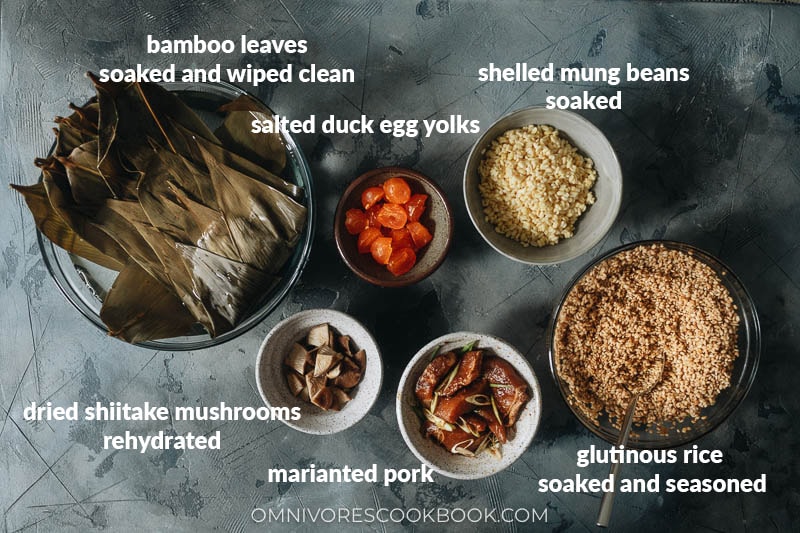
It takes some organization to prepare all the ingredients for zongzi. You should marinate the pork and soak the bamboo leaves, sweet rice, and mung beans the day before making the zongzi. The day you plan to make them, you will need to mix the sauce with the soaked rice, rehydrate the mushrooms, and cut the salty egg yolks. Your table should look at this before wrapping the zongzi.
Cooking Process
Prepare the zongzi leaves
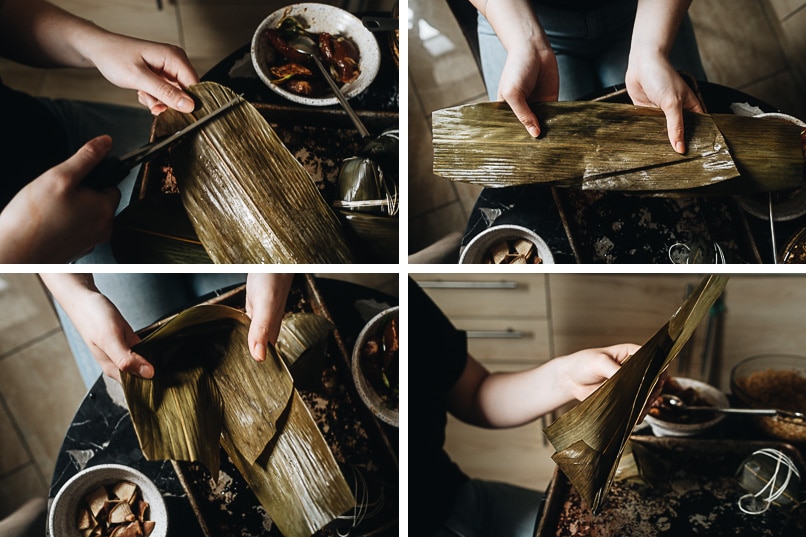
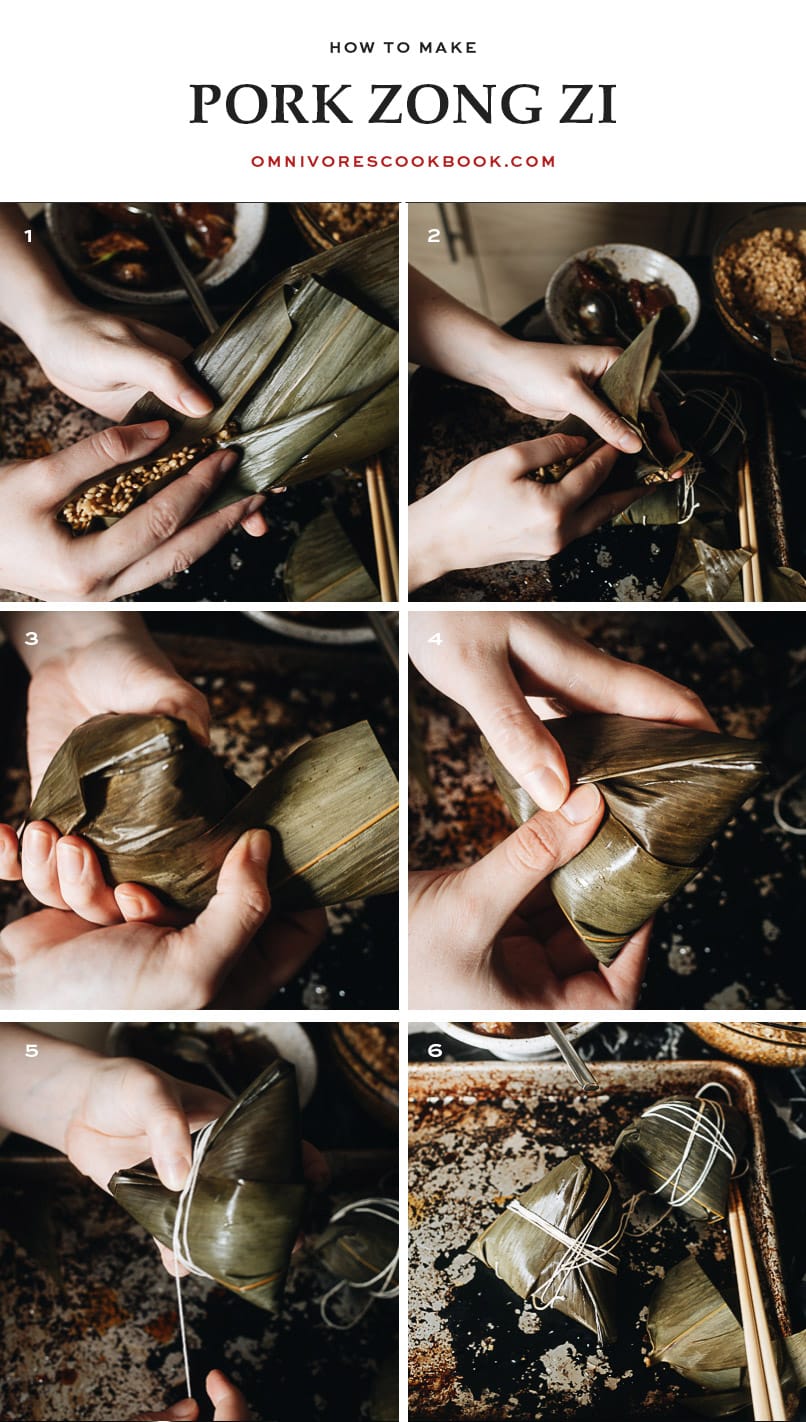
Select two leaves and cut off both ends of each.Overlap about half, up to two thirds, of the leaves together.Use both of your hands to shape the leaves into a cone.Make sure the tails of the leaves are long enough to cover the top of the cone. If not, rearrange the leaves so they overlap less.
Stuff the filling
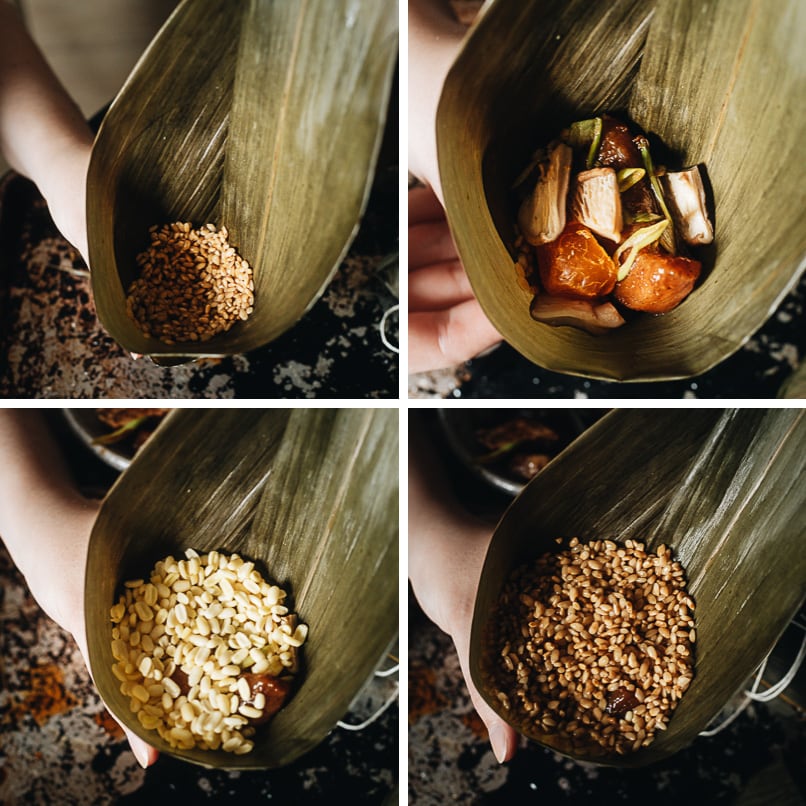
Stuff the bottom of the cone with sweet riceAdd the pork, egg yolk, and mushroomsPlace a thin layer of mung beans on topFurther add sweet rice to almost fill the cone
NOTE:
It’s important to NOT pack the rice with too much force. The rice will expand a lot once cooked and it will make the filling more chewy if you do so.If you decide to use two pieces of pork, make sure to space them out and have some rice in between them.
Wrap the zongzi
Cook the zongzi
You can either cook zongzi on the stovetop or in an Instant Pot (pressure cooker).
To cook them on the stove top: cover the zongzi with a lot of water and boil covered for 3 hours.To cook in a pressure cooker: cover the zongzi with water and cook at high pressure for 1 hour, then let the pressure release naturally.
Even for the pressure cooker method, you will need about 2 hours if you include the time needed to increase and release the pressure. But I found it slightly easier because you don’t need to monitor the process. I didn’t find a significant difference in the outcomes of the two methods.
Afterthought
Making pork zongzi is definitely a project you’ll want to set aside half a day to work on. It might seem complicated, but it’s actually a lot of fun to wrap them. And it’s definitely very rewarding one you taste the zongzi. While it does take a while to make, your pork zongzi can be frozen and they’ll be good for 6 months, making them a wonderful edible gift you can give to friends to celebrate the Dragon Boat festival.
Other pastry to make for Dragon Boat Festival
Sweet Zongzi with Red Bean PasteSticky Rice Cake with Red Bean PasteSesame Checkerboard CookiesChinese Turnip Cake (Lo Bak Go, 萝卜糕)
Want to learn more about Chinese Cooking? Sign up my newsletter to receive the 5-Day Chinese Cooking Crash Course and recipe update! If you give this recipe a try, let us know! Leave a comment, rate it (once you’ve tried it), and take a picture and tag it @omnivorescookbook on Instagram! I’d love to see what you come up with.
Other dishes to make for Dragon Boat Festival
Sweet and Sour FishRed Bean SoupChinese Tea Eggs (w/ Soft and Hard Boiled Eggs, 茶叶蛋)The Best Chinese Noodle Sauce (Da Lu Mian, 打卤面)Eight Treasure Rice (八宝饭, Chinese Rice Pudding)
Lilja Walter is a part of the Omnivore’s Cookbook team and worked closely with Maggie to develop and test this recipe.