What is Portuguese egg tart
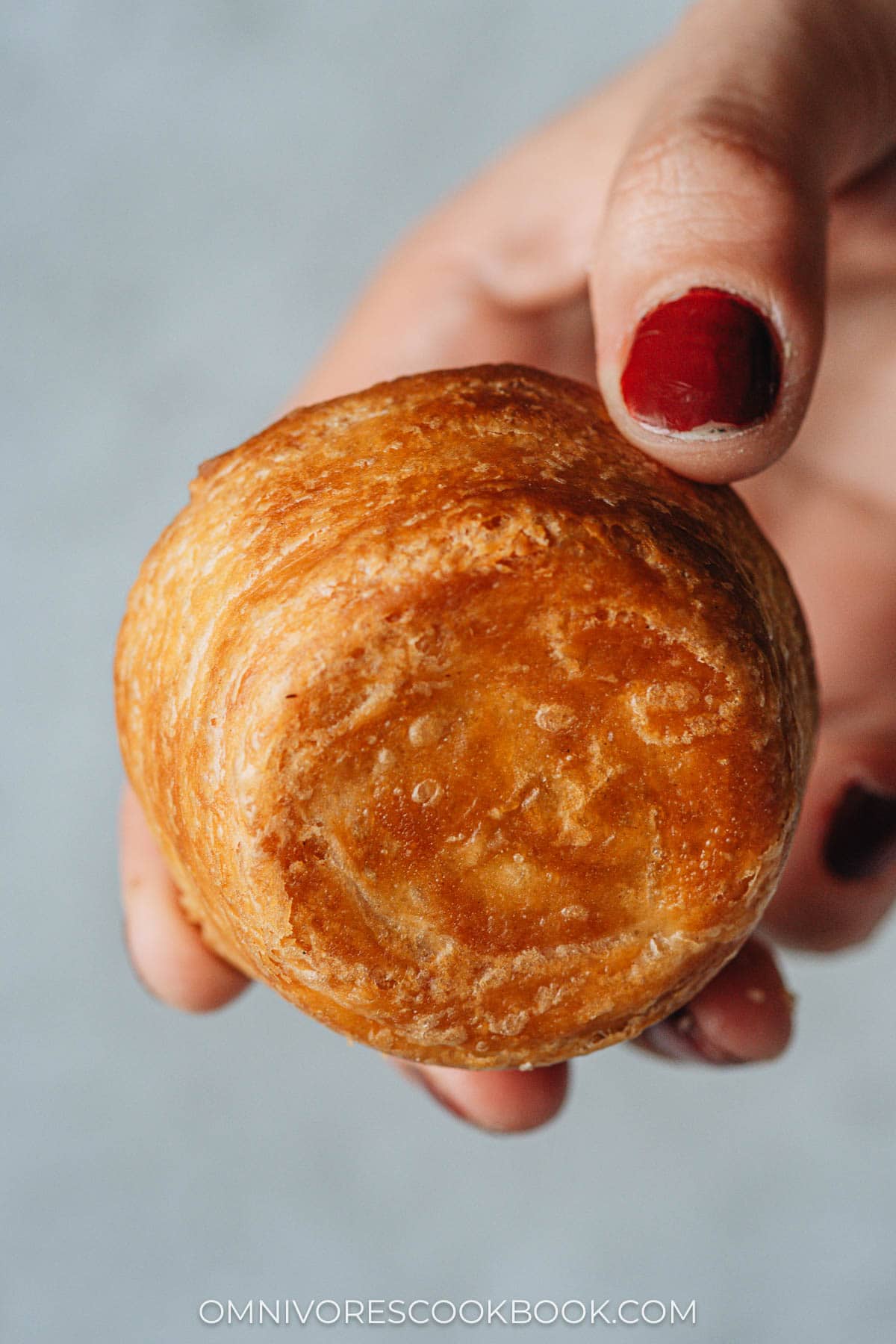
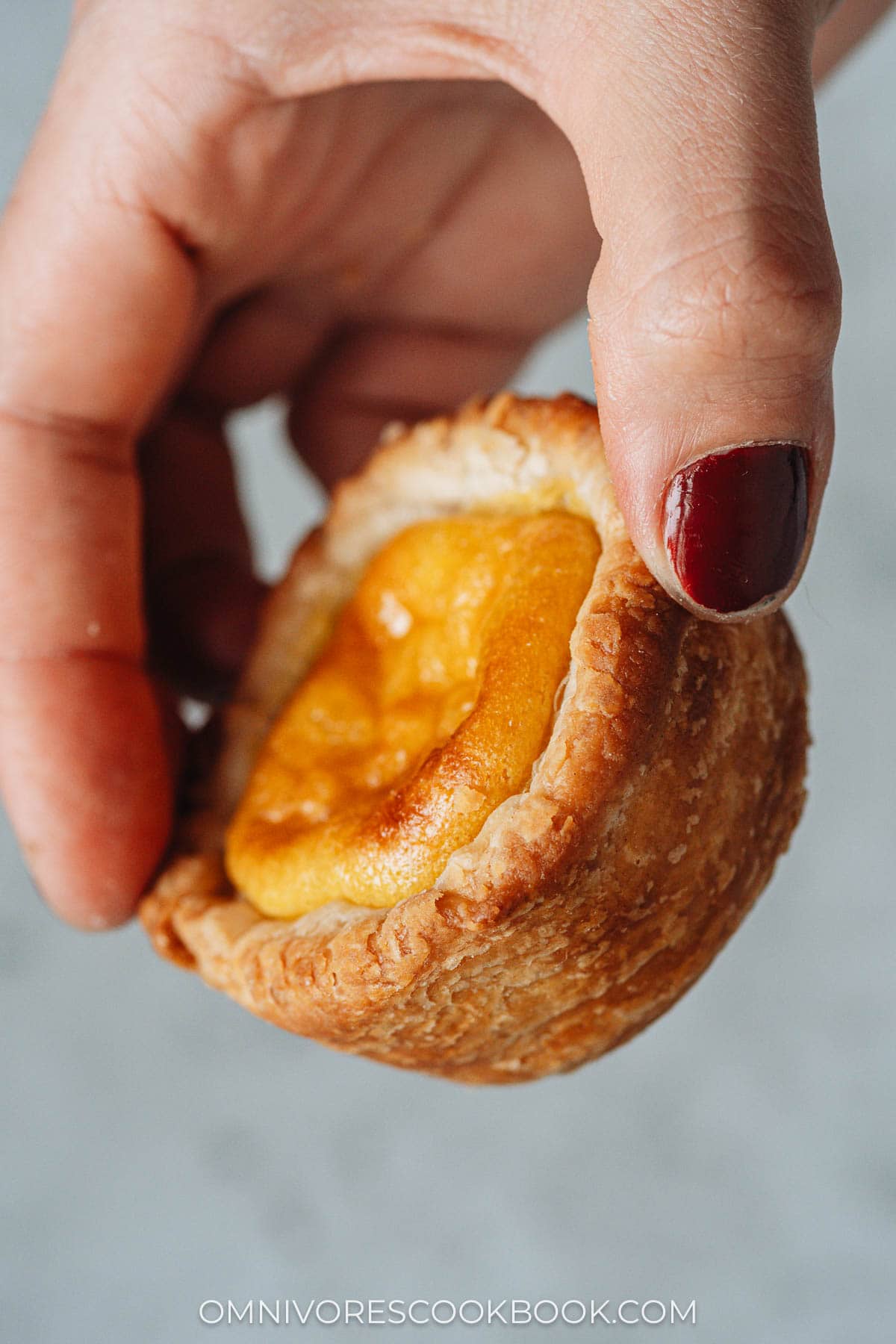
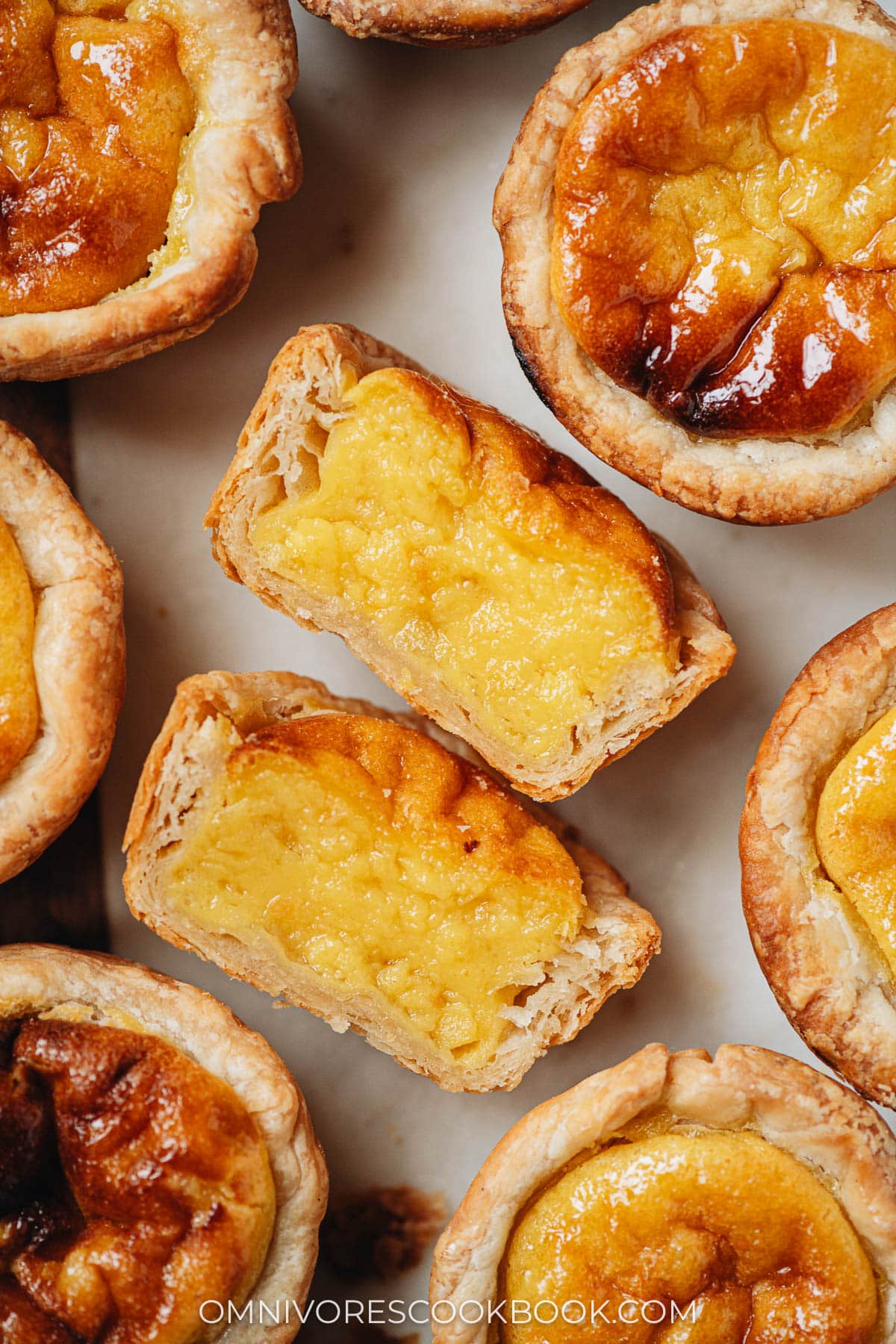
Portuguese egg tart, also known as “Pastel de Nata,” features a layered and flaky crust made from puff pastry, filled with a rich creamy custard. The top is often caramelized, giving it a slightly burnt appearance and a rich flavor. These delightful tarts were first introduced by the Portuguese in Macau in the late 20th century. Since then, they have become one of the most popular pastries in China.
Why this recipe
Portuguese egg tart was one of my favorite pastries back when I was living in China. After eating it in the US, I was surprised that they were quite different from the version I was familiar with. Compared to the Portuguese egg tarts in China, the American version is usually much sweeter, the custard is runnier, and the crust is quite thin. On the other hand, the Chinese version features a slightly thicker crust that is more flaky and crispy. The custard is a bit more set, has a rich fragrance of egg and milk, and is mildly sweet. For me, the Chinese version has a much more balanced texture and flavor profile, which I prefer. That’s why I worked with my pastry chef Emily Drucker to develop this Portuguese egg tart recipe that ticks all the boxes in my book.
Portuguese egg tart ingredients
Ingredients for the crust
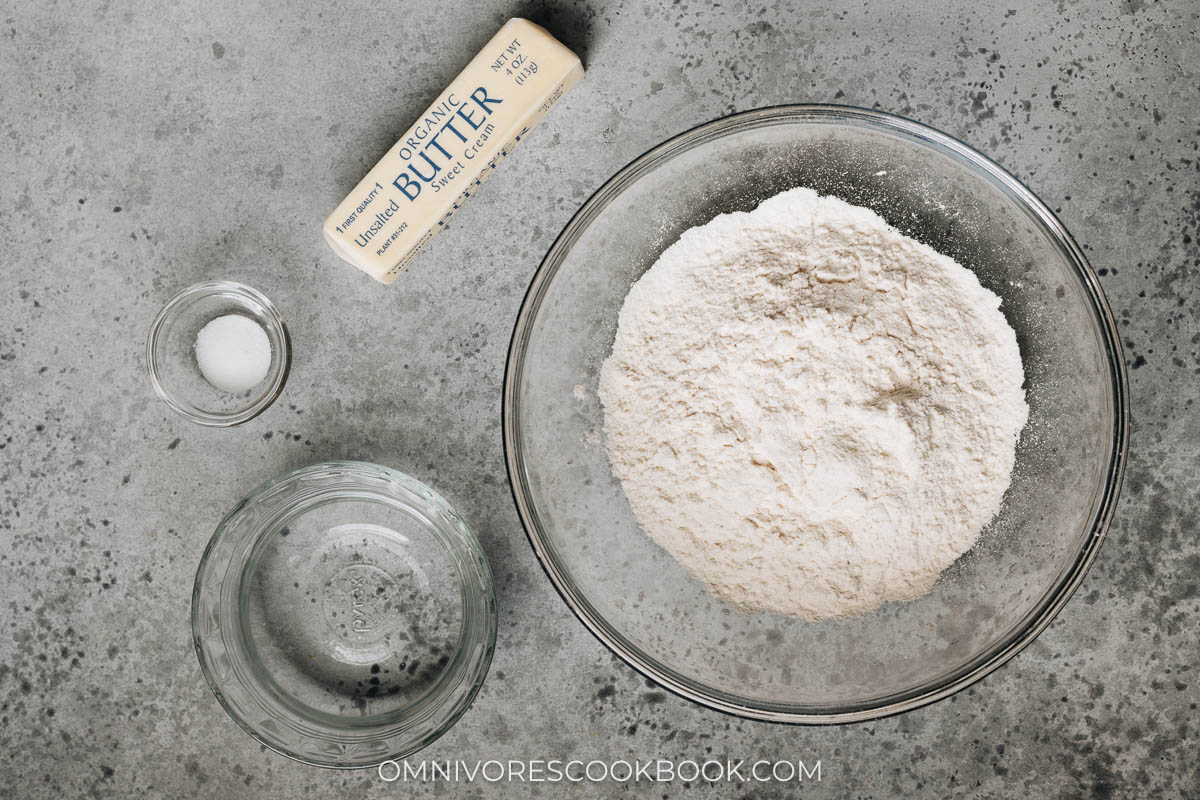
The portuguese egg tart crust consists of just four common pantry ingredients:
All-purpose flour Butter Water Salt
From these simple ingredients, you’ll be creating a layered pastry dough that makes a super flaky and crispy crust just like professional bakeries.
Ingredients for the custard
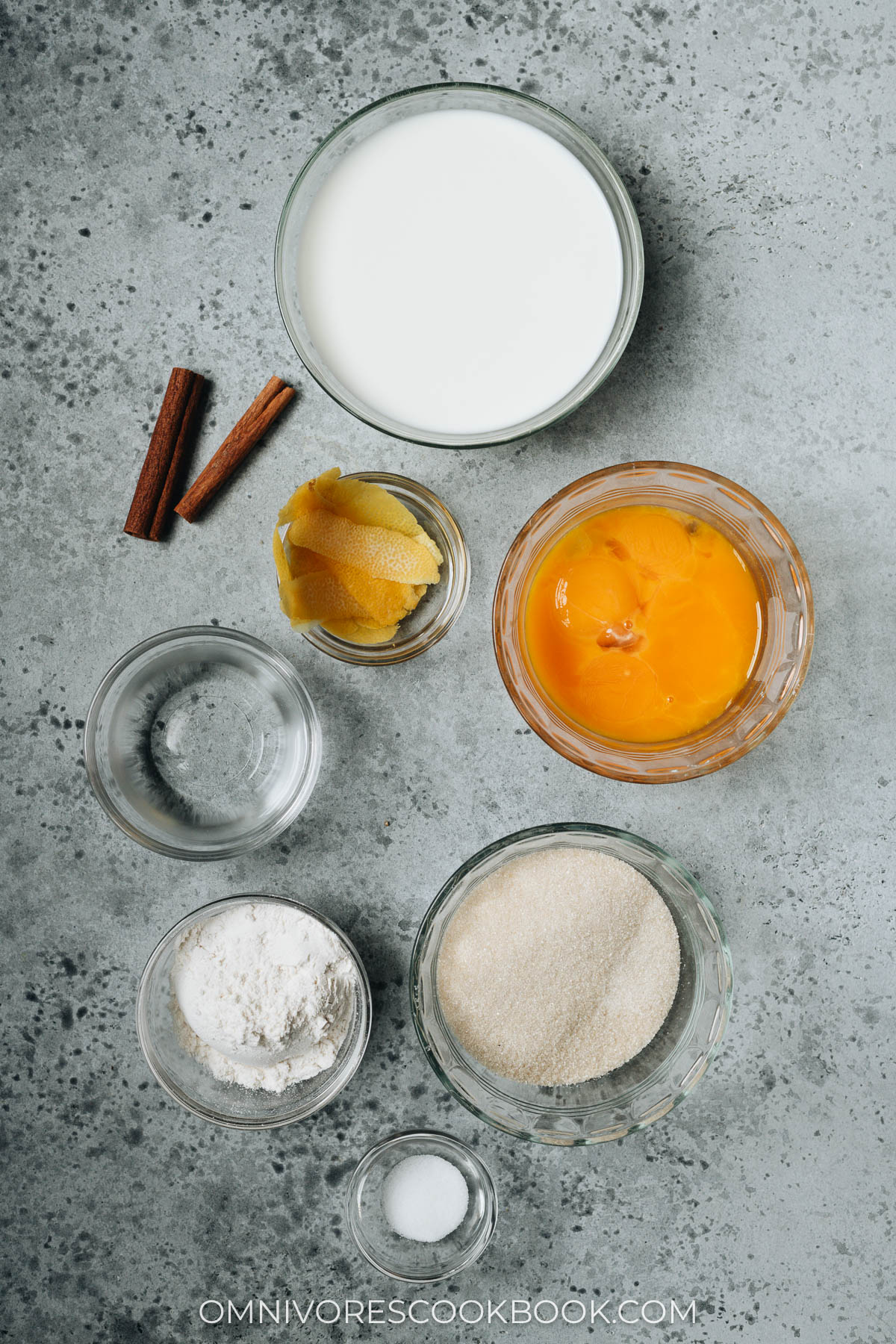
The ingredients for the custard are quite simple as well and you can probably find everything in your fridge and pantry:
Milk Egg yolks All-purpose flour Sugar Lemon Cinnamon sticks Water
A lot of Portuguese egg tart recipes use vanilla instead of cinnamon sticks. For me, I find the latter flavor more complex and unique. You can use either flavoring method depending on your taste. This recipe creates a rich, creamy custard that is aromatic and not too sweet. It pairs perfectly with the crispy crust to create a dessert that is irresistible!
How to make Portuguese egg tart
Prepare the dough
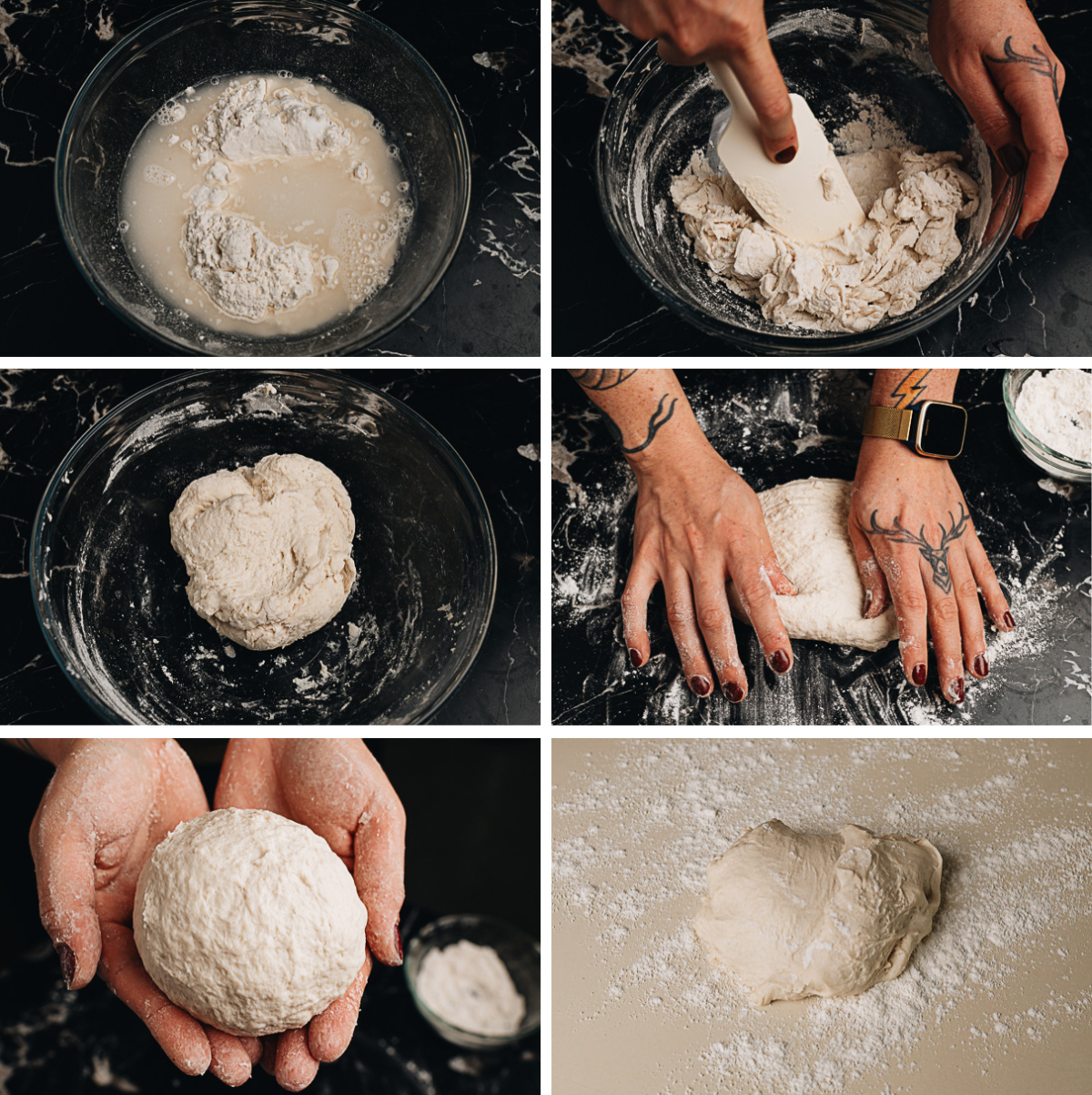
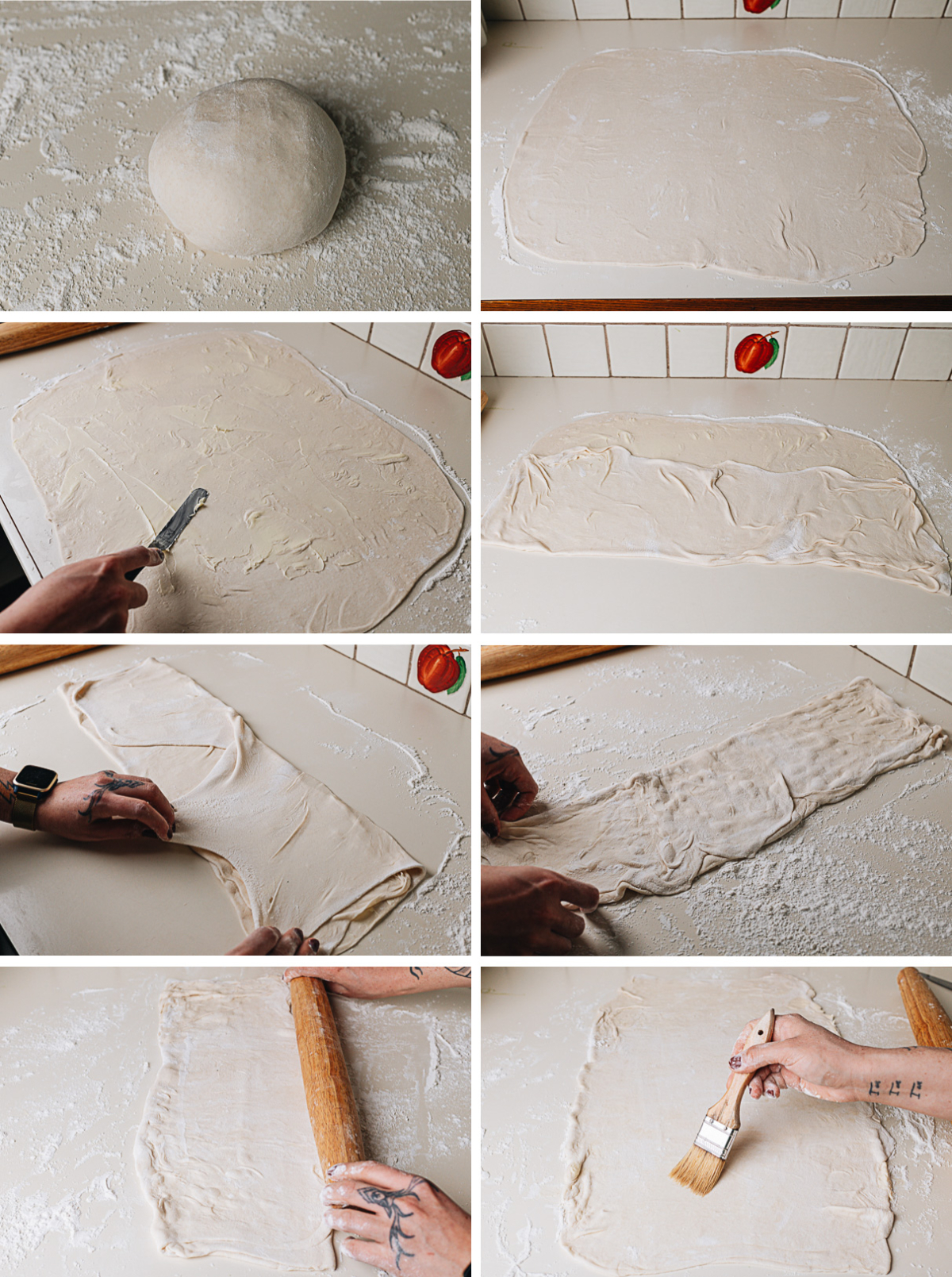
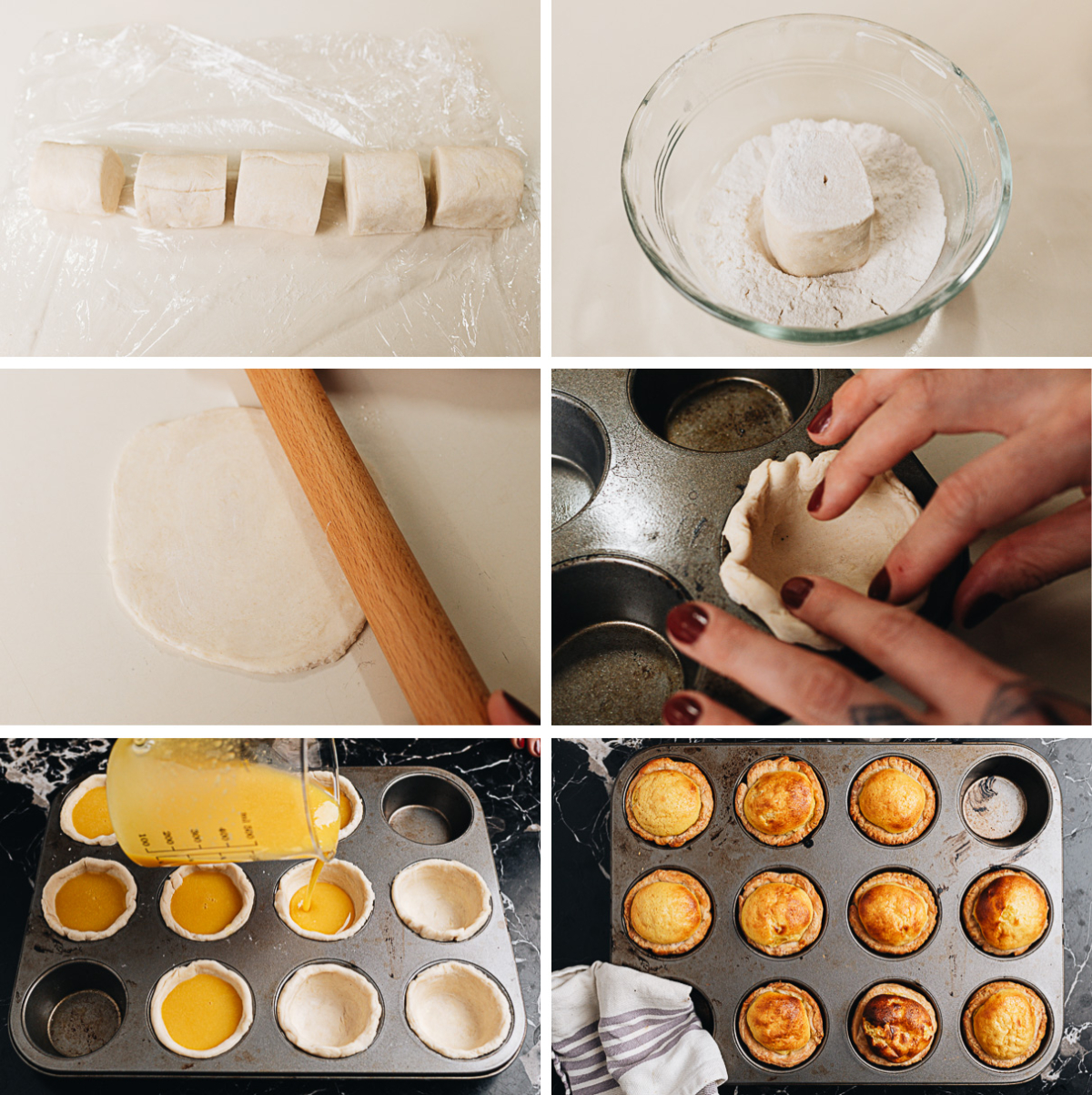
Make the pastry dough – 1st part
This way, you’ll have made a pastry dough with many thin layers.
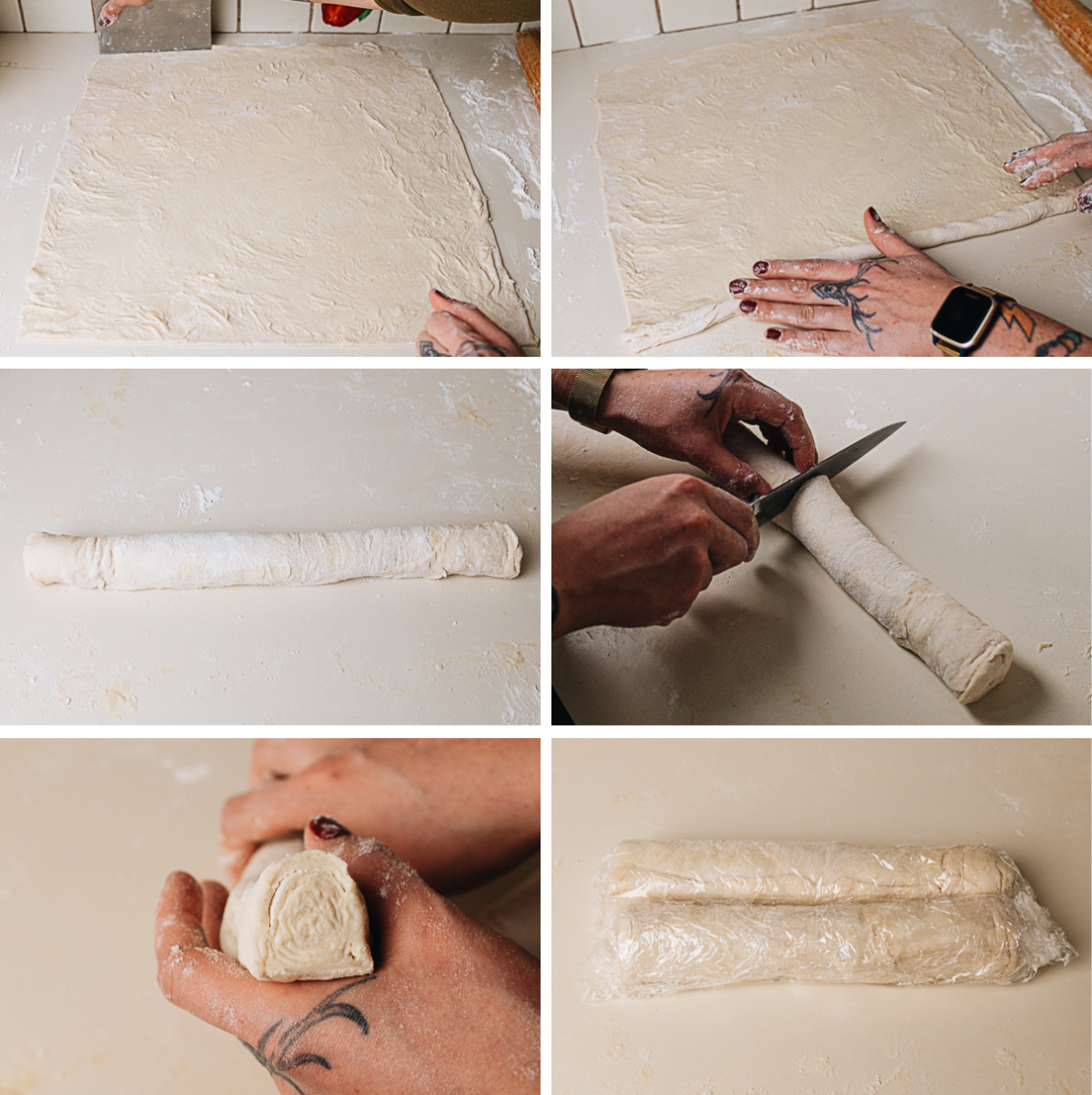
Make the pastry dough – 2nd part
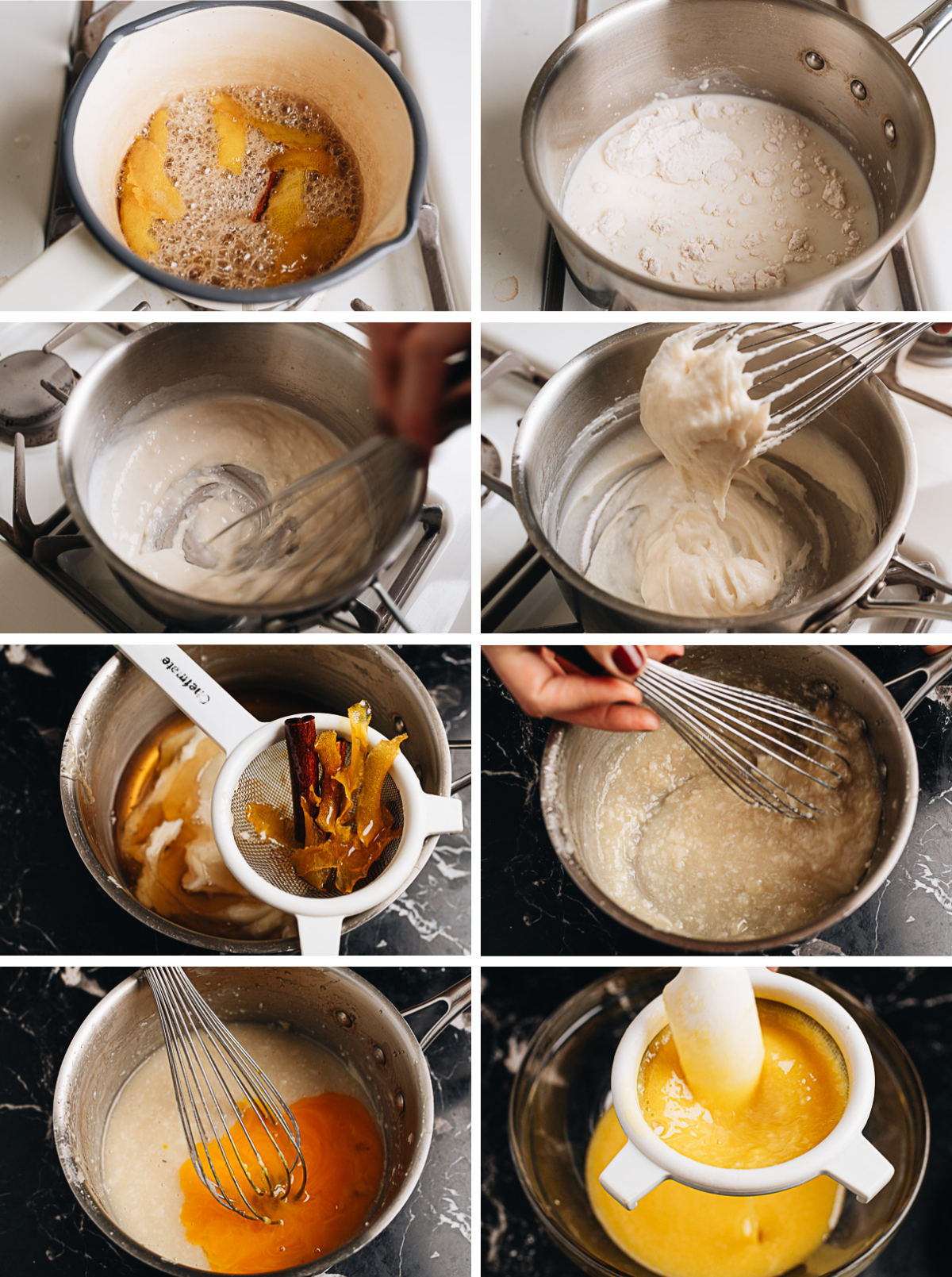
Cook the custard
Assemble the egg tarts and bake
Once baked, you will need to let the egg tarts rest for a few minutes. The top of the tarts will deflate once rested. Now you can enjoy the tarts while warm, or wait until they’ve cool off to room temperature.
How to store and reheat Portuguese egg tart
Portuguese egg tarts taste the best when they’re fresh out of the oven. If you’re serving them the same day you make them, you can store them loosely covered at room temperature. For longer storage, seal them in a container and store it in the fridge for a few days. You can always warm up refrigerated egg tarts in the oven before serving. These Portuguese egg tarts are perfect for breakfast, afternoon tea, and snacks throughout the day. My favorite way is to pair them with a cup of hot tea.
Common questions
Why does my egg tart not have the char on the top?
If your oven’s heating element sits on the bottom of the oven, your egg tarts might not caramelize properly. Your best bet is to use a blow torch to brown the top after the tarts are baked. Do not over bake these tarts to get the top charred. It will result in over cooking the custard and make it less creamy.
What is the difference between Portuguese and Chinese egg tarts?
Chinese egg tarts, or Hong Kong egg tarts, have a shortcrust pastry and a smoother, more gelatinous custard filling. The Chinese version does not have the caramelized top that is characteristic of the Portuguese tart. You can refer to my Hong Kong egg tarts recipe.
How to reheat Portuguese egg tart in an air fryer?
You can heat up the egg tarts at 300°F in the air fryer for a couple of minutes to warm them through before serving.
Other delicious Chinese bakery recipes
Pineapple Cake (凤梨酥), A Simplified Version Taro Bread Chinese Walnut Cookies (核桃酥) Red Bean Bread (豆沙包) Coconut Mochi (糯米滋, Lo Mai Chi)