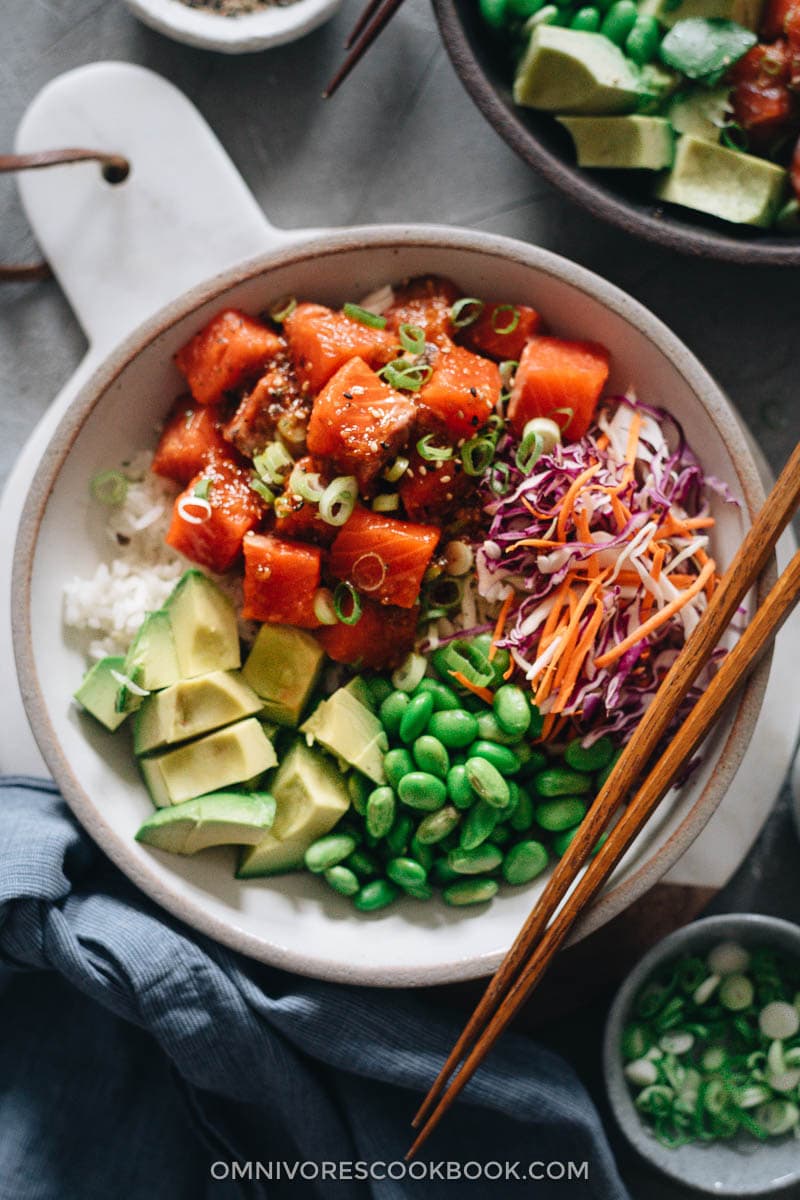
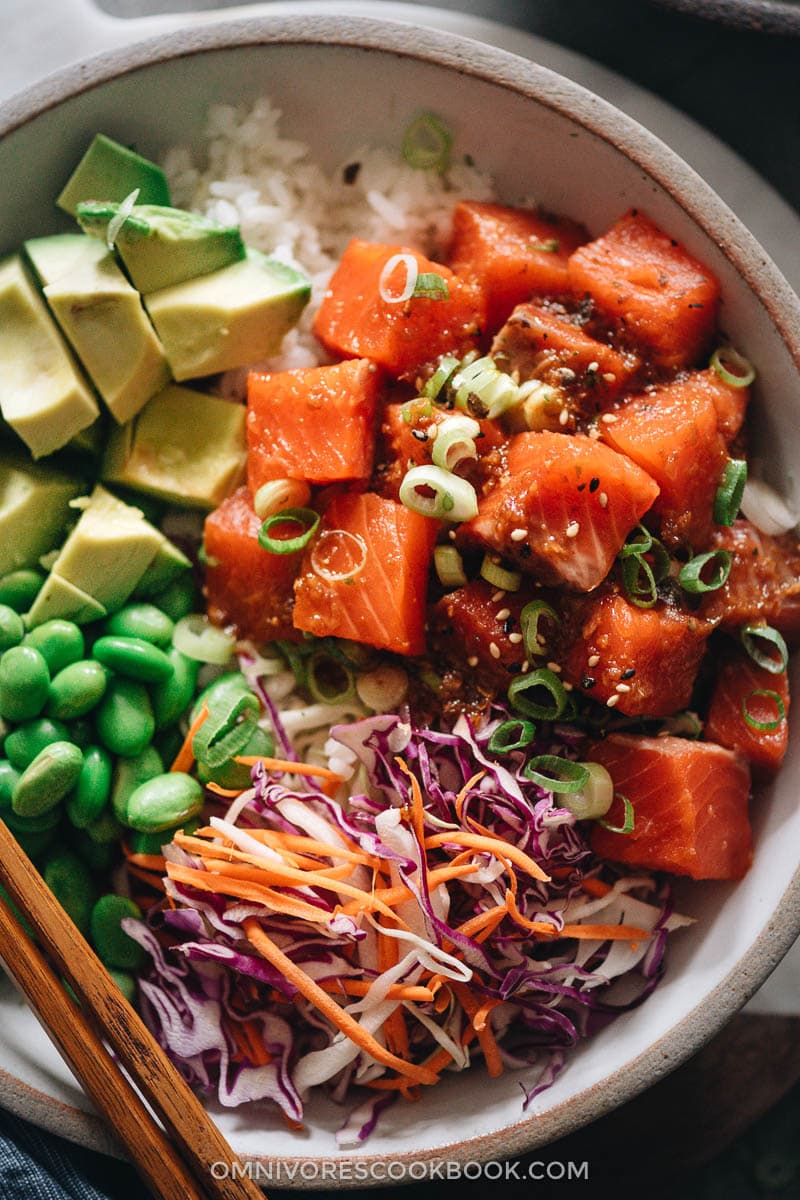
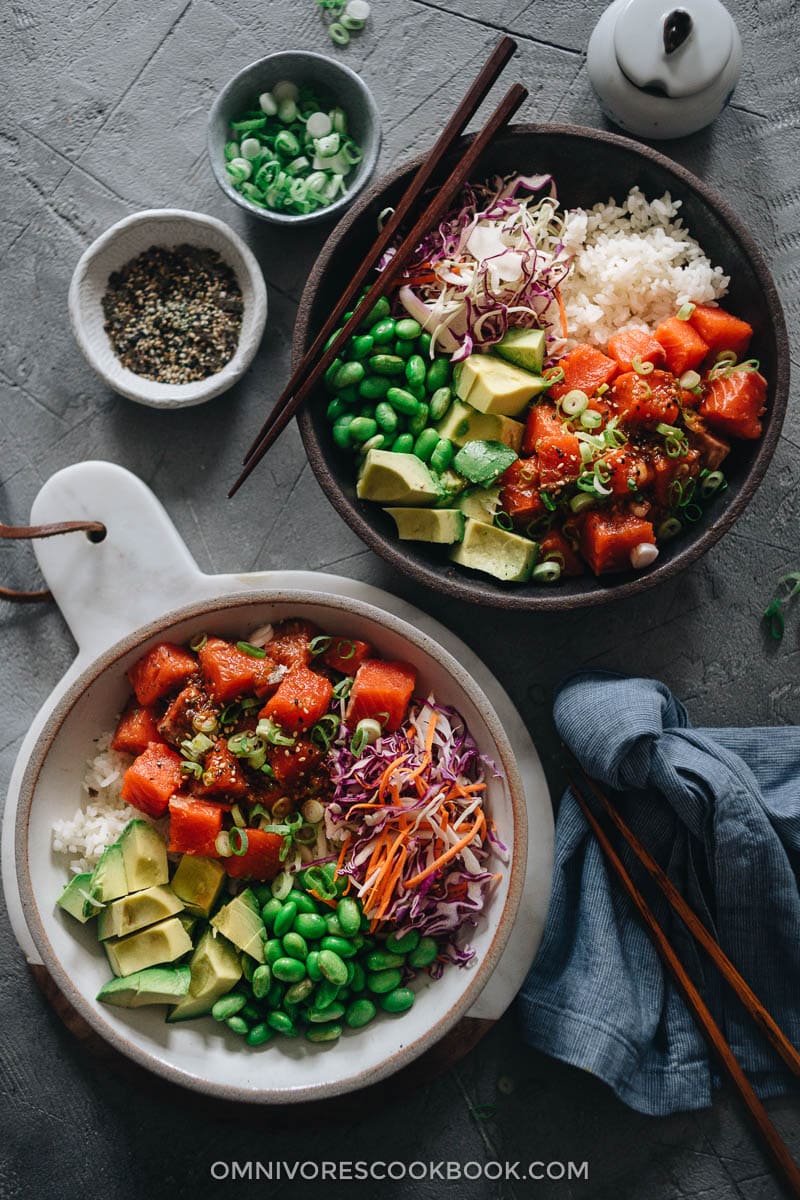
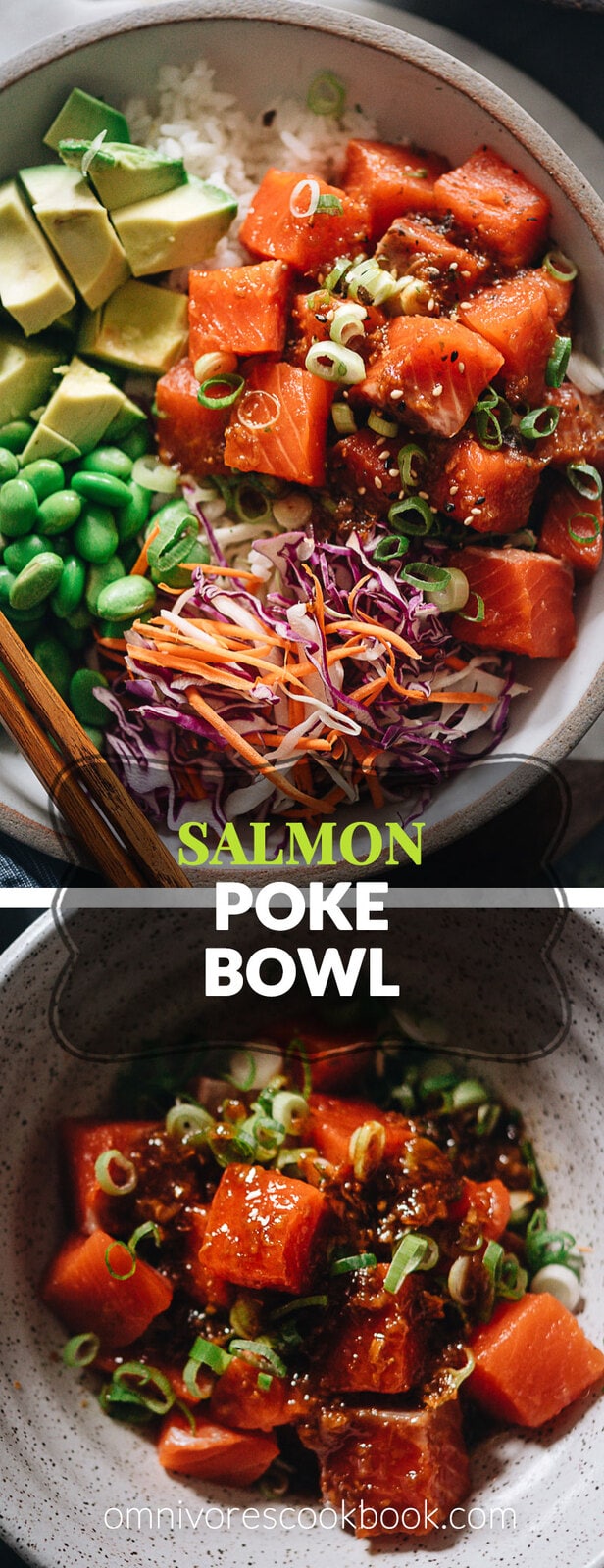
Summer means poke! Mmm… There’s really only one dish I crave when I’m hankering for a delicious combination of contrasting textures and vibrant colors and flavors that take me to the beach. A main dish of native Hawaiian cuisine, poke is basically diced raw fish, traditionally tuna, salmon, or octopus, marinated in Asian seasonings. It has strong Japanese influences, which is why the traditional marinade is made from ingredients such as soy sauce and rice vinegar. My approach to the recipe was to keep it simple and refreshing. I used the traditional approach with fresh aromatics to create a rich sauce that goes perfectly with the salmon. The other day, when I was testing the recipe, my friend came over and insisted I let him try it out. I was so nervous because he’s from Hawaii. To my biggest relief, he LOVED the taste and finished the whole bowl. So I’m proud to say that this recipe is Hawaiian-approved!
An introduction to sushi-grade salmon
Why frozen salmon
Choosing a high-quality salmon not only makes a difference in the taste of your dish, but for raw seafood especially, you want to make sure it’s 100% clean and safe to eat. The FDA Food Code states that fish eaten raw should be frozen at -4 degrees Fahrenheit for a minimum of seven days, or for 15 hours at a temperature of -31 degrees F. Fish for sushi usually uses the latter approach, called flash freezing. The process kills the parasites while retaining the texture of the fish. And you can usually find a “sushi grade” label on fish that’s processed this way. That’s why a poke recipe usually recommends using frozen salmon instead of fresh salmon.
Where to buy sushi-grade salmon
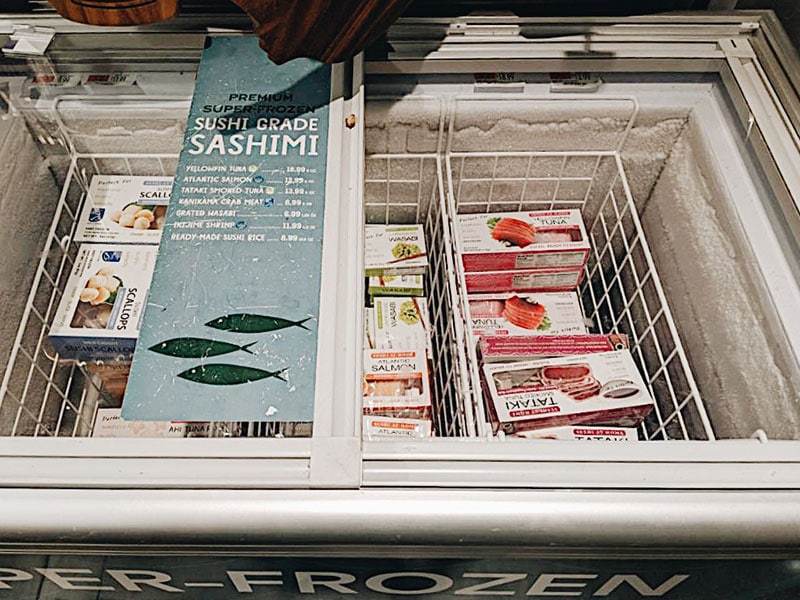
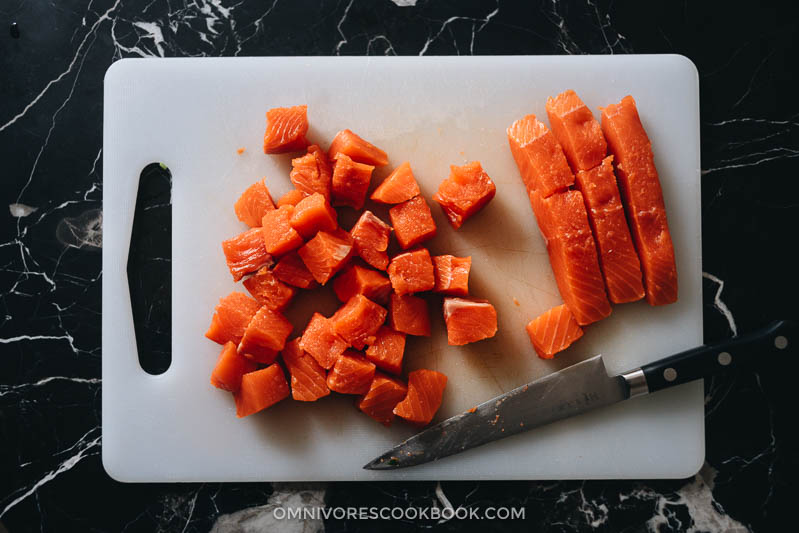
You can usually find sushi-grade salmon in a high-end grocery store, in the freezer session near the fish and seafood section. For example, the Whole Foods near us carries various kinds of sushi-grade fish – skinned, cut into rectangular pieces, and packaged in boxes. When I was living in Austin, we usually went to Central Market to buy sushi-grade salmon and tuna. For this recipe, I used Sockeye salmon from the Copper River Prince William Sound Marketing Association. It’s a non-profit in rural Alaska that works on behalf of 540 fishing families to help share their stories and their salmon with the world. Copper River salmon are handled with extreme care on their journey from net to plate. Their Sockeye salmon is robust and rich in flavor with a firm texture that makes it perfect for a poke bowl.
What to do if you cannot find sushi-grade salmon
Not all salmon have parasites. But they are usually more susceptible to parasites than other types of fish such as tuna. That’s why it’s always a good idea to buy frozen salmon. But when you cannot find sushi-grade salmon, using wild-caught salmon from a reliable source might be your next best option. Living in the wild and eating their natural diet, wild-caught salmon have a lower risk of contamination from man-made toxins. Also, they’re less likely to be exposed to antibiotics, pesticides, colorings, and other harmful substances used in some farm-raised fish. Farm-raised salmon usually grow up in poor crowded conditions, with higher rates of bacteria, parasites, and diseases.
Cooking notes
1. How to fast prepping the sauce
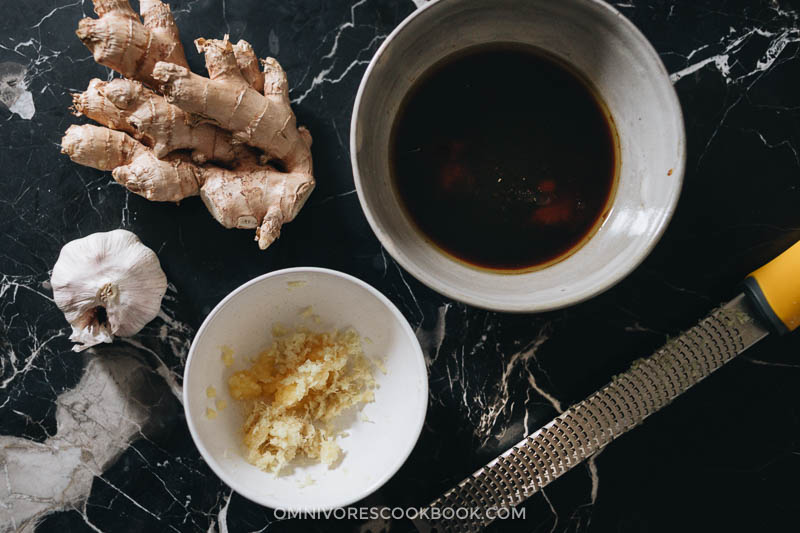
It’s important to finely grate the aromatics, so you won’t bite into big chunks of ginger and garlic. I usually use a garlic press to finely grate the garlic and a lemon zester to grate the ginger. Not only does this speed up your prep, but it also makes your sauce texture really fine. Alternatively, you can mix the sauce ingredients with a hand blender.
2. Make sushi rice (optional but highly recommended)
In short, sushi rice is made with short-grain white rice, steamed just like regular rice with a piece of kombu (dried seaweed), then mixed with rice vinegar and sugar while hot, and chilled to room temperature. It is super easy to make and will make your poke bowl extra delicious. My go-to sushi rice recipe is from Just One Cookbook. When I’m super lazy, I usually skip soaking the rice, adding the kombu, and mix the rice in my rice cooker bowl instead. Of course, you can always use regular steamed rice for your poke bowl. Short grain white rice is the default grain for this recipe. But I would use brown rice or mixed grains if I wanted my dish extra healthy. I made extra sauce in this recipe, so you can drizzle more sauce onto your rice if you’re not making sushi rice.
3. Keep the toppings simple
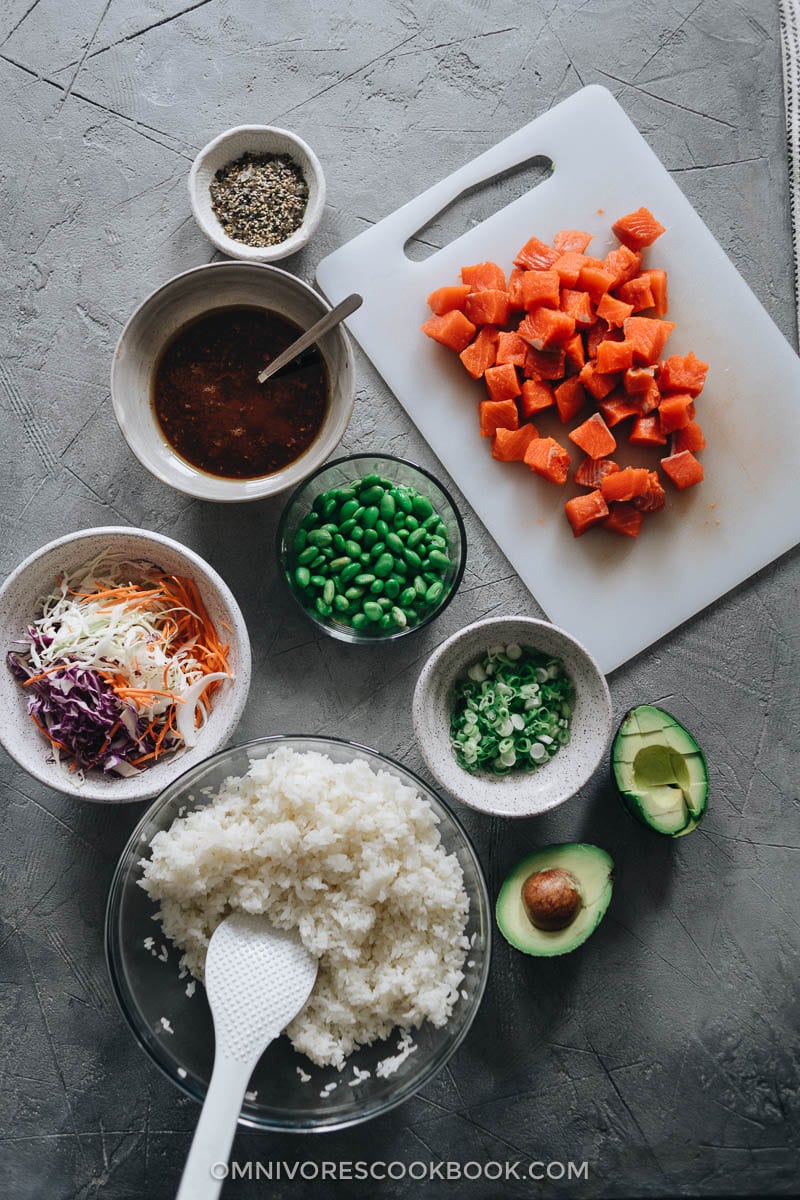
There are many ways to garnish your poke bowl, but I find that simplicity is key. Some common veggies that go well with the salmon poke bowl include:
Avocado (highly recommended) Cabbage (or coleslaw mix) Blanched spinach Finely chopped kale, in small amounts Rehydrated wakame (a type of dried seaweed, usually used in Japanese salads) Blanched edamame Sliced or cubed cucumber Thinly sliced radish, in small amounts
I always use avocado in my salmon poke bowl, simply because it naturally goes so well with raw fish and adds a beautiful buttery texture. You can choose another one or two ingredients from the list, but you don’t want the veggies to overpower the fish. Some nice garnishes include:
Toasted sesame seeds Dried nori sheets, cut into strips Furikake (Japanese rice seasoning, made with sesame seeds, nori, salt, and sugar) Japanese pickled ginger
Many poke bowl recipes use salmon roe or other types of fish roe (caviar). If you have those on hand, it’s nice to add a small spoon to your bowl. Because fish roe are usually very salty, you should reduce the amount of sauce according to your taste.
4. Storage
The salmon poke bowl tastes the best when served fresh. If you’re planning to serve the dish later, you can always make the sauce and cook the rice beforehand. It takes no time to assemble the dish. On the other hand, if you’ve already made the poke bowl and have leftovers, you can store it in an airtight container for a day. The salmon will slowly cook in the vinegar and slightly change its texture, but the result will remain tasty.
More easy dinner recipes
30-Minute Salmon Noodle Bowl with Coleslaw Chicken Udon Soup Easy Beef Fried Rice Honey Soy Sauce Glazed Salmon Crispy Salmon with Ginger Soy Sauce
If you give this recipe a try, let us know! Leave a comment, rate it (once you’ve tried it), and take a picture and tag it @omnivorescookbook on Instagram! I’d love to see what you come up with.