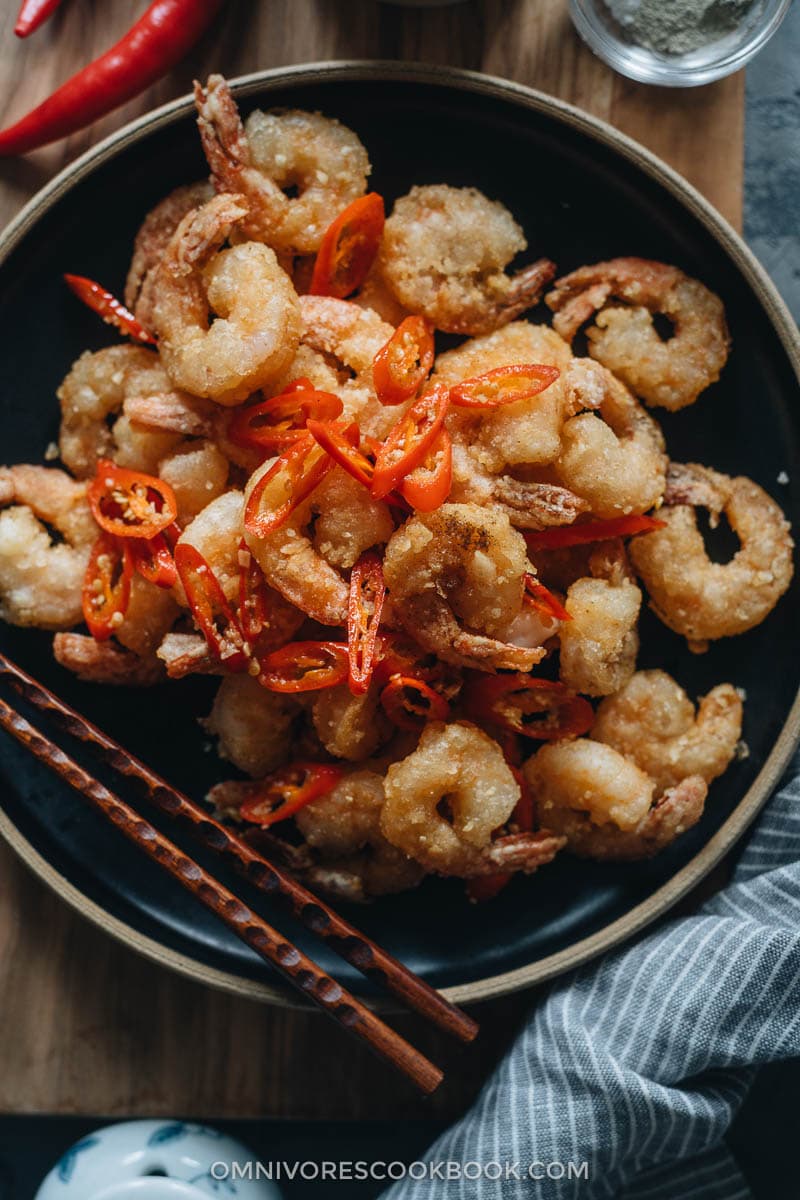
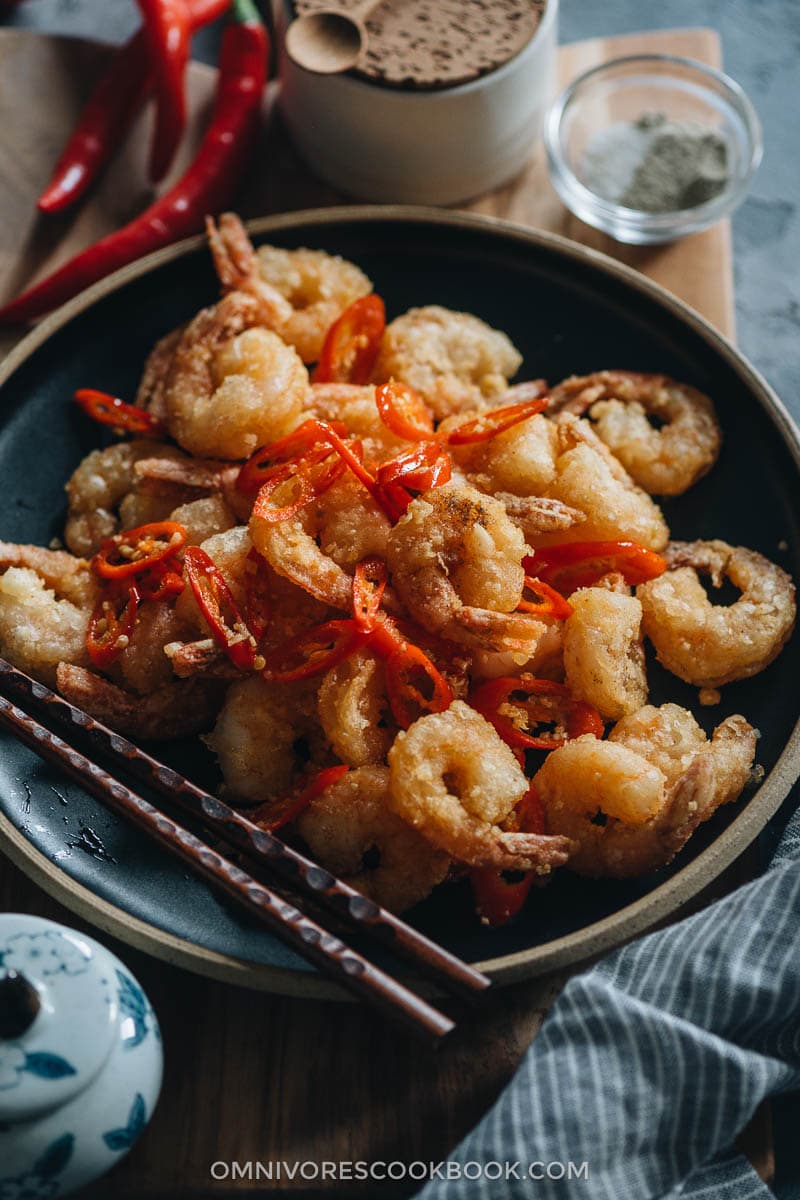
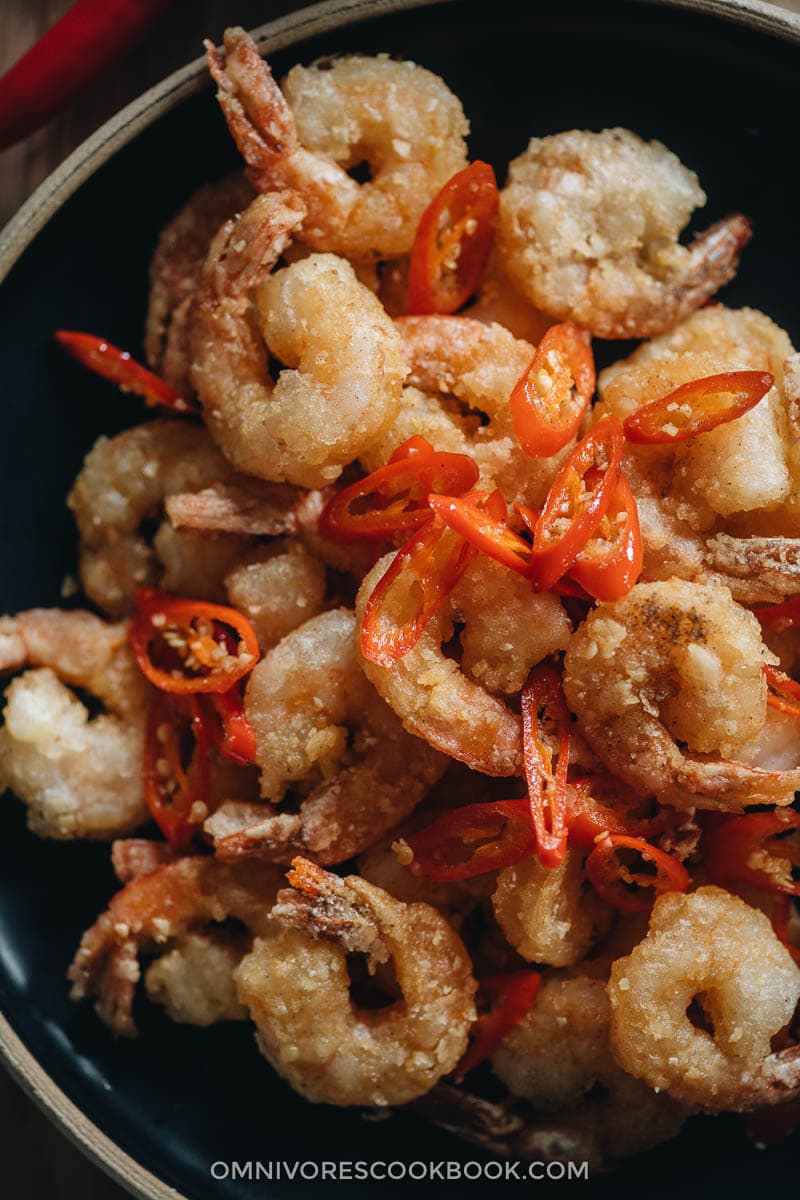
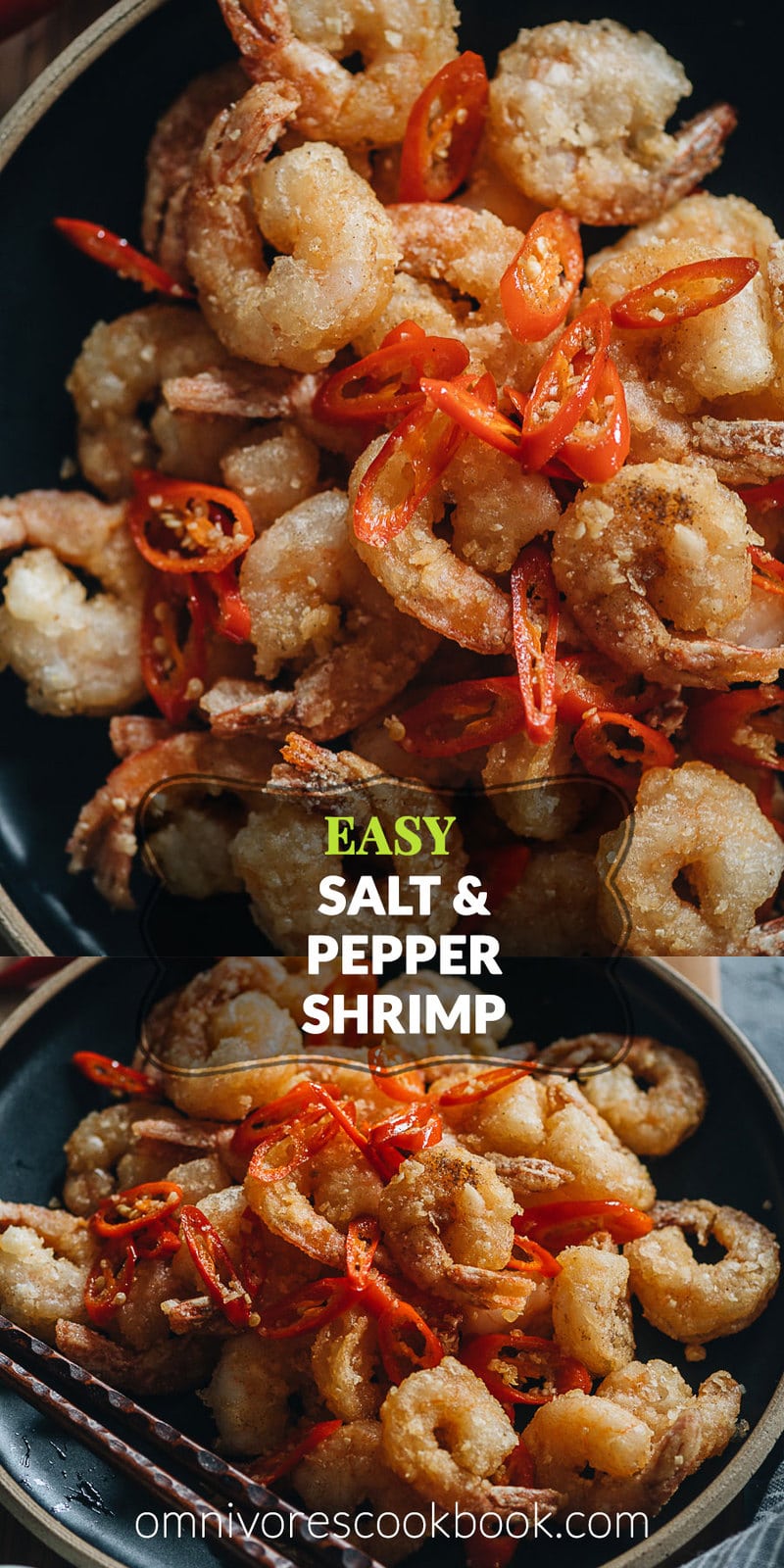
Growing up in Northern China, seafood was quite expensive and was typically an occasional treat. Salt and pepper shrimp was always one of my favorite appetizers when we went to a restaurant. Back in China, restaurants usually use head-on shrimp with the shell to make this dish. The shrimp are lightly battered and fried until crispy, and tossed in a salt and pepper mixture. It tastes heavenly served with cold beer. Making salt and pepper shrimp in a home kitchen, I made some small adjustments and used peeled shrimp instead. Even though fried shrimp shells are OK to eat and are supposed to have a lot of calcium, it’s not my favorite part. Plus, when I’m busy, I do like to use peeled and deveined frozen shrimp to make my life easier.
Cooking process
Cooking salt and pepper shrimp is so easy. The cooking process is separated into two parts.
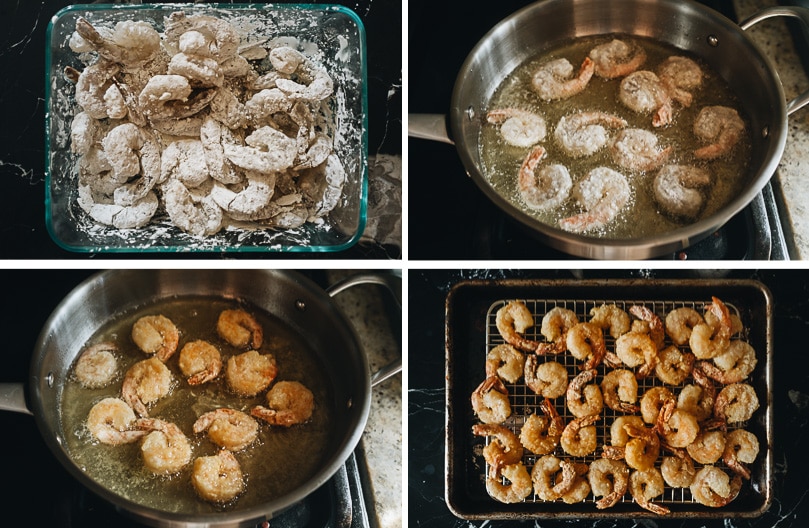
Part 1 – shallow fry the shrimp
Coat the shrimp with cornstarch Shallow fry both sides until cooked through and crispy Drain the shrimp on a wire rack to get rid of the excess oil
Note: you can drain the shrimp on paper towels as well, but I prefer to avoid this method because it might make the bottom of the shrimp soggy.
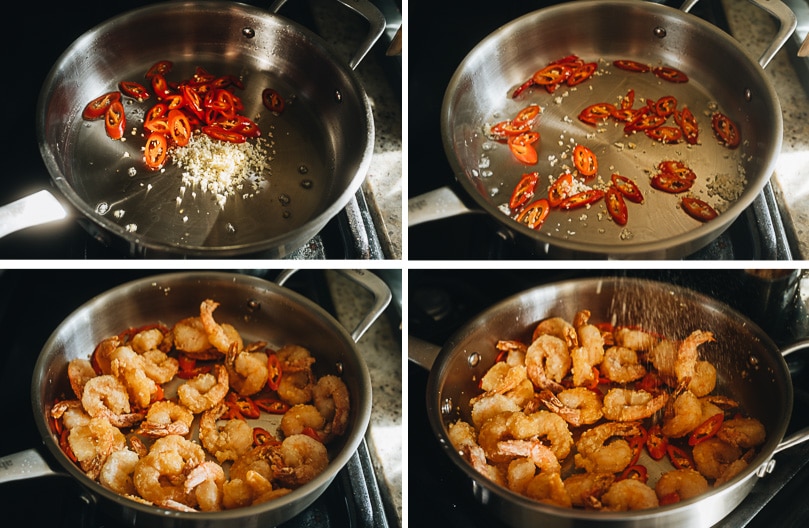
Part 2 – Toss the shrimp with aromatics
Saute garlic and chile pepper to release fragrance Toss the shrimp with the garlic and chile pepper Add the salt and pepper mixture and toss again
That’s it! You will get super juicy and crispy shrimp that are bursting with flavor. It’s best to serve the dish immediately when the shrimp are hot. But the coating stays crispy pretty well and will remain tasty even after the shrimp cool off a bit.
Cooking notes
(1) Leave the shrimp tails on
I prefer to use frozen shrimp when I’m busy. If you bought shell-on shrimp, try to leave the tails on when you peel the shrimp. I find it easy to grab the tail of the shrimp when you coat them in the batter.
(2) Salt and pepper mixture
The classic northern salt and pepper mixture always uses one part salt and one part white pepper. If you have Sichuan peppercorns on hand, you can replace the white pepper with ground Sichuan peppercorn to create a different flavor profile, like the ones in Sichuan restaurants.
(3) How much oil to use
You can use very little oil to pan fry the shrimp. But I found that the texture gets so much better if you add enough oil to cover half of the shrimp to shallow fry them. The coating will turn fluffy, crispy, and a bit crunchy.
More delicious shrimp recipes
Honey Garlic Shrimp Crispy Baked Coconut Shrimp Shrimp Egg Foo Young Cheesy Shrimp Baked Spring Rolls 3-Ingredient Fried Shrimp 15-Minute Shrimp Soup with Tofu and Kale
If you give this recipe a try, let us know! Leave a comment, rate it (once you’ve tried it), and take a picture and tag it @omnivorescookbook on Instagram! I’d love to see what you come up with. Lilja Walter is a part of the Omnivore’s Cookbook team and worked closely with Maggie to develop and test this recipe.