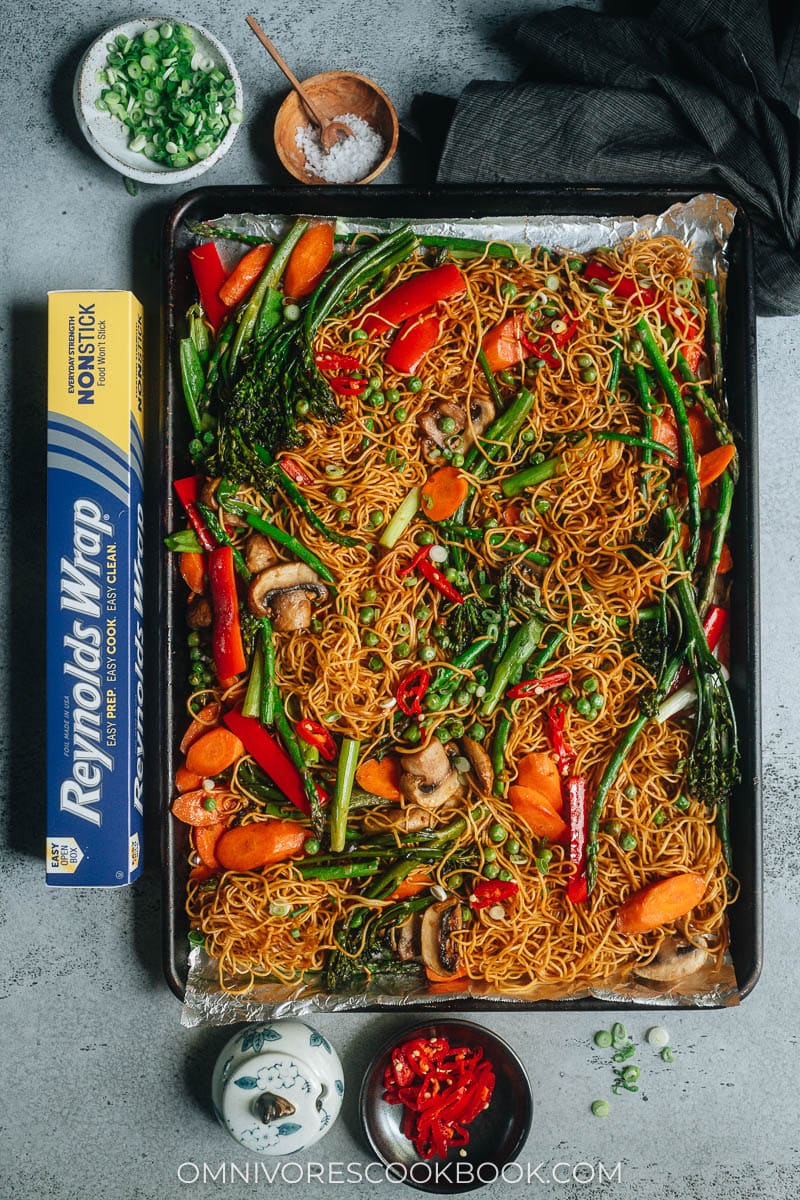
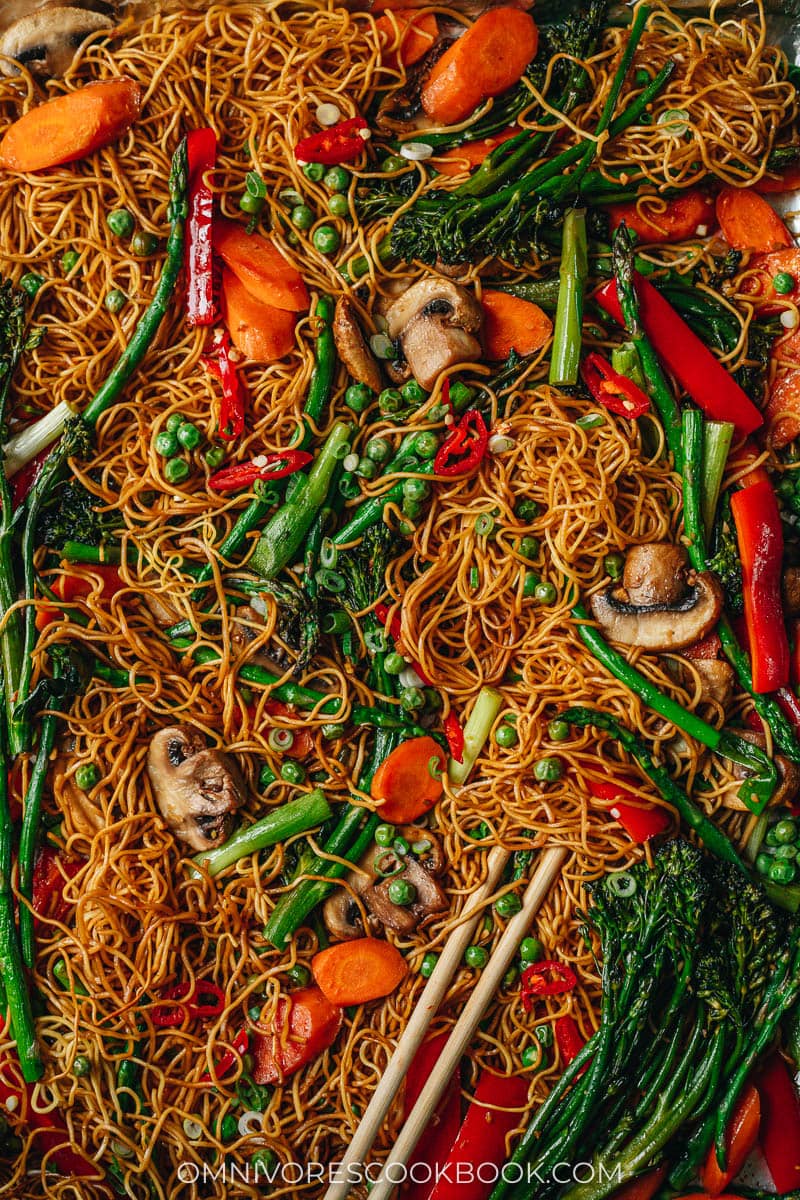
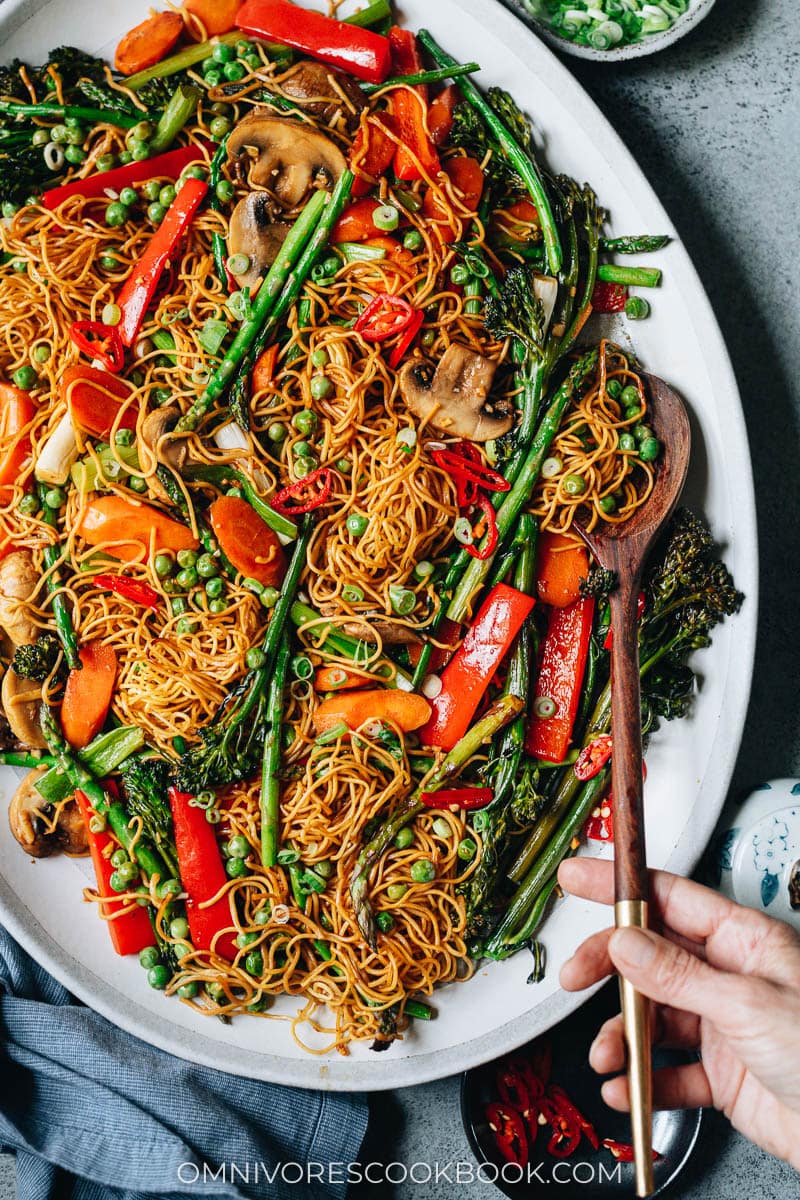
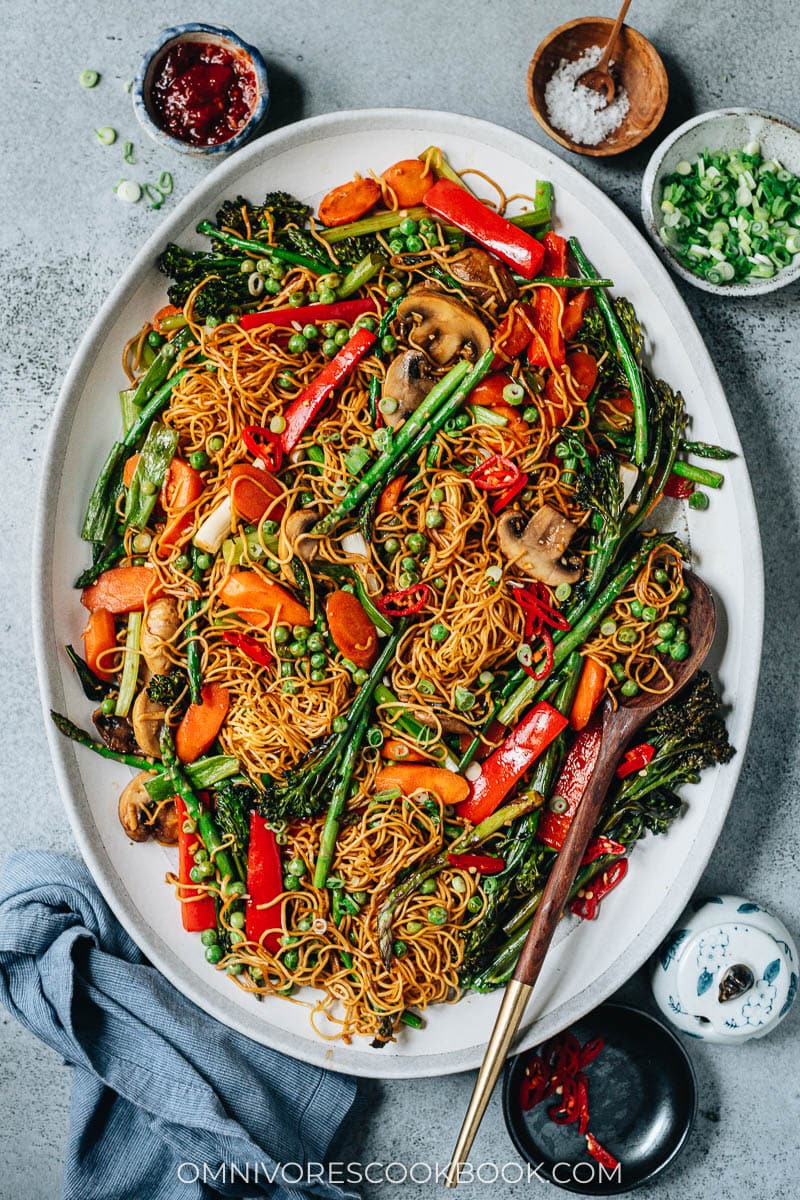
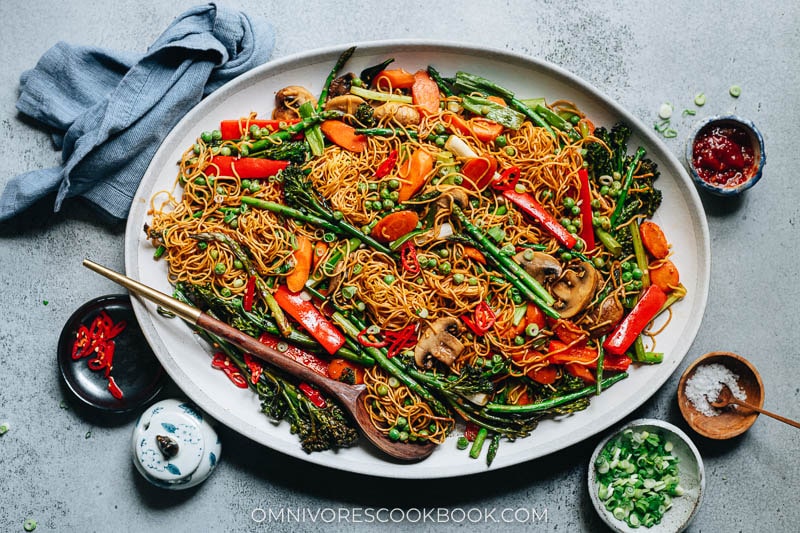
Introducing a super easy sheet pan chow mein recipe that features beautifully charred noodles loaded with colorful vegetables. It takes no time to put together, requires very little active cooking time and the clean-up is a breeze! {Vegetarian} In the past I’ve shared many traditional fried noodle recipes such as vegetable lo mein, vegetarian chow mein, and soy sauce pan fried noodles. Lately, I have been inspired by the sheet pan noodle recipe from Hetty McKinnon’s latest cookbook To Asia, With Love. I tried out the method at home and was very impressed with the result, so today I can’t wait to share this method with you.
Why sheet pan chow mein
There are a few benefits to making noodles using a sheet pan:
You can create a big batch of noodles that’s loaded with vegetables. With a large skillet, you would need to cook the ingredients separately without making the pan temperature drop too much. With the sheet pan method, you can load vegetables onto the noodles.You need very little active cooking time, so you can work on different dishes while the noodles are roasting.Cleanup is a breeze. I used Reynolds Wrap® Non-Stick Foil to line the sheet pan, which helps the starchy noodles lift right off with no mess.The result is amazing with less oil. Reynolds Wrap® Non-Stick is made with a non-stick coating on one side (the dull side), so there’s no need to add cooking spray or oil. All I did was coat the ingredients with a thin layer of peanut oil (for flavor and cook time), which is way less than what you would have to use in a regular stir fry. The noodles are beautifully charred with the vegetables roasted to perfection.
How to make sheet pan chow mein
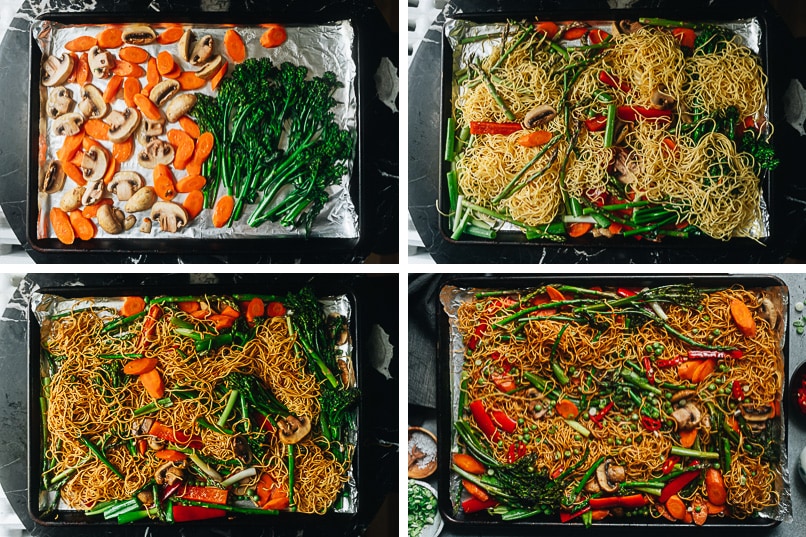
Making sheet pan chow mein couldn’t be easier. The key is to use a slightly high oven temperature. Not only do the ingredients roast faster this way, but the noodles will also come out nice and crispy. All you need to do to prep is briefly cook the noodles and cut the vegetables. Then to cook and assemble: That’s it!
TIP:
When you combine the noodles with the tender vegetables, try to expose as much of the noodles as possible and cover up some of the vegetables. So the noodles will brown nicely, and the vegetables will be slightly steamed until tender yet crisp. Make sure to use Reynolds Wrap® Non-Stick Foil to line up your sheet pan, and remember to keep the dull side up, which is the non-stick side. I really like to use their product for this sheet pan chow mein because it crisps up the noodles quite well. The starchy noodles and sticky brown sauce won’t stick to the foil, making serving and cleanup a breeze.
How to select your own vegetables
In this recipe, I used a number of spring vegetables because they’re in season, look the best, and are great for roasting. There are many other vegetable options as well. For example, use broccoli to replace broccolini. Use spicy peppers to replace the bell pepper. Use green beans to replace the green peas or the asparagus (if using fresh green beans, add them during the first roasting with the mushrooms etc. If using frozen, thaw and drain before adding). And you can use other types of mushrooms such as oyster mushrooms or Maitake to replace the white mushrooms. You can also use some greens such as chard or bok choy. In this case, make sure you cover the green leafy part with the noodles so the greens stay green without turning brown.
How to serve sheet pan chow mein
This sheet pan chow mein is bursting with flavor and has a delightful texture, making it a filling main dish. However, I also like to serve it on the side when I cook a full Chinese dinner. The best thing about the sheet pan chow mein is, you can cook your main dish while the noodles are roasting, so everything will come out together. No matter how you decide to serve the sheet pan chow mein, it will add many beautiful colors to your table. Not to mention, your meal will be delicious, balanced, and nutritious.
Delicious mains to serve with
Beef and Chinese Broccoli (芥蓝牛肉)Sesame BeefEasy Sweet and Sour MeatballsChinese Curry ChickenHoney Garlic Pork Chops