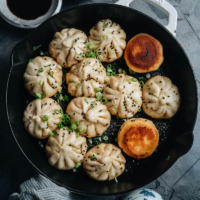
What is Sheng Jian Bao
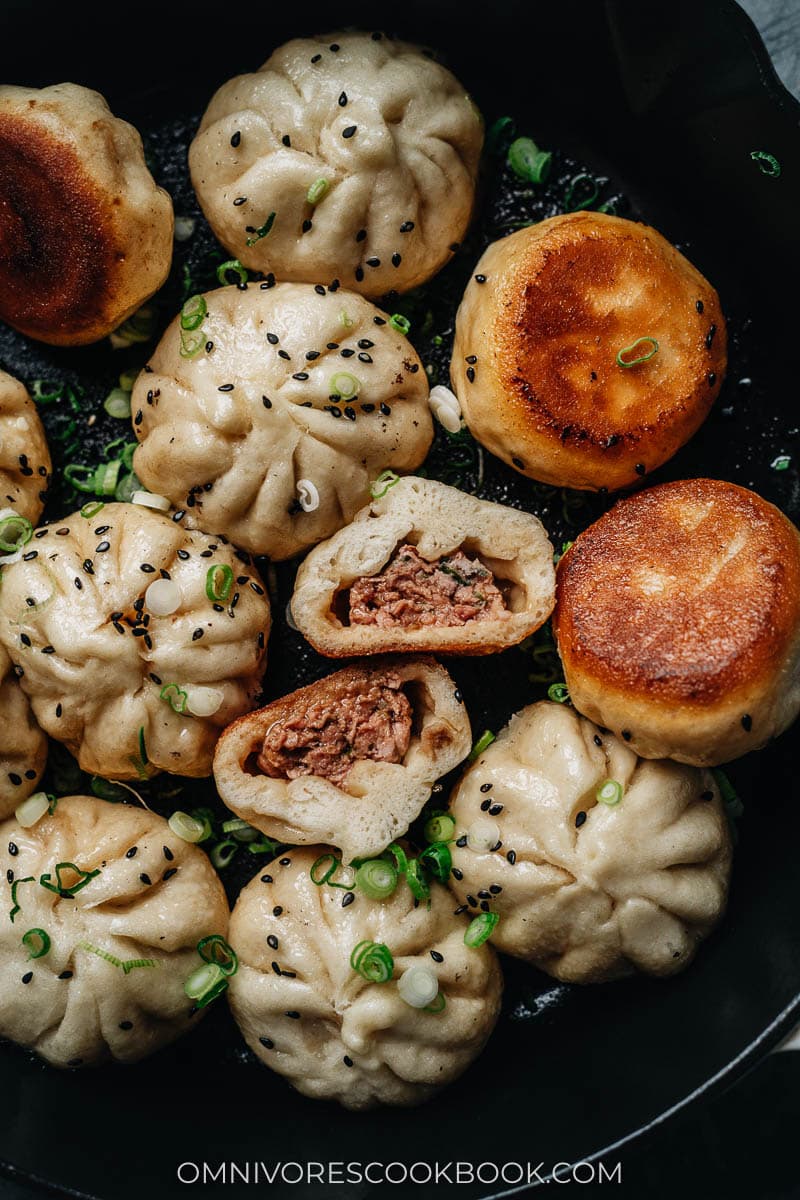
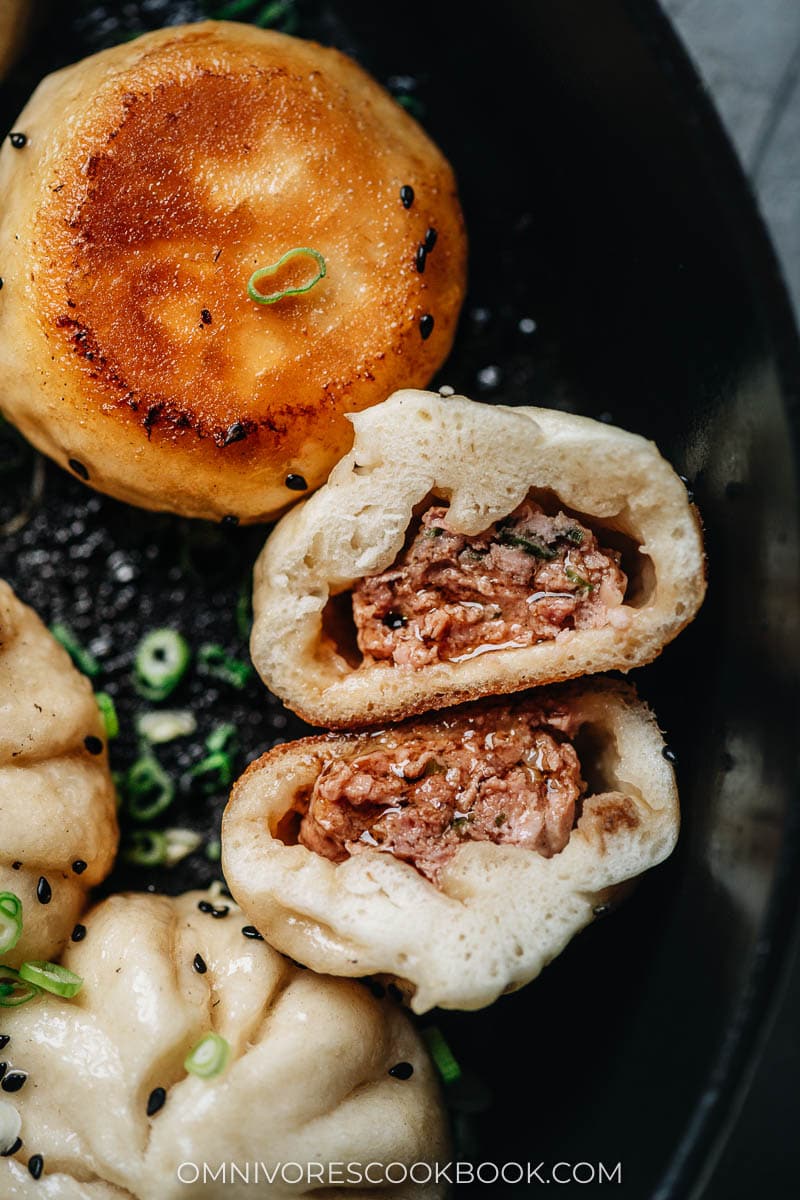
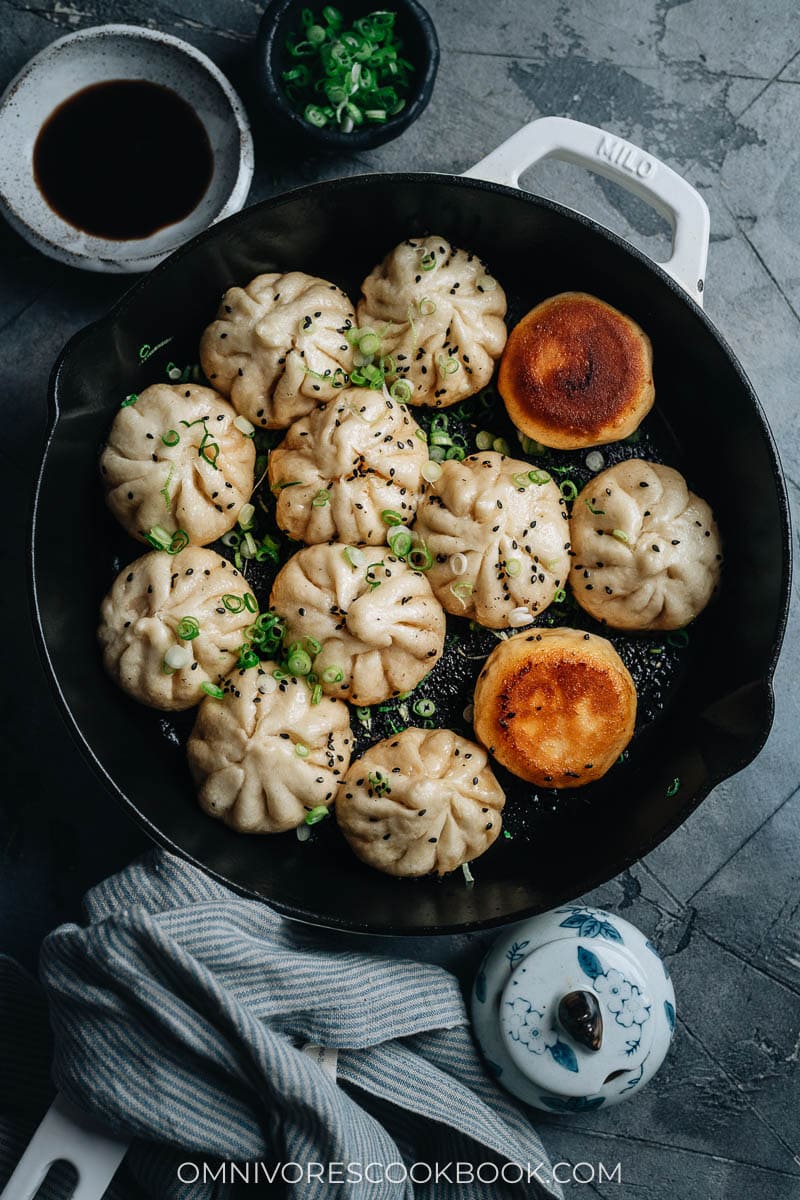
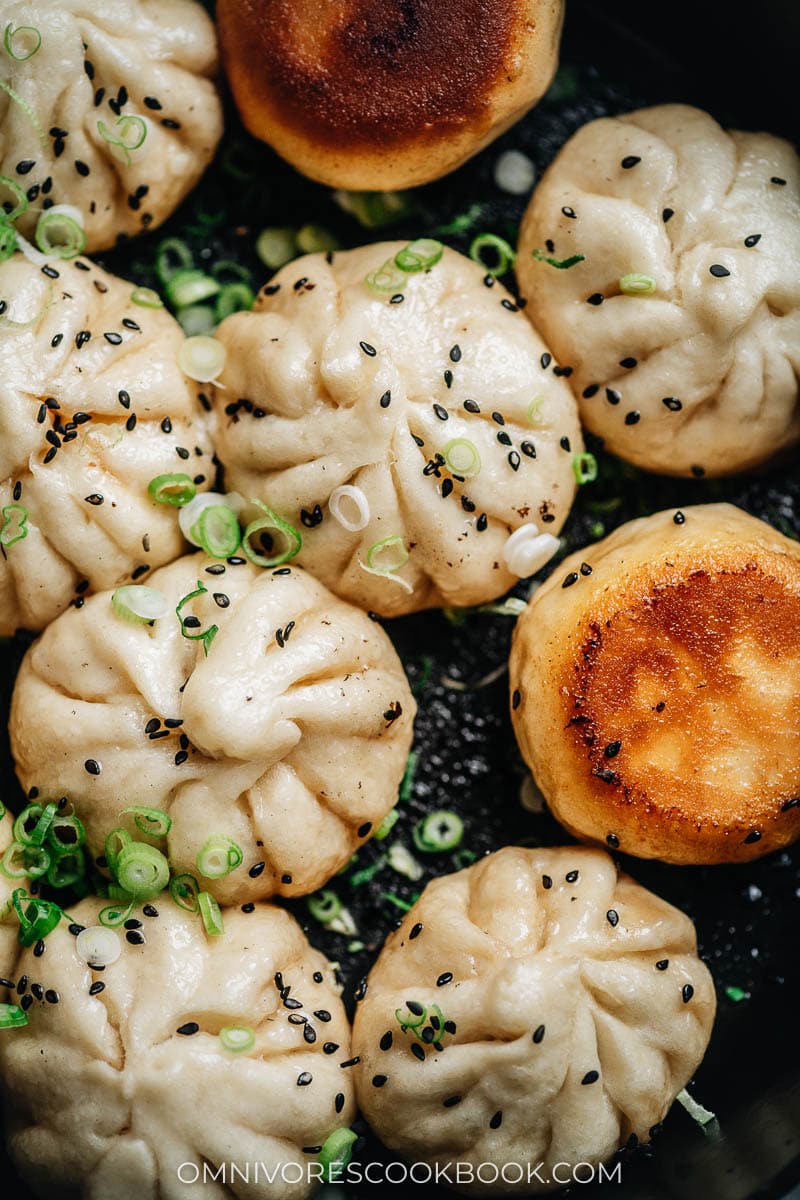
Sheng Jian Bao (生煎包), or directly translated as raw fried buns, is one of the signature dishes from Shanghai. By “raw”, it means you pan fry the buns without steaming them first, in which process the dough will rise and the bottom crisp up at the same time. The pan-fried pork bun is different from the steamed stuffed buns (known as ‘baozi’), which is steamed only. The filling is savory pork and green onion with a soupy texture. Imagine crispy potstickers, soup dumplings, and fluffy bread all combined together! One bite into it, and it awakens your taste buds with all the different textures and a rich umami. Since the 1900s, the people of Shanghai have enjoyed this tasty bun for breakfast, and now you can enjoy it at any time you like in your own kitchen.
Why this recipe
No gelatin required yet very juicy
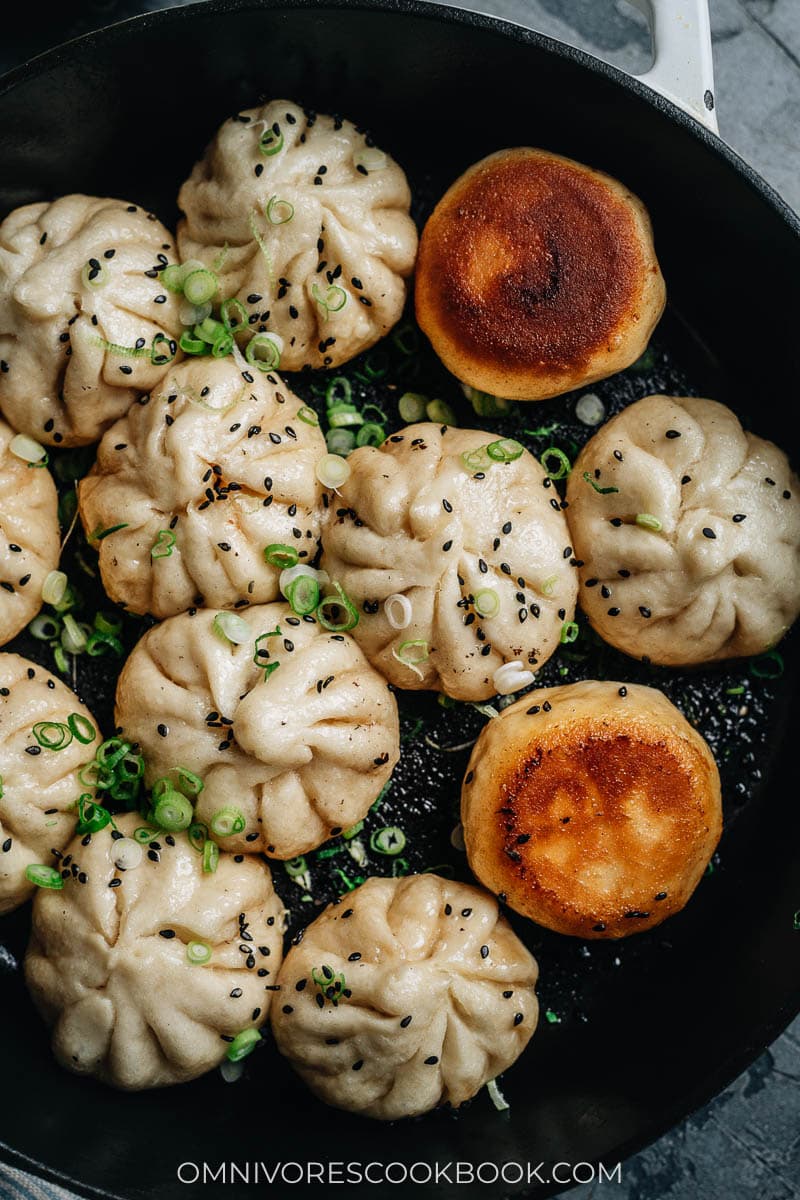
While many recipes for sheng jian bao use pork gelatin to create a soup-dumpling-like texture, it’s a time-consuming process. It requires pork skin or trotters, braised for many hours to get a rich soup, then chilled overnight. Plus, the yeast buns tend to absorb the soup during and after cooking, so they don’t even come out soupy. This version I have for you uses ginger-soaked water to increase the moisture in the filling so you get a juicy texture, yet it simplifies the cooking process. You can make it even juicier than that by using a fattier ground pork, like the type with 30% fat. Once cooked, the Sheng Jian Bao will have a very juicy and almost soupy filling. Also, you should know there are two ways to fry these sheng jian bao buns. The first method is to fry them pleat-side down. Or you can go with the flat-side down. I prefer using the latter method because it keeps the pleats pretty for a nice presentation and appearance.
Ingredients
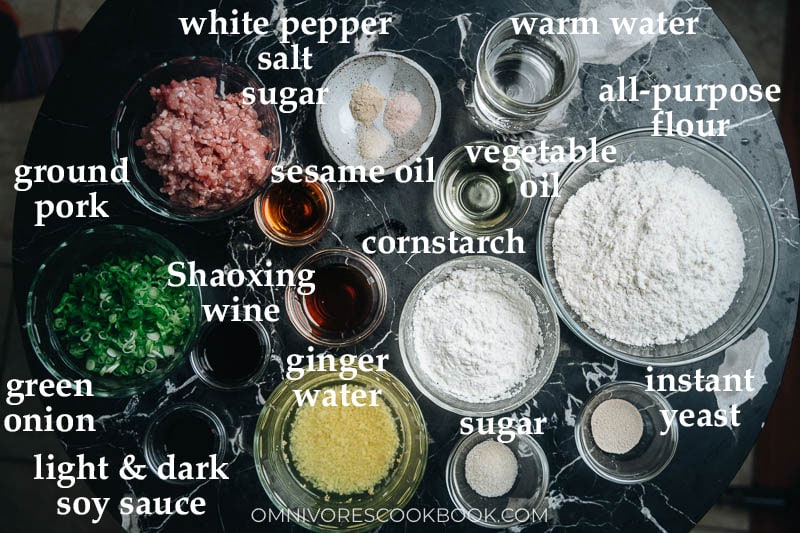
The best part of making Sheng Jian Bao at home is that it requires very basic ingredients you probably already have in your pantry. NOTE: you will need to use instant yeast instead of dry active yeast. Because the yeast dough is a bit finicky when pan frying and steaming. Using instant yeast produces a more consistent result. I listed the ingredients below just so you can see everything. When you make the dish, you don’t need to lay everything out in small plates.
Cooking process
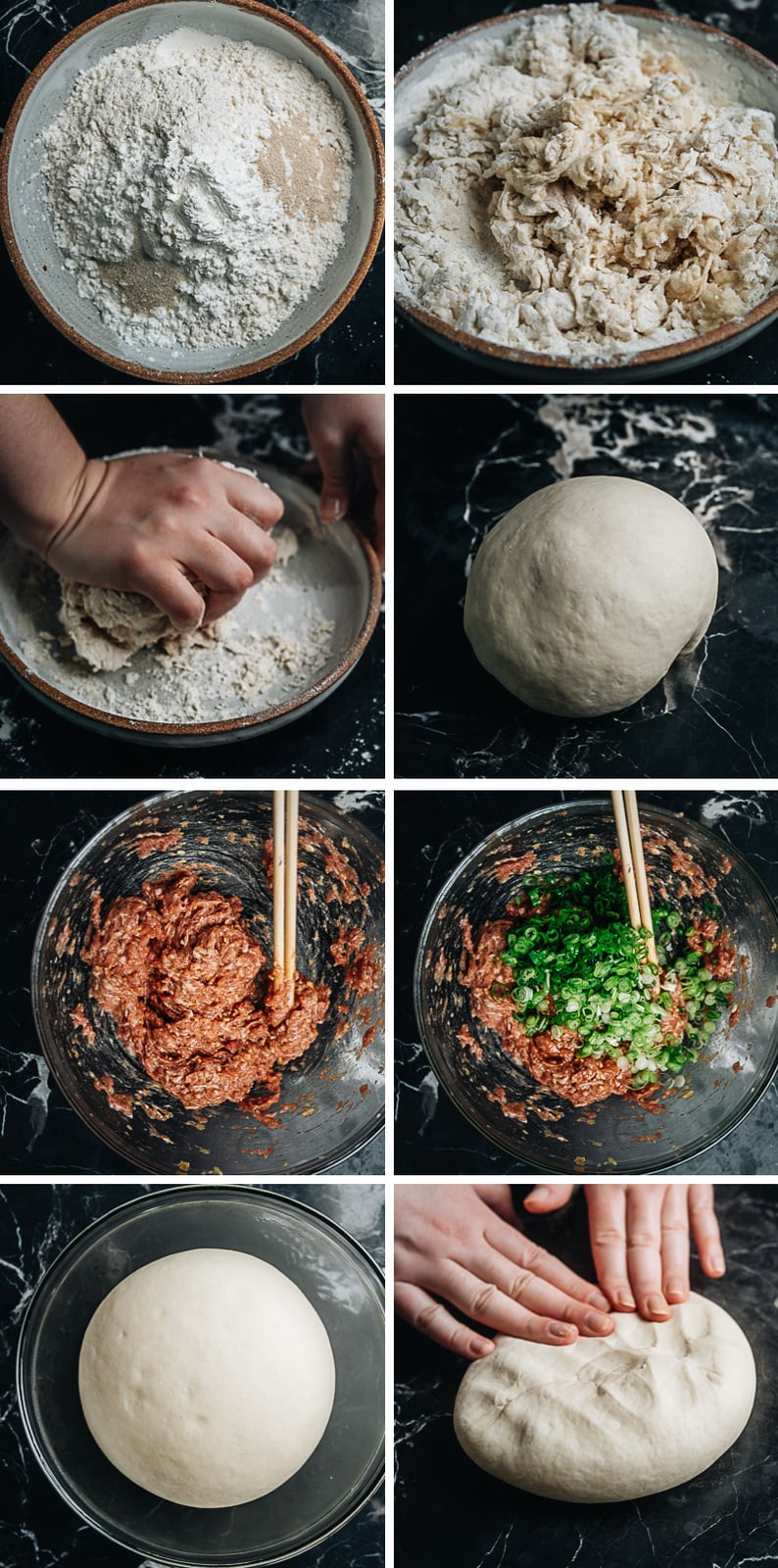
If you’ve made dumplings in the past, you’ll find the cooking process very straightforward. Even for a beginner, the dough is easy to put together. You don’t even need a stand mixer!
To prepare the dough and filling
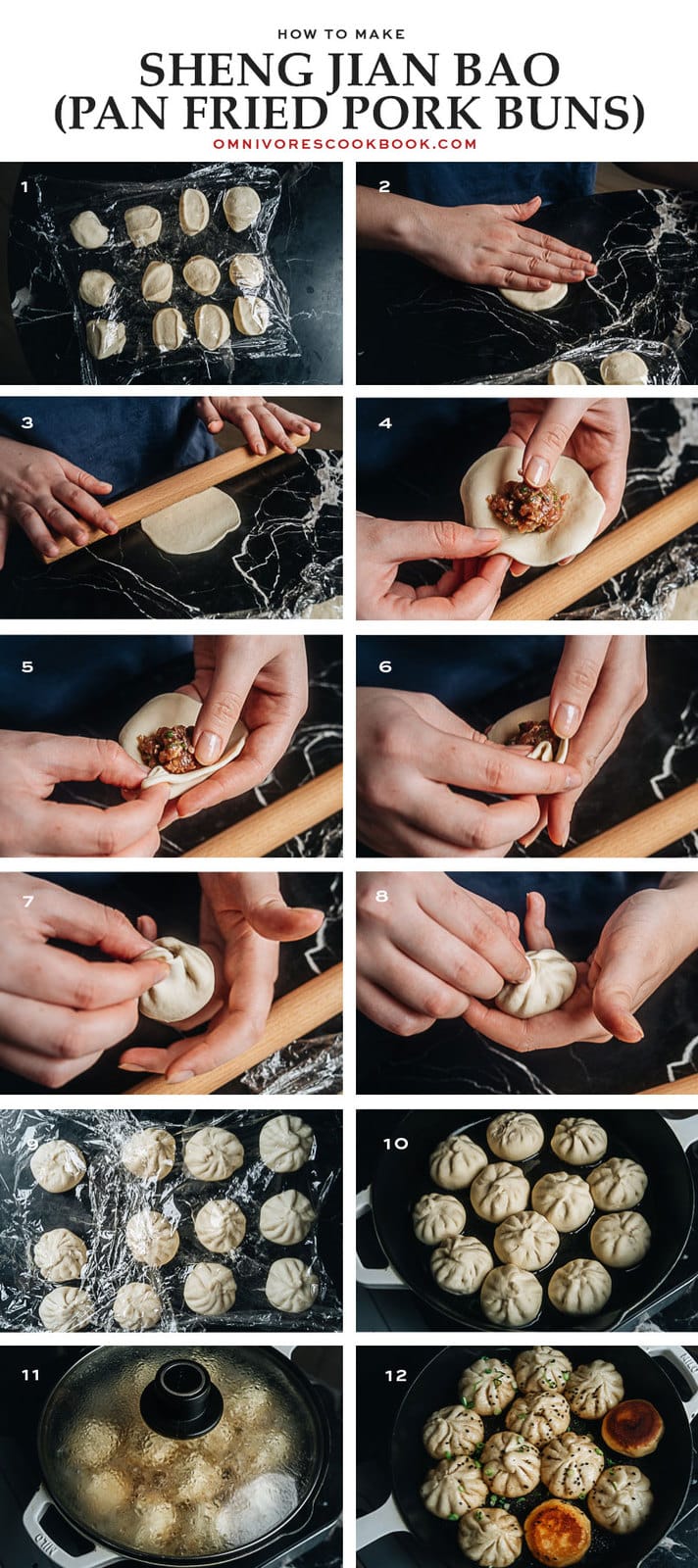
Assemble the buns
I highly recommend working on half a batch of buns at a time, so the dough won’t dry out and the filling won’t get soggy. NOTE: I recommend serving the buns immediately after cooking, so the filling will be extra soupy. If you let the buns sit for a while, the juice will gradually be absorbed by the skin and lose its moisture. It will still taste delicious, but it won’t have the soup dumpling effect.
Afterthoughts
You can store your leftovers in the fridge or freezer. I like making a big batch and freezing them so my husband and I can enjoy them whenever the mood strikes! As mentioned, in Shanghai, sheng jian bao is served for breakfast. I know the American palate is a bit different, though, so if you’re not keen on trying them for breakfast, make them as an appetizer or side dish for lunch or dinner. They’re so satisfying that you can even serve them as a main dish. Want to learn more about Chinese Cooking? Sign up for my newsletter to receive the 5-Day Chinese Cooking Crash Course and recipe update! If you give this recipe a try, let us know! Leave a comment, rate it (once you’ve tried it), and take a picture and tag it @omnivorescookbook on Instagram! I’d love to see what you come up with.
Other dumplings and buns recipes
Gua Bao (Taiwanese Pork Belly Buns, 割包)Baked BBQ Pork Buns (Char Siu Bao)Chinese Steamed Custard Buns (nai wong bao, 奶黄包)Addictive Kimchi Pork Steamed BunChinese Pork Belly Bun (Rou Jia Mo, 肉夹馍)
Lilja Walter is a part of the Omnivore’s Cookbook team and worked closely with Maggie to develop and test this recipe.