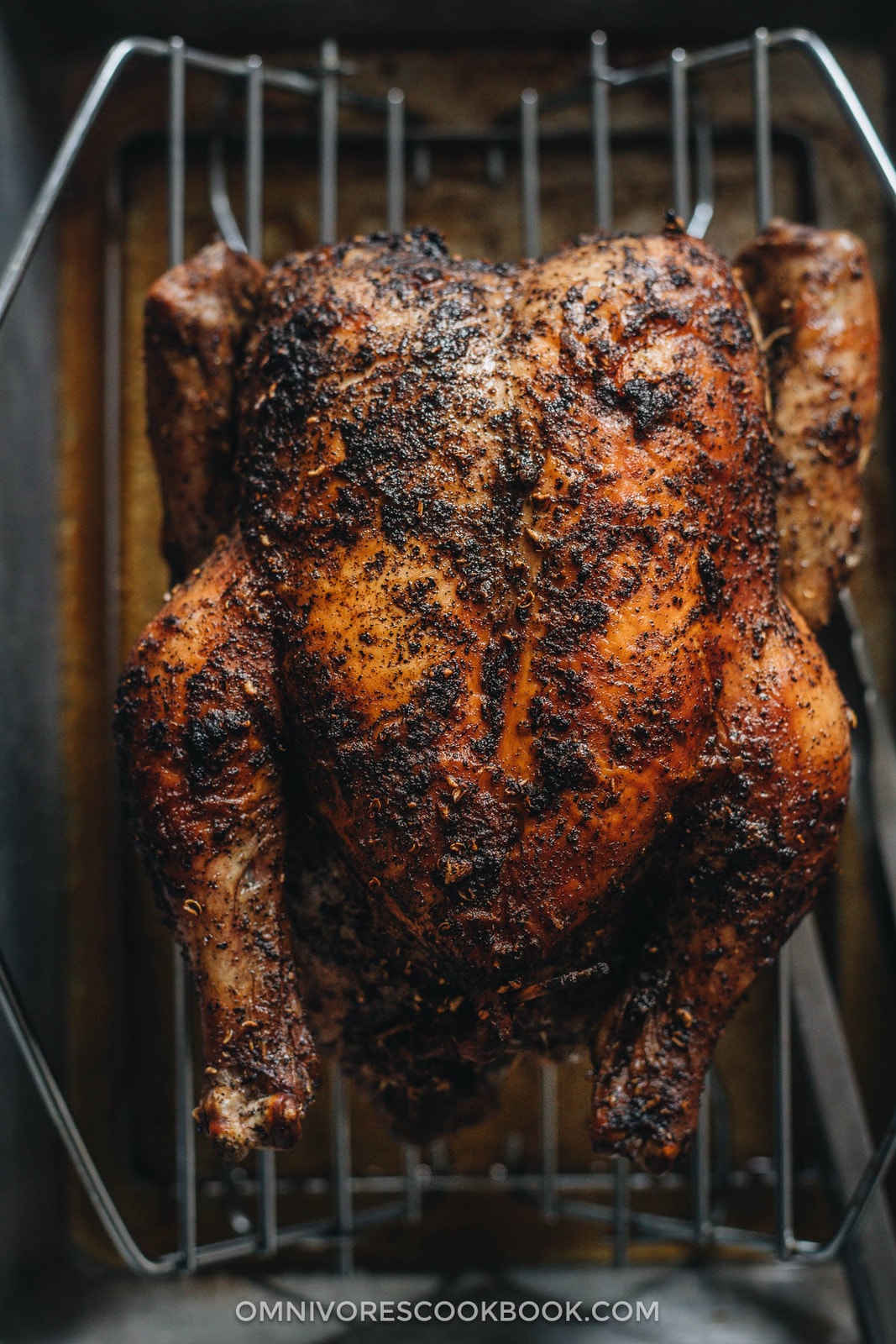
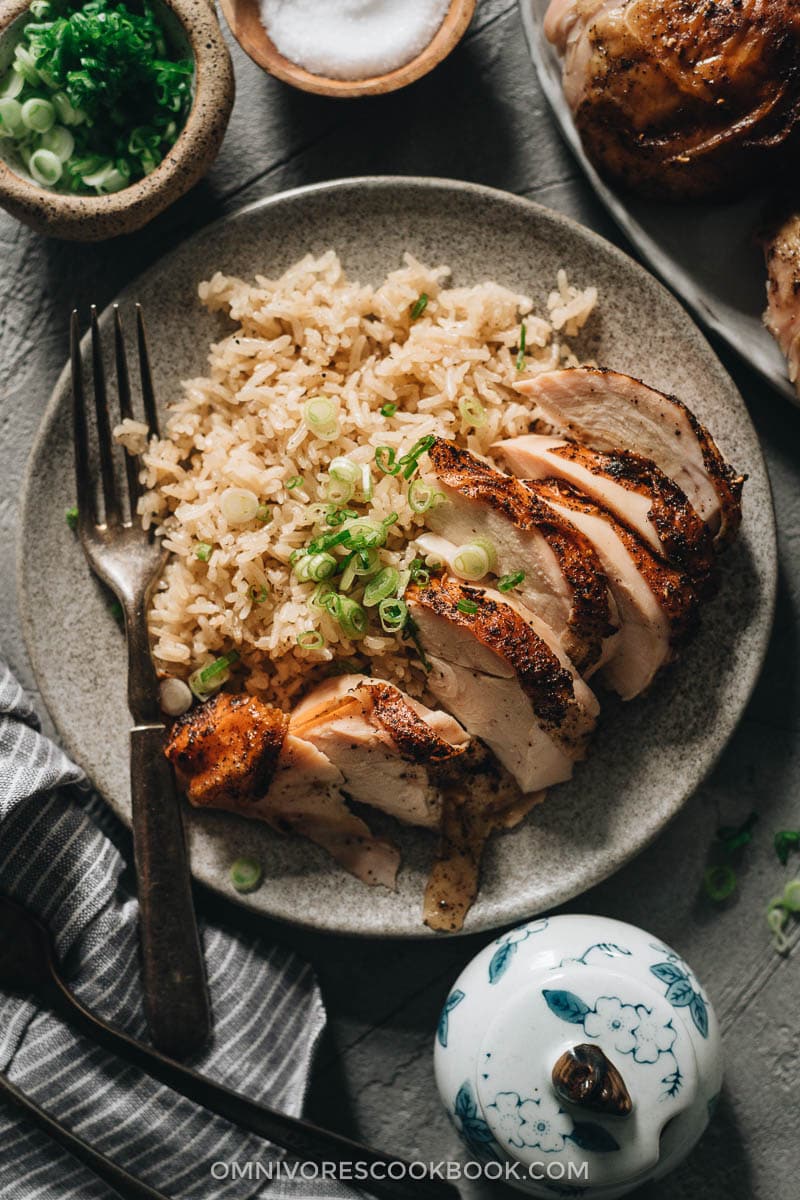
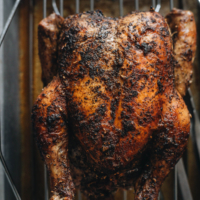
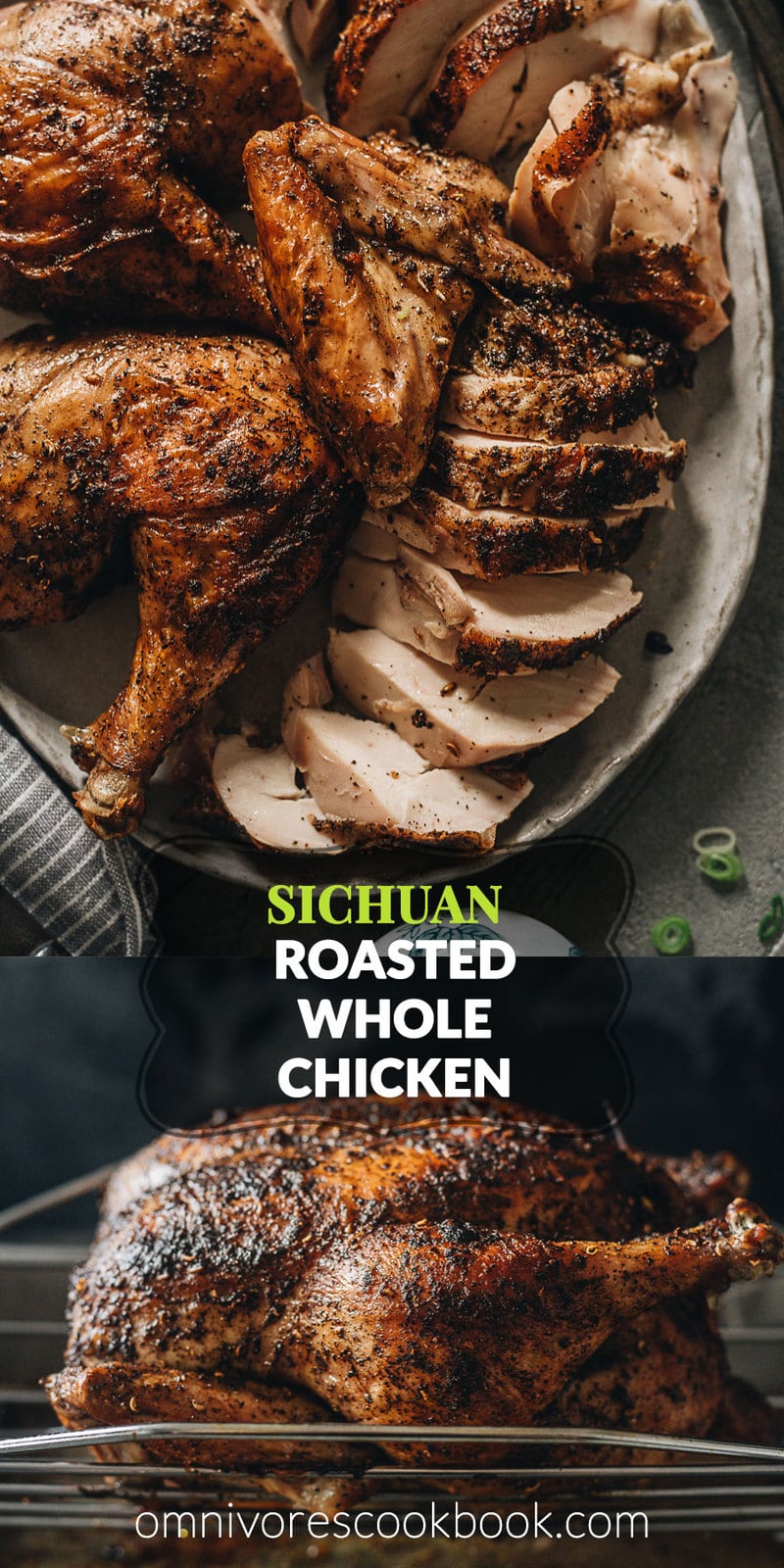
Roasting a whole chicken is always a great way to create a stunning centerpiece for your dinner. With a little advance preparation, you will have a delicious meal that makes everyone happy. It’s a good main dish for Christmas as well, in case you don’t want to roast a whole duck or goose this year. I love roasted chicken in all forms. Although a classic roast chicken with salt and butter is just delicious enough, I do like to do something new, once in a while. That’s why I developed this Sichuan roasted whole chicken recipe. It uses Sichuan peppercorns and black tea to create a dry rub, plus plenty of fresh aromatics to stuff the chicken. The end result is a super juicy, moist, tender chicken with a rich, savory, fragrant taste. At the end of the recipe, I’ve also included a quick chicken rice using the pan drippings from the roasted chicken. Serve it with the carved chicken for a Hainan chicken rice style dish, only 10 times more flavorful.
Cooking process & notes
1. Sichuan peppercorn salt
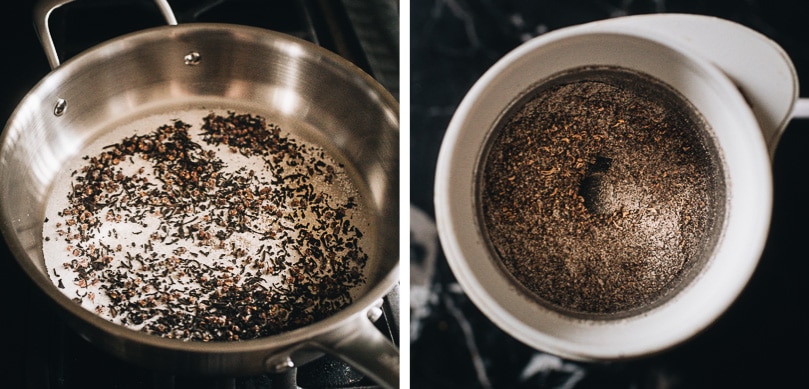
This recipe uses Sichuan peppercorn, black tea, garlic powder and salt to create a super rich and fragrant dry rub. If you’ve never used Sichuan peppercorns, you’ve been missing out. A main ingredient in Sichuan cuisine, Sichuan peppercorn has a citrusy taste with a numbing tingling sensation when you chew on it. It’s a secret to add aroma to your dish that no ingredient can replace. You can purchase Sichuan peppercorns at Asian grocery stores, but I highly recommend these premium fresh ones from The Mala Market. Inspired by the traditional tea-smoked duck, the black tea is used as a hidden spice. Just like using ground coffee on barbecued beef brisket, black tea adds another layer of umami to your chicken. To make the spice blend, toast all the ingredients in a small pan to release the aroma and then blend them into a fine powder. I highly recommend using a coffee grinder, which produces a very fine grind. A small food processor works too, although it might leave bigger chunks of spices in the mix.
2. Coat the chicken
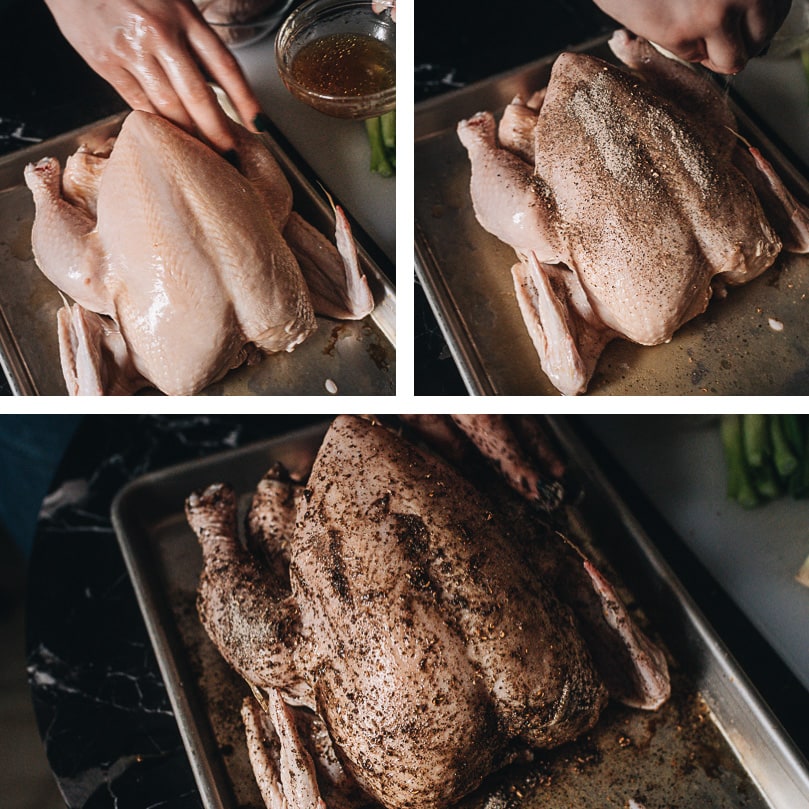
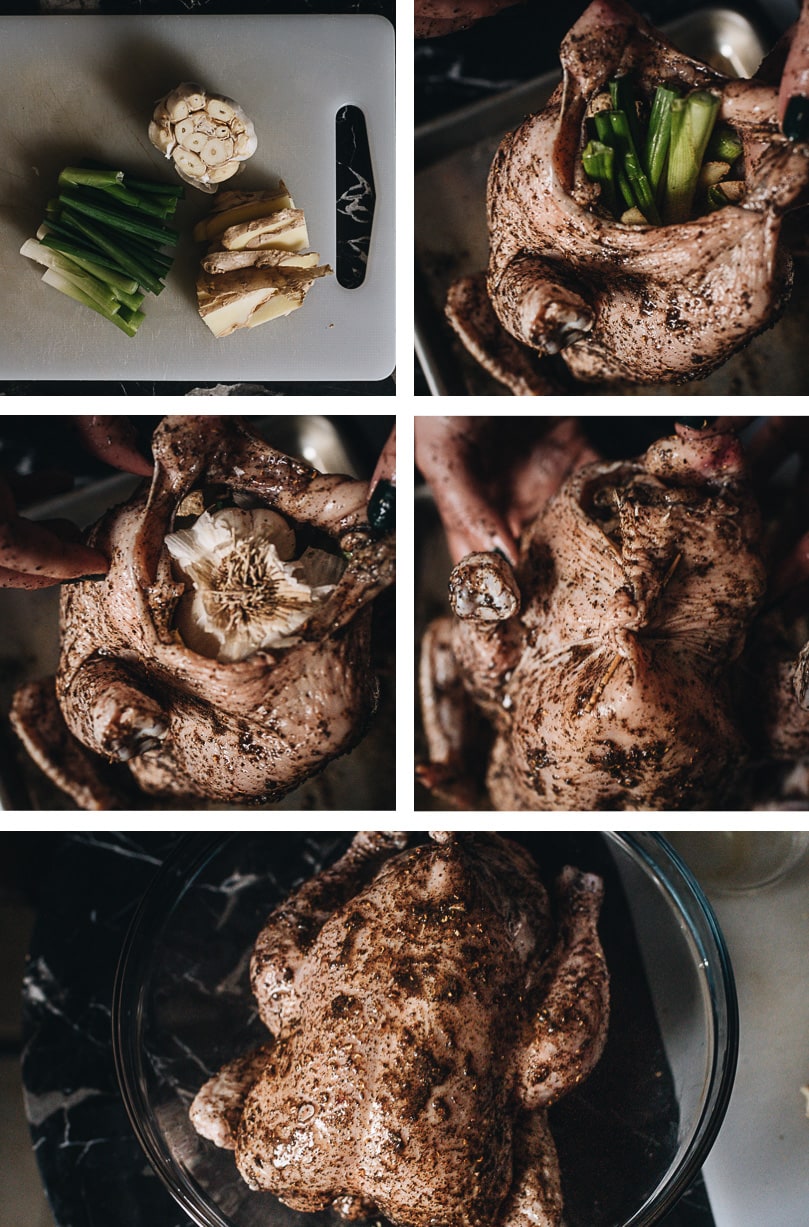
It might look like a lot of spices and salt. But it’s necessary to rub extra spice blend onto the outside and inside of the chicken, to yield a very rich result. To coat the chicken, you first apply a mixture of Shaoxing wine and sesame oil, then the Sichuan peppercorn salt. Not only does it season the chicken well, but the salt will also serve as a dry brine, to keep the chicken extra moist once it’s baked.
3. Stuffing
Stuffing a whole chicken with fresh aromatics is another way to keep the meat juicy and fragrant. I used plenty of green onion and ginger to stuff the cavity, then a whole head of garlic at the end. I also used a toothpick to seal the cavity to prevent the stuffing from falling out. Feel free to skip this if you don’t have toothpicks on hand.
4. Marinating
Once you coat the chicken with spices and stuff it with aromatics, it’s very important to let the chicken marinate overnight. Yes, it does require a bit of patience. But the marinating is a key process to season the chicken meat and create a juicier result. I recommend you place the chicken in a big bowl, then seal the bowl with plastic wrap. Try not to touch the chicken directly with the plastic wrap, as it will remove the spice mix once peeled off. You should rotate the chicken once during the marinating, so it will be seasoned more evenly. But if you’re feeling lazy and do not plan to rotate it, simply place the chicken breast-side-down, so the breast meat will be seasoned properly.
5. Roasting method
This recipe uses a high temperature to brown the chicken skin and a low temperature to finish up. The opposite method works as well, but I found that using a low temperature at the end gives you more flexibility. Due to differently sized chickens and actual oven temperatures, using a low temperature at the end will ensure your chicken is cooked through and browned properly. Once the chicken is browned, do drizzle a bit more sesame oil onto the surface before proceeding. This will prevent the spice mix from burning. To keep the process fuss-free, you can roast the chicken without flipping it at all. But if you’re a perfectionist, there is another method I recommend.
6. How to get evenly browned thighs
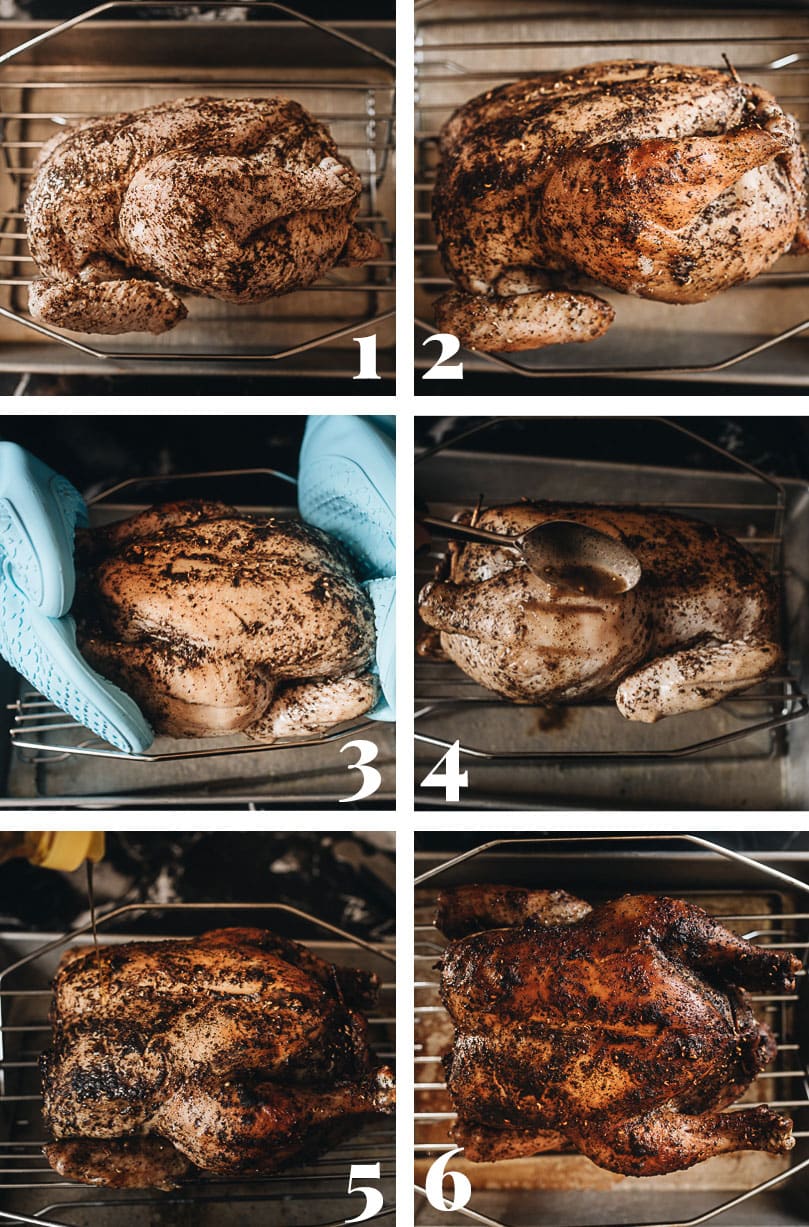
I’m a dark meat fan. For me, a roasted whole chicken is all about the crispy skin. The no-flipping method works just OK, but it bothers me when the base of the chicken thigh is not browned properly. If you like your chicken thighs browned evenly, you gotta flip the bird! I highly recommend you get an adjustable roasting rack. I shaped the rack at a 60-degree angle, so it would hold the chicken when I placed it on its side, leaving the wing and the whole thigh facing upward (pic 1). I roast the first side at high temperature for 15 minutes. You can see in picture 2, the thigh is browning nicely after the first 15 minutes. Then I rotate it to bake the other thigh (pic 3), only 10 minutes this time, to get the other thigh browned. During the roasting, I also drizzle a bit of leftover marinating liquid over the chicken (pic 4). Once you’re done roasting both thighs, turn it to a lower temperature and flip the chicken so it’s breast-up. Drizzle a bit of sesame oil onto the breast to prevent it from burning (pic 5). Keep roasting at the low temp until the chicken is cooked through (pic 6).
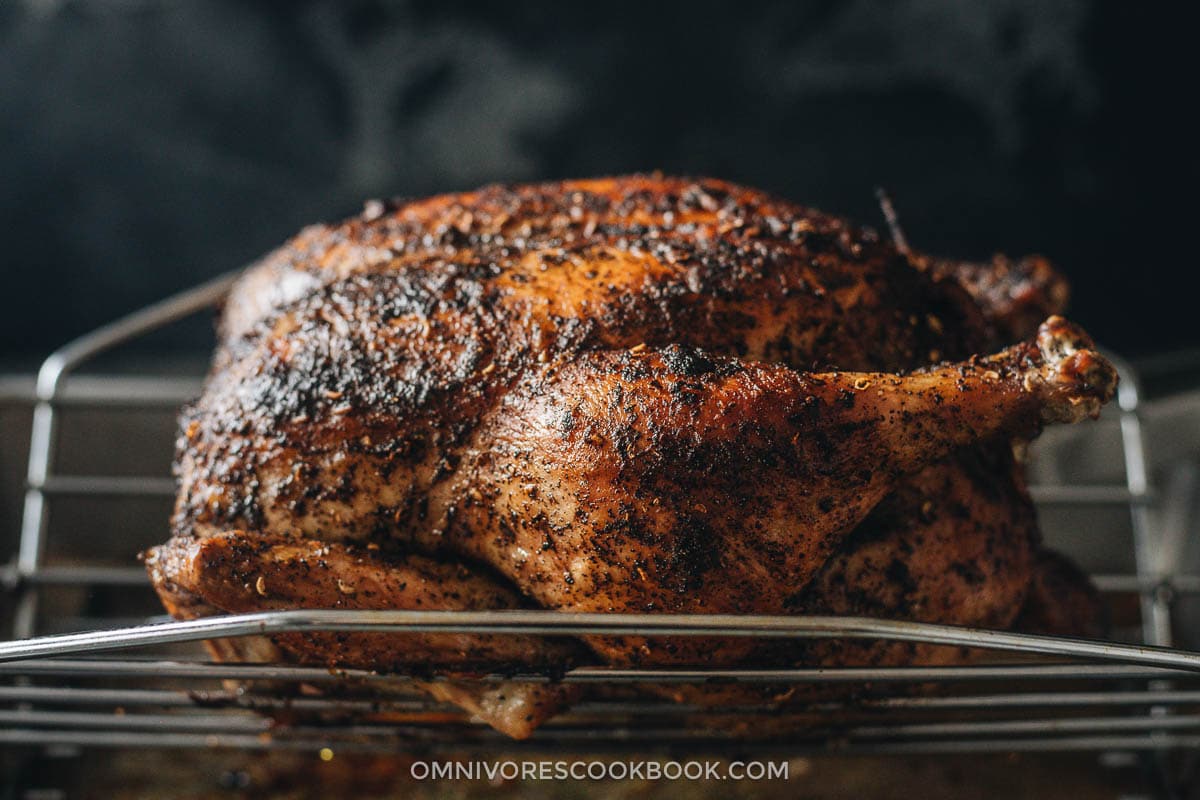
Once it’s done cooking, you can see that not only is the chicken breast brown, but the base of the thigh will be crisped up as well.
7. Bonus recipe – chicken rice
While roasting the chicken, do remember to add a thin layer of water into the roasting pan to catch the drippings and prevent them from burning. You can collect the drippings at the end of roasting and use them to make steamed rice. You can simply use the drippings, water, and some ginger to steam rice (on the stovetop or in the rice cooker). It creates super delicious rice just like the one in Hainan chicken rice, but even more flavorful.
8. May I roast the chicken on a bed of vegetables?
Yes you totally can roast the chicken on a bed of potatoes (or any other combination of veggies). But I do find that it yields a slightly better result if you roast the chicken on a rack. The chicken will sink into the veggies and some of the thigh meat will get soggy. I also think the pan drippings create a really special rice dish that goes perfectly with the chicken. However, do feel free to use a bed of veggies if that makes your life easier.
Afterthoughts
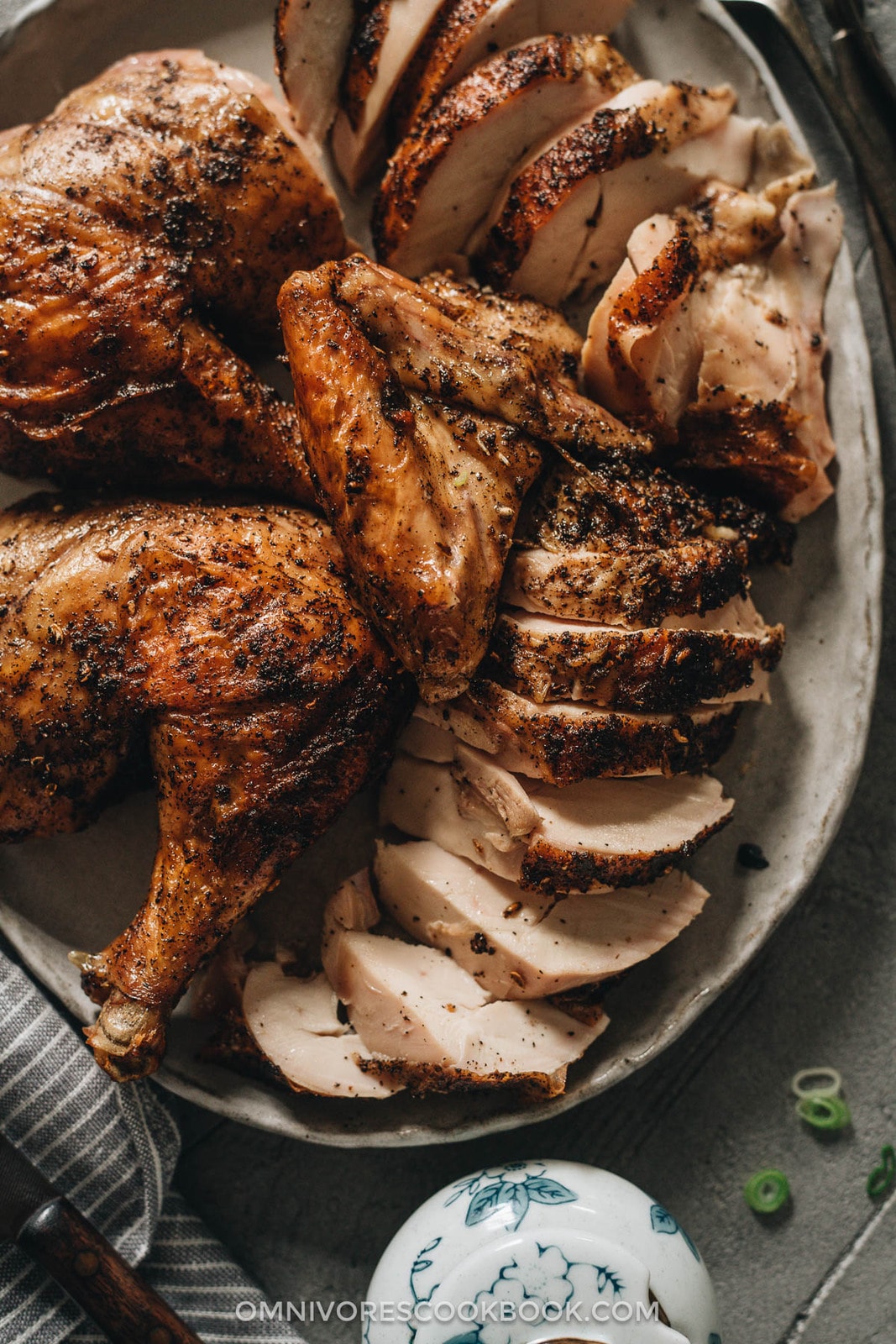
This is not the easiest roasted whole chicken recipe, but I guarantee you it is worth the effort. I’m a dark meat lover and chicken breast usually doesn’t appeal to me so much. But the finished chicken is so juicy and rich that I enjoyed the chicken breast just as well.
Side dishes to serve with this
The Sichuan roasted whole chicken is so rich that you just need something simple and fast to accompany it. Here are some side dishes I recommend:
The Best Chinese Coleslaw Stir-Fried Pea Shoots with Garlic An Easy Chinese Broccoli Recipe Three-Ingredient Quick Pickled Watermelon Radish 3-Ingredient Garlic Broccoli Stir Fry Chinese 4-Ingredient Fried Cabbage
More delicious chicken recipes
Chinese Bang Bang Chicken Korean Fire Chicken (Cheese Buldak) Salt and Pepper Chicken Without Deep-Frying Chicken and Broccoli (Chinese Takeout Style) Real-Deal Soy Sauce Chicken (See Yao Gai) The Best Cantonese Roast Chicken
If you give this recipe a try, let us know! Leave a comment, rate it (once you’ve tried it), and take a picture and tag it @omnivorescookbook on Instagram! I’d love to see what you come up with. Lilja Walter is a part of the Omnivore’s Cookbook team and worked closely with Maggie to develop and test this recipe.