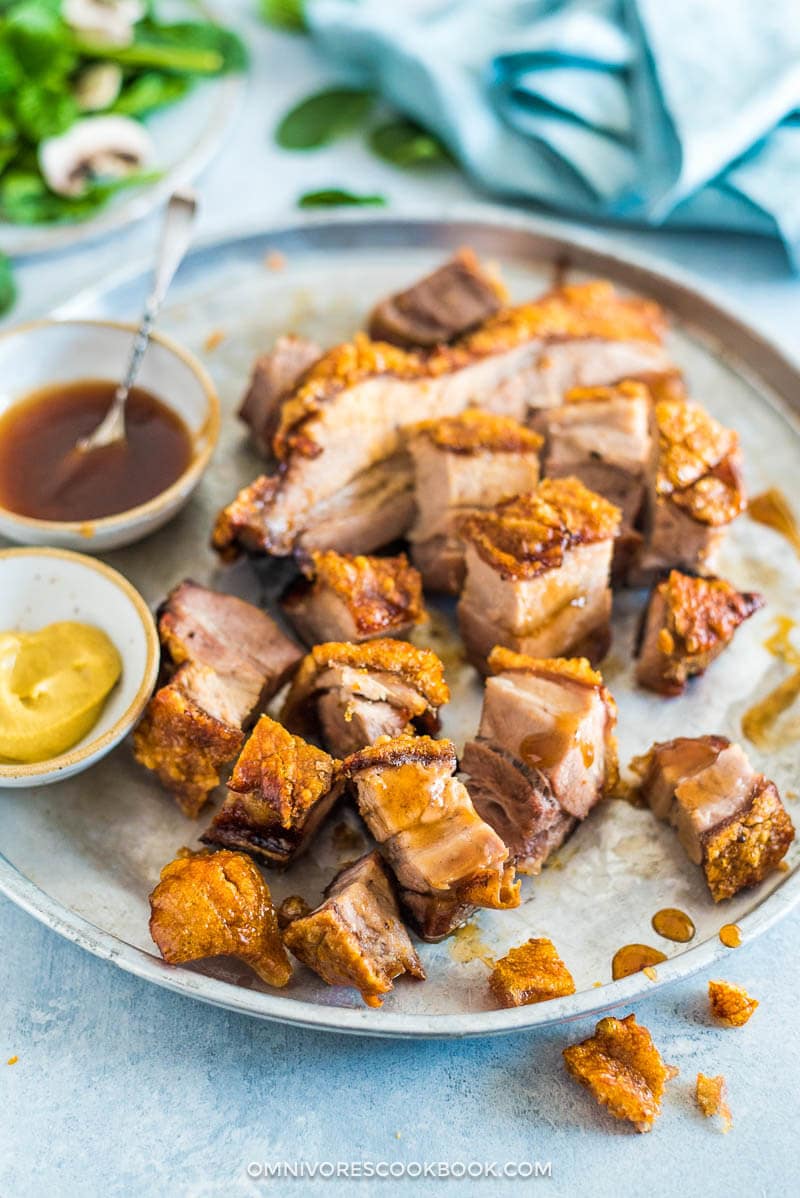
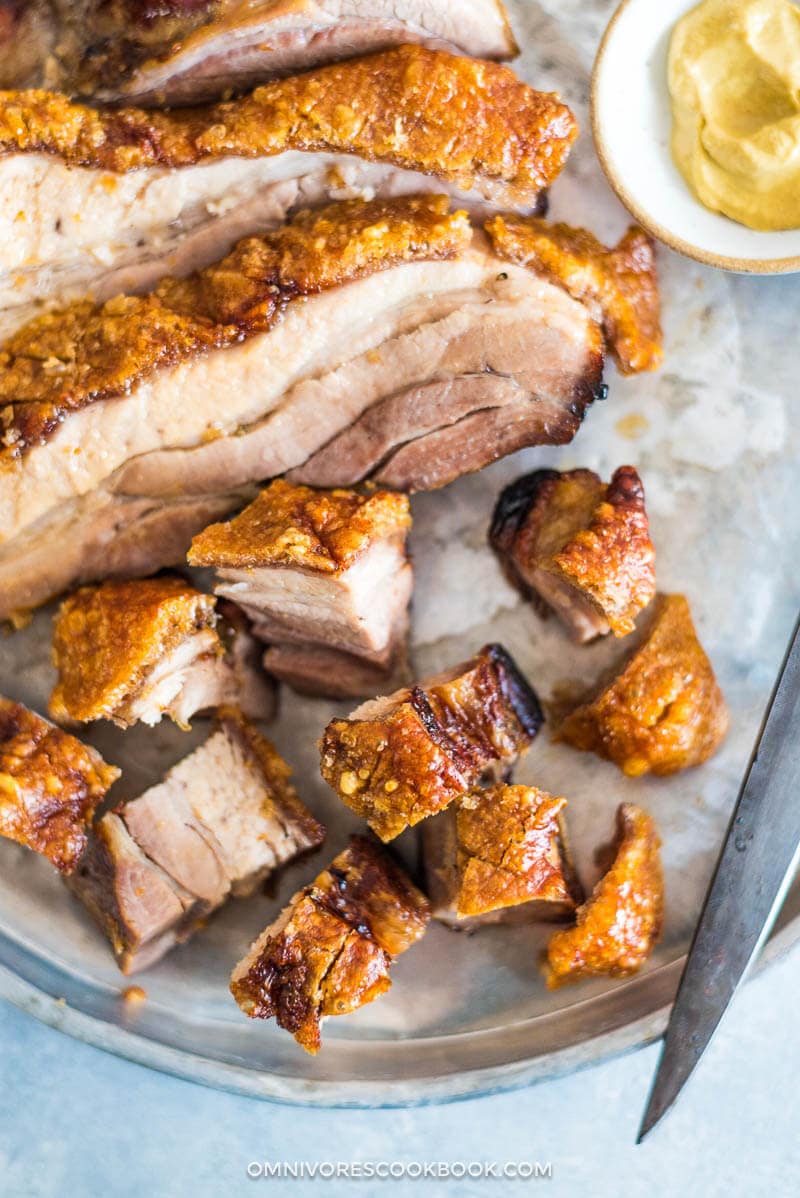
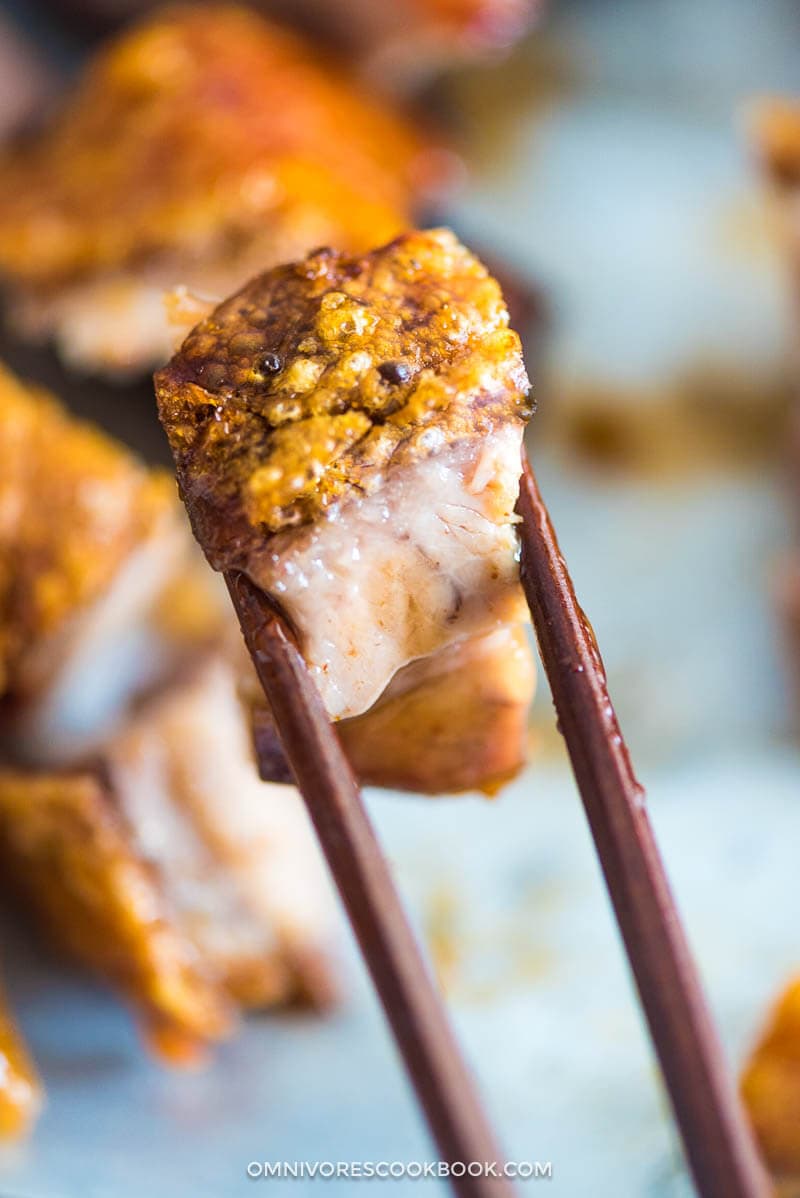
In the past, I’d always choose crispy roast duck over crispy pork whenever I dined at a Cantonese restaurant. Although both taste heavenly when done right, the roast pork was usually a hit or miss. More often than not, the cuts were too fatty and the meat too bland. The skin might be crispy, but not to the degree of snap-in-your-mouth perfection. I wouldn’t be able to eat more than one piece because it was often too rich for my taste. When developing a recipe for crispy pork, I decided to find a method to solve all these problems: aiming for a less greasy dish with flavorful pork with a perfect, crispy skin. I chose to go the low and slow route. Just like I did with the Perfect Roast Duck. I hoped that the slow-cooking process would thoroughly render the fat and produce extra tender meat while making the skin brittle.
Slow-Roasted Siu Yuk
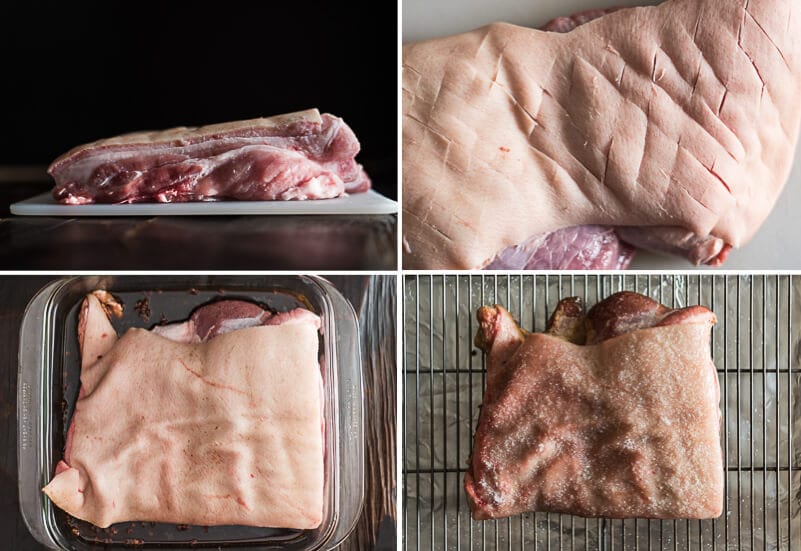
I used the method from Three-Hour Pork Belly by BBC Good Food with a few modifications. This is definitely not the traditional approach to cook siu yuk, but I love how the result turns out. Below are the key elements that show why this recipe is unique. (1) Marinate the meat overnight. Although most traditional recipes use a five-spice dry rub or no marinade at all, I used a Cantonese-style liquid marinade instead. It produces an extra flavorful meat without affecting the crispiness of the skin. (2) Score the skin instead of using the traditional way of piercing it with pointed sharp tool, to create a surface that is crispier than deep-fried egg rolls. The reason is simple: the pork skin has a super tough texture that requires a serious workout if you want to pierce it properly, with thousands of small holes next to each other. Plus, the piercing depth needs to be perfect — right through the pork skin, but without piercing the fat and meat. In my first roast, I tried using a meat puncher, tooth pick, and sharp nail. None of them worked. Eventually I pierced the skin using the point of a super sharp paring knife, which resulted in extremely sore muscles the next day. There have been a couple of times my knife went too deep and penetrated the fat, which resulted in a few soggy spots that didn’t crisp up as I’d hoped. Then I switched to the scoring method, by slicing a 1/4-inch (1-cm) diamond pattern onto the skin. Not only does it take way less work, the skin will be cooked to cracklin’ perfection.
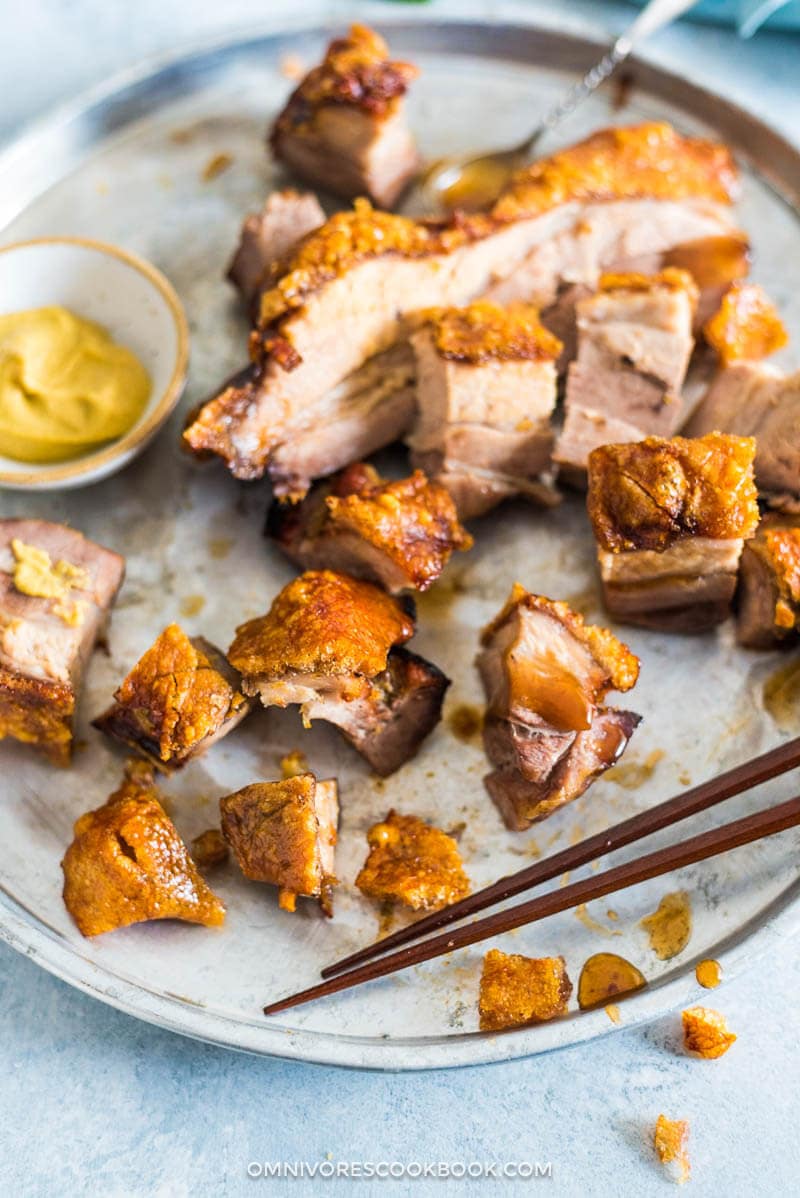
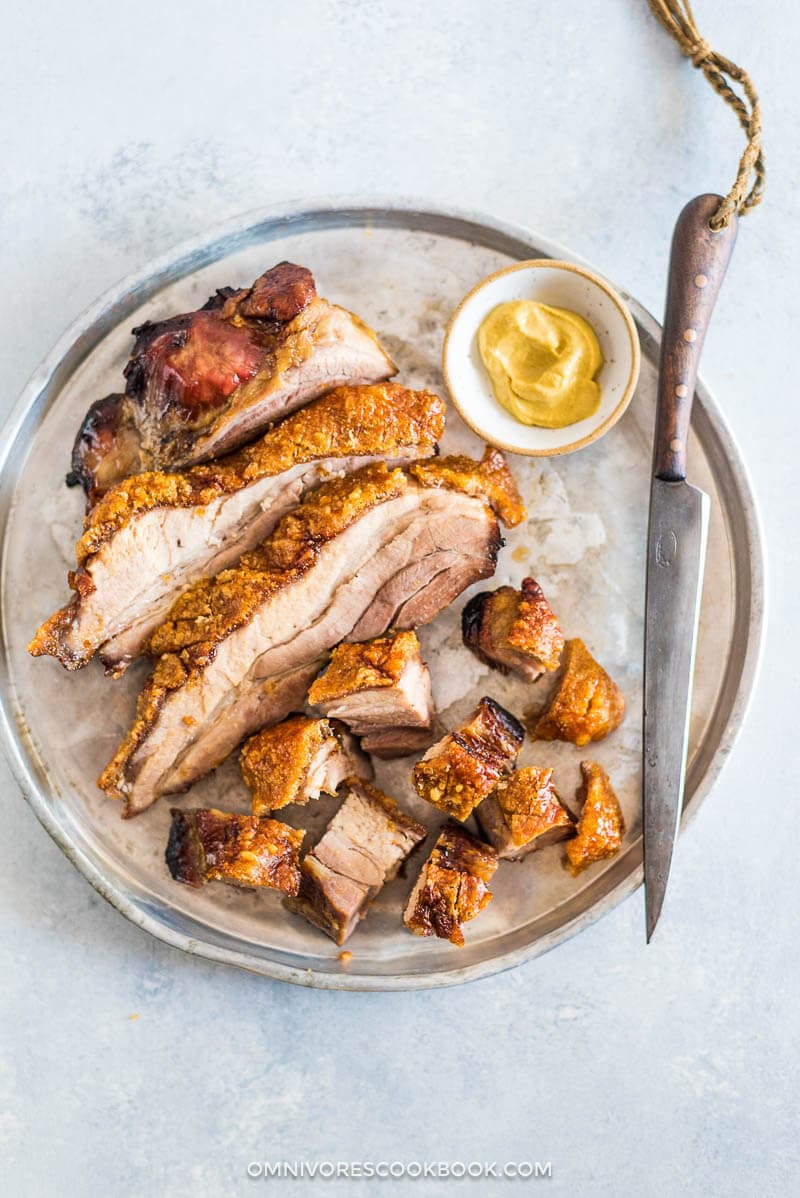
(3) Roasting – low and slow. Roast at a high temperature first. Switch to a low temperature and roast for 2 hours. Bump the heat to high again to finish up. The slow cooking process will thoroughly tenderize the fat layers – about 90% of the fat will be gone at the end of cooking, making the pork way less greasy. The melted fat keeps the lean meat juicy and tender, which creates a melt-in-the-mouth texture. The slow-roasting also makes sure the skin is properly dried and ready for crisping-up. High-temperature cooking creates a wonderfully browned surface on the lean meat. The skin will turn to a beautiful golden-brown that is evenly cracked. Though I say so myself, the siu yuk from my own oven tastes a ton better than some of the pork I’ve had in restaurants.
More cooking notes
(1) Purchase the right cut I highly recommend you visit an Asian market to purchase the pork belly. Although I see the cut in other grocery stores occasionally, it is usually very fatty without the skin attached — this type of cut does not work for this dish. Choose a cut that has thin fat layers between the lean part, so the result is tender without being too greasy.
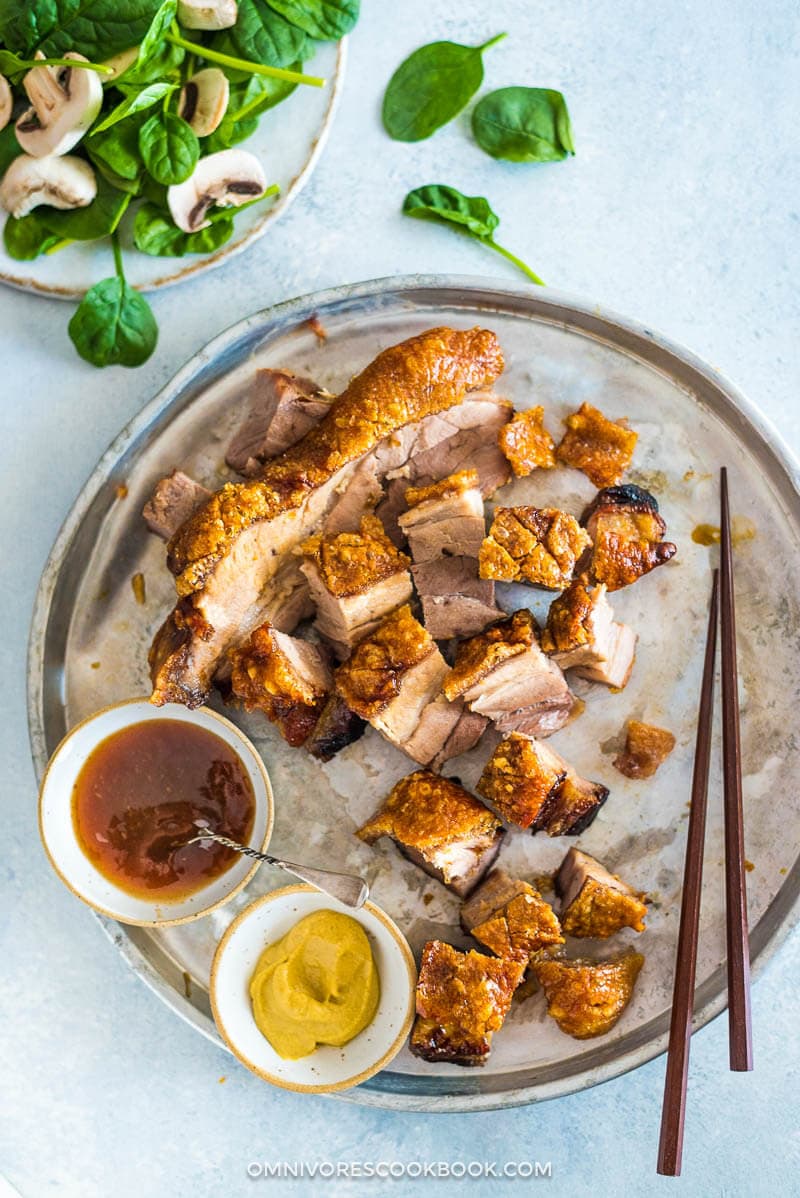
(2) Roasting time and temperature The roasting time and temperature vary depending on the individual oven and the size of the pork belly. The recipe below records the time and temperature I used for cooking a 3-pound pork belly. You might need to shorten or prolong the roasting time for the final stage (450F / 230C) of roasting, so the skin will crisp up properly. This recipe is rather forgiving, so it wouldn’t be a big problem if you slightly overcook the meat. (3) Dipping sauce Although the pork is so flavorful that you can totally serve it without, a touch of sauce will take the dish to new heights. What is even better than crispy pork belly? When it’s lathered in sweet plum sauce! For a less sweet taste, serve with some mustard instead.
(4) How to serve In Cantonese cuisine, siu yuk is usually served warm, standing alone as an appetizer. However, the slow-cooked version makes a perfect main course. A piece of 3-pound pork belly can serve 3 to 4 people as a main course, and a 4-pound cut serves 4 to 6 people. For sides, a light green vegetable is a must. It cuts the richness of the main course and cleanses your palate. Opt for blanched Broccoli with Oyster Sauce or baby bok choy in garlic soy sauce. A small bowl of steamed rice makes a good addition, or Mashed Potato also makes an ideal side to absorb the juices. (5) How to reheat Siu yuk tastes the best when is right out of the oven, and you can keep it warm in the oven on the lowest setting for hours before serving. When you store it in the fridge, the skin will become soggy. BUT I did find a great way to reheat leftovers. Here is what you should do:
Preheat the oven to 400 F (200C). Separate the skin from the meat. Place the skin in a baking dish without overlapping; place in the middle or upper section of the oven. Wrap the meat with aluminum foil and place in the lower part of the oven. Bake for 10 to 15 minutes, or until the skin is bubbling and starts to turn dark.
By reheating the skin and meat separately, the skin will properly crisp up again while the meat remains tender. That’s it! For your next family gathering or holiday celebration, try out this dish instead instead of your usual roast chicken or turkey. I guarantee it’ll be a hit!
More holiday main courses
The Best Cantonese Roast Chicken The Best Slow Roast Duck Chinese BBQ Pork (Char Siu Pork) Chinese Brined Turkey
If you give this recipe a try, let us know! Leave a comment, rate it (once you’ve tried it), take a picture and tag it @omnivorescookbook on Instagram! I’d love to see what you come up with.