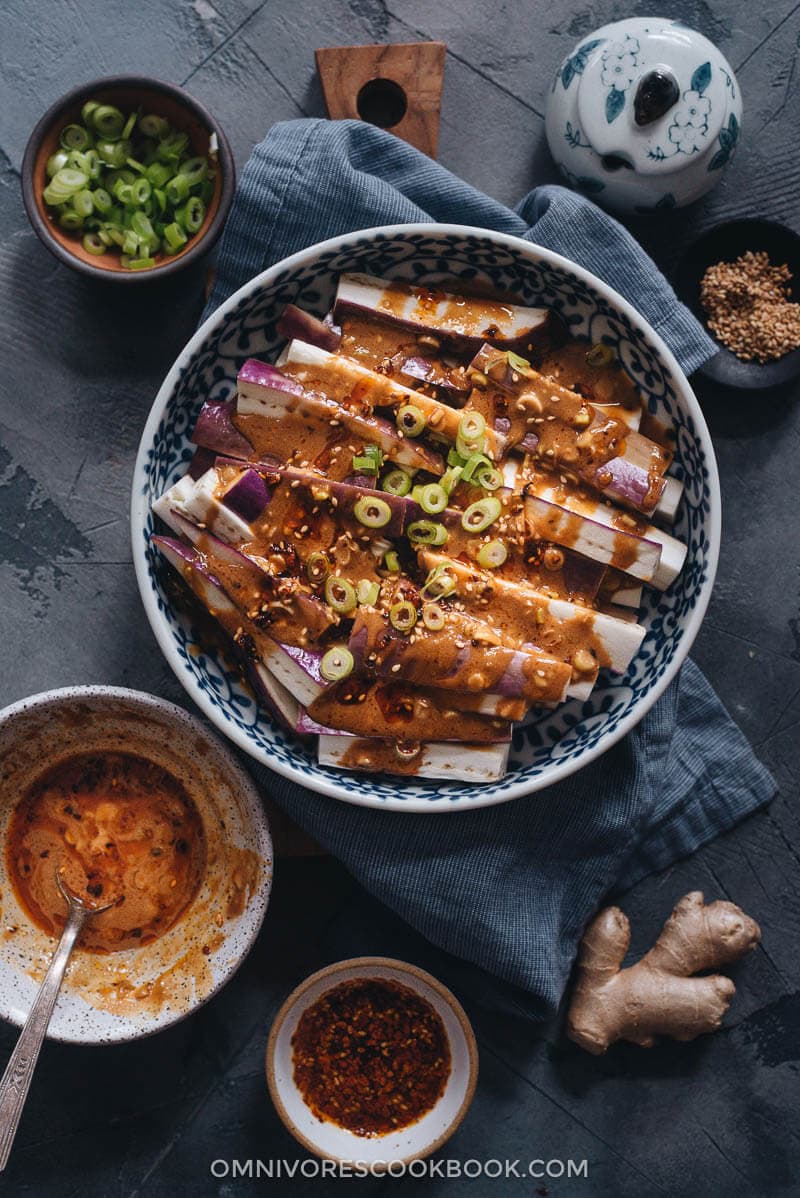
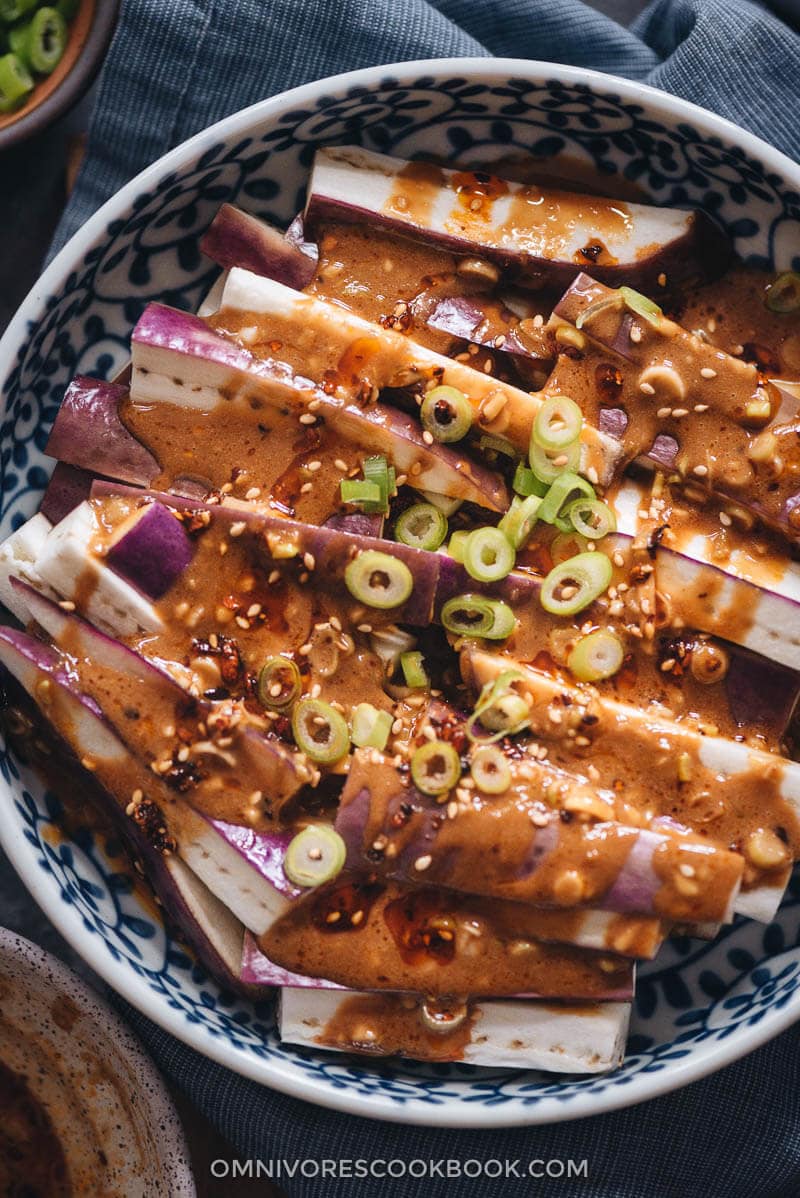
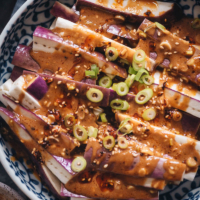
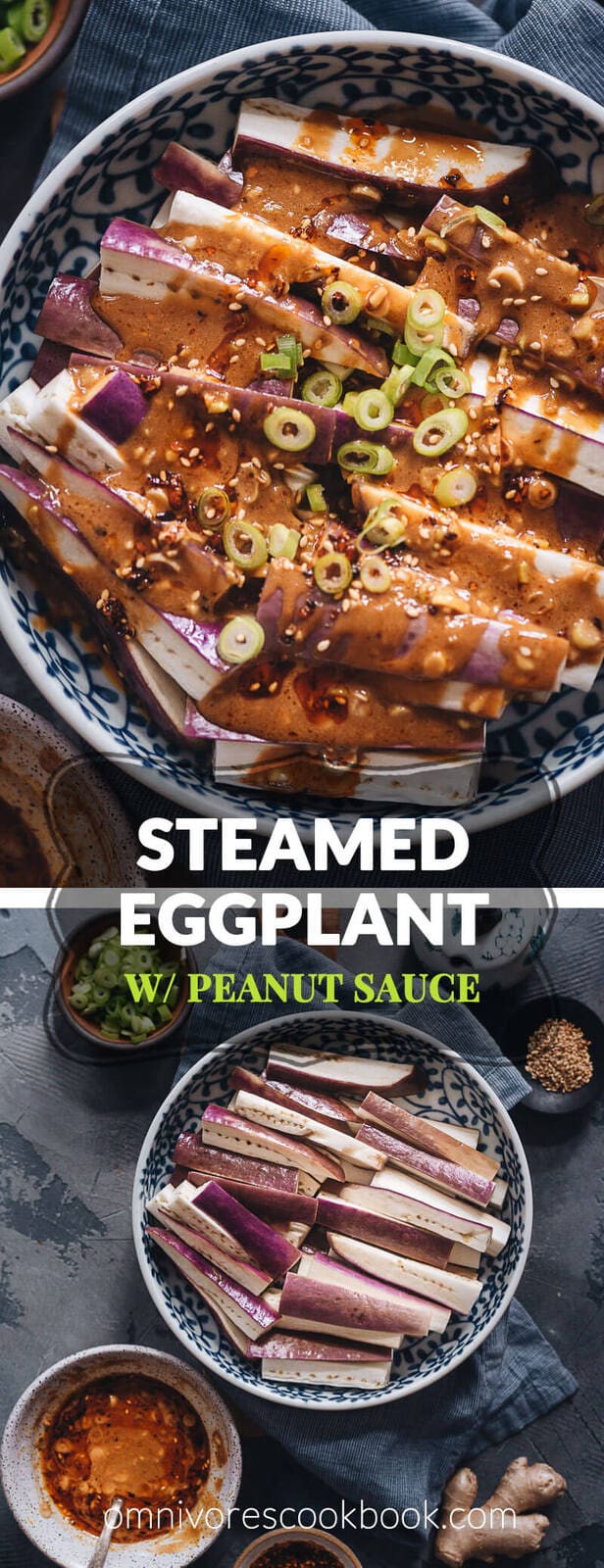
There are many things that I took for granted back in China but appreciated so much more after moving to the US. Homemade dumplings, freshly made congee, and a simple veggie stir-fry are some good examples. This steamed eggplant dish belongs to the same category. It’s a dish my mom often makes in the summer because it’s so easy to prepare. It requires very little hands-on time, it doesn’t require that you fire up the wok in the hot weather, it tastes great, and it’s super healthy. The only downside is that it doesn’t look very pretty. My mom’s steamed eggplant usually involves removing the eggplant skin and steaming it until super tender. Then she mixes it with the sauce, which results in a bowl of brown mess.
Cooking notes
When I was recreating the recipe, I did a few things slightly differently so you can easily make it in your home kitchen and it will actually look good:
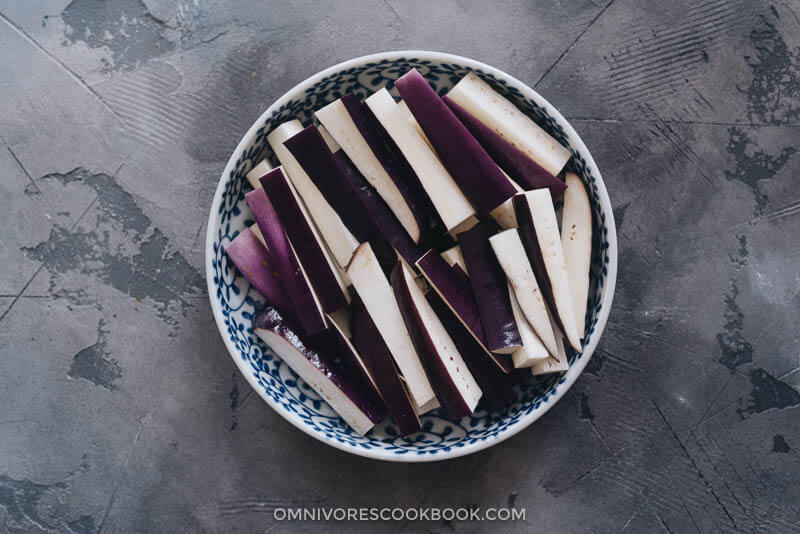
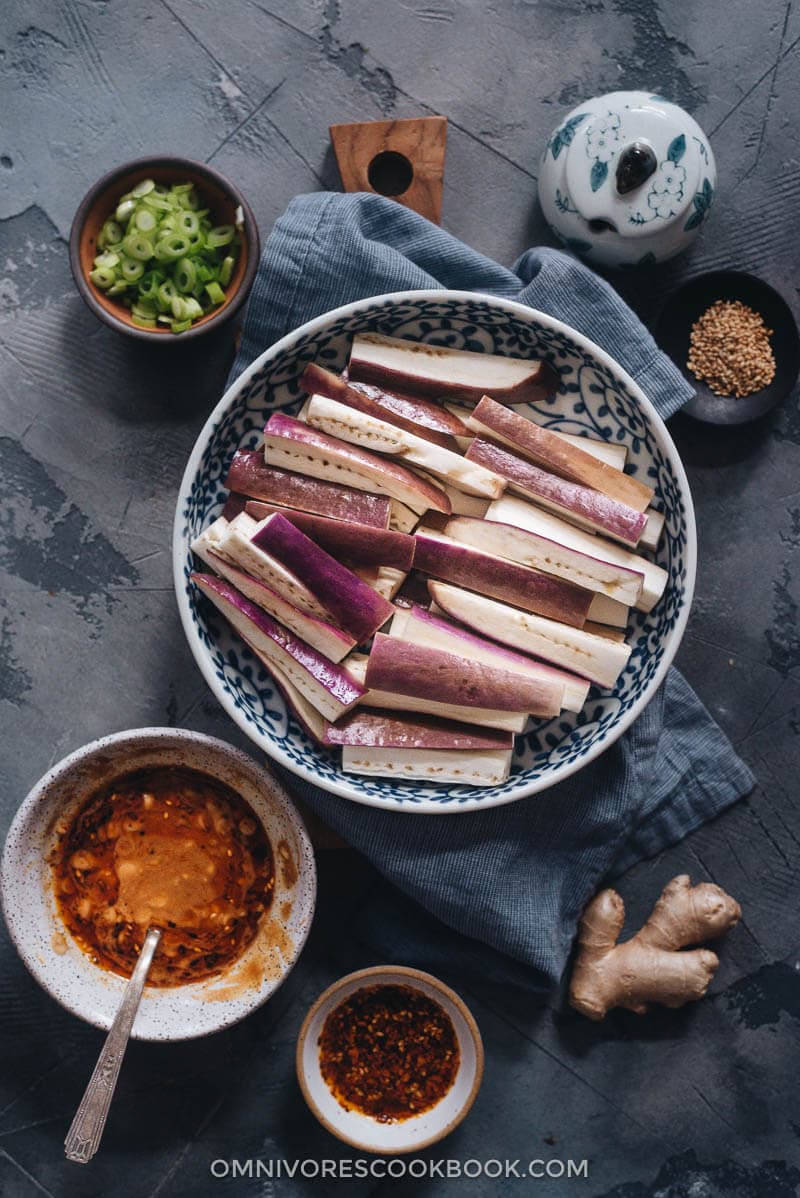
Cut the eggplant without peeling the skin off. So it will look much better once cooked. Make a bit more sauce so the dish tastes irresistibly good. Use peanut butter to replace the sesame paste, making the dish more accessible.
What eggplant to use
Any eggplant will work in this dish, but long Asian eggplant generates the best result. Asian eggplant contains less water so the cooked eggplant won’t release too much liquid and make the dish watery. If you use another type of eggplant and it releases liquid during cooking, simply drain and discard the liquid before serving.
Cooking time
The steaming time is largely dependent on the type of eggplant you use, the size of the cuts, and the doneness you’re looking for. You should always monitor the cooking process and judge the doneness by tasting the eggplant. To give a general time frame, I usually cook for 10 minutes for a firm texture. The eggplant skin will still have some purple color and the fruit will hold its shape. If you like very tender eggplant, steam for 15 minutes. The eggplant skin will turn brown but the texture will be tender and nice.
Sesame paste and alternatives
Note, toasted sesame paste tastes very different from Chinese white sesame paste and tahini, which are made from raw sesame seeds. Do not use either of these products to make this dish. I found the next best option is unsalted natural peanut butter, which you can find in almost any grocery store. In fact, I personally love its taste so much that I use it more often to make steamed eggplant, than I do the traditional Chinese sesame paste.
Consistency of the sauce
The consistency of the sauce can vary a lot depending on the sesame paste (or peanut butter) you use. The sauce requires none or very little extra liquid to thin it out if you use the paste from the top of the jar, which is runnier and mixed with lots of oil. On the other hand, your sauce might end up super thick if you use the paste from the bottom of the jar. Adjust the consistency by adding water, 1 teaspoon at a time, and mix until it reaches the thickness you like.
Homemade chili oil
It’s not required in the recipe, but I highly recommend adding it. If you used Chinese chili pepper flakes to make the oil, it will only add very little spiciness to the dish. All it does is add a rich and nutty aroma to the sauce, making it even better. It takes 5 minutes to make a batch of fresh chili oil using my recipe. Try it once and you’ll thank me later!
Afterthoughts
Steamed eggplant was not my favorite dish back in China, probably because my attention was always focused on meat dishes. Since we started cooking more vegan and vegetarian dishes in my American kitchen, I’ve started to appreciate steamed eggplant so much more. I love the fact that it requires no oil to cook the eggplant, and it tastes so good that I can finish a big plate of it in one sitting. You can double the sauce, top the eggplant on boiled noodles, and add the sauce. Then you’ll have a bowl of sesame noodles in no time.
More recipes you might like
Sichuan Eggplant Stir Fry (Yu Xiang Qie Zi, 鱼香茄子) Di San Xian (Fried Potato, Eggplant and Pepper in Garlic Sauce 地三鲜) Chinese Eggplant with Garlic Sauce Vegan Dan Dan Noodles Sweet and Sour Tofu (糖醋豆腐)
If you give this recipe a try, let us know! Leave a comment, rate it (once you’ve tried it), and take a picture and tag it @omnivorescookbook on Instagram! I’d love to see what you come up with.