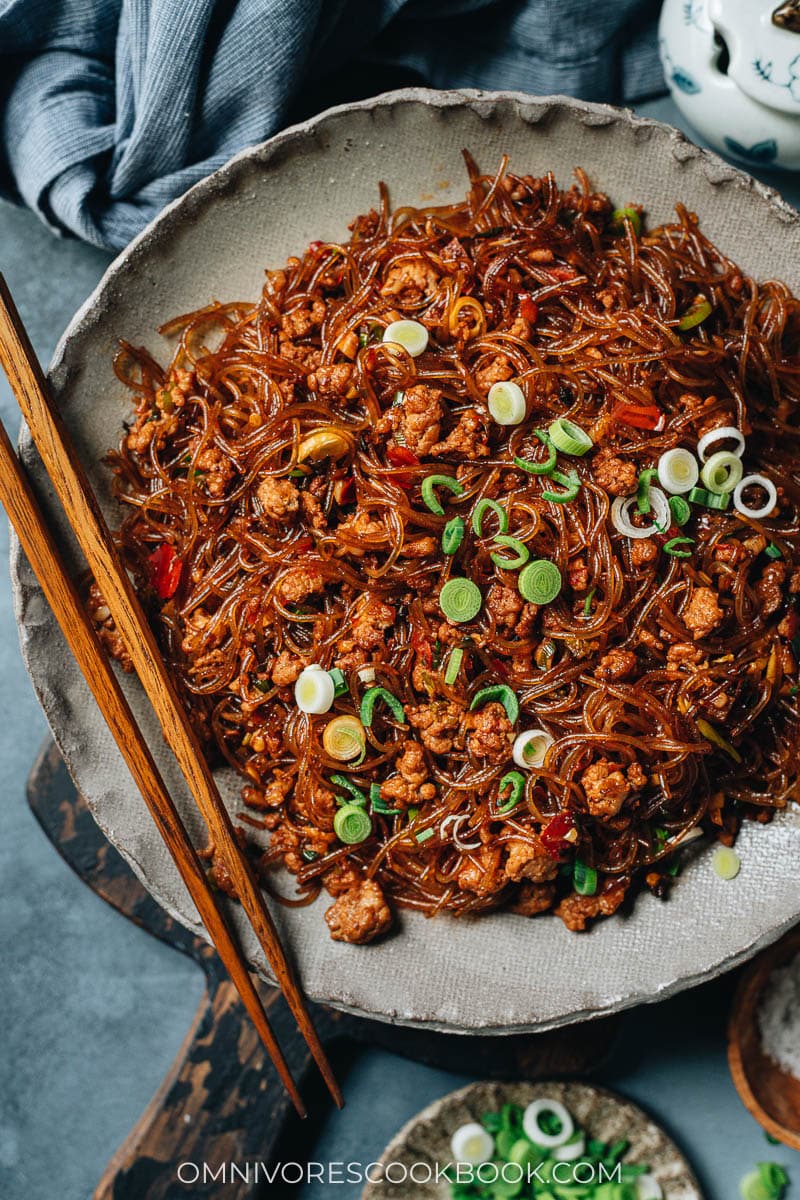
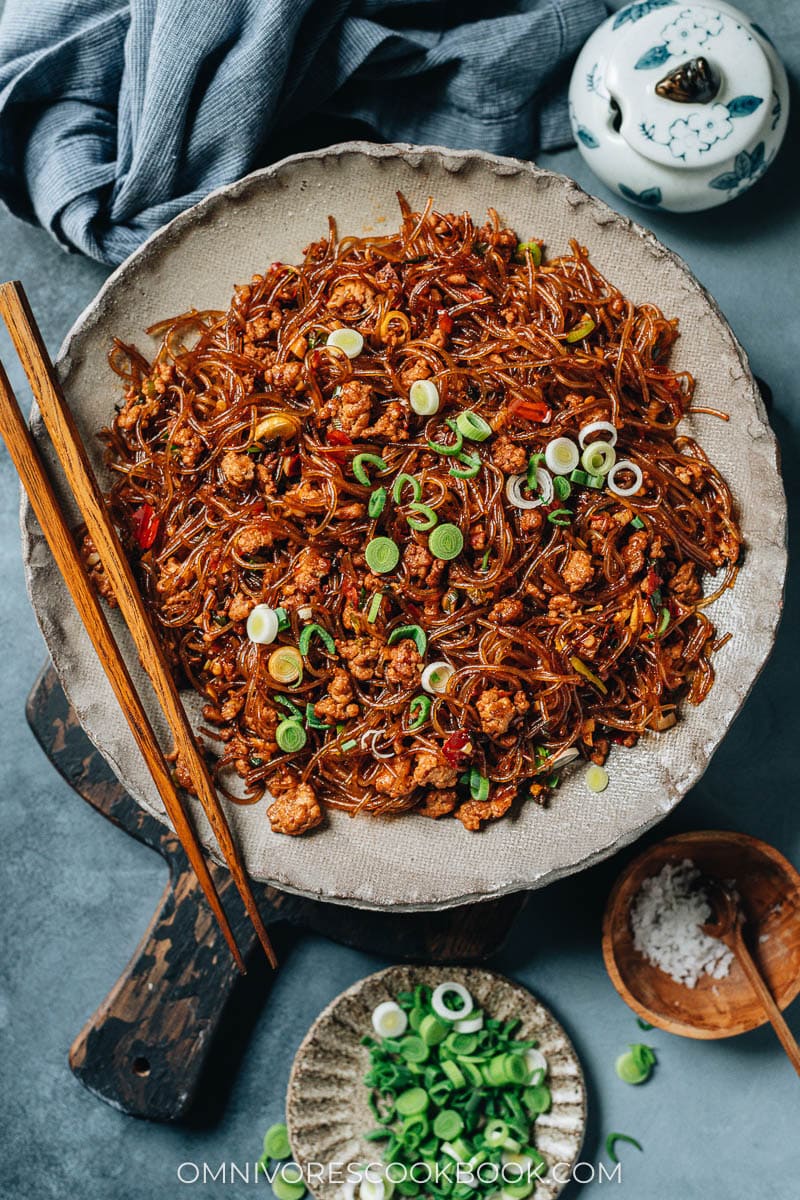
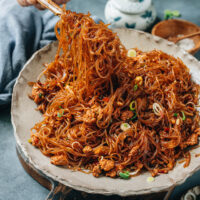
Some Chinese dishes have the weirdest names. Such as Husband and Wife Lung Slices (Fu Qi Fei Pian), Saliva Chicken (Chicken in Red Oil), and this one – translated literally it means Ants Climbing a Tree. Sometimes Chinese restaurants need to be creative and give a dish an interesting name to lure their guests in. For example, using the name “Husband and Wife’s Special” instead of lung pieces. And once you get past the sound of the name and try out the dish, you’ll often find them super delicious.
What is Ma Yi Shang Shu
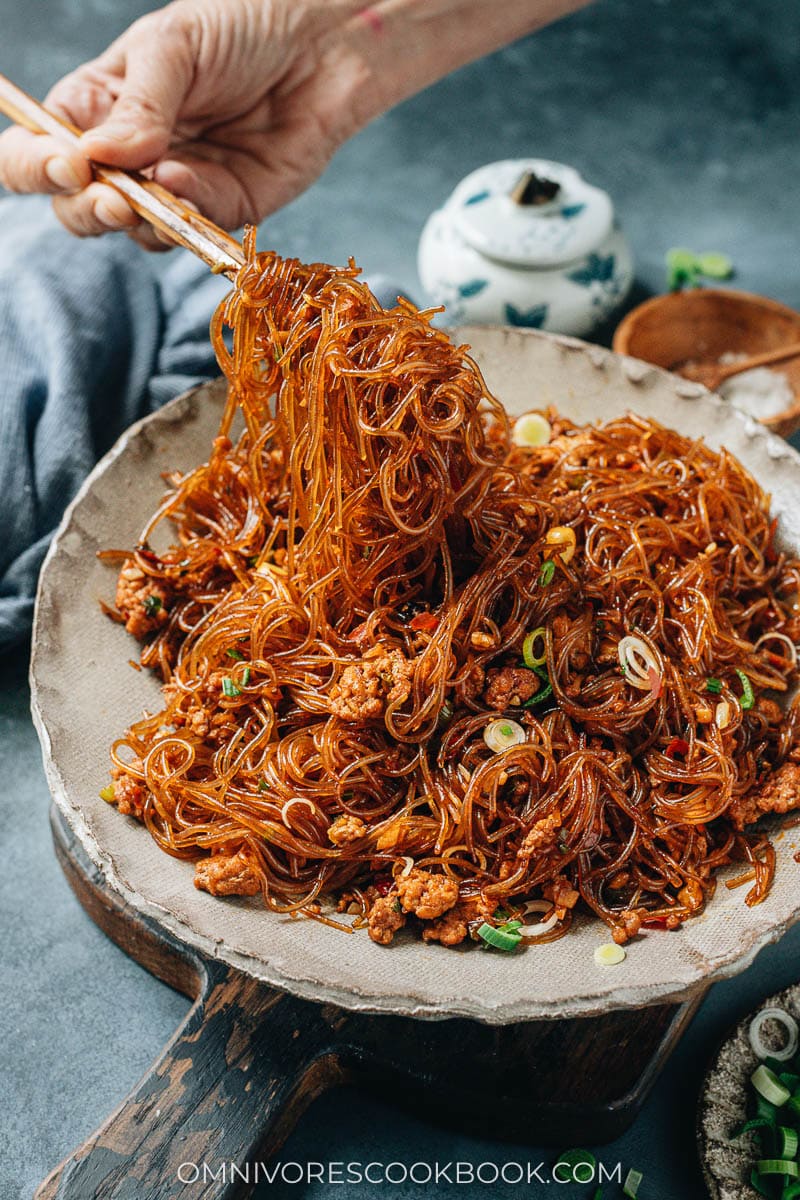
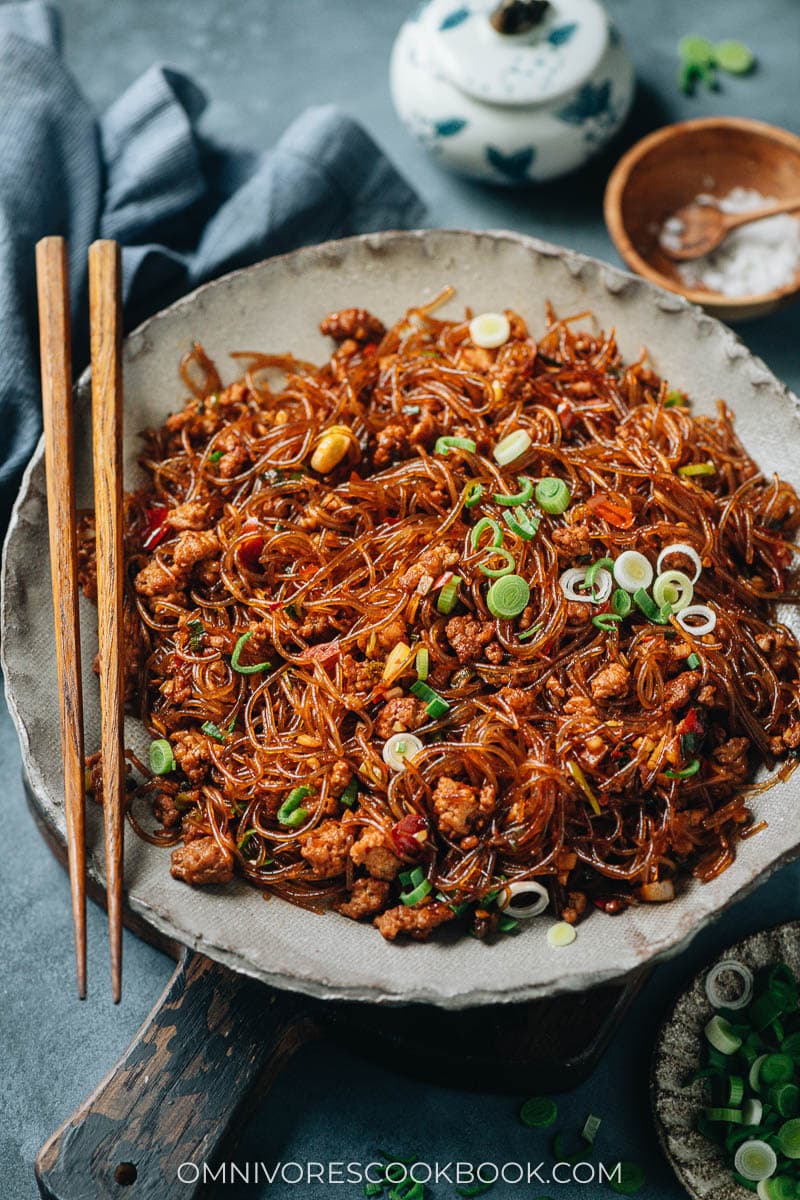
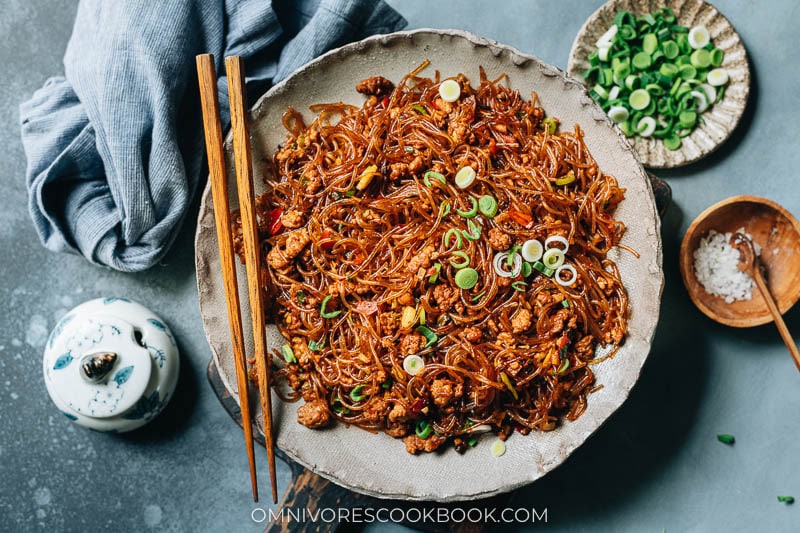
Ma Yi Shang Shu (蚂蚁上树), or Ants Climb a Tree, is famous Sichuan dish. Rest assured, it does not contain any ants. It is made with braised vermicelli noodles and ground pork in a slightly spicy and savory sauce, along with aromatics. When you serve the dish by pulling up the noodles with chopsticks, you will notice small bits of pork clinging to the noodles. And that’s where the name of the dish comes from – because it resembles ants climbing up a tree branch.
Ingredients
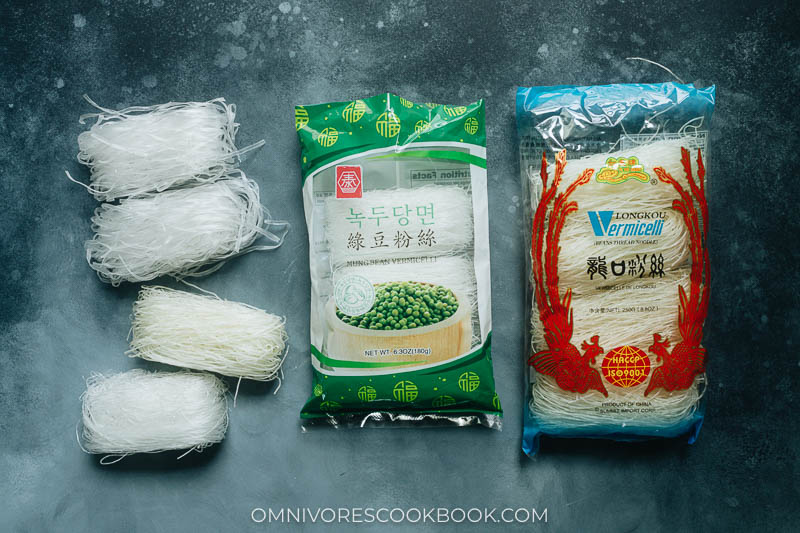
What type of vermicelli noodles to use
If you cannot find the mung bean type, sweet potato vermicelli noodles can be a great replacement.
Doubanjiang (Fermented Spicy Bean Paste)
Doubanjiang (豆瓣酱), also known as spicy fermented bean paste or broad bean sauce, is one of the most important ingredients in Sichuan cuisine. It has a strong fermented savory, salty and spicy taste. This recipe uses a very simple sauce. But with doubanjiang, everything immediately becomes super flavorful.
Mise en place
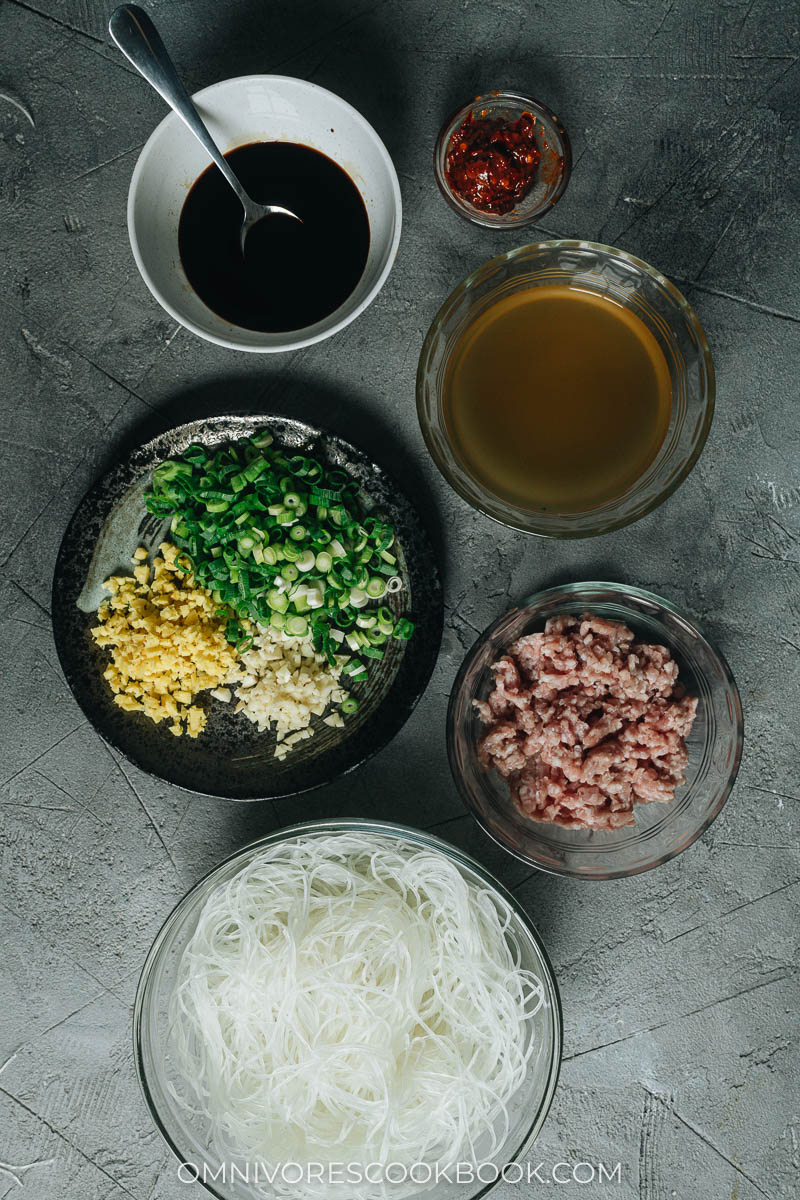
When you’re ready to cook, your table should have:
Mixed sauceDoubanjiangChicken brothChopped ginger, garlic and green onionGround porkSoaked vermicelli noodles
What pan to use
A large nonstick skillet is the best to make Ma Yi Shang Shu. Rehydrated vermicelli noodles are very starchy and can easily stick to the pan when they’re not floating in the broth. And for Ma Yi Shang Shu, the broth needs to be cooked down completely at the end for the best result. Use a nonstick skillet to prevent the noodles from sticking to the pan as you finish cooking. In Chinese restaurants, this dish is usually cooked in a hot wok. At the end of the cooking, the chef would toss the noodles very quickly at high heat, to impart a heavenly smoky taste. This recipe does not use that technique because it’s challenging to do in a home kitchen setting. Plus, you will need to use much more oil (restaurants opt to use pork lard sometimes), so the noodles don’t stick to the wok. I think my home-style version tastes just as great, and it uses a lot less oil.
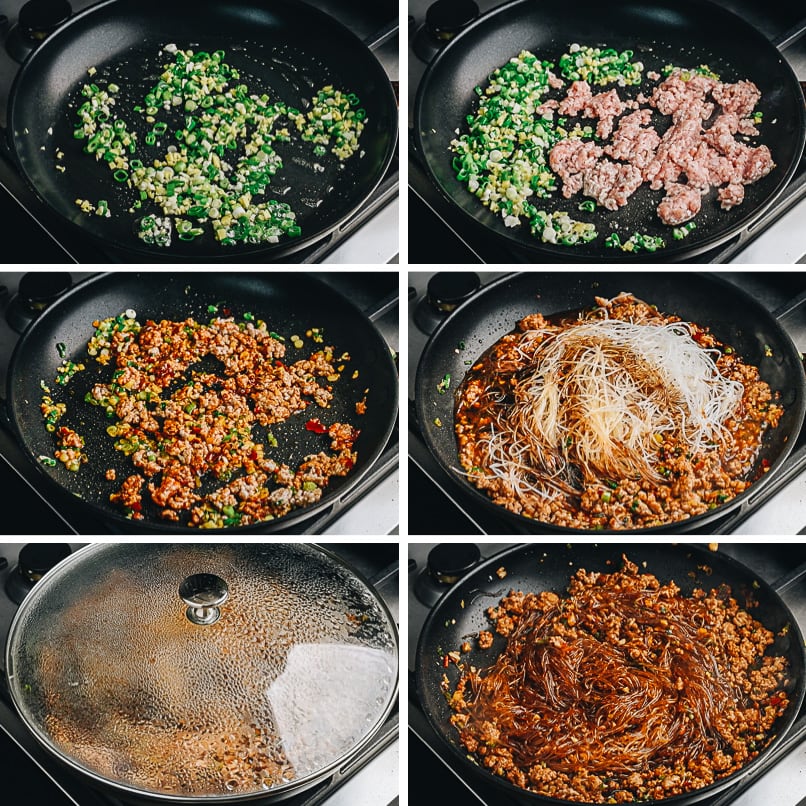
How to cook Ma Yi Shang Shu
Cooking Ma Yi Shang Shu couldn’t be easier. All you need is: Once done, the noodles will soak up the super flavorful broth that is infused with heavenly flavors from the aromatics and the pork. You can enjoy the dish by itself but it also goes great with steamed rice.
Other quick dinner ideas
Dry Pot Cauliflower (干锅菜花)Authentic Mapo Tofu (麻婆豆腐)Chinese Bang Bang Chicken (棒棒鸡)Pork Lettuce Wrap (San Choy Bow)Suan La Fen (Hot and Sour Noodle Soup, 酸辣粉)15-Minute Pork Fried Rice