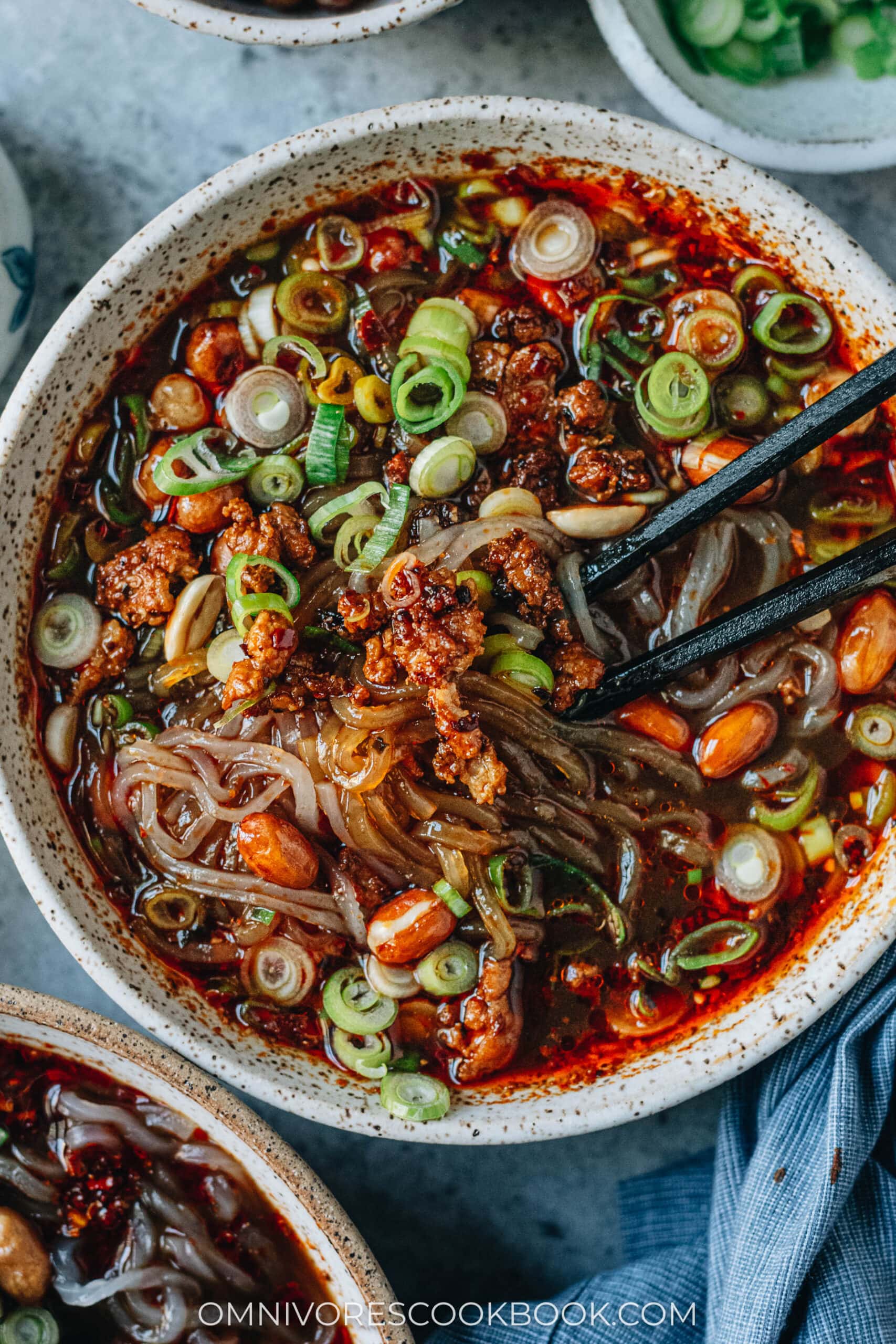
A bowl of suan la fen brings back one of my favorite childhood memories. It was one of my favorite lunch options when I was in middle school. Back then, my parents rarely let me carry any cash, and I usually ate the school cafeteria lunch. Whenever I had saved up some pocket money, my friends and I would go to the street stalls that sold Sichuan food and order a hot bowl of suan la fen.
What is suan la fen
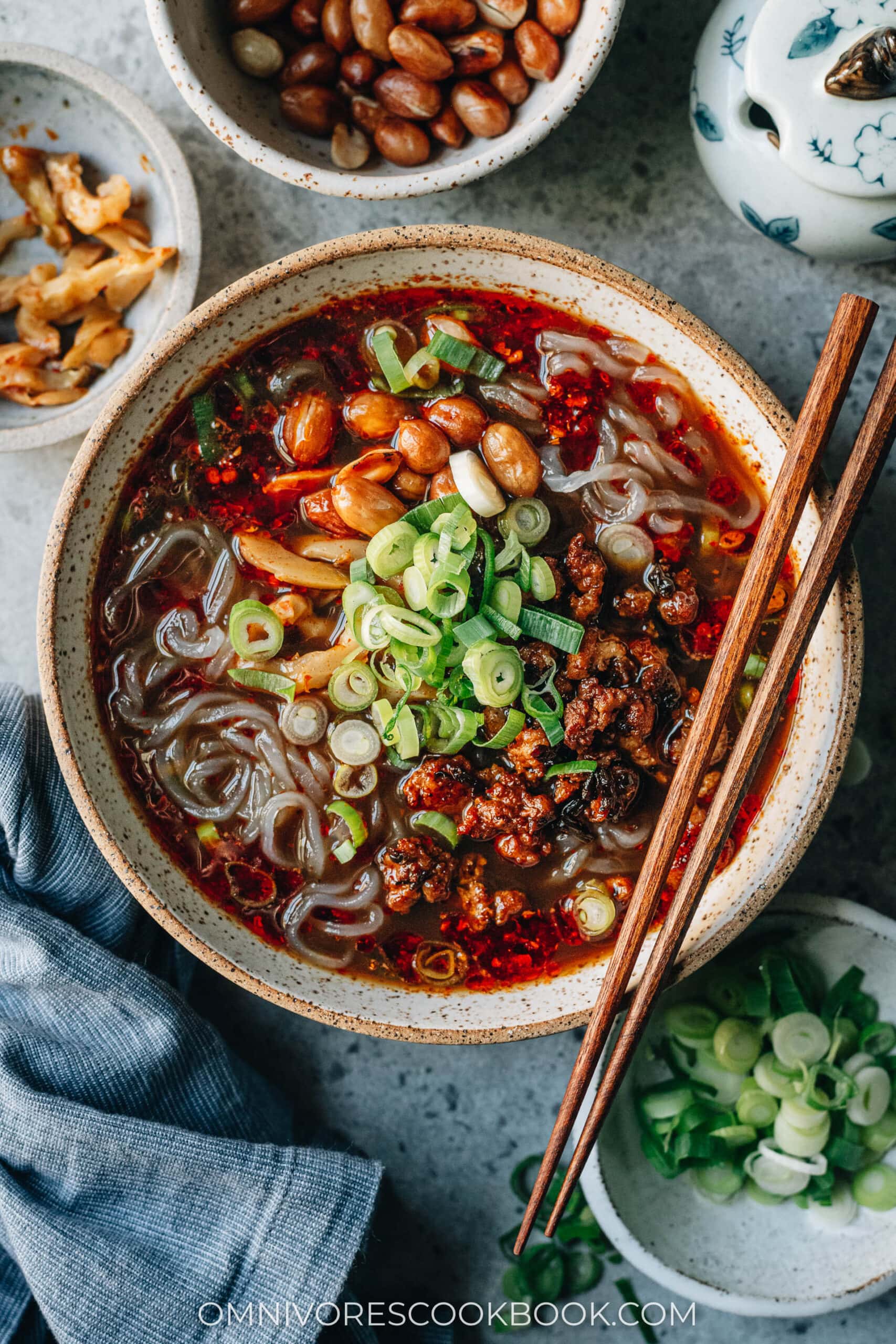
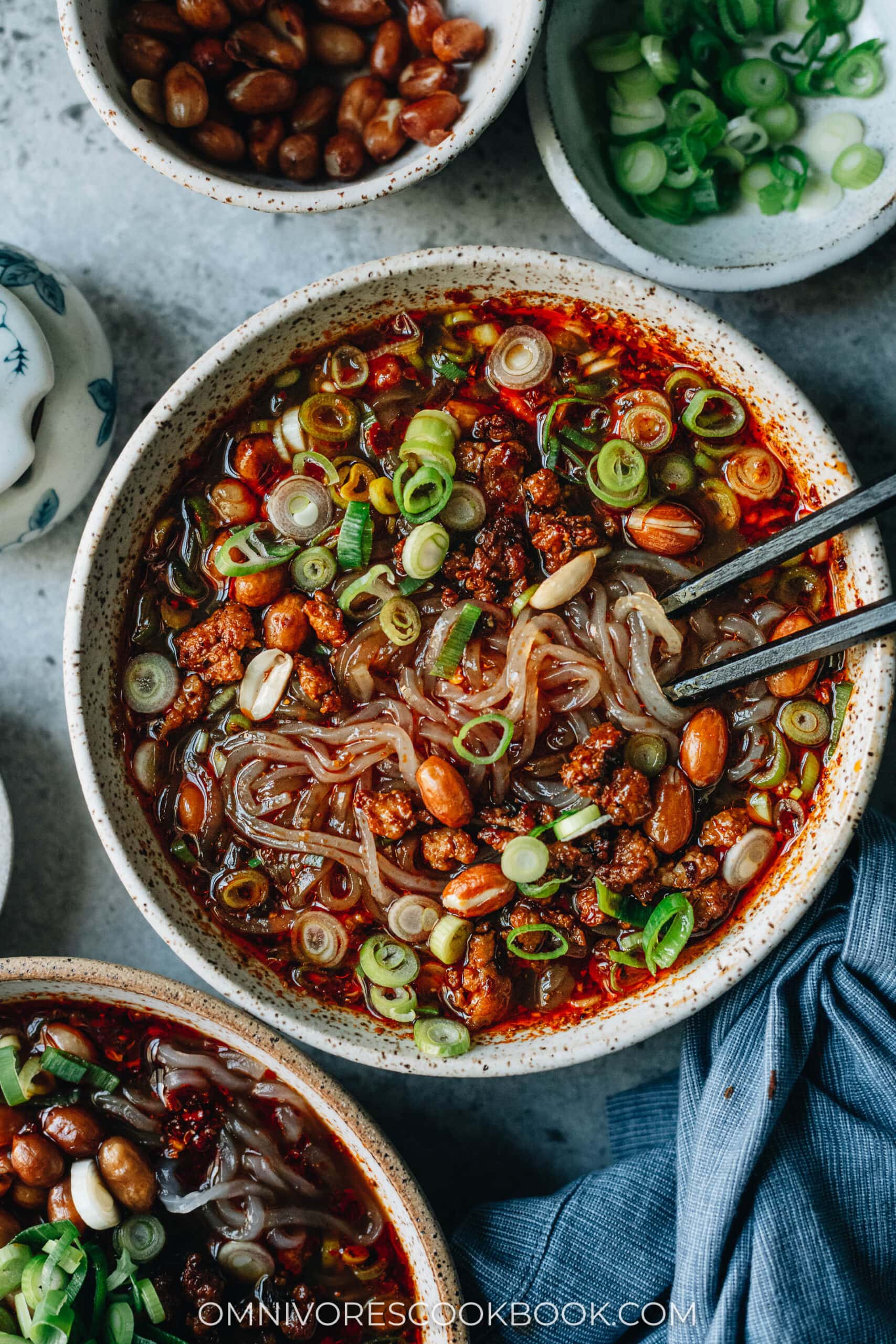
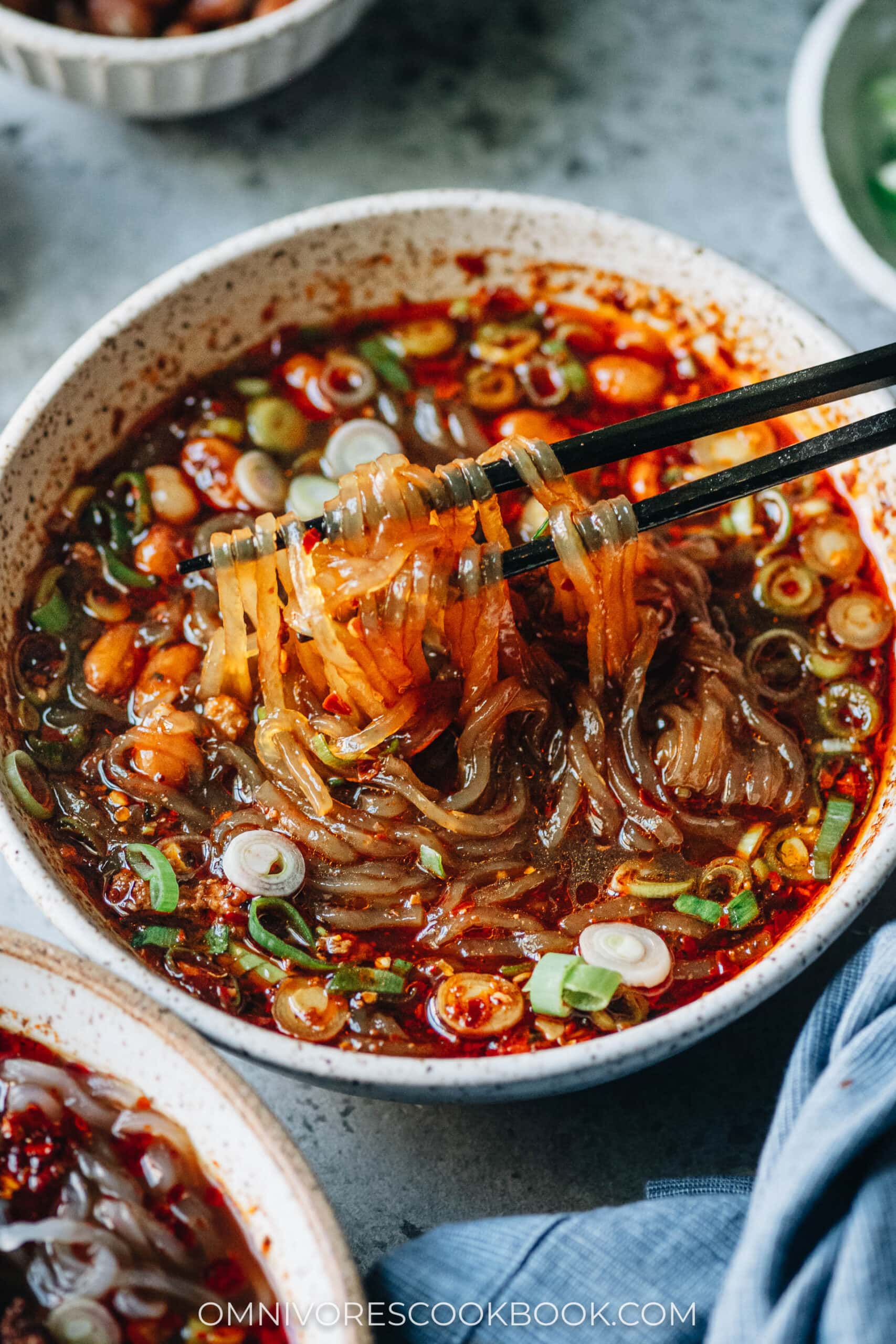
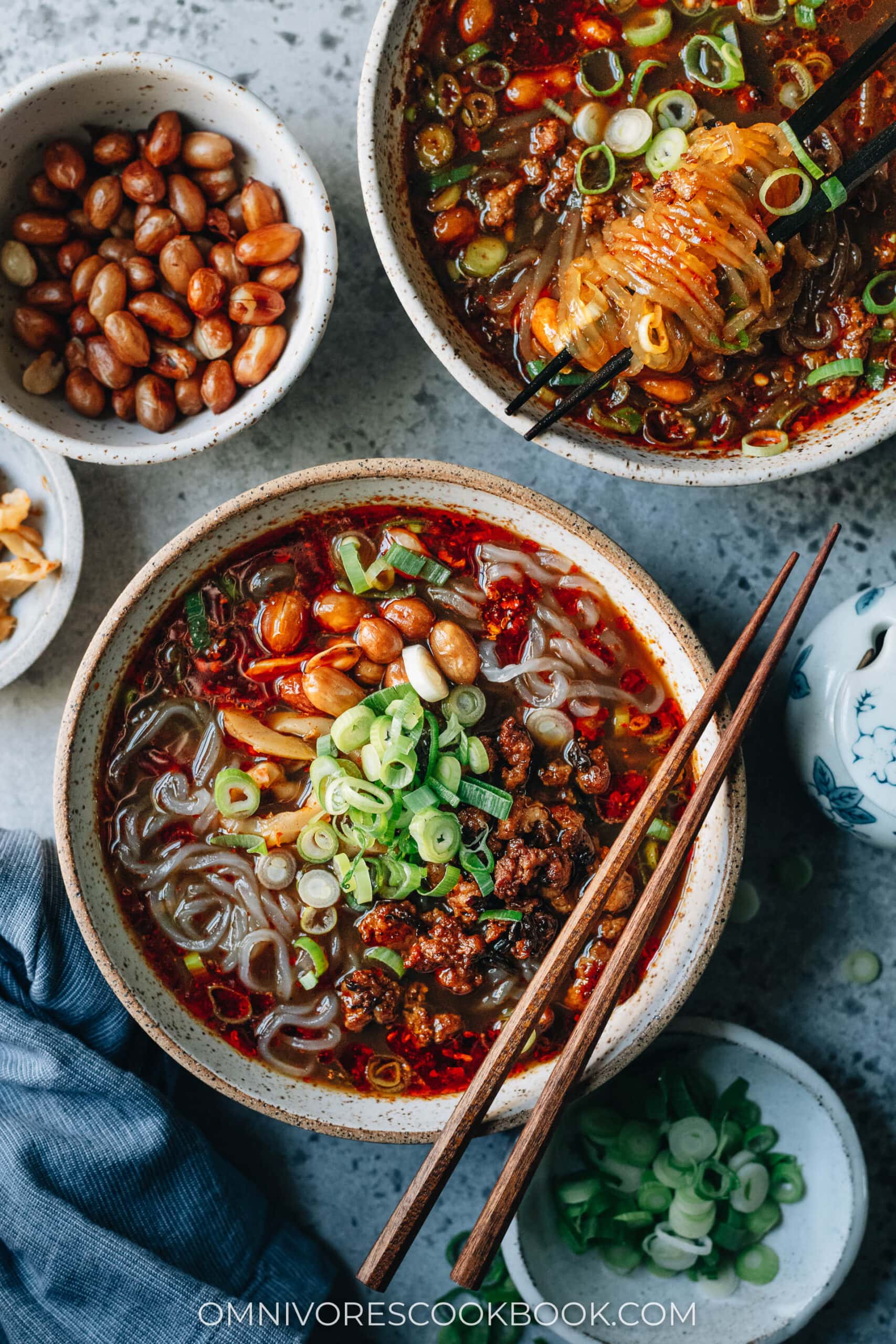
Suan La Fen (酸辣粉), or hot and sour noodle soup, is a signature Sichuan dish that is wildly popular in China and a bit less known overseas. It often uses thick potato or sweet potato noodles, served in a super spicy savory broth with a small amount of ground pork, pickles and crispy fried soy beans for toppings. Back in our school days, the street vendors were very generous with their chili oil. So we often used the dish as a dare to see who could drink more soup without coughing their eyes out. Jokes aside, I’ve always had the fondest memories of suan la fen, not only because it brings back laughs and memories, but also because it is addictively tasty.
Ingredients
The noodles for suan la fen
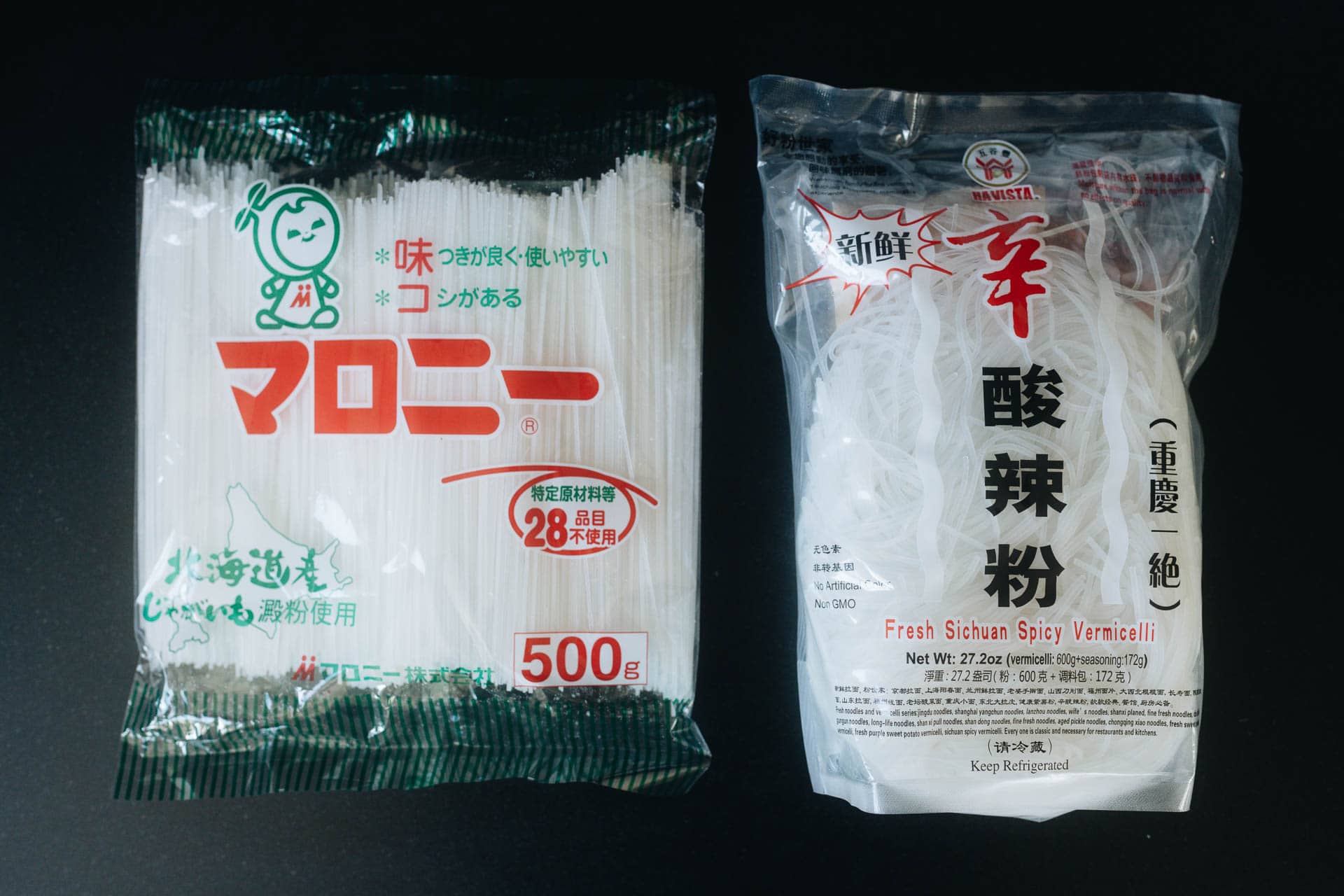
Back in China, we always used freshly made sweet potato noodles for this dish. Once cooked, the noodles have a round and fat shape and a tender, almost gooey texture that is super fun to eat. I have not been able to find fresh sweet potato noodles in the US, but recently I was surprised to see fresh potato noodles at H Mart that are specially designed for suan la fen (see the picture below on the right). They are labeled as “Fresh Sichuan Spicy Vermicelli”, produced by the Havista brand in the refrigerated section, along with other Chinese noodles. It even comes with some broth ingredient packages that actually taste decent, although I prefer the flavor of my homemade one below 🙂 If fresh noodles are hard to find, you can use dried potato noodles or dried sweet potato noodles. Both can be found in many Asian grocery stores under Japanese or Korean names (you might need to check the ingredient list if you cannot read the package language). I tried out the Japanese dried potato noodles (picture below on the left), and they tasted just as great. The next best option is the dried sweet potato noodles used for Japchae, but I’ve found that the dried potato noodles have the closest texture to the authentic suan la fen.
The broth base
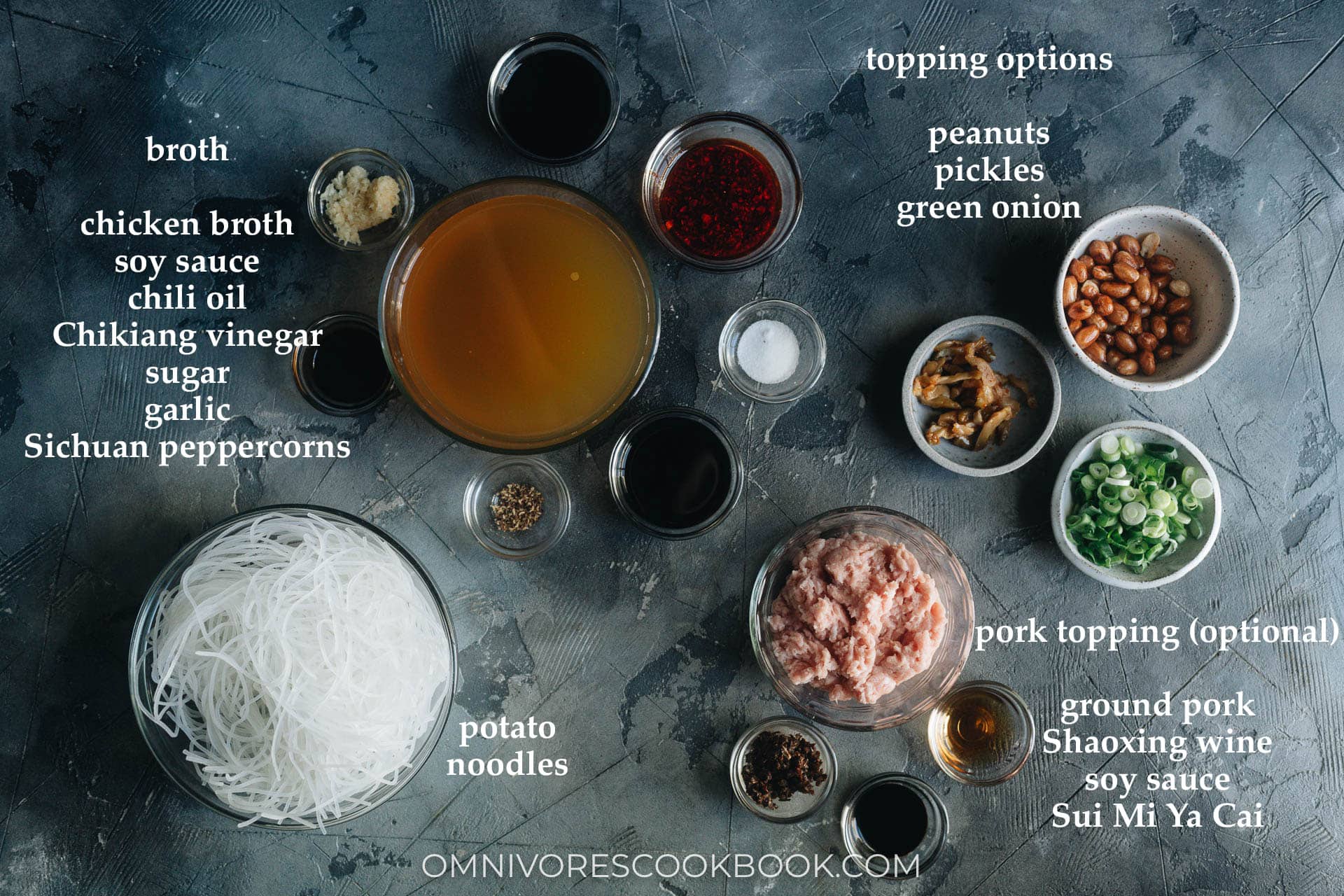
Creating a great suan la fen base is very easy. The most important thing you need is a high quality chili oil. I always recommended homemade chili oil in the past because it’s the freshest and it’s very easy to make. However, recently there has been a boom of artisanal chili oils in the US and you can easily find a freshly made one like this that’s high in quality. The rest of the main ingredients are Chinkiang vinegar and soy sauce. As long as you follow the ratio below, you will get a very balanced tasting hot and sour soup base in your own kitchen.
Suan la fen toppings
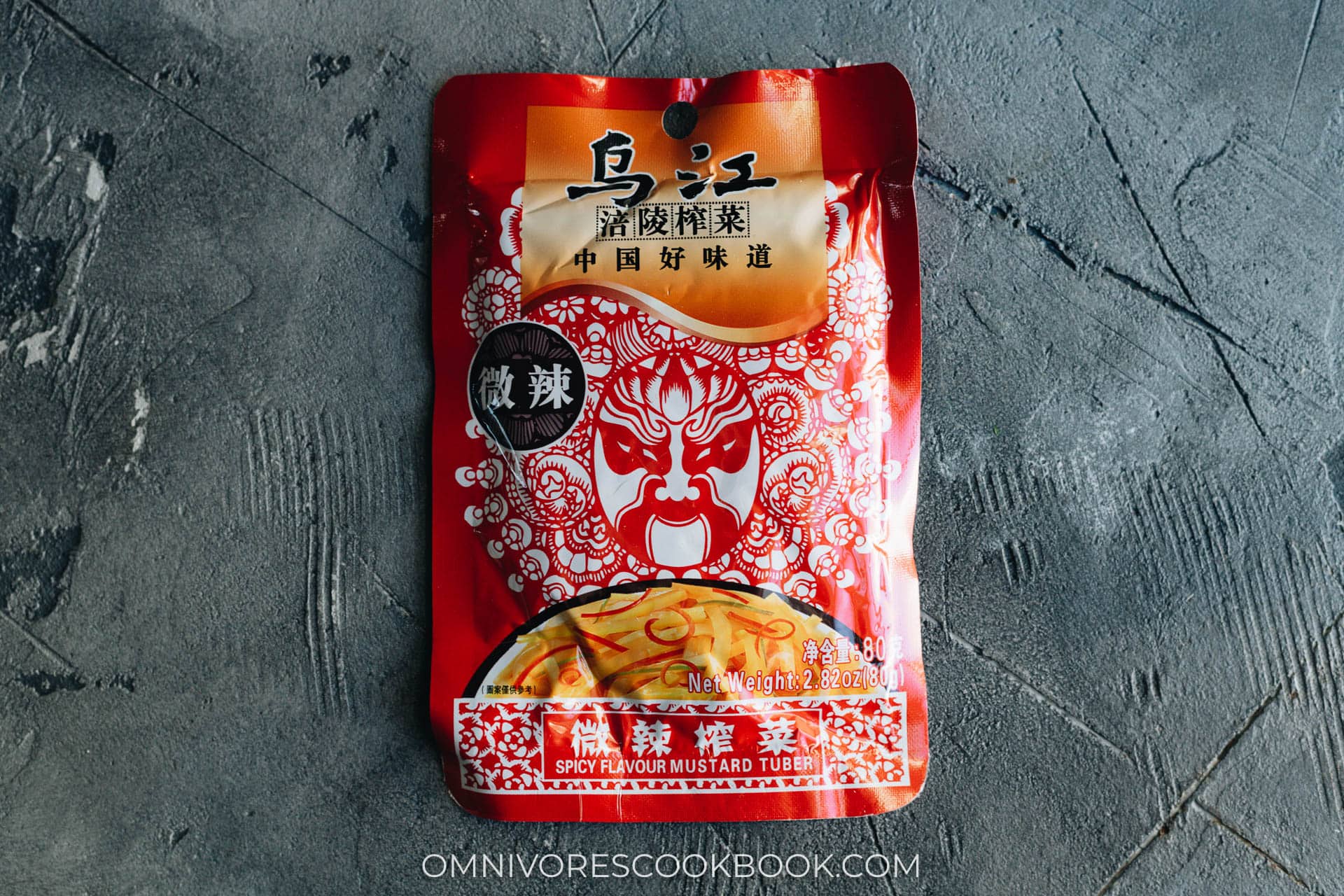
Suan La Fen is a popular street food in many regions of China, and each of them might have slight tweaks in their own signature style. The most traditional set of toppings includes a very small amount of fried ground pork to boost the taste, some crunchy crispy fried soy beans for texture, and a few slices of pickle for an extra kick of flavor. Truth to be told, the broth base is so addictively good and the noodle texture very fun to eat, I always feel like all the toppings are optional. But I decided to include some of my favorite toppings to recreate the suan la fen I ate growing up. The ground pork topping is super easy to put together and it’s definitely optional. But I do like how it enhances the flavor of the noodles. I replaced the traditional fried soy bean topping with toasted peanuts because they’re more readily available and do not require additional cooking. For the soybeans, you would need to pre-soak and fry them – a bit too much trouble in my opinion. The pickle topping is also optional. Since the suan la fen broth is so intense, you don’t really need to add extra saltiness to it. But I do like the crispy texture of it. Feel free to replace it with a small head of blanched baby bok choy for added texture and color.
How to make suan la fen vegetarian / vegan
It’s totally possible to make suan la fen vegetarian or vegan. Instead of chicken broth, you can simply use boiling water plus a plant-based bouillon. My personal favorites are Lee Kum Kee mushroom powder and Better than Bouillon Mushroom Base. Both are very savory and less sweet than most Western-style vegetable broth / bouillons. If you prefer to use a vegetable broth, try to find one that is more savory and less sweet (usually the ones made with a lot of carrots are too sweet for this dish). A mushroom broth will work great here.
How to cook suan la fen
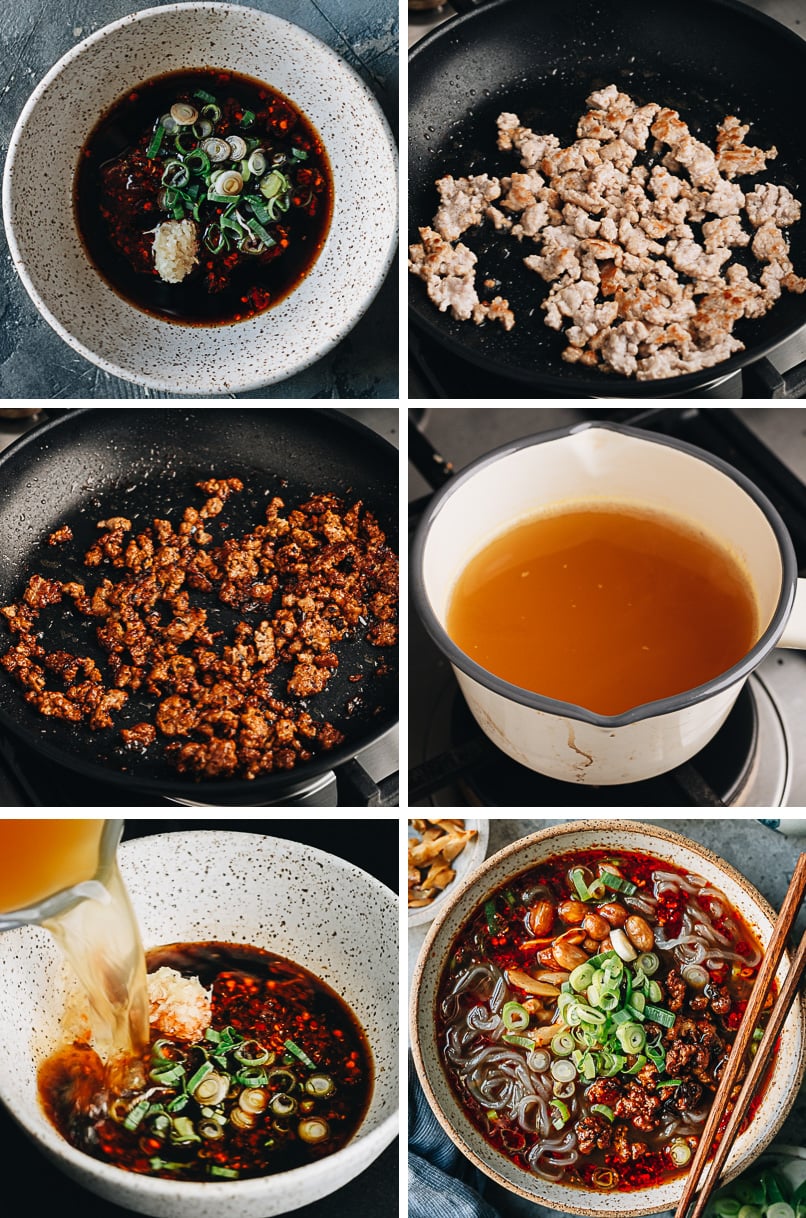
Cooking suan la fen is super easy, but you do need to figure out a good logistical plan to keep everything hot. Serving Tip: Freshly made suan la fen is quite spicy, especially when the broth is hot. Be careful when you slurp the noodles because the chili oil will float on the top and may catch you by surprise. If it tastes too spicy for you, simply wait for the broth to cool down a bit and it will be much easier to handle. Also note, since the broth of the suan la fen is quite rich and intense, I usually fish out all the noodles and rarely drink all the broth. Feel free to make more (double) the noodles and add more of them to the broth if you prefer.
Afterthoughts
Because Suan La Fen is a very rich and intense dish, it’s usually served in smaller bowls as an appetizer, a snack during the day, or a light meal. But for me, I can easily finish up two servings in no time. If you like noodles and spicy food, you cannot miss this one! Maybe it’s less famous than Dan Dan Noodles, or Cumin Lamb Noodles these days, but it definitely deserves a spot on your Chinese dinner rotation.
Other delicious Sichuan recipes
Ma La Xiang Guo (Sichuan Mala Dry Pot, 麻辣香锅)Shui Zhu Yu (Sichuan Boiled Fish, 水煮鱼)Chinese Bang Bang Chicken (棒棒鸡)Fu Qi Fei Pian (Sichuan Sliced Beef in Chili Sauce, 夫妻肺片)Sichuan Eggplant Stir Fry (鱼香茄子)Sichuan Dry Fried Green Beans (干煸四季豆)