As the name suggests, it is a stir fry recipe with Elephant yams. I know what you’re thinking…..Elephant Yam is a tropical tuber loaded with nutritious benefits that makes it too good to ignore. I agree to be sent email.
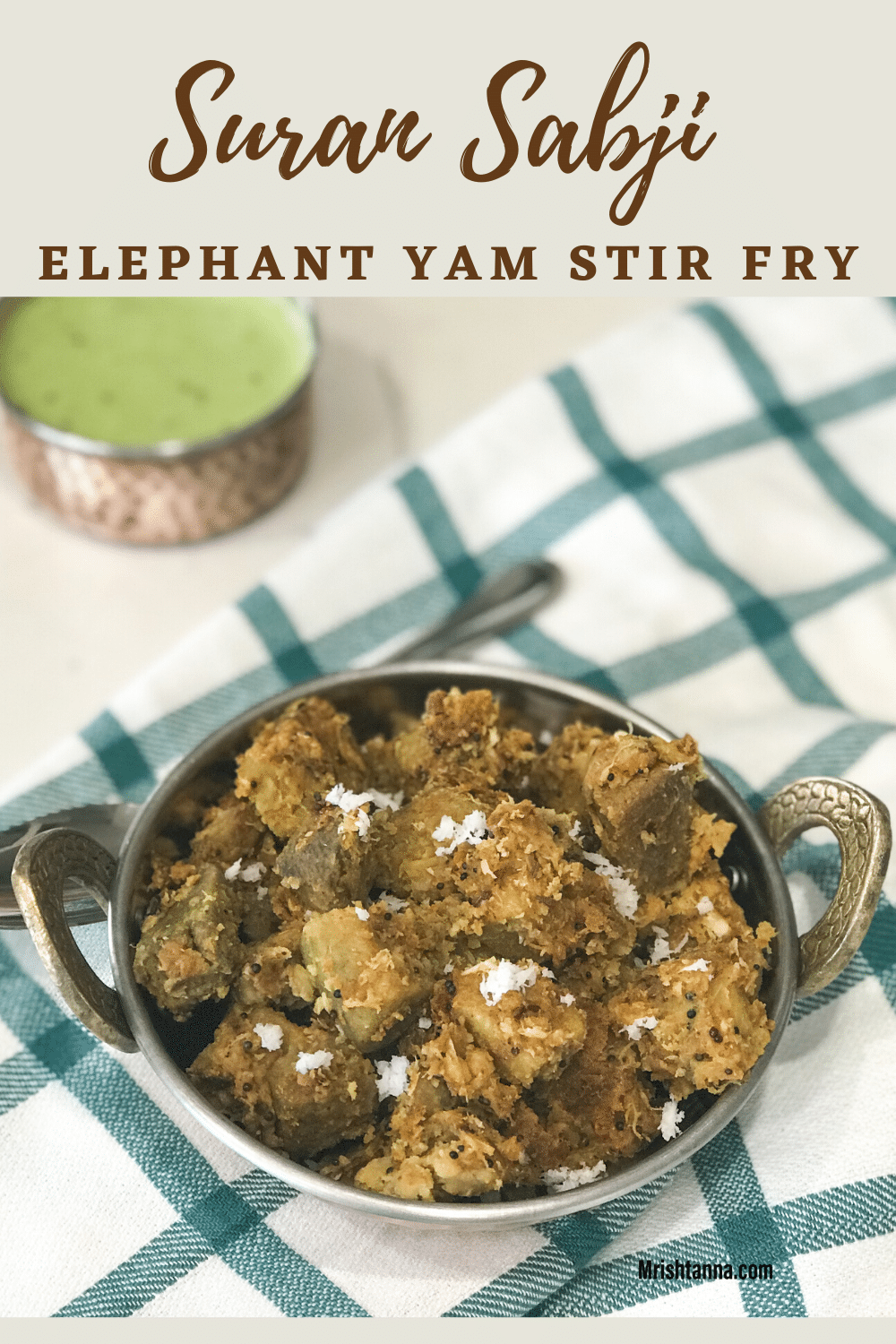
I have included step-by-step photos and videos to make sure you capture every nuance of this awesome stir fry recipe. Although Suran (Elephant Yam) is a common ingredient in Indian households, I rarely see them available elsewhere. Here in the USA, I rarely get my hands on a fresh Suran and I settle for the frozen ones that I can find fairly easily. But when I find them at Asian grocery stores, I make sure I get at least one to prepare a stir fry or even a curry with a coconut base. I am sure there are several other options to enjoy this tuber. Elephant yam stir fry or Suran Sabji is a tasty, nutritious option that is likely the easiest option for healthy palya or sabzi in southern India. This side dish goes very well with steamed rice, served with sambar or rasam and Tambli. This yam stir fry recipe brings out the nutty flavor from elephant yams and the flavors are complemented by the flavors from jeera and turmeric. Although sabji or palya can look dry, the curry packs a punch of flavor and makes a great pair for a dish that is normally bland. With simple ingredients and a simpler procedure, this is one recipe you will prepare often, once you try it!
Is Suran good for health?
Like I said at the beginning, elephant yam or suran is rich in proteins and carbs and that makes this a complete meal. Besides having a high fiber content, it also lowers bad cholesterol from our body. Being rich in fiber, also makes you feel full for a long time and hence helps you cut your cravings. I am in no way good at cutting the cravings, but I have no doubts about the health benefits of elephant yams that my grandma passed on to me. She also used to tell me that elephant yams can be a big difference-maker in women during the first 20 days of postpartum.
How to cook
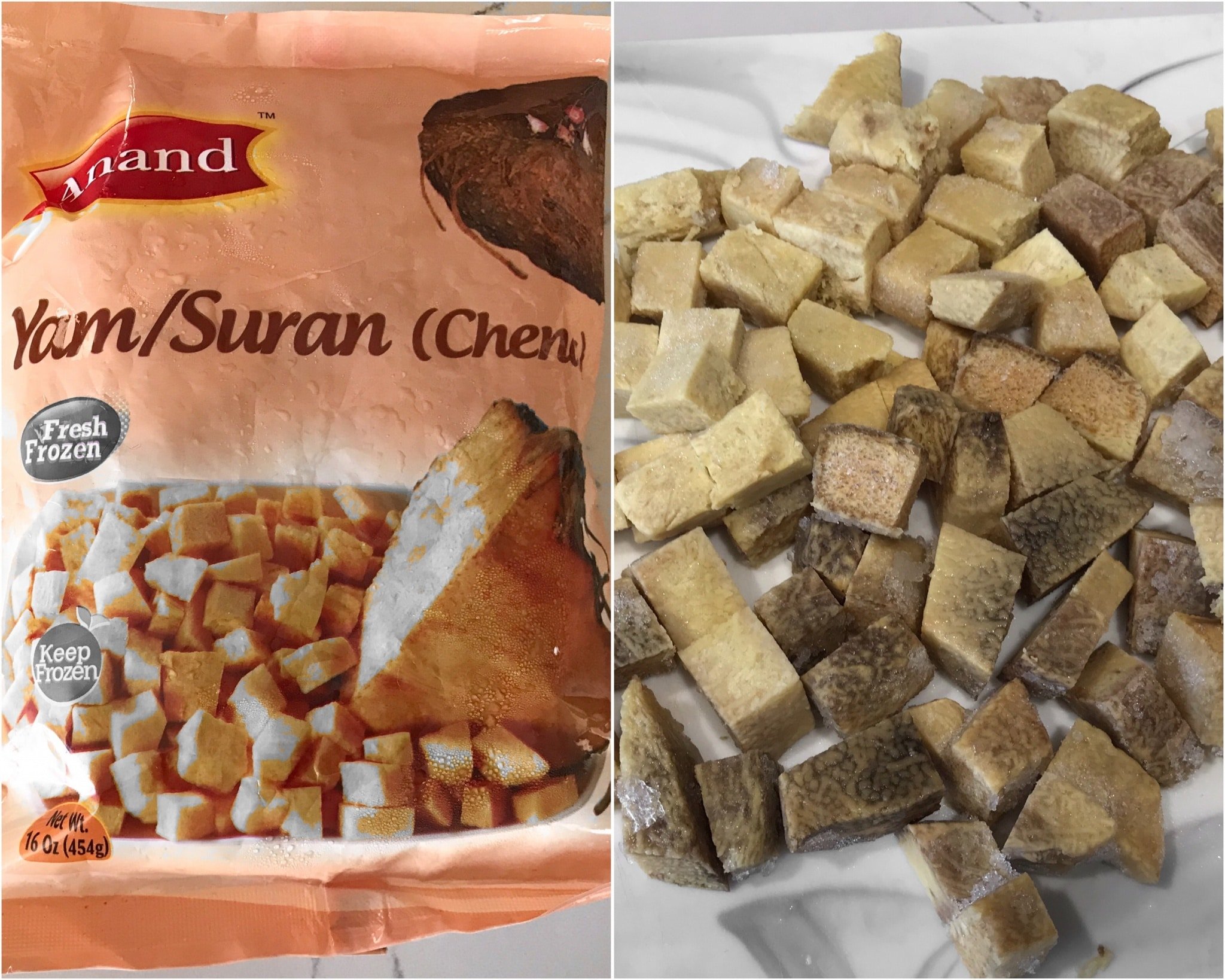
Suran (Elephant foot yam) a.k.a ‘Jimikand’ is a root vegetable that can give an itchy feeling in your throat if it is not cooked properly. To avoid this, it needs a sour ingredient in the dish. So it is common to add a little bit of lemon juice or tamarind when elephant yams are cooked. I have outlined the procedure to prepare stir fry. Another way of making suran curry is the one like ‘Green Bean Sambar’…just replace the beans with Suran. If you are using the fresh ones, peel the skin off and cut them into ½ in cubes. Be sure to grease your hands with a thin layer of oil to avoid the itchy feeling when you cut them. After you cut them into cubes, soak them in water for 10 mins before cooking them. If you are using the frozen kind, just soak them in water for 10 minutes to let them thaw. Cooking the elephant yams under pressure is one good way to cook them. Just add turmeric powder, lemon juice, and enough water to fully immerse them and cook it in a traditional steam cooker. It only takes one whistle to cook them to perfection with a medium flame. If you choose to cut them into bigger chunks, you will likely need one more whistle. Once it is steam cooked, drain the excess water and place them aside. Then use the cooked yam in Suran sabji.
Step by step method
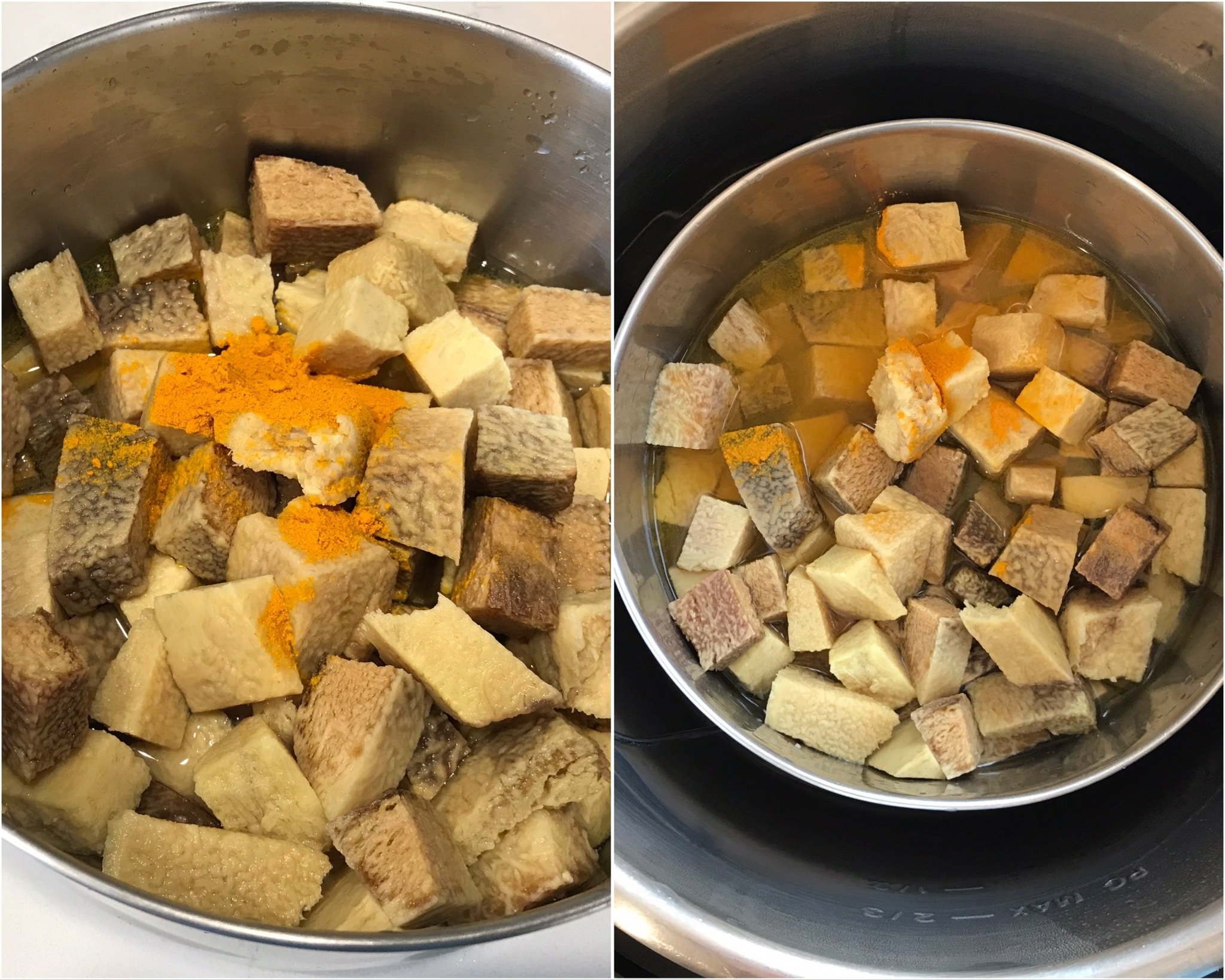
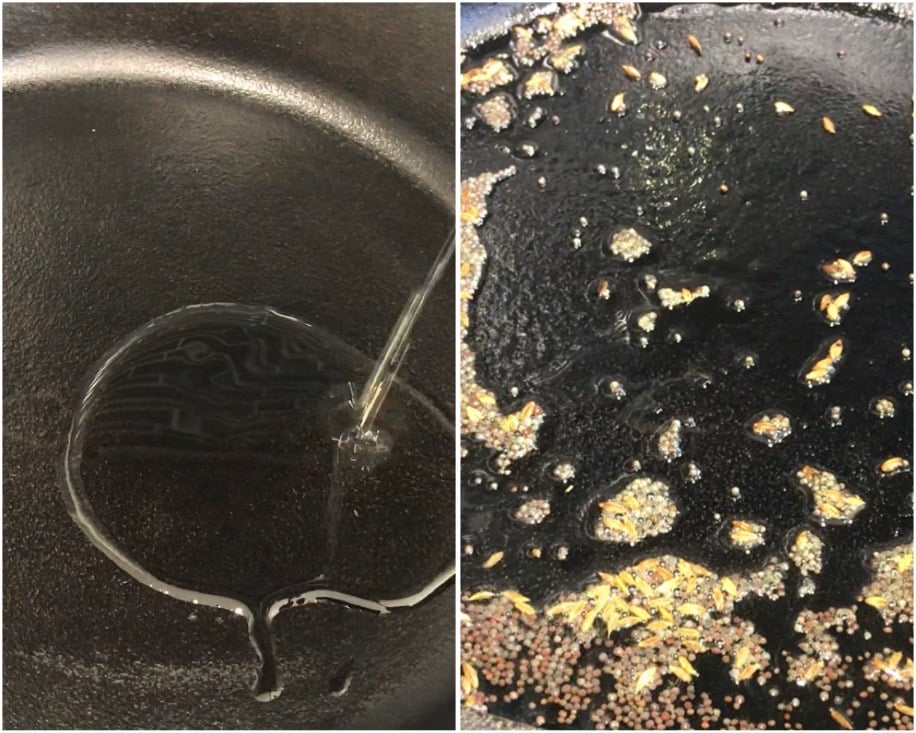
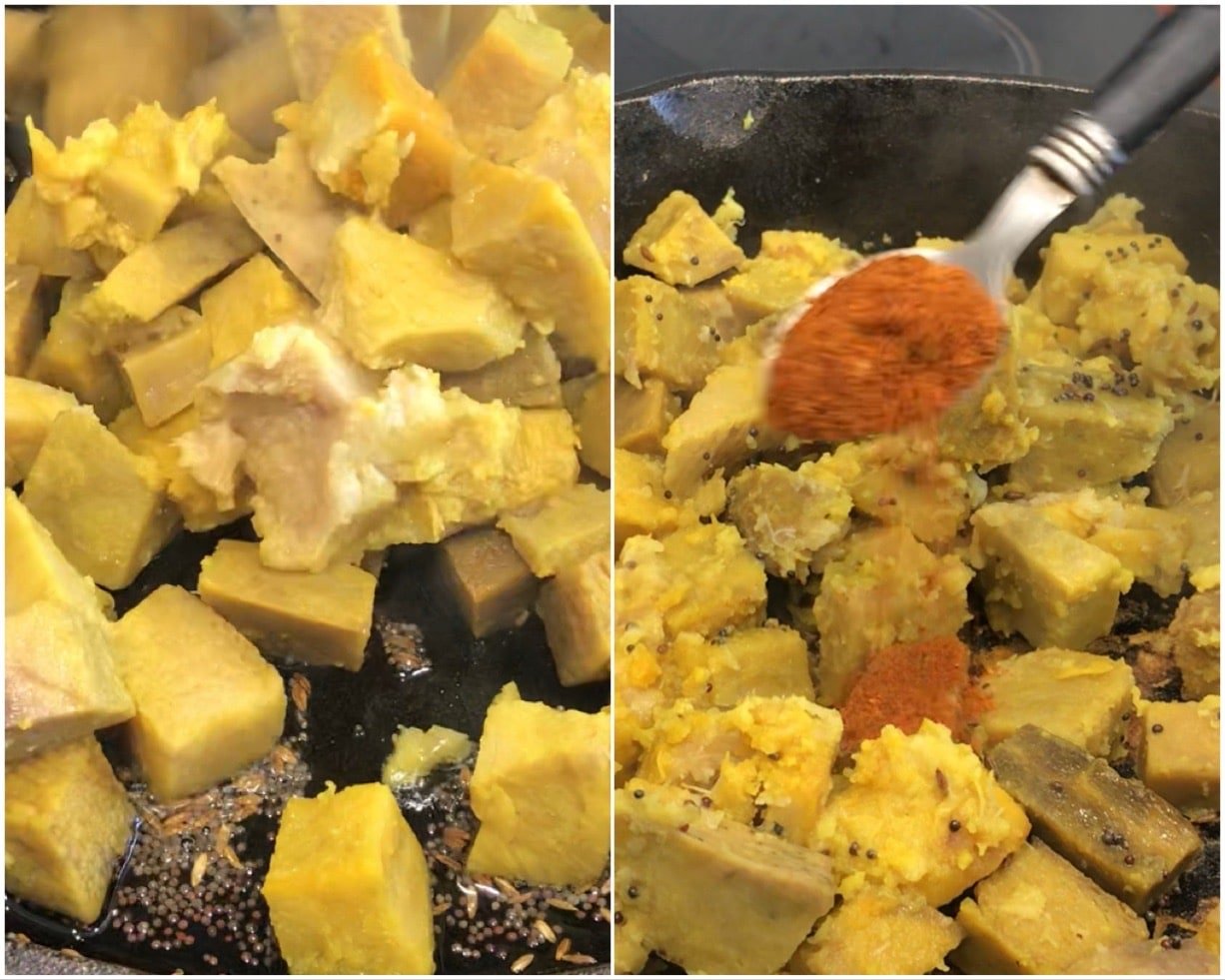
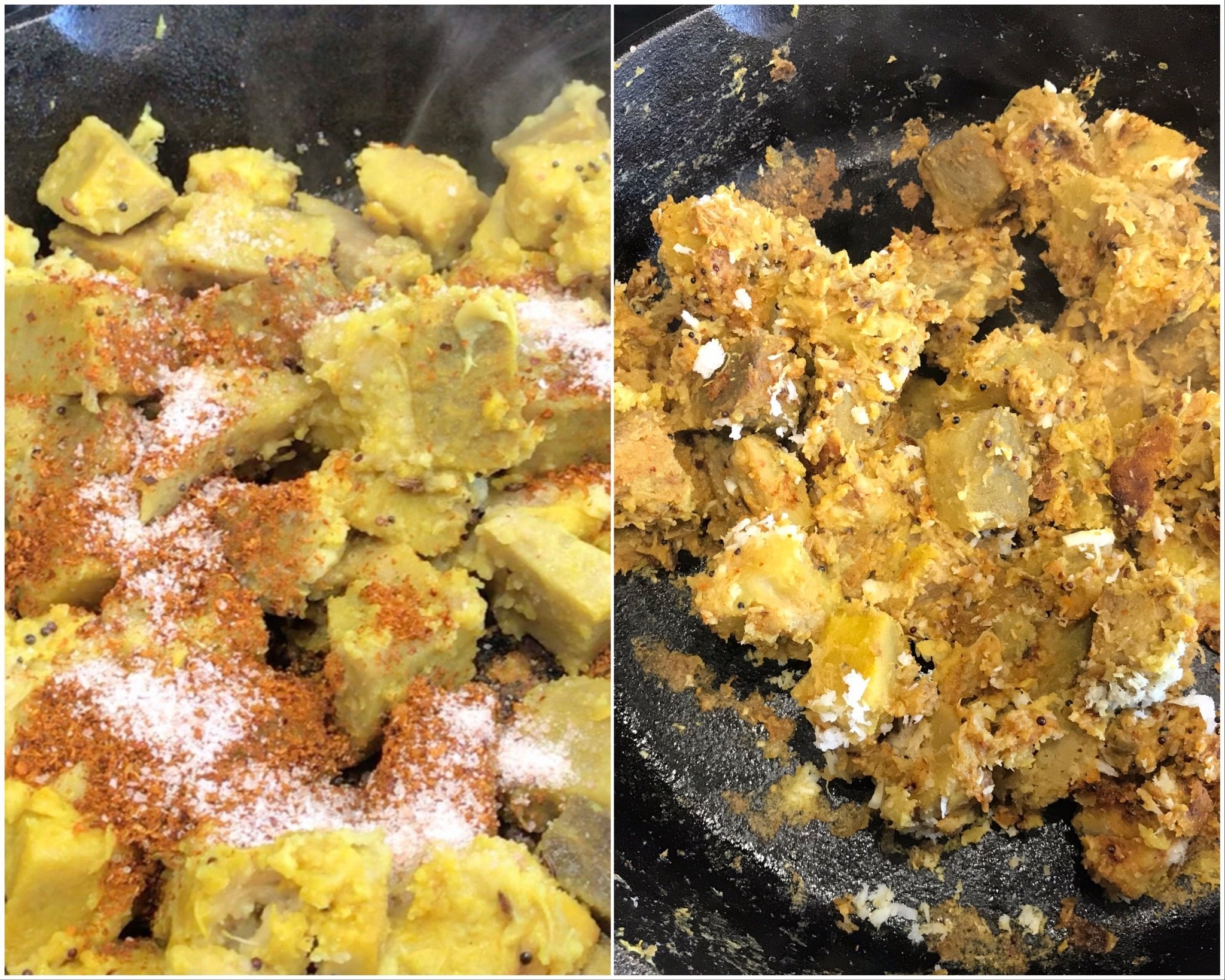
I used frozen Suran / Yam for this recipe. Cube them before using it in the recipe. In a small pot add cubed suran and pour enough water, lemon juice, and turmeric powder. Pour 2 cups of water inside the inner pot and place the smaller pot inside the inner pot (Pot-in-Pot method). Press the “pressure cooker” and set the timer for 2 mins. When the timer expires press “cancel” and after 10 mins release the pressure using quick release. Drain the water and keep the boiled suran aside. Place a pan over medium heat and add a few teaspoons of oil. When the oil heats up, add mustard seeds, cumin seeds and saute them until they start to splutter. Now add the cooked and drained Suran/ Yam to the pan and gently mix with spices. Do not overmix them to avoid breaking down the yam cubes and becoming too mushy. Add sambar/ curry powder, salt, and again stir gently. Cook for 2 min until the raw smell of sambar powder is gone. Switch off the heat and sprinkle the grated coconuts on top of the Suran Sabji or Palya. Suran Sabji is ready! Serve it as a side dish over steamed rice and Dal or Saaru.
Instant pot method for cooking elephant yam
With the Instant Pot, it is even simpler. For fresh or frozen kind, add them to a small pot with water and turmeric powder. Pour 2 cups of water into the inner pot and place the smaller pot inside the inner pot (Pot-in-Pot method). Choose the “pressure cooker” setting and set the timer for 2 mins. As the timer expires, press “cancel” and release the pressure using the ‘manual release’ option after 10 mins. Now drain the excess water and keep the boiled suran aside for your dish. The rest of the procedure is just gathering up the spices and preparing the stir fry. It was the best stir fry I made in less than 20 minutes. Try it today and let me know how you like it! If this recipe interests you, look for similar recipes in my blog such as the Okra fry, Plantain stir fry, Easy cauliflower fry, Beetroot palya, Bitter Gourd Fry Vegan Jalfrezi recipe. Just subscribe to my newsletter for more delicious vegan recipes such as this sent directly to your inbox.
📖 Recipe
Pin this recipe for later use