In China, a fish course is a must-have for celebratory occasions such as dinner parties, festivals, and Chinese New Year. The Chinese character for fish is yu (鱼), which is pronounced the same as the Chinese character for surplus (yu 余). So a fish course is always served at the dinner party, to bring good luck, abundance, and fortune. For me, a fish course deserves its main spot simply because it’s tasty! A popular fish dish to serve at Chinese New Year and other festivals is steamed whole fish. However, it does require extra work and access to a wet market that sells live fish. Since moving from China to the US, I’ve lived in Austin, Texas and New York. I’ve found that it’s quite challenging to get live fish that are suitable for Chinese cooking. That’s why I’ve started to develop fish recipes that maintain the spirit of the whole fish course, but are more practical to make at home.
Why this recipe
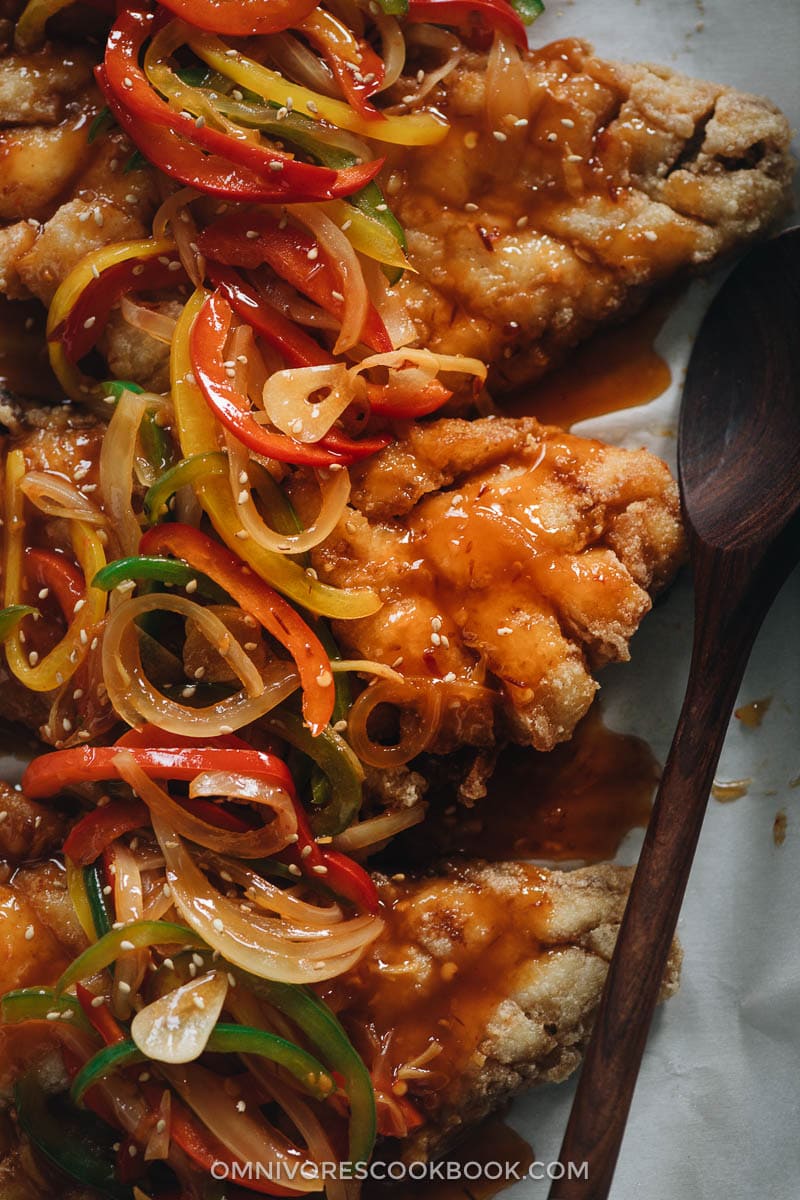
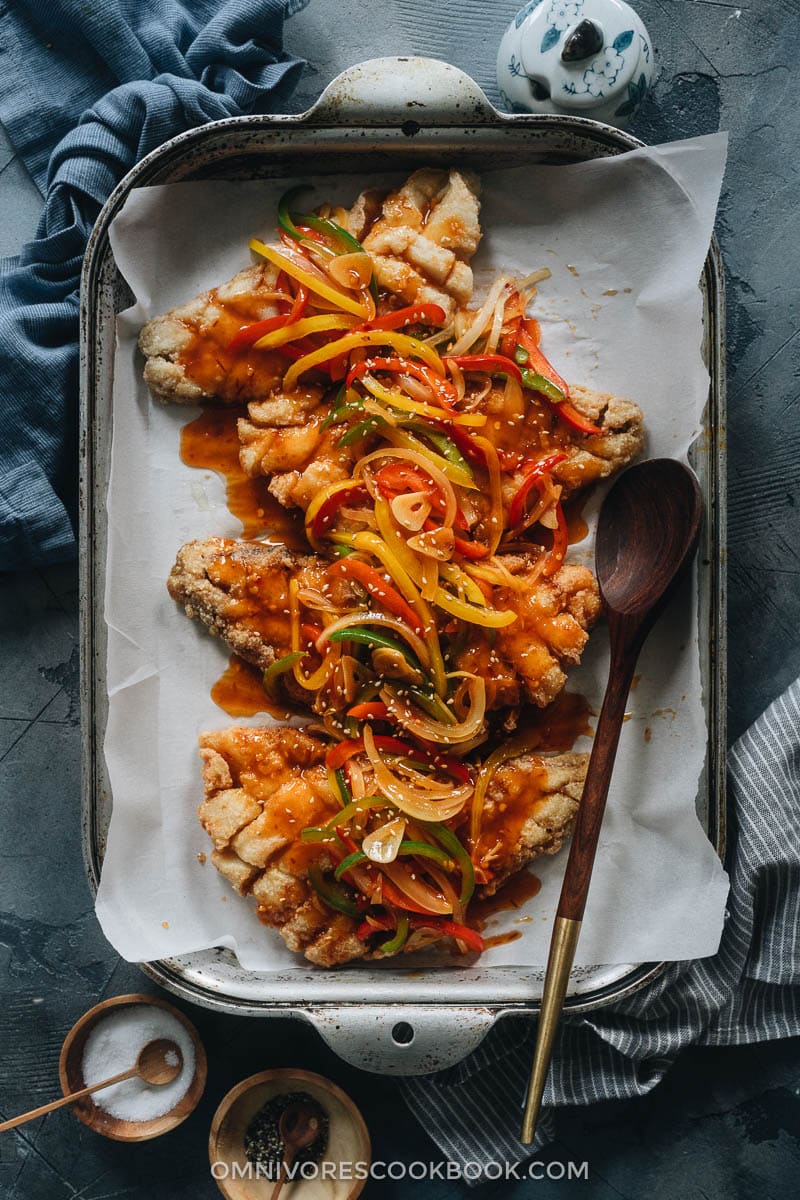
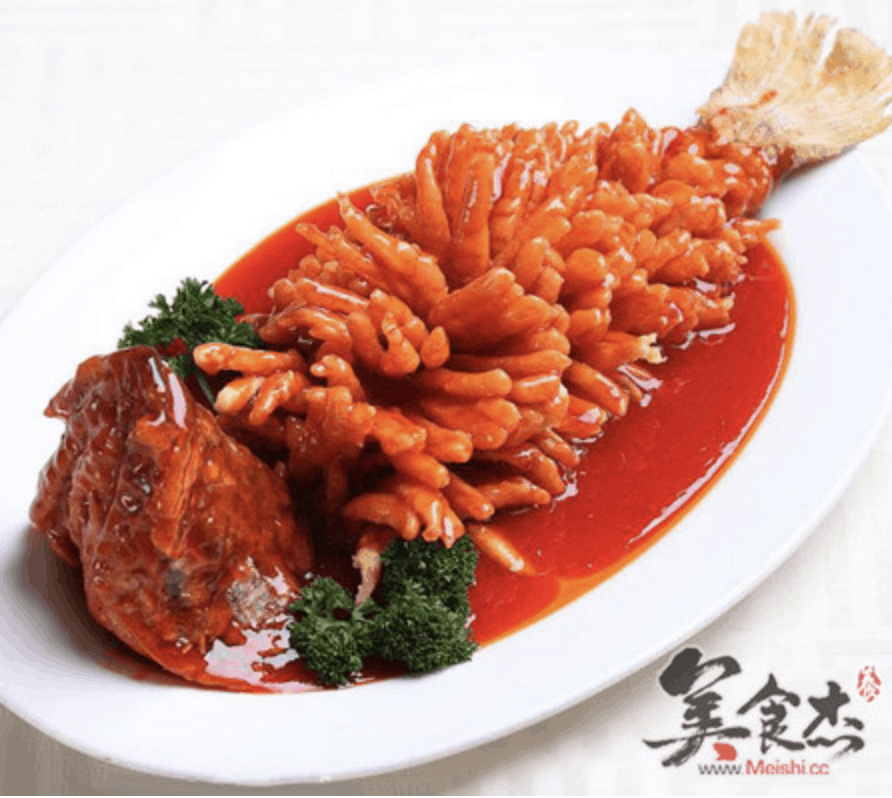
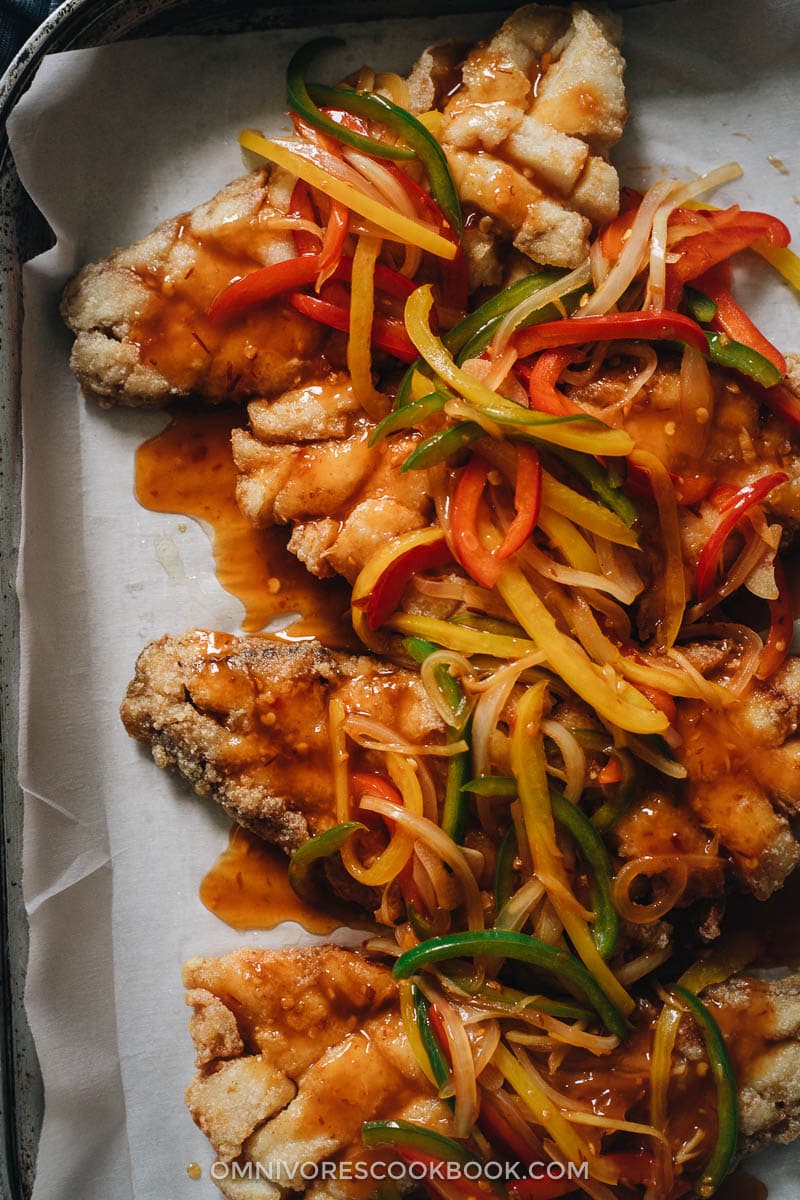
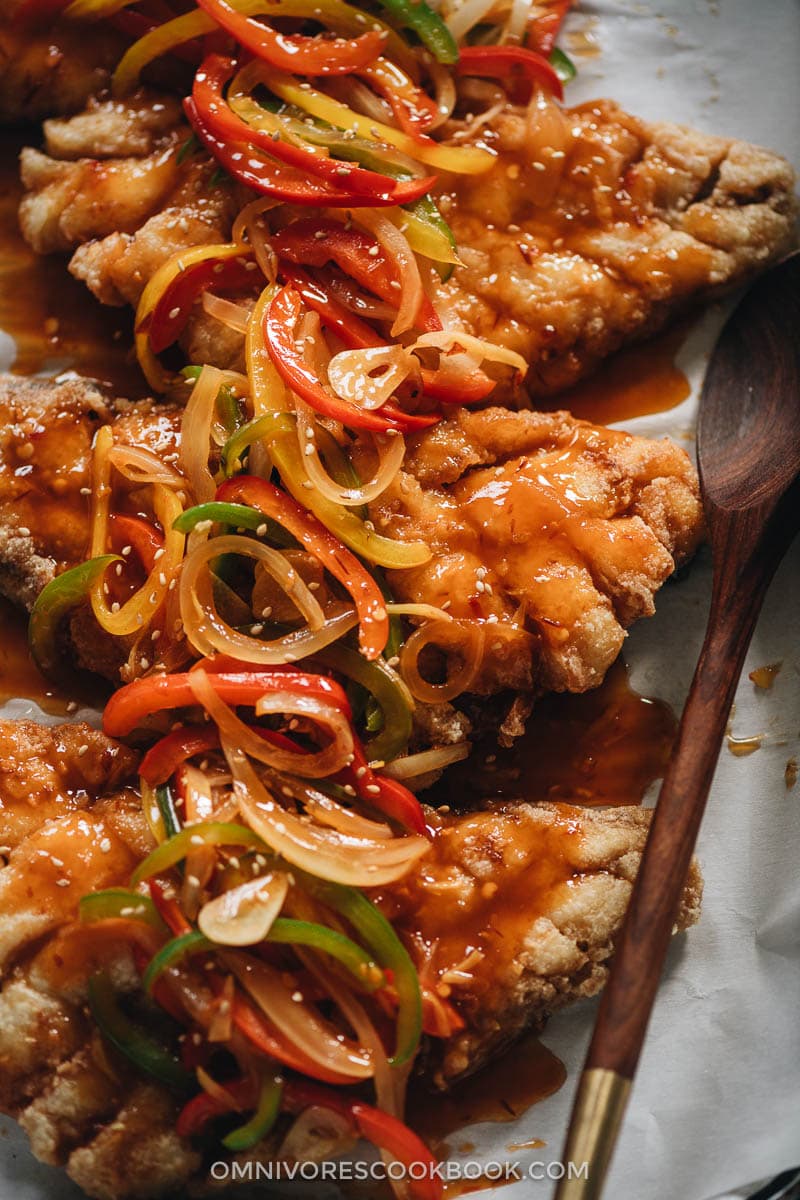
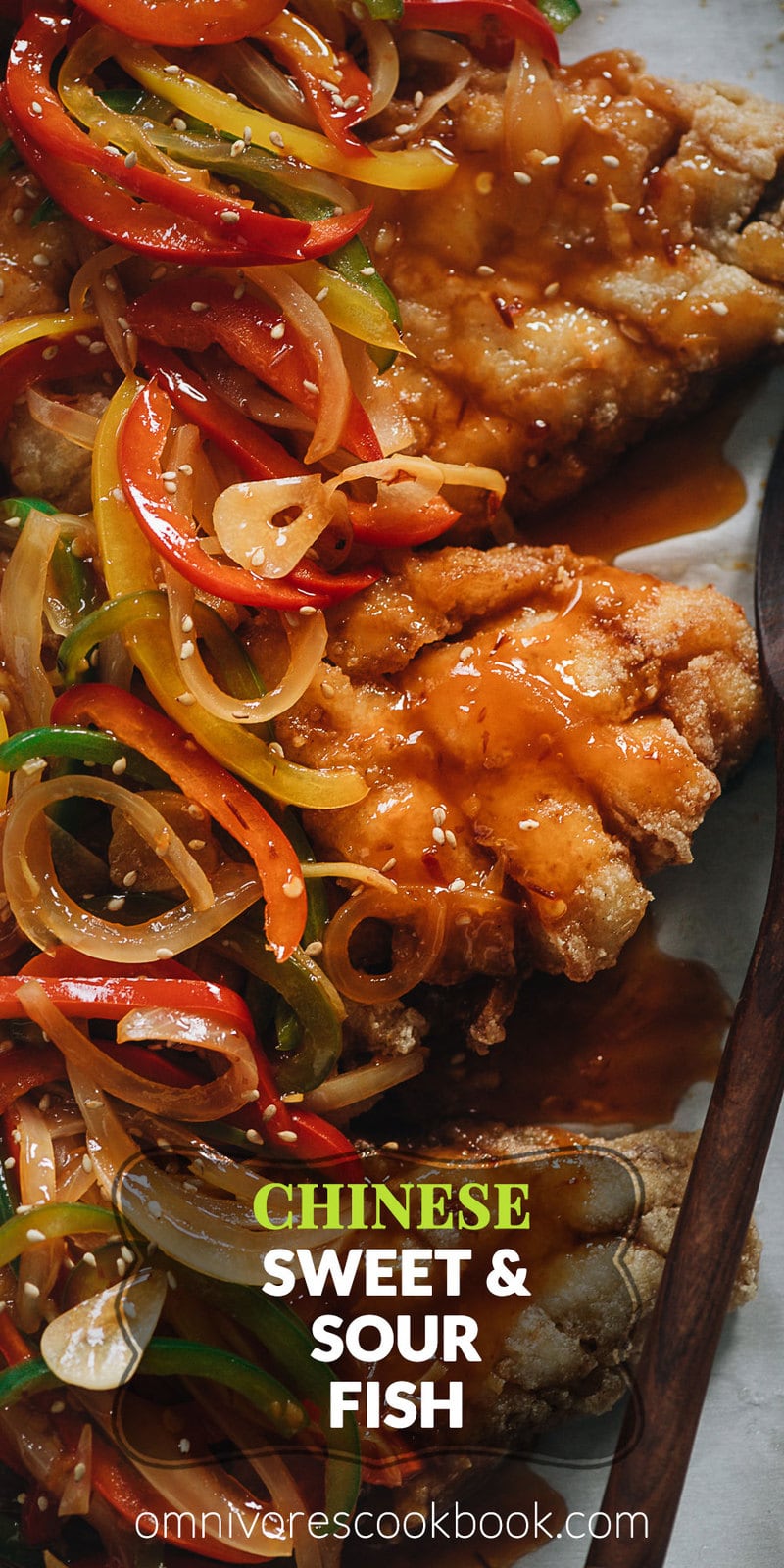
Sweet and sour fish is a perfect dish to serve during Chinese New Year or at any dinner party. It has a flavor profile that your guests will love and it looks festive. Traditionally, a whole river fish is used for this dish. Chinese chefs fillet the fish, then flip the fillet so that the skin curls to expose the flesh. The fillet is scored, battered, then deep-fried until it looks like a blossom, and then drizzled with sweet and sour sauce. While that dish is stunning and extremely delicious, it’s so hard to achieve in a home kitchen. That’s why I developed this recipe.
The recipe uses fish fillets to create the festive look, but it’s much more approachable to cook at home. It uses much less oil to create a super crispy fish, just like the real-deal. The sauce is very fragrant and well balanced, like the restaurant version. I used some chili garlic sauce to create a slightly spicy taste that works great with the sweet and sour. Easy workflow. I’ve also included plenty of pictures so it’s super easy to follow.
What fish to use
(1) White fish with slightly fatty and firm flesh is the best option. My personal favorite is catfish. It’s affordable, very fatty, and holds together well during cooking. Seabass, perch, trout, and snapper are great options as well. Avoid delicate fish such as cod, which will fall apart easily once cooked. (2) For size, smaller and thinner fillets work better, because they require less oil for cooking and will crisp up better. It’s best if the fillets are about 1/2” or 2/3” (1 to 1.5 cm) thick. The largest cut I used weighed 1/2 pounds per fillet, and the thick part was about 1” (2.5 cm). I wouldn’t recommend any cut that’s larger than this. (3) A skin-on cut is preferred. You can score the fish deeper if you’re using a skin-on cut, so the result will be crispier. Not only does the skin hold the fish together so it won’t fall apart, but it also tastes heavenly once crisped up. But you can use skinless fillets to cook this dish as well. (4) When possible, get the freshest fillets you can. I would choose a great-looking whole fish and ask the fishmonger to fillet it for me at the fish market.
Prep for cooking
It might look like a long ingredient list. But if you get organized, the recipe is actually very easy and straightforward. Once you’re done prepping, you should have a few things on your table (see the picture below). You can use one small bowl for the aromatics (ginger and garlic), because you will add them at the same time.
Workflow & how to prepare ahead
The recipe contains two parts – (1) frying the fish and (2) cooking the sauce. If you plan to prepare the dish ahead, you can make the sauce on the day of serving and heat it up later. In this case, you should make the sauce first, then fry the fish later. The sauce holds up pretty well and you can reheat it in the microwave. Once you’ve made the sauce, you should let it sit at room temperature. Remember, do not reheat it too much, which will reduce the thickening power of the cornstarch and make the sauce watery. Ideally, you should fry the fish and immediately serve it once it’s cooked. If you have to prepare it slightly ahead of time, you can keep the fried fish on a baking tray lined with a wire rack, and store it in the oven at the lowest temperature setting (for 1 or 2 hours). Then drizzle it with the heated sauce when you’re ready to serve.
Cooking process
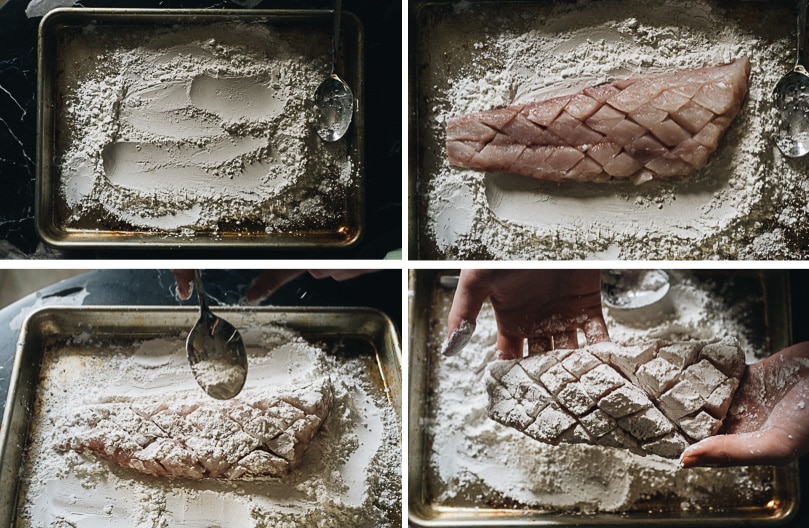
Coat the fish
Only do this step when you’re ready to fry and the oil is heated.
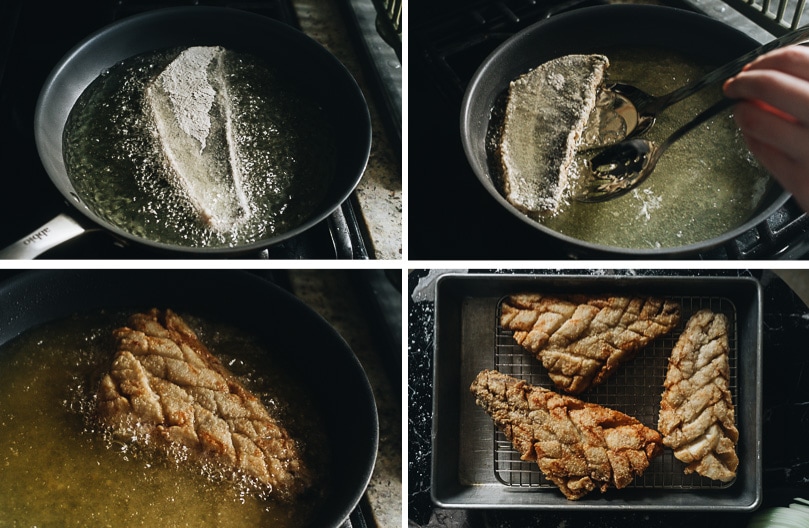
Shallow fry
You will save a lot of oil if you use shallow frying instead of deep frying. But if you have a fryer, deep frying works just as well.
Carefully place the fish into the oil skin-side-up. It’s important to fry the flesh side first, so the fillet won’t curl up too much. Flip the fillet. A fish spatula works best. I didn’t have one so I had to use two spatulas, and the flipping was a little awkward. Fry the skin side. Drain off the excess oil using a rack.
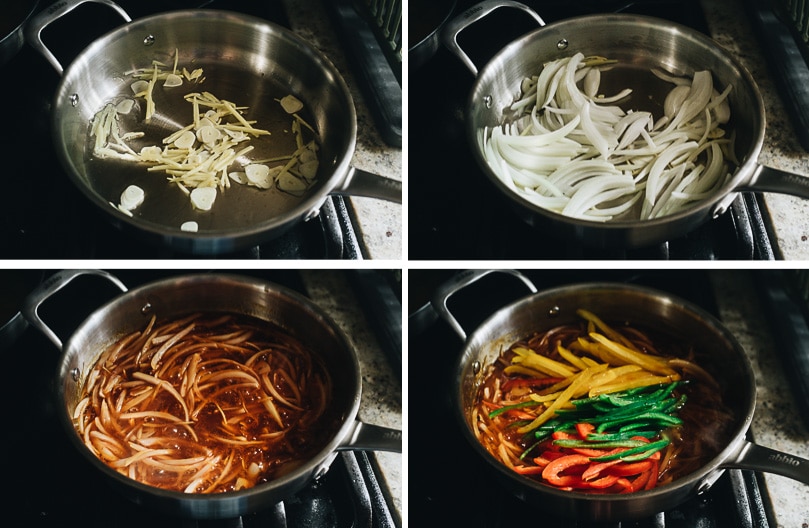
Make the sauce
Quickly saute the aromatics Add the yellow onion for a quick stir Cook the sauce mixture Saute the peppers and let the sauce thicken
NOTE: Chinese sweet and sour recipes usually cook the veggies very lightly so that they’re almost raw when served. I cooked the onion a bit more in this dish so the onion flavor wouldn’t be too intense. If you prefer your peppers cooked a bit more, you can add them in the same step as the onions.
Afterthought
This sweet and sour fish recipe is perfect for Chinese New Year, for other Chinese festivals, or even as a centerpiece for your dinner party. Using fish fillets instead of a whole fish takes all the guesswork out of cooking and makes it a very practical dish for home cooks. I hope you enjoy it as much as I do!
More delicious fish & seafood recipes
Steamed Salmon in Black Bean Sauce Crispy Baked Coconut Shrimp Thai Fish Cakes (Tod Mun Pla) Salt and Pepper Squid Honey Soy Sauce Glazed Salmon Authentic Chinese Steamed Fish
If you give this recipe a try, let us know! Leave a comment, rate it (once you’ve tried it), and take a picture and tag it @omnivorescookbook on Instagram! I’d love to see what you come up with. Lilja Walter is a part of the Omnivore’s Cookbook team and worked closely with Maggie to develop and test this recipe.