What is sweet and sour ribs
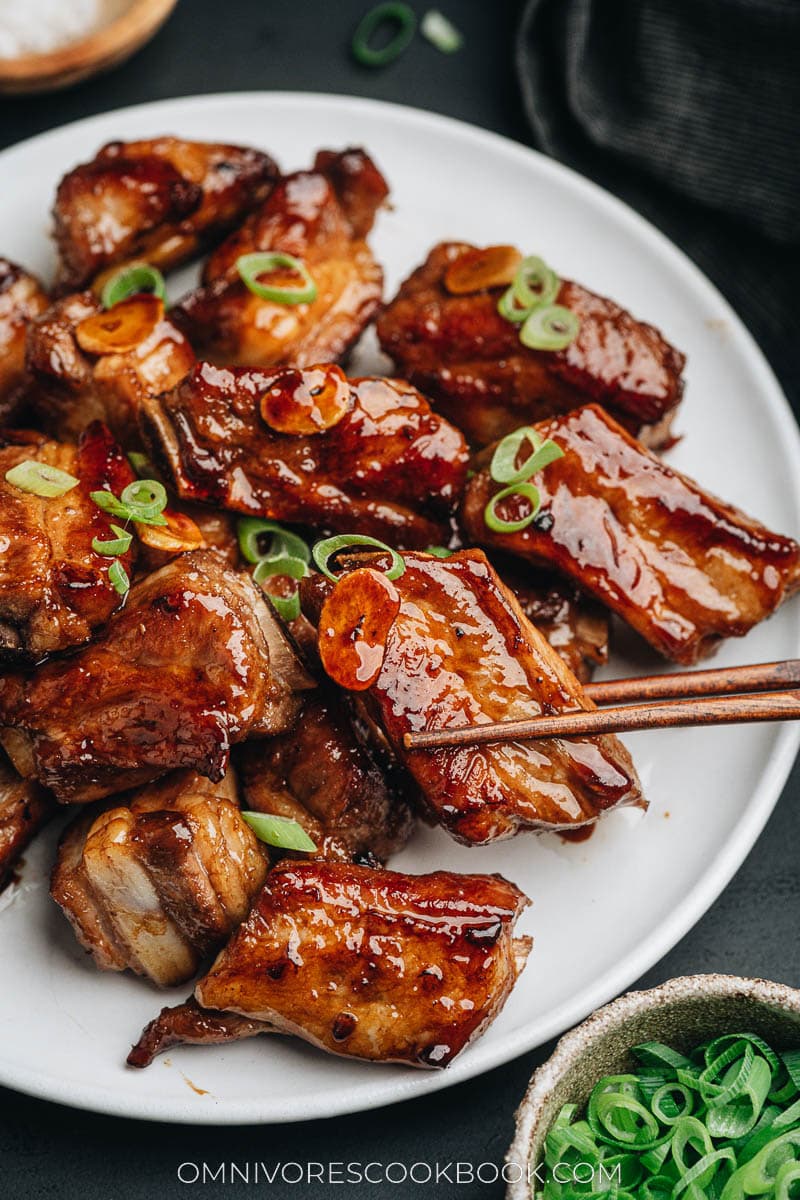
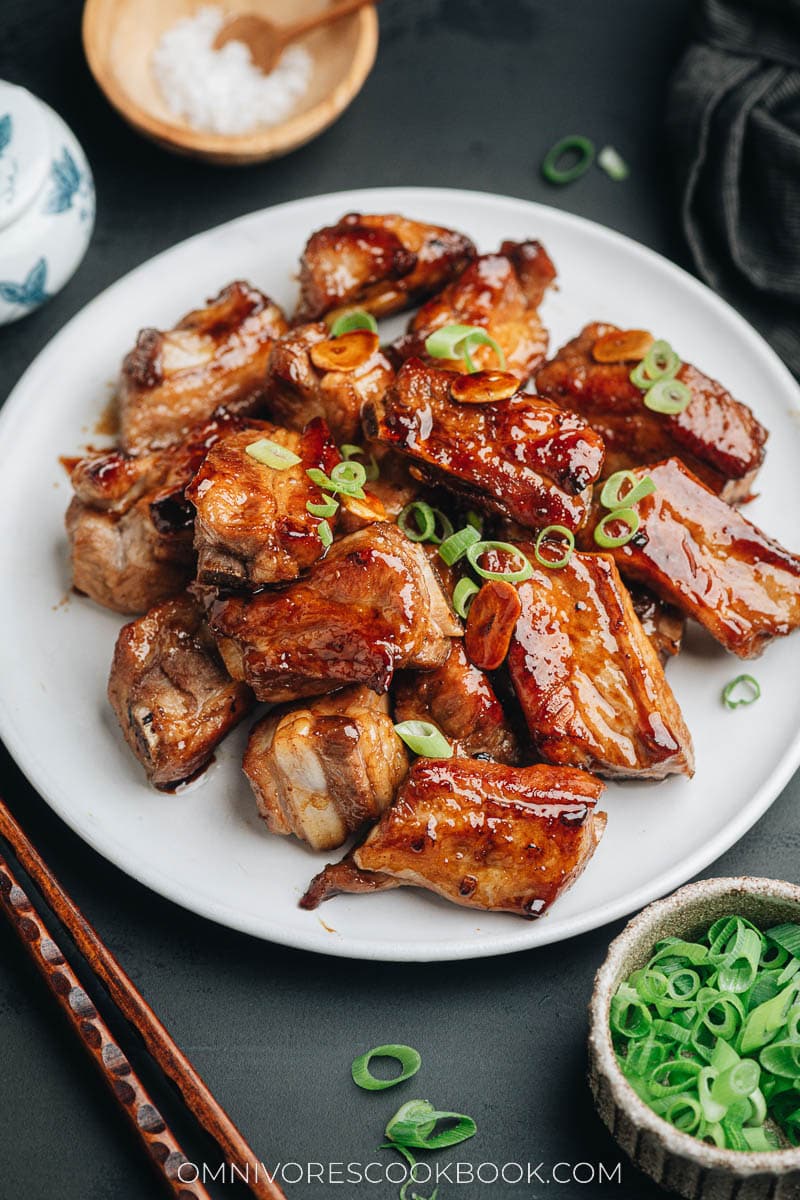
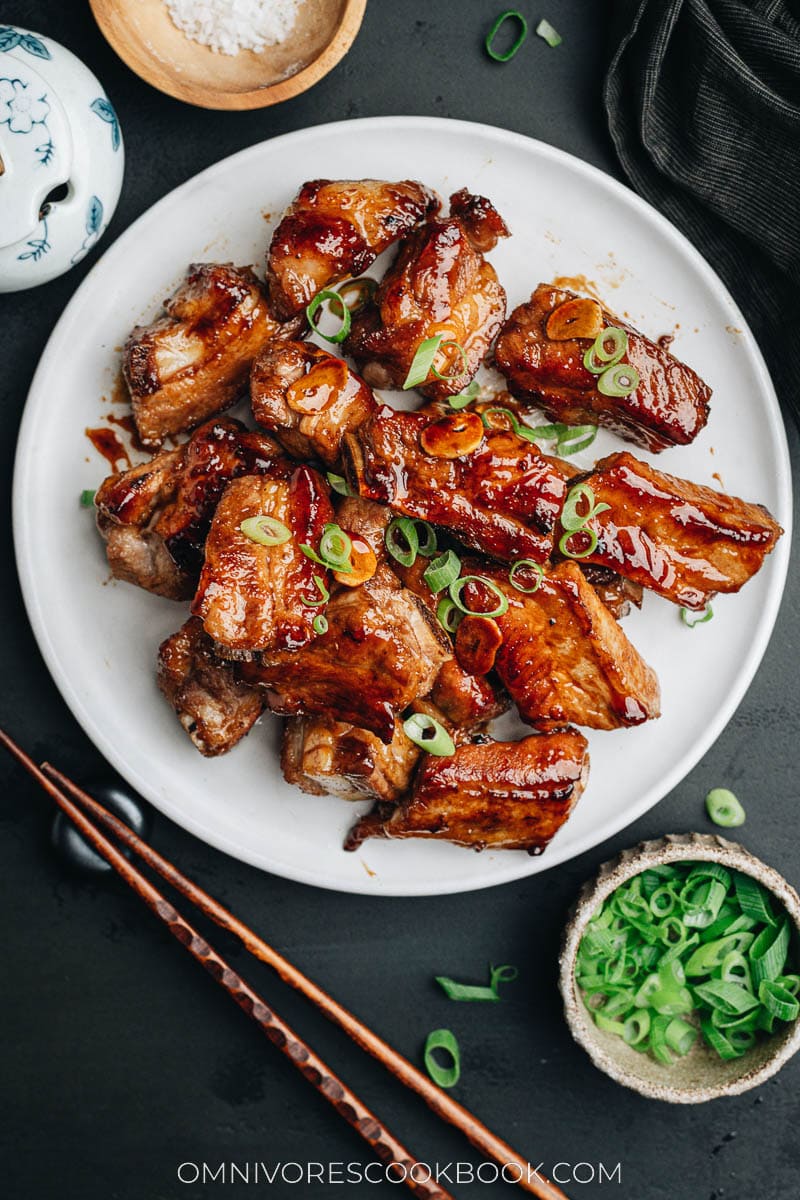
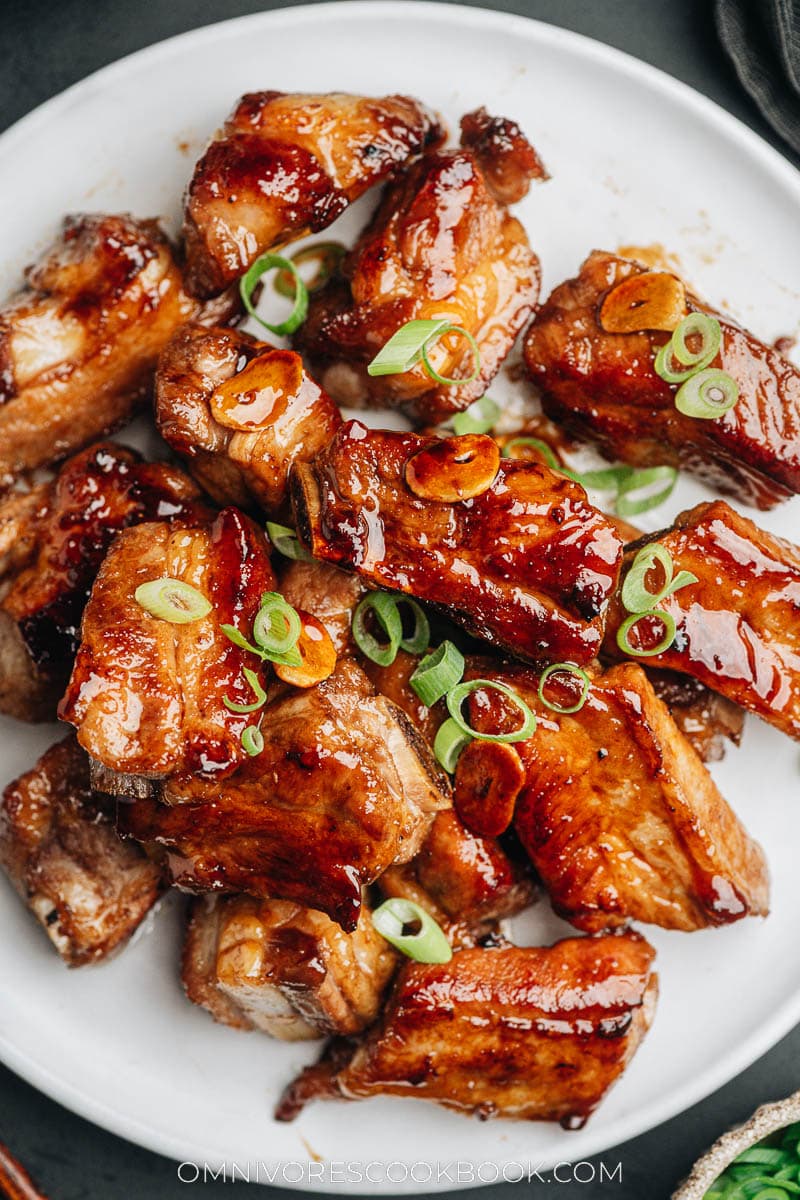
Sweet and sour ribs (糖醋小排, tang cu xiao pai) is a famous dish from Shanghai cuisine. The small pork ribs are fried until golden crispy, then coated with a thin layer of sticky sweet and sour sauce. The ribs have a special chewy texture and a crunchy caramelized surface, and they’re bursting with flavor. The dish can be served hot or cold, usually in small quantities as an appetizer.
Why this recipe
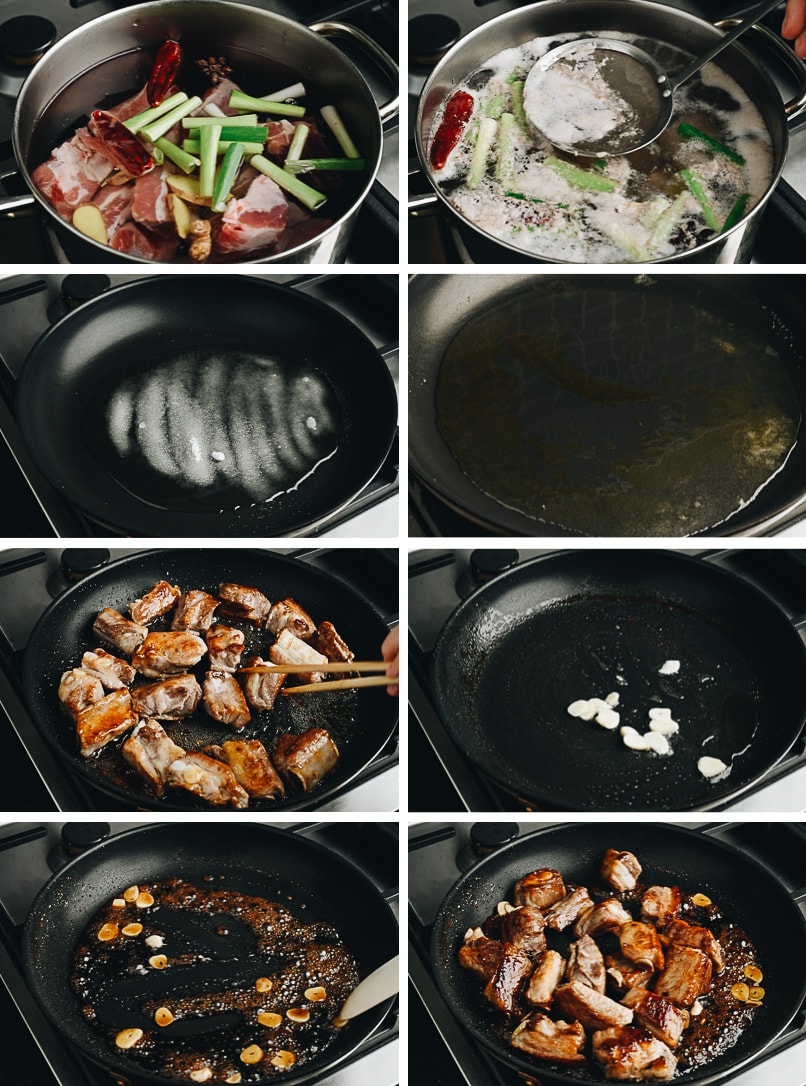
There are a few different approaches to recreating this dish at home. For example, the traditional way is to marinate, deep fry, and then cook the ribs with the sauce. However, I found the approach below is slightly easier and yields a great result:
Blanch the ribs with aromatics to get rid of any gamey taste, and quickly cook through the interior.Brown the ribs using the melted sugar method (more details below) for the caramelized texture.Stir the ribs with the sauce to finish up.
Ingredients for sweet and sour ribs
This sweet and sour ribs recipe requires a few very simple ingredients.
What type of pork ribs to use
The most important thing for sweet and sour ribs is to use the correct type of pork ribs. To mimic the authentic restaurant dish, you should use 2” (5 cm) long small single riblets. Spare ribs work better than baby back ribs because they have a thinner layer of meat. The thin layer will cook better in this recipe because the meat will cook through more quickly and yield a better texture given the short cooking time. You can usually find this type of ribs at Asian markets, especially Chinese and Korean markets (like H Mart). They are often sold in fully cut-up form in a package. Either that, or a slab of partial ribs that is cut crosswise. These days, you can even shop for them online and get them delivered using online Asian grocery stores such as Umamicart. If you do not have access to an Asian market, it’s possible to buy a slab of regular spare ribs. And you could ask the butcher to slice the ribs crosswise using their saw. Then you only need to cut them into single riblets at home, which is quite easy to do with your regular knife. It is also possible to use whole riblets without cutting them short. In this case, try to find a smaller slab with flat ribs, which will be easier to brown.
The sauce
The sweet and sour sauce is made of three simple ingredients:
Soy sauceChinkiang vinegarSugar
Mise en place
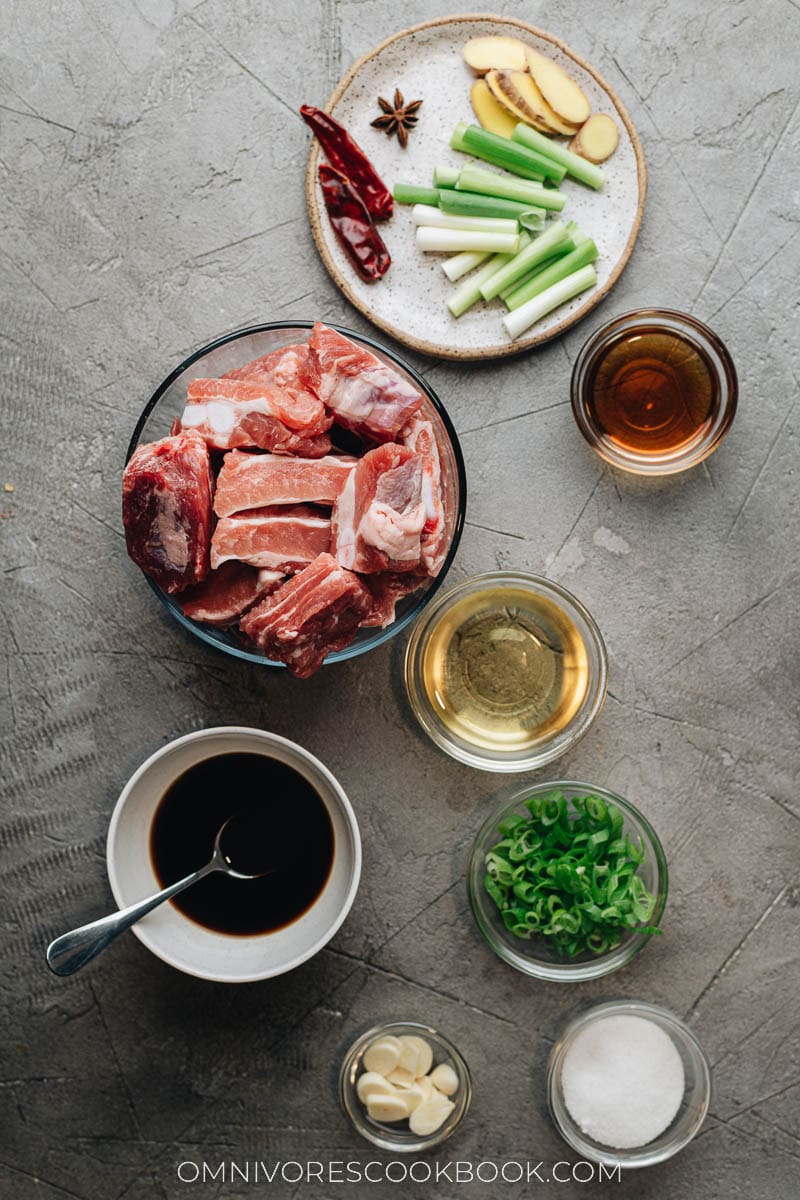
Once you’re ready to cook, your table should have:
Aromatics for braising (green onion, ginger, star anise, dried chili pepper)Shaoxing winePork ribsMeasured out oil (it’s important to measure the oil in this recipe)Mixed sauceSliced garlicSugarSliced green onion for garnish
How to cook sweet and sour ribs
The melted sugar browning method
炒糖色 (chao tang shai), or browning meat in melted sugar, is a cooking technique that is widely used in Chinese stir fries and braised dishes, to create a special texture to the surface. Different from browning the meat directly in hot oil, the melted sugar adds a beautiful golden color to the meat, and creates a light caramelized and crispy texture, along with a slightly sweet taste. For example, the popular red braised pork uses this method to brown the meat before braising. You start by adding sugar to cold oil. Cook it slowly until the sugar melts and turns golden. It’s important to get a proper oil temperature without burning the sugar. Then the pork is then added for a quick stir fry. You will find that the pork gets a nice beautiful reddish golden color in a minute or so, along with the caramelization of the sugar.
What pan to use
In Chinese restaurants it’s common practice to use a wok to melt the sugar. Because of the round shaped wok bottom, the sugar will be submerged in the oil and melt more evenly. In a US home kitchen, I found a nonstick pan works better. Because: When using a nonstick pan, the biggest challenge is to disperse the oil and sugar as evenly as possible, so the sugar is in contact with as much oil as possible. But I found the result with a nonstick pan to be quite nice, without the worry of un-seasoning my wok.
Sweet and sour ribs cooking process
NOTE
You might find that I use a lot of oil in the recipe, which facilitates the sugar melting process. But don’t worry, the ribs won’t absorb all this oil during the cooking and you will discard most of the oil in the end. It is very important that you remove the excess oil after browning the ribs and before adding the sauce. If there’s too much oil in the pan, the sauce won’t thicken properly.
Afterthoughts
The melted sugar technique is not the easiest thing to master, and even many Chinese home cooks do not feel confident they’ll get a good result every time. So I wouldn’t recommend this recipe if this is the first Chinese stir fry you make at home. But if you have some Chinese cooking experience under your belt and follow my instructions closely, it will give you a very pleasant result, if not a perfect one. This dish is quite a fun challenge and you will get a result that is close to restaurant quality sweet and sour ribs.
Other delicious Shanghai dishes
Rice Cake Stir Fry (炒年糕, Chao Nian Gao)Yang Zhou Fried Rice (扬州炒饭)Air Fryer Garlic Ribs (蒜香排骨)Sister Song’s Soup (宋嫂鱼羹, Chinese Fish Soup)Braised Chestnut Chicken (板栗炖鸡)Sheng Jian Bao (生煎包, Shanghai Pan-Fried Pork Buns)