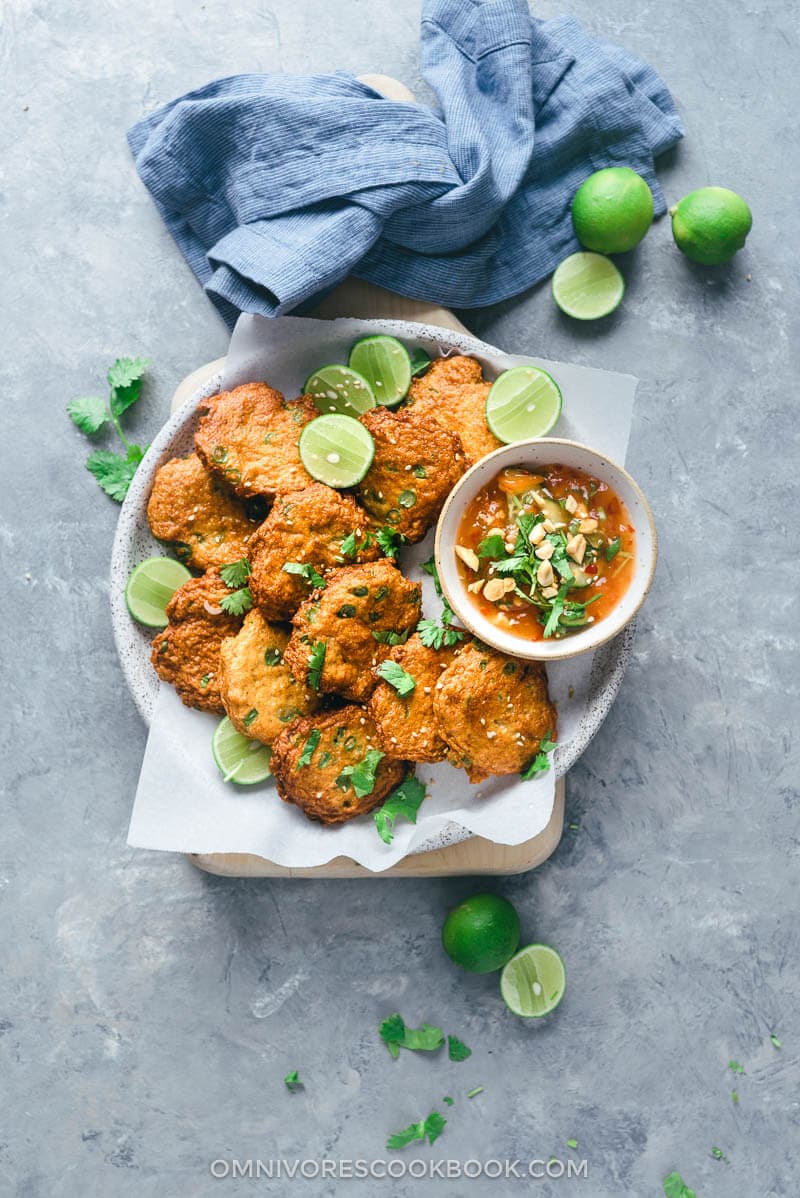
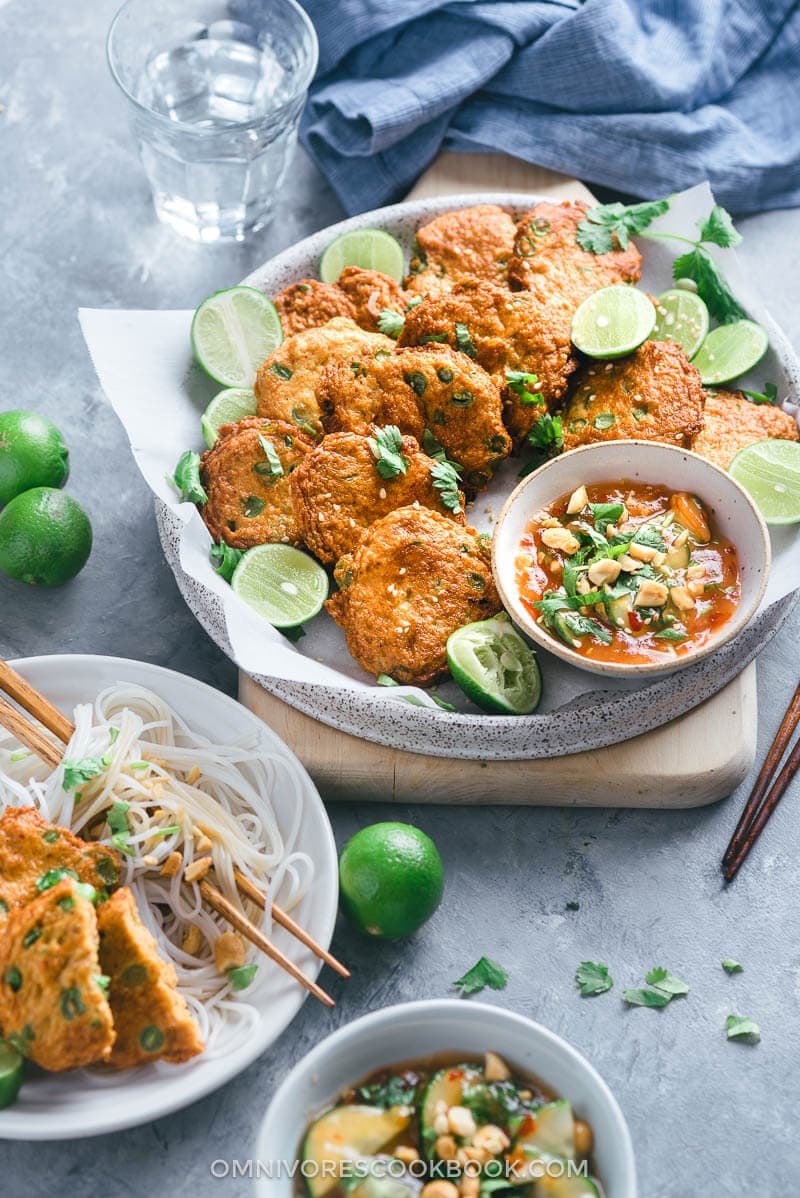
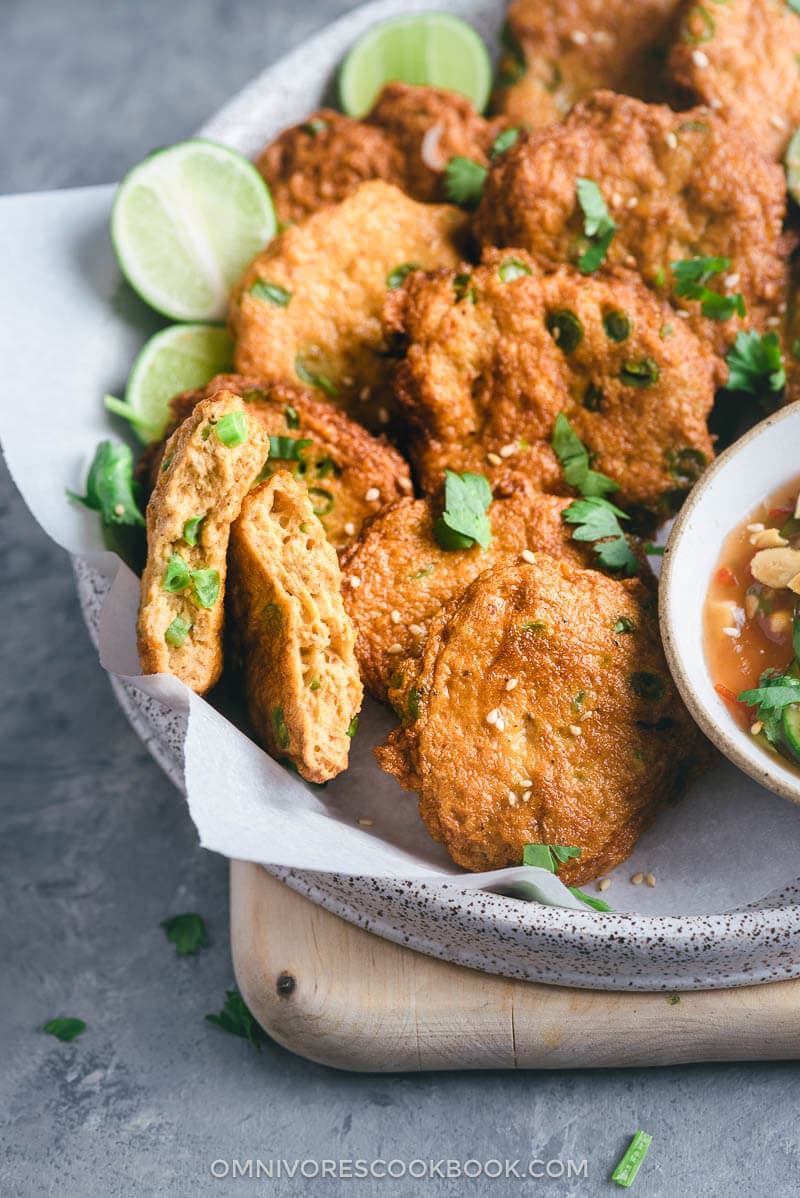
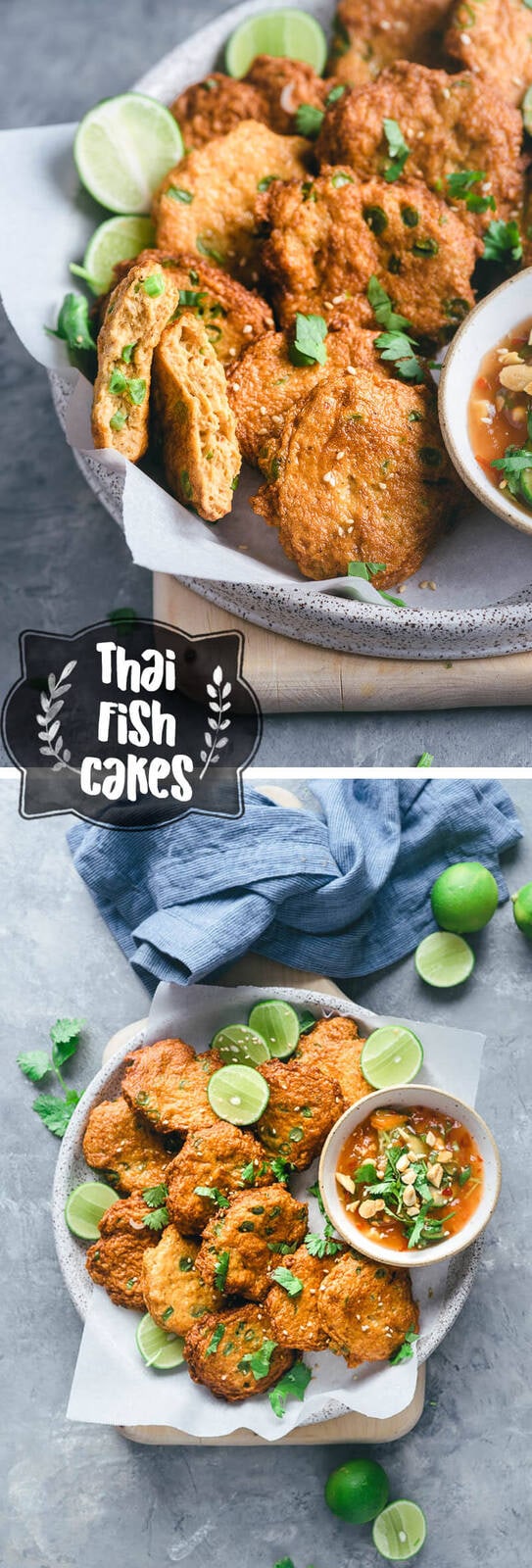
Lately we’ve been obsessed with these fish cakes. Here are three reasons you should try them out: Back in 2014 when I had just started this blog, I posted a Chinese fish cake recipe right here. I bought the freshest fish I could find. And I used a cleaver to chop the fish for 20 minutes to make the fish paste (I was living in China and did not own a food processor). The result was a mediocre fish cake with a grainy texture. I firmly believed that the sad results were caused by the fish I used. In Hong Kong and Macau, where I had some of the best fish cakes ever, they always used live, whole fish. To create the springy fish cake, they would baton the paste with wooden sticks for 30 minutes. I thought it was a process that would be impossible to recreate at home. I was dead wrong about that.
The key to the springy texture
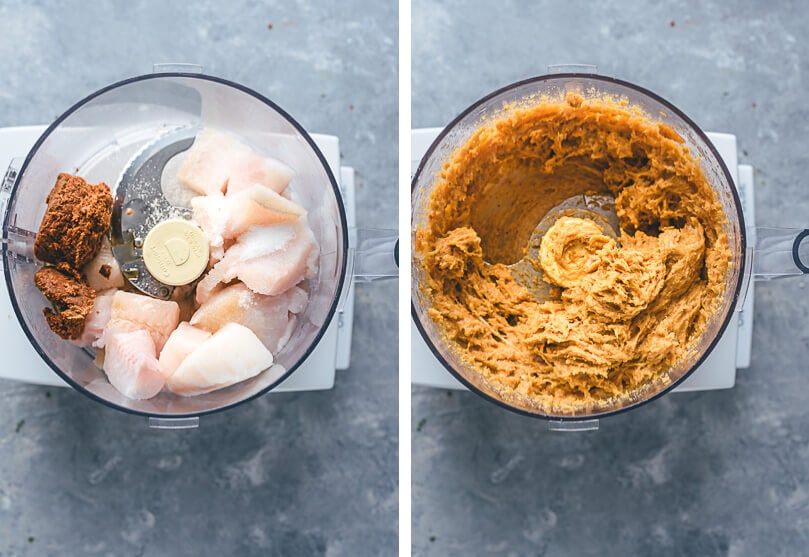
Recently I came across the Tod Mun Pla recipe on She Simmers. If you haven’t heard about this blog, it is my go-to place for all Thai recipes. Leela Punyaratabandhu started the blog back in 2008 and has a great collection of authentic Thai recipes. She is a serious cook who grew up in a traditional Thai family that loves cooking and appreciates good food. She is the author of two beautiful cookbooks: Bangkok: Recipes and Stories from the Heart of Thailand and Simple Thai Food: Classic Recipes from the Thai Home Kitchen. Her recipes might look quite long and they use exotic ingredients, just like in a real Thai kitchen, but my cooking of her recipes has always resulted in excellent dishes. This fish cake is no exception. In her post, she shares the secrets of creating the perfect fish cake texture at home–by adding egg whites and beating the fish paste with a mixer, to create that airy, fluffy texture. It is a process that mimics the traditional method of beating the fish with wooden sticks. But with modern tools, you can actually accomplish it at home by simply turning on your mixer and letting it run for a few minutes.
When I tried out her method, I did a few things differently: The result was perfect springy fish cake with a smooth texture and bold flavor, just like the ones you have in a restaurant.
How to shape the fish cakes without getting your hands dirty
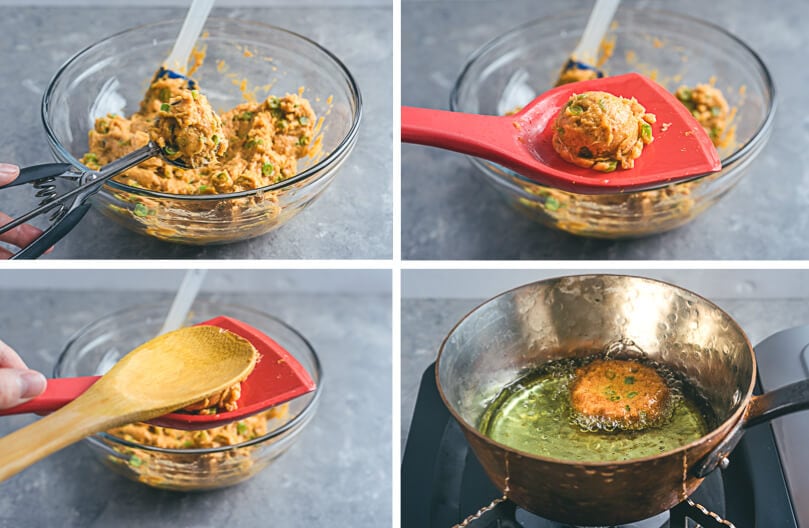
During the cooking, I also found a great way to create round-shaped fish cakes without shaping them with your hands. Here is how: OK, it might look like a lot of work. But I’m a control freak and I want my fish cakes to be perfectly round. Judge me if you want!
In case you don’t want to deep fry the fish cakes, you can use a little oil and pan fry them as well. The fish cakes won’t have a consistent golden surface, but it won’t affect the taste.
A note on serving
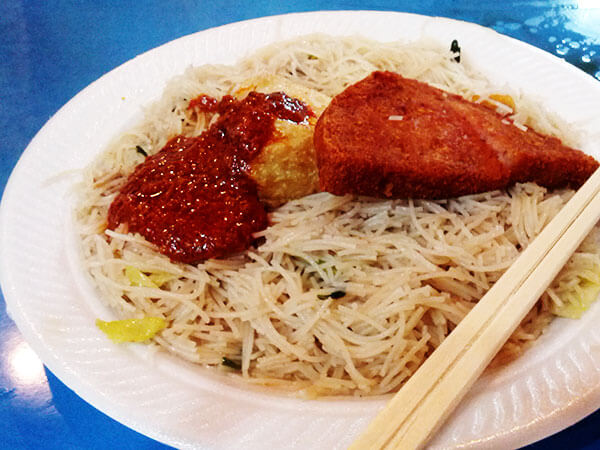
Although an Asian restaurant would serve fish cakes as an appetizer, they are actually a great ingredient to serve as a main dish. When I was visiting Singapore, I had the most excellent fried noodle dish at a hole-in-the-wall restaurant in the basement of an office building. The plate was extremely simple and did not even look appetizing (see the picture below). The thin strips of noodles were piled on a paper plate with a fish cake on top. When I had one bite, I blurted out “OH. MY. GOD!” It was one of my most satisfying meals ever.
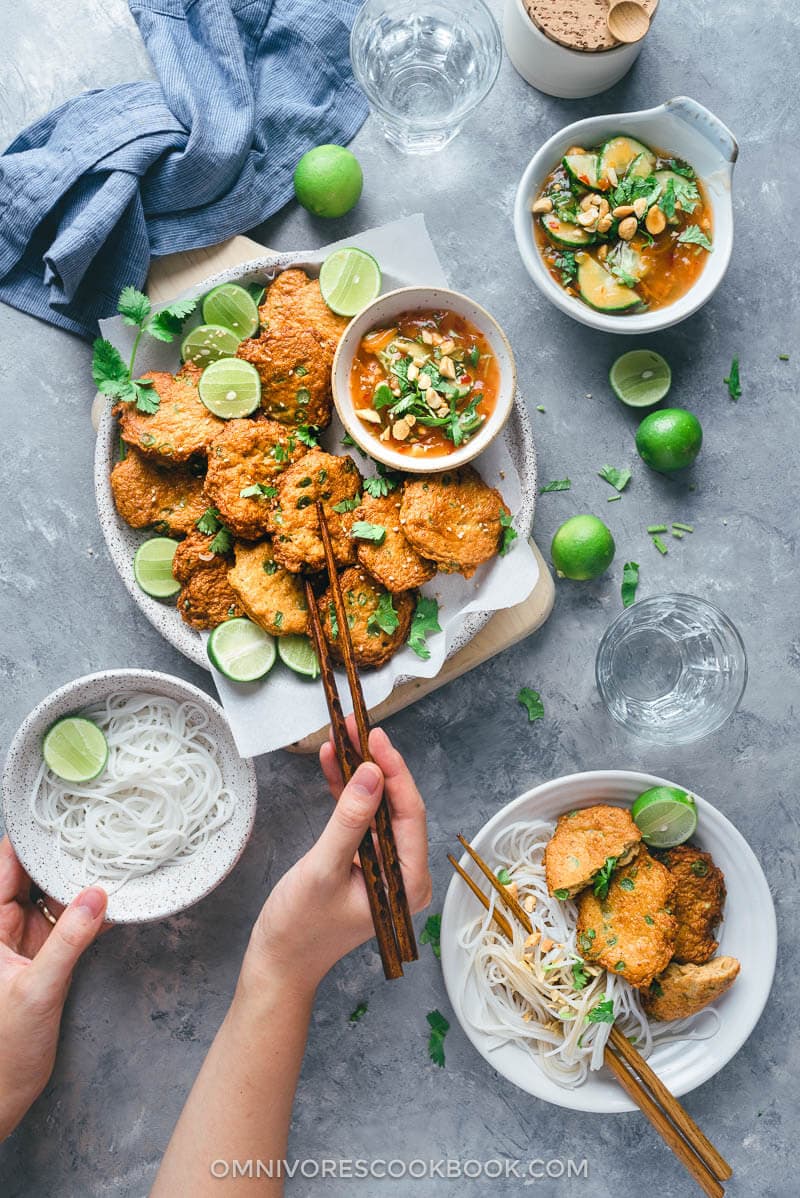
Back to the topic… Here are a few ways to serve the fish cakes to make a satisfying main: I hope you enjoy this dish as much as I do!
If you give this recipe a try, let us know! Leave a comment, rate it (once you’ve tried it), and take a picture and tag it @omnivorescookbook on Instagram! I’d love to see what you come up with.
More delicious seafood recipes
Salt and Pepper Squid Kung Pao Shrimp Steamed Fish in Black Bean Sauce Cheesy Baked Shrimp Spring Rolls
The recipe was originally published in August 21, 2014 and updated in September 10, 2017. I completely changed the ingredients and cooking method. Please replace your old copy with this new version for much better results.